
Published: November 2025 | Last updated: April 2026 | Editorial review and quality control: Martina N.
Most sexually transmitted infections give no warning. You can carry chlamydia, gonorrhea, or HIV for weeks while feeling completely well, then unknowingly pass the infection to a partner. The U.S. Centers for Disease Control and Prevention reports more than 2.4 million combined new infections of chlamydia, gonorrhea, and syphilis each year (CDC STD overview), and most begin without symptoms.
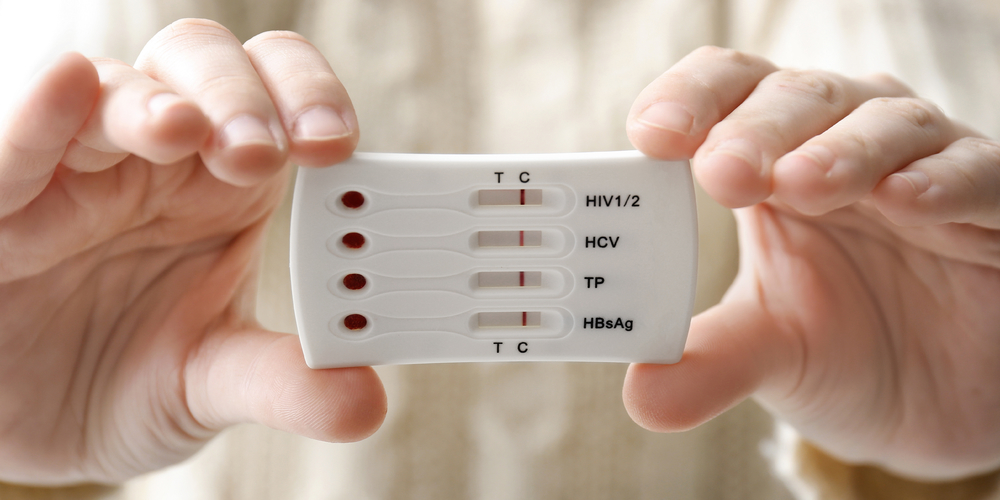
At-home rapid test kits give you a way to check on your own time, in private, without a clinic appointment. The 7-in-1 panel discussed here screens for the infections most people worry about after a possible exposure: chlamydia, gonorrhea, syphilis, HIV, hepatitis B, hepatitis C, and HSV-2 (genital herpes). This guide walks through the chemistry behind the kits, the window periods that decide when to test, the accuracy figures and what they really mean, and the gaps where a clinic visit is the right move instead.
This guide is published by stdrapidtestkits.com, which sells the at-home rapid test kits referenced below. We recommend products based on fit-for-purpose for the reader's concern, not commercial benefit. Where the right answer is a clinic visit instead of a home kit, this article says so plainly.
How does an at-home STD combo kit work?
You collect either a self-swab (for chlamydia and gonorrhea) or a fingerstick blood drop (for HIV, syphilis, hepatitis B, hepatitis C, and HSV-2), apply it to the cassette's sample well, and read the result line at 15 minutes. Each infection has a recommended waiting period after exposure before the test is reliable, ranging from about 14 days for chlamydia to 12 weeks for HSV-2 antibodies. A positive home result should be confirmed by a clinic-run laboratory test before treatment begins.
Key Takeaways
- A 7-in-1 home rapid panel screens for chlamydia, gonorrhea, syphilis, HIV, hepatitis B, hepatitis C, and HSV-2, with results in about 15 minutes per cassette.
- Each infection has its own window period; testing too early after exposure produces a false negative even when the test itself works correctly.
How home STD test kits actually work
Every rapid test in the panel uses the same underlying chemistry, called lateral-flow immunoassay. You add your sample to a small cassette, capillary action draws it across a strip embedded with two lines of binding chemistry, and any target molecule in your sample produces a visible colored line within 10 to 20 minutes.
The kits run two slightly different tests depending on the infection. For chlamydia and gonorrhea, the cassette looks for surface antigens of the bacteria themselves. The sample is a self-collected vaginal or penile swab. For HIV, syphilis, the hepatitis viruses, and HSV-2, the cassette looks for antibodies your immune system has produced in response to the infection. The sample is a fingerstick drop of blood, the same kind you would use for a glucose meter.
Both formats include a built-in control line that confirms the test ran correctly. If the control line never appears, the result is invalid and the test should be repeated. The 15-minute read window matters; reading the cassette much later can produce evaporation lines that look like positives but are not.
Lateral-flow chemistry has a long track record. Pregnancy tests, COVID-19 antigen tests, and HIV self-tests sold in pharmacies all use the same approach. The technology is reliable when used correctly and within its validation window, which is the next thing worth understanding.
Window periods: the single most misunderstood part of testing
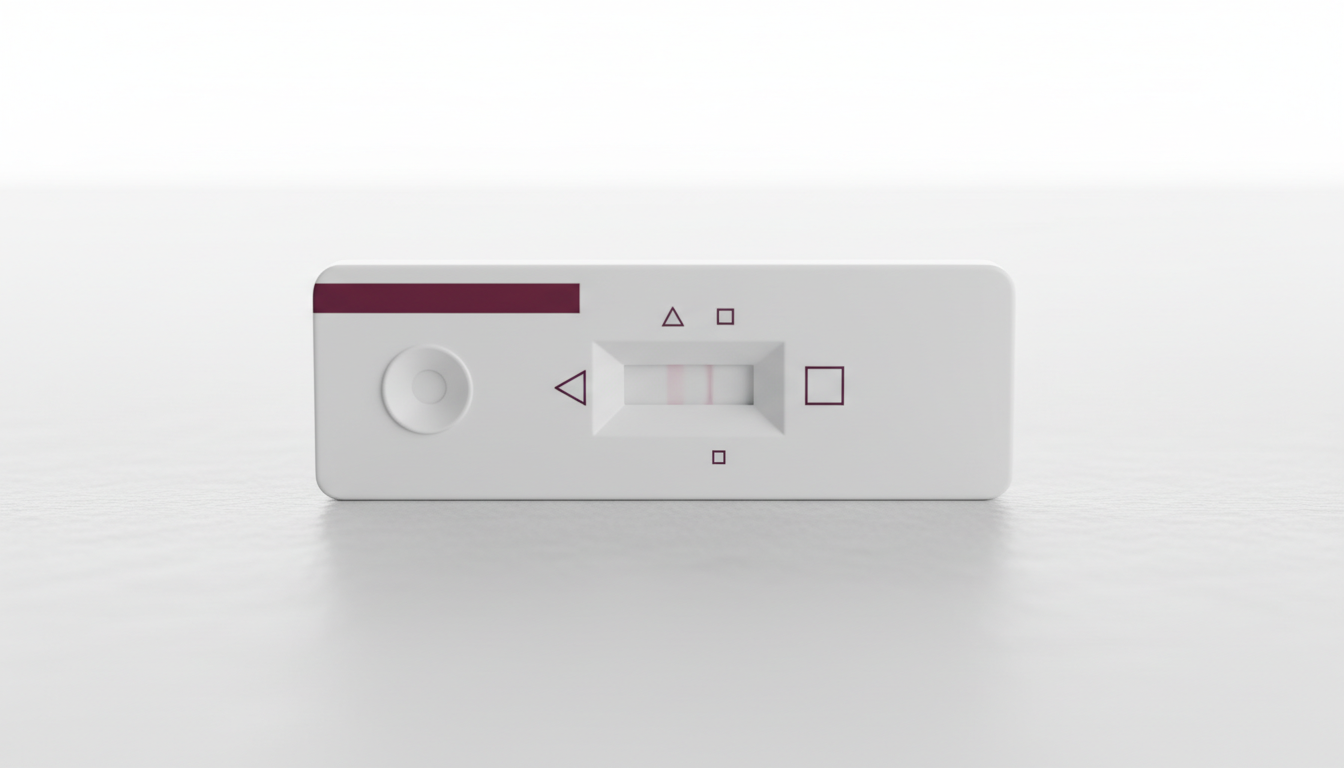
The window period is the gap between when an infection enters your body and when a test can actually detect it. During that gap, you can be infected and contagious while still testing negative. Every test on every platform has one. Home rapid tests are not an exception, and neither are clinic NAAT panels.
The CDC publishes window-period guidance for each infection because the time it takes for a target to build to detectable levels varies by infection and by test technology (CDC STD testing pages). For the seven infections in our panel, the rough ranges are:
- Chlamydia and gonorrhea: about 1 to 2 weeks. The bacterial antigen is detectable within days of infection, but most kit instructions specify 14 days post-exposure for reliable screening.
- HIV antibody tests (the chemistry our kit uses): typically 23 to 90 days, with most people seroconverting by 6 weeks. The CDC recommends a follow-up test at 90 days to definitively rule out HIV after a high-risk exposure (CDC HIV testing).
- Syphilis: about 3 to 6 weeks for antibodies to be detectable, with some tests reliable up to 12 weeks.
- Hepatitis B surface antigen: typically detectable 4 to 10 weeks after exposure (CDC viral hepatitis).
- Hepatitis C antibodies: typically 8 to 11 weeks; some people take up to 6 months to produce detectable antibodies.
- HSV-2 antibodies: typically 12 weeks. A test taken before the 12-week mark can miss recent infection even if the test technology is working as designed.
This is why a single negative result soon after a possible exposure is not the end of the testing question. If your exposure was very recent, the test cannot see what is not yet there in detectable amounts. The honest answer is to plan a follow-up test at the appropriate window for the infection you are most concerned about. Many clinicians recommend retesting at 12 weeks after a high-risk exposure to cover all seven infections in one sweep.
If you only want to test once after a high-risk exposure, the 12-week mark covers all seven infections in this panel. Earlier testing has a role for chlamydia and gonorrhea (from day 14) and for clinic 4th-generation HIV antibody/antigen testing (from about day 45), but a single 12-week home screen catches the late-seroconversion infections (HIV, hepatitis C, HSV-2) that would otherwise need a separate follow-up.
Swab tests versus blood tests: why the same panel uses both
The reason a combo kit contains two different sample types comes down to where each infection lives in the body. Chlamydia and gonorrhea are bacterial infections of the genital mucous membranes, and the bacteria themselves sit on the surface tissue you can swab. Detecting them is straightforward: pick up a sample of cells from the infected area, look for bacterial antigen, get a result.
The other five infections in the panel are systemic. HIV, syphilis, hepatitis B, hepatitis C, and HSV-2 do not stay localized to a swabbable surface; they circulate in the blood (HIV, the hepatitis viruses), live in nerve ganglia (HSV-2), or spread through the bloodstream from a primary lesion (syphilis). Detecting them on a self-swab is not technically reliable. The kit instead measures antibodies your immune system has produced, which appear in your blood once seroconversion has occurred.
This is also why a swab test for chlamydia turns positive faster than a blood test for HIV. The bacterial antigen is present from the day the infection takes hold; antibodies take weeks to build. The split-format combo kit gives you the right chemistry for each infection in a single package.
The seven infections covered by the combo kit
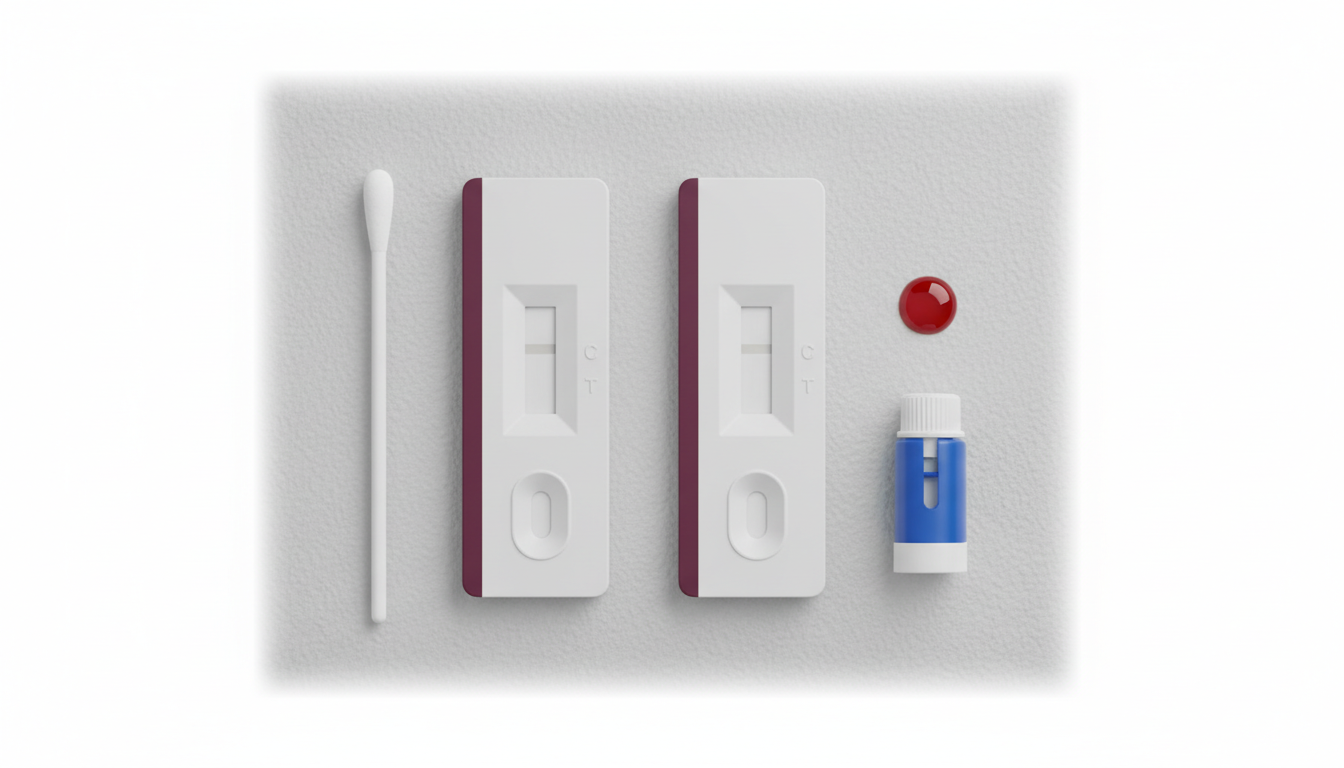
Each entry below summarizes what the infection is, what the kit can tell you, and the key window-period detail.
Chlamydia. The most commonly reported bacterial STI in the United States, caused by Chlamydia trachomatis. Untreated chlamydia can scar the fallopian tubes and cause infertility in women, and inflame the testicular ducts (epididymitis) in men. The kit uses a self-collected genital swab and looks for chlamydia antigen on the cassette. Curable with a single course of antibiotics; reliable from about 14 days post-exposure (CDC STD treatment guidelines).
Gonorrhea. Caused by Neisseria gonorrhoeae. Often co-occurs with chlamydia, which is why most clinicians screen for both together. Antibiotic resistance has made treatment more complex over the last decade; the CDC currently recommends a single intramuscular injection of ceftriaxone for uncomplicated infection. Same swab format as chlamydia; same approximate 14-day window.
Syphilis. A bacterial infection (Treponema pallidum) that progresses through stages over months and years if untreated, eventually affecting the heart, brain, and nervous system. The kit detects anti-treponemal antibodies in fingerstick blood. Antibodies typically become detectable 3 to 6 weeks after infection. Curable with penicillin in early stages.
HIV. The virus that causes AIDS if untreated. Modern antiretroviral therapy reduces viral load to undetectable levels in most patients, which prevents both progression and sexual transmission (the U=U principle, undetectable equals untransmittable, per CDC HIV resources). The kit detects antibodies to both HIV-1 and HIV-2. Window of 23 to 90 days; CDC recommends confirming a negative at 90 days after a high-risk exposure.
Hepatitis B. A viral liver infection that becomes chronic in roughly 5 to 10% of adults who contract it, with chronic carriers at lifetime risk of cirrhosis and liver cancer. The kit detects hepatitis B surface antigen (HBsAg), which appears 4 to 10 weeks post-exposure. A safe and effective vaccine exists; the CDC now recommends universal adult vaccination through age 59 (CDC viral hepatitis).
Hepatitis C. Another viral liver infection, transmitted through blood-to-blood contact and (less commonly) through sexual contact. Most people develop chronic infection without symptoms. The good news here is real: modern direct-acting antiviral medication cures more than 95% of hepatitis C cases in 8 to 12 weeks of oral therapy. The kit detects anti-HCV antibodies; window of about 8 to 11 weeks.
HSV-2 (genital herpes). A lifelong viral infection causing recurrent genital sores, though many carriers are asymptomatic and shed virus without lesions. The kit detects type-specific antibodies to HSV-2 in fingerstick blood; antibodies typically take 12 weeks to reach detectable levels (CDC genital herpes). No cure; antiviral medication suppresses outbreaks and reduces transmission risk by roughly half. Note that the blood antibody panel cannot diagnose a current outbreak; that requires a clinic-run swab of the lesion itself.
| Infection | Sample type | Window period | Curable? |
|---|---|---|---|
| Chlamydia | Self-swab | About 14 days | Yes (antibiotics) |
| Gonorrhea | Self-swab | About 14 days | Yes (antibiotics) |
| Syphilis | Fingerstick blood | 3 to 6 weeks | Yes (penicillin, early stages) |
| HIV | Fingerstick blood | 23 to 90 days | No, but managed lifelong |
| Hepatitis B | Fingerstick blood | 4 to 10 weeks | Sometimes; vaccine prevents |
| Hepatitis C | Fingerstick blood | 8 to 11 weeks | Yes, more than 95% with antivirals |
| HSV-2 | Fingerstick blood | About 12 weeks | No, but suppressed with medication |

Reading accuracy claims: sensitivity, specificity, and what 99% really means
Marketing copy for home tests often quotes a single "accuracy" number. That word hides two distinct concepts that medical professionals separate.
Sensitivity is how often the test correctly identifies a true infection. A 99% sensitive test catches 99 out of every 100 infected samples and misses 1.
Specificity is how often the test correctly rules out infection. A 99% specific test will incorrectly flag 1 out of every 100 uninfected samples as positive.
For the seven infections in our combo kit, the per-product specifications run in the high-90s for both sensitivity and specificity when the test is used after the appropriate window period. For exact figures on each cassette, check the relevant product page; the values vary by infection type and reflect what each manufacturer's validation studies have measured.
Two important caveats follow from these numbers.
First, no rapid lateral-flow test is a perfect substitute for the laboratory NAAT (nucleic acid amplification test) used in clinics. Lab NAATs amplify the genetic material of the infection itself and can detect smaller amounts of target than a lateral-flow strip. The home rapid panel is best understood as a screening tool. A positive home result should be confirmed at a clinic before treatment begins, and a negative result taken inside the window period should be repeated after the window closes.
Second, false positives matter more than the percentage suggests when the underlying prevalence of an infection is low. If you are screening for HIV in a population where 1 in 10,000 people is positive, even a 99.9% specific test will produce more false positives than true ones; this is precisely why clinic confirmation is the standard of care everywhere. False negatives matter the most for ruling out a recent high-risk exposure, which loops back to the discipline of testing after the window closes.
Sensitivity answers, “If I am infected, will the test catch me?” A 99% sensitive test correctly flags 99 of every 100 infected samples and misses 1.
Specificity answers, “If I am not infected, will the test correctly clear me?” A 99% specific test correctly clears 99 of every 100 uninfected samples and falsely flags 1.
Both numbers matter. High sensitivity protects you from false negatives (missing a real infection). High specificity protects you from unnecessary worry and treatment from false positives.
When a combo kit makes sense and when a single test is enough
Not every situation calls for a 7-in-1 panel. Some readers know exactly what they are testing for, and a single-infection cassette serves them better. The decision usually comes down to three questions.
Did your possible exposure involve more than one route? Vaginal or anal intercourse without a condom can transmit any of the seven infections in the panel. If you are screening after that kind of exposure, a combo kit is more efficient than buying seven separate tests, and the price-per-target is lower.
Is one infection your specific concern? If a partner just disclosed a chlamydia diagnosis and you have no other risk factors, a single chlamydia or chlamydia-plus-gonorrhea swab kit is more appropriate than a full panel. Same logic for HIV after a needlestick exposure, or hepatitis C after sharing a tattoo needle.
Are you screening routinely without a specific exposure? The CDC recommends annual chlamydia and gonorrhea screening for all sexually active women under 25 and for men who have sex with men, plus periodic HIV and syphilis screening based on risk profile. For a yearly comprehensive screen, a combo kit is convenient.
One real limitation worth flagging up front: our trichomoniasis and HPV self-test kits are validated for vaginal self-swab only. We do not currently offer a male-compatible at-home test for either of those two infections; a clinic visit is the right move for men who want to be screened for trich or HPV.

After testing: confirming positives, partner notification, and treatment
What you do with a result depends on whether it is positive or negative.
For a positive home test result. Do not start any treatment based on the rapid cassette alone. Make a clinic appointment within a few days and bring a photo of your test cassette plus the lot number printed on the kit packaging. The clinician will run a confirmatory laboratory test before prescribing treatment. This is the standard of care for every infection in the panel; it protects you from unnecessary antibiotics if the home result was a false positive, and ensures the right drug regimen is chosen if the result was real.
For a negative result inside the window period. The negative tells you that as of the test date, no detectable target was present. If your exposure was recent, plan a follow-up test at the appropriate window for the infection you are most concerned about; 12 weeks covers all seven. Until then, use barrier protection with any sexual partners.
Partner notification. A confirmed positive means current and recent sexual partners need to know they may also be infected. Most U.S. health departments offer free partner-notification services that can deliver the message anonymously if you prefer. Many states also allow expedited partner therapy for chlamydia and gonorrhea, where your provider can prescribe treatment for your partner without a separate exam.
Treatment outlook. Five of the seven infections in the panel are curable: chlamydia, gonorrhea, syphilis, hepatitis C, and (in some adult cases) hepatitis B. HIV and HSV-2 are managed lifelong, but the medications are highly effective and the long-term outlook for both is excellent compared with twenty years ago.
If your home test is positive: a four-step workflow
- Photograph the cassette result window and note the kit's lot number printed on the packaging.
- Book a clinic or primary-care appointment within a few days; do not begin self-treatment.
- Bring the photo and lot number with you so the clinician can run a confirmatory laboratory test.
- Notify current and recent sexual partners. State health departments offer free anonymous partner-notification services if you prefer not to make the call yourself.
What home tests do not cover
The 7-in-1 panel covers the seven infections listed, and that is where it stops. A few notable gaps:
Throat or rectal infections. Chlamydia and gonorrhea can infect the throat (after oral sex) or the rectum (after receptive anal sex). Detecting them at those sites requires a swab of the affected area, not a genital swab. We do not sell pharyngeal or rectal swab kits; for those, see a clinic that offers extragenital site testing.
Trichomoniasis and HPV in men. Our trich and HPV at-home kits are validated for vaginal self-swab only. Male readers needing screening for either should see a clinic.
HSV-1 specifically. The HSV-2 component of the combo kit detects type-specific HSV-2 antibodies. It does not detect HSV-1, which is the typical cause of oral cold sores and an increasingly common cause of genital herpes too. We sell a separate HSV-1 antibody test if HSV-1 is your specific concern.
Active outbreak diagnosis. Antibody tests measure your immune system's history with a virus. They cannot tell you whether a current sore on your body is herpes versus another lesion. Diagnosing an active outbreak needs a clinic-run swab and PCR test of the sore itself, ideally within 48 hours of the lesion appearing.
Bacterial vaginosis, yeast, and other non-STI infections. These are common, treatable, and unrelated to STIs; if those are your concern, a clinician's exam is the right starting point.
Many people who have an STI don't know it. Testing is the only way to know for sure. CDC recommends sexually active people get tested as part of regular health care.
Frequently asked questions
- How accurate are at-home rapid STD tests?
- When used after the appropriate window period, the rapid cassettes in our combo kit run in the high-90s for both sensitivity and specificity per the per-product specifications. They are screening tools; a positive result should be confirmed by a clinic-run laboratory test (typically NAAT for bacterial infections, or HIV antibody/antigen testing for HIV) before treatment.
- How long should I wait after a possible exposure to test?
- It depends on the infection. About 14 days for chlamydia and gonorrhea, 3 to 6 weeks for syphilis, 4 to 10 weeks for hepatitis B, 8 to 11 weeks for hepatitis C, 23 to 90 days for HIV antibodies (most people seroconvert by 6 weeks; CDC recommends confirming a negative at 90 days after a high-risk exposure), and about 12 weeks for HSV-2 antibodies. Testing earlier than the window risks a false negative even when the test works correctly. If you only want to test once, the 12-week mark covers all seven infections in a single comprehensive screen.
- Does the combo kit detect HSV-1 or oral herpes?
- No. The HSV-2 cassette in the panel detects HSV-2-specific antibodies only. HSV-1 (which causes most oral cold sores and an increasing share of genital herpes cases) requires a separate test. We sell a dedicated HSV-1 antibody kit if HSV-1 is your specific concern.
- Can I test for STIs from a urine sample at home?
- Our at-home kits use either a self-collected genital swab (chlamydia, gonorrhea) or a fingerstick blood drop (HIV, syphilis, hepatitis, HSV-2). We do not offer urine-based home tests. Clinic NAAT panels can use urine samples, which is one option if a swab self-collection feels uncomfortable.
- I had unprotected sex last night. When should I take the test?
- Tonight's exposure is too recent for any STI test, home or clinic, to detect reliably. Wait at least 14 days for chlamydia and gonorrhea screening. For HIV and the other blood-based panels, the most efficient approach is one comprehensive test at 12 weeks; if you want earlier reassurance, a clinic 4th-generation HIV antibody/antigen test is reliable from about 45 days post-exposure.
- What does it mean if my home test is positive but my doctor's lab test is negative?
- This pattern is consistent with a false positive on the rapid screen. Lateral-flow tests trade some specificity for speed and convenience. If the clinic's laboratory NAAT or antibody/antigen test is negative, the laboratory result is the more reliable answer. Your provider may repeat the lab test to confirm. The opposite pattern (negative home, positive clinic) is also possible if you tested at home before the window closed.
- Do I need to fast or prepare in any way before the test?
- No fasting needed. For the genital swab tests, do not urinate for at least 1 hour before sample collection (washing the bacterial cells away can affect the result). For the fingerstick blood tests, your hand should be warm to encourage blood flow, and the lancet site should be clean and dry. Each kit includes detailed step-by-step instructions.
- Are home rapid tests as good as the lab tests at a clinic?
- They use different chemistry. Clinic gold-standard chlamydia and gonorrhea testing uses NAAT, which amplifies bacterial DNA and is more analytically sensitive than the lateral-flow rapid test. Clinic HIV testing uses 4th-generation antibody/antigen panels, which detect infection earlier than rapid antibody tests alone. Home rapid tests are excellent for screening (faster, private, lower-cost), and clinic tests are the appropriate next step for confirming a positive or for testing inside the early window period.

- U.S. Centers for Disease Control and Prevention. STD overview, annual case counts, screening recommendations, and per-infection treatment guidelines for the U.S. population.
- U.S. Centers for Disease Control and Prevention. HIV testing windows, antiretroviral treatment outcomes, and the U=U (undetectable equals untransmittable) evidence base.
- U.S. Centers for Disease Control and Prevention. Hepatitis B and hepatitis C testing windows, vaccination recommendations, and direct-acting antiviral cure outcomes.
- U.S. Centers for Disease Control and Prevention. Genital herpes (HSV-1 and HSV-2) transmission, antibody seroconversion timing, and antiviral suppression outcomes.
- World Health Organization. Sexually transmitted infections fact sheet covering global incidence, prevention, and testing access.
- U.K. National Health Service. Conditions overview for sexually transmitted infections, including symptoms, testing routes, and treatment options.
