Where to Buy At-Home STD Rapid Test Kits Online: A Buyer's Guide
An honest guide to picking the right at-home STD rapid test kit. Match exposure timing to window period, match sample type to infection, and decide whether a single-infection kit or a combination kit fits your situation. Practical decisions, current CDC guidance, no marketing fluff.
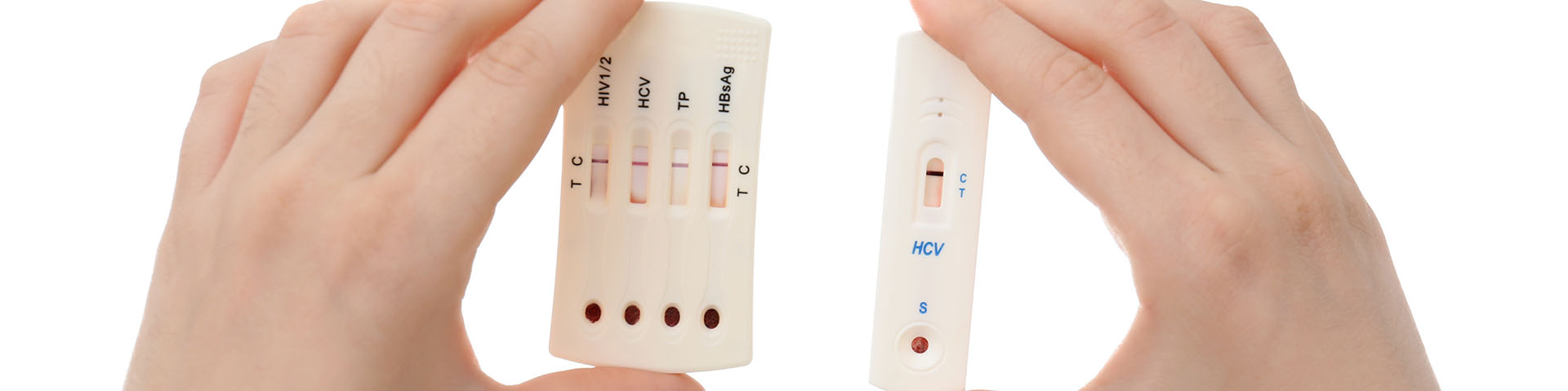



- At-home rapid lateral-flow STI test kits screen at home in about 15 minutes; any reactive result should be confirmed by a laboratory test before treatment begins.
- Pick a kit by matching exposure timing to the infection's window period, and matching the sample type (genital swab versus fingerstick blood) to what the infection actually requires.
Published: September 2025 | Last updated: May 2026 | Editorial review and quality control: Martina N.
Picking an at-home STD rapid test kit shouldn't require a medical degree. You're usually trying to answer one of three practical questions. Did a recent exposure leave me with something? Am I clear before a new partner? Has a quiet worry finally pushed me to check?
The right kit depends on which question you're asking, when you're asking it, and which sample type your situation calls for. Bacterial infections like chlamydia and gonorrhea are detected from a self-collected genital swab. Blood-borne infections like HIV, syphilis, hepatitis B, and hepatitis C are detected from a fingerstick blood drop. Herpes type-specific antibody tests need a fingerstick too. Each has a different window period after exposure when the test becomes reliable.
This guide walks through the practical decisions: which infections show up on rapid lateral-flow chemistry, when each becomes detectable after exposure, what a swab versus a fingerstick actually involves, and how to read a product page so you don't end up with the wrong tool. Information here synthesizes current at-home testing and screening guidance from the CDC, the WHO, and the NHS, with honest notes on what at-home rapid kits do well and where laboratory testing is the better fit.
When at-home STD testing makes sense
Most adults will need an STI test at some point. The reasons cluster into a handful of patterns, and a rapid at-home kit fits most of them well.
Routine screening if you're sexually active. The CDC recommends regular screening for sexually active people, with frequency depending on your risk profile (CDC STI information and screening guidance). Annual chlamydia and gonorrhea screening is standard guidance for sexually active women under 25 and for any sexually active person with new or multiple partners. HIV testing at least once is recommended for everyone aged 13 to 64.
After a new partner. The most common reason people order an at-home kit. Test before your first sexual contact with a new partner whenever possible; if you're already past that point, test after the relevant window period has passed.
After a known or suspected exposure. Common scenarios include a partner disclosing a recent diagnosis, a condom failure, or unplanned unprotected contact during a casual encounter. Each scenario points to a specific testing schedule based on the suspected infection.
During pregnancy. Routine prenatal screening covers HIV, syphilis, and hepatitis B at the first prenatal visit, with chlamydia and gonorrhea screening for those under 25 or with risk factors. An at-home rapid test can fill the gap between prenatal appointments if a new exposure happens mid-pregnancy.
Symptoms that prompt the question. Unusual discharge, genital itching or burning, sores, or pelvic pain. A test helps narrow the picture before a clinic visit.
Higher-frequency screening for higher-risk situations. Men who have sex with men, people in non-monogamous relationships, people who share injection equipment, people living with HIV, and sex workers should screen more often. The CDC recommends quarterly screening for some of these groups.
Most orders fall into the first three categories. Most readers landing on a page like this after a possible exposure don't have anything; they want a fast answer that lets them stop worrying or, if needed, start treatment.
- Everyone aged 13 to 64: at least one HIV test in your lifetime.
- Sexually active women under 25: annual chlamydia and gonorrhea screening.
- Anyone with new or multiple partners: annual chlamydia, gonorrhea, and HIV screening.
- Men who have sex with men, people who share injection equipment, sex workers: screen quarterly for chlamydia, gonorrhea, syphilis, and HIV.
- Pregnant people: HIV, syphilis, and hepatitis B at the first prenatal visit; add chlamydia and gonorrhea if under 25 or with risk factors.
Which STIs you can actually test for at home
Rapid at-home test kits exist for the most common bacterial and viral sexually transmitted infections. The list below covers what's available on stdrapidtestkits.com using lateral-flow rapid chemistry. A few infections (mycoplasma genitalium, lymphogranuloma venereum, throat-only or rectal-only infections) require laboratory NAAT testing and aren't covered by rapid at-home kits.
Chlamydia. The most commonly reported bacterial STI in the United States (CDC chlamydia information). Often asymptomatic, especially in women, where untreated infection can lead to pelvic inflammatory disease and tubal-factor infertility. A self-collected vaginal or penile swab on a rapid lateral-flow cassette gives a result in about 15 minutes. Treated with a short course of antibiotics prescribed by a clinician.
Gonorrhea. The second most reported bacterial STI, frequently co-infecting with chlamydia. The same swab-based rapid format applies. Antibiotic-resistant gonorrhea is a growing concern; current treatment uses an injectable antibiotic recommended by the CDC (CDC gonorrhea information).
Syphilis. A bacterial infection (Treponema pallidum) the CDC describes in four stages: primary, secondary, latent, and tertiary. Untreated syphilis can damage the heart, brain, and other organs over years to decades. Rapid at-home testing uses fingerstick blood on a lateral-flow cassette to detect treponemal antibodies. Treatable with antibiotics prescribed through a clinician (CDC syphilis information).
HIV. A viral infection that, untreated, progresses to AIDS. With early antiretroviral therapy, life expectancy approaches that of the general population, and viral suppression eliminates the risk of sexual transmission (the U=U principle). Rapid at-home HIV tests use fingerstick blood antibody chemistry (CDC HIV testing information).
Hepatitis B. A viral liver infection that can become chronic and lead to cirrhosis or liver cancer. Highly preventable with vaccination. Rapid at-home testing uses fingerstick blood to detect hepatitis B surface antigen (HBsAg), the marker of active infection (CDC viral hepatitis information).
Hepatitis C. A viral liver infection now curable in over 95% of cases with direct-acting antiviral therapy. Rapid at-home testing detects anti-HCV antibodies via fingerstick blood (CDC viral hepatitis information).
Herpes simplex virus type 2 (HSV-2). The virus most often responsible for genital herpes, transmitted through skin-to-skin contact in the genital area, including during asymptomatic viral shedding. Rapid at-home testing uses fingerstick blood to detect type-specific HSV-2 antibodies. The rapid antibody test confirms past or established infection, not an active outbreak; PCR swabbing of an active lesion is a clinic procedure used to diagnose a current sore.
Herpes simplex virus type 1 (HSV-1). Historically associated with oral cold sores, HSV-1 is increasingly the cause of genital herpes too, particularly in younger adults exposed through oral-genital contact. The at-home format is the same fingerstick blood antibody test, and the same caveat applies: the antibody assay tells you whether your immune system has seen HSV-1, not whether a sore in front of you is active herpes.
Trichomoniasis and HPV (women only). Self-collected vaginal swab kits for these two infections are available on stdrapidtestkits.com but are validated for female anatomy only. Male readers needing a trich or HPV test should see a clinic.
| Infection | Sample type | Window period (rapid at-home) | Confirmation needed? |
|---|---|---|---|
| Chlamydia | Self-collected swab | 1 to 2 weeks | Yes, lab NAAT before treatment |
| Gonorrhea | Self-collected swab | 1 to 2 weeks | Yes, lab NAAT before treatment |
| Syphilis | Fingerstick blood | 3 weeks to 3 months | Yes, lab treponemal panel |
| HIV | Fingerstick blood | 23 to 90 days | Yes, lab antigen-antibody plus RNA |
| Hepatitis B | Fingerstick blood | 4 to 10 weeks | Yes, lab HBsAg confirmation |
| Hepatitis C | Fingerstick blood | 8 to 11 weeks | Yes, HCV RNA confirmation |
| HSV-1 / HSV-2 | Fingerstick blood | 6 to 16 weeks (most by 12) | Recommended; lesion PCR if active |
| Trichomoniasis (women) | Self-collected swab | About 1 week | Yes, clinician confirmation |
| HPV (women) | Self-collected swab | Variable | Pap and HPV NAAT at clinic |
Sample types: swab versus fingerstick blood
Two collection methods cover almost all at-home rapid STI testing. Picking the wrong test for the wrong sample type is the single most common avoidable mistake when buying online.
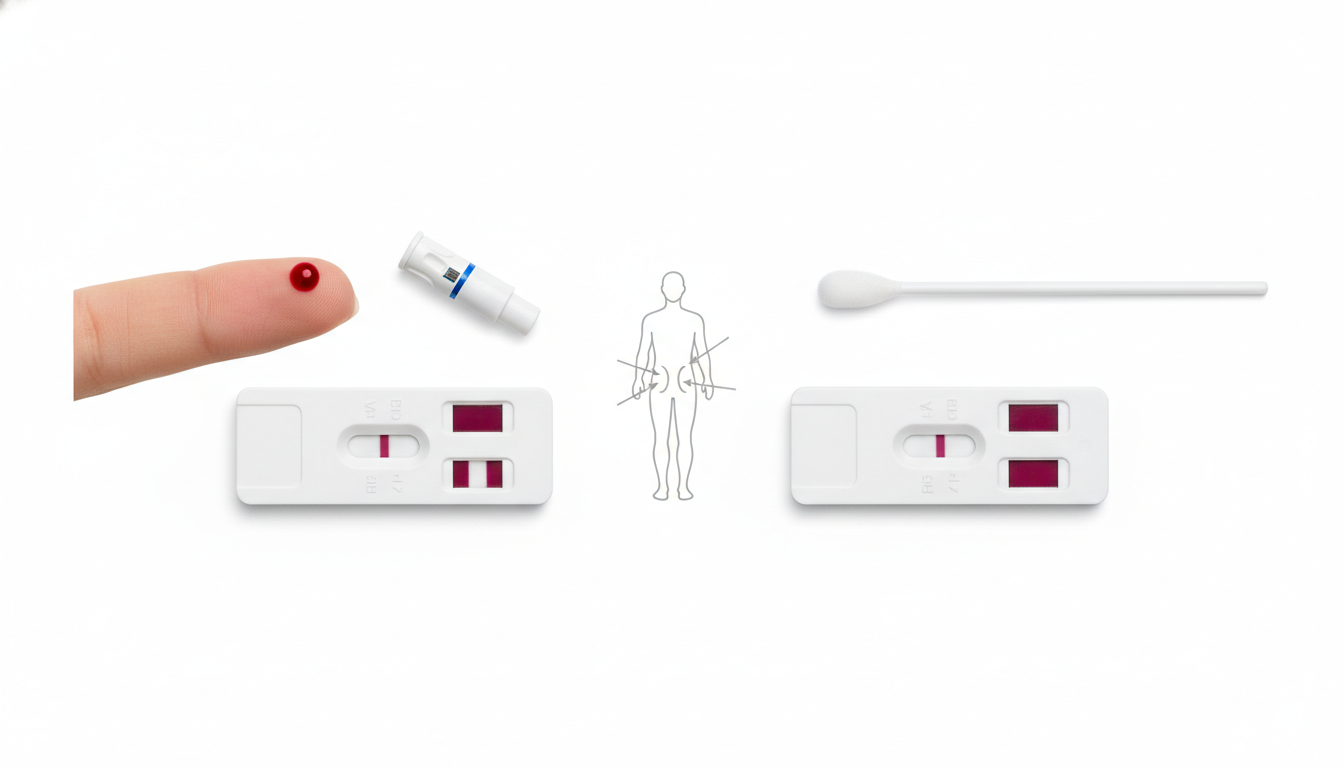
Self-collected genital swab. A small sterile cotton swab (similar to a long Q-tip) collects cells from the vaginal canal in women or from inside the urethral opening in men. The swab tip is then placed into a buffer tube; a few drops of the buffer go onto a lateral-flow cassette window. Used for chlamydia, gonorrhea, trichomoniasis, and HPV. Painless or mildly uncomfortable; takes a couple of minutes.
Fingerstick blood. A single-use sterile lancet pricks the side of a fingertip; one or two drops of blood are collected into a small pipette and applied to the cassette window, followed by buffer. Used for HIV, syphilis, hepatitis B, hepatitis C, and herpes (HSV-1 and HSV-2). The needle is shorter and finer than a vaccination needle; most people describe it as a brief sting.
What at-home rapid kits do NOT use is mail-in lab processing. The lateral-flow cassette IS the test. You collect, apply, wait roughly 15 minutes, and read the result line on the strip yourself. There's no envelope to ship back, no waiting for laboratory turnaround. This is the key difference between rapid lateral-flow tests and the mail-in NAAT services some other companies sell; both are legitimate, but the experience and timing are very different.
Rectal and pharyngeal (throat) swab tests for chlamydia and gonorrhea are not part of the at-home rapid product line. Those samples need laboratory NAAT processing and are best done at a clinic that can process the specific swab type. If your exposure was specifically oral or anal sex and you want a site-specific test, see a sexual-health clinic.
Window periods: when each test becomes reliable
The window period is the gap between exposure and when a test can detect the infection. Test too early and you can get a false-negative result while you're actually infected. Window periods differ by infection because the body produces detectable markers (bacterial antigens, viral antigens, antibodies) on different timelines.
Conservative ranges for at-home rapid lateral-flow tests, drawn from CDC guidance:
- Chlamydia and gonorrhea swab: 1 to 2 weeks after exposure. Testing earlier than 7 days post-exposure may miss low-bacterial-load early infection.
- HIV (rapid antibody, fingerstick): 23 to 90 days after exposure per CDC HIV testing guidance. A non-reactive test at 90 days post-exposure is conclusive for ruling out HIV. If your exposure was less than 23 days ago, the rapid antibody test cannot rule out infection yet; clinic-based 4th-generation antigen-antibody testing closes the window earlier (about 18 to 45 days).
- Syphilis: roughly 3 weeks to 3 months. Treponemal antibodies typically appear about 3 weeks after exposure but may take longer in some cases.
- Hepatitis B (HBsAg): roughly 4 to 10 weeks after exposure for surface antigen detection.
- Hepatitis C (anti-HCV antibody): 8 to 11 weeks for most people, with conclusive ruling-out at around 6 months. Earlier detection requires a NAAT (HCV RNA) lab test.
- Herpes (HSV-1 / HSV-2 antibody): roughly 6 to 16 weeks, with most people seroconverting by 12 weeks per CDC genital herpes information. Laboratory serology can sometimes detect antibodies on the earlier end of that range; at-home lateral-flow assays generally read most reliably from 12 weeks on, with some kits recommending up to 16 weeks for full seroconversion. Antibody tests are not the right tool for diagnosing an active outbreak; clinic swab PCR of an actual lesion is.
If you test before the relevant window has passed, a non-reactive result doesn't rule out infection. Either wait, or repeat the test once the window closes.

Accuracy: what "99%" actually means
Most rapid at-home STI tests on the market report sensitivity and specificity figures in the mid-to-high 90s when used after the correct window period. Two terms matter here.
Sensitivity is the true-positive rate: of people who have the infection, what fraction does the test correctly flag as positive? A 95% sensitivity means 5 out of every 100 infected people would get a false-negative result.
Specificity is the true-negative rate: of people who don't have the infection, what fraction does the test correctly flag as negative? A 99% specificity means 1 out of every 100 uninfected people would get a false-positive result.
For YMYL screening contexts like sexual health, both numbers matter. A test with high sensitivity but lower specificity will produce more false alarms; a test with high specificity but lower sensitivity will miss more real cases. Lateral-flow rapid tests, including the kits sold here, are screening tools. They're designed to be sensitive enough to flag likely infections, with the understanding that any reactive result is confirmed by a laboratory NAAT or treponemal test before treatment begins.
Laboratory NAAT (Nucleic Acid Amplification Test) for chlamydia and gonorrhea is considered the screening gold standard by the CDC and reaches sensitivities above 95% and specificities above 98% in published validation data (CDC chlamydia information). Those figures reflect laboratory testing, not the at-home rapid format. The at-home rapid lateral-flow test is a different technology with different performance characteristics; it shouldn't be marketed as "NAAT-equivalent" because it isn't. The honest description is that the lateral-flow cassette is a fast, private, low-cost screen that flags most positives and almost all negatives, with a recommendation to confirm any reactive result through a clinic.
Always check the specific product page for the kit you're buying; sensitivity and specificity figures vary by manufacturer and infection.
This article is published by stdrapidtestkits.com, which sells at-home STI testing kits. We recommend products based on fit-for-purpose for the reader's concern, not commercial benefit.
Choosing single-infection versus combination kits
Once you know which infections to test for and the window period for each, the next decision is whether to buy single-infection kits one at a time or a combination kit covering several at once.
Pick a single-infection kit when:
- You have a specific concern after a known exposure (your partner just disclosed a chlamydia diagnosis; you broke a condom with someone whose status you don't know).
- You're in a recurring testing pattern for one infection (annual chlamydia screen; quarterly HIV check).
- You want to keep one type on hand at home for repeat use.
Pick a combination kit when:
- This is your first comprehensive screen and you don't have a specific suspected exposure.
- You're starting a new relationship and want a clean baseline across the most common infections before going condom-free.
- You're past the window period for several infections at once and want to clear them in one sitting rather than ordering separate kits.
The 7-in-1 combination kit covers the seven most prevalent screenable infections in a single shipment: chlamydia, gonorrhea, syphilis, hepatitis B, hepatitis C, HIV, and HSV-2. The 8-in-1 expands coverage and is validated for both men and women. The 10-in-1 (women only) extends to trichomoniasis and HPV, neither of which currently has a male-compatible at-home test on the market.
Combination kits are typically a better cost-per-test than buying each component separately, especially when several of the included infections share similar window periods so you can run them at the same sitting.

Privacy, packaging, and what arrives at your door
Discreet packaging is one of the main reasons people choose at-home over clinic testing. Reputable at-home STI test retailers ship in plain outer packaging with no clinical or sexual-health branding visible on the exterior. Return addresses are generic; the parcel looks like any other mail-order item.
Inside, a typical kit contains the components needed to collect the sample, run the lateral-flow cassette, and dispose of used items safely. No clinical waste pickup is required; the used cassette and lancet can go in the household trash inside the disposal bag.
Order records are maintained for transactional purposes only. The kit doesn't transmit your result anywhere; you read the line on the strip yourself in your bathroom. There's no clinic visit on your medical record, no insurance billing, no clinic intake form. For people who live in small communities, who share a doctor with family members, or who simply don't want a sexual-health visit appearing on their charts, the privacy difference is the deciding factor.
- Sealed pouch containing the lateral-flow test cassette.
- Sample collection tool: sterile single-use lancet plus pipette (blood tests) or sealed sterile swab (swab tests).
- Small bottle or vial of buffer solution.
- Printed step-by-step instructions with timing diagram.
- Sealable disposal bag for used components.
After a positive result: what to do next
A reactive (positive) line on a rapid at-home test means the test detected the marker for that infection. The right next step depends on which infection it was.
Bacterial infection (chlamydia, gonorrhea, syphilis). See a clinician or telehealth provider promptly. They will typically retest with a laboratory NAAT (chlamydia and gonorrhea) or treponemal antibody panel (syphilis) to confirm the result and rule out laboratory error. Treatment is a short course of antibiotics prescribed by the clinician, and most cases clear with a single course. Notify recent partners so they can also test and treat if needed.
HIV. See an HIV-experienced clinician within days. Confirmation testing (4th-generation antigen-antibody plus viral RNA quantification) establishes the diagnosis and stages it. Antiretroviral therapy can begin almost immediately. With consistent treatment, viral suppression is typically achieved within a few months, life expectancy approaches normal, and sexual transmission risk drops to effectively zero (the U=U principle, per CDC HIV testing information).
Hepatitis B or C. See a clinician for confirmatory testing. For hepatitis B, a positive HBsAg test indicates active infection; chronic infection is monitored over years and may require antiviral treatment. Hepatitis C is now curable in over 95% of cases with 8 to 12 weeks of direct-acting antivirals.
Herpes. A positive antibody test indicates established HSV infection. Suppressive antivirals are an option for frequent outbreaks, and a clinician can help weigh that against transmission counseling, condom use, and conversations with current and future partners.
- Bacterial STI: see a clinician within the same week for confirmation and antibiotics.
- HIV: see an HIV-experienced clinician within days for confirmation and to start antiretroviral therapy.
- Hepatitis B or C: clinician confirmation; both have effective treatment options.
- Herpes antibody: discuss suppressive antiviral options if outbreaks are frequent; otherwise focus on transmission counseling.
When at-home testing isn't the right fit
Rapid at-home tests serve most adult screening contexts well. A few situations need a clinic visit instead.
| Situation | Why a clinic is the right starting point |
|---|---|
| Active sores, severe pelvic pain, abnormal bleeding, or skin lesions | Need an in-person physical examination; a test result alone can't replace clinical evaluation of an active lesion. |
| Suspected pharyngeal (throat) or rectal infection | Site-specific NAAT swabs for chlamydia and gonorrhea require laboratory processing; genital-only at-home swabs miss extragenital infections. |
| Exposure within the window period | Antibody-based rapid tests cannot rule out infection until the window has passed; 4th-generation antigen-antibody clinic testing closes the HIV window roughly 25 days earlier. |
| Pregnancy | Routine prenatal panels offer comprehensive screening as part of standard care; at-home testing supplements rather than replaces. |
| Sexual assault or recent high-risk exposure | Post-exposure prophylaxis (PEP) for HIV must start within 72 hours; emergency contraception, hepatitis B PEP, and STI prophylactic antibiotics may apply. Go to urgent-care or an emergency room. |
| Children, infants, or anyone unable to follow kit instructions | Rapid at-home kits are validated for adult self-collection; pediatric STI testing requires clinical evaluation. |
How to buy from stdrapidtestkits.com
Ordering an at-home STD rapid test kit online involves three practical decisions: which test or combination, what shipping speed, and whether you want recurring testing.
1. Pick the kit. Use the catalog search or the comparison sections above to match exposure timing, suspected infection, and sample type to a specific kit. Single-infection options run from about $25 to $50 each; combination kits (3-in-1 through 10-in-1) sit in the $80 to $200 range. Each product page lists what's in the kit, the validated sensitivity and specificity figures for that specific cassette, and the recommended testing window.
2. Add to cart and check out. No prescription is required for at-home rapid STI tests in the United States. Standard credit card and digital wallet checkout. The order is itemized on the receipt only by the company name; the specific product is not named on the bank or credit-card statement, just on the receipt that's emailed to you.
3. Receive in discreet packaging. Standard shipping covers most U.S. addresses in 3 to 5 business days. The outer parcel is plain. Once it arrives, you can use the kit at any convenient time at home; no appointment, no clinic, no waiting room.
For repeat testing patterns (such as quarterly HIV screening), reorder when needed; current at-home test kits don't yet offer subscription pricing, but bulk orders for multiple kits do come with combined-shipping discounts.
If you already know what fits your situation, go straight to the matching product page; if you're not sure, the 7-in-1 banner above covers the most common comprehensive baseline and is a defensible first-time purchase for most adults.
Frequently asked questions
- How is a rapid at-home test different from a mail-in lab kit?
- Rapid at-home tests deliver a result in about 15 minutes from the lateral-flow cassette in your hand; nothing gets mailed back. Mail-in lab kits collect a sample at home, then ship it to a laboratory for NAAT processing; results come back in days to a week through a secure portal. Both are legitimate; rapid kits prioritize speed and privacy, mail-in kits prioritize laboratory-grade analytical sensitivity.
- How accurate are at-home rapid STI tests?
- Reputable rapid lateral-flow STI tests typically report sensitivity in the mid-to-high 90s and specificity above 99% when used after the correct window period (per the validation data on individual product pages). Performance varies by infection and kit; check the specific product specs. Any reactive result should be confirmed by a clinician with a laboratory test before treatment begins.
- How long after exposure should I wait to test?
- For chlamydia and gonorrhea swabs, 14 days is the practical window. For HIV antibody, 90 days is the conclusive non-reactive point (clinic 4th-generation testing closes that gap to about 18 to 45 days). Other waits in brief: syphilis 3 weeks to 3 months; hepatitis B 4 to 10 weeks; hepatitis C 8 to 11 weeks (definitive at 6 months); herpes antibody roughly 6 to 16 weeks with most seroconversion complete by 12 weeks.
- Will the package or my credit-card statement reveal what I bought?
- Outer packaging is plain and unbranded. Statements show the company name, not the product name. Itemized receipts are sent to your email only.
- Do I need a prescription?
- No. At-home STI rapid test kits are available without a prescription in the United States.
- What if my result is positive?
- See a clinician within days for confirmatory testing and treatment. Bacterial infections (chlamydia, gonorrhea, syphilis) are typically treated with a single course of antibiotics. HIV is treated with antiretroviral therapy. Hepatitis B or C results are confirmed and managed by a clinician familiar with viral hepatitis. A positive at-home result is a screen, not a final diagnosis.
- Can men and women both use these kits?
- Most kits are validated for any-gender use, including chlamydia and gonorrhea swabs (vaginal swab for women, penile swab for men) and all blood-based tests. Trichomoniasis and HPV swab kits on this site are validated for vaginal self-collection only; male readers needing those tests should see a clinic.
- How long does shipping take?
- Standard shipping reaches most U.S. addresses in 3 to 5 business days. Expedited options are typically available at checkout. International shipping varies by destination.
- U.S. Centers for Disease Control and Prevention. Sexually transmitted infections topic hub, including screening guidance, infection profiles, and at-home testing context.
- U.S. Centers for Disease Control and Prevention. HIV testing window periods, test types (rapid antibody, 4th-generation antigen-antibody, NAAT), and self-testing guidance.
- U.S. Centers for Disease Control and Prevention. Chlamydia infection background, complications, and treatment context.
- U.S. Centers for Disease Control and Prevention. Syphilis information including the four clinical stages (primary, secondary, latent, tertiary), transmission, and treatment.
- U.S. Centers for Disease Control and Prevention. Genital herpes information including HSV-1/HSV-2 antibody testing and seroconversion timelines.
- U.S. Centers for Disease Control and Prevention. Viral hepatitis hub covering hepatitis B and hepatitis C testing markers, treatment availability, and prevention.
- World Health Organization. Sexually transmitted infections fact sheet covering global burden, screening overview, and testing principles.
- National Health Service. STI testing services and result interpretation guidance for the general public.