
Published: August 2025 | Last updated: May 2026 | Editorial review and quality control: Martina N.
Many sexually transmitted infections in men progress through the body without sending up obvious warning signs. Chlamydia stays quiet in roughly half of the men who carry it, gonorrhea hides itself in a sizeable share of cases, and most HPV infections never produce anything visible. The U.S. CDC's STI program identifies asymptomatic infection as one of the main reasons these conditions keep spreading worldwide, even among people who are otherwise healthy and careful.
That fact sounds alarming, but it does not need to be. Most infections that go undetected are simple to treat once they are found, and many at-home and clinic-based test options exist for people who want answers without a long appointment. This guide explains which infections tend to stay silent in men, what subtle signs are worth paying attention to, and when a quick screening test is genuinely useful, all without turning a healthy precaution into an anxious obsession.
Key Takeaways
- Chlamydia, gonorrhea, HPV, HIV, and early syphilis frequently produce few or no symptoms in men, yet can still be transmitted to partners and quietly damage reproductive health.
- Routine screening, not waiting for symptoms, is how most silent infections are caught; annual testing for sexually active people is standard public-health guidance from the CDC and WHO.
The Quiet Reality of Asymptomatic STIs in Men
The popular assumption that the body always warns you about an infection does not match what clinicians actually see. Male anatomy hides certain infections surprisingly well. The urethra and reproductive tract do not always produce the discharge, irritation, or visible changes that prompt a clinic visit, so the infection sits quietly for weeks or months. Public-health agencies have a specific term for this pattern: asymptomatic infection, meaning the pathogen is present and active but producing few or no detectable symptoms.
This is not a fringe situation. The World Health Organization estimates that more than one million curable STIs are acquired around the world every day among people aged 15 to 49, and the majority of those infections are asymptomatic. Public-health guidance for sexually active adults is increasingly built around that statistic, because waiting for symptoms misses too many cases for screening to be reactive.
An asymptomatic infection is still doing the same things a symptomatic one does. The pathogen continues to multiply, remains transmissible to a partner, and in some cases keeps damaging tissue in the background while life continues normally. Silence is about what the body is reporting, not about what is happening inside it.
More than one million curable sexually transmitted infections are acquired globally every day among people aged 15 to 49, and most produce no symptoms. (<a href="https://www.who.int/news-room/fact-sheets/detail/sexually-transmitted-infections-(stis)" target="_blank" rel="noopener">WHO Sexually Transmitted Infections fact sheet</a>.)
Which STIs Commonly Stay Silent in Men
Five infections account for the vast majority of silent presentations in men. The pattern across them is consistent: asymptomatic transmission is common, complications tend to develop slowly, and routine screening is the only reliable way to catch them before damage occurs.
None of these conditions are rare. Chlamydia and gonorrhea remain two of the most commonly reported bacterial STIs worldwide, and HPV is even more widespread, with most sexually active people exposed to at least one strain at some point in their lives.
| Infection | How often symptoms are missing in men | Potential long-term risks |
|---|---|---|
| Chlamydia | Most infected men report few or no symptoms | Epididymitis, infertility, chronic pelvic discomfort |
| HPV | Often produces no visible signs at all | Genital warts, oropharyngeal cancer, penile and anal cancers |
| HIV | Early-stage symptoms may resemble a mild flu or be absent | Progressive immune-system damage if untreated |
| Syphilis | Early painless sore may go unnoticed | Neurological and cardiovascular complications in later stages |
| Gonorrhea | Some men experience minimal or no symptoms | Epididymitis, infertility, disseminated infection in rare cases |
Why Male Anatomy Hides Infection So Effectively
Several anatomical and biological factors combine to make silent infections particularly common in men. The male urethra is short and lined with tissue that does not always react to bacterial colonization with obvious inflammation. Some pathogens, including chlamydia and certain HPV strains, are specifically adapted to live in cells where they trigger only a mild immune response. The result is an infection that exists below the threshold a person can feel.
Behavioral factors also play a role. Symptoms that do occur are often mild enough to be misread. Faint burning during urination can be written off as dehydration after a workout. A passing testicular ache might be blamed on a long bike ride. A sore throat after oral sex is easy to mistake for a routine cold. These are reasonable interpretations, but they are also the exact pattern that allows infections to keep moving from one partner to the next.
Public-health guidance reflects this. The NHS STI guide and the CDC's STI program both recommend screening based on risk and exposure rather than symptoms alone. Annual testing for sexually active adults, and more frequent testing if you have new partners, is the standard baseline for that reason.

Subtle Clues Worth Paying Attention To
Even when infections are technically silent, the body sometimes produces small signals that are easy to dismiss because they do not feel serious. The challenge is recognizing them as worth checking rather than worth ignoring. None of the signs below mean an STI is definitely present, but each is a reasonable trigger to consider testing, especially if there was a recent new partner or possible exposure.
Clinicians who staff sexual health clinics regularly hear patients describe these symptoms after the fact, once a positive test has been returned. The most common comment is that the symptom seemed too mild to investigate at the time.
| Mild symptom | Why it tends to get dismissed | Possible STI cause |
|---|---|---|
| Mild burning when urinating | Often blamed on dehydration | Chlamydia, gonorrhea |
| Sore throat lasting more than a few days after oral sex | Mistaken for a normal cold or seasonal virus | Pharyngeal gonorrhea, syphilis |
| Occasional testicular discomfort | Attributed to exercise or muscle strain | Chlamydia, gonorrhea (early epididymitis) |
| Small painless sore that heals on its own | May disappear before it triggers concern | Primary syphilis |
| Fatigue with mild fever and body aches | Feels like a routine flu | Acute HIV infection |
What Happens When Silent Infections Go Untreated
Ignoring an infection does not make it disappear. In most cases, bacteria or viruses continue to multiply slowly in the body, and the longer they go untreated, the more opportunity they have to cause complications that are harder to reverse than the original infection.
Epididymitis is one of the complications clinicians most often warn about. It is a painful swelling of the tube that stores and transports sperm, and it is most commonly triggered by untreated chlamydia or gonorrhea, according to the CDC's STI program. In a smaller percentage of cases it leads to long-term effects on fertility.
Long-term viral infections raise different concerns. Certain high-risk HPV strains are associated with cancers of the throat, penis, and anus. These infections may sit silently for years before any tissue change appears, which is why screening and HPV vaccination (routine through age 26, with shared clinical decision-making through age 45) are part of standard preventive care. Untreated syphilis, although less common than chlamydia, can eventually progress to neurological and cardiovascular damage if it is missed at the early stage when treatment is simple.
The common theme is time. The longer an infection stays in the body without treatment, the more chances it has to cause harm and to be passed to a partner. Early detection generally means a shorter course of antibiotics, or for viral infections, an earlier start on effective long-term management.
More than 1 million curable sexually transmitted infections (STIs) are acquired every day worldwide in people 15 to 49 years old, the majority of which are asymptomatic.
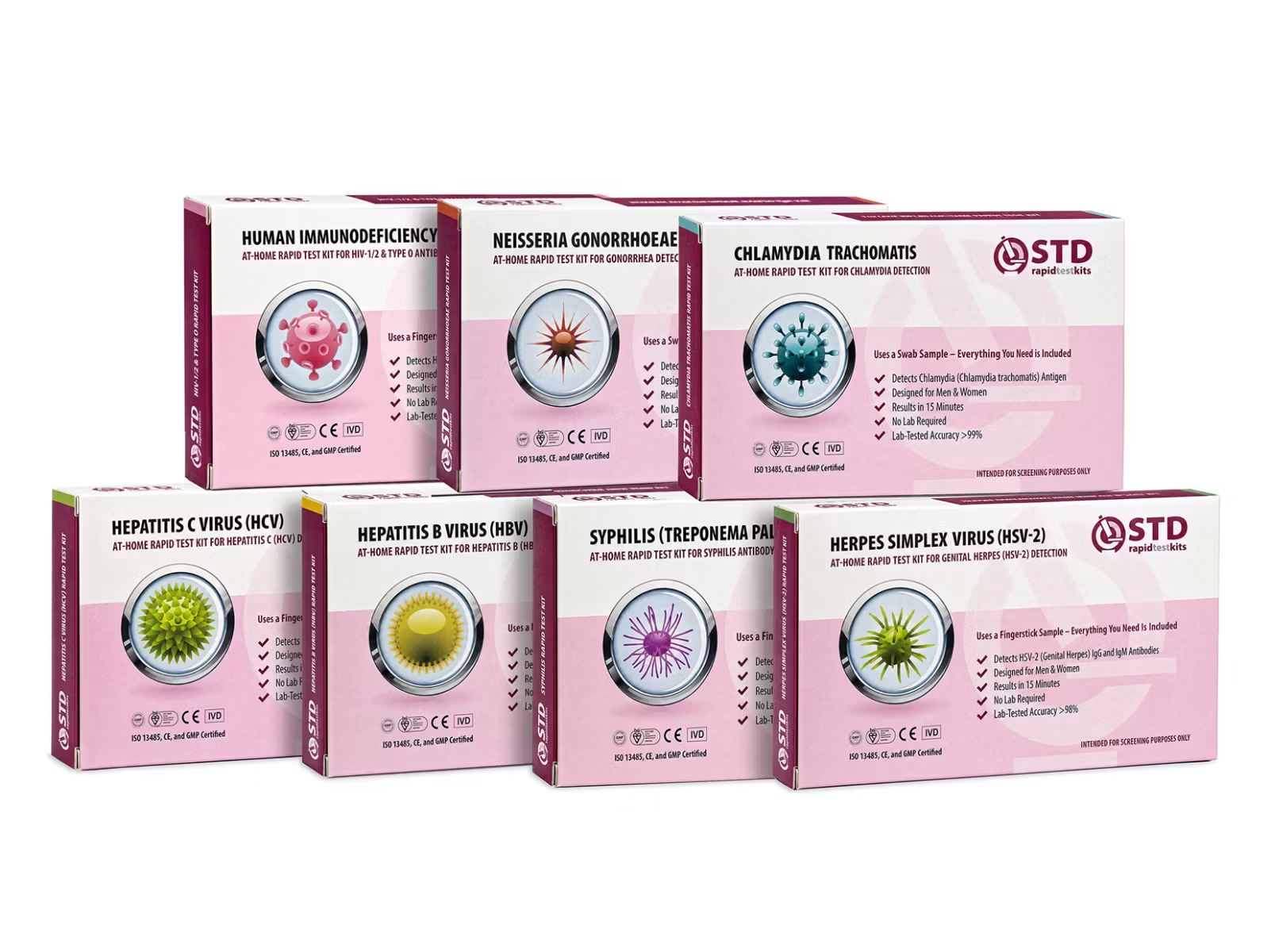
This site sells the at-home rapid tests featured below. We list them because they are relevant to the article's topic, not as a substitute for clinical advice. A clinician can help interpret any positive result and recommend confirmatory laboratory testing.
When Men Should Consider Testing Even Without Symptoms
Testing is not just for people who feel that something is wrong. Most screening guidelines are built around exposure risk, not discomfort, and clinicians frequently recommend testing for men who feel perfectly healthy. The reasoning is the same as for any other routine screening: it is easier to catch a problem early than to deal with it after it has progressed.
A few situations make routine STI testing particularly worth scheduling, listed below. A useful comparison some clinicians use is dental care. You do not wait for a tooth to fall out before seeing a dentist. Screening exists for the same reason, to catch issues before they become serious.
Situations that make testing worth scheduling
- A new sexual partner: even when both people feel healthy, asymptomatic infections may still be present.
- Unprotected sex: condoms reduce risk substantially but do not eliminate it, especially for infections like HPV and herpes that can spread through skin contact.
- A partner's recent diagnosis: if a current or recent partner tests positive, testing is recommended whether or not you have any symptoms.
- Annual routine screening: most health organizations encourage at least once-yearly testing for sexually active adults, with more frequent testing for people who have multiple or new partners.
The Window Period: Why Timing Matters
One concept that catches people off guard is the window period. This is the gap between exposure to an infection and the point at which a test can reliably detect it. Testing too soon can return a false negative because the body has not yet produced enough viral material or antibodies to be measurable.
The window period varies by infection. Bacterial STIs like chlamydia and gonorrhea become detectable within a couple of weeks. HIV detection depends on which generation of test is used; fourth-generation antigen-antibody lab tests typically detect infection within several weeks, while some rapid antibody tests have longer windows. Syphilis usually becomes detectable a few weeks after exposure, but the timing varies by stage. HPV does not have a fixed window the way bacterial infections do, since screening relies on cellular changes rather than antibody response.
Knowing the right time to test helps avoid the wasted effort of an early-and-inaccurate result. If you tested very soon after a possible exposure, a follow-up test outside the window is often a good idea, even when the first result was negative.
| Infection | Typical detection window after exposure | Notes |
|---|---|---|
| Chlamydia | About 1 to 2 weeks | Most accurate after 2 weeks; often completely asymptomatic |
| Gonorrhea | About 1 to 2 weeks | Symptoms, when present, are variable |
| Syphilis | About 3 to 6 weeks | Early painless sores may go unnoticed |
| HIV | Roughly 2 to 6 weeks for modern lab tests; longer for older rapid tests | Confirm with follow-up testing outside the window |
| HPV | Variable; relies on screening rather than a fixed window | Often detected only via Pap testing in women or visible signs |
Why Many Men Delay Testing, and How to Reframe It
Health researchers have spent years studying why people delay STI screening. The reasons are often very human. Many men assume they are low risk because they have only had one or two recent partners, or because their last test came back fine. Others associate testing with embarrassment, or worry about what a positive result would mean for an existing relationship.
Then there is the most common reason of all: nothing feels wrong. When the body is silent, it is easy to indefinitely postpone something that feels optional. That combination of subtle infections and indefinite postponement is a major reason silent STIs continue to circulate.
Reframing the decision can help. Most sexual-health clinicians treat testing as part of general adult health maintenance rather than as a reaction to a problem. People check their cholesterol or blood pressure without waiting for symptoms; the same logic applies here. Privacy concerns, which used to push many men away from clinic appointments, are also less of a barrier than they used to be, because at-home rapid tests can be ordered and run without involving anyone outside the household.
Sexual-health clinicians often frame routine STI testing the same way as an annual blood-pressure check: a baseline, not a reaction to a problem. Annual is the floor for sexually active adults; every three to six months is reasonable for people with new or multiple partners.
Testing Is Simpler Than Most Men Expect
Another reason testing gets postponed is the assumption that it is invasive, awkward, or time-consuming. Modern STI testing is none of those things for most infections. Depending on what is being screened, a test may involve:
- A small fingerstick blood sample (for HIV, syphilis, hepatitis B, hepatitis C, and herpes antibody tests)
- A self-collected swab (for chlamydia and gonorrhea)
- A urine sample at a clinic or mail-in lab (for chlamydia and gonorrhea in some collection protocols)
At-home rapid kits use lateral-flow technology, the same general approach as a home pregnancy test or a rapid COVID-19 test. They are not the same as the high-sensitivity NAAT (nucleic acid amplification) tests used by laboratories, but they are a useful screening tool, especially when the alternative is no test at all. A positive result on a rapid screen is a clear reason to follow up with a clinic for confirmatory testing and treatment.
For sexually active people who are weighing the time, cost, or privacy of a clinic visit, a home kit can remove most of the friction. The point of testing is awareness, not anxiety, and the fastest path to peace of mind is usually whichever option you will actually use.
Habits That Reduce the Risk of Silent Infections
Testing is the only way to confirm infection status, but several routine habits significantly lower the chance of acquiring or passing on an STI in the first place. None of these are a substitute for screening, and most public-health guidance recommends combining them.
Condom use during vaginal, anal, and oral sex remains one of the most effective ways to lower transmission risk for the bacterial STIs (chlamydia, gonorrhea, syphilis) and for HIV. Condoms reduce, but do not fully eliminate, the risk of skin-to-skin infections like HPV and herpes, since these can spread from areas not covered by a condom.
Vaccination matters for the infections where a vaccine exists. The HPV vaccine is recommended routinely through age 26, with shared clinical decision-making through age 45, and is an effective tool against the strains responsible for most HPV-related cancers. Hepatitis B vaccination is also recommended for adults who were not vaccinated in childhood.
Open conversations with partners are easier to recommend than to practice, but they reduce uncertainty more than any single test. A short conversation about when each person last tested, and what testing each would want before becoming sexually active together, heads off most surprises later.
Three protective habits worth combining
- Consistent condom use during vaginal, anal, and oral sex to lower transmission risk for bacterial STIs and HIV.
- HPV vaccination through age 26 (with shared clinical decision-making through age 45) and hepatitis B vaccination for adults who were not vaccinated in childhood.
- An honest conversation with new partners about when each of you last tested, before becoming sexually active together.
Clarity Replaces Guesswork
Silent infections create a particular kind of background uncertainty. Nothing hurts. Nothing obvious is wrong. And yet, something might still be there, quietly. That gray area is where many men spend more energy than they realize, second-guessing a faint symptom or a recent encounter that probably was not risky but might have been.
The goal of routine STI testing is not to panic over every minor twinge. It is to replace the gray area with an actual answer, so the question can stop occupying mental space. If a new partner, a missed condom, or a long stretch without screening is on your mind, a single round of testing can resolve weeks of low-level worry. And if a test catches an infection, finding it early is the single best predictor of how easy treatment will be.
Feeling fine does not mean everything is fine, and getting tested does not mean you assume the worst. The fastest path to peace of mind is usually whichever screening option you will actually use.
Frequently Asked Questions
- Can a man really have an STI and feel completely normal?
- Yes. Many infections like chlamydia and HPV can sit in the body without causing pain, discharge, or visible signs. The CDC and WHO both estimate that asymptomatic infections account for a large share of STI cases overall, which is why testing rather than symptom-watching is the recommended approach for sexually active adults.
- If an STI has no symptoms, is it actually doing any damage?
- Sometimes, yes. Some infections cause slow inflammation of reproductive tissues or progress to other body systems over time. Untreated chlamydia and gonorrhea, for example, can lead to epididymitis and in some cases fertility problems. The risk is not the same for every infection, but the longer something sits untreated, the more opportunity it has to cause harm.
- How do most men find out they have a silent STI?
- Usually through one of two paths: routine screening at an annual checkup or before a new relationship, or notification from a partner who tested positive. Clinics report the partner-notification scenario very often, because asymptomatic carriers usually have no other reason to test.
- Which STI is most likely to hide without symptoms in men?
- Chlamydia is one of the top offenders, with a large share of infected men reporting no symptoms at all. HPV is also frequently silent; most men who carry it never develop visible warts or any obvious sign of infection. Early HIV and primary syphilis can also pass unnoticed.
- If nothing hurts, why bother getting tested?
- An asymptomatic infection is still contagious. Partners can be exposed without either person knowing, which is the core reason routine screening exists rather than symptom-triggered testing. For the person carrying the infection, certain pathogens also continue to cause slow damage even without obvious symptoms, so early detection matters for treatment ease.
- How often should sexually active men get tested?
- Annual screening is a common baseline for sexually active adults. For people with new or multiple partners, testing every three to six months is often recommended. Specific frequency depends on individual risk, and a primary-care provider or sexual-health clinic can suggest a schedule tailored to your situation.
- Do at-home STI tests actually work?
- Home tests are real screening tools, but they are not all the same. Rapid lateral-flow home tests give a quick result and are useful for screening. Lab-based NAAT tests, whether at a clinic or via a mail-in sample, are more sensitive and considered the laboratory gold standard for several infections. A positive at-home result should be followed up with a clinic for confirmatory testing and treatment.
- What is the most common mistake men make with silent STIs?
- Testing too late. The assumption that the body will warn you when something is wrong does not hold up for several of the most common infections. The reliable approach is regular screening based on activity and exposure, rather than waiting for a symptom that may never arrive.
How we sourced this article: This article was written by summarizing current public-health guidance from the CDC, WHO, and NHS on sexually transmitted infections, with a particular focus on how many of those infections present in men. We cross-checked clinical information on chlamydia, gonorrhea, HPV, HIV, and syphilis against agency fact sheets and treatment guidelines. The goal is to translate the source material into plain English so readers can recognize subtle warning signs and decide for themselves when a screening test is worth scheduling.
- U.S. Centers for Disease Control and Prevention. STI program homepage, with overview pages and treatment guidelines for chlamydia, gonorrhea, syphilis, HPV, and HIV testing recommendations.
- U.S. Centers for Disease Control and Prevention. HIV program homepage, including information on early-stage symptoms, testing windows, and screening guidance for sexually active adults.
- World Health Organization. Sexually Transmitted Infections (STIs) fact sheet, including the global daily-incidence figure for curable STIs in people aged 15 to 49 and the asymptomatic-majority finding cited in the body of this article.
- UK National Health Service. Sexually transmitted infections (STIs) overview, including testing recommendations and symptom-recognition guidance for general audiences.
- U.S. National Library of Medicine. MedlinePlus Sexually Transmitted Infections topic page, covering general STI definitions, transmission routes, and screening basics.
