Can Shigella Be Sexually Transmitted? Symptoms and Testing
Shigella is best known as a stomach bug from daycare centers and travel, but it also spreads between sexual partners. This guide covers the symptoms, how soon they appear, how they differ from rectal STIs, why only a stool test can confirm the infection, and why drug-resistant strains have changed what clinicians need to know about you.
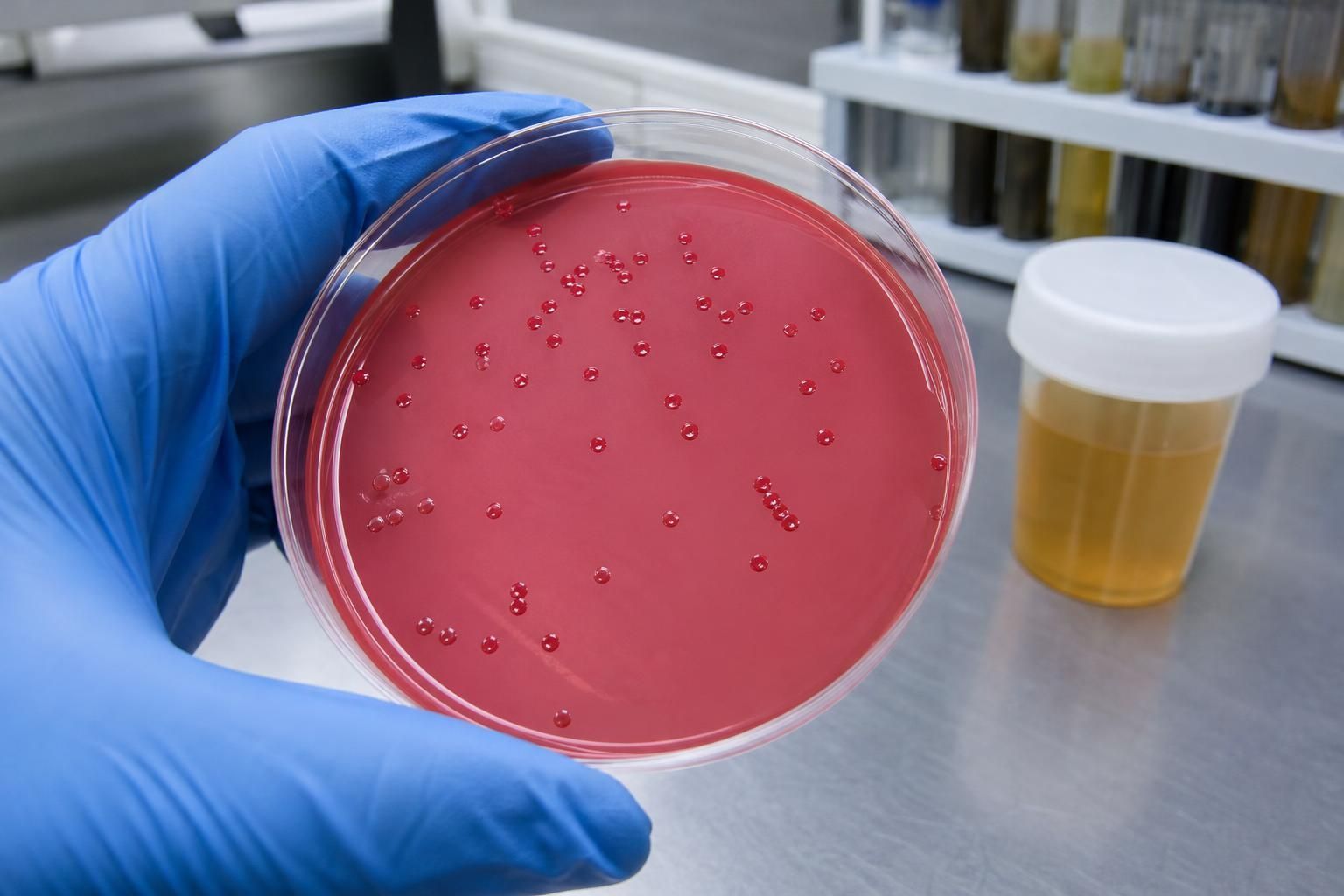



- Shigella spreads during sex when even a trace of stool reaches the mouth, and it typically causes bloody or prolonged diarrhea, fever and cramps, usually within a day or two, sometimes up to a week.
- A stool test is the only way to confirm it, and because drug-resistant strains became more common between 2015 and 2022, a culture that shows which antibiotics still work matters more than it used to.
Published: October 2026 | Last updated: October 2026 | Editorial review and quality control: Martina N.
Can you get Shigella from sex?
Yes. Shigella passes when traces of stool reach a partner's mouth, such as from oral-anal contact or fingers. Symptoms usually start 1 to 2 days after exposure, sometimes up to a week: diarrhea that may be bloody, fever, stomach pain and a constant urge to pass stool. Only a clinic stool test confirms it. Home STI kits do not detect it.
Shigella is a gut bacterium, and most people catch it from contaminated food, water or hands. Sex is a well-documented route too. The CDC states that Shigella can spread during sexual activity with a sick person, and that swallowing just a small amount of the germ can make you sick.
Our guide to fecal-oral infections and pooping during sex covers the general mechanics of stool exposure during sex. This article is narrower. It covers Shigella itself: what the illness feels like and when it starts, how to tell it apart from a rectal STI, which test actually finds it, and why the answer to "which antibiotic?" has become harder.
That last point is why Shigella is back in the news. On October 16, 2026, the journal Sexually Transmitted Infections published a genomic study of an extensively drug-resistant Shigella sonnei strain carrying the resistance gene blaCTX-M-15. The strain caused a sexually transmitted infection in a man who has sex with men in Spain.
How Shigella moves between sexual partners
The route is fecal-oral. The CDC's page on how Shigella spreads describes germs passing "from the poop or soiled fingers of one person to the mouth of another person," and names contact with stool during sex with someone who has or recently had diarrhea as a risk. The CDC's STI treatment guidelines add that oral-anal contact, and in some cases direct genital-anal contact, can transmit enteric (gut) pathogens. The NHS likewise lists oral or anal sex with a person with dysentery, its term for bloody diarrhea caused by an infection, as a way the illness spreads. If you want the broader picture of rimming, fingering and other stool-exposure practices, our article on whether sex involving feces can transmit STIs goes through them one by one.
The CDC's point above, that a small amount is enough to make you sick, is what sets Shigella apart. A trace of stool too small to notice, carried on a finger or a toy, can be enough.
Gay, bisexual and other men who have sex with men (often shortened to GBMSM or MSM) have higher rates of Shigella infection, according to CDC. The CDC's clinical overview of shigellosis lists this group among at-risk populations alongside young children, international travelers, people experiencing homelessness and people with weakened immune systems.
Although rates are higher among GBMSM, the risk is present for any sexual activity involving stool exposure.
What Shigella infection feels like, and when it starts
Shigella works fast. The CDC says symptoms usually start 1 to 2 days after infection and last about 7 days. MedlinePlus, the National Library of Medicine's consumer reference, gives a wider range: about 1 to 7 days after contact, with an average of 3. Taken together, diarrhea that starts a day or two after a sexual encounter fits Shigella's timeline. So does diarrhea that starts several days later.
The signature symptom is diarrhea that is bloody or prolonged, which the CDC defines as lasting more than 3 days. Many people also feel tenesmus, the clinical term for the urge to pass stool even when the bowel is already empty. Stools are often small in volume. The CDC's clinical overview notes that severe dehydration is rare, though it can still happen, especially with vomiting.
None of these symptoms is unique to Shigella, so the checklist below is a reason to get a stool test, not a way to diagnose yourself.
Symptoms of Shigella Infection
These symptoms overlap with other gut infections and some rectal STIs. Only a stool test confirms Shigella.
- Diarrhea that is watery, bloody or lasts more than 3 days Common
- Fever Common
- Stomach pain or cramping Common
- Feeling the need to pass stool when the bowels are empty (tenesmus) Common
- Mucus or pus in the stool, or crampy rectal pain Less common
- Nausea and vomiting Less common
- Joint pain and swelling after the gut symptoms (reactive arthritis) Rare
Is it Shigella or a rectal STI?
After anal or oral-anal sex, gut and rectal symptoms can come from two quite different groups of infections. One is the classic STI group that inflames the rectum: gonorrhea, chlamydia (including the LGV strains), syphilis and herpes. The other is the enteric group that infects the bowel through the mouth, which includes Shigella, Campylobacter, Salmonella and parasites such as Entamoeba histolytica.
The CDC's STI treatment guidelines sort these by where the inflammation sits. Proctitis is inflammation of the last 10 to 12 cm of the rectum, with anorectal pain, tenesmus or discharge. Proctocolitis adds diarrhea or cramps because the inflammation extends further up the colon. Enteritis is diarrhea and cramping without the rectal signs. Shigella can cause either of the last two. Rectal gonorrhea and chlamydia, by contrast, often cause no symptoms at all, a point our article on anal STDs with no symptoms covers in detail.
In practice, diarrhea with fever fits an enteric infection such as Shigella better, and rectal discharge without much diarrhea fits a classic STI better, but symptoms alone cannot separate them. The two can also occur together after the same encounter, which is why a clinician may order a stool test and rectal STI swabs at the same visit. Our guide to rectal STD testing and when you need a swab explains how those rectal tests work.
Proctitis, Proctocolitis and Enteritis After Sex
| Feature | Proctitis | Proctocolitis | Enteritis |
|---|---|---|---|
| Where the inflammation sits | Lower rectum only | Rectum and colon above it | Small or large bowel, rectum spared |
| Main symptoms | Anorectal pain, tenesmus, rectal discharge | Proctitis symptoms plus diarrhea or cramps | Diarrhea and cramping without rectal signs |
| Typical causes | Gonorrhea, chlamydia, syphilis, herpes | Shigella, Campylobacter, E. histolytica, LGV chlamydia | Shigella and other enteric bacteria or parasites |
| Typical tests | Rectal swab NAATs, syphilis blood test, clinician exam | Stool test, plus rectal swab NAATs and a syphilis blood test | Stool culture |
Categories follow the CDC STI treatment guidelines. Shigella usually appears in the second and third columns, not the first.
How Shigella is diagnosed
Shigella is diagnosed from a stool sample. When a clinician suspects it, the CDC's clinical guidance is to request a stool specimen for testing by culture or by a culture-independent diagnostic test (CIDT). A CIDT is a molecular test, often a multiplex PCR panel that looks for the genetic material of several gut pathogens at once. MedlinePlus describes both options: a stool culture, and a stool PCR test that can detect multiple pathogens including Shigella.
PCR panels are fast, but they only answer whether Shigella is present. They cannot show which antibiotics will still work. That is why the CDC asks clinicians to confirm a positive CIDT with a stool culture and to run antimicrobial susceptibility testing, a lab check of which drugs kill the isolate, whenever antibiotics are planned.
A few practical points for the visit:
- Say plainly that the diarrhea followed sex, and what kind. Clinicians cannot weigh a sexual route they have not been told about, and it changes which other tests they offer.
- Mention any recent travel. The CDC notes that travelers are more likely to be infected with strains that are harder to treat.
- Ask whether your sample will be cultured, not only run on a PCR panel.
No home test, ours included, detects Shigella. Our kits use genital swabs or a fingerstick blood sample, and Shigella lives in the bowel. Rectal swabs and stool tests are clinic or lab procedures, and we do not sell them.
Why drug resistance changes the advice
Most people with Shigella recover without antibiotics. The CDC says people usually get better in 5 to 7 days, and mild cases may need only fluids and rest. MedlinePlus notes that medicines that stop diarrhea are generally avoided because they can make the infection last longer. The NHS is more direct: for dysentery, do not use anti-diarrhea medicine. Check with a clinician or pharmacist before taking one.
Antibiotics are used for severe illness, for people with weakened immune systems, and sometimes to shorten illness and reduce onward spread. This is where resistance matters. The CDC estimates that of about 450,000 U.S. Shigella infections each year, roughly 242,000 are antimicrobial-resistant, and that resistance to trimethoprim-sulfamethoxazole, ciprofloxacin and azithromycin is widespread.
Extensively drug-resistant (XDR) strains go further. In a February 2023 health advisory, the CDC defined XDR Shigella as resistant to azithromycin, ciprofloxacin, ceftriaxone, trimethoprim-sulfamethoxazole and ampicillin, and reported that about 5% of Shigella infections reported to the CDC in 2022 were XDR, compared with 0% in 2015. The advisory also stated that, as of February 2023, the CDC had no recommendations for treating XDR shigellosis, and it advised clinicians to consult a specialist knowledgeable in treating antibiotic-resistant bacteria.
Shigella is part of a much wider problem. The World Health Organization reports that about 1 in 6 laboratory-confirmed bacterial infections worldwide were resistant to antibiotics in 2023. For you, the practical upshot is the culture point above: a result that names the drugs your strain responds to.
Who Had XDR Shigella in the U.S. (Reported 2015 to January 2023)
- Among 232 XDR patients with available information, reported from 2015 to January 2023 in the CDC's advisory, 82% were men, 13% were women and 5% were children.
- Of 41 of those XDR patients who answered questions about recent sexual activity, 88% reported male-to-male sexual contact.
- The advisory named gay, bisexual and other men who have sex with men, people experiencing homelessness, international travelers and people living with HIV as groups to watch.
- Separately, the CDC's clinical overview notes that bloodstream infection with Shigella is rare but most common in people with weakened immune systems, including people with HIV.
When to contact a clinician
Many cases are mild and settle with fluids and rest, but arrange a stool test if symptoms fit. Shigella occasionally causes complications: the CDC's clinical overview lists post-infectious arthritis in about 2% of people infected with S. flexneri, rare bloodstream infections, and seizures in young children. A kidney complication called hemolytic-uremic syndrome is linked mainly to the Shiga-toxin-producing species S. dysenteriae.
People with HIV or another weakened immune system face a higher risk of the infection reaching the bloodstream, so they should contact their clinician early rather than waiting it out.
- Bloody diarrhea, or diarrhea lasting more than 3 days
- A high fever, or severe stomach cramping or tenderness
- Signs of dehydration: very little urine, dizziness on standing, a dry mouth
- A weakened immune system, including HIV, and any of the symptoms above
- Symptoms that are not improving a couple of days after starting antibiotics
Sex after Shigella: how long to wait
Feeling better does not mean the bacteria are gone. The CDC says people can shed Shigella in their stool for up to two weeks after symptoms go away. Its guidance is to avoid sex for at least two weeks after the diarrhea ends if you or a partner has been diagnosed. That applies to oral, anal and vaginal sex, because stool traces travel on hands and skin.
Two weeks is a minimum. After you resume sex, wash hands, genitals and anus before and after, avoid sharing toys without washing them, and use barriers such as dental dams for oral-anal contact. If your partner develops diarrhea in the days after you were ill, they need their own stool test. A negative test for you does not cover them.
A Typical Shigella Timeline
- Day 0 Exposure
Trace of stool reaches the mouth during sex
- Day 2 Symptoms start
Usually 1 to 2 days later, sometimes up to 7
- Day 7 Diarrhea ends
Most people recover in 5 to 7 days
- Day 21 Earliest return to sex
At least two weeks after diarrhea ends
Example with symptoms starting on day 2 and lasting 5 days. Count the two-week wait from the day your own diarrhea stops.
Testing for other STIs after the same exposure
A Shigella infection picked up during sex tells you that a sexual exposure happened that could have carried other infections. The CDC's STI guidelines list syphilis and LGV chlamydia among causes of proctocolitis, and HIV status matters because it affects how serious Shigella can get. Once you are well, it makes sense to catch up on STI screening.
Blood-based tests work regardless of which body site was exposed. Our at-home STI test kits include fingerstick tests for HIV, syphilis and hepatitis B and C, plus genital swabs for chlamydia and gonorrhea. Genital swabs test the genital site only. If you had receptive anal sex or oral-anal contact, rectal and throat infections need clinic swabs, which we do not sell. Window periods also apply, so a test taken a few days after exposure can miss a recent infection.
This article is published by stdrapidtestkits.com, which sells at-home STI kits. We mention a kit only where it matches a test you may need.
FAQs
- Does a standard STI panel include Shigella?
- No. Routine STI panels test blood, urine or swabs for infections such as HIV, syphilis, chlamydia and gonorrhea. Shigella needs a separate stool test, so ask for it specifically if you have diarrhea after sex.
- Can women get Shigella from sex?
- Yes. The CDC statement quoted above applies to any sexual activity involving stool exposure, whatever the partners' genders.
- My partner has Shigella but I feel fine. Should I be tested?
- Watch for diarrhea, fever or cramps over the following week and get a stool test if any appear. Without symptoms, ask your clinician whether testing is worthwhile. In the meantime, avoid sex until two weeks after your partner's diarrhea ends.
This article summarizes current guidance from the U.S. Centers for Disease Control and Prevention (CDC), MedlinePlus, the World Health Organization (WHO) and the U.S. National Institutes of Health (NIH) and the other sources listed below. Each specific figure or recommendation links to the page that states it, and every page used is listed under Sources with what it supports. It is general health information written by our editorial staff, not a diagnosis or a treatment plan; how we choose topics and use sources is described in our editorial policy.
- U.S. Centers for Disease Control and Prevention. About Shigella Infection: sexual spread, small infectious dose, symptoms starting 1 to 2 days after infection, recovery in 5 to 7 days without antibiotics, and waiting at least two weeks after diarrhea ends before sex.
- U.S. Centers for Disease Control and Prevention. How Shigella Spreads: fecal-oral spread during sexual activity, higher rates among GBMSM, travelers' higher likelihood of hard-to-treat strains, and stool shedding for up to two weeks after symptoms end.
- U.S. Centers for Disease Control and Prevention. Clinical Overview of Shigellosis: at-risk populations, stool culture or CIDT with culture confirmation and susceptibility testing, the estimate of 242,000 resistant infections out of about 450,000, and complications including post-infectious arthritis in about 2% of S. flexneri infections.
- U.S. Centers for Disease Control and Prevention. Health Alert Network advisory CDCHAN-00486 (February 24, 2023): XDR Shigella definition, about 5% of 2022 infections versus 0% in 2015, patient demographics and sexual-contact data for reports from 2015 to January 2023, and the absence of CDC treatment recommendations.
- U.S. Centers for Disease Control and Prevention. STI Treatment Guidelines, 2021: Proctitis, Proctocolitis, and Enteritis. Definitions, Shigella among enteric pathogens in MSM, and oral-anal contact as a transmission route.
- MedlinePlus Medical Encyclopedia (U.S. National Library of Medicine). Shigellosis: symptom onset 1 to 7 days (average 3) after contact, symptom list, stool culture and PCR testing, and avoidance of antidiarrheal medicines.
- World Health Organization. Antimicrobial resistance fact sheet: about 1 in 6 laboratory-confirmed bacterial infections worldwide were resistant to antibiotics in 2023.
- Fraile Valcárcel N, et al. Sexually Transmitted Infections, 2026;102(7):471-474, published October 16, 2026 (PubMed record). Genomic case report of a sexually transmitted, extensively drug-resistant Shigella sonnei carrying blaCTX-M-15 in a man who has sex with men in Spain.
- NHS (UK National Health Service). Dysentery: spread through oral or anal sex with a person with dysentery, and advice not to use anti-diarrhea medicine.