Published: October 2025 | Last updated: May 2026 | Editorial review and quality control: Martina N.
Can you get an STD from pooping during sex? Fecal matter during sex is a meaningful vehicle for gut infections, hepatitis A and Shigella in particular, rather than classic STDs like chlamydia, gonorrhea, or HIV, which spread through infected fluids and mucosal contact rather than feces itself. The two categories overlap, however. Anal sex creates exposure risk for both, and indirect fecal-oral contact through hands, toys, or oral-anal play adds a genuine transmission layer on top of the classic-STD picture.
The longer answer depends on what you are asking. Fecal matter is a more significant vehicle for gut infections, hepatitis A, Shigella, and Giardia, than for chlamydia or gonorrhea. Classic STDs spread primarily through infected fluids and mucosal contact, not feces. There is meaningful overlap though, and the risk is real enough to understand clearly. Anal sex, rimming, and indirect hand-to-mouth contact after anal play all create genuine fecal-oral exposure pathways. Knowing which infections travel that route, and how to test if you are concerned, is what the rest of this article covers.
Recent public-health data makes this more timely than ever. According to the CDC, Shigella spreads with remarkable efficiency through fecal-oral contact; only a small amount of bacteria is needed to make someone sick. Thousands of Shigella cases are reported across the US each year, with outbreaks repeatedly documented among sexually active adults in CDC surveillance. This is not a niche concern for a specific community. It is a mainstream sexual-health issue that does not get enough airtime, and one most readers have never had explained to them clearly.
Key Takeaways
- Fecal matter during sex mostly transmits gut infections like hepatitis A, Shigella, and Giardia rather than classic STDs. The fecal-oral route requires ingestion of microscopic amounts of stool, which happens during rimming, fingering followed by mouth contact, and shared anal-then-oral sex toys.
- Anal sex still puts you at risk for chlamydia, gonorrhea, syphilis, HIV, herpes, and HPV through mucosal and skin-to-skin contact. Testing windows of 14 days to 12 weeks apply depending on the infection, and at-home rapid kits cover most of them privately.
What “Fecal-Oral” Actually Means During Sex
The fecal-oral route sounds clinical and distant, like something that happens in developing countries through contaminated water rather than in bedrooms. It actually operates through any mechanism by which microscopic fecal particles make their way to someone’s mouth, and during sex those pathways are more common than most people think.
The most direct route is oral-anal contact, often called rimming, mouth to anus, which creates immediate fecal-oral exposure if any fecal material is present in or around the anal area. Indirect routes are just as real and far less discussed. Performing oral-penile sex immediately after a penis has been inside the rectum. Touching someone’s anus during fingering and then touching your own mouth, eyes, or face. Using a sex toy anally and then orally without cleaning it in between. All of these create fecal-oral exposure without anyone “pooping” in the traditional sense. Trace amounts of fecal matter are present in the rectal canal at all times, which is simply how anatomy works.
When an accident does happen during anal sex, which is more common than the silence around it suggests, the exposure potential increases. The type of risk it creates depends on which infections either partner might be carrying, and whether the fecal material reached a mucous membrane, an open sore, or the mouth. Skin contact with feces alone is far less risky than most people imagine. The concern is not touching it. It is ingesting it, even in microscopic amounts. Research published in Clinical Infectious Diseases describes person-to-person transmission of enteric pathogens during sex as a well-documented phenomenon, occurring through both direct oral-anal contact and indirect pathways like fingering or fisting followed by oral contact.
What Can Be Transmitted: Gut Infections vs Classic STDs
Here is the distinction that most articles on this topic handle badly. There are two overlapping categories of infection at play, and they behave differently. Classic STDs (chlamydia, gonorrhea, syphilis, and HIV) spread primarily through infected bodily fluids and direct mucosal contact, not through fecal matter as such. Gut infections (hepatitis A, Shigella, Giardia, Campylobacter, and E. coli) spread primarily through fecal-oral transmission. The categories overlap in a few places, and understanding where they cross matters for knowing what you are at risk for.
Hepatitis A is the most significant fecal-oral infection in a sexual context. It is a liver virus shed in large quantities in feces; a single bowel movement from an infected person can contain billions of viral particles. It spreads during rimming, during anal sex followed by oral contact, and through indirect hand-to-mouth transfer. Hepatitis A is not considered a classic STD, but it has been repeatedly documented in sexual-transmission clusters. It can cause serious illness including jaundice, fatigue, and liver inflammation lasting weeks to months. Critically, there is an effective vaccine, and if you are sexually active with multiple partners or engage in anal play, being vaccinated against hepatitis A is genuinely worth discussing with a doctor. Readers who want the wider hepatitis picture, including what distinguishes hepatitis A from B and C, can read more in our article on what they don’t tell you about hepatitis and casual sex.
Hepatitis B is primarily spread through blood, sexual fluids, and anal sex; fecal matter can carry the virus when blood is present. Fecal exposure during anal sex with a hepatitis B-positive partner increases contact risk if any mucosal injury occurs. Like hepatitis A, there is an effective vaccine. Shigella deserves its own spotlight because it is increasingly being transmitted sexually, is becoming drug-resistant, and spreads with alarming efficiency. The bacterial dose required for infection is remarkably low (StatPearls and other clinical references put the figure at as few as 10 to 100 organisms), compared to the millions of bacteria typically needed for Salmonella. Shigella causes severe gastrointestinal symptoms: bloody diarrhea, fever, stomach cramps. It spreads readily through rimming and indirect oral-anal contact. The Merck Manual explicitly lists Shigella among the top sexually transmitted enteric infections. If you have had a gastrointestinal illness, particularly bloody diarrhea, following anal play or rimming, Shigella is worth raising with a doctor.
Giardia and Campylobacter are parasitic and bacterial gut infections respectively, both transmissible through fecal-oral sexual contact. Giardia in particular is associated with rimming and can cause prolonged gastrointestinal symptoms including diarrhea, bloating, and nausea. Neither is an STD in the traditional sense, but both are sexually acquired infections that show up in people who engage in oral-anal play. Herpes (HSV-1 and HSV-2) is not a fecal-oral infection, but it is relevant here because rimming and oral-anal contact can transmit herpes when active sores are present in the anal region or on the mouth. Herpes sheds from skin including perianal skin, and oral-anal contact creates a direct skin-to-skin pathway. HPV similarly spreads through skin-to-skin contact and can travel through oral-anal and anal sex. Perianal HPV is common and often asymptomatic.
| Infection | Fecal-Oral Risk? | Primary Sexual Route | Key Risk Scenario |
|---|---|---|---|
| Hepatitis A | High | Rimming, anal-then-oral contact | Any oral-anal contact; vaccine available |
| Hepatitis B | Moderate (with blood) | Anal sex, infected fluids | Anal sex with mucosal injury; vaccine available |
| Shigella | Very high | Rimming, indirect oral-anal contact | Very low infectious dose; increasingly drug-resistant |
| Giardia | High | Rimming, oral-anal contact | Prolonged GI symptoms after oral-anal play |
| Campylobacter | Moderate | Oral-anal contact | Diarrhea and fever following anal play |
| E. coli | Moderate | Oral-anal contact | Diarrhea after fecal-oral exposure; clinically relevant strains vary |
| Herpes (HSV-1/2) | No (skin contact) | Skin-to-skin, oral-anal contact | Active sores in anal or oral region during rimming |
| HPV | No (skin contact) | Skin-to-skin, anal sex | Perianal HPV; often asymptomatic |
| Gonorrhea | No | Anal sex, mucosal contact | Rectal gonorrhea from anal sex, not feces |
| Chlamydia | No | Anal sex, mucosal contact | Rectal chlamydia; often asymptomatic |
| Syphilis | No | Contact with sores | Anal or perianal sores during anal sex or rimming |
| HIV | No | Infected fluids, anal sex | Anal sex primary route; fecal exposure elevates risk with open sores |
Classic STDs Still Travel With Anal Sex
Chlamydia, gonorrhea, syphilis, and HIV travel through anal sex and infected fluids rather than fecal matter as such. They are still central to any post-anal-sex testing decision. Gonorrhea and chlamydia can infect the rectum, and anal sex with an infected partner transmits them through mucosal contact, not through poop itself. Rectal gonorrhea and rectal chlamydia are commonly asymptomatic, which is one reason routine screening matters for anyone who has anal sex. Syphilis spreads through contact with syphilitic sores, which can be located in or around the anus and are often painless and easy to miss.
HIV transmission through anal sex is well-established and depends on infected fluids rather than fecal matter per se, though fecal contact with open sores or mucosal tissue during an accident creates additional exposure considerations. The CDC consistently identifies receptive anal sex without a condom as the highest-risk sexual act for HIV acquisition. If you are testing after any anal-sex exposure, HIV is on the list regardless of whether fecal contact was involved.

The Indirect Routes Most People Don’t Hear About
The most embarrassing version of this scenario, an accident during anal sex, is not the only way fecal-oral transmission happens during sex, or even the most common one. The indirect routes are subtler, happen more often, and get almost no attention in mainstream sexual-health content.
Consider what happens during fingering or fisting. The fingers or hand enter the rectum, contact fecal matter (even a trace amount), and then those same hands touch the partner’s mouth, face, genitals, or are used to handle food or a phone before being washed. That chain of contact is enough to transmit hepatitis A or Shigella. It does not require an accident. It requires ordinary anatomy and a moment of forgetting to wash your hands. The same logic applies to sex toys. A toy used anally and then orally, even minutes later, even if it looks clean, can carry enough fecal material to transmit gut infections. This is true whether it is used on the same person or shared between partners. Our article on STD risks from hand jobs and fingering goes deeper on how non-penetrative acts create real transmission pathways that often get dismissed.
Another indirect route is performing oral sex on a penis immediately after it has been inside a rectum. Even without visible fecal matter, the rectal environment means fecal bacteria are present on the surface. This is one of the clearest examples of how an accident isn’t necessary; the ordinary sequence of certain sex acts is enough. None of this is meant to generate alarm about anal sex or rimming. Millions of people engage in these activities safely. The point is that the hygiene practices that make them safer are not complicated; they just require understanding why they matter. Washing hands and sex toys, using barriers, and avoiding mouth-to-anus contact without a dental dam are effective because of the specific biology described above, not because of vague “cleanliness” concerns.
- Fingers to mouth. Hand enters the rectum during fingering or fisting, then touches a mouth, face, food, or shared object before being washed. Enough to transmit hepatitis A or Shigella.
- Anal-then-oral sex toys. A toy used anally and then orally, even minutes later and even if it looks clean, carries trace fecal material that can transmit gut infections.
- Anal-to-oral penile contact. Performing oral sex on a penis right after rectal contact transfers fecal bacteria on the surface, even when no fecal matter is visible.
If an Accident Happens, a Practical Checklist
Something happened, you’re reading this article, and you want to know what to actually do. Here is the practical answer, in order.
Wash thoroughly with soap and water on any skin that had contact with fecal matter. This step stops ongoing skin contact and reduces further transfer. It cannot undo exposure that has already reached a mucous membrane or the mouth, but it limits anything that has not yet been ingested. If the accident involved contact with your mouth, rinsing and brushing your teeth is reasonable hygiene, though it won’t undo ingestion if it occurred.
Then consider the infection landscape. If your partner has a known gut infection, active hepatitis A, or known Shigella, the calculus changes and prompt medical advice is warranted. If you are both unknown-status sexually active adults, the more relevant question is what you both might be carrying asymptomatically, which is where testing comes in. Watch for symptoms over the following days and weeks. Gut infections like hepatitis A and Shigella have incubation periods before symptoms develop, so a stomach illness a few weeks after the incident is not coincidental. If you develop fever, diarrhea, nausea, or abdominal pain in the window following the exposure, tell a doctor what happened so they can test appropriately. Separately, consider testing for the classic STDs that anal sex puts you at elevated risk for. Rectal chlamydia and rectal gonorrhea are both common, frequently asymptomatic, and not included in standard STD panels unless specifically requested or unless you use a comprehensive at-home kit. People in relationships also face this reality; being committed does not always mean both partners know their current status. Our article on whether you can get an STD in a relationship covers why status checks matter even within partnerships.
Post-accident checklist
- Wash skin that had fecal contact with soap and water. Rinse and brush teeth if the mouth was involved.
- Map the infection landscape: known partner gut infection (Shigella, hepatitis A) warrants prompt medical advice. Unknown-status partners shift the question to what either of you might be carrying.
- Watch for fever, diarrhea, nausea, abdominal pain, or jaundice for up to 50 days post-exposure. Mention the exposure to your doctor so they test for the right pathogens.
- Test for classic STDs at the right window: chlamydia at 14 days, gonorrhea at 3 weeks, HIV at 6 and 12 weeks. Use the testing table below.
Testing Windows for STDs After Anal Sex
Testing after potential fecal-oral exposure during sex feels awkward to bring up with a doctor and even more awkward to figure out on your own. For gut infections that travel the fecal-oral route (hepatitis A, Shigella, Giardia), testing is typically symptom-driven. If you develop GI symptoms following a fecal-exposure event, those are the tests a doctor will run. Asymptomatic testing for gut infections after sexual exposure is not standard practice the way STD screening is. The more useful proactive step for hepatitis A specifically is checking whether you have been vaccinated, and getting vaccinated if not.
For the classic STDs that anal sex puts you at risk for, the testing windows are precise and important. Testing before the window risks a false negative; the test is fine, but antibody levels have not yet reached the detection threshold. Each infection has its own timeline, and testing at the right moment is what makes the result meaningful.
| Infection | Test From |
|---|---|
| Chlamydia | 14 days after exposure |
| Gonorrhea | 3 weeks after exposure |
| Syphilis | 6 weeks after exposure |
| HIV | 6 weeks (first indicator); retest at 12 weeks for certainty |
| Herpes HSV-1 and HSV-2 | 6 weeks after exposure |
| Hepatitis B | 6 weeks after exposure |
| Hepatitis C | 8 to 11 weeks after exposure |
Why At-Home Rapid Testing Fits This Situation
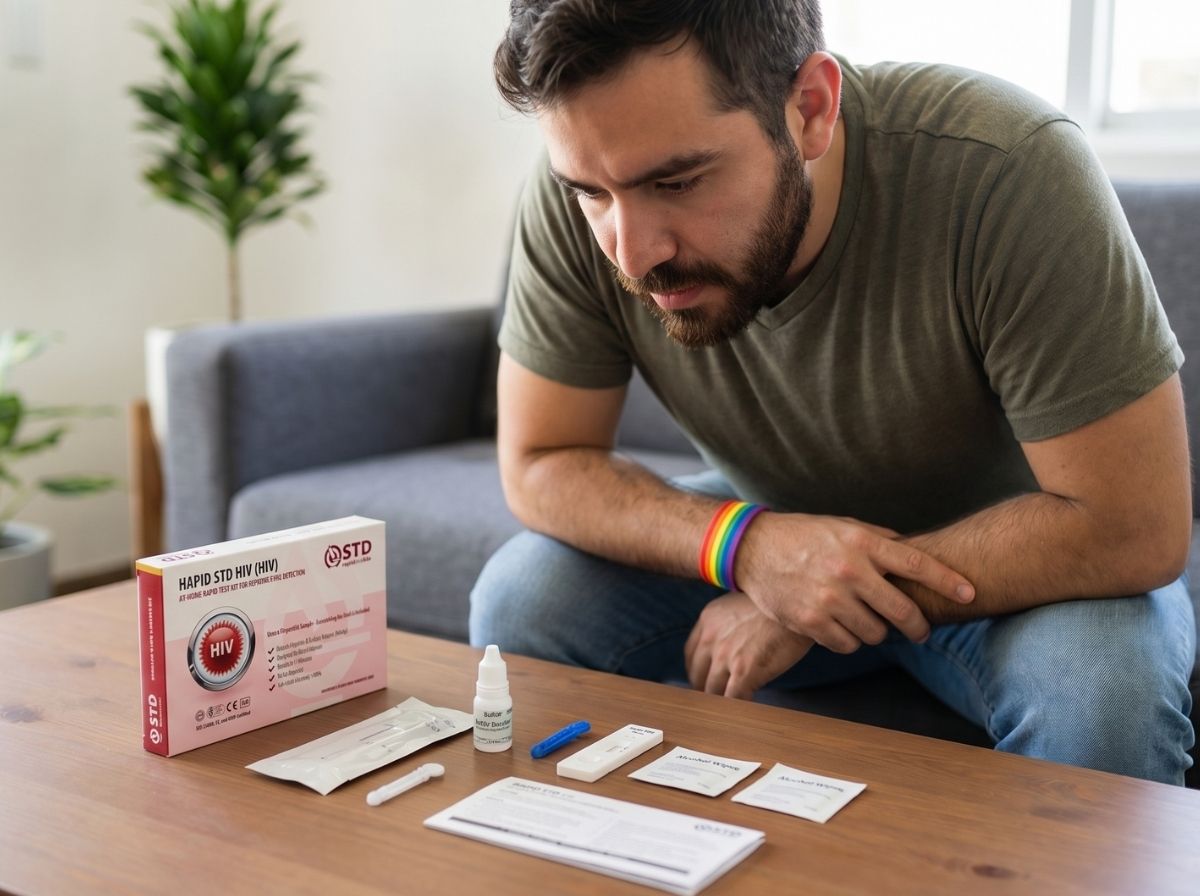
For a situation that already feels uncomfortable, at-home rapid testing removes the usual clinical barriers: no receptionist, no intake form asking about the sex act that prompted the visit, no waiting room. You order a kit, follow the instructions, get a result in 15 minutes, and know where you stand. For classic STDs after anal sex exposure (chlamydia, gonorrhea, syphilis, HIV, hepatitis B, hepatitis C, and HSV-2), at-home rapid kits are accurate when used inside the correct testing windows in the table above.
At-home rapid kits use lateral-flow chemistry, not laboratory NAAT. They are screening tools, and a positive at-home result is worth confirming with a clinical follow-up. Gut infections like Shigella, hepatitis A, or Giardia require stool testing at a clinic if symptoms appear, since these kits are not designed to detect them. The kits cover the STD side of the equation; the doctor covers the gut-illness side if it becomes symptomatic.
Practical Steps to Reduce Risk Without Stopping What You Enjoy
The goal is not abstinence from anal sex or rimming. The goal is to reduce the specific transmission risks that come with fecal-oral exposure pathways, using measures that are actually practical. Here is what the evidence supports.
Dental dams for rimming create a physical barrier between the mouth and anus, blocking fecal-oral contact while still allowing sensation. They are not perfect (edges can shift, and they do not protect against every infection), and they meaningfully reduce the primary transmission route for hepatitis A and Shigella during oral-anal contact. The same principle applies to using condoms on penises and sex toys during anal sex, especially when transitioning between anal and oral contact. Washing before sex, particularly the anal area, reduces the surface load of fecal bacteria and viruses. It does not eliminate risk, because fecal matter is present internally in the rectum regardless, and it reduces exposure during external oral-anal contact.
Washing hands and sex toys immediately after anal play, before they contact mouths, faces, or other body parts, is the single most effective practical step for preventing indirect fecal-oral transmission. Avoiding anal sex or rimming when either partner has an active gut infection, diarrhea, or has recently recovered from one is important specifically for Shigella, which can be shed in feces for up to two weeks after symptoms resolve. The CDC specifically flags this window as a period of ongoing transmission risk. None of these steps is exotic; the difficulty is remembering them in the moment, which is mostly a matter of having decided in advance what your hygiene practices are going to look like.
Hepatitis A and B Vaccination, Available and Underused
Vaccination for hepatitis A and hepatitis B is available, effective, and often underutilized by sexually active adults who would genuinely benefit. The hepatitis A vaccine is a two-dose series given six months apart. The hepatitis B vaccine is a two- or three-dose series depending on the formulation. Both have been on the routine childhood schedule in the US for years, which means many readers in their twenties and thirties are already covered. Many older adults are not, and many in any age group have not completed both series.
If you engage in anal sex or rimming with any regularity and you are not sure whether you have been vaccinated, that is a conversation worth having with a healthcare provider. A blood titer test can confirm immunity, and the catch-up doses are inexpensive and widely available. This is one of the most concrete protections available against the infections most likely to travel the fecal-oral route, and it is something the at-home rapid kits cannot do for you.
- Hepatitis A. Two-dose series given six months apart. Long-lasting immunity after the second dose.
- Hepatitis B. Two- or three-dose series depending on formulation (Heplisav-B is 2 doses one month apart; Engerix-B and Recombivax HB are 3 doses over six months).
- Both vaccines are widely available at primary-care offices, pharmacies, and many sexual-health clinics. A blood titer test can confirm whether prior childhood vaccination produced lasting immunity.
The Embarrassment Gap, and Why It Matters for Your Health
There is an elephant in the room in every conversation about fecal exposure during sex, and it is the fact that most people feel deeply embarrassed about the topic. Bowel accidents during anal sex happen to real people with real bodies, and the silence around them means people do not ask their doctors the right questions, do not get the right tests, and do not know what poses risk and what does not.
The embarrassment is not neutral. It creates a gap between what people experience and what they report to healthcare providers. Someone who has a gut illness following an accident during sex may not mention the sex part to their doctor, which means the doctor does not test for the right things. Someone who is worried they transmitted something to a partner may avoid the conversation entirely rather than face the awkwardness. These gaps lead to untreated infections and onward transmission. The most useful reframe is that a bowel accident during anal sex is a medical event rather than a moral failure. Bodies have digestive systems. Anal sex involves the rectum. These are not surprising facts about human anatomy. Understanding the infection risk plainly (which infections travel which routes, what the actual transmission mechanism is, and what a negative test result means) is the kind of information that lets people make clear-headed decisions rather than shame-driven ones. If you have been concerned about this and have not said anything to anyone, the right next step is straightforward: test for what you might have been exposed to, at the right window, and get a result that answers the question. That is what testing is for: an answer to a concrete question, not a verdict about who you are or what happened.
Shigella spreads easily during sexual activity, particularly through oral-anal contact. People can become sick after touching the anus or stool of someone with Shigella and then touching their mouth, even after very small amounts of bacteria are transferred.
Frequently Asked Questions
- Can you get an STD specifically from poop getting on your skin during sex?
- Skin contact with fecal matter alone carries a very low risk for classic STDs like chlamydia, gonorrhea, or HIV. These infections need mucosal tissue or direct fluid contact to take hold. The risk from skin contact is primarily gut infections, and only if fecal matter then reaches the mouth. Wash the skin thoroughly with soap and water after any fecal contact.
- What infections are most likely after an accident during anal sex?
- The infections most likely to be transmitted through fecal contact during sex are hepatitis A and Shigella. Both spread via the fecal-oral route and require only trace amounts of fecal material to cause infection. Classic STDs are transmitted through anal sex itself rather than through fecal matter as the vehicle. If an accident occurred, the standard STD testing window applies for HIV, chlamydia, gonorrhea, and syphilis based on the anal-sex exposure, independent of the fecal element.
- Can you get HIV from fecal contact during sex?
- HIV is not transmitted through fecal matter; it requires direct contact with infected blood, semen, vaginal fluids, rectal fluids, or breast milk. Fecal matter on intact skin does not transmit HIV. However, if fecal contact during anal sex occurs alongside mucosal injury or contact with infected fluids, the overall risk from the anal-sex exposure remains. Test at 6 weeks for a first indicator result, and retest at 12 weeks for certainty.
- How soon after a fecal exposure would gut-infection symptoms appear?
- It depends on the infection. Shigella typically causes symptoms within 1 to 4 days of exposure. Hepatitis A has a longer incubation period of 15 to 50 days, meaning you might feel fine for weeks before symptoms develop. If you develop fever, diarrhea, nausea, or jaundice (yellowing of the skin or eyes) in the weeks following fecal exposure during sex, tell your doctor about the exposure so they can test accordingly.
- Does rimming without an accident still carry fecal-oral risk?
- Yes. The rectal canal always contains trace amounts of fecal matter regardless of whether a bowel movement occurs. Rimming creates direct oral-anal contact, which is exactly the fecal-oral pathway for hepatitis A and Shigella. A dental dam significantly reduces this risk by creating a physical barrier.
- Can you get Shigella from a partner who seems healthy?
- Yes. Shigella can be present and transmissible before a person has symptoms, and people can continue to shed it in their feces for up to two weeks after symptoms resolve. Someone who appears completely healthy can still transmit it through fecal-oral contact during sex.
- What is the difference between a gut infection from sex and an STD?
- Classic STDs (chlamydia, gonorrhea, syphilis, HIV, herpes, HPV) are defined by spreading through sexual contact via infected fluids or skin-to-skin contact. Gut infections like hepatitis A, Shigella, and Giardia spread via the fecal-oral route and can be acquired sexually without being technically classified as STDs. The practical difference is limited; both can be acquired through sexual activity, and both warrant testing and treatment. Understanding which category applies tells you what to test for and what to watch for symptomatically.
- Do I need to see a doctor or can I test at home?
- For the classic STDs associated with anal-sex exposure, at-home rapid testing is accurate and private when used inside the correct testing windows. For gut infections like Shigella or hepatitis A, where you develop symptoms, a doctor visit is warranted because those require specific stool testing and potentially treatment. The two categories need slightly different responses, and at-home testing covers the STD side of this equation effectively.
Test Without the Awkward Conversation
If there is one thing that makes the aftermath of an anxious situation easier, it is a concrete next step that does not require explaining yourself to anyone. At-home testing means no receptionist, no waiting room, no conversation you are not ready for. You test, get your result in minutes, and know where you stand.
The testing windows in the table above apply regardless of whether an accident happened; they are based on the anal-sex exposure itself. For the most common single concern after anal sex, the HIV 1 and 2 At-Home Rapid Test Kit covers HIV specifically. For full coverage in one kit (HIV, hepatitis B, hepatitis C, chlamydia, gonorrhea, syphilis, and herpes HSV-2), the 7-in-1 Complete At-Home STD Test Kit handles everything at once. Women who want the most comprehensive panel, including HPV and trichomoniasis, can use the Women’s 10-in-1 Kit. All kits ship discreetly with results in minutes; no lab required.
Product: STD-7KIT-ATH-2024
- U.S. Centers for Disease Control and Prevention. Preventing Shigella Infection Among Sexually Active People: supports the sexual-transmission framing and the CDC guidance that only a small amount of Shigella bacteria is needed to cause infection.
- Clinical Infectious Diseases (Oxford Academic). Sexually transmitted enteric infections supplement: supports the documented fecal-oral transmission of enteric pathogens during sex via direct and indirect pathways.
- Merck Manual Professional Edition. Sexually Transmitted Enteric Infections: supports the inclusion of Shigella, Giardia, Campylobacter, and hepatitis A among sexually transmitted enteric infections.
- CDC STI Treatment Guidelines. Proctitis, Proctocolitis, and Enteritis: supports rectal chlamydia and rectal gonorrhea framing as common asymptomatic infections from anal sex.
- NIH National Library of Medicine, StatPearls. Shigellosis: supports the Shigella incubation period of 1 to 4 days, the low infectious-dose figure, and the symptom profile described in this article.
- U.S. Centers for Disease Control and Prevention. Hepatitis A: supports the incubation window of 15 to 50 days, the fecal-oral transmission route, and the availability of an effective vaccine.
