Can You Get an STD Without Penetration?
Skin contact and fluids carry real risk, even without sex.



- Manual sex is lower risk than intercourse, not zero risk. Herpes, HPV, syphilis, and trichomoniasis can all spread through skin contact or fluid transfer alone.
- If symptoms appear after a no-penetration encounter, or if you want peace of mind, an at-home rapid test for the most likely infection types takes about 15 minutes.
Published: November 2025 | Last updated: April 2026 | Editorial review and quality control: Martina N.
You kept your clothes mostly on. There was no oral, no vaginal, no anal. Just hands, fingers, maybe some skin against skin through underwear. A few days or weeks later something feels off, and a question that nobody mentioned in sex ed surfaces: can you actually pick up an STD from that?
Sometimes, yes. Manual stimulation and skin-to-skin contact carry lower transmission risk than unprotected intercourse, and that distinction matters. But lower is not zero. Herpes, HPV, syphilis, trichomoniasis, and occasionally gonorrhea or chlamydia have all been documented in encounters where the only contact was hands, fingers, mouths, or genitals rubbing against each other through clothing.
This article walks through what transmits without penetration, what does not, what the published numbers say, and how to reduce your real-world risk without turning intimacy into a clinical procedure. If you came here worried about a recent encounter, the later sections cover when testing makes sense and which test fits the situation.
Can you get an STD without penetration?
Yes, several can. Herpes, HPV, syphilis, and trichomoniasis transmit through skin-to-skin contact or genital-fluid transfer alone. Gonorrhea and chlamydia can spread this way when fluids reach a mucous membrane (eyes, mouth, urethra), although that is less common than fluid-on-fluid intercourse transmission. HIV transmission via fingering or hand contact is effectively zero in practical terms because intact skin is a strong barrier. If you had skin-to-genital or fluid contact and you have symptoms, or you simply want certainty, an at-home rapid test taken roughly 2 to 16 weeks after exposure (depending on the infection; herpes antibody tests typically need 12 to 16 weeks for full reliability) is the right call. Disclosure: this site sells rapid lateral-flow home test kits for the infections discussed below, and the product picks at the end of the article are matched to the scenarios this piece describes.
Key Takeaways
- Manual sex is lower risk than intercourse, not zero risk. Herpes, HPV, syphilis, and trichomoniasis can all spread through skin contact or fluid transfer alone.
- If symptoms appear after a no-penetration encounter, or if you want peace of mind, an at-home rapid test for the most likely infection types takes about 15 minutes.
How manual sex fits into STD transmission risk
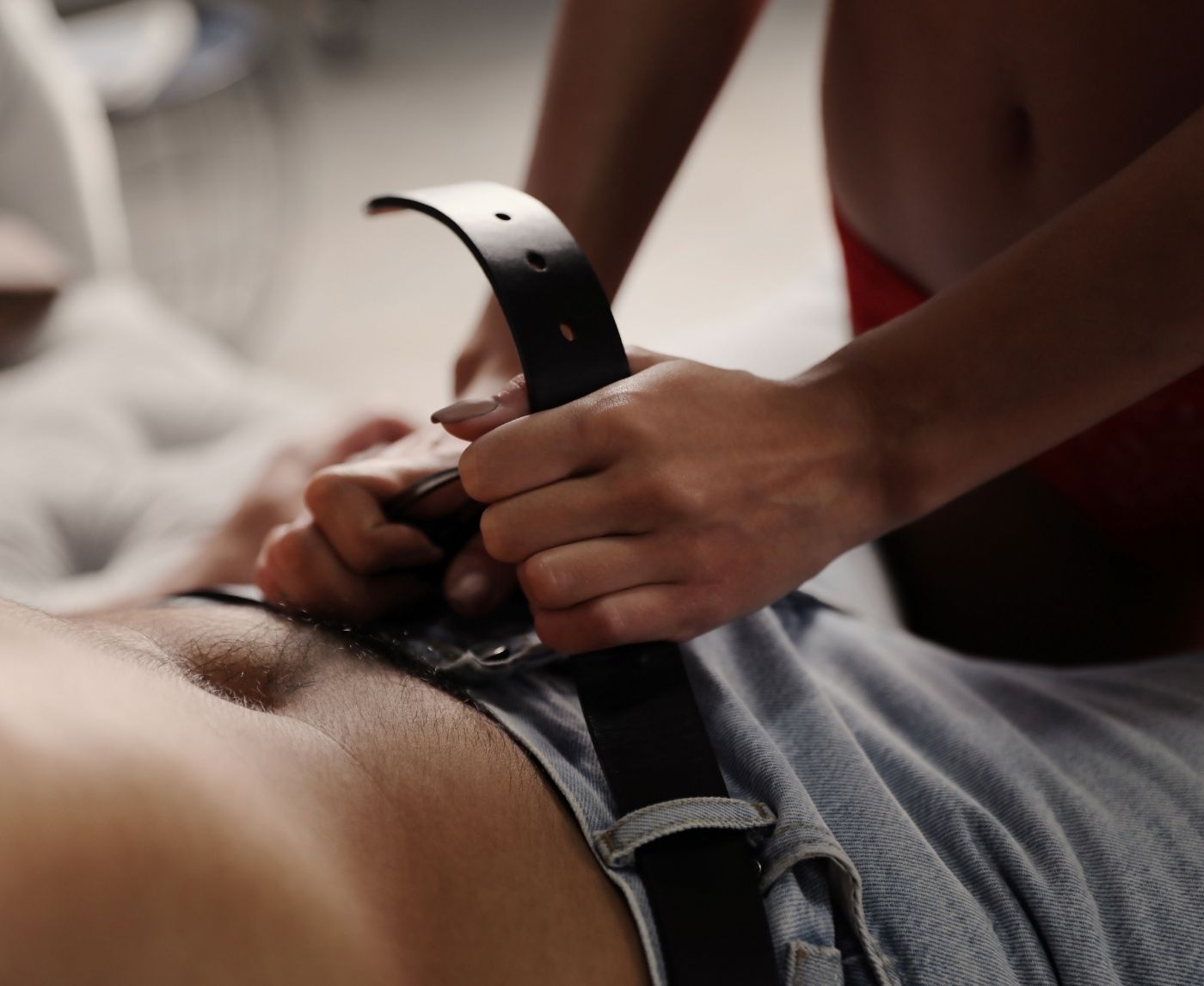
"Manual sex" is shorthand for using hands or fingers to touch, rub, stroke, or penetrate a partner's genitals. Most public-health guidance lists it as low-risk for STD transmission, and that is accurate. Compared to unprotected vaginal or anal intercourse, the chance of picking something up from manual contact alone is meaningfully smaller.
The mechanism behind most STD transmission is contact between mucous membranes (the soft, moist linings of the genitals, mouth, eyes, and rectum) and infected tissue or fluid. Hands have skin, not mucous membrane, and intact skin is an excellent barrier against most pathogens. That is why HIV, for example, does not realistically pass through fingering or a hand job: the virus needs to reach a mucous membrane or enter the bloodstream through a fresh wound, and ordinary hand contact does not provide that pathway.
Where manual contact does carry risk is in three specific situations. First, when the infection itself transmits via skin-to-skin contact (herpes and HPV are the main examples). Second, when fingers carry genital fluid from one partner's genitals to a mucous membrane on the same partner or another partner: the eye, the urethral opening, the mouth. Third, when there are small breaks in the skin (a hangnail, a paper cut, eczema, a recent shaving nick) that let pathogens reach the bloodstream or deeper tissue.
Most encounters do not satisfy any of those conditions. But "low risk" is a population statistic, not a guarantee for any one specific encounter.
Intact skin on the hand blocks the bloodstream entry HIV needs. The CDC treats hand-to-genital HIV transmission as effectively zero risk in the absence of fresh, deep, bleeding wounds on both sides at the same moment. Herpes and HPV are the opposite case: they live in the surface layer of skin, so skin-to-skin contact is the entire transmission pathway. The same encounter can therefore be HIV-safe and herpes-risky simultaneously, because the two pathogens use completely different transmission mechanisms.
The infections that spread without penetration
Not every STD plays by the same rules. Some need fluid exchange to transmit. Others need only skin contact in the right place. Here is what the evidence says about the ones that show up most often after non-penetrative encounters.
Herpes (HSV-1 and HSV-2)
Herpes is the textbook example of a skin-to-skin STD. The virus lives in skin and mucous membrane cells, and direct contact with an infected area is the transmission route, even when no sore is visible. The CDC notes that herpes spreads through contact with herpes sores, saliva, or genital secretions of a person with the virus, and that asymptomatic shedding (the virus being present on skin without a visible sore) accounts for many transmissions. Hand-to-genital and genital-to-hand transfer is well documented, including a finger infection called herpetic whitlow that healthcare workers historically picked up before universal glove use became standard.
HPV (human papillomavirus)
HPV is the other major skin-contact infection. The virus lives in the surface layer of genital skin and can move through small abrasions during direct contact. Visible warts are not required for transmission. Many HPV strains produce no symptoms at all. Some peer-reviewed research has detected HPV DNA on the hands of partners of people with genital HPV, suggesting hand-to-genital transfer is biologically plausible even if it is not the dominant transmission route.
Syphilis
Syphilis transmits through direct contact with a syphilitic sore, called a chancre. Chancres usually appear on or around the genitals, anus, or mouth. If a chancre is present and unprotected skin (a finger, a lip, a thigh) brushes against it, transmission is possible. Chancres are often painless and easy to miss, which is part of why early-stage syphilis can spread despite both partners thinking they were being cautious.
Gonorrhea and chlamydia
These are bacterial infections that mostly transmit through fluid contact between mucous membranes. They do not typically transmit through skin alone. The realistic non-penetrative scenario is fluid getting on a finger, then onto a mucous membrane: into the urethra, the eye, or the mouth. Gonorrheal conjunctivitis (eye infection) from genital-to-eye fluid transfer is uncommon but documented, and the trigger is usually rubbing the eye after manual contact without washing hands first.
Trichomoniasis
Trich is a parasitic infection that lives in genital fluids. It does not require penetration to spread. Vulva-to-vulva contact, fingers carrying secretions, or shared sex toys can all transfer the parasite if there is enough moisture. The next section covers trich in more detail because it is the infection most people have never heard of and the one most often passed during dry-sex or grinding encounters.
Molluscum contagiosum and pubic lice
Not classic STDs, but worth mentioning because they show up in the same conversations. Molluscum is a viral skin infection that spreads through skin-to-skin contact and produces small pearl-like bumps. Pubic lice ("crabs") spread through close body contact and shared bedding. Both can land after a no-penetration encounter and both confuse people who assume an STD diagnosis requires more dramatic exposure.
| Infection | How it spreads without penetration | At-home test type |
|---|---|---|
| Herpes (HSV-1, HSV-2) | Skin-to-skin contact at the affected area, including during asymptomatic shedding | Blood (lateral-flow antibody test) |
| HPV | Skin-to-skin contact at the genital area; no visible wart required | Vaginal swab (women only); no validated male home test |
| Syphilis | Direct contact with a chancre on skin or mucous membrane | Blood (lateral-flow antibody test) |
| Gonorrhea | Fluid carried to a mucous membrane (eye, mouth, urethra) | Genital swab (rapid lateral-flow) |
| Chlamydia | Fluid to a mucous membrane; less common via hand alone | Genital swab (rapid lateral-flow) |
| Trichomoniasis | Genital fluid via grinding, fingering, or shared toys | Vaginal swab (women only); see clinic for men |
The trichomoniasis surprise: dry sex, grinding, and the parasite nobody talks about
Trichomoniasis (trich) is caused by a single-celled parasite called Trichomonas vaginalis. The CDC estimated more than 2 million trichomoniasis infections in the United States in 2018, and most carriers, especially men, have no symptoms. That combination of common and easy to miss is why trich keeps showing up in encounters that did not include intercourse.
The parasite lives in genital fluid: vaginal secretions, semen, and pre-ejaculate. It needs moisture to survive. What that means in practice is that anything carrying enough fluid from one partner's genitals to another's can transmit it: rubbing together with underwear in the way, mutual masturbation that mixes secretions, sharing a sex toy without cleaning it, or fingering followed by reciprocal contact. The classic dry-sex scenario, where two people press together with clothing in the way and one ejaculates into their underwear, has been documented as a transmission route in adolescent and young-adult populations.
Trich symptoms in women include unusual discharge (often gray, yellow-green, or frothy), itching or burning, an unfamiliar odor, and discomfort with urination. About 70 percent of people with the infection have no signs or symptoms, per CDC surveillance, and when symptoms do appear they are easy to mistake for a yeast infection, bacterial vaginosis, or a urinary tract infection. Trich gets missed at first clinic visits for exactly this reason: the parasite is invisible and its symptoms overlap with three other common conditions. In men, trich is almost always asymptomatic and rarely tested for, which is how the parasite bounces back and forth between partners after only one of them gets treated.
The fix is straightforward when caught: a single course of metronidazole or tinidazole, prescribed by a clinician, clears the infection. The risk if it is left untreated includes increased susceptibility to other STIs (including HIV) and, in pregnancy, complications including preterm delivery.
Our rapid trichomoniasis self-test kit is validated for vaginal self-swab only and is not designed for male anatomy. Male readers who want a trich test should ask a clinician or order a NAAT-based mail-in panel that accepts urine samples. The same scope applies to our HPV self-test, which is also validated for vaginal swab use only. We are honest about that limit because guessing wrong on sample type wastes the kit.
The gray zone: oral, dry humping, and mutual touch
Sex education tends to draw a sharp line between "sex" and "not sex" and to put condoms on one side of that line. The gray zone in the middle (oral, dry humping, mutual rubbing, hand-to-genital contact) gets handled with a shrug. Unexpected diagnoses cluster in this gray zone.
Oral sex is the riskier neighbor. The CDC lists oral sex as a transmission route for gonorrhea, chlamydia, syphilis, herpes, and HPV. Pharyngeal gonorrhea (throat gonorrhea) is increasingly common and usually produces no symptoms, which means carriers can pass it on without knowing. Herpes transmits readily between mouth and genitals in either direction; cold sores caused by HSV-1 are now the source of a substantial share of new genital herpes cases in younger adults, according to recent surveillance.
Dry humping, where two people rub together with clothing in place, is technically lower risk than direct skin-to-skin, but clothing is not a barrier in the way condoms are. Fluids can soak through. Friction can pull clothing aside. If one partner has herpes lesions or HPV near the contact point, transmission is possible even when bare skin never touches. Public-health research on adolescent sexual-health literacy has consistently found that non-penetrative contact is underestimated as a transmission route, which is part of why a meaningful share of first STDs in this age group show up after encounters that did not include intercourse.
The more useful lens is that "we did not have sex" is a story people tell after the fact, and any contact where skin or fluid crosses between partners sits on a spectrum of risk rather than a clean binary.
Throat gonorrhea picked up through oral sex usually produces no symptoms at all, which means the person carrying it has no reason to suspect they should test. The CDC has flagged pharyngeal gonorrhea as a contributing factor to the spread of antibiotic-resistant strains, because untreated throat infections can quietly seed onward transmission to genital partners. If oral sex was part of a recent encounter and the partner's testing history is unclear, a throat-swab test at a clinic is the right next step. Our at-home rapid kits are validated for genital sample sites only and do not cover the throat.
The myths that keep this risk invisible
The reason so many people are caught off guard by a non-penetrative STD diagnosis is that several myths about manual sex are repeated everywhere and corrected almost nowhere. Here is a clear comparison of what people commonly believe versus what the evidence shows.
| Common belief | What the evidence shows |
|---|---|
| You cannot get an STD without penetration. | Herpes, HPV, syphilis, and trichomoniasis all transmit without penetration. Manual, oral, and skin-to-skin contact are recognized routes. |
| No symptoms means no infection. | Many STIs (HPV, herpes, trich, early syphilis, asymptomatic gonorrhea) produce no symptoms while still being contagious. |
| Hand sanitizer or a quick rinse is enough. | Soap and water for 20 seconds reduces fluid carryover. Sanitizer is not validated against many viruses or against fluid that has already reached a mucous membrane. |
| A negative test means I am clear forever. | A test is a snapshot in time. Most infections need a window period of days to weeks to detect. Standard panels often skip herpes and HPV unless requested. |
| Manual sex does not need disclosure. | If you have herpes, HPV, or another transmissible infection, partners deserve to know before any contact that could transfer skin or fluid. |
| Gonorrhea cannot infect an eye. | Gonorrheal conjunctivitis is well documented. The usual cause is fluid carried on a finger to the eye after manual genital contact. |
What the published numbers show
The phrase "manual sex is low risk" gets repeated so often that it can sound like "no risk." The published evidence is more textured. A few specific data points are worth knowing.
The CDC reported an estimated 572,000 new genital herpes infections in 2018 among people aged 14 to 49 in the United States, and most carriers have no visible symptoms. Asymptomatic shedding (releasing virus from intact-looking skin) drives a meaningful fraction of new transmissions. In a population where most carriers show no visible sign, any encounter carries a baseline of context invisible to both partners.
HPV is even more common. The CDC describes HPV as so common that nearly every sexually active person will get it at some point in their life if they are not vaccinated. Some peer-reviewed research has also detected HPV DNA on the hands of partners of people with genital HPV, suggesting hand-to-genital transfer is biologically plausible. Hand contact is not the dominant transmission route, but the finding is consistent with the broader picture: HPV travels well wherever skin meets skin.
The CDC estimated more than 2 million trichomoniasis infections in the United States in 2018, and women are diagnosed far more often than men because women are more likely to have symptoms and far more likely to be tested. Reinfection between partners is common when only one partner gets treated, which is part of why couples-based testing matters more for trich than for many other infections.
None of these numbers say that fingering or grinding is high risk. They say that the population of people you might be touching includes a meaningful number who are carrying something they do not know about, and that for the right combination of contact and infection, transmission can happen even without intercourse.
Most people with genital herpes have no symptoms or have very mild symptoms. Mild symptoms may go unnoticed or be mistaken for other skin conditions like a pimple or ingrown hair.
How to reduce risk without overcomplicating things
You do not need to glove up like a surgeon to enjoy intimate contact safely. A handful of practical habits cuts the realistic risk significantly while leaving the experience intact.
- Wash hands with soap and water before and after. Twenty seconds, warm water. Sanitizer is acceptable as a top-up, not a replacement; it does not reliably inactivate every virus and it does not remove fluid that has already reached a mucous membrane.
- Skip manual contact when there are open cuts or sores. Hangnails, eczema flares, fresh shaving nicks, and visible genital lesions all raise the risk on either side of the contact. Wait until skin is intact.
- Do not move from one partner's genitals to your own (or to a mucous membrane like the mouth or eyes) without washing first. This is the most common transmission pathway in non-penetrative encounters.
- Use lubricant. Friction creates microtears, and microtears are exactly where viruses and bacteria find a way in. Water-based or silicone-based lube reduces that risk and makes the contact more comfortable.
- Consider finger cots or gloves with new partners. They are honest harm reduction, useful especially when one person is immunocompromised, when there are visible sores, or during menstruation. Most people who try them stop noticing them after a few minutes.
- Disclose what you know. If you have herpes, HPV, or another transmissible infection, partners deserve the information before contact, even if the contact is "just hands." Disclosure is also legally relevant in some jurisdictions for some infections.
- Trim nails. Long or sharp nails create microtears in vaginal or rectal tissue and provide hiding places for bacteria and viral particles.
None of this requires perfect execution every time. Doing two or three of these consistently moves your real-world risk down a step from the baseline.
From higher to lower transmission risk, in rough order: unprotected vaginal or anal intercourse, then unprotected oral sex, then direct skin-to-skin genital contact (no penetration), then manual contact with washed hands and no open cuts, then dry humping with clothing in place. Each step down is a meaningful reduction, not a guarantee. Where you sit on this spectrum is what determines which test fits your situation, and how soon you should take it.
When to test, what to test for, and how to time it
If something on your body changed after a non-penetrative encounter, or if your gut is telling you to know for sure, testing is the right move. The trick is timing the test for the right window and choosing the right panel.
Timing matters because every infection has a window period (the gap between exposure and when a test can reliably detect it). Trichomoniasis can usually be detected within a week of symptoms appearing. Bacterial infections like chlamydia and gonorrhea are typically detectable from about one to two weeks after exposure. Herpes antibodies, when present, take roughly 4 to 16 weeks to develop after a primary infection, depending on the assay; most IgG tests reach reliable sensitivity by 12 to 16 weeks, which is why a test taken too soon after exposure can miss it. HIV (although unlikely to transmit through manual contact) has its own window of about 18 to 45 days for fourth-generation antigen-antibody tests. Syphilis blood tests are usually positive 3 to 6 weeks after a chancre appears.
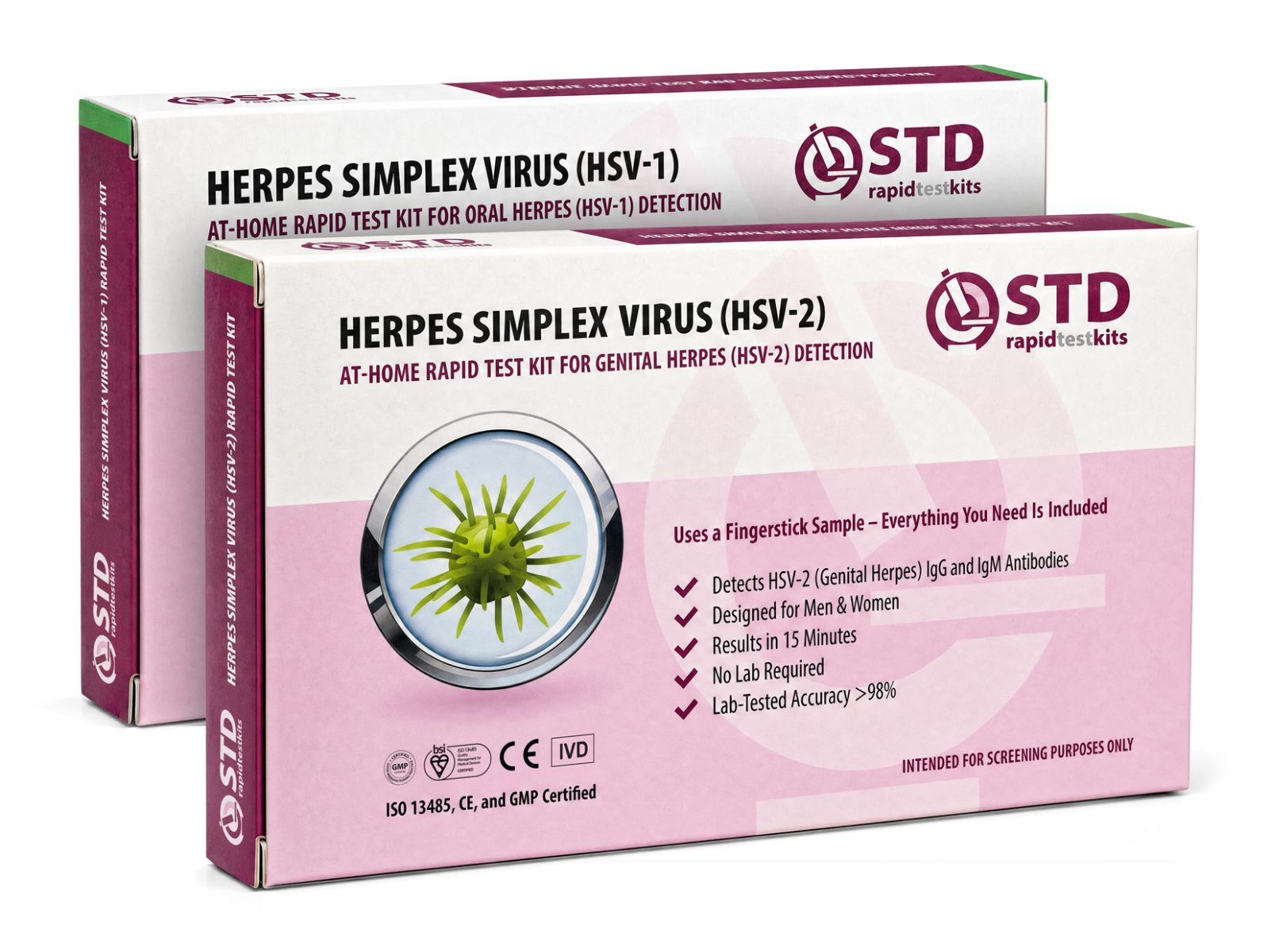
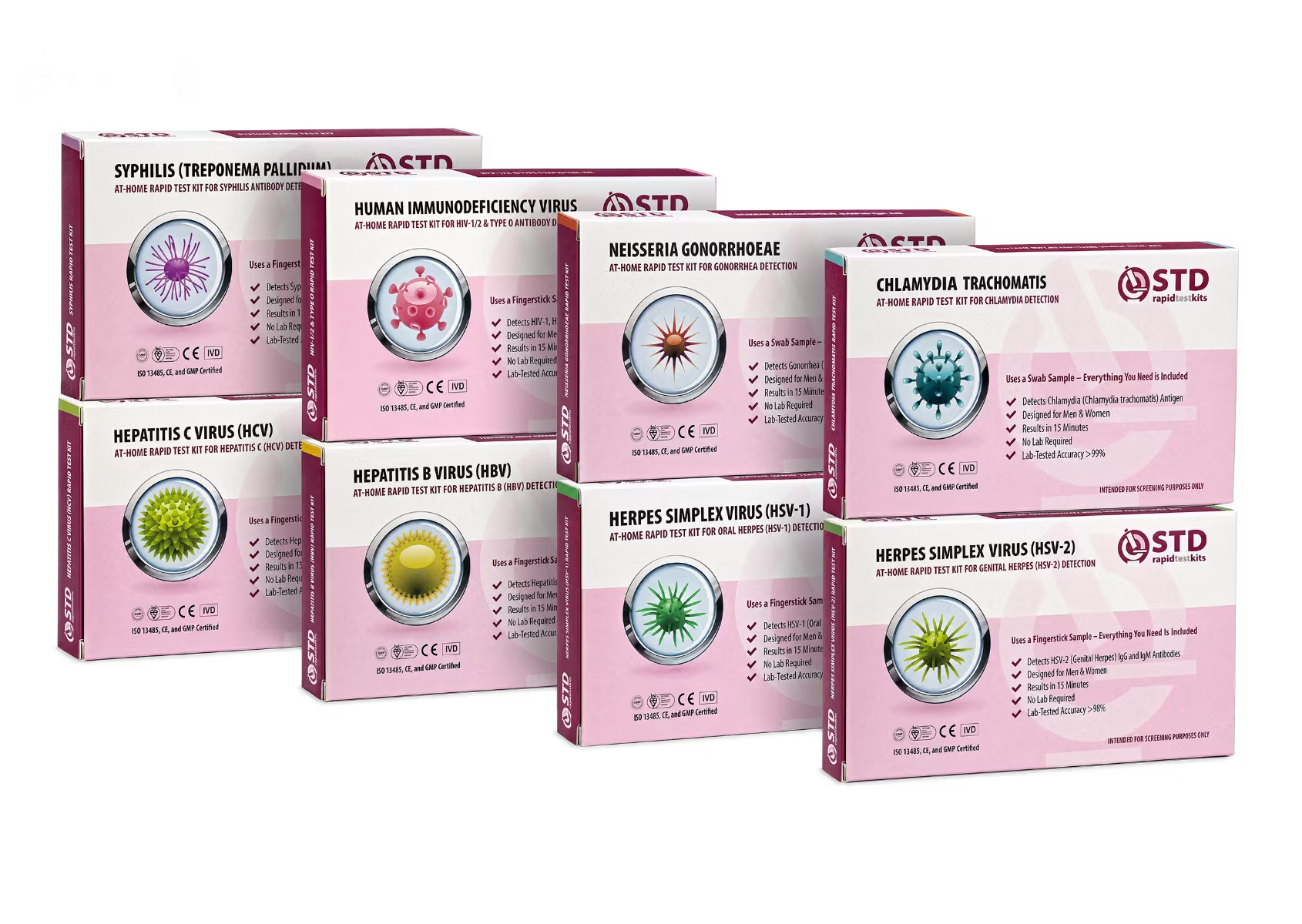
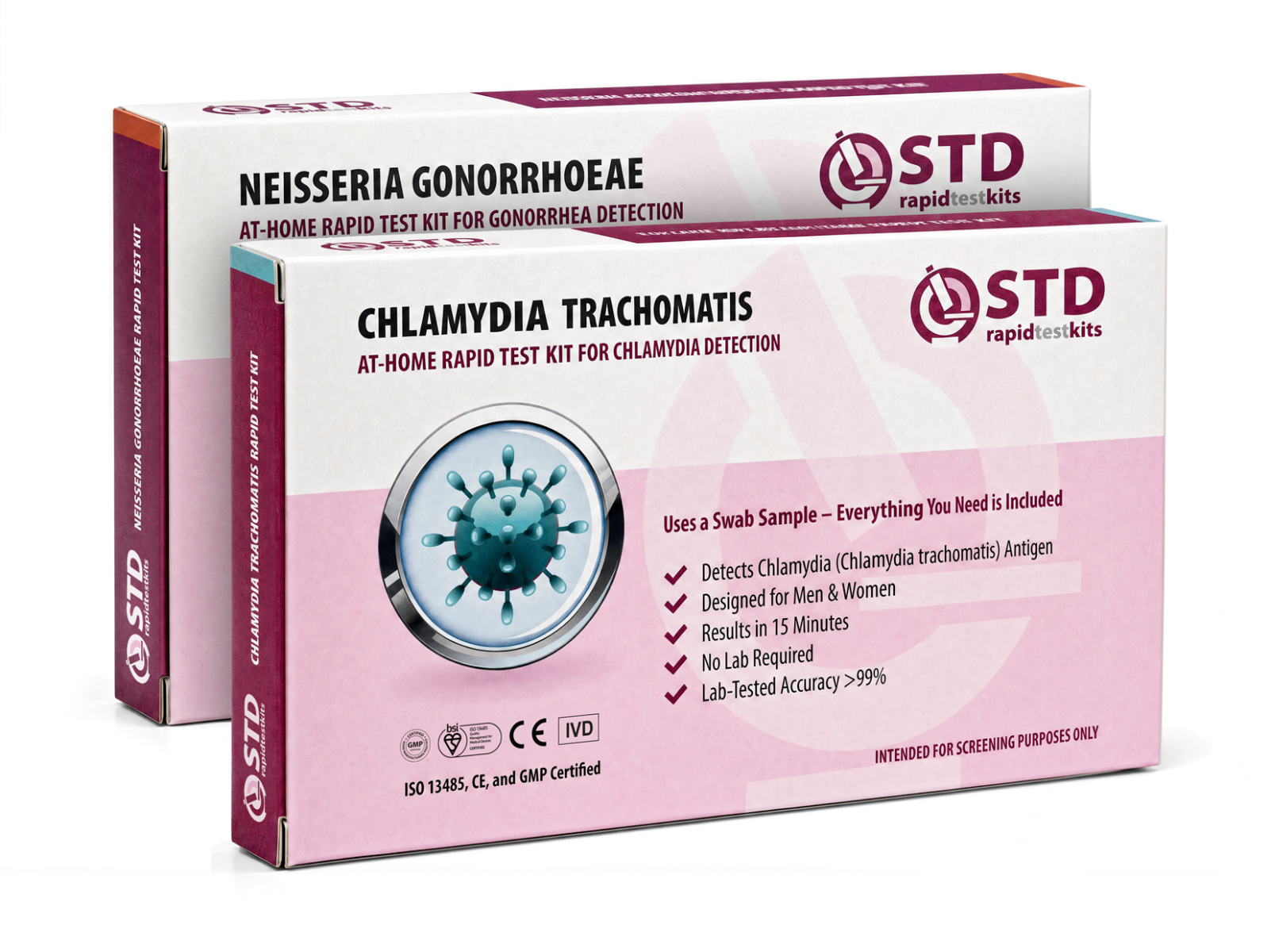
For a non-penetrative encounter where the main worry is herpes, HPV, syphilis, or trich, an at-home rapid test that targets the specific concern is a reasonable first step. If you want broader peace of mind, a multi-infection panel that screens for the most common bacterial and viral STIs covers more ground in a single kit. Our at-home rapid tests are lateral-flow immunoassays, which is a different technology from the NAAT (nucleic-acid amplification) tests that labs use. A positive lateral-flow result is a strong signal to confirm with a clinic test before starting treatment, while a negative result outside the window period is reassurance you can usually rely on.
If you have visible sores, ongoing pelvic pain, painful urination, or any symptom that is not improving on its own, do not wait for the window to close on a panel. See a clinician. Visible lesions are diagnosable in person without waiting for serology, and earlier treatment generally means a smoother course.
| Infection | Earliest detection | Reliable window |
|---|---|---|
| Trichomoniasis | Within a week of symptoms appearing | 1 to 4 weeks after exposure |
| Chlamydia and gonorrhea | About 1 week after exposure | 1 to 2 weeks after exposure |
| Syphilis | About 3 weeks after a chancre appears | 3 to 6 weeks after exposure |
| Herpes (HSV IgG antibodies) | Around 4 weeks after a primary infection | 12 to 16 weeks after exposure |
FAQs
- Can I really get an STD from just fingering or a hand job?
- Yes. Per-encounter risk is low, but herpes, HPV, syphilis, and trichomoniasis have all been documented after skin-to-genital or fluid-to-mucous-membrane contact with no penetration involved. Gonorrhea and chlamydia are possible when fluid reaches the eye, mouth, or urethra directly.
- What if there were no fluids exchanged, just skin contact?
- Skin-to-skin contact alone is enough for herpes and HPV, both of which live in the surface layer of the skin. It is also enough for syphilis if a chancre is present at the contact site, and for non-classic infections like molluscum contagiosum and pubic lice. These do not require visible fluid to spread.
- Can I get an STD on my fingers themselves?
- Yes. Herpetic whitlow is a herpes infection of the finger, usually picked up from contact with infected genital fluid or sores while there is broken skin (a hangnail, a paper cut) on the finger. It is painful, very contagious to the next person who touches the affected hand, and a known occupational risk for healthcare workers in the pre-glove era.
- If I wash my hands right after, am I safe?
- Washing helps. Soap and water for 20 seconds before and after manual contact reduces fluid carryover meaningfully. But if you have already touched a mucous membrane (your eye, your mouth, your own genitals, your partner's mouth) with infected fluid, washing afterward will not undo that specific exposure.
- Does HIV transmit through fingering or hand jobs?
- Realistically, no. HIV needs a mucous membrane or a direct route into the bloodstream, and intact skin on the hand is an excellent barrier. The CDC lists hand-to-genital contact as effectively zero risk for HIV in the absence of fresh, deep, bleeding wounds on both sides at the same time.
- Should I get tested if I only had non-penetrative contact?
- If you have any symptoms (sores, unusual discharge, painful urination, an unfamiliar bump), test. If you have no symptoms but want certainty, testing 2 to 16 weeks after exposure is the right window, depending on the infection: bacterial STIs at 1 to 2 weeks, syphilis at 3 to 6 weeks, herpes at 12 to 16 weeks for full antibody-test reliability. Manual contact alone is not a guarantee that nothing happened.
- Do gloves or finger cots reduce transmission risk?
- Yes. They reduce skin-to-skin contact and stop fluid from coating the fingers. They are most useful with new partners, when there are visible sores or lesions on either side, when the receiving partner is immunocompromised, or during menstruation. They cost very little and are easy to find at a pharmacy.
- Which at-home test should I pick after a no-penetration encounter?
- It depends on the concern. For visible lesions or fear of herpes, the herpes-specific blood panel is the right pick. For broader peace of mind covering the most common bacterial and viral STIs, a multi-infection combo panel covers more ground in one box. If you are not sure exactly what to test for, a multi-panel kit is the safer default.
- U.S. Centers for Disease Control and Prevention. About genital herpes: transmission routes, asymptomatic shedding, and 2018 incidence figures (572,000 new infections among people aged 14 to 49).
- U.S. Centers for Disease Control and Prevention. About HPV: skin-to-skin transmission, prevalence, and the role of hand-to-genital contact.
- U.S. Centers for Disease Control and Prevention. About trichomoniasis: parasite biology, the 'about 70 percent asymptomatic' figure, and the 2018 prevalence estimate (more than 2 million infections).
- U.S. Centers for Disease Control and Prevention. About syphilis: stages, chancres, and transmission via direct contact with sores.
- World Health Organization. Sexually transmitted infections (STIs) fact sheet: global burden, transmission routes, and testing guidance.
- NHS. Sexually transmitted infections (STIs) overview: testing, symptoms, prevention, and partner-notification guidance.