
Published: August 2025 | Last updated: May 2026 | Editorial review and quality control: Martina N.
You tested positive without ever having had what most people call sex, and the reactions that tend to follow, shock and then shame, are both understandable and both unhelpful. They come from a sex-education system that treats penetration as the only meaningful exposure. Many sexually transmitted infections do not require intercourse to spread. Skin contact, saliva, shared sex toys, a kiss with a cold sore present, even a tattoo needle from an unregulated studio, can each transmit different infections to different parts of the body.
The science is straightforward, and the language matters. Sexually transmitted infections, or STIs, travel through contact: skin to skin, mucous membrane to mucous membrane, blood to blood, saliva to saliva. Penetrative sex is one route. Oral sex, mutual masturbation, genital-to-genital rubbing, shared toys, shared razors, and mother-to-baby transmission during birth are others. This article walks through how transmission actually works, which infections matter most, when to test, and what at-home tests can and cannot do.
Key Takeaways
- Three of the most common STIs (herpes, HPV, and syphilis) spread through skin-to-skin contact alone, no penetration or fluid exchange required.
- Most STIs are asymptomatic in the early weeks; exposure plus testing matters more than how the encounter was labeled.
Why "no sex" is not the same as "no risk"
Sex education in most American schools focuses on penetrative intercourse, which leaves a wide gap in what readers actually need to know. Bacteria and viruses do not check whether contact was penetrative. They check whether tissue made contact, whether fluids exchanged, and whether a mucous membrane was available. Penetration is one of several routes. Skin-to-skin contact, oral sex, mutual masturbation, and shared sex toys all qualify as exposure events for at least some STIs.
"Virgin" is not a clinical term either. Public-health agencies describe risk in terms of sexual activity (which kinds of contact, with how many partners, over what time period), not in terms of whether someone has had a specific kind of sex. The cultural shorthand of "virgin equals safe" leads people to skip testing, skip protection during oral sex, and dismiss symptoms because the story they are telling themselves does not include the possibility of infection.
The practical implication: a person who has only ever engaged in non-penetrative sexual contact can still test positive. The CDC's overview of sexually transmitted infections is explicit that contact, not the specific act, drives transmission for most pathogens. This matters especially for queer, nonbinary, and asexual readers who are often left out of traditional risk checklists. The screening logic is the same regardless of how someone identifies: if intimate contact occurred, testing is on the table.
Self-identified virgins testing positive is a recurring scenario in primary care and sexual-health clinics, particularly among young adults whose first sexual experiences involve oral sex, manual stimulation, or grinding. The shame that follows a positive result in this context tends to weigh more than the medical condition itself, and it often delays follow-up testing of partners.
Contact drives transmission for most pathogens, not whether that contact involved penetration. A mucous membrane and a few seconds of exposure can be enough.
Skin-to-skin transmission: herpes, HPV, and syphilis
Three of the most common sexually transmitted infections do not require fluid exchange or penetration. Herpes simplex virus (HSV-1 and HSV-2) transmits during direct skin-to-skin contact in any area where the virus is shedding, which can include times when no sore is visible. The CDC's genital herpes overview notes that transmission can occur from partners with no visible sores and from people who are unaware they are infected. Brief contact during a period of asymptomatic shedding is enough.
Human papillomavirus (HPV) is even more transmissible. The virus lives in the surface skin of the genitals, anus, mouth, and throat, and it spreads through contact with infected skin. Condoms reduce the risk substantially, although they do not cover every area where HPV can sit. The CDC describes HPV as a common virus and one of the most prevalent sexually transmitted infections in the country.
Syphilis begins with a small, painless sore (a chancre) at the site of contact. The chancre is highly infectious. Because it is painless and often hidden inside the mouth, vagina, or anus, many people never see it and never realize they were exposed. Direct contact with the sore, including skin-to-skin contact during oral sex or mutual masturbation, can transmit the infection. The CDC's syphilis page notes that the primary chancre is painless and often goes unnoticed.
Can you get an STI without having vaginal or anal sex?
Yes. Many sexually transmitted infections spread through skin-to-skin contact, oral sex, shared sex toys, or kissing when sores are present. Herpes, HPV, and syphilis transmit without any fluid exchange. Chlamydia, gonorrhea, and HIV can spread through oral exposure. Hepatitis B, hepatitis C, and HIV can move through shared razors, needles, or unsterile tattoo equipment. A positive result without penetrative sex is not unusual; it reflects the biology of transmission rather than your carelessness.
Oral sex is sex
Pharyngeal gonorrhea, oral chlamydia, oral HPV, and oral herpes are all real diagnoses, and they are all increasing in younger populations who consider oral sex "safer" than intercourse. The mouth and throat are lined with the same kind of mucosal tissue as the genitals, which makes them hospitable to many of the same pathogens. The CDC's overview of STI risk during oral sex lists chlamydia, gonorrhea, syphilis, herpes, HIV, and HPV as transmissible during oral contact.
Pharyngeal gonorrhea matters in particular because it is often asymptomatic. Someone may have a throat infection, feel completely well, and transmit the bacteria to a partner's urethra, cervix, or rectum during oral sex. Treatment is straightforward when caught, but detection requires a throat swab. Most general clinic panels do not include one unless the patient specifically asks.
HIV transmission through oral sex deserves its own paragraph because it is the fear most readers carry into this kind of search. The CDC categorises overall oral-sex HIV risk as little to no risk at the population level; the conditions below are what shift an individual exposure above that baseline. Per-encounter risk is genuinely low, but it is not zero. Risk goes up when a mucosal break is present (recent dental work, active gum disease, a sore in the mouth or on the genitals), when a partner has a high viral load (undiagnosed acute infection or untreated chronic infection), or when ejaculate enters the mouth. Risk drops to effectively zero when a partner living with HIV is on effective antiretroviral therapy with a sustained undetectable viral load. The CDC's U=U position (undetectable equals untransmittable) covers sexual transmission of all kinds, including oral.
Oral exposure also matters for HPV. The same strains that cause cervical cancer can cause oropharyngeal cancers years to decades later. Per-encounter risk is small, but cumulative lifetime exposure is meaningful, which is why the HPV vaccine is recommended through age 26 routinely and through age 45 with shared clinical decision-making per ACIP guidance.
The rapid kits sold by stdrapidtestkits.com use self-collected genital swabs and fingerstick blood; they do not include a pharyngeal swab. If you had a recent oral exposure and want a throat-specific test, that needs to happen through a clinic where a nucleic acid amplification test (NAAT) swab can be sent to a lab. Our genital and bloodwork kits cover the adjacent risk from the same exposure event.
| Activity | Possible STIs | Notes |
|---|---|---|
| Oral sex (giving or receiving) | Chlamydia, gonorrhea, syphilis, herpes, HIV, HPV | All transmissible; throat-specific testing needed for accuracy |
| Genital skin-to-skin (no penetration) | Herpes (HSV-1, HSV-2), HPV, syphilis | No fluid exchange required for any of the three |
| Shared sex toys | Chlamydia, gonorrhea, trichomoniasis, herpes, HPV | External condom on the toy, plus warm soapy water between uses, lowers risk substantially |
| Kissing during a cold sore or oral chancre | HSV-1, syphilis (oral chancre) | Active outbreak raises risk substantially; viral shedding can occur without visible sores |
| Hand-to-genital with fluids on fingers | Chlamydia, gonorrhea, HPV, herpes (rare) | Wash hands when moving between partners or body sites |
| Shared razors or toothbrushes | Hepatitis B, hepatitis C, HIV (rarely) | Bloodborne; risk is highest when blood residue is present |
| Tattoo or piercing in unregulated setting | Hepatitis B, hepatitis C, HIV | Single-use needles and autoclave sterilization mitigate the risk; the problem is unverified studios |
Fingers, toys, and kissing
Hands move between bodies during most sexual encounters. Fluids on fingers can carry chlamydia, gonorrhea, HPV, or herpes from one partner's genital area to another's, particularly when hangnails, paper cuts, or shaving abrasions are present. Per-contact risk is low, although it is not zero, especially when hands move between partners without washing.
Shared sex toys are a more reliable transmission route. Bacteria and viruses survive on porous and non-porous toy surfaces for hours. Using a toy on one partner and then on another, or moving a toy between vaginal and anal use without cleaning, can pass chlamydia, gonorrhea, trichomoniasis, herpes, or HPV. The fix is straightforward: a fresh external condom on the toy when sharing, plus warm soapy water (or a toy-specific cleaner) between uses.
Kissing transmits a smaller but real list of infections. HSV-1, the virus behind most oral cold sores, is the most common. The World Health Organization estimates around 3.8 billion people globally under the age of 50 are infected with HSV-1, and most acquired it during childhood through ordinary saliva contact: a parent's kiss, shared utensils, sips from the same drink. That early-life pattern is why so many adults test positive for HSV-1 antibodies despite never having had a recognized cold sore. The virus then sits dormant and reactivates intermittently, sometimes emerging in adulthood through oral sex with a new partner. None of that involves deception; it is the way some viruses work.
Syphilis can transmit when an infectious chancre sits in the mouth or on the lips. Cytomegalovirus and Epstein-Barr virus (mononucleosis) also pass through saliva, although neither is classified as an STI.
Bacteria and viruses can survive on silicone, glass, and non-porous toy surfaces for several hours. A fresh external condom on the toy when switching partners or body sites, plus warm soapy water between uses, removes most of the transmission risk.
Bloodborne routes: tattoos, needles, and shared razors
Three STI viruses move through blood: HIV, hepatitis B, and hepatitis C. They share a common transmission setup, which is contact between a contaminated sharp or blood-bearing fluid and broken skin or the bloodstream of another person. Sex is one way that contact happens. The non-sexual ways matter too.
Shared injection equipment. The single largest non-sexual driver of new HIV and hepatitis C cases globally. A needle, syringe, or any piece of injection equipment used by an infected person and reused by another can transmit, regardless of how briefly the equipment was set down.
Razors and toothbrushes. Both can draw small amounts of blood. In a household with an undiagnosed hepatitis B carrier, a borrowed razor is one of the most common non-sexual exposure routes in case-tracking literature. The CDC's hepatitis B overview recognizes shared razors, toothbrushes, and similar items as transmission routes when blood residue is present.
Tattoo and piercing equipment. Licensed studios in the U.S., U.K., and most of the EU follow strict single-use needle and autoclave protocols. The risk is real when those protocols are missing, which is most relevant for travelers getting tattoos or piercings abroad in unregulated settings. If you are getting a tattoo or piercing while traveling, ask plainly how the studio sterilizes equipment; reputable studios are not offended by the question.
Blood transfusions and organ transplants. Donor blood in the U.S., Canada, U.K., EU, Japan, and Australia is screened for HIV, HBV, HCV, syphilis, and other infections. Transmission through screened blood is now extraordinarily rare. Transfusion or transplant in countries with weaker donor screening remains a meaningful risk.
If you have had a tattoo or piercing in an unregulated setting, an injection in a low-resource healthcare environment, or shared a razor with someone whose hepatitis status is unknown, blood-test screening is the appropriate step. Window periods vary, so testing six to twelve weeks after the exposure is the practical guidance for HBV and HCV; for HIV, the fourth-generation lab combo test is reliable by 45 days.
Per the CDC, hepatitis B virus remains infectious on environmental surfaces for at least seven days. That is why sharing a razor or toothbrush in a household where someone has untreated hepatitis B is a real exposure, even when no one is using needles. Staying current on the hepatitis B vaccine, which is part of the standard adult and infant immunization schedule, neutralizes the most common household bloodborne route.
Vertical transmission: from mother to baby
Vertical transmission, sometimes called mother-to-child or perinatal transmission, is the most numerically significant non-sexual STI route worldwide and the most preventable with routine prenatal care. CDC and WHO guidance now treat universal STI screening during pregnancy as standard, because catching an infection before delivery often prevents transmission to the baby entirely.
The infections that matter here are HIV, syphilis, hepatitis B, gonorrhea, chlamydia, and herpes. With combination antiretroviral therapy during pregnancy and around delivery, perinatal HIV transmission drops to a small fraction of the untreated baseline, which is why antenatal antiretroviral therapy is treated as the single highest-impact intervention for preventing pediatric HIV. Maternal syphilis treated with appropriate antibiotics during pregnancy prevents stillbirth, neonatal death, and congenital syphilis. Babies born to HBV-positive mothers can be protected with hepatitis B immune globulin plus the first HBV vaccine dose within hours of birth. Newborn eye-ointment prophylaxis prevents most gonorrhea- and chlamydia-related neonatal eye infections in countries that follow the protocol.
Neonatal herpes is rare but serious. The risk is highest when a mother acquires HSV for the first time late in pregnancy, because she has not yet developed antibodies to pass to the baby. C-section is sometimes recommended when active genital lesions are present at delivery.
Vertically-transmissible infections and their preventive interventions
- HIV: combination antiretroviral therapy during pregnancy and delivery; risk drops to a small fraction of the untreated baseline.
- Syphilis: antibiotic treatment during pregnancy prevents stillbirth, neonatal death, and congenital syphilis.
- Hepatitis B: hepatitis B immune globulin plus the first HBV vaccine dose within hours of birth.
- Gonorrhea and chlamydia: newborn eye-ointment prophylaxis prevents most cases of neonatal conjunctivitis.
- Herpes: C-section is sometimes recommended when active genital lesions are present at delivery.
Confirming your prenatal panel
If you are pregnant, confirm your prenatal care includes the standard STI panel (HIV, syphilis, hepatitis B, gonorrhea, chlamydia at minimum). HSV is not part of the routine panel everywhere; ask your provider about it specifically if you or your partner have a history of cold sores or genital herpes. Bringing the question up directly is the most reliable way to avoid a missed test in a busy prenatal appointment.
Most STIs cause no symptoms in the early weeks
The single hardest fact for first-time positive results to absorb: most sexually transmitted infections cause no symptoms in the early weeks, and many cause no symptoms ever. The WHO STI fact sheet describes the majority of STI cases worldwide as asymptomatic at any given moment. That holds particularly true for chlamydia, gonorrhea, HPV, and HIV in its early stages.
When symptoms do show up after a non-penetrative exposure, they often appear in places people are not paying attention to. A throat infection from oral gonorrhea or chlamydia can feel exactly like the start of a cold. A single painless ulcer from primary syphilis on the lip, tonsil, or genital skin can come and go within two to six weeks without anyone treating it as urgent. A small cluster of herpes vesicles tucked under pubic hair or on the upper inner thigh often gets dismissed as a shaving rash or ingrown hair. None of those raise alarms if the mental model of "risky" starts and ends with intercourse.
This is also why couples who both said they were "clean" sometimes test for the first time months into a relationship and learn that one partner has been carrying an infection without knowing. That outcome does not require anyone to have lied. It only requires one person to have had a past exposure they did not realize counted, did not have symptoms from, or never connected to "sex." HSV-1 is the clearest example: someone can acquire it as a toddler from a relative's kiss, carry it asymptomatically for thirty years, and pass it during oral sex without ever having had a visible cold sore. HPV is similar; the immune system often suppresses it below a detection threshold, and the only sign anything happened is an abnormal Pap result years later.
The absence of itching, burning, discharge, sores, or unusual smell is not the absence of infection. Public-health guidance therefore leans on regular screening rather than symptom-triggered testing. The CDC's general recommendation is at least annual STI testing for sexually active people under 25 and for anyone with new or multiple partners, regardless of how "safe" the activity felt. For people in monogamous long-term partnerships with no new exposures, the cadence stretches. For people with frequent new partners or oral exposures, every three to six months is more reasonable. The downstream cost of asymptomatic infection is real: untreated chlamydia and gonorrhea can scar fallopian tubes and cause infertility, and that scarring is usually silent because the underlying pelvic inflammatory disease (PID) often causes no symptoms while it is happening. Early antibiotic treatment of the original infection prevents the scarring entirely, which is why screening matters more than waiting for pain or discharge to appear. Untreated syphilis can damage the heart, brain, and nervous system over years; untreated HIV progresses to AIDS without antiretroviral therapy.
Pharyngeal gonorrhea and oral chlamydia frequently cause no symptoms at all, which means a feeling-fine throat is not proof of a clean throat. Detection requires a clinic-collected NAAT swab of the throat itself; our at-home kits do not test this site. If oral sex was your primary exposure, ask a clinician specifically for a pharyngeal NAAT alongside any genital or blood testing.
Testing that matches your activity, not just your label
A clinic STI panel ordered without context typically tests urine for chlamydia and gonorrhea and draws blood for HIV and syphilis. That panel misses pharyngeal infections, rectal infections, and any HPV exposure. If your sexual practice includes oral sex or anal play, specifically request throat and rectal swabs. Many clinicians will not add them by default, and a "standard panel" result that comes back negative does not rule out a pharyngeal or rectal infection.
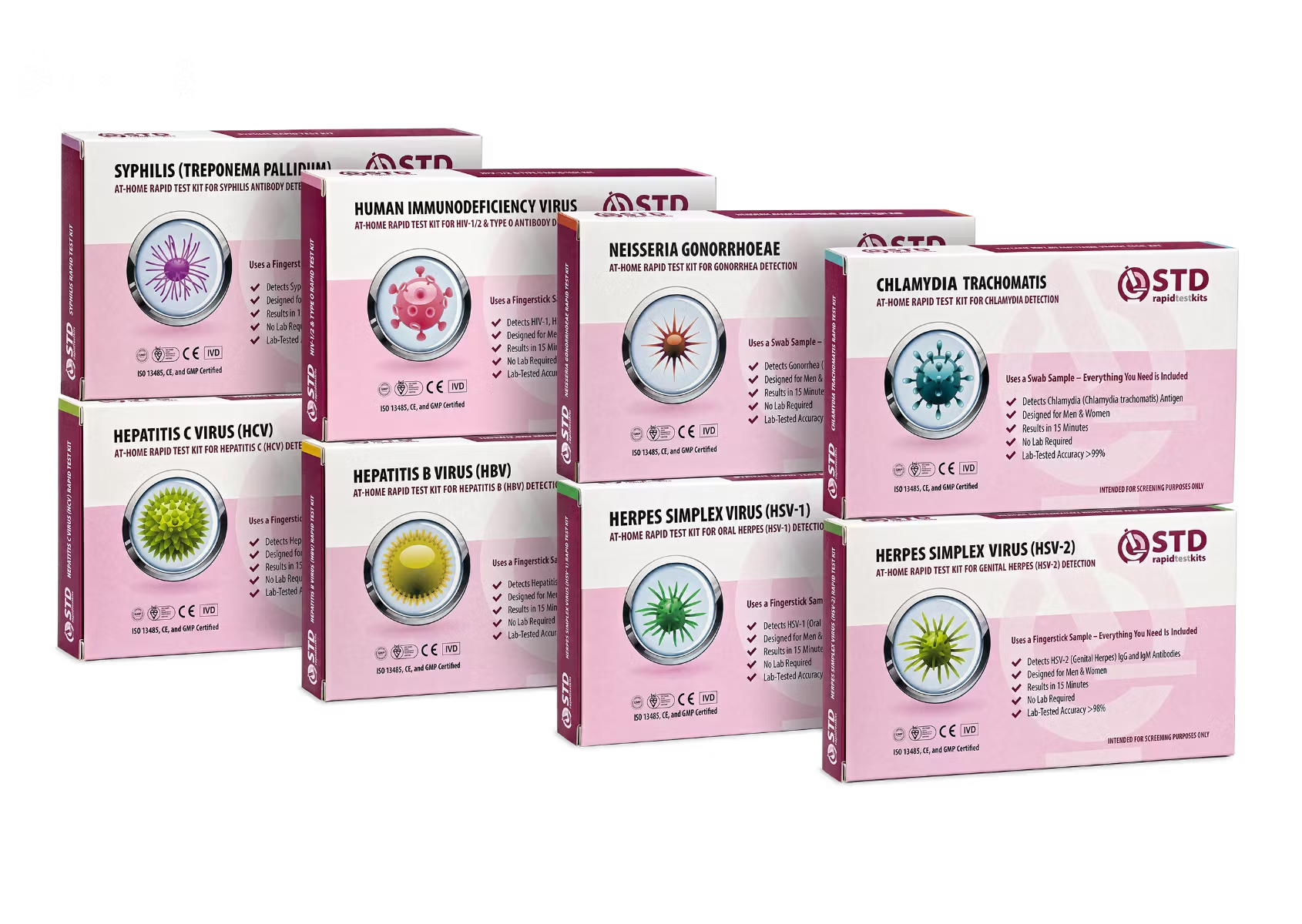
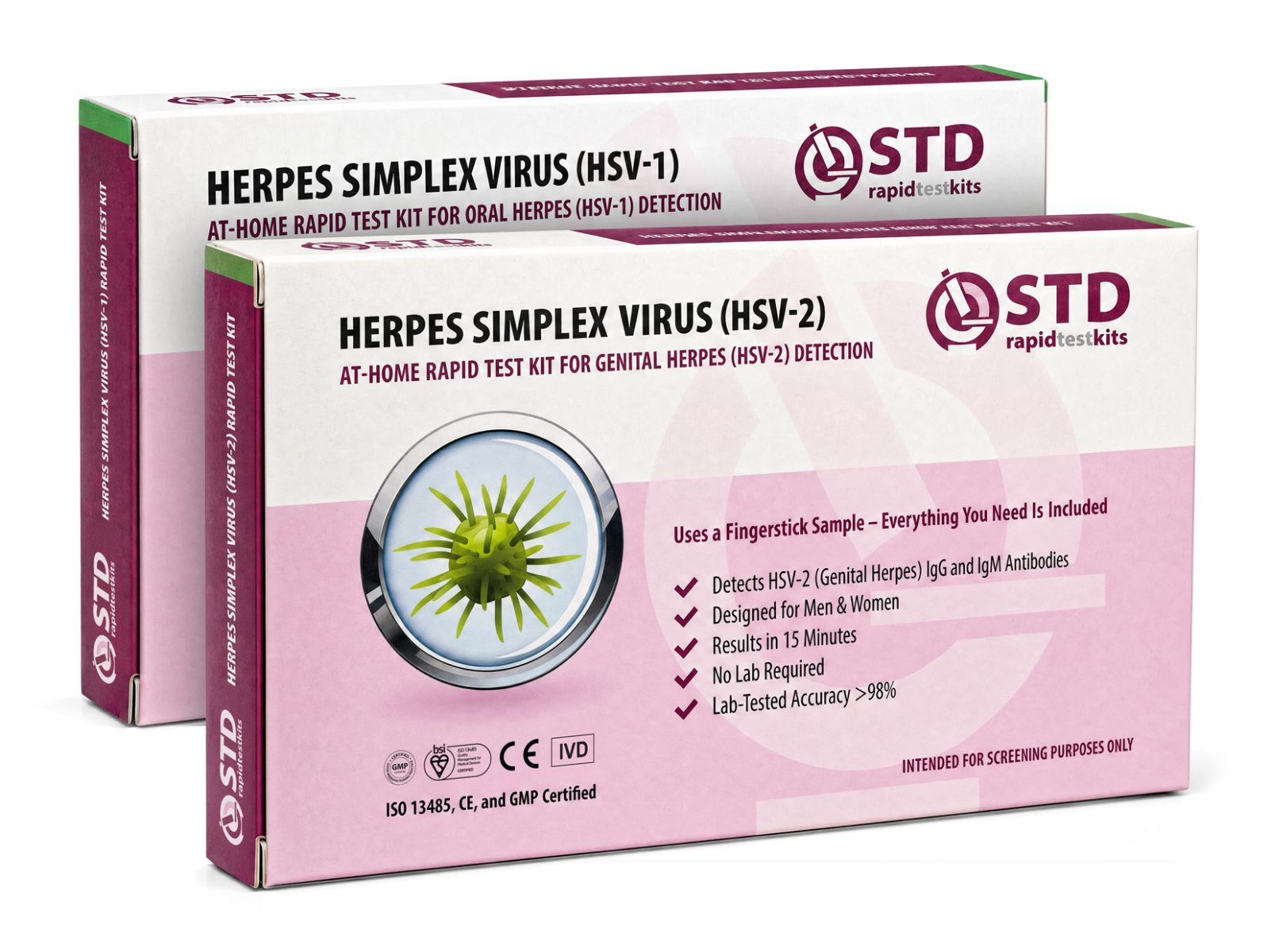
For at-home testing, the options depend on which part of the body matters. The lateral-flow rapid kits sold here cover the genital and bloodborne side: self-collected genital swabs for chlamydia, gonorrhea, HSV-1, HSV-2, trichomoniasis, and HPV (the trichomoniasis and HPV swabs are validated for vaginal self-swab only, so they are women-only kits), plus fingerstick blood for HIV, syphilis, hepatitis B, and hepatitis C. They are screening tools, not laboratory NAATs; a positive home result is worth confirming at a clinic when possible, because labs use NAAT and PCR chemistry that has higher analytical sensitivity than lateral-flow strips. The two approaches are complementary, not competing: at-home tests give you a fast first signal; lab confirmation closes the loop. We do not currently sell pharyngeal (throat) or rectal swab kits, so if your exposure was oral or anal, see a clinic for a NAAT swab of the relevant site, and use our panel to cover the adjacent genital and bloodwork risk from the same exposure event.
A reasonable testing strategy for someone with non-penetrative sexual activity:
- If oral sex was the primary exposure: ask a clinic for a pharyngeal NAAT for chlamydia and gonorrhea, plus a fingerstick HIV and syphilis panel.
- If genital-to-genital contact was the primary exposure: an at-home swab for chlamydia, gonorrhea, and a herpes blood panel covers most of the relevant risk.
- If shared toys or hand-to-genital contact was the primary route: at-home swab still applies; women can add HPV self-swab, while male readers needing an HPV test should see a clinic, since our HPV kit is validated for vaginal self-swab only.
- If the exposure was bloodborne (shared razor in an HBV-positive household, tattoo or piercing in an unregulated setting, medical procedure abroad): fingerstick HIV, HBV, and HCV at six to twelve weeks post-exposure.
Window periods: when your results are reliable
Each STI has a window period: the time between exposure and the point at which a test reliably detects the infection. Testing before the window closes can produce a false negative. Testing after gives accurate results.
Chlamydia and gonorrhea are detectable on a rapid swab around 14 days post-exposure. Syphilis antibody tests are usually reliable by 6 to 12 weeks. HIV detection depends on the test type: fourth-generation antigen-antibody tests (used in lab panels) detect most infections by 45 days post-exposure; antibody-only rapid tests need closer to 90 days. HSV-2 antibody tests are generally reliable by 12 weeks. HPV is not routinely tested without symptoms in men; HPV testing in women is performed at routine cervical screenings rather than after a single exposure. For bloodborne exposures, hepatitis B and hepatitis C antibodies are usually detectable within 6 to 12 weeks, though seroconversion can take longer in some cases.
When risk feels low, the temptation is to test once, see negative, and move on. That can be a trap. People who have not had intercourse often test early just to be safe, see a negative result, and move on; then symptoms appear later or a partner tests positive, and the original test gets blamed for failing. The test did not fail. It was done before the infection was detectable. If anxiety is high, an earlier test for peace of mind followed by a confirmatory test at the end of the window is a reasonable plan.
| STI | Earliest reliable test window | Notes |
|---|---|---|
| Chlamydia | 14 days post-exposure | Self-collected genital swab |
| Gonorrhea | 14 days post-exposure | Self-collected genital swab; throat needs separate clinic NAAT |
| Syphilis | 6 to 12 weeks | Antibody blood test; fingerstick rapid available |
| HIV (4th-generation lab) | 45 days | Antigen-antibody combo test |
| HIV (rapid antibody-only) | 90 days | Antibody-only fingerstick |
| HSV-2 | 12 weeks | Antibody blood test |
| HPV (women) | At cervical screening | Routine screening, not exposure-driven |
| Hepatitis B and C | 6 to 12 weeks | Antibody fingerstick blood test |
Toilet seats, hot tubs, and other myths
The bacteria and viruses that cause sexually transmitted infections need warm, moist environments to survive. They die quickly on cold, dry surfaces. A toilet seat is not a transmission route for any common STI, and neither is a public bench, a gym towel, or a swimming pool. The infections discussed here require direct contact with infected tissue or fluids. The skin on the buttocks is intact and is not an entry point for any STI pathogen.
Hot tubs are similarly not a risk. Chlorinated water kills most pathogens within seconds, and dilution makes infection effectively impossible. The same goes for sharing a swimming pool or using a hotel jacuzzi. Hot tubs can transmit other infections such as Pseudomonas folliculitis or Legionella, but not STIs.
The myths that do bear truth: shared razors and toothbrushes carry small risks for bloodborne infections (hepatitis B, hepatitis C, HIV) when blood residue is involved, and hepatitis B in particular survives on surfaces for days. Shared lip balm or a glass with someone shedding HSV-1 carries a small herpes risk. Both are real, although both are rare in everyday households, and neither is the typical transmission route for the infections people most commonly worry about. The energy spent on toilet-seat worry is better directed at the three real categories: bloodborne, vertical, and direct skin or saliva contact.
Many people with STIs have no symptoms but can still pass them to partners. The only reliable way to know your status is to get tested.
Treatment, retesting, and what "undetectable" means
After a positive diagnosis and a completed treatment course, the question shifts from "do I have this" to "when do I check again." For chlamydia and gonorrhea, the CDC's STI treatment guidelines recommend a retest at three months post-treatment to catch reinfection from a partner who was not treated at the same time. For syphilis, follow-up serology at 6 and 12 months tracks treatment response. For HIV, viral-load monitoring is ongoing once antiretroviral therapy starts.
Treatment outcomes are better than most readers expect. Chlamydia, gonorrhea, and trichomoniasis are typically cleared with one short course of antibiotics. Gonorrhea in particular has developed resistance to several antibiotic classes; current first-line treatment per the CDC is a single intramuscular injection of ceftriaxone, typically given at a clinic. The CDC actively monitors for treatment failures, and if symptoms persist after treatment, follow up with a clinician promptly. Early-stage syphilis is curable with antibiotics. Herpes and HPV are lifelong infections but well-controlled with available medications or self-monitoring, and most herpes carriers go years between outbreaks. The HPV vaccine, even after a positive HPV result, still protects against strains the body has not yet encountered. Routine cervical screening detects HPV-related cell changes before they become cancer.
HIV is now a highly manageable condition. The phrase "undetectable equals untransmittable," often shortened to U=U, is standard public-health messaging from the CDC: a person living with HIV who is on effective antiretroviral therapy and has a sustained undetectable viral load does not sexually transmit HIV to partners. Diagnosis is the first step toward that outcome, which is why early testing matters even when the exposure feels minor.
A positive result after limited contact is not proof that anyone lied. It can mean an infection was carried in from a past exposure that predated the current partnership, that one partner had asymptomatic skin contact with someone earlier who did not know they were infected, or that a virus like HSV-1 entered the picture from non-sexual childhood transmission and emerged later in a sexual context. All of these are biologically ordinary. After testing, treatment, and disclosure to current partners, the work is done. Once you have completed the retesting schedule your clinician recommends, you do not need to keep testing unless a new exposure occurs.
Retest cadence and treatment at a glance
- Chlamydia, gonorrhea, trichomoniasis: usually cleared with a short antibiotic course; retest at 3 months post-treatment to catch reinfection.
- Gonorrhea is now treated with a single ceftriaxone injection at a clinic because of antibiotic resistance; persistent symptoms after treatment warrant clinician follow-up.
- Syphilis: curable with antibiotics in early stages; follow-up serology at 6 and 12 months confirms response.
- HIV: highly manageable on daily antiretroviral therapy; with a sustained undetectable viral load (U=U), no sexual transmission.
- Herpes and HPV: lifelong but manageable; antiviral suppression for HSV, vaccination plus cervical screening for HPV.
FAQs
- Can you really get an STI without having vaginal or anal sex?
- Yes. Skin-to-skin contact, oral sex, shared sex toys, and kissing during an active outbreak can all transmit different infections. Herpes, HPV, and syphilis spread without any fluid exchange. Chlamydia, gonorrhea, and HIV can transmit through oral exposure. Hepatitis B, hepatitis C, and HIV can move through shared razors, needles, or unsterile tattoo equipment.
- What about kissing alone, can that transmit anything?
- Yes for some infections. HSV-1, the virus behind most oral cold sores, spreads readily through kissing, particularly during an outbreak. Syphilis can also spread by mouth contact when an infectious chancre is present in the mouth or on the lips. Chlamydia and gonorrhea do not transmit through ordinary kissing.
- I have never had penetrative sex but tested positive for chlamydia. How?
- Chlamydia can spread through oral sex, contact with infected fluids on hands or sex toys, and rarely through vaginal-to-vaginal contact. Penetration is not required; the bacteria need a hospitable mucous membrane, which the throat, urethra, cervix, and rectum all provide.
- We both said we were clean. How did one of us still test positive?
- That outcome does not require anyone to have lied. HSV-1, HPV, and even syphilis can sit asymptomatic for years and only surface when a relationship triggers first-ever testing. Many infections carried in from past exposures stay invisible until tested for. The conversation gets easier when it focuses on shared management (what we do now) rather than on blame for what may have happened in a different relationship.
- Can fingers or sex toys really pass infections?
- Yes. Fluids on fingers can carry chlamydia, gonorrhea, HPV, or herpes from one person's body to another's, especially when hands move between partners or between body sites without washing. Shared sex toys can transmit the same infections; using a fresh external condom on the toy and washing it between uses lowers the risk substantially.
- Can a tattoo or piercing transmit an STI?
- At licensed studios in regulated countries, the risk is very low because of single-use needles and autoclave sterilization. The risk rises significantly with unregulated studios and procedures performed in low-resource travel settings. Hepatitis B, hepatitis C, and HIV are the relevant infections; testing six to twelve weeks after a higher-risk exposure is the practical move.
- How long after exposure should I wait to test?
- Bacterial infections (chlamydia, gonorrhea) are detectable within two weeks. Syphilis and hepatitis B and C antibody tests need six to twelve weeks. HSV-2 antibody tests are most reliable at 12 weeks post-exposure. For HIV, the window depends on the test: a lab combo test is reliable by 45 days; a rapid antibody-only home test needs 90 days. If you test before the window closes, retest at the longer interval to confirm.
- Can I get an STI from a toilet seat or hot tub?
- No. The bacteria and viruses that cause STIs do not survive long on cold, dry surfaces or in chlorinated water. Toilet seats, gym benches, and hot tubs are not transmission routes for any of the common STIs.
- Can at-home rapid tests help if my exposure was not penetrative?
- Yes, with one caveat. At-home rapid lateral-flow tests can screen for HIV, syphilis, hepatitis B, hepatitis C, chlamydia, gonorrhea, trichomoniasis (women), herpes, and HPV (women) using fingerstick blood or self-collected genital swabs. They cannot test throat or rectal sites; for a pharyngeal or rectal exposure, see a clinic for a NAAT swab.
- U.S. Centers for Disease Control and Prevention. Overview of sexually transmitted infections: transmission, prevalence, and screening guidance.
- U.S. Centers for Disease Control and Prevention. STI transmission risks during oral sex, including pharyngeal gonorrhea, oral chlamydia, and oral HIV exposure factors.
- U.S. Centers for Disease Control and Prevention. Genital herpes overview, asymptomatic shedding, and transmission via skin-to-skin contact even when no visible sores are present.
- U.S. Centers for Disease Control and Prevention. Human papillomavirus prevalence, transmission via skin-to-skin contact, and ACIP vaccination guidance through age 26 routinely and age 45 with shared clinical decision-making.
- U.S. Centers for Disease Control and Prevention. Syphilis stages, the painless primary chancre, and transmission via direct contact with sores.
- World Health Organization. Sexually transmitted infections fact sheet, including global asymptomatic prevalence and recommended screening cadence.
- World Health Organization. Herpes simplex virus fact sheet, including global HSV-1 prevalence and childhood acquisition data (around 3.8 billion people under 50 infected).
- U.S. Centers for Disease Control and Prevention. Hepatitis B overview, including non-sexual transmission via shared razors, toothbrushes, and other items with blood residue, and environmental surface survival of at least seven days.
- U.S. Centers for Disease Control and Prevention. STI treatment guidelines, including ceftriaxone first-line therapy for gonorrhea and post-treatment retest cadence for chlamydia and gonorrhea.
