

Published: June 2025 | Last updated: April 2026 | Editorial review and quality control: Martina N.
Hepatitis is one of the most underestimated sexually transmitted infections in the United States. Most people still think of it as something that happens through needles, contaminated transfusions, or international travel. The reality is different. Hepatitis B (HBV) is one of the most efficiently transmitted sexually transmitted infections, more infectious than HIV per exposure, and hepatitis C (HCV) can spread sexually too, especially during anal sex or when blood is involved. Many infections are silent for months or years, which is exactly what makes them dangerous in casual-sex contexts where conversations are short and assumptions are long. This guide breaks down what actually transmits during which act, when at-home testing produces a reliable result, what the hepatitis B vaccine does and does not cover, and how to fold all of that into your sexual-health routine without turning your life into a clinic.
Can you get hepatitis from casual sex?
Yes. Hepatitis B is efficiently transmitted through unprotected vaginal, anal, and (less commonly) oral sex; the U.S. Centers for Disease Control and Prevention notes HBV is roughly 50 to 100 times more infectious than HIV. Hepatitis C transmits sexually less often, but the risk rises during anal sex, when blood is involved, and among people with HIV co-infection. An at-home HBsAg test becomes reliably useful from around 6 weeks after exposure; HCV antibody tests typically require 8 to 11 weeks, with a confirmatory retest at 3 to 6 months to close the longer seroconversion tail. The hepatitis B vaccine prevents HBV but does nothing for HCV, for which there is still no vaccine.
Key takeaways
- Hepatitis B is one of the most efficiently sexually transmitted viruses, far more infectious per exposure than HIV, and the at-home blood test screens for HBV surface antigen.
- Most acute hepatitis B and C infections produce no symptoms for weeks or longer, so testing after a new partner is the only way to actually know your status.
It is not just needles: how hepatitis really spreads
Hepatitis is a family of viruses that inflame the liver. Three of them matter most for sexually active adults: hepatitis A (HAV), hepatitis B (HBV), and hepatitis C (HCV). They look similar on a lab report and feel similar in the acute phase, but they spread differently and the long-term consequences differ.
Hepatitis A is shed in stool. The most common sexual route is oral-anal contact (rimming) or any sexual practice that ends with hand-to-mouth or mouth-to-mouth transfer of fecal material. According to the CDC, outbreaks among gay and bisexual men have been documented for decades, and a single vaccinated partner does not protect an unvaccinated one. The HAV vaccine exists, is effective, and is recommended for adults at increased risk including men who have sex with men and people with chronic liver disease.
Hepatitis B is bloodborne and present in semen and vaginal fluids in concentrations high enough to transmit easily. The CDC's clinical overview is blunt: HBV is one of the most efficiently transmitted sexually transmitted infections, and the surface antigen can survive on surfaces outside the body for up to seven days. Unprotected vaginal or anal sex with an infected partner is the dominant adult transmission route. The good news: a complete vaccine series provides decades of protection in most adults.
Hepatitis C is bloodborne first. Sexual transmission is real but less efficient than HBV in heterosexual partnerships. The CDC and peer-reviewed surveillance describe higher sexual transmission rates among men who have sex with men, particularly when HIV co-infection, syphilis, or anal practices that produce mucosal bleeding are involved. There is currently no vaccine for HCV, but treatment with direct-acting antivirals now cures most cases in courses that run 8 to 24 weeks depending on the specific regimen and whether cirrhosis is present.
The thread running through all three: visible symptoms are not how you find out. Status is.
Hepatitis A: Spreads through fecal-oral routes, including rimming. Vaccine available and recommended for adults at increased risk.
Hepatitis B: The most efficiently sexually transmitted of the three. Vaccine available and recommended for all U.S. adults aged 19 to 59.
Hepatitis C: Bloodborne first; sexual transmission documented mainly in men who have sex with men, kink, or HIV co-infection contexts. No vaccine yet. Curable with direct-acting antivirals.
Risk by sexual act, what the evidence actually says
Not every sex act carries the same hepatitis risk. The numbers below pull from CDC transmission categorization, WHO fact sheets, and peer-reviewed transmission studies; the descriptors are relative, not absolute, because per-act probability depends on viral load, mucosal injury, co-infections, and vaccination status.
| Sexual act | Hepatitis B risk | Hepatitis C risk | What raises the risk |
|---|---|---|---|
| Unprotected vaginal sex | High | Low to moderate | Menstrual blood, ulcers, untreated co-infections |
| Unprotected anal sex (receptive) | Very high | Moderate to high | Mucosal trauma, HIV co-infection, group settings |
| Oral sex with ejaculation | Moderate | Low | Bleeding gums, dental work, mouth ulcers, other STIs |
| Rimming (oral-anal contact) | Low to moderate | Low | Higher risk for hepatitis A specifically |
| Shared sex toys without cleaning | Moderate | Moderate | Toy passed between partners with no condom or wash between uses |
| Kissing alone | Very low | Very low to none | Open mouth sores plus blood-tinged saliva |
Why symptoms are a terrible test
Acute hepatitis B and C are clinically silent in most adults. The CDC estimates roughly half of new HBV infections produce no symptoms at all in the first weeks, and the figure is similar or higher for HCV. When symptoms do appear, they are vague and easy to misread: fatigue, low-grade fever, nausea, mild abdominal discomfort, occasional joint aches. Yellowing of the skin or whites of the eyes (jaundice) and dark urine appear in only a fraction of acute cases, and by then the liver is already responding to weeks of viral replication.
The infection moves through distinct phases. In the acute window, 2 to 12 weeks post-exposure, symptoms may appear, but most people have nothing to flag. A silent phase follows that lasts weeks to years, where chronic HBV and HCV often produce no daily symptoms while quietly damaging liver tissue. Untreated chronic infection eventually raises lifetime risk of cirrhosis and hepatocellular carcinoma; the CDC and WHO both list viral hepatitis as a leading global cause of liver cancer.
This is why "I feel fine, so I am fine" is the wrong question to ask after a new partner. The right question is when you last had a hepatitis test, and what kind.
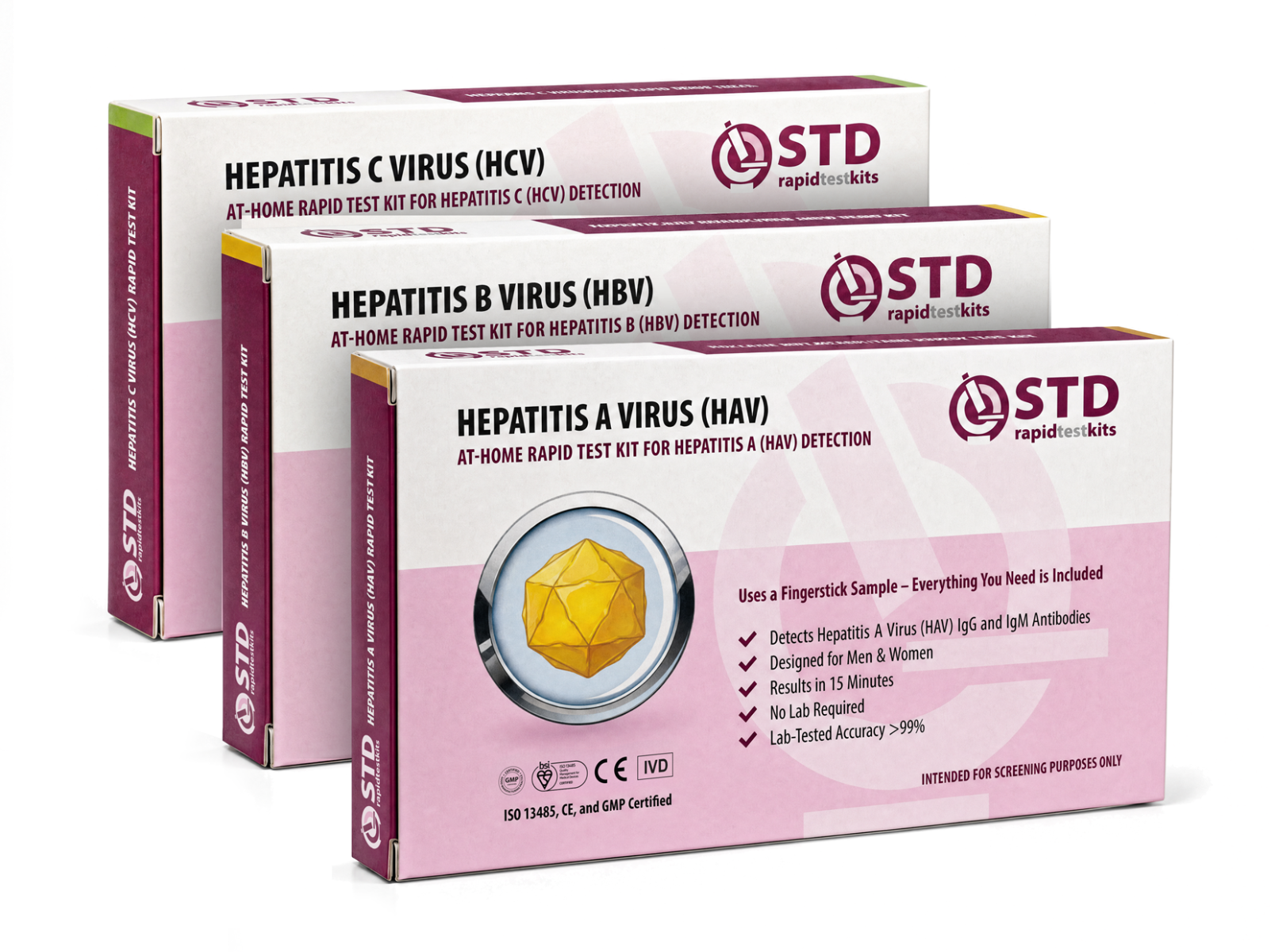
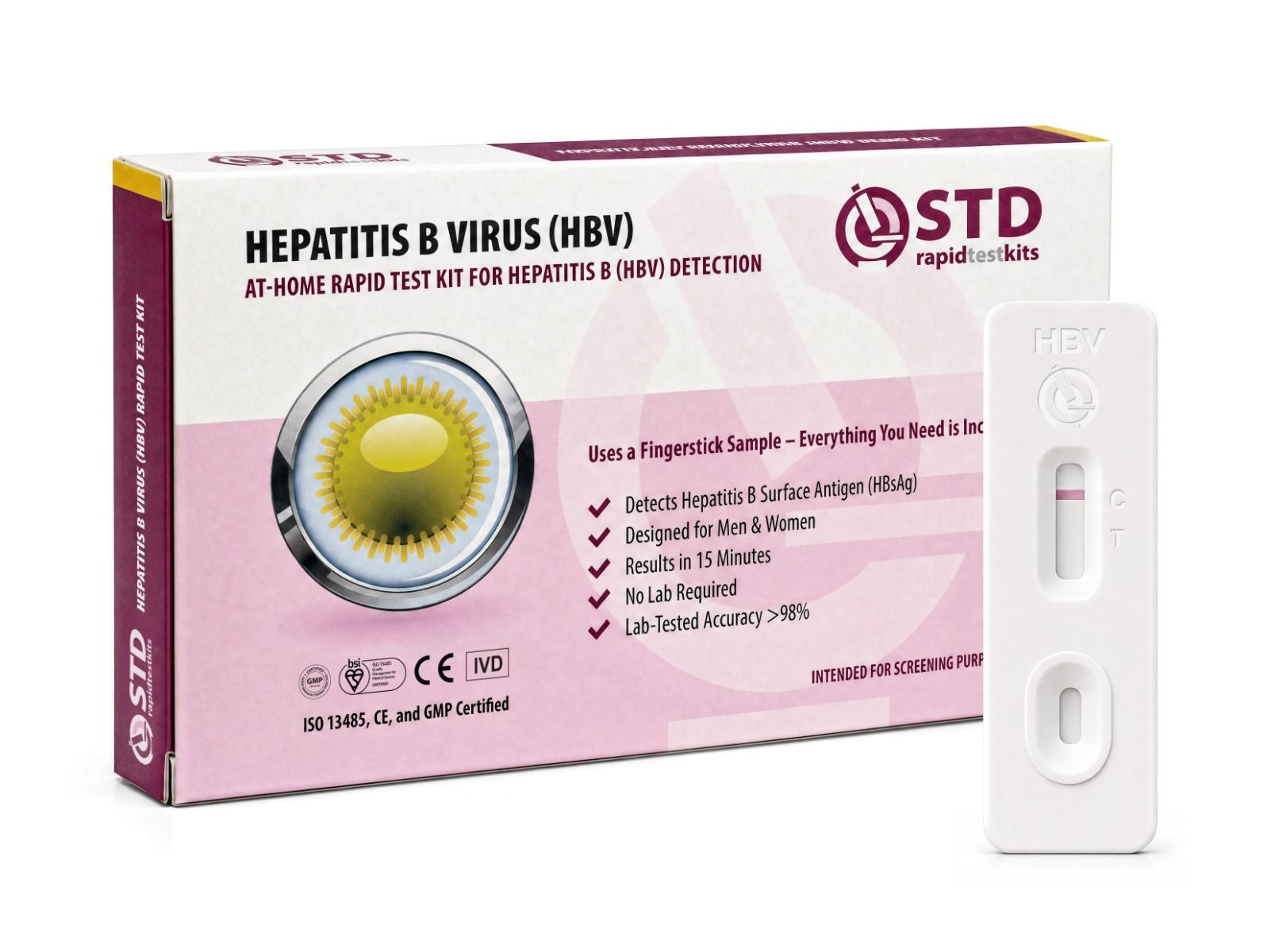
The hepatitis B and C kits sold at stdrapidtestkits.com are rapid lateral-flow fingerstick blood tests, not lab-processed NAAT or PCR. The HBV test detects hepatitis B surface antigen (HBsAg). The HCV test detects HCV antibodies. They are useful screening tools after the window period (see below) and a positive home result should always be followed up with a confirmatory test from a clinician. Lab NAAT/PCR remains the analytical gold standard for confirming active infection and viral load.
When to test after casual sex: the window-period math
Hepatitis tests detect either viral antigens or the antibodies your immune system makes in response. Each takes time to become detectable, and testing too early returns a false negative even in a real infection.
For hepatitis B surface antigen (HBsAg), the antigen our home rapid test screens for, the typical window is 4 to 10 weeks after exposure, with most acute infections detectable by week 6. Some immunocompetent adults clear acute HBV without ever becoming chronic; the test only sees them while the antigen is circulating.
For hepatitis C antibodies, seroconversion most often occurs 8 to 11 weeks after exposure, but can take up to six months in a small share of people. A negative HCV antibody result before week 8 is not reassuring; a clear screen requires retesting at the longer window.
A reasonable casual-sex testing schedule:
- Within 1 to 2 weeks of exposure: useful only as a baseline if you want to document pre-existing status. Do not treat a negative as final.
- At 6 to 9 weeks: the sweet spot for a first meaningful HBsAg and early HCV antibody screen.
- At 3 to 6 months: retest to close the HCV antibody window, especially after high-risk exposure (anal sex, group settings, or a partner whose status you cannot verify).
If you had a needle-stick, condom failure, or sexual assault, do not wait. See a clinician within 72 hours; HBV post-exposure prophylaxis (vaccine plus, in some cases, hepatitis B immune globulin) is most effective when started early.
The hepatitis B vaccine: what it does and who is missing it
The hepatitis B vaccine has existed since 1982 and is one of the most effective vaccines ever developed. A complete series produces protective antibodies in over 90 percent of healthy adults and confers decades of protection. The CDC's 2022 Advisory Committee on Immunization Practices update recommends universal hepatitis B vaccination for all adults aged 19 through 59, and risk-based vaccination for adults 60 and older.
Coverage gaps run along generational lines. Routine infant HBV vaccination became standard in the United States in 1991. Adults born before then, particularly those who never had a college or workplace booster, may have no protection at all and never know it. People who started but did not finish the series (it is two or three doses depending on formulation) may also not have protective titers.
Start by checking your records. Your primary care provider, college health system, or state immunization registry can confirm whether you completed the full series. If records are missing or you are immunocompromised, ask for an anti-HBs titer test, a single blood draw that measures protective antibody levels and confirms current immunity. Adults who are unvaccinated or undervaccinated should complete the series; many sexual-health clinics and pharmacies offer it at low or no cost.
There is currently no vaccine for hepatitis C. Prevention here means barriers, harm reduction, regular testing, and prompt treatment of partners who test positive. If you are unsure where you stand, an at-home HBsAg test tells you whether active hepatitis B is currently circulating, while a clinician-ordered titer measures vaccine-derived immunity.
Hepatitis and queer sex: the conversation public health keeps skipping
The data here is unambiguous. Men who have sex with men experience higher rates of acute hepatitis B and have been the population most affected by the documented sexual transmission of hepatitis C. The CDC and WHO both attribute this to a combination of factors: anal sex carries higher per-act mucosal-trauma risk than vaginal sex, group-sex and chemsex settings concentrate exposure, and HIV co-infection independently raises HCV transmissibility.
What public health messaging often fails to do is meet queer sex where it actually happens. Generic "use a condom and get tested" guidance skips the specifics that matter in queer sexual contexts: the hepatitis A risk from rimming, the HBV and HCV transmission pathway through shared unwashed toys, and the blood-exposure considerations relevant to kink practices like fisting where gloves and hygiene protocols make a measurable difference.
If you are queer and sexually active, two adjustments make a practical difference. First, treat hepatitis A and B vaccination as basic infrastructure; both are recommended by the CDC for men who have sex with men, and the HAV vaccine specifically is the single highest-yield prevention move available right now if you have not had it. Second, make hepatitis testing part of your standard panel: if you already test for HIV and syphilis on a 3- to 6-month cycle, add HBsAg and HCV antibodies to that same draw. Many sexual-health clinics include them automatically; many do not unless you ask.
The CDC recommends both hepatitis A and hepatitis B vaccination for men who have sex with men. Hepatitis A is a 2-dose series given roughly 6 months apart. Hepatitis B is a 2- or 3-dose series depending on formulation (Heplisav-B is a 2-dose schedule given 1 month apart; older formulations follow a 0, 1, and 6 month schedule).
If you do not know your vaccination status, ask your primary care provider for an anti-HBs titer test. It is a single blood draw that confirms whether prior vaccination still gives you protective immunity, and it is generally covered by insurance as preventive care.
Talking to partners without ruining the moment
The hardest part of hepatitis prevention is not the biology, it is the conversation. "Are you clean?" is a question loaded with stigma and produces unreliable answers. What works better is specific, low-stakes language that treats sexual health as shared infrastructure rather than personal accusation.
A few openings tend to land well. You might ask whether a partner has been vaccinated for hepatitis B and mention that you have. You can note that you get tested every few months and ask about their last full panel. Or you can simply suggest swapping recent test results before things go further. If a partner reacts badly to any of these, that is information. People who refuse to discuss testing with a current partner are statistically less likely to have been tested recently, regardless of what they say. You are not being paranoid by asking. You are being rigorous about something that can affect your liver for the rest of your life.
One more useful frame: dating profiles increasingly include vaccination and testing status as standard fields, particularly in queer communities. Being public about your own status normalizes the question for everyone you match with.
If you test positive: what actually happens next
A positive home rapid test is a screening result, not a diagnosis. Follow-up steps depend on which infection it flagged.
For hepatitis B (HBsAg positive): see a primary care provider or hepatologist. They will run a quantitative HBV DNA viral load, an HBeAg test (which speaks to infectivity), and liver function tests (ALT, AST). Most healthy adults clear acute HBV within six months without treatment. People who do not clear it are diagnosed with chronic HBV and managed long-term with antiviral medication when indicated, plus liver cancer surveillance.
For hepatitis C (HCV antibody positive): you need an HCV RNA test next. About 25 percent of people with HCV antibodies have already cleared the infection on their own and the antibodies are a historical record only. The remaining 75 percent have active HCV and benefit from direct-acting antiviral treatment, which now cures more than 95 percent of cases per CDC and WHO guidance, with course length running 8 to 24 weeks depending on the regimen and whether cirrhosis is present. Newer pangenotypic regimens can treat treatment-naive patients without cirrhosis in as little as 8 weeks; longer courses apply for patients with cirrhosis or specific genotypes.
Either way, the same prevention steps apply during the workup: condoms with current partners, do not share razors or toothbrushes, do not donate blood, and tell recent partners they should be tested. Both HBV and HCV are now manageable or curable when caught early, with most acute HBV clearing on its own and chronic HCV cured by oral DAA therapy in the majority of cases.
Hepatitis B virus is the most common cause of viral hepatitis transmitted through sexual contact. All sexually active persons not previously vaccinated should receive hepatitis B vaccination.
Common myths the data refutes
Hepatitis attracts more outdated folklore than almost any other STI. Below are four of the most common claims and what current evidence actually says about each.
"You only get hepatitis from needles." False for HBV, which is dominantly sexually transmitted in U.S. adults. Partly true historically for HCV, but sexual transmission is documented and rising in specific populations.
"Hepatitis has obvious symptoms." False. The majority of acute infections are silent or vague, and chronic infection can run for years before liver damage produces noticeable signs.
"Oral sex is risk-free." Lower risk than penetrative sex, but not zero, particularly with bleeding gums, recent dental work, or co-occurring oral STIs.
"If my partner looks healthy, I am fine." You cannot tell hepatitis status by looking at someone, and a test is the only reliable answer.
How hepatitis got left out of the sex-ed conversation
For decades, public-awareness campaigns about hepatitis focused on injection drug use and contaminated blood transfusions. That framing shaped a generation of sex-ed curricula. HIV got the safe-sex spotlight in the 1980s and 1990s. HPV got it in the 2000s after vaccine approval. Hepatitis B, despite being more efficiently sexually transmitted than either, never got the same cultural moment.
Two things are slowly changing that. First, updated CDC guidance now recommends universal hepatitis B screening at least once for all adults 18 and older, expanding from the previous risk-based-only approach. Second, dating apps and queer-health platforms have begun normalizing vaccination and testing status alongside HIV disclosure. Hepatitis testing is following HIV disclosure into the cultural mainstream, just on a roughly fifteen-year lag.
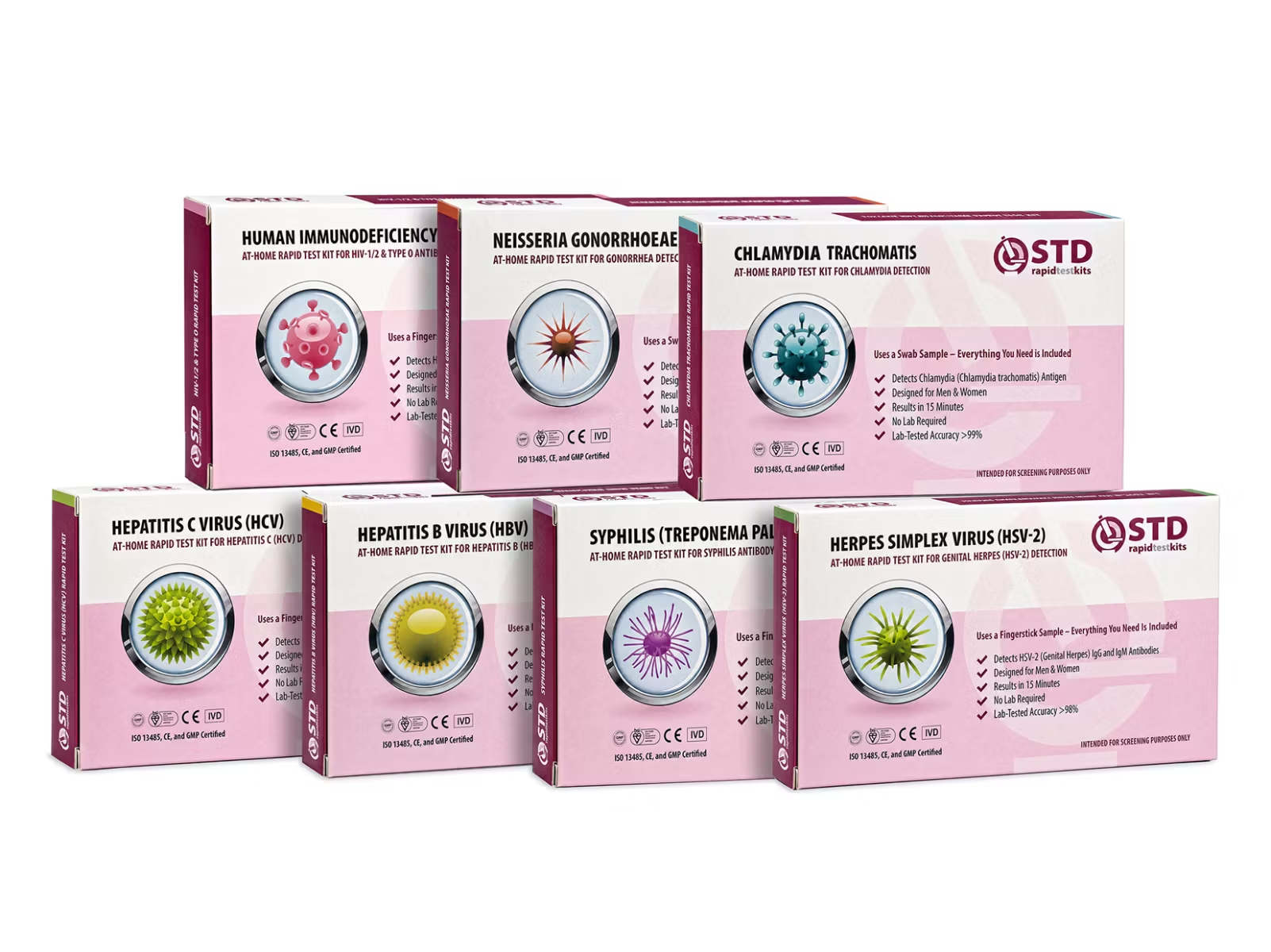
The practical takeaway for any sexually active adult right now: do not wait for the cultural conversation to catch up. Verify your hepatitis B vaccination status, add HBsAg and HCV antibodies to your routine STI panel, and treat the home rapid kit as a first-line screening tool you reach for after a new partner.
Frequently asked questions
- Can you really get hepatitis from a single hookup?
- Yes. Hepatitis B in particular transmits efficiently per exposure, and a single act of unprotected vaginal or anal sex with an infected partner is enough. Hepatitis C transmits less efficiently per act but can still happen, especially during anal sex or when blood is involved. What matters most is whether infected fluid reached a mucosal surface or a break in the skin, regardless of how many partners someone has.
- How long after exposure should I take an at-home hepatitis test?
- For hepatitis B surface antigen, most acute infections become detectable around 6 weeks post-exposure. Waiting until roughly 8 to 9 weeks is a practical first-test date because it also opens the early HCV antibody window, covering both infections in one draw. A second test at 3 to 6 months closes the HCV seroconversion tail. Testing before week 6 yields only a pre-exposure baseline, not a final result on this specific exposure.
- Is oral sex actually risky for hepatitis?
- It is lower risk than penetrative sex but not zero. Hepatitis B can transmit during oral sex when bleeding gums, recent dental work, mouth ulcers, or untreated co-occurring STIs are present. Rimming (oral-anal contact) is the dominant sexual route for hepatitis A specifically. Hepatitis C transmission through oral sex alone is rare without blood exposure.
- Does the hepatitis B vaccine protect against hepatitis C?
- No. The HBV vaccine targets the hepatitis B surface antigen and does not provide cross-protection. There is currently no licensed vaccine for hepatitis C anywhere in the world. Prevention for HCV depends on barrier methods, harm-reduction practices, and routine testing followed by direct-acting antiviral treatment when indicated.
- I was vaccinated as a kid. Am I still protected from hepatitis B?
- Most likely yes. The CDC notes that protection from a complete childhood HBV series typically lasts decades and a routine booster is not recommended for healthy adults. However, if you are unsure whether you completed the full series (two or three doses depending on formulation), or you are immunocompromised, ask your provider for an anti-HBs titer test. It is a single blood draw and confirms current immunity.
- Can I really get hepatitis from sharing sex toys?
- Yes. Both HBV and HCV can transmit when a toy goes from one partner to another without cleaning or a fresh condom in between, particularly when even microscopic blood or fluid is involved. HCV in particular can survive on surfaces longer than people assume. Wash toys with soap and water between partners, and use a fresh condom over toys that pass between bodies.
- Is hepatitis B an STD?
- Yes. The CDC classifies hepatitis B as a sexually transmitted infection and the WHO estimates global infections in the hundreds of millions, with sexual transmission being the dominant adult route in the United States. Vaccination and routine screening are recommended in current STI treatment guidelines.
- Is hepatitis C curable?
- Yes. Direct-acting antivirals introduced in the past decade now cure more than 95 percent of hepatitis C cases per CDC and WHO treatment guidance. Course length runs 8 to 24 weeks depending on the regimen and whether cirrhosis is present, with shorter courses available for treatment-naive patients without cirrhosis. Earlier detection means less liver damage by the time treatment starts, which is why testing after a new partner matters even when you feel fine.
Bottom line: know your status, vaccinate, retest
Hepatitis B and C do not behave like the infections most people picture when they hear "STI." There is rarely a visible warning. The acute phase is mostly silent. The damage shows up years later if it shows up at all. Casual sex is not the problem; not knowing your status is.
The practical takeaway is short. Confirm that your hepatitis B vaccination is complete and your titer is still protective. Add hepatitis B and C to whatever STI panel you already run. And treat a positive home result as the start of a workup rather than a diagnosis. The home rapid test is fast, private, and meaningfully accurate after the window period; what it cannot do is replace the clinician you call after a positive result. Use both, in that order.
- U.S. Centers for Disease Control and Prevention. Hepatitis B information for the public and clinical providers, including transmission, symptoms, and vaccination recommendations.
- U.S. Centers for Disease Control and Prevention. Hepatitis C information including sexual transmission risk, screening recommendations, and direct-acting antiviral treatment.
- World Health Organization. Hepatitis B fact sheet covering global burden, transmission routes, and prevention through vaccination.
- World Health Organization. Hepatitis C fact sheet covering global prevalence, sexual transmission risk factors, and antiviral cure rates.
- U.S. Centers for Disease Control and Prevention. Sexually Transmitted Infections Treatment Guidelines, viral hepatitis section covering screening, vaccination, and clinical management.
- Mayo Clinic. Hepatitis C patient education root page covering symptoms, causes, diagnosis, and treatment options.
