
Published: October 2025 | Last updated: May 2026 | Editorial review and quality control: Martina N.
You bought the ticket, packed the glitter, and earned the wristband. Now the weekend is over, the playlist is on loop, and a small voice asks: was anyone tested before that tent? Festival weekends do not invent new sexually transmitted infections (STIs). They concentrate ordinary risk into a 72-hour window: new partners met fast, judgment softened by alcohol or other substances, and a sleep debt that makes everything from condom retrieval to consent conversations harder than they would be on a normal Tuesday.
That does not mean festivals are dangerous. It means the week after a festival is the right time to think about testing the same way you think about hydration: a sensible reset, not a panic move. This guide explains the actual mechanics of festival STI risk, the testing timeline for each common infection, and what to do if your weekend included an exposure you would rather not repeat.
Key Takeaways
- Festivals compress new partners, substance use, and sleep loss into 72 hours. The risk factor is the behavior pattern, not the festival itself.
- Plan a single testing window 2 to 3 weeks after a festival hookup for bacterial STIs, and a follow-up at 12 weeks for HIV and syphilis if exposure was high risk.
Why Festival Weekends Multiply STI Exposure
The factors that raise STI risk are well documented in public-health literature: more new partners in a short period, condomless sex, substance use, and sex with a partner whose recent testing history is unknown (WHO STI fact sheet). A festival weekend tends to stack all four at once.
Inhibition drops, and so does protection follow-through. Alcohol and recreational drugs reduce the cognitive overhead available for negotiating safer-sex steps. You may pack condoms with the same care you pack sunscreen, then forget them in a tent ten minutes before you need them. Studies of music-festival attendees consistently find that intoxication is associated with higher rates of condomless sex among people who had a casual partner at the event.
Partner pools are wider and more anonymous. Large festivals pull crowds from across the country and across borders. The person you meet on Saturday may have spent the previous month in a different state or continent, with a different baseline STI profile than your local dating pool. This is not a moral problem. It is an epidemiological one: wider mixing networks transmit infections faster, and rising US chlamydia, gonorrhea, and syphilis rates over the past several years reflect exactly that pattern (CDC STI surveillance).
Sleep loss and physical proximity matter too. Skin-to-skin contact transmits some infections (notably herpes simplex virus and human papillomavirus) regardless of condom use. Communal sleeping, shared bathrooms, and tight crowds do not transmit those infections by themselves, but the social setting that comes with them creates more contact opportunities than a normal weekend at home.
On-site health resources are usually triage, not screening. Festival medical tents are staffed to handle dehydration, heat exhaustion, falls, and overdoses. A few progressive events distribute free condoms and have peer harm-reduction volunteers, but routine STI testing on the festival grounds is rare. Plan to test after you get home, not at the event.
A festival weekend compresses four well-documented STI risk factors into one short window:
- More new partners in a short period.
- Substance use that softens judgment about protection.
- Condomless sex (alcohol cuts follow-through, not intent).
- Sex with someone whose recent testing history is unknown.
Festivals do not invent these factors; they stack them.
The Infections Most Likely to Ride Home With You
Six infections drive most of the post-festival STI conversation. Knowing which is which shapes both the timing and the type of test you should plan for.
Chlamydia and gonorrhea are the two most commonly diagnosed bacterial STIs in the United States, and most cases produce no symptoms in the first weeks (CDC chlamydia information; CDC gonorrhea information). Both are curable with antibiotics if caught early. Both can cause pelvic inflammatory disease, infertility, or epididymitis (inflammation of the tube behind the testicle that can cause pain and fertility problems) if left untreated for months.
Antibiotic-resistant gonorrhea is a genuinely new concern. Strains less responsive to ceftriaxone, currently the first-line treatment, have been documented in several countries and are tracked closely by US public-health surveillance (CDC about gonorrhea, including drug-resistant strains). Festival crowds with international travelers are exactly the kind of mixing environment where resistant strains can spread before local clinics see them. Catching gonorrhea early, when treatment options are still effective, matters more than it did ten years ago.
Herpes simplex (HSV-1 and HSV-2) spreads through skin-to-skin contact, including contact with skin that looks normal at the time. Condoms reduce risk but do not eliminate it, because not all sores or shedding sites are in areas a condom covers (CDC genital herpes information). A first outbreak can appear anywhere from two days to several weeks after exposure, and many people never have a clearly visible outbreak at all.
Human papillomavirus (HPV) follows the same skin-to-skin route as herpes. Most infections clear on their own, but some persistent strains cause cervical, anal, oropharyngeal, or penile cancers years later. The vaccine is the best long-term protection; routine vaccination is recommended through age 26, and shared clinical decision-making applies through age 45.
HIV and syphilis are less common than chlamydia at festivals, but the stakes are higher. US syphilis rates have risen sharply over the past decade, and congenital syphilis follows that trend. HIV is a lifelong infection that is now manageable but not curable. Both are detectable with fingerstick blood testing, with the timing notes that follow.

Why Testing After a Festival Matters More Than Blame
An STI is a health event, not a character verdict. The framing matters because shame is the single biggest reason people delay testing, and delayed testing is the single biggest reason infections continue to spread (WHO STI fact sheet). A few concrete reasons to plan a test even if you feel fine:
Most early infections are silent. The CDC's chlamydia information notes that most people with the infection have no symptoms in the first weeks. A normal-feeling body is not evidence of a clean exposure. It is just evidence that the infection has not produced symptoms yet, which is exactly when treatment is simplest and complications are still preventable.
Early catches are short, easy treatments. Uncomplicated chlamydia and gonorrhea are treated with a single antibiotic course in most cases. Once an infection has been silent long enough to cause pelvic inflammatory disease or epididymitis, treatment becomes more involved and the fertility risk climbs.
Testing protects future partners, not just you. A festival hookup is rarely the end of someone's dating life. Knowing your status from the past two to three weeks lets you answer a new partner's question with a date and a result, not a guess.
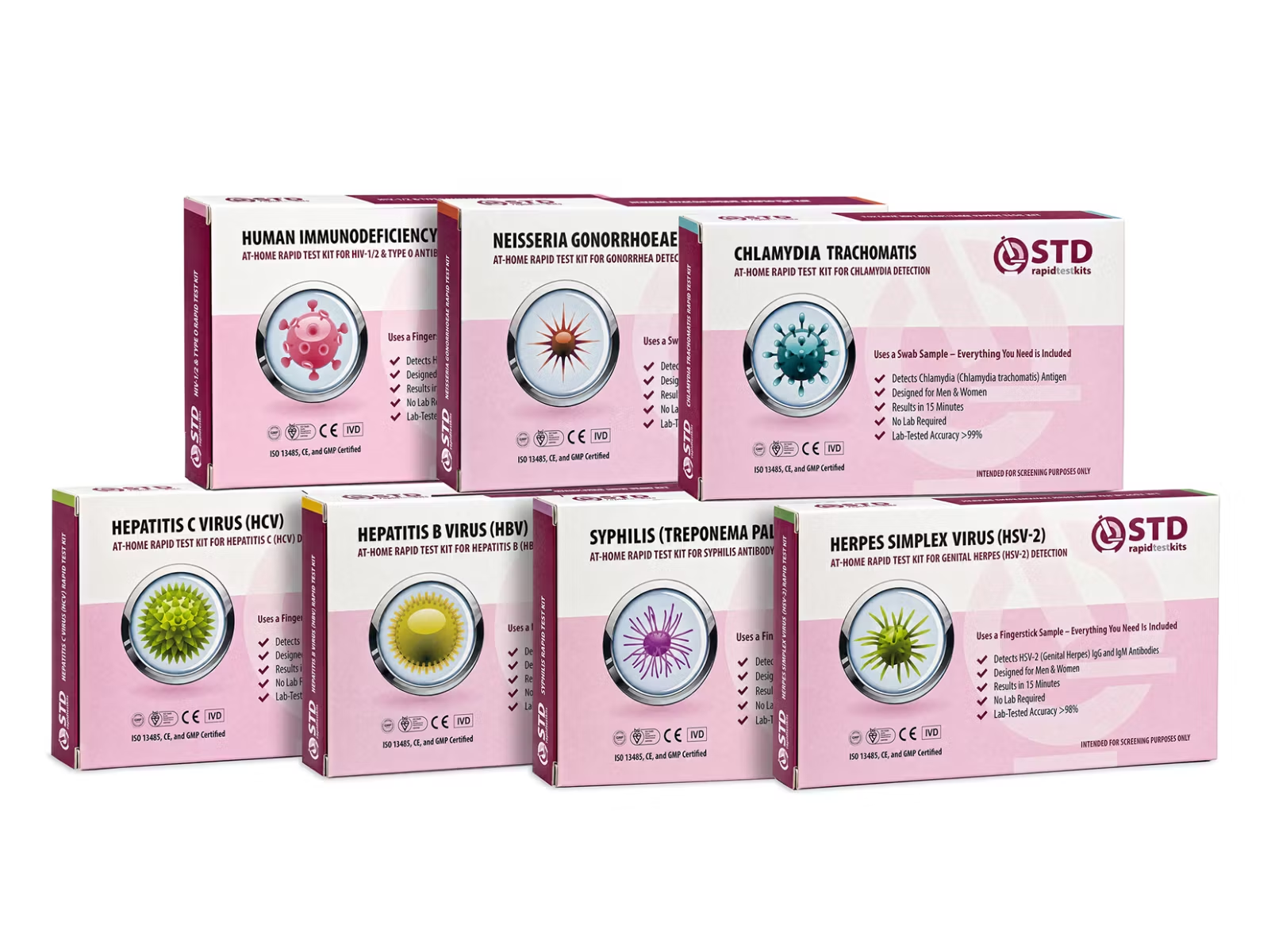
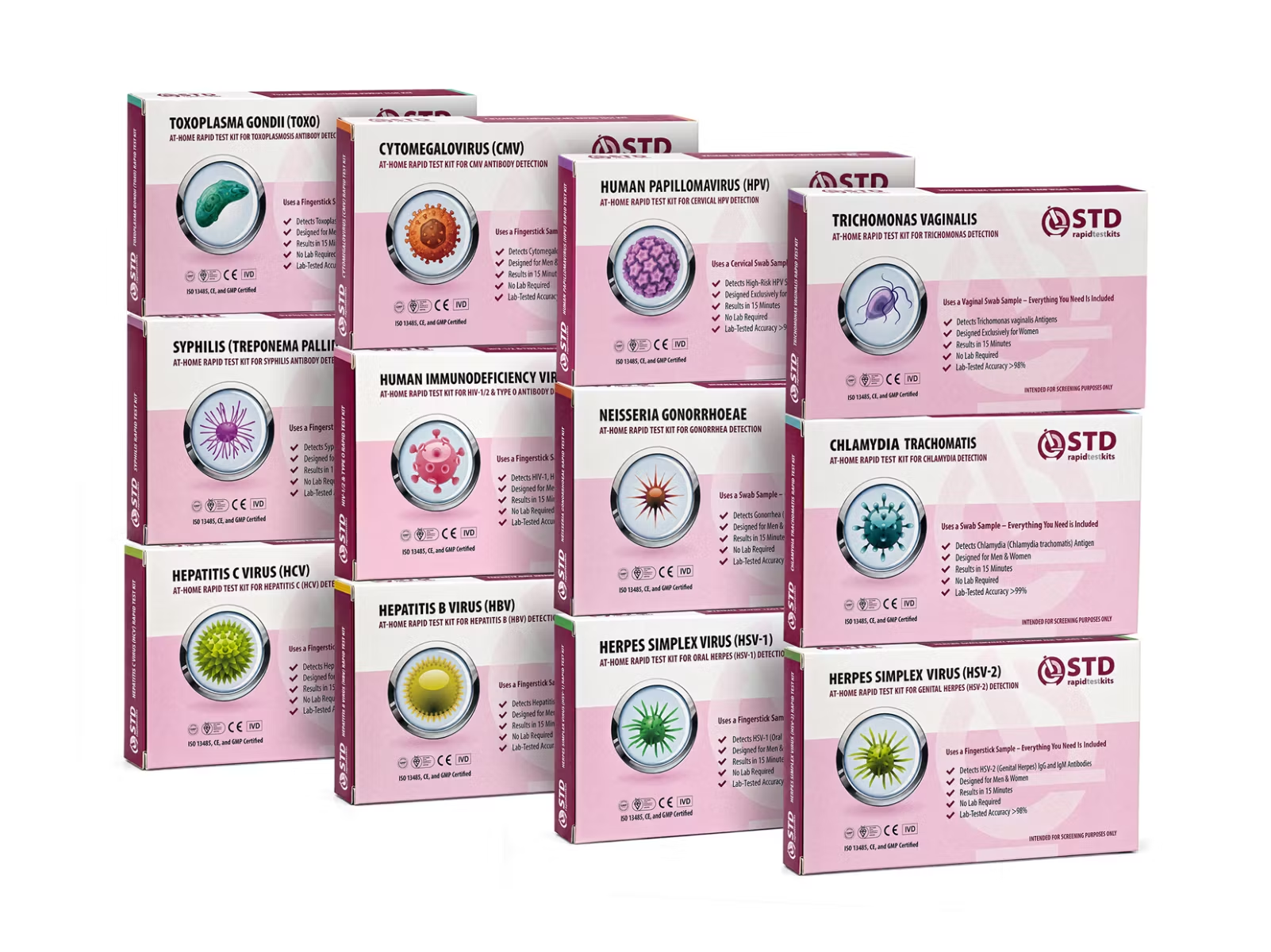
One disclosure before the product mention below: stdrapidtestkits.com publishes this article and sells the at-home test kits surfaced in the banners. We point to specific kits based on whether they fit the topic in front of the reader, not on commercial benefit.
Your Festival Survival Playbook
Most of the risk reduction here is mundane, not heroic. The point is to make safer choices the default option so you do not have to negotiate them at 2 a.m. in a tent.
Before you go:
- Pack condoms in three places (bag, pocket, tent). If you have to walk somewhere to find one, the moment will pass.
- If you take medication on a daily schedule (PrEP, hormonal contraception, antiretrovirals), pre-set phone alarms in the festival's local time zone. Festival days break routines.
- If you are HPV-vaccine eligible and not yet vaccinated, this is a good calendar prompt. The vaccine has weeks-long protection ramp-up, so plan ahead of next season.
During the weekend:
- Pair up with a sober-check friend. Agree before the festival starts that either of you can wave off a hookup that looks impaired without it being a friendship issue.
- Treat consent as a continuous check, not a single yes. Substances complicate this; if your partner cannot answer a basic question clearly, the answer to the next-step question is no.
- Keep the festival map handy and know where the health tent is. Most can handle emergency contraception requests and sexual-assault referrals even if they do not offer STI testing on-site.
After you get home:
- Note the date of any unprotected or partly-protected encounter. Window-period math depends on that date.
- Plan one test at 2 to 3 weeks for bacterial STIs and a second at 12 weeks for HIV and syphilis if the exposure was high risk. Details in the next section.
- If symptoms appear (sores, discharge, burning urination, unexplained rash, painful lymph nodes), do not wait for the window-period clock. Test sooner and see a clinician.
Write down the date of any unprotected or partly-protected encounter from the weekend. Window-period math, treatment timing, and partner-notification dates all depend on knowing this number. Memories of festival weekends fade fast; the date does not need to fade with them.
When to Test, and What Each Test Catches
Window periods are the gap between exposure and when a test can reliably detect the infection. Test too early and a real infection may not yet trigger a positive result. Wait too long and you may have already passed it along. The CDC's testing guidance maps cleanly to a two-step schedule for most festival scenarios (CDC HIV testing).
2 to 3 weeks after exposure: bacterial STIs. This is when chlamydia, gonorrhea, and trichomoniasis are reliably detectable. At-home swab tests for chlamydia and gonorrhea use the same sample type as a clinic swab and give a rapid result. Trichomoniasis swabs are validated for vaginal self-collection only; our at-home kit is not available for male readers, who should see a clinic for that specific test.
4 to 6 weeks after exposure: early HIV and syphilis check. Fourth-generation laboratory HIV tests can detect infection from roughly 18 to 45 days, with most modern tests positive by day 45. Rapid antibody HIV tests have a longer window. A first syphilis antibody test at 4 to 6 weeks catches many early infections, but a negative result here is not final.
12 weeks after exposure: confirmatory HIV, syphilis, and herpes antibody testing. A negative at 12 weeks closes the window for HIV with high confidence under current US testing guidance. Syphilis antibody tests are reliably positive by 12 weeks if infection occurred. Herpes type-specific antibody tests can take weeks to months after exposure to become reliably positive, so a herpes blood test soon after a possible exposure can miss a recent infection; the CDC notes that type-specific serologic tests are most useful when timed to allow antibodies to develop (CDC genital herpes information).
Symptoms override the schedule. Sores, ulcers, unusual discharge, a rash on palms or soles, or a fever with sore throat in the weeks after a festival are reasons to see a clinician now, not to wait for a window-period clock.
Test 1: 2 to 3 weeks after the festival. Covers chlamydia and gonorrhea (the two most common infections to plan for) and starts the HIV/syphilis clock.
Test 2: 12 weeks after the festival, if your encounter was unprotected or higher risk. Closes the HIV window, confirms syphilis status, and is the right time for a herpes antibody test if you want one.
If your exposure was higher risk for HIV (e.g., sex with a partner whose status you do not know in a higher-risk context), add an early fingerstick blood test at 4 to 6 weeks before the 12-week confirmatory draw. The early test catches most recent infections; the 12-week test closes the window.
Festival Myths That Can Cost You
Myth: Condoms make sex completely safe. Condoms used correctly and consistently dramatically reduce risk for chlamydia, gonorrhea, HIV, syphilis, hepatitis B, and trichomoniasis. They reduce, but do not eliminate, risk for herpes and HPV because both spread through skin contact in areas a condom does not cover. The implication is not to skip condoms. It is to pair condoms with periodic testing and HPV vaccination for the gaps condoms cannot close.
Myth: Festival health tents will test me for STIs. Most do not. A handful of harm-reduction-focused events run pop-up testing collaborations with local clinics, but the default assumption should be that on-site staff handle injuries, dehydration, and overdoses, not STI screening. Plan to test at home after you return.
Myth: I would know if I had something. The most common pattern for chlamydia, gonorrhea, and early HIV is no symptoms at all in the first weeks. Many people first learn they have an STI when a partner tests positive, or during a routine annual screening months later. A symptom-free body is not the same as a tested body.
Myth: One time can't infect me. A single condomless encounter with an infected partner is enough for most common STIs. The probability per encounter varies by infection, by which partner is infected, and by other factors, but it is never zero.
Myth: At-home tests are not as good as lab tests. At-home rapid tests use lateral-flow chemistry and are designed for screening. A positive result is worth confirming with a laboratory NAAT or antibody test when possible, especially for HIV and syphilis. The lab and the at-home test are complementary, not equivalent.
Chlamydia, gonorrhea, and early HIV most commonly produce no symptoms in the first weeks. A symptom-free body and a tested body are different things. This is the single reason the testing schedule is built around dates from the encounter, not from the first sign of trouble.
Beyond Infection: Consent, Aftercare, and When to See a Clinic
STI risk is not the only health risk a festival weekend can leave behind. Consent and post-exposure prophylaxis (PEP) for HIV both belong in the same week-after window as testing.
Consent and substances are mixed. A partner who cannot reliably answer questions about the day, the place, or what they would like to happen next is not in a state to give meaningful consent. If you suspect that an encounter you had crossed that line in either direction, the resources to talk to are not random. In the US, the National Sexual Assault Hotline (1-800-656-4673, RAINN) and local rape crisis centers offer confidential support and can refer you to a forensic exam if you want one. Forensic exams are most useful within 72 hours.
Post-exposure prophylaxis (PEP) for HIV is time-sensitive. If you had a high-risk exposure to HIV (sex with a partner who is HIV-positive or whose status you do not know in a higher-risk context), a 28-day course of PEP started within 72 hours can prevent infection. This requires a clinic, not an at-home test. Sooner is better; 24 hours is much more effective than 72.
Visible symptoms call for a clinic, not a self-test. A sore, ulcer, unusual discharge, or rash on palms or soles is a reason to be seen in person. Self-tests are designed for screening of asymptomatic exposures, not for diagnosing an active lesion.
More than 1 million curable sexually transmitted infections are acquired every day worldwide, the majority of which are asymptomatic.
Don't Let One Weekend Define the Year
The work after a festival is not penance. It is the same calm checklist you would run after any other event that mixed new people, new substances, and a short sleep: drink water, catch up on rest, and book a test if the weekend had encounters you would want to know about. Most tests will come back negative. The ones that do not come back negative are precisely the ones where catching them at three weeks is dramatically better than catching them at three months. None of this requires you to feel bad about a weekend you enjoyed. It requires you to act on information that you are now in a position to gather. Test yourself. Treat what comes up. Plan the next weekend with the same care you planned the outfits for this one.
Three things to do this week
- Write down the date of any condomless or partly-condomless encounter from the festival.
- Order or book a chlamydia and gonorrhea test for 2 to 3 weeks after that date.
- If the encounter was higher risk for HIV, add a fingerstick HIV and syphilis test at 4 to 6 weeks and a confirmatory one at 12 weeks.
Frequently asked questions
- How soon after a festival should I get tested?
- The two-test schedule: a rapid swab for chlamydia and gonorrhea at 2 to 3 weeks after the festival, then a fingerstick blood test for HIV and syphilis at 12 weeks if the encounter was unprotected or higher risk. If symptoms appear sooner, do not wait for the clock.
- Can I get an STI if I used a condom every time?
- Condoms used correctly dramatically reduce the risk of chlamydia, gonorrhea, HIV, syphilis, hepatitis B, and trichomoniasis. They reduce but do not eliminate the risk of herpes and HPV, which spread through skin contact in areas a condom does not cover. Periodic testing is still worthwhile after new-partner encounters.
- I had one unprotected encounter. Am I definitely infected?
- No. A single condomless encounter with an infected partner can transmit an infection, but it does not guarantee transmission. Per-encounter probability varies by infection, by which partner is infected, and by other factors. Testing is the only way to know.
- Can I get tested without going to a clinic?
- Yes for screening. Our at-home rapid kits cover the most common infections using either a fingerstick blood drop or a self-collected swab. A positive screening result is worth confirming with a laboratory test, and visible symptoms (sores, unusual discharge, rashes) are a reason to see a clinician in person.
- Are at-home tests as accurate as lab tests?
- At-home rapid tests use lateral-flow chemistry; clinic labs typically use nucleic-acid amplification (NAAT) for bacterial STIs and antibody or antigen tests for blood-based infections. The lab tests have higher analytical sensitivity, especially close to a window period. For screening after a known exposure outside the early window, at-home rapid tests are practical and useful.
- What about post-exposure prophylaxis (PEP) for HIV?
- PEP is a 28-day course of antiretroviral medication that can prevent HIV after a high-risk exposure if started within 72 hours, ideally sooner. It requires a clinic visit, not an at-home test. If your festival included a known or suspected HIV exposure, contact a clinic or an emergency department now rather than waiting for the testing window.
- Should I stop going to festivals?
- No. Festivals are not inherently more dangerous than any other social setting that includes new partners. The point is to layer cheap, durable precautions: condoms within reach, a sober-check friend, and a calendar reminder to test 2 to 3 weeks after you get home. Those three habits remove most of the avoidable risk.
- World Health Organization. Sexually transmitted infections (STIs) fact sheet. Background prevalence and per-day incidence figures used in this article.
- U.S. Centers for Disease Control and Prevention. STI Statistics surveillance hub. Used for US incidence trends in chlamydia, gonorrhea, and syphilis cited in the article.
- U.S. Centers for Disease Control and Prevention. Chlamydia information page. Source for asymptomatic chlamydia and treatment claims.
- U.S. Centers for Disease Control and Prevention. About Gonorrhea (includes discussion of drug-resistant strains and current first-line treatment). Source for the ceftriaxone-resistance and surveillance discussion.
- U.S. Centers for Disease Control and Prevention. About Genital Herpes. Source for HSV transmission via skin-to-skin contact, condom efficacy limits, and the general role of type-specific serologic testing for HSV.
- U.S. Centers for Disease Control and Prevention. HIV testing guidance. Source for HIV window-period timing used in the testing schedule.
