
Published: November 2025 | Editorial review and quality control: Martina N.
STD testing is not one-size-fits-all, even though most clinics hand patients the same urine cup at every visit. The sample you provide determines which body site is checked. A urine sample reflects what is happening in the urethra. It does not reflect what is happening in the rectum, and that gap is where a meaningful share of chlamydia and gonorrhea infections quietly continues after receptive anal exposure.
This guide covers who benefits from a rectal swab, what the test involves, how it differs from urine testing, and where at-home kits help versus where a clinic visit is the correct call. The goal is clarity, not pressure to test more than you need.
Key Takeaways
- A standard urine STI test does not detect rectal infections. The sample location is what gets checked, and a negative urine result says nothing about rectal tissue.
- If receptive anal exposure has happened, a rectal swab is the only way to reliably screen that site, regardless of whether symptoms are present.
Why Site-Specific Testing Matters
Sexually transmitted infections stay local to the tissue where exposure happens. Bacteria or viruses do not travel into a urine stream just because they exist somewhere else in the body. They sit in the tissue they were transmitted to until something physically samples that tissue. This is the reason public-health guidance has shifted toward what clinicians call extragenital screening: testing at every anatomic site where unprotected exposure occurred (CDC STI Screening Recommendations).
The CDC specifically recommends that gay, bisexual, and other men who have sex with men be screened at least annually for chlamydia and gonorrhea at the rectum, urethra, and pharynx when receptive sex at those sites has occurred. The same site-specific logic applies to anyone with receptive anal exposure, regardless of gender or orientation. The body responds to whatever tissue was in contact, not to the labels we use socially.
What this means in practice: a clean urine test after receptive anal sex is not a clean bill of health. It is a clean read on the urethra. The rectum was never sampled.
A negative urine STI result after receptive anal sex confirms only that the urethra is clear. It says nothing about the rectum. The two sites require separate samples; one cannot stand in for the other.
What Counts as a Rectal STD
The phrase makes the topic sound rare or unusual. It is neither. Rectal infections are the same pathogens you have heard about, located in rectal tissue instead of the urethra or cervix. The most common are chlamydia and gonorrhea, both bacterial, both treatable with antibiotics, and both routinely missed when only a urine test is run. Less commonly, herpes simplex virus and syphilis can affect the rectal area, especially after skin-to-skin or mucous-membrane contact (WHO sexually transmitted infections fact sheet).
The infections themselves are not exotic. What catches people off-guard is where they land. Genital symptoms tend to be visible: discharge, burning, sores in places people check regularly. Rectal symptoms tend to be quiet or absent, and when they do appear, they are often misread as hemorrhoids, irritation, or dietary discomfort.
| STI | How it presents rectally | Symptoms (if any) |
|---|---|---|
| Chlamydia | Bacterial infection in rectal lining | Usually none, sometimes mild discomfort or discharge |
| Gonorrhea | Infects rectal mucosa | Discharge, itching, anal pressure, occasionally bleeding |
| Herpes (HSV) | Skin lesions in or near the anus | Pain, sores, burning during outbreaks |
| Syphilis | Painless chancre, often unnoticed | Usually none in primary stage |
Why So Many Rectal Infections Stay Silent
Most rectal chlamydia infections cause no symptoms at all. Rectal gonorrhea is symptomatic more often, but a substantial share of cases remain asymptomatic by most clinical estimates. This silence is the practical reason routine screening exists at all. Public-health guidance treats screening as a function of exposure, not symptoms, because waiting for a symptom can mean waiting through weeks or months of unknowing transmission to partners (CDC Getting Tested for STIs).
When symptoms do appear, they are easy to misread. People often interpret mild rectal discomfort as hemorrhoidal, dietary, or stress-related. The clinical reality is that mild rectal discharge, pressure, itching, or pain following a recent receptive exposure deserves at minimum a screening conversation, and ideally a swab.
The reverse misreading also happens. Some people assume any discomfort must be infection-related and spiral into anxiety when the underlying cause is genuinely a hemorrhoid or local irritation. A test sorts the two cleanly and removes the guesswork.
Most rectal chlamydia infections produce no symptoms at all, and a substantial share of rectal gonorrhea cases are also asymptomatic. Exposure-based screening rather than symptom-based screening is the clinical standard for this reason: a person can carry, and pass on, a silent rectal infection for months before any sign appears.
Why Urine Tests Don't Cover the Rectum
The biology is straightforward. A urine sample collects organisms shed into the urinary stream from the urethra. If chlamydia bacteria are colonizing rectal tissue, they are not in your urine stream. There is no pathway for them to get there. The same is true for gonorrhea at the rectal site. Lab analysis of a urine sample for those infections returns negative because the sample never contained them in the first place.
This is the most common source of false reassurance in routine sexual-health testing. Someone tested, the result said negative, and the test was technically perfect at what it measured. It measured the wrong location for the exposure that mattered.
Clinicians use the term site-discordant infection to describe positive rectal results paired with negative urethral or cervical samples. It is common enough to be its own clinical category.
| Test type | Sample location | What it detects | What it misses |
|---|---|---|---|
| Urine test | Urethra | Urethral chlamydia and gonorrhea | Rectal and pharyngeal infections |
| Rectal swab | Rectal mucosa | Rectal chlamydia, gonorrhea, herpes, syphilis lesions | Does not assess urethra or pharynx |
| Pharyngeal swab | Throat | Throat chlamydia and gonorrhea | Does not assess urethra or rectum |
| Blood test (fingerstick or lab) | Bloodstream | HIV, syphilis, hepatitis B and C, herpes antibodies | Does not detect site-specific bacterial infections |
Do You Personally Need a Rectal Swab?
The decision tree here is simpler than most people expect. The question is not about identity, orientation, or how often anal sex is part of your life. The question is whether receptive anal exposure happened, and how recently. If the answer is yes within the last several months, a rectal swab is the test that matches what you are screening for.
One useful clinical framing: if a clinician is going to ask you only one routing question to decide what test you need, that question is some version of was there receptive anal contact? If yes, a rectal swab is the appropriate screening tool, regardless of how you describe your sexual orientation in conversation. The screening follows the exposure, not the label (CDC STI Treatment Guidelines, Screening Recommendations).
The table below condenses the most common situations and what is appropriate in each.
| Situation | Rectal swab indicated? | Why |
|---|---|---|
| Receptive anal sex within the past several months (any gender) | Yes | Exposure directly involves rectal tissue |
| Only vaginal sex, no anal contact | No (unless symptoms) | Rectal tissue was not exposed |
| Anal contact via shared toys or fingers | Sometimes | Depends on partner exposure and hygiene |
| Rectal symptoms like discharge, pain, or pressure | Yes | Could indicate rectal infection regardless of exposure history |
| Routine screening with multiple partners and any anal contact | Yes | Catches the most common asymptomatic rectal infections |
Do you need a rectal STD swab?
Yes, if there has been any receptive anal exposure in the past several months. A standard urine STI test does not screen rectal tissue, and rectal chlamydia and gonorrhea are usually asymptomatic. A swab is the only sample type that can detect them at that site. If there has been no anal exposure and no rectal symptoms, a rectal swab is not part of routine screening.
What the Swab Involves
The procedure people quietly dread is genuinely quick. A clinician (or you, if you are using an at-home variant where one exists) inserts a thin, soft swab about one to two inches inside the anal canal and rotates it gently against the rectal lining for a few seconds. That is the entire collection step. There is no instrumentation deeper than the swab itself, no anesthesia, and no recovery time.
For most people the procedure sits at the level of a mildly uncomfortable cotton-swab insertion. It is brief and clinical. The mental build-up is usually heavier than the experience itself.
What matters more than the physical sensation is technique. The swab needs to make rotating contact with the rectal mucosa for a few seconds to collect enough cellular material for the lab assay or rapid-test cassette to work. A swab that is inserted and immediately withdrawn may not collect a usable sample, which is why clinic protocols and at-home kit instructions both emphasize the rotation step.
At-Home Kits, Clinic Visits, and What Each Can Actually Do
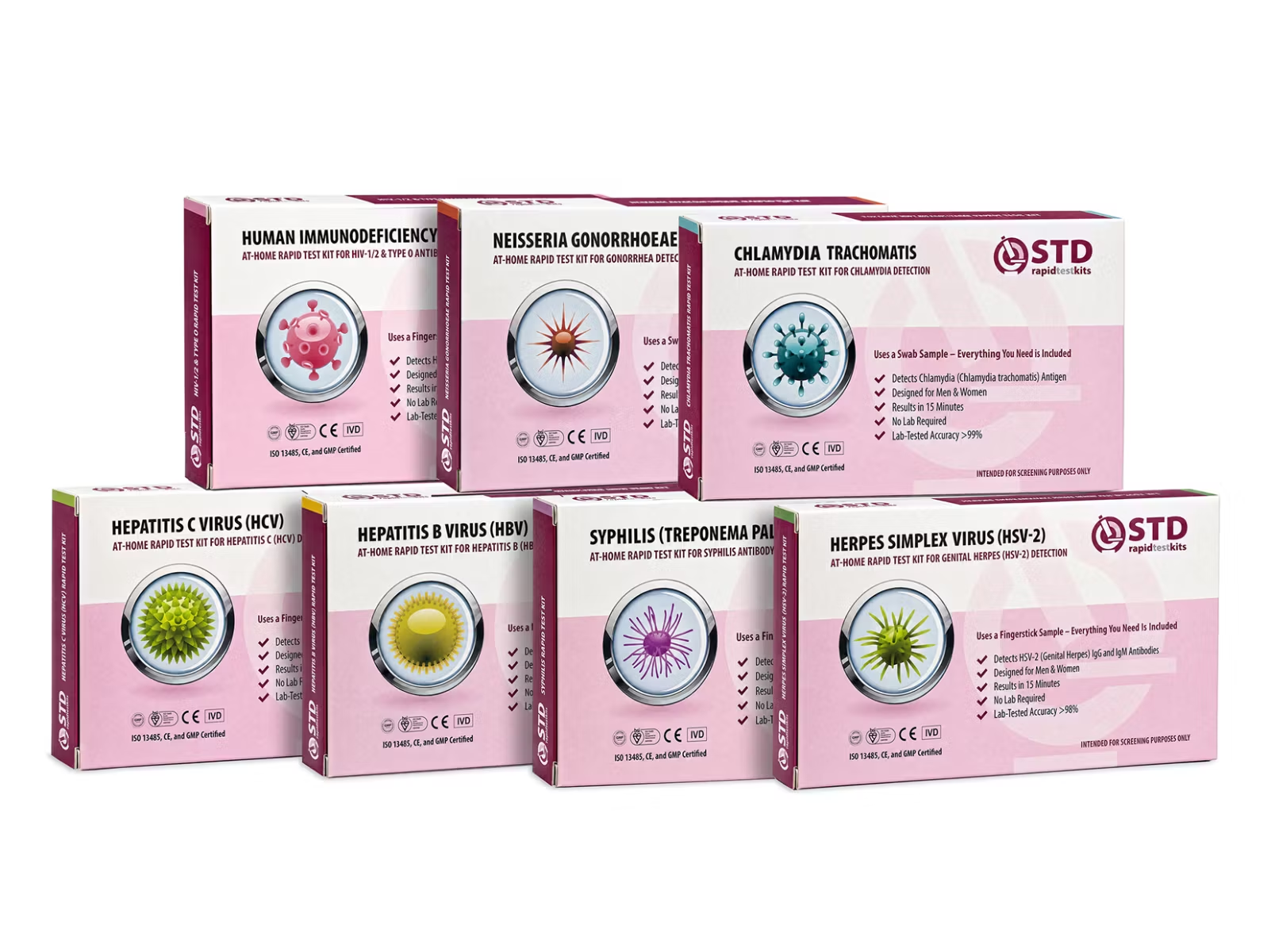
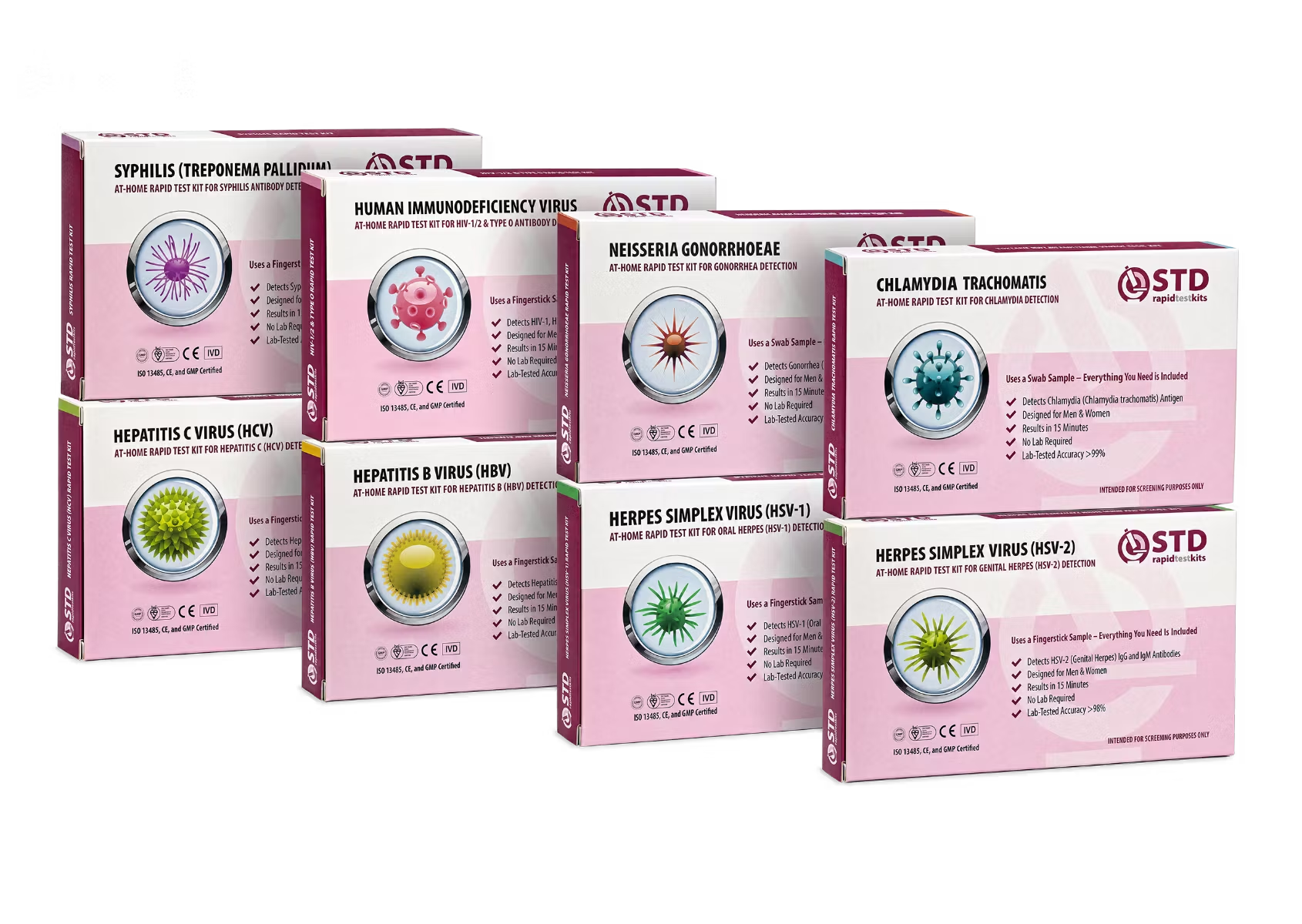
Our at-home kits do not include a rectal-site swab option. The chlamydia and gonorrhea kits we sell are validated for genital self-swab, not for rectal collection, and regulatory labelling treats those as separate sample types with separate validation. If your reason for testing is specifically the rectal site, the most accurate option is a clinic visit, where the swab is taken under proper conditions and processed by NAAT (nucleic-acid amplification testing) at a lab.
What our at-home kits do cover, in this context, is the overlap. Receptive anal exposure also creates risk for genital and bloodstream infections. Partner-to-receptive transmission can introduce chlamydia or gonorrhea to the urethra or cervix as well, and bloodborne infections like HIV, syphilis, and hepatitis B and C are detected via fingerstick rather than site swabs (CDC Getting Tested for STIs). A combo kit screens those at the genital and bloodstream level, which is a useful complement to a clinic rectal swab.
The practical recommendation: if you have one exposure to screen and it was rectal, go to a clinic for the rectal swab. If you want broader STI coverage that also captures the genital and bloodstream risks from the same exposure event, an at-home combo kit runs alongside the clinic visit. The two work together. They do not replace each other.
Timing: When the Test Detects Something
One of the most common testing mistakes is testing too early. Anxiety after an exposure is a normal human response, and it pushes people to test as soon as possible. The biology does not cooperate with that urgency. Every STI test has a window period, the minimum interval between exposure and the point where there is enough pathogen present to be detected reliably (CDC STI Treatment Guidelines).
For rectal chlamydia and gonorrhea using NAAT, the practical window starts around 5 to 7 days after exposure. Testing before then risks a false negative driven by the timing rather than by test inaccuracy: the assay was perfectly capable of detecting the infection, but there was not yet enough of the organism present in the sample.
If you tested too early and something still feels off, that is a retesting situation, not a result you should treat as final.
| STI | Earliest detection window | Best time to test |
|---|---|---|
| Rectal chlamydia (NAAT) | Around 3 to 5 days | 7 days or later |
| Rectal gonorrhea (NAAT) | Around 2 to 5 days | 7 days or later |
| Herpes (during outbreak) | When sores appear | During active symptoms |
| Syphilis (blood) | Around 10 to 21 days | 3 to 6 weeks |
| HIV (4th-generation antigen/antibody, blood) | Around 18 to 45 days | 45 days or later for a conclusive screen |
Risk Situations People Tend to Dismiss
A lot of missed infections trace back to a moment where someone reasonably concluded the exposure did not count. Most of those judgments are based on intuition rather than on how transmission actually works. Bacteria respond to physical contact with mucous membranes, including brief or partial contact. They do not distinguish between an encounter the person retrospectively considers serious and one they considered casual.
The most commonly overlooked situations include brief or partial penetration, shared sex toys between partners or between body sites, switching between anal and vaginal contact without changing protection, and any encounter where a condom slipped, broke, or was removed mid-act. Each of these can transmit rectal chlamydia or gonorrhea at meaningful frequency. None require explicit high-risk framing for the exposure to register medically.
The takeaway is not that every brief contact carries high risk. The body responds to physical contact independently of how a person mentally categorizes the encounter, and a site-specific swab is the only reliable way to check what transmitted.
| Scenario | Why it still matters |
|---|---|
| Brief or partial penetration | Short mucous-membrane contact can still transmit bacteria |
| Shared sex toys | Bacteria transfer if toys are not cleaned between uses or between partners |
| Switching between anal and vaginal contact | Cross-site contamination, even with the same partner |
| Condom that slipped, broke, or was removed mid-act | Partial exposure counts as exposure |
| Receptive anal contact with no condom but no visible symptoms in either partner | Most rectal infections are asymptomatic in the carrier |
How Rectal Infections Spread
The mechanics are unsurprising once explained. Rectal infections occur when infected fluids or tissue come into contact with the rectal mucosa. That includes seminal fluid, vaginal or cervical secretions transferred via shared toys or fingers, and direct mucous-membrane contact with an infected partner. The rectal lining is thin and prone to micro-tears, which makes bacterial and viral entry easier than at many other body sites.
Condoms reduce transmission substantially without eliminating it. They cover the shaft, not the surrounding skin, and they do not protect against exposure during pre-penetration contact or against transmission of pathogens like herpes that spread through skin-to-skin contact rather than fluid exchange (WHO sexually transmitted infections fact sheet).
Condoms substantially reduce transmission of fluid-borne infections like chlamydia, gonorrhea, HIV, and hepatitis B during anal sex. They offer less protection against pathogens that spread through skin-to-skin contact, including herpes and syphilis, when the affected skin sits outside the area the condom covers.
What Happens If a Rectal STI Is Left Untreated
Most rectal STIs are treatable, especially when caught early. Rectal chlamydia and gonorrhea can spend weeks or months undetected, and during that window complications can develop and transmission to others continues.
Untreated rectal chlamydia and gonorrhea can cause ongoing local inflammation, occasional proctitis (rectal inflammation severe enough to cause pain, bleeding, or discharge), and a measurable increase in susceptibility to other infections, including HIV, because inflamed mucosa is more permeable. Untreated syphilis at any site, including rectal lesions, can progress through secondary and latent stages with effects that eventually reach the cardiovascular and nervous systems (CDC STI Treatment Guidelines).
Catching infections at the screening stage avoids almost all of these complications.
Main risks of leaving a rectal STI untreated
- Proctitis: rectal inflammation severe enough to cause pain, bleeding, or discharge.
- Increased HIV susceptibility because chronically inflamed rectal mucosa is more permeable to other pathogens.
- Syphilis progression from primary lesion through secondary and latent stages that affect the cardiovascular and nervous systems.
- Ongoing transmission to partners during the months an infection is silently carried.
The Stigma Pause Most People Hit
Even readers who are otherwise comfortable with sexual-health conversations often hit a pause when the specific topic is rectal testing. The pause is real, and it is worth naming. Anal sex is still treated as something people are supposed to keep quiet about, even though survey data consistently shows it is practiced across orientations and demographics. That silence is what makes the testing feel disproportionately weighted.
The clinical position is straightforward. Needing a rectal swab reflects which tissue was exposed, nothing more. It does not classify a person. It does not require disclosure beyond the clinician asking what sites to screen. Clinicians who handle STI screening daily see every variation of human sexual behavior and respond to it as routine.
A clinician asking which anatomic sites to screen is asking a medical intake question, not a personal or social one. Disclosure goes no further than that conversation, and the answer routes the testing without ever needing a broader label.
The Practical Bottom Line
If you have had receptive anal exposure and your most recent STI testing did not include a rectal swab, the testing you have done so far did not screen that site. Most missed infections live in exactly that gap, where testing was done but the right site was never sampled. Closing it is one swab, taken at a clinic if you want the most validated sample type, with at-home combo screening for the bloodstream and genital risks that came with the same exposure event.
A rectal swab is a routine test matched to the tissue that was exposed, not a statement about identity. Reassurance comes from clarity, and clarity comes from making the test cover what happened.
What the CDC Recommends
The CDC guidelines name men who have sex with men because of population-level screening priorities and prevalence data. The site-specific logic itself applies to anyone with receptive anal exposure, regardless of gender or orientation.
Sexually active gay, bisexual, and other men who have sex with men should be screened at least annually for gonorrhea and chlamydia at sites of exposure, including the urethra, rectum, and pharynx.
FAQs
- Will a urine STD test detect a rectal infection?
- No. A urine test collects bacteria shed into the urinary stream from the urethra. A rectal infection sits in rectal tissue and is not present in the urine sample. A negative urine result after rectal exposure means the urethra is clear, not that the rectum is clear.
- How soon after receptive anal sex should I get a rectal swab?
- For chlamydia and gonorrhea using NAAT, wait roughly 5 to 7 days. Earlier testing risks a false negative because there may not yet be enough of the organism in the sample. If symptoms appear sooner, test then anyway and retest at the 7-day mark.
- Is the rectal swab procedure painful?
- For most people, no. The swab is soft, inserted only about one to two inches, and rotated against the rectal lining for a few seconds. Mild discomfort or pressure is common; sharp pain is not. The mental build-up tends to be heavier than the experience.
- Do I need a rectal swab if I have no symptoms?
- Often, yes. Most rectal chlamydia infections and a substantial share of rectal gonorrhea infections cause no symptoms. CDC and similar guidelines recommend screening based on exposure rather than symptoms for that reason.
- Can I do a rectal swab at home, or do I need a clinic?
- Our at-home kits do not include a rectal-swab option. For the rectal site specifically, a clinic visit with a NAAT-processed swab is the most validated route. At-home combo kits can run alongside the clinic visit to cover genital and bloodstream risks from the same exposure.
- Do condoms prevent rectal STIs?
- They reduce risk substantially but do not eliminate it. Condoms cover the shaft, not surrounding skin, and pathogens like herpes spread through skin-to-skin contact in areas a condom may not cover.
- What happens if a rectal STI goes untreated?
- Most are treatable, but untreated rectal chlamydia and gonorrhea can cause proctitis, ongoing inflammation, and increased susceptibility to other infections including HIV. Untreated syphilis can progress to secondary and latent stages affecting other organ systems. Early detection avoids almost all of these complications.
- Is rectal STI testing only relevant for men who have sex with men?
- No. Testing follows the exposure, not the identity. Anyone with receptive anal contact, regardless of gender or orientation, can carry a rectal infection and benefit from a rectal swab. The CDC guidelines highlight MSM because of population-level screening priorities, not because rectal infection is limited to that group.
How We Sourced This Article: This guide draws on current CDC STI screening and treatment guidelines, WHO and NHS guidance on sexually transmitted infections, and standard clinical practice around extragenital (rectal and pharyngeal) screening. We focused on how rectal infections are detected, how often they are missed by urine-only testing, and where at-home rapid kits help versus where a clinic visit is the more accurate option. The article is editorial summary, not clinical advice; if you have symptoms or specific exposure questions, see a licensed provider.
- U.S. Centers for Disease Control and Prevention. STI Treatment Guidelines, Screening Recommendations. Source for extragenital (rectal and pharyngeal) screening guidance and MSM annual screening recommendation.
- U.S. Centers for Disease Control and Prevention. Getting Tested for STIs. Source for testing process, sample types, and site-specific testing rationale.
- U.S. Centers for Disease Control and Prevention. STI Treatment Guidelines (root). Source for clinical management, window periods, and treatment of chlamydia, gonorrhea, syphilis, and herpes including extragenital sites.
- World Health Organization. Sexually Transmitted Infections (STIs) Fact Sheet. Source for global STI prevalence, transmission routes, and prevention overview including condom limitations.
- NHS. Sexually Transmitted Infections Overview. Source for symptoms, transmission, and clinical screening guidance in the UK context.
- U.S. Centers for Disease Control and Prevention. Chlamydia. Source for clinical presentation, asymptomatic infection rates, and population-level prevalence.
