Tested Positive for HPV: What It Means and What to Do Next
What a positive HPV result really tells you, and what to do next.



- HPV is so common that nearly every sexually active adult will get at least one strain in their lifetime, and roughly 90% of new infections clear within two years without any treatment.
- Testing positive for HPV is not a cancer diagnosis. High-risk strains can cause cell changes over many years, which is exactly why screening exists to catch them early.
Published: October 2025 | Last updated: May 2026 | Editorial review and quality control: Martina N.
Opening a positive HPV result can feel like the floor drops out. Within a minute you might already be scrolling cancer forums, drafting apologetic texts, or trying to recall every partner from the last five years. Pause. Breathe. A positive HPV result almost never means what your panic brain wants you to believe.
Here is what the result actually tells you: the human papillomavirus is in your body. That is it. The result does not tell you when you got it, who you got it from, whether it will cause any health problem, or whether your relationship is at risk. HPV is the most common sexually transmitted infection in the world. The U.S. Centers for Disease Control and Prevention estimates that nearly all sexually active adults will be exposed to at least one strain at some point in their life. Most clear it without ever knowing.
This article walks through what a positive result actually means, how to read the wording, what to do in the first 24 hours, how to talk to partners, when treatment is needed (and when it is not), how reinfection works, and how to mentally land somewhere reasonable. If you are reading this in the bathroom with a printout in one hand, you are exactly the person it was written for.
Key Takeaways
- HPV is so common that nearly every sexually active adult will get at least one strain in their lifetime, and roughly 90% of new infections clear within two years without any treatment.
- Testing positive for HPV is not a cancer diagnosis. High-risk strains can cause cell changes over many years, which is exactly why screening exists to catch them early.
First, what a positive HPV result actually says
HPV test results are written in clinical shorthand that almost no one is taught to read. The most common results you might see on a portal: HPV positive with high-risk types detected (such as type 16 or 18), HPV positive with low-risk types detected (such as 6 or 11), HPV positive for unspecified strains, abnormal cytology with HPV positive (often phrased as ASC-US, LSIL, or HSIL), and HPV negative.
These phrases sound clinical but they describe very different situations. A positive high-risk HPV result paired with a normal Pap smear means the virus is present but is not yet causing visible cell changes. Most cases like this resolve on their own within a year or two. A high-risk HPV result paired with abnormal cytology means there may be early cell changes worth investigating with colposcopy or biopsy. A low-risk HPV positive result is generally linked to genital warts rather than cancer.
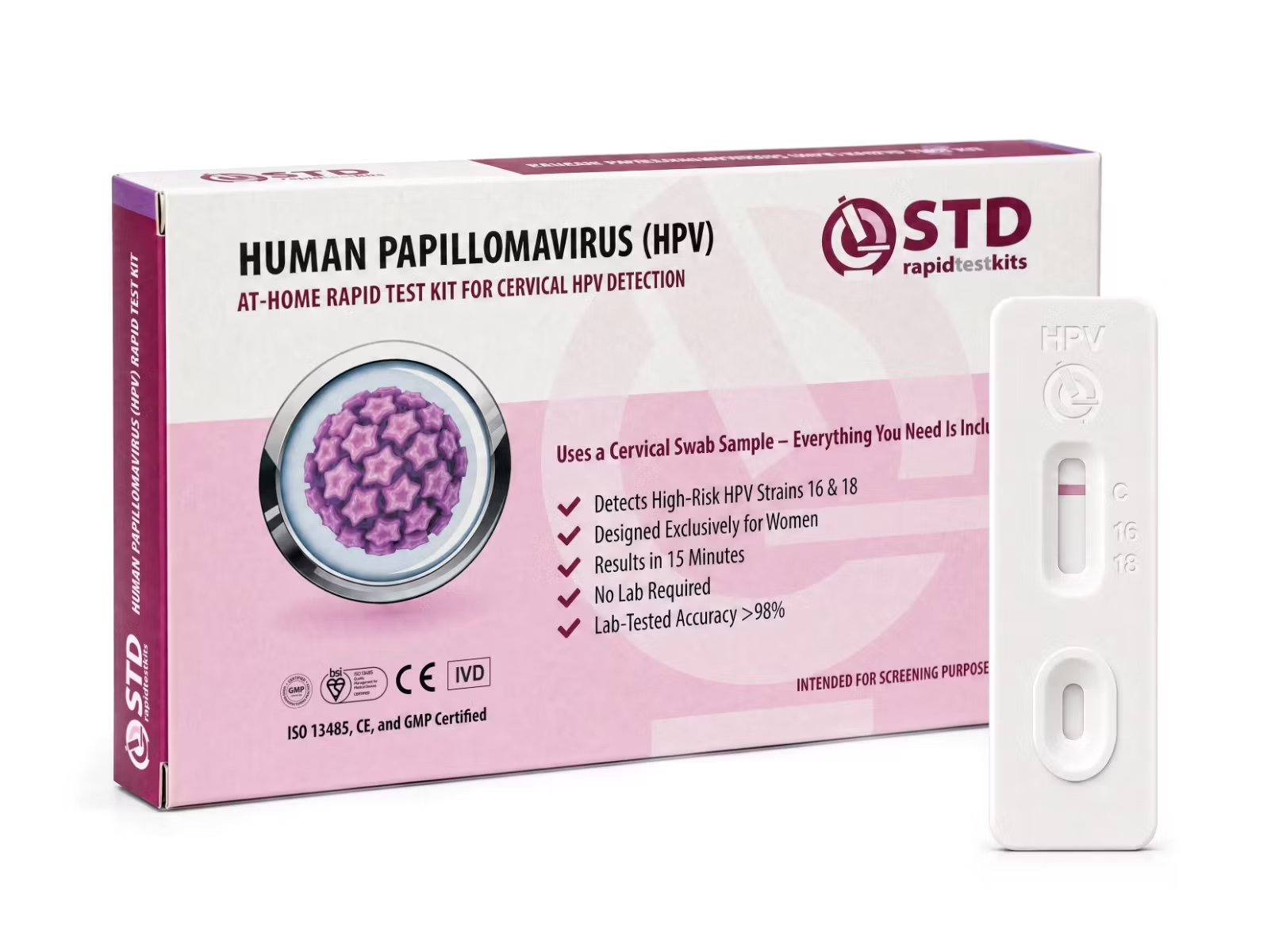
If you tested at home with a rapid swab, the result usually flags HPV positive or negative without specifying the strain. That is enough to know you should follow up with a clinical Pap or HPV co-test that can identify the type. A screenshot of your at-home result is fine to bring to a telehealth visit or to a clinic such as Planned Parenthood. The clinical follow-up is what determines whether you need further screening or simply a wait-and-retest plan.
| Result Phrase | What It Means | Typical Next Step |
|---|---|---|
| HPV Positive, High-Risk Type Detected | A strain linked to cancer risk is present, though this is not cancer itself | Repeat Pap or HPV co-test in 6 to 12 months |
| HPV Positive, Low-Risk Type (6, 11) | Linked to genital warts rather than cervical cancer | Usually no treatment unless visible warts appear |
| Abnormal Pap + HPV Positive | Cell changes are present and could progress if unmonitored | Colposcopy or biopsy recommended by your provider |
| HPV Positive, Strain Unspecified (home test) | Virus is present but strain unknown | Follow-up clinical Pap or HPV co-test to identify strain |
| HPV Negative | No virus detected in this sample | Routine screening schedule applies |
Does a positive HPV result mean I have cancer?
No. A positive result means the virus is in your body, and that is different from cancer or precancer. About 90% of new HPV infections clear on their own within two years, per CDC data. For high-risk strains such as type 16 or 18, your provider may add a Pap or colposcopy at the 6 to 12 month mark to watch for cell changes. Most people with high-risk HPV never develop anything that needs treatment.
The first 24 hours after a positive result
The hours right after the result are usually the worst part. Brains build worst-case scenarios that have very little to do with what the result actually says. The most common reactions are mass-texting old partners, Googling cervical cancer staging, and self-diagnosing from outdated forum posts. None of that helps. Some of it actively makes things worse.
What helps in the first 24 hours is grounding yourself in what your result actually says. Write down the exact phrasing. Was it high-risk or low-risk? Was a Pap also done, and was it normal or abnormal? Was a specific strain identified, or just a positive flag? Knowing the specifics turns a vague fear into a concrete plan.
After that, set a follow-up. If your test came from a clinic, the clinic will usually call within a week to schedule next steps. If it came from a home test, book a telehealth visit or a Pap appointment so a provider can confirm what the result means for you specifically. Until that appointment, you do not need to make any decisions about disclosure, treatment, or your sex life. The follow-up will give you the information you need to act on, instead of the late-night spiral.
One more thing the first 24 hours does not require: an apology tour. HPV can stay dormant in the body for years before showing up on a test. A positive today says almost nothing about who you got it from or when. Treating the result as urgent moral evidence is one of the most common mistakes people make at this stage.
1. Write down the exact result phrasing from the portal or report.
2. Note whether a Pap was also done and whether the cytology was normal or abnormal.
3. Book a follow-up appointment, in clinic or via telehealth, within the next week.
4. Hold off on disclosure conversations until you have the strain detail in hand. No other decisions are required today.
Telling partners without causing spirals
There is no legal requirement to disclose HPV to current or past partners in most U.S. states, partly because it is so common that public-health authorities do not treat it the way they treat chlamydia or HIV reporting. That said, honesty with current partners tends to make everything easier downstream, especially in a long-term or new relationship where trust matters.
The script most people respond well to is short and matter-of-fact. Keep it on the level of a medical update rather than a confession. The framing in the box below works for new partners, established partners, and casual partners alike, with small wording tweaks.
For long-term partners, the part that often causes the most friction is the assumption that a positive result must mean someone cheated. HPV does not work that way. The virus can sit dormant for years, sometimes more than a decade, without showing up on a test or causing symptoms. A positive result today could trace back to a partner you had before you ever met your current one. Saying that out loud, ideally with a CDC fact sheet handy, prevents the result from becoming a relationship landmine.
For casual or hookup-era partners, you do not owe a confessional tour. If you are sleeping with someone now, disclosure is generous and reasonable. Going back through years of contacts is rarely useful, because the timeline is impossible to reconstruct and most of those people will also have had HPV at some point. Focus the conversation on people in your current life who could meaningfully benefit from knowing.
"I just got a positive HPV result. It is the most common STI, most people clear it without ever knowing they had it, and it does not mean either of us did anything wrong. I wanted you to hear it from me."
This framing keeps the conversation medical rather than confessional. For an established partner, you can add: "The virus can sit dormant for years, so this is not evidence of recent contact. We can read the CDC fact sheet together if it helps."
Treatment: why most strains need watchful waiting, not action
This is one of the most misunderstood parts of an HPV diagnosis: a positive result usually does not mean you need treatment. There is no medication that targets the virus itself. What gets treated, when needed, are the conditions HPV can cause, such as warts or precancerous cell changes.
Most strains clear on their own. Per the CDC, about 90% of new HPV infections become undetectable within two years. The immune system handles the rest of the work quietly. Treatment becomes relevant in two specific situations. First, if you develop visible genital warts (typically caused by low-risk strains 6 or 11), they can be removed with prescription topical creams (such as imiquimod or podophyllotoxin), cryotherapy, or laser ablation. Warts can recur if the underlying strain is still active in the body.
Second, if you have a high-risk strain that is causing persistent cell changes on a Pap, your provider may recommend a colposcopy, biopsy, or LEEP (loop electrosurgical excision procedure) to remove the affected tissue. These procedures are common, generally outpatient, and well-tolerated. They are also highly effective at preventing progression to cancer.
For everyone else with a positive HPV result and no symptoms or abnormal cells, the standard recommendation is monitoring rather than action. That usually means a repeat Pap and HPV co-test in 12 months. Your provider is not ignoring you with this advice. They are giving your immune system the time it needs to do its job.
In the meantime, lifestyle factors do measurably support clearance. The strongest evidence supports not smoking (smoking is associated with slower clearance and a higher cervical cancer risk), getting consistent sleep, and managing chronic stress. These are not magical interventions. They simply remove drag on the immune system that is already trying to clear the virus.
| HPV Type | What It Can Cause | Typical Approach | Clears on Its Own? |
|---|---|---|---|
| Low-risk (6, 11) | Genital warts | Topical cream, freezing, or laser if visible warts appear | Often, though warts may recur |
| High-risk (16, 18) | Cervical, anal, oropharyngeal cell changes over years | Monitoring with Pap and HPV co-test; colposcopy or LEEP only if cell changes persist | Yes for most people, especially under 30 |
| Other high-risk types (31, 33, 45, 52, 58, others) | Less common cell changes | Regular screening follow-up | Yes, immune system clears most cases within 2 years |
This article is published by stdrapidtestkits.com, which sells at-home STI testing kits. We recommend products based on fit for the reader's concern, not commercial benefit. Our HPV rapid test is a swab-based kit validated for vaginal self-collection only. Male readers who want HPV-related testing should ask a clinician for the appropriate diagnostic, since there is no FDA-approved at-home HPV test for men.
How long does HPV stay in your body?
The honest answer is: usually 6 months to 2 years for most healthy adults. The CDC reports that about 90% of new HPV infections clear within two years. Younger people tend to clear faster than older people. People with stronger immune systems clear faster than those with chronic illness, immunosuppression, or active heavy smoking.
A persistent infection (one that does not clear within 24 months) is the small minority of cases. Persistence is also the cohort where cell changes can develop, which is exactly why follow-up screening matters. The progression from a persistent high-risk infection to invasive cervical cancer takes years, often a decade or more, with multiple chances along the way for screening to catch and treat any changes long before they become dangerous. Cervical cancer in a screened population is rare, and is almost always preventable with routine follow-up.
If your test came from a home rapid test, do not retest in two weeks "just to be sure." Two weeks is not enough time for clearance, and a second positive will not tell you anything new. Wait the full window your provider recommends, usually 12 months, before retesting. If new symptoms appear in the meantime (visible warts, unexplained bleeding, pelvic pain, or new lesions), book a visit right away regardless of where you are in the schedule.
It usually takes 15 to 20 years for abnormal cells to become cancer in women with normal immune systems. In women with weakened immune systems, such as untreated HIV, this process can be faster and take 5 to 10 years.
Reinfection and how to prevent future strains
Once your immune system clears a specific HPV strain, you are generally protected against that strain going forward. But there are more than 100 known types of HPV, including roughly 14 considered high-risk for cancer. Clearing one does not protect you from the others. Reinfection in the everyday sense usually means picking up a different strain, or passing the same strain back and forth with a partner whose system has not yet cleared it.
The HPV vaccine (Gardasil 9 in the U.S.) covers nine strains responsible for the bulk of HPV-related cancers and genital warts. CDC and ACIP guidance recommends routine vaccination through age 26, with shared clinical decision-making for adults aged 27 through 45. A positive result for one strain does not disqualify you from getting vaccinated against the other eight.
Condoms and dental dams meaningfully reduce HPV transmission, though they cannot cover every point of skin-to-skin contact the way they block fluid-borne infections such as HIV. The base of the penis, the vulva, and the inner thighs all remain exposed during condom-protected sex. Consistent use still measurably lowers risk, especially when combined with vaccination.
Regular Pap or HPV co-test screening catches cell changes long before they become dangerous. For people with a cervix, that means screening on the schedule your provider recommends, typically every 3 to 5 years depending on age, prior results, and whether you have had a recent positive HPV finding.
| Prevention Step | What It Helps With | Who Should Consider It |
|---|---|---|
| HPV vaccination (Gardasil 9) | Protects against 9 high-risk and low-risk HPV types | Anyone aged 9 to 26 routinely; 27 to 45 via shared decision with a provider |
| Condoms or dental dams | Reduces but does not eliminate HPV transmission | All sexually active people, regardless of relationship type |
| Limiting new partners during active clearance | Reduces ping-pong reinfection and viral load while immune system works | People recently diagnosed with high-risk HPV |
| Regular Pap or HPV co-test screening | Detects abnormal cervical changes early | People with a cervix age 21+, or anyone with a recent HPV positive |
| Not smoking | Tobacco is associated with slower HPV clearance and higher cervical cancer risk | Anyone with a current HPV positive |
The emotional weight: why this result feels heavier than it is
A positive HPV result hits a lot harder than its medical weight would suggest, and that is not a failure of logic on the reader's part. It is the cost of how poorly society talks about STIs. Many people leave the result feeling tainted, untrustworthy, or somehow at fault. None of that has anything to do with what the result actually says.
The way this shows up most often is self-blame about choices. "I should have used condoms more." "I should have asked harder questions." "I should have stayed monogamous." Those reactions are understandable, and the patterns they reflect are sometimes worth thinking about. They do not change the fact that HPV is unusually transmissible. Skin-to-skin contact during sex, even protected sex, is enough. Most people get it from a partner who had no symptoms and did not know they had it.
What helps more than self-blame is concrete action: book the follow-up, talk to one trusted person, and get the vaccine if you are eligible. People who turn a positive HPV result into a prompt for active care of their body and their relationships tend to come out of it in a steadier place than people who ruminate alone. If shame is sticking around for more than a few weeks, a single session with a sex-positive therapist or a counselor at Planned Parenthood often resets the emotional load.
The CDC estimates that nearly all sexually active people will get HPV at some point in their lives. Most never know it. A positive result means you tested, which is unusual only in that most people who carry the virus never bother to look.
For men: what HPV means and what testing looks like
There is no FDA-approved at-home HPV test for men in general use. Men get HPV just as frequently as women. The gap is in screening technology: the Pap-style cervical swab has no validated equivalent for routine male asymptomatic detection, which is why most infections in men resolve undiagnosed.
When HPV does cause problems in men, the most common are genital warts (low-risk strains) and, less commonly, anal, penile, or oropharyngeal cancers (high-risk strains). Anal Pap-style screening is available in some clinics, typically recommended for men who have sex with men or anyone with a history of receptive anal intercourse. Routine oral or throat HPV screening is not standard clinical practice for asymptomatic men.
If you are a male reader and your partner has tested positive, the most useful active step is vaccination. The HPV vaccine is FDA-approved through age 26 and available off-label up to age 45 in many practices. Condoms reduce future risk. Regular dental and ENT checkups will flag oral lesions if they appear. If you develop a visible wart, a primary-care provider or urologist can treat it the same way it is treated in women.
A note on our at-home kits: the HPV rapid test on this site is validated for vaginal self-collection only. Male readers who want screening for HPV-related concerns should ask a clinician for the right diagnostic for the specific symptom, whether that is an anal Pap, a biopsy of a visible lesion, or a head-and-neck exam.
When to retest and what to watch for
For most people with an initial positive HPV result, the follow-up plan is straightforward: a repeat Pap or HPV co-test at 12 months. The repeat is what tells your provider whether the virus has cleared, is still present, or is causing cell changes that need closer attention. Retesting earlier rarely adds useful information and often adds anxiety without changing the plan.
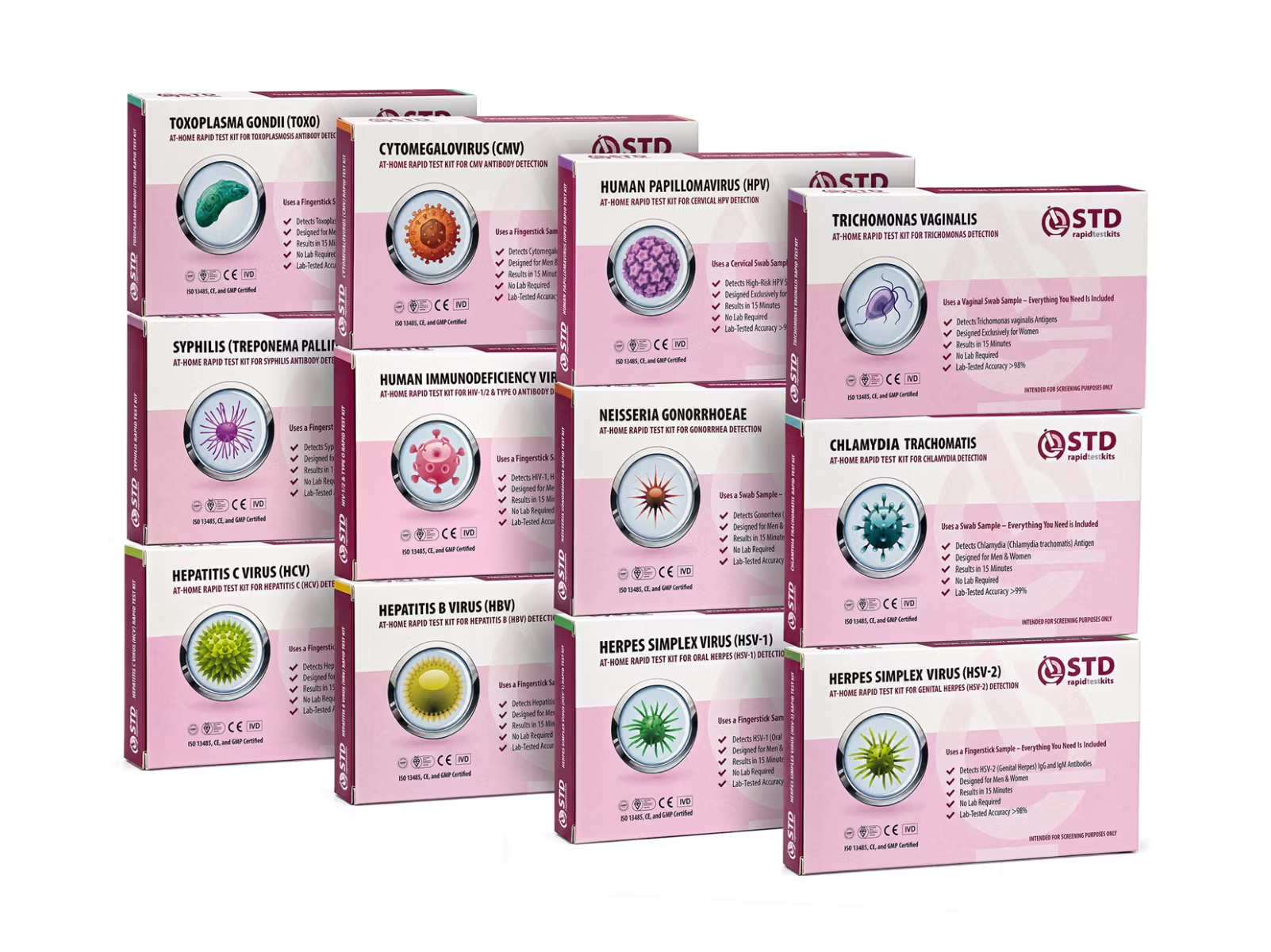
Some symptoms do justify an earlier visit. New genital warts, unexplained bleeding outside your period, pelvic pain, or visible lesions are worth checking on right away, regardless of where you are in the retest schedule. For most readers, those symptoms will not appear, and the 12-month retest will simply show clearance. If you want to screen for other STIs at the same time as your HPV follow-up, a single multi-infection kit removes the need to order separate tests.
In the meantime, the active things you can do are short on drama and long on consistency: book the follow-up, stay current on Pap screening, get the vaccine if you are under 45 and have not had the full series, do not smoke, and tell current partners. None of those are quick fixes. They are the slow, evidence-supported path to clearance and to confident long-term sexual health.
A positive HPV result is one piece of information among many. Book the follow-up, get the vaccine if you qualify, talk to current partners, and let your immune system do the rest. Most readers who follow that simple list never need to think about this result again after the 12-month retest.
FAQs
- Can I still have sex if I tested positive for HPV?
- Yes. HPV does not mean a lifetime of celibacy. Most people who have ever had sex have been exposed to HPV at some point, whether they knew it or not. If you are symptom-free (no visible warts, no active lesions), sex is generally safe, especially with condoms or dental dams. In an existing relationship, this is something you work through together, not something that ends your sex life.
- Do I have to tell every partner I have ever had?
- No. HPV is not tracked the way chlamydia or HIV is, partly because it can sit dormant for years and there is no way to know exactly when or from whom you got it. If you are currently seeing someone, honesty helps. Going back through years of past contacts is rarely useful and usually not what public-health guidance recommends.
- If high-risk HPV can cause cancer, which cancers and how worried should I be?
- High-risk HPV is linked to cervical cancer most often, and also to anal, oropharyngeal (throat and tonsil), penile, vaginal, and vulvar cancers. All of these still require years of persistent infection before cell changes develop, which is why routine screening, vaccination, and regular dental or ENT checks address the risk across all these sites. Most people with any high-risk HPV strain never develop any of these cancers, especially with consistent follow-up.
- I feel completely fine. Do I really need a follow-up?
- Yes. Most people with HPV never feel a thing, which is precisely why screening exists. The virus can quietly cause changes to cervical or anal cells over time without any symptoms. That is exactly why providers typically recommend a Pap, HPV co-test, or colposcopy at the 12-month mark even when you feel fine. Catching any cell changes early is what keeps this manageable.
- Can men get HPV, and is there a male home test?
- Men get HPV often, and most do not know it. There is no FDA-approved at-home HPV test for men in general use. The HPV swab on this site is validated for vaginal self-collection only. Men with a visible wart or other concern should see a primary-care provider, urologist, or dermatologist. Vaccination is the most useful active step male readers can take, and it is available through age 45.
- If I already have HPV, is it too late for the vaccine?
- Probably not. Gardasil 9 protects against nine HPV strains. Even if you have been exposed to one, the odds of having been exposed to all nine are low. The CDC recommends routine vaccination through age 26, with shared clinical decision-making between you and your provider for adults aged 27 to 45. Many people get vaccinated after a diagnosis to prevent future strains.
- My partner is convinced I cheated. How do I explain HPV's timeline?
- HPV does not come with a timestamp. The virus can sit dormant in the body for years, sometimes more than a decade, without symptoms or a positive test result. That means a positive result today could trace back to a partner you had long before you ever met your current one. Try saying something like, "This does not mean someone did something wrong. It means one of us had it from before, and now we know." A printed CDC fact sheet can help anchor the conversation.
How we sourced this article: We combined current guidance from leading public-health and medical organizations (CDC, WHO, National Cancer Institute, Planned Parenthood) with peer-reviewed clinical references, then translated the consensus into plain-English steps. We do not provide clinical diagnosis. For symptoms or decisions specific to your case, see a licensed provider.
- U.S. Centers for Disease Control and Prevention. About Genital HPV Infection. Source for prevalence, clearance rates (about 90% clear within two years), and strain risk categories.
- U.S. Centers for Disease Control and Prevention. HPV Clinical Management and STI Treatment Guidelines. Source for follow-up screening intervals and management of HPV-related cell changes.
- U.S. Centers for Disease Control and Prevention. HPV Vaccination Considerations for Clinicians. Source for ACIP routine vaccination through age 26 and shared clinical decision-making guidance for adults aged 27 through 45.
- World Health Organization. Cervical Cancer Fact Sheet. Source for 15 to 20 year progression timeline from persistent HPV infection to invasive cervical cancer, and global cervical cancer burden.
- U.S. National Cancer Institute. HPV and Cancer. Source for high-risk strain identification and the full list of HPV-attributable cancer sites in both women and men.
- U.S. National Cancer Institute. HPV Vaccine Fact Sheet. Source for Gardasil 9 strain coverage and post-diagnosis vaccination guidance.
- Planned Parenthood. HPV. General overview of HPV prevalence, transmission, and the reassurance that most infections clear. Tone reference for accessible patient-facing language.