

Published: August 2025 | Last updated: April 2026 | Editorial review and quality control: Martina N.
The model for sexual-health care is shifting. Two screens away from your bedroom, a clinician can take a history, write a prescription, and ship a rapid test kit to your door. The waiting-room walk, the front-desk paperwork, and the awkward eye contact with a neighbor are gone for most uncomplicated visits. That is the practical promise of telemedicine paired with at-home STI testing in 2026.
This combination has matured fast. Telehealth visits jumped during the pandemic and stayed elevated for sexual health specifically, because the privacy benefit of a video call applies to almost no other category of care more cleanly. At-home rapid lateral-flow kits have moved from novelty to common stock since the FDA's first authorization of an over-the-counter syphilis test in 2024. AI symptom triage now sits inside a number of telehealth platforms as a routing layer, not a diagnosis engine, and that distinction matters when you are trying to figure out what these tools can and cannot do for you.
The rest of this guide walks through how the workflow actually runs, what the tests measure, where AI fits in, what the limits are, and the practical decisions you will face if you want to use any of this for your own care.
Can I really handle STD testing and treatment without going to a clinic?
For routine screening and most uncomplicated bacterial infections (chlamydia, gonorrhea, trichomoniasis), yes. A telehealth consult plus an at-home rapid lateral-flow kit gets you a clinician-prescribed result and treatment in roughly 1 to 2 weeks for bacterial swab tests, and 4 to 12 weeks for blood-based viral screens that need a window period. Throat, rectal, and active-lesion infections still need a clinic visit because home kits are validated for genital sample sites and fingerstick blood draws only.
Key Takeaways
- Telemedicine plus an at-home rapid kit handles most routine STI screening and uncomplicated bacterial-infection treatment without a clinic visit.
- Throat, rectal, and active-lesion testing still need a clinician-administered swab. Home kits are validated for genital sample sites and fingerstick blood draws only.
This article is published by stdrapidtestkits.com, which sells at-home STI testing kits. We recommend products based on fit-for-purpose for the reader's concern, not commercial benefit. Where the right answer is a clinic visit instead of a kit, we say so.
How Telemedicine Has Changed Sexual-Health Care
Until the early 2010s, almost every STI test required a clinic visit. You sat in a waiting room, repeated your sexual history twice (intake nurse, then clinician), waited a few business days for lab results, and went back if you needed treatment. That model still works, and it is still the right answer for some readers, but the friction of getting there always cut the most asymptomatic infections out of the testing pool entirely.
According to CDC STI surveillance data, more than 2.2 million reported cases of chlamydia, gonorrhea, and syphilis hit the U.S. system in 2024, and a much larger pool of asymptomatic infections never got tested at all because the friction of getting to a clinic exceeded the urgency of a quiet symptom. Telehealth lowers that friction in three ways:
- The intake conversation moves to your phone, off your calendar.
- The sample collection moves to your bathroom, off the public schedule.
- The follow-up moves to a secure message thread, off the next available appointment slot.
This is more than convenience. The CDC's 2021 STI Treatment Guidelines explicitly endorse expedited partner therapy and remote prescribing for several common bacterial infections, which means a telemedicine clinician can write a script for you and your partner without seeing either of you in person where state law allows. The regulatory framework caught up to what the technology had already made possible.
What changed during the 2020 to 2024 window is the underlying rapid-test chemistry. Lateral-flow strips that used to live in clinics moved into consumer kits, including the FDA's first authorization of an over-the-counter home syphilis test in 2024. Reading a strip in your kitchen does not require a phlebotomist, and the kits in this category package the instructions in clear consumer-facing form.
The CDC's 2024 provisional surveillance report logged over 2.2 million combined cases of chlamydia, gonorrhea, and syphilis in the United States. Total cases declined 9 percent from 2023, but congenital syphilis rose for the twelfth consecutive year. The reported numbers undercount the asymptomatic infections that never reach a clinic at all.
How the At-Home and Telehealth Workflow Works
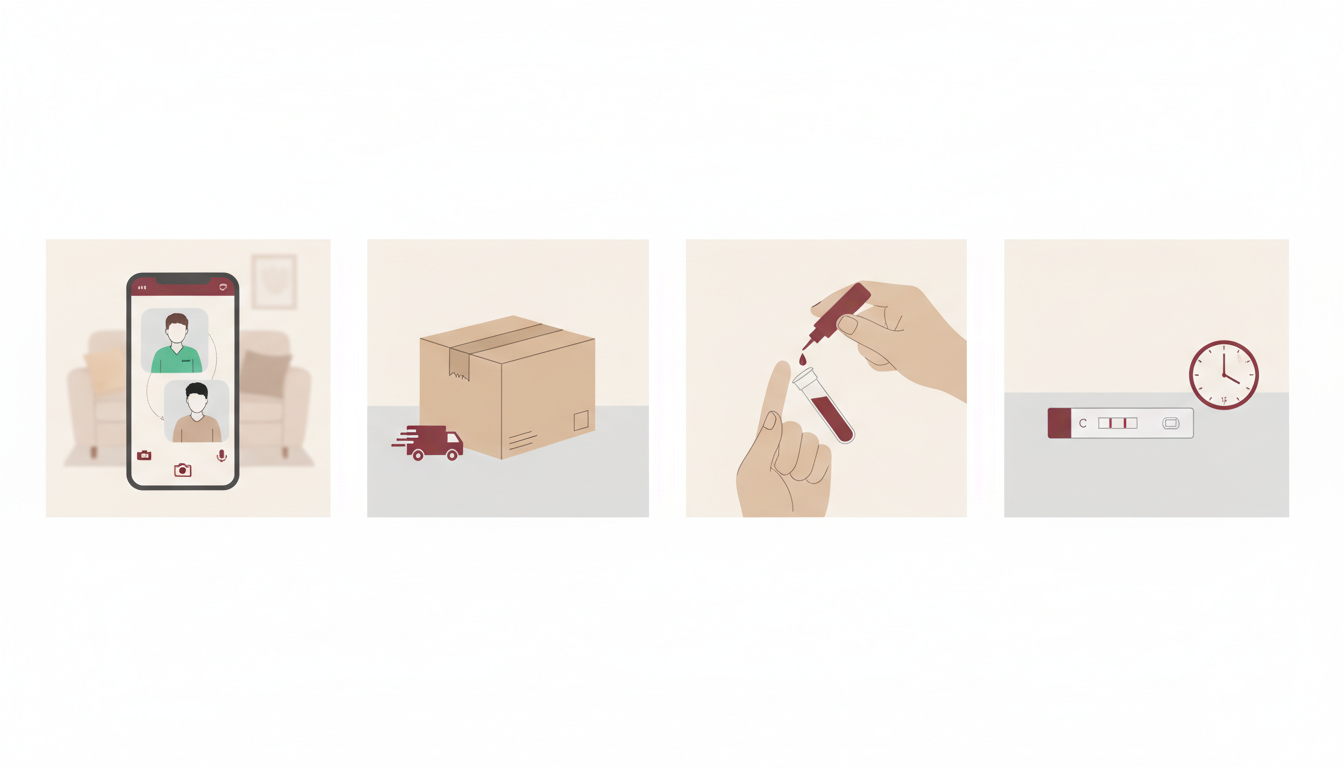
A typical telehealth plus home-test cycle moves like this:
- You book a video or message-based consult through a telehealth platform, usually within 24 hours.
- The clinician asks about exposure, symptoms, last test, and risk pattern.
- They recommend a kit, or a clinic visit if a swab type they cannot supply remotely is the right call.
- The kit arrives in plain packaging, usually 1 to 3 days.
- You collect the sample at home (fingerstick blood draw, vaginal or penile self-swab, or both for combo kits).
- For lateral-flow kits, you read the strip yourself in 15 to 20 minutes; for some platforms, you mail the sample to a partner lab and wait 2 to 5 business days.
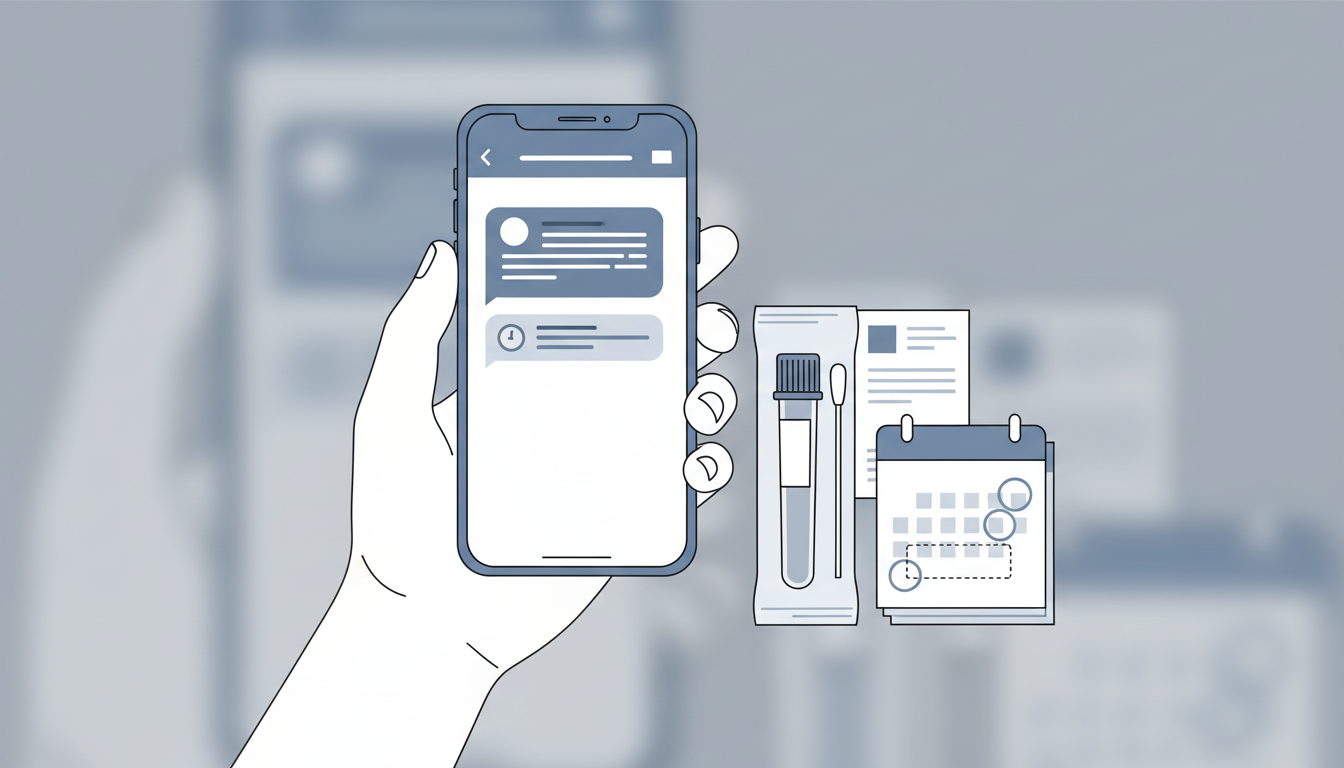
- The clinician reviews results in a follow-up message, prescribes treatment if needed, and routes any positive case to a confirmation lab test.
The at-home rapid test is a screening tool, not a diagnostic gold standard. A positive result on a lateral-flow strip should always be confirmed with a lab NAAT, which the prescribing clinician will order. Lab NAAT chemistry is more analytically sensitive than lateral-flow chemistry; the two are complementary, not equivalent.
Timing also matters. The fingerstick blood tests carry window periods that the clinician needs to factor into when you collect. A test taken five days after exposure will not pick up an HIV antibody response that needs roughly 18 to 45 days to develop reliably for fourth-generation antigen-antibody assays. The CDC treatment guidelines carry the per-infection window detail; the NHS sexual-health overview gives a reader-friendly orientation to STI testing more broadly.
Rapid lateral-flow strips are screening tools. A positive result should always be confirmed with a lab NAAT, which the prescribing clinician orders before starting a full course of treatment. The home strip narrows the question fast; the lab NAAT closes it.
What These At-Home Tests Actually Measure
People expect STI test to mean one thing. It does not. The technology splits cleanly into two camps, and the choice of kit depends on what you are checking for.
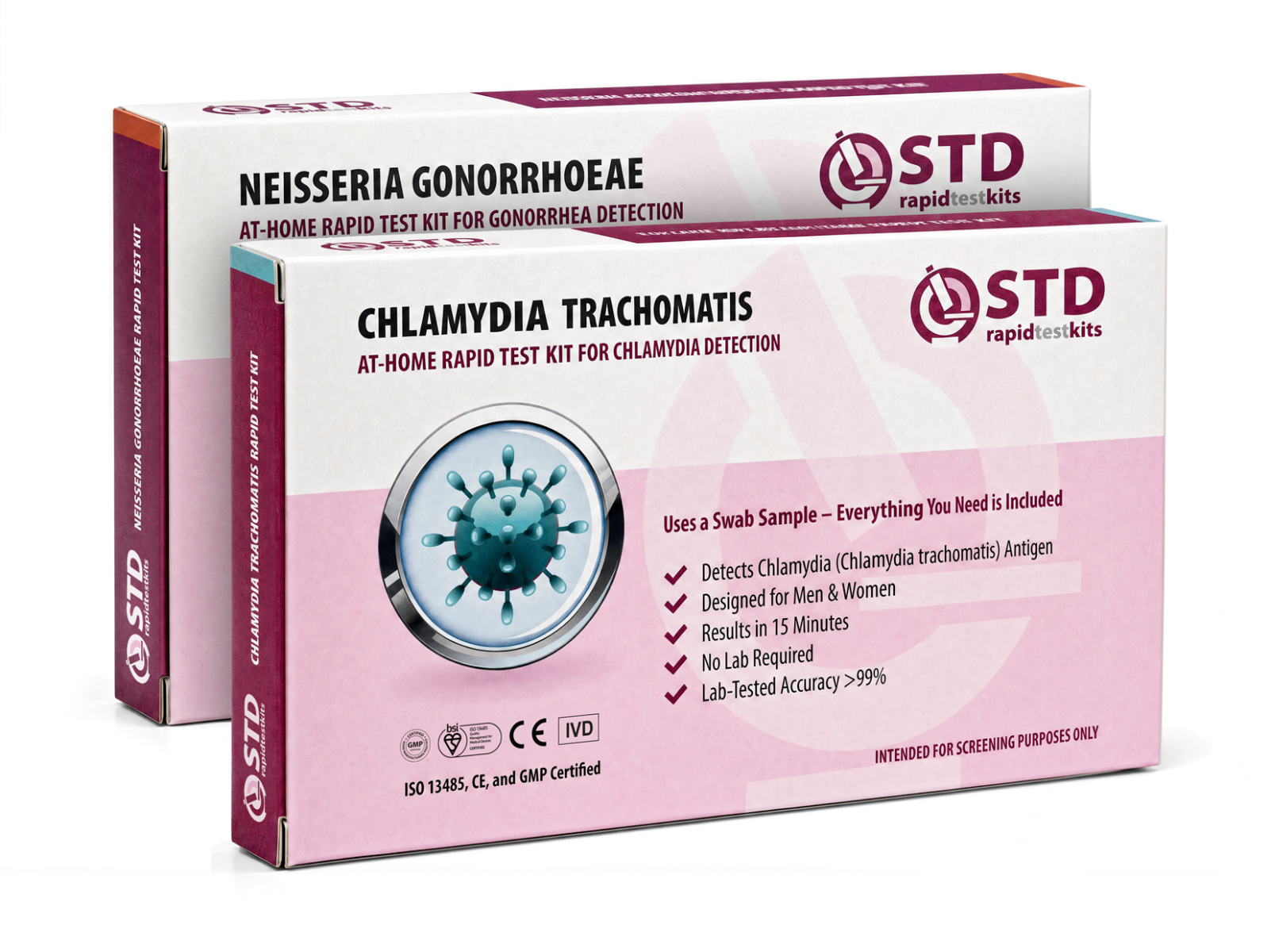
Self-collected genital swab kits use lateral-flow strips that detect bacterial antigens. Chlamydia, gonorrhea, trichomoniasis, and high-risk HPV subtypes (women only, vaginal self-swab) sit in this category. The window period is short: a positive result is reliable within roughly 1 to 2 weeks of exposure, with chlamydia testable from about day 14 onward per the CDC treatment guidelines.
Fingerstick blood antibody kits use a similar strip chemistry but detect immune response, not the pathogen itself. HIV (fourth-generation tests detect by 18 to 45 days), syphilis (3 to 12 weeks), hepatitis B and C (4 to 12 weeks for HCV antibodies), and HSV-1 and HSV-2 antibodies all fall in this category. The longer window matters: a fingerstick blood test taken too early will miss an active infection that a later test would catch. The CDC recommends retesting at the end of the window period if your initial result is negative and you had a known exposure.
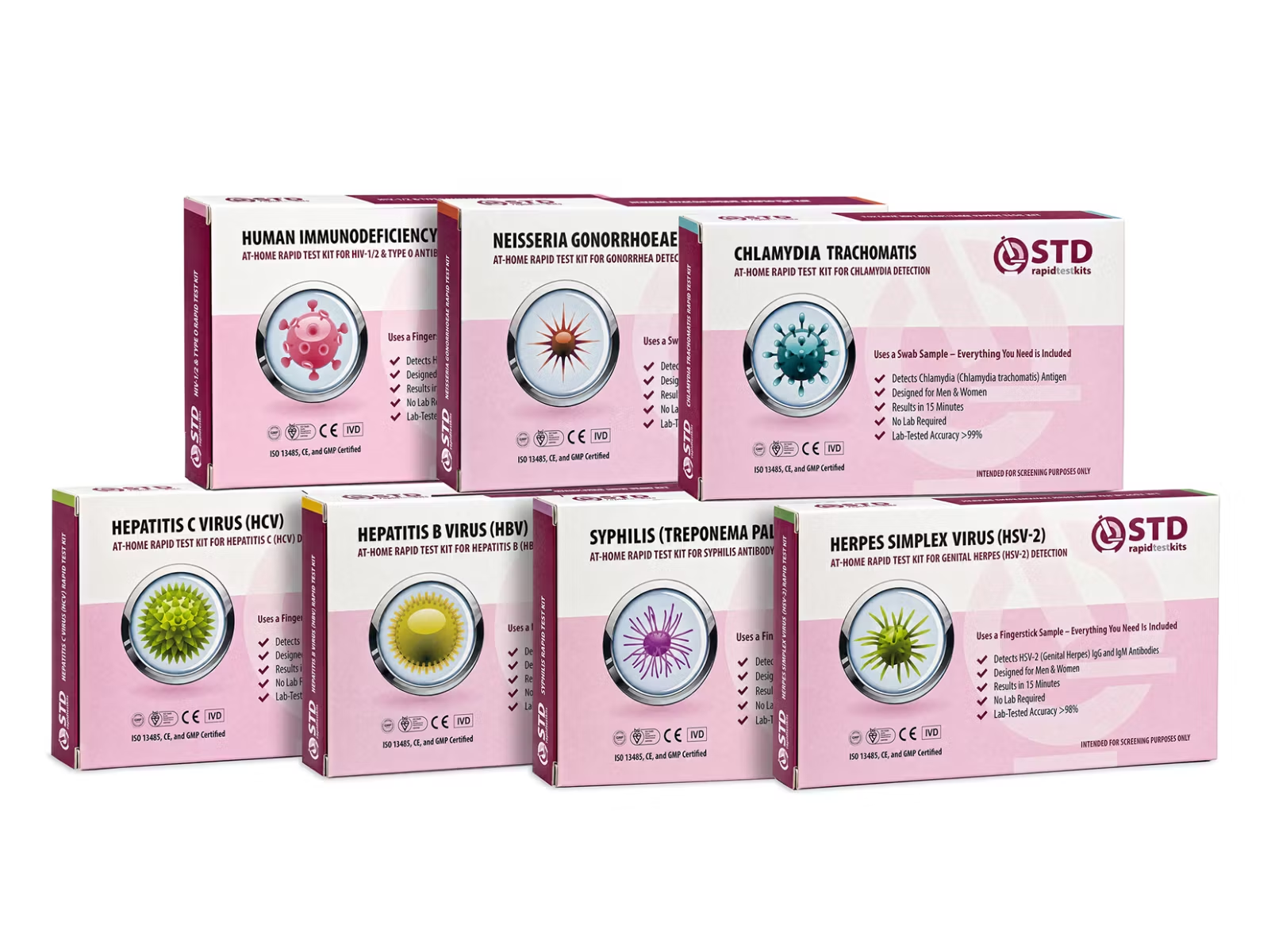
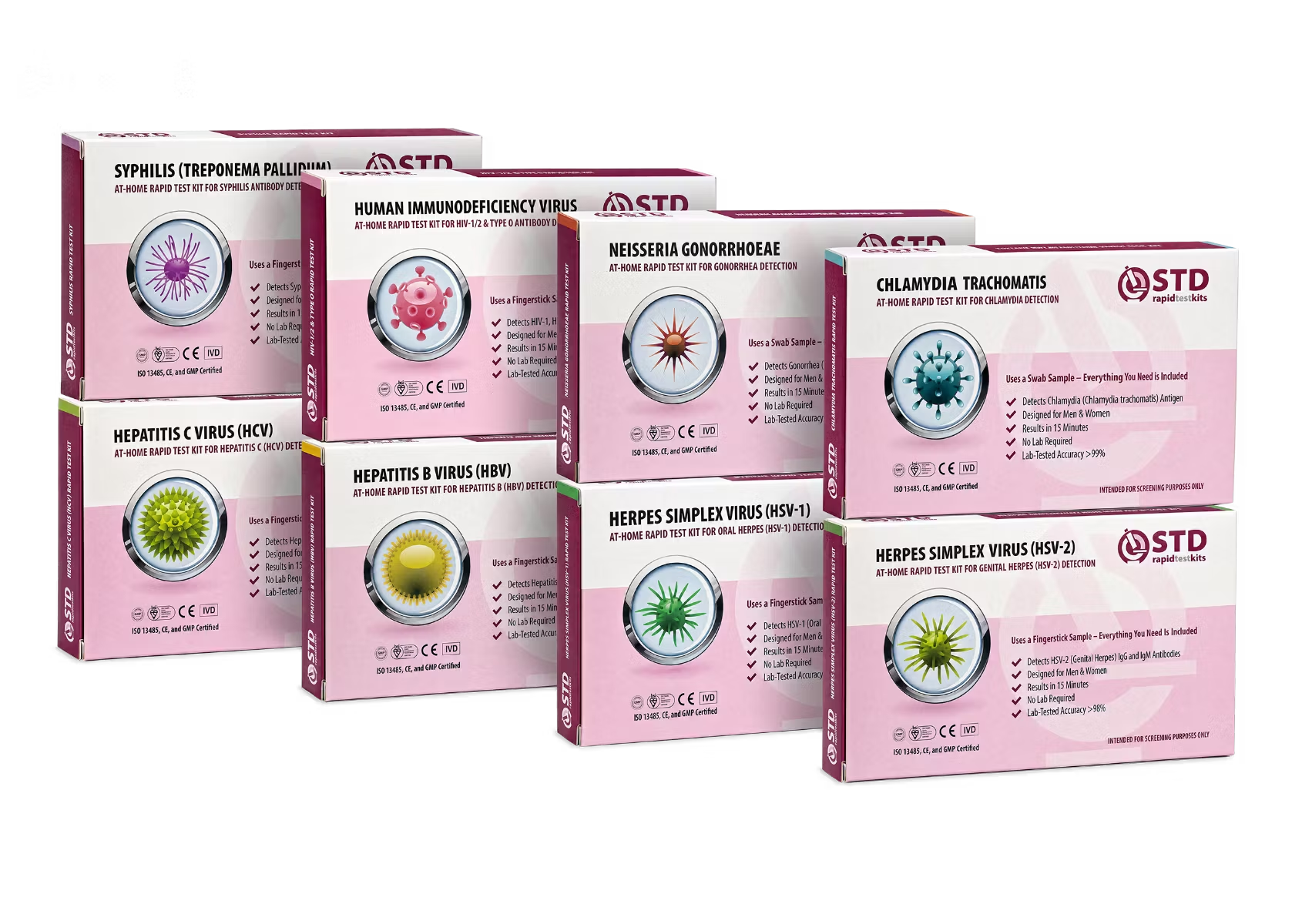
Combo kits bundle swab and blood components. A typical 7-in-1 panel covers chlamydia, gonorrhea, syphilis, HIV, hepatitis B, hepatitis C, and HSV-2; an 8-in-1 panel adds another infection on top, and the 10-in-1 (women-only) reaches the broadest at-home coverage available for an at-home rapid format.
One scope-limit worth flagging up front: our trichomoniasis and HPV at-home swabs are validated for vaginal self-collection only. Male readers concerned about either infection should see a clinic for a clinician-administered test rather than ordering the women-only kit.
Choosing a Kit: Single-Infection Versus Combo Panel
Pick a kit by matching it to your specific concern and to your timing. If you had a known exposure to a partner who told you they tested positive for a single infection, the single-infection kit is the right answer. If your concern is broader (a new partner, a missed condom, a long gap since your last screen), the combo panel covers the bases without forcing you to guess which infection to chase.
Timing pulls in the same direction. Bacterial swab tests can be read accurately from about day 14 post-exposure. Blood antibody tests need longer windows. If you are testing two weeks after a possible exposure, the bacterial single-infection swab is decisive on day 14, while the HIV and syphilis components of a combo panel are not yet at peak detection. Many users run two passes: a chlamydia and gonorrhea swab early to clear the most common bacterial pair, then a fingerstick blood panel at the four-to-twelve-week mark for the viral and treponemal screens.
| Infection group | Sample type | Window period | Typical at-home kit |
|---|---|---|---|
| Chlamydia, gonorrhea, trichomoniasis | Self-collected genital swab | About 14 days post-exposure | Single-infection or 2-in-1 combo |
| HPV (women only) | Vaginal self-swab | Per partner-positive context | Single-infection HPV swab |
| HIV (4th-generation) | Fingerstick blood | 18 to 45 days | Single-infection or combo panel |
| Syphilis | Fingerstick blood | 3 to 12 weeks | Single-infection or combo panel |
| Hepatitis B and C | Fingerstick blood | 4 to 12 weeks for HCV antibodies | Single-infection or 2-in-1 |
| HSV-1, HSV-2 (antibody) | Fingerstick blood | 12 or more weeks | Single-infection or combined herpes panel |
What These Kits Cannot Cover
Pharyngeal (throat) gonorrhea and throat chlamydia from oral exposure need a clinician-administered swab and a lab NAAT. Our at-home kits are validated for genital sample sites only, so a throat-only concern means a clinic visit for a site-specific swab.
Rectal infections sit under the same constraint. A rectal swab and lab NAAT need to be done in clinic. The home kit cannot answer the rectal-only question.
Active herpes lesions are a separate case. The HSV blood antibody test detects past or current systemic infection, not which lesion you are looking at right now. An active sore needs a clinician-administered viral swab and lab PCR for site-specific identification. The blood antibody test is the right tool for the parallel question of whether you have been exposed at all and have seroconverted, which usually requires 12 or more weeks after exposure to be reliable.
If your specific concern is a throat-only or rectal-only exposure, or an active visible lesion that needs morphology assessment, see a clinic. The at-home kit can answer the parallel genital and bloodwork question in the same testing cycle, but it is not a substitute for the site-specific swab.
Privacy, Cost, and Access
The privacy argument is real. Plain packaging, encrypted patient portals, and out-of-pocket payment options together let you handle a test cycle without the visit ever appearing on insurance, on a clinic's check-in roster, or in someone else's earshot. For survivors of sexual trauma, that level of control matters; for young adults still on family insurance, it matters; for people who live somewhere small enough that a clinic visit would not stay private, it matters.
Cost is a less clean story. The cheapest path is your local public-health clinic, which often runs free or sliding-scale STI screening for the most common infections. Telehealth-plus-home-kit care typically runs roughly 40 to 150 dollars for a single-infection kit and 80 to 250 dollars for combo panels, with the consult fee usually between 30 and 75 dollars. Insurance coverage varies by carrier and by state. The at-home model wins on time and privacy, not always on price.
Access is where telemedicine genuinely changes the math. The technology reaches populations the brick-and-mortar clinic system has historically underserved: rural users, LGBTQ+ users in conservative geographies, people with disabilities or caregiving responsibilities that make travel hard, and shift workers whose schedules clash with clinic hours. There is also a real digital-divide concern. People without a smartphone or with weak broadband do not get reached by this model at all, and the public-health system still owes those readers the brick-and-mortar option.
Public-health clinic: free or sliding-scale for most common infections. Telehealth consult: roughly 30 to 75 dollars. Single-infection at-home kit: 40 to 150 dollars. Combo panel kit: 80 to 250 dollars. Coverage varies by insurance carrier and state, and many telehealth platforms accept self-pay to keep the visit off insurance records.
Where AI Fits In
Several platforms now route a pre-visit questionnaire through a machine-learning model that suggests which infections are most likely given the answers and which kit to consider. The output is a recommendation routed to a clinician, not a verdict to the patient. Done well, it shortens the consult by giving the clinician a structured pre-read.
Image-based pre-screening. A few platforms accept a photo of a lesion or rash and run it through a vision model trained on dermatological reference data. The output is a confidence score, again routed to a clinician. Performance varies sharply by skin tone and image quality, which is a known limit of consumer vision models on dermatology tasks. Treat any consumer-facing AI dermatology output as triage, not diagnosis.
Result interpretation and operations. For lab-processed mail-in kits, AI helps the lab side: routing positive results faster, flagging weakly positive antibody bands for human review, batching follow-up messages. The clinician still signs the result.
The boundary that matters: an AI recommendation does not constitute a clinical diagnosis. A licensed clinician reviewing the result and writing your prescription is what closes the loop. If a service offers test results without a clinician in the chain, ask why.
STIs are often asymptomatic. When symptoms occur, they can be non-specific.
What These Tools Cannot Replace
Site-specific swabs at non-genital sites need a clinician's hands. If your exposure was specifically oral or anal, the home kit can confirm or rule out a parallel genital or blood-based infection, but it cannot answer the site-specific question.
Pelvic exams, internal speculum exams, and external genital lesion biopsies are also clinic work. If you have suspicious bleeding, a sore that is not healing, or a lesion that needs morphology assessment, that is a clinic visit.
Sustained follow-up for complex cases also belongs in person. Recurrent infections, pregnancy-related testing, and PEP or PrEP management all benefit from face-to-face follow-up at least once. Treatment-resistant gonorrhea is a related concern: first-line dual therapy (ceftriaxone plus a second agent per the 2021 CDC guidelines) remains effective for most current cases, but resistance is rising. A positive rapid-test result for gonorrhea should be confirmed by clinician-collected culture testing for susceptibility before committing to a treatment course, especially after recent travel or known partner-side treatment failure.
Telemedicine and at-home testing handle the routine middle of STI care well. The remaining slice still needs a clinic, and pretending otherwise erodes trust in the whole category. The CDC's STI testing overview walks through which clinical scenarios point toward in-person care.
When the answer is a clinic, not a kit
- Throat-only or rectal-only exposure: clinic-administered swab and lab NAAT.
- Active genital or oral lesion that needs morphology assessment: in-person viral PCR swab.
- Pelvic, speculum, or biopsy work: clinic, not kit.
- Pregnancy-related testing, PEP/PrEP management, or recurrent and treatment-resistant infections: in-person follow-up at least once.
Practical Tips for Getting the Most Out of Telehealth STI Care
Be specific about your exposure history. Date, type of contact, condom use or not, partner information if you have it. The clinician's recommendation depends on these details, and shyness costs you accuracy.
Match the kit to your timing. Bacterial swabs read accurately from about day 14. Viral and treponemal blood antibody tests need their full window. Ask the clinician explicitly when to test, not just what to test.
Confirm positive results in a lab. A lateral-flow positive is a strong signal, not a confirmed diagnosis. The clinician should route a positive to a NAAT or other gold-standard lab confirmation before you start a long course of treatment.
Read the kit instructions before you collect. Most false-positive and false-negative results on home kits trace to sample collection error, not chemistry failure. Five careful minutes of reading is worth more than a retest.
Save your records. The patient portal usually keeps a copy of consult notes, prescriptions, and results. Download the PDF for your own records, especially if you switch platforms later.
Tell partners. Most platforms now offer anonymous partner-notification, and some prescribe expedited partner therapy where state law allows. The 2021 CDC treatment guidelines explicitly support EPT for chlamydia and gonorrhea in heterosexual partners. Use it.
Confidence Without the Clinic Visit
Telemedicine and at-home testing are not perfect, and they are not for every situation. They are very good at the routine middle of STI care: regular screening, uncomplicated bacterial-infection treatment, post-exposure check-ins where the time pressure is real and the privacy stakes are high. They are not a substitute for clinic-administered swabs at non-genital sites, for pelvic exams, or for the kind of sustained follow-up that complex infections need.
Used inside their boundaries, they reduce the friction that causes most missed tests. If your situation fits the routine middle of the category, an at-home rapid kit paired with a telehealth consult is a reasonable starting point.
If your concern is a single recent exposure, start with the bacterial swab kit at the 14-day mark. If your concern is broader (new partner, gap since last test, multiple exposures), the combo panel covers more ground in one cycle. Either way, book the telehealth consult first so the clinician can match the kit and timing to your specific situation before you order.
FAQs
- Can I get a prescription through telehealth without an in-person exam?
- For most uncomplicated bacterial STIs (chlamydia, gonorrhea, trichomoniasis), yes. A telehealth clinician can prescribe first-line antibiotics based on a positive at-home result that is then routed to a confirmatory lab NAAT. Complex cases (treatment-resistant gonorrhea, pregnancy-related testing, recurrent infections) usually need in-person follow-up.
- How accurate are at-home rapid STI tests compared with clinic NAATs?
- Lateral-flow rapid kits are screening tools. Sensitivity and specificity vary by infection and by kit; check the product data sheet for validated figures for each specific test. Lab NAATs remain the analytical gold standard for confirmation, so the home kit and the lab NAAT are complementary, not equivalent. A positive at-home result should always be routed to a lab NAAT by the prescribing clinician before a long treatment course.
- How long after an exposure should I test?
- Bacterial swab tests (chlamydia, gonorrhea, trichomoniasis) are accurate from about 14 days post-exposure. Fingerstick blood antibody tests have longer windows: HIV fourth-generation tests 18 to 45 days, syphilis 3 to 12 weeks, hepatitis C antibodies 4 to 12 weeks, and HSV-2 antibodies typically 12 or more weeks. The CDC recommends retesting at the end of the window if your initial result is negative and you had a known exposure.
- Do home kits test for throat or rectal infections?
- If that is your specific concern, book a clinic appointment before ordering a kit. Throat or rectal exposures need a clinician-administered swab and lab NAAT. Our at-home kits answer the parallel genital and bloodwork question from the same exposure event, which adds useful context, but they are validated for vaginal or penile self-swab and fingerstick blood draws only.
- Will a telehealth STI consult show up on my insurance?
- Only if you bill it through insurance. Most telehealth platforms offer out-of-pocket payment options that keep the visit and the kit purchase off any insurance record. The kits ship in plain unmarked packaging.
- What does AI actually do in these platforms?
- It triages by routing reader inputs through a model that helps the clinician understand likely infections before the consult, and some platforms route a lesion photo through a vision model for early sorting. The clinician still reviews everything and writes the prescription. AI in this setting is a routing layer, not a diagnostic engine.
- Can I order a home kit without talking to a clinician first?
- Yes, and that is the right answer for some readers (routine periodic screening, follow-up after a known prior infection). For ambiguous symptoms or a known recent exposure, the consult is worth doing first because it tightens which kit you need and when to read the strip.
- What happens if my at-home test is positive?
- The telehealth clinician routes a positive lateral-flow result to a confirmatory lab NAAT, then prescribes treatment if confirmed. Most prescriptions go to your local pharmacy or by mail. Partner notification (often anonymous, sometimes through an expedited partner therapy script) is offered for chlamydia and gonorrhea where state law allows.
- U.S. Centers for Disease Control and Prevention. STI Treatment Guidelines, 2021. Source for expedited partner therapy guidance, per-infection window periods, and treatment-window framing.
- U.S. Centers for Disease Control and Prevention. Sexually Transmitted Infections Surveillance, 2024 (Provisional). Source for the 2.2 million combined-cases figure and year-over-year trends.
- World Health Organization. Sexually transmitted infections (STIs) fact sheet. Source for the asymptomatic-infection framing and the global-screening rationale.
- U.K. National Health Service. Sexually transmitted infections (STIs) overview. Source for reader-facing orientation to STI testing.
- U.S. Centers for Disease Control and Prevention. STI Testing overview. Source for clinical-scenarios framing on when in-person care is the right choice.
