Anal Sex and STDs: Risks, Testing, and Prevention
Anal sex carries the highest per-act HIV transmission risk of any common sexual activity, and most rectal infections cause no symptoms. This guide covers what raises risk, when each STI becomes detectable, what at-home rapid tests cover, and where a clinic visit is the right call. Concrete numbers from CDC, WHO, and NHS guidance throughout.




- Receptive anal sex without a condom carries roughly 138 HIV transmissions per 10,000 exposures from a partner with detectable virus, about 17 times the per-act risk of receptive vaginal sex (per CDC).
- Rectal gonorrhea and chlamydia are usually symptom-free, so testing after anal exposure is the only reliable way to find them.
Published: October 2025 | Last updated: April 2026 | Editorial review and quality control: Martina N.
Anal sex carries higher per-act risk of HIV transmission than any other common sexual activity, and most bacterial infections of the rectum cause no symptoms at all. Those two facts shape how testing and prevention should be handled if anal sex is part of your sex life, whether occasionally or routinely, and across any combination of partners or orientations.
This guide walks through what makes the rectal lining more vulnerable than other tissue, which infections matter most after anal exposure, when each becomes detectable, and which testing options actually fit. It also covers honest scope notes about what at-home rapid kits can answer and where a clinic visit is the right call. The aim is responsible action without alarm or shame, with concrete numbers from public-health sources rather than vague reassurance.
What is the actual STI risk from anal sex, and what should I test for?
Receptive anal sex without a condom carries the highest per-act HIV transmission risk of any common sexual activity. CDC modelling puts it at about 138 transmissions per 10,000 exposures from a partner with detectable virus, compared with roughly 8 per 10,000 for receptive vaginal sex. The same encounter can transmit gonorrhea, chlamydia, syphilis, herpes (HSV-1 and HSV-2), HPV, and hepatitis B or C. Because rectal gonorrhea and chlamydia are usually symptom-free, post-exposure testing is the only reliable way to find them. After unprotected anal exposure the standard screen is HIV, syphilis, and hepatitis B and C through bloodwork, plus rectal gonorrhea and chlamydia through a clinic-administered rectal swab. At-home rapid kits cover the bloodwork side; rectal swabs need a clinic.
Key Takeaways
- Receptive anal sex without a condom carries roughly 138 HIV transmissions per 10,000 exposures from a partner with detectable virus, about 17 times the per-act risk of receptive vaginal sex (per CDC).
- Rectal gonorrhea and chlamydia are usually symptom-free, so testing after anal exposure is the only reliable way to find them.
Why anal sex carries higher STI risk than other sex acts
Three biological features of the rectum make sexually transmitted infections easier to acquire during anal intercourse compared with vaginal or oral exposure.
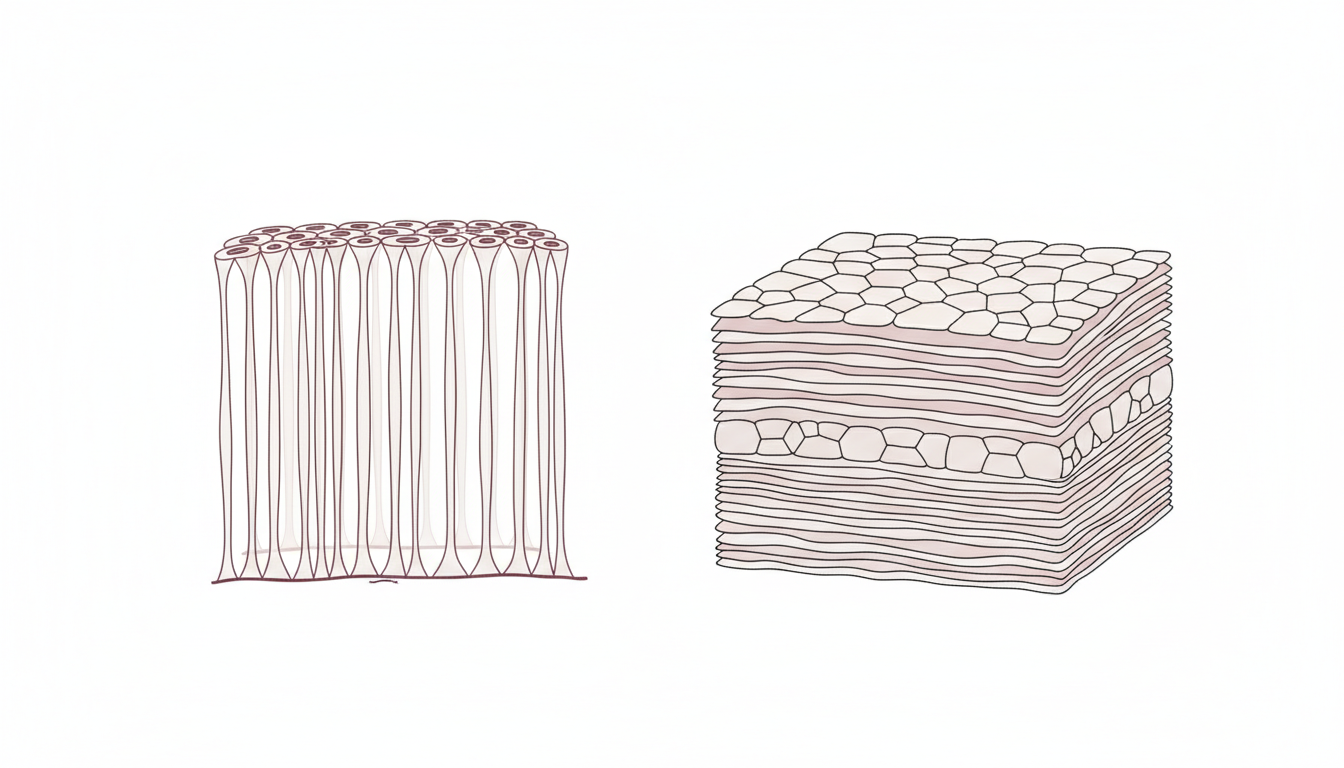
The rectal lining is thinner. The vaginal canal is lined with stratified squamous epithelium, many cell layers thick, that acts as a physical barrier. The rectum is lined with simple columnar epithelium, a single layer of cells whose primary job is absorbing water rather than blocking pathogens. That single-cell barrier is far easier for bacteria, viruses, and inflammatory cells to cross.
Friction creates micro-injuries. The rectum produces no natural lubrication. Penetration without adequate added lubricant causes small tears in the mucosa and surrounding skin, even when the experience does not feel painful. Those micro-tears expose tissue to blood, semen, and pre-ejaculate from a partner. Visible or microscopic blood is one of the strongest amplifiers of bloodborne STI transmission.
The rectum is rich in HIV target cells. The lamina propria immediately under the rectal epithelium contains a dense population of CD4-positive T cells, dendritic cells, and macrophages. These are exactly the cells HIV needs to establish infection. The rectum also contains specialized M cells that sample antigens and can ferry pathogens across the epithelium directly. Combined, this means a smaller viral inoculum can cause infection through anal exposure than through other routes (per CDC HIV transmission guidance).
Risk is not symmetric between partners. The receptive partner (the person being penetrated) bears most of the risk, because the receptive partner's tissue absorbs the inoculum and sustains the abrasion. The insertive partner faces lower but still meaningful risk, particularly with unprotected exposure to blood, anal secretions, or visible lesions on the receptive partner.
Two other factors push per-act risk further. A higher viral load in the partner with the infection raises transmission probability roughly proportionally; a partner on consistent antiretroviral therapy with sustained viral suppression (often described as 'undetectable') does not transmit HIV sexually, per the Undetectable = Untransmittable (U=U) evidence base. The presence of any other STI, especially ulcerative ones like syphilis or active herpes, raises HIV acquisition risk by a factor of 2 to 5 because inflamed tissue recruits more target cells.
None of this means anal sex is dangerous in absolute terms. Plenty of people have it routinely, manage risk well, and never acquire an STI. The point is that the risk multipliers stack predictably, and the prevention and testing strategies below are calibrated to that arithmetic.
The STIs most commonly transmitted through anal exposure
The infections below all have meaningful documented transmission through anal sex. The relative weight differs by infection, by viral load or bacterial burden in the partner, by condom use, and by other co-factors. The table that follows summarizes route, common rectal presentation, and the typical detection window for each.
HIV
HIV is the highest-impact infection in this group because of the per-act risk and lifelong consequences. CDC modelling estimates roughly 138 transmissions per 10,000 condomless exposures for the receptive partner and about 11 per 10,000 for the insertive partner, when the source partner has detectable virus. Modern combination antiretroviral therapy reduces a person's viral load to undetectable, which prevents sexual transmission entirely (the U=U finding). PrEP (pre-exposure prophylaxis) used consistently by an HIV-negative partner reduces acquisition risk by more than 99% (per CDC HIV prevention guidance).
Gonorrhea and chlamydia
Both bacterial infections can establish in the rectum after receptive anal exposure. Most rectal infections cause no symptoms at all. When symptoms do appear they include rectal discharge, itching, pain on defecation, and bleeding. The clinical gold standard is nucleic acid amplification testing (NAAT) on a rectal swab, performed in clinic. Untreated rectal infection can persist for months and silently transmit to other partners (per CDC STI treatment guidelines).
Syphilis
Primary syphilis presents as a single painless ulcer (chancre) at the site of entry. A rectal chancre is often invisible to the patient and may be discovered only on clinical exam. Untreated infection progresses through secondary, latent, and (rarely now) tertiary stages. Detection is via blood antibody testing, with most reactive results appearing within 3 to 6 weeks of exposure and a 90-day window for conservative confirmation.
Herpes (HSV-1 and HSV-2)
Herpes simplex virus transmits through skin-to-skin contact, including during periods of asymptomatic shedding. Either HSV-1 or HSV-2 can establish in the genital or perianal area. Outbreaks present as painful blisters or ulcers; many infections are silent. Blood antibody tests detect seroconversion 12 or more weeks after exposure; an active lesion can be confirmed immediately with PCR swab in clinic.
Human papillomavirus (HPV)
HPV transmits through skin-to-skin contact and does not require penetration. Most HPV infections clear without intervention. Persistent infection with high-risk strains (notably HPV 16 and 18) raises the long-term risk of anal cancer, which has been rising in incidence among receptive anal-sex partners. Vaccination is routine through age 26; through age 45 it is a shared clinical decision (per CDC HPV guidance).
Hepatitis B and C
Hepatitis B (HBV) is efficiently transmitted through anal sex and is part of routine adult vaccination guidance. Hepatitis C (HCV) is primarily bloodborne but transmits sexually at elevated rates among MSM living with HIV. Both are detectable on blood antibody testing within 1 to 3 months of exposure.
| Infection | Rectal symptoms | How it is detected | Detection window after exposure |
|---|---|---|---|
| HIV | Often none early; some develop flu-like illness in week 2 to 4 | 4th-generation lab test or rapid antibody test | 18 to 45 days for 4th-gen; 23 to 90 days for antibody-only |
| Gonorrhea (rectal) | Usually none; sometimes discharge, pain on defecation, bleeding | Rectal swab NAAT in clinic | 5 to 14 days |
| Chlamydia (rectal) | Usually none; sometimes discharge or rectal pain | Rectal swab NAAT in clinic | 1 to 3 weeks |
| Syphilis | Painless rectal ulcer (often hidden) | Blood antibody test | 3 to 6 weeks; 90 days conservative |
| Herpes (HSV-1, HSV-2) | Painful blisters or sores; many silent infections | Blood antibody test or PCR of active lesion | PCR: immediate when lesion present; antibody: 12+ weeks |
| HPV | Often none; warts or anal-cancer risk over time | No routine adult screen; clinical exam if warts | Not applicable for routine testing |
| Hepatitis B | Usually none acute; some develop jaundice or fatigue | Blood antigen and antibody panel | 4 to 9 weeks |
| Hepatitis C | Usually none acute | Blood antibody test | 8 to 11 weeks |
Why most rectal infections cause no symptoms
The rectal mucosa is densely innervated for stretch and pressure but sparsely innervated for the kind of low-grade inflammation that bacterial colonization causes. Add the fact that the rectum already produces mucus and tolerates a varied microbiome, and the result is that low-level bacterial infection often produces no detectable signal.
Rectal gonorrhea is symptom-free in roughly 70 to 85% of cases (per CDC STI treatment guidelines). Rectal chlamydia is symptom-free in an even higher proportion. Both can persist for months, transmit to other partners, and increase HIV acquisition risk through low-grade rectal inflammation, even when the carrier feels completely well.
Symptoms, when they do appear, are non-specific and easy to dismiss as something benign. They include itching around the anus, mucus or blood-tinged discharge, mild pain on defecation, the sensation of incomplete evacuation, or rectal bleeding. Many people attribute these to hemorrhoids, fissures, or dietary changes and do not seek testing.
This is the strongest argument for routine post-exposure screening regardless of symptoms. The CDC's STI treatment guidelines recommend rectal NAAT for any person who reports receptive anal exposure since the last screen, with annual screening for sexually active men who have sex with men and more frequent screening (every 3 to 6 months) for those with multiple partners or HIV co-infection. The same logic applies to syphilis and hepatitis B and C, where many primary infections present silently or with symptoms that get mistaken for unrelated illness.
Bleeding after recent anal exposure can come from harmless causes such as a small fissure or hemorrhoids, but it can also be the only sign of a rectal STI or, less commonly, primary syphilis. A clinic visit for rectal swab and exam settles the question quickly. Self-diagnosing as hemorrhoids and waiting can delay treatment of an infection that is highly curable when caught early.
What actually reduces risk: condoms, lube, PrEP, and vaccines
Risk-reduction options for anal sex stack together. Using more of them in combination produces a much smaller residual risk than any single measure alone. Below are the measures with the strongest evidence base.
Condoms (latex or polyurethane)
External condoms used consistently and correctly during anal sex reduce HIV transmission by roughly 70 to 80% (per CDC HIV prevention guidance), and they reduce most other STI transmission proportionally. The residual risk is non-zero because condoms can break, slip, or fail to cover the full skin-to-skin contact area (relevant for HSV and HPV).
Lubricant choice matters
The rectum produces no natural lubrication. Use a generous amount of water-based or silicone-based lubricant, applied to both partners. Oil-based lubricants such as Vaseline, mineral oil, lotions, and baby oil destroy latex condoms within minutes and should never be used with them. Silicone-based lubricants are condom-safe with latex and longer-lasting; they should not be used with silicone toys, which they damage.
PrEP (pre-exposure prophylaxis)
PrEP for HIV is a daily oral medication (or in some regions a long-acting injectable) for people who are HIV-negative and at ongoing risk. Consistent oral PrEP reduces HIV acquisition risk by more than 99% in studies of MSM (per CDC PrEP guidance). It does not protect against other STIs.
Vaccination
Two vaccines are directly relevant. The HPV vaccine is routine through age 26 (catch-up still recommended) and a shared clinical decision through age 45. It targets the high-risk strains responsible for most cervical, anal, and oropharyngeal cancers. The hepatitis B vaccine series provides long-term protection and is recommended for all sexually active adults who have not received it (per CDC immunization schedules). There is no vaccine for HIV, HSV, or hepatitis C.
Routine STI testing
Annual screening for HIV, syphilis, and hepatitis B and C, plus rectal NAAT for gonorrhea and chlamydia, is the standard for sexually active people who practice anal sex. Frequency increases to every 3 to 6 months for those with multiple partners, those on PrEP, and people living with HIV.
How the measures stack:
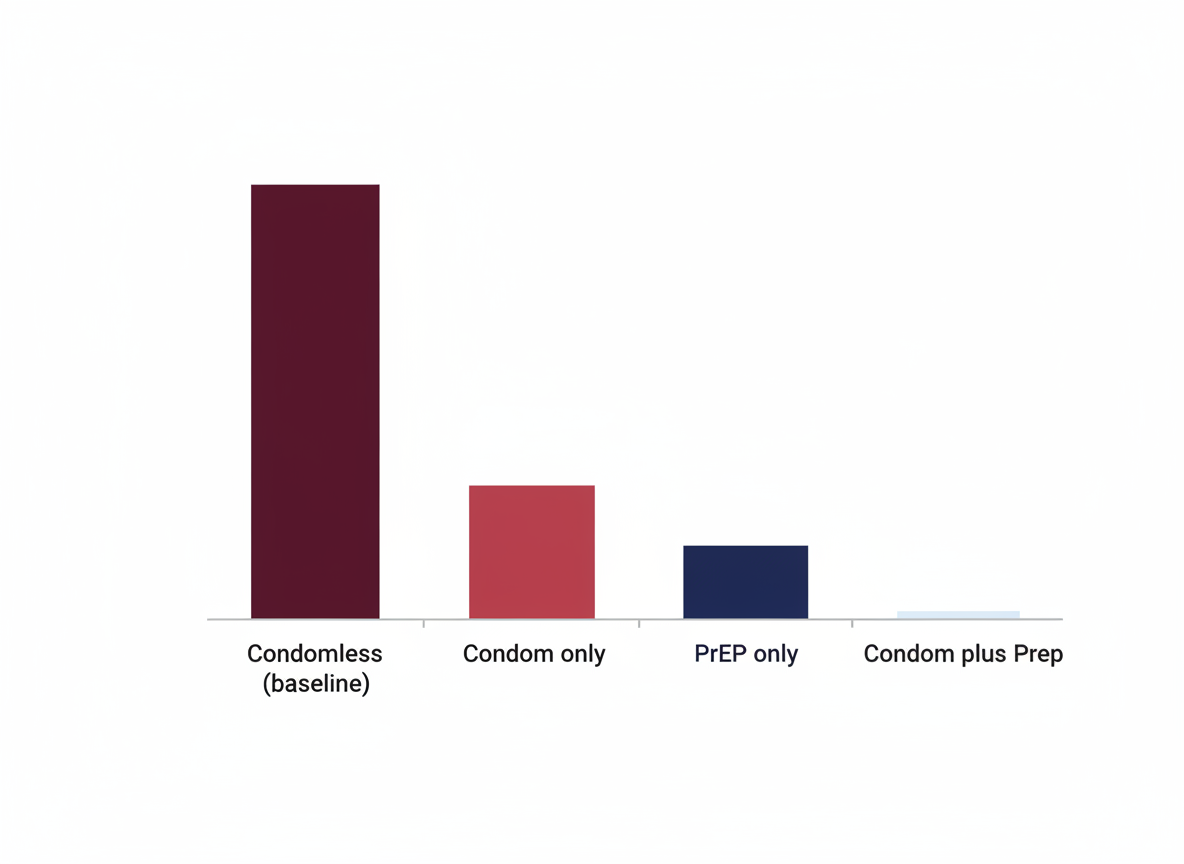
- Condoms alone: roughly 70 to 80% HIV reduction during anal sex, plus broad coverage against bacterial STIs.
- PrEP alone: over 99% HIV reduction with consistent use, but no protection against other STIs.
- Condom plus PrEP: the smallest residual HIV risk available outside of an undetectable partner.
- HPV vaccine: covers high-risk strains 16 and 18 driving most anal-cancer risk.
- Hepatitis B vaccine series: durable protection for all sexually active adults.
Testing windows that matter after anal exposure
A negative result before the test's window period is unreliable. The window is the time between exposure and the point at which the body has produced enough antibodies, antigens, or detectable viral RNA for the test to find. Testing too early can give a falsely reassuring negative.
The rough windows for the most commonly tested infections are listed below. They reflect typical published ranges; individual variation can extend them slightly. When in doubt, retest at the conservative end of the window.
The right testing strategy after a single recent unprotected anal exposure is usually a baseline test now (to record current status), repeat at 4 to 6 weeks (most infections detectable), and a final round at 12 weeks for herpes seroconversion and conservative HIV and HCV ruling out. If symptoms appear at any point, do not wait for the full window before seeking care.
Window periods (when each test reliably picks up infection)
- HIV (4th-generation antigen/antibody): from about day 18 after exposure; 90 days for definitive ruling out.
- Syphilis: most reactive antibody tests within 3 to 6 weeks; 90 days conservative.
- Hepatitis B (surface antigen): 4 to 9 weeks.
- Hepatitis C (antibody): 8 to 11 weeks.
- Herpes (HSV antibody): 12 or more weeks for seroconversion. PCR of an active lesion is immediate.
What at-home rapid tests can and cannot detect after anal exposure
At-home rapid tests are useful for the bloodwork side of post-exposure screening: HIV, syphilis, hepatitis B, hepatitis C, and HSV antibody testing. They use a fingerstick blood sample and lateral-flow chemistry to give a result in about 15 minutes. Sensitivity in studies is in the mid-to-high 90s when used after the relevant window period; specificity is typically over 99%.
What rapid lateral-flow kits do not do is replace a rectal NAAT swab. Rectal gonorrhea and chlamydia detection requires a sample of mucus and cells from the rectal lining, processed by a clinical laboratory using NAAT (nucleic acid amplification). At-home swab products on this site are validated for genital sampling, not rectal sampling, and should not be used for rectal infection screening. After receptive anal exposure with concern for rectal gonorrhea or chlamydia, the right step is a clinic visit for a rectal swab.
Lateral-flow rapid tests are also not equivalent to a 4th-generation lab HIV test. Most at-home rapid kits detect HIV antibodies only and have a longer window period (23 to 90 days) than the laboratory combination antigen/antibody assay (18 to 45 days). A rapid antibody test taken at 30 days post-exposure can give a negative result that a 4th-generation lab test would catch as positive. For the most sensitive early detection, a lab-based 4th-generation antigen/antibody test through a clinic is the right choice.
That said, rapid kits are accurate when used at the right time, private, and immediate. They are well-suited to confirming HIV status outside the early window, screening for syphilis and hepatitis at 6 to 12 weeks post-exposure, and routine annual checks alongside clinic-based rectal sampling.
All sexually active gay, bisexual, and other men who have sex with men should be tested for HIV at least annually, and as often as every 3 to 6 months for those with risk factors.

When a clinic visit beats a home kit
Home rapid kits are well-suited to routine, asymptomatic, post-window screening of bloodborne infections. Several scenarios make a clinic appointment the better starting point.
Possible rectal gonorrhea or chlamydia. Rectal NAAT requires a clinic-administered swab. Self-collected genital swabs do not screen the rectum. After unprotected receptive anal exposure, ask the clinic for a rectal NAAT in addition to standard urine or vaginal sampling.
Active visible lesions. Genital, perianal, or rectal sores, blisters, ulcers, or warts should be assessed in person. PCR of an active herpes lesion confirms HSV type immediately, and a clinical exam distinguishes a syphilitic chancre from other causes. Imaging or anoscopy may be needed for hidden rectal lesions.
Need for treatment. Bacterial STIs (gonorrhea, chlamydia, syphilis) and HSV outbreaks all require prescription medication. A positive at-home test is the start of a treatment pathway, not the end. Clinics can treat the patient and offer expedited partner therapy where state law permits.
Possible HIV exposure within 72 hours. Post-exposure prophylaxis (PEP) is a 28-day medication course that, started within 72 hours of exposure (the sooner the better), substantially reduces the chance of seroconversion. PEP requires immediate clinic or emergency-room access; it is not available through home testing.
Symptoms of acute HIV. Fever, sore throat, swollen lymph nodes, and rash 2 to 4 weeks after exposure may indicate acute HIV. NAT (nucleic acid testing) detects HIV RNA at this stage, before antibody tests. NAT is clinic-only.
Quick reference: when a clinic visit is the right call
- Concern for rectal gonorrhea or chlamydia: rectal NAAT is clinic-only.
- Active visible sores, blisters, ulcers, or warts: PCR and exam in person.
- Positive at-home result: clinic for prescription treatment and partner notification.
- Within 72 hours of unprotected exposure: clinic or ER for PEP, ideally within hours.
- Acute HIV symptoms (fever, rash, swollen nodes 2 to 4 weeks post-exposure): clinic for HIV NAT.
Talking with partners about testing and status
Disclosure conversations are part of the prevention toolkit. Done well, they reduce STI transmission as much as condoms or PrEP. Done poorly, they create stigma and avoidance. A few principles help.
Lead with your own status, not their assumed status. Saying 'I tested negative for everything 3 weeks ago and I am on PrEP' sets a frame the other person can match without feeling interrogated. 'When did you last test?' can follow naturally.
Match the conversation to context. A long-term partner may welcome a discussion of joint testing schedules and shared decisions about condom use. A new or casual partner may need a quick, factual exchange before a first encounter.
Status disclosure is not the same as risk disclosure. A partner who reports being negative may have tested last week, last year, or never, and may not know their own current status. Asking when (and for what) someone last tested gives more information than asking whether they are positive or negative.
Treat unknown status as a planning input, not a deal-breaker. Combining condoms, water- or silicone-based lube, and PrEP keeps the residual risk small even with a partner whose status is uncertain. Scheduling a screen 4 to 6 weeks after a new partner keeps the uncertainty window short and makes the next conversation easier to have.
Try: 'I got my full panel done about three weeks ago and everything came back clear. When was your last test, and what did it cover?' It signals you take it seriously, gives the other person a frame to match, and turns the question into a factual exchange rather than an interrogation.
Frequently asked questions
- Can I get an STI from a single act of anal sex?
- Yes. A single condomless act with an infected partner is enough to transmit any of the bacterial STIs (gonorrhea, chlamydia, syphilis), several viral STIs (HIV, HSV, HPV, hepatitis B and C), or more than one at the same time. Condoms and PrEP lower the risk substantially but do not eliminate it. Most first-time infections come from a single exposure rather than long cumulative contact.
- Does receiving anal sex always tear the rectal lining?
- Micro-injuries are common even when there is no visible bleeding or pain. They do not occur on every occasion, and adequate water- or silicone-based lubrication with unhurried pacing reduces mechanical trauma. The thin single-layer rectal epithelium is also more permeable to infection than vaginal tissue, so even intact lining can transmit certain pathogens.
- How soon after anal exposure can I test?
- Most infections are detectable by 4 to 6 weeks post-exposure. Test at baseline, again at 4 weeks, and once more at 12 weeks for a final HSV antibody result and conservative HIV and HCV rule-out. If you develop symptoms before any of those windows, get seen sooner.
- I had unprotected receptive anal sex less than 72 hours ago. What should I do?
- Go to a clinic or emergency room as soon as possible to discuss post-exposure prophylaxis (PEP) for HIV. PEP is a 28-day medication course; it is most effective when started within hours and progressively less effective up to 72 hours. Most clinics also screen baseline for other STIs at the same visit.
- Do at-home swab tests detect rectal gonorrhea and chlamydia?
- No. Our at-home swab tests are validated for genital self-sampling (vaginal or penile). Rectal screening requires a clinic-administered rectal swab processed by NAAT. After receptive anal exposure with concern for rectal infection, schedule a clinic visit for a rectal NAAT in addition to any home testing for bloodborne infections.
- Are condoms really effective for anal sex?
- Yes, when used correctly with adequate lubricant. External condoms reduce HIV transmission by roughly 70 to 80% and reduce most bacterial STI transmission proportionally. Use water-based or silicone-based lubricant to reduce condom breakage; oil-based lubricants destroy latex within minutes. Combine with PrEP for the strongest HIV protection.
- Should I get vaccinated against any STIs before anal sex?
- The HPV vaccine is recommended through age 26 routinely and through age 45 as a shared clinical decision. The hepatitis B vaccine series is recommended for all sexually active adults who have not received it. There are no vaccines available for HIV, HSV, hepatitis C, or the bacterial STIs.
- U.S. Centers for Disease Control and Prevention. HIV transmission, per-act risk by exposure route, PrEP and PEP guidance, U=U evidence base.
- U.S. Centers for Disease Control and Prevention. STI Treatment Guidelines, including rectal NAAT recommendations for gonorrhea and chlamydia and screening frequency for sexually active MSM.
- U.S. Centers for Disease Control and Prevention. HPV transmission, persistent infection and anal cancer risk, vaccination recommendations through age 26 routine and 27 to 45 shared decision.
- U.S. Centers for Disease Control and Prevention. Adult immunization schedules including hepatitis B series for sexually active adults.
- World Health Organization. Sexually transmitted infections information, global incidence figures, and screening guidance (root domain).
- UK National Health Service. Sexual health and sexually transmitted infection condition pages, symptoms, testing pathways, and clinical management (root domain).