
Published: November 2025 | Last updated: May 2026 | Editorial review and quality control: Martina N.
Acute HIV symptoms usually appear 2 to 4 weeks after exposure, range 1 to 6 weeks. The pattern is flu-like: fever, sore throat, swollen lymph nodes, rash, fatigue, night sweats. Some people have no symptoms at all, so feeling fine is not the same as testing negative. If exposure was within 72 hours, call a clinic today about PEP.
The first symptoms of acute HIV infection usually surface 2 to 4 weeks after an exposure event, with a wider possible range of 1 to 6 weeks. They look like the flu. Fever, sore throat, swollen glands, fatigue, a faint chest rash, drenching night sweats. They last about one to two weeks and fade.
What feels like recovery during that fade is the immune system catching up enough to suppress the most dramatic symptoms. HIV continues replicating quietly underneath. Without treatment, it stays for life.
This guide covers what acute HIV (also called primary HIV or acute retroviral syndrome) looks like after unprotected anal exposure, why anal sex carries higher per-act risk than vaginal or oral exposure, when each HIV test actually starts working, and what to do in the 72 hours after exposure when post-exposure prophylaxis (PEP) can still prevent infection.
Key Takeaways
- Acute HIV symptoms usually appear 2 to 4 weeks after exposure and last about a week or two; some people have no symptoms at all, so feeling fine is not the same as testing negative.
- PEP (post-exposure prophylaxis) starts within 72 hours of exposure and can substantially reduce infection risk. The earlier in that 72-hour window you start, the better it works.
The HIV symptom timeline: day-by-day after exposure
After unprotected anal sex with a partner whose HIV status is positive or unknown, the virus has to find a path into the bloodstream, replicate, and reach a level the immune system reacts to. That sequence takes time, and the timeline matters because it tells you which test will actually detect a fresh infection at any given point.
Day 0 to 7: viral entry and early replication. HIV crosses the rectal mucosa and infects local CD4+ T-cells. The virus reaches gut-associated lymphoid tissue within hours and begins seeding the body's main reservoir. You feel nothing. No standard test will detect the virus yet.
Day 7 to 14: viral load rises rapidly. Plasma viral load climbs steeply. The first detectable HIV RNA can appear in nucleic acid tests (NAT) around day 10 to 14 in most people. Symptoms are still uncommon at this stage.
Day 14 to 28 (the peak symptom window). The immune system mounts a response. Most people who get acute symptoms experience them in this period. The classic presentation is fever (often the first sign), sore throat, painful swollen lymph nodes in the neck, armpits, or groin, deep muscle and joint aches, fatigue out of proportion to anything you have been doing, and a faint maculopapular rash on the trunk. Night sweats can be intense enough to soak bedding. Mouth ulcers appear in some people. The p24 antigen (a viral protein) is detectable in blood from about day 18, which is when 4th-generation antigen/antibody tests begin to read positive.
Day 28 to 42: symptoms fade. The immune response has produced enough antibodies to suppress the obvious illness. You feel better. Standard fourth-generation antigen/antibody lab tests reliably catch the infection in this window. Antibody-only rapid tests need longer.
Day 42 to 90 (asymptomatic phase begins). No symptoms in most people. The virus continues replicating at a lower level and gradually depletes CD4+ T-cells. By day 90, almost any HIV test will detect existing infection in nearly everyone.
Some people have no acute symptoms at all, so feeling fine after exposure tells you nothing definitive about your status (CDC, About HIV; HIVinfo NIH, Stages of HIV Infection). And the 2 to 4 week symptom window is not the same as the test detection window; specific numbers per test are below.
Peak symptoms fall between day 14 and 28. Test detection runs on its own schedule: a clinic NAT can read positive from around day 10, a 4th-generation antigen/antibody lab test from day 18, and a home antibody fingerstick test from around day 23. Symptoms and test sensitivity are not the same window, which is why the right test for the right point in time matters more than how sick you feel.
Acute HIV symptoms: the full clinical picture
Studies of seroconverters describe a fairly consistent pattern during acute HIV infection (also called acute retroviral syndrome, or ARS), though not every symptom appears in every person. The checklist below groups the recognized findings by frequency, drawing on CDC and NIH HIVinfo descriptions of the acute stage.
The cluster of fever plus sore throat plus swollen lymph nodes plus rash is the most clinically suggestive pattern. None of these symptoms individually is specific; they overlap with influenza, mononucleosis, COVID-19, strep throat, secondary syphilis, and a long list of other viral infections. The combination, especially when swollen lymph nodes or rash persist beyond the typical one-week flu timeline after a known unprotected anal exposure, is the trigger for early testing with a fourth-generation antigen/antibody assay or NAT.
One detail worth flagging: swollen lymph nodes and fatigue can outlast the fever and sore throat by several weeks. Most ordinary viral infections clear all their symptoms together, so persistent lymphadenopathy after a flu-like illness in someone with a recent possible exposure is a pattern that should prompt an HIV test even after the headline symptoms have resolved.
Acute HIV symptoms (acute retroviral syndrome)
Having one or more does not confirm infection. The combination of fever plus rash plus swollen lymph nodes 2 to 4 weeks after a possible exposure is the most suggestive pattern; only a 4th-generation antigen/antibody test or NAT can confirm.
- Fever, often 38 to 40°C (100 to 104°F), frequently the first symptom Common
- Severe fatigue, often disabling for several days at a stretch Common
- Sore throat, often described as one of the worst the person has had Common
- Enlarged lymph nodes in the neck, armpits, or groin (tender to firm pressure) Common
- Muscle and joint aches that feel deep and all-over, not localized Common
- Maculopapular rash on the chest, upper back, sometimes face: small flat to slightly raised pink spots, typically non-itchy; on darker skin may appear more brown or violet than red Common
- Drenching night sweats heavy enough to soak bedding Common
- Headache and occasional chills Common
- Mouth or genital ulcers Less common
- Gastrointestinal upset: nausea, diarrhea, loss of appetite Less common
- Unintentional weight loss of a few pounds over a couple of weeks Less common
What acute HIV usually doesn't look like
The opposite checklist is just as useful. Several symptom patterns get pinned on HIV by an anxious reader after an exposure event, when the actual presentation argues against it. The takeaways below summarize where to pause before assuming acute HIV is the explanation.
What acute HIV usually does NOT look like
- A single mild symptom in isolation (one mild headache, a single mouth ulcer with no fever) is rarely acute HIV.
- Symptoms appearing more than 6 weeks after exposure are unlikely to be acute HIV; that window has usually closed by then.
- Local-only symptoms (a cold sore on the lip, a single rash patch) without fever or systemic illness are unlikely to be acute HIV.
- A widespread rash plus high fever plus difficulty swallowing warrants in-person evaluation within 24 hours regardless of HIV status.
Why anal sex carries the highest per-act HIV risk
Anal sex is the highest-risk consensual sexual activity for HIV transmission, by a meaningful margin. The CDC's pooled per-act estimates put receptive anal intercourse at roughly 1.38% per exposure (about 138 transmissions per 10,000 unprotected acts) when the partner is HIV-positive and not on treatment. Insertive anal intercourse is approximately 0.11% per exposure, or roughly 11 per 10,000 acts. Receptive vaginal intercourse is around 8 per 10,000, insertive vaginal around 4 per 10,000. Sharing injection equipment sits at roughly 63 per 10,000 acts. Oral sex is much lower again, with documented but rare transmissions (CDC, About HIV: transmission and risk).
Three biological factors make anal exposure higher risk:
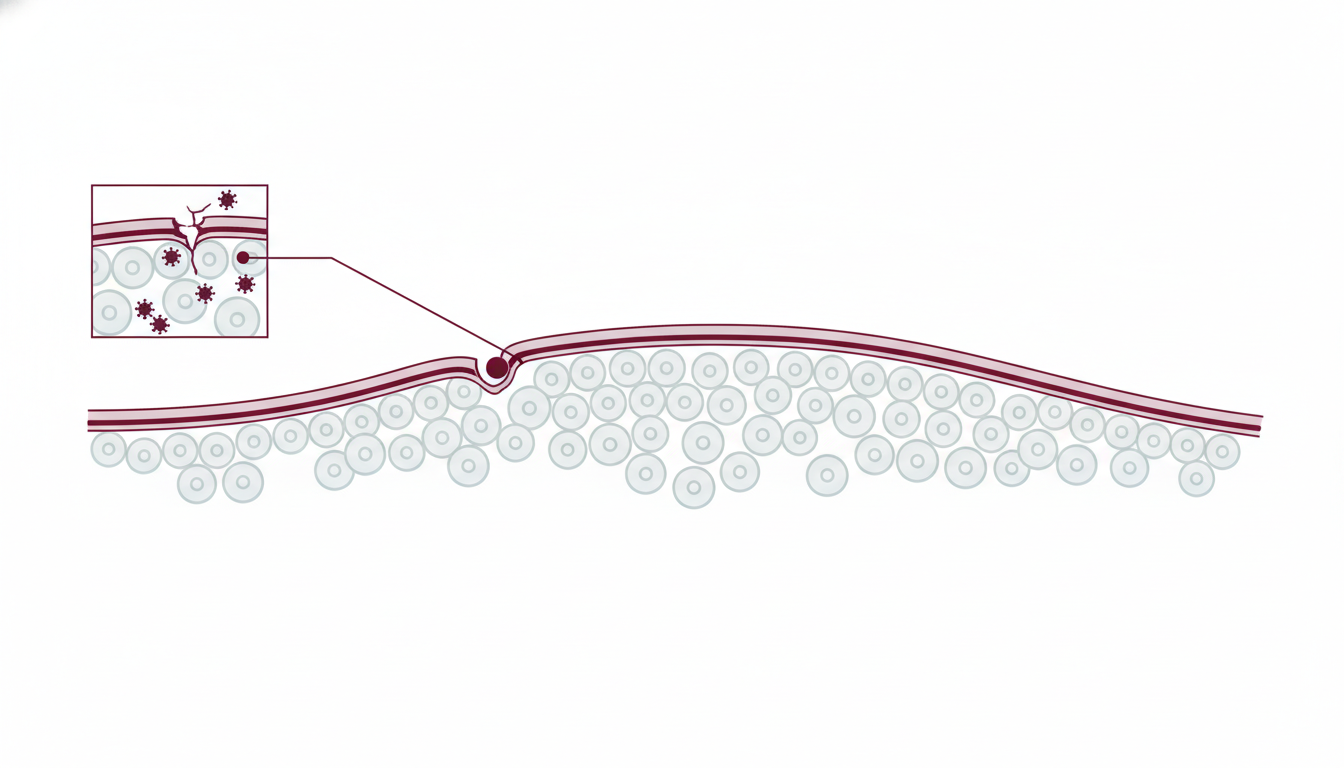
Fragile rectal mucosa. The rectum is a single layer of columnar epithelium designed for fluid absorption rather than friction. It tears more easily than the multi-layered squamous epithelium of the vagina or mouth. Microscopic tears do not cause noticeable bleeding but are sufficient to expose the bloodstream to virus.
Dense immune cell population. The gut-associated lymphoid tissue (GALT) under the rectal lining contains one of the densest concentrations of CD4+ T-cells in the body. HIV's preferred target cells are immediately accessible after the mucosal barrier is breached.
No natural lubrication. The rectum produces no lubricating fluid in response to arousal. Friction during unlubricated or under-lubricated intercourse increases mucosal trauma. Adequate water-based or silicone lubrication reduces, but does not eliminate, this risk.
A few factors meaningfully change the per-act number:
- Viral load on the partner. An HIV-positive partner who is on effective antiretroviral therapy and has been undetectable for at least 6 months cannot transmit HIV sexually. This is the U=U (undetectable equals untransmittable) consensus.
- Co-existing STIs. Concurrent gonorrhea, chlamydia, or syphilis (especially with rectal lesions or proctitis) roughly doubles or triples per-act HIV transmission risk by recruiting additional target cells through inflammation (CDC, STI Treatment Guidelines).
- Condom use. Consistent and correct external condom use reduces per-act risk by approximately 70 to 80%.
- PrEP. Daily oral PrEP reduces sexually-acquired HIV risk by about 99% when taken as prescribed (HIV.gov, Pre-Exposure Prophylaxis).
These numbers are per-act averages from population data. They cannot tell any one person what their personal risk was from a specific encounter. What they can do is calibrate the urgency of testing. If the exposure was receptive anal sex with a partner of unknown status, the rational response is to test on the earliest reliable window, not wait three months hoping symptoms will clarify the picture.
Why the acute window is so contagious
The viral peak during acute HIV is the most overlooked piece of this whole timeline. In the first few weeks after infection, plasma viral load reaches levels roughly 10 to 100 times higher than during untreated chronic infection, which is why the CDC describes people in acute HIV as carrying a large amount of HIV in their blood and being very contagious (CDC, About HIV; HIVinfo NIH, Stages of HIV Infection). Higher viral load translates directly into higher per-act transmission risk. A person can therefore be more infectious in week 3 after their own exposure than they will be at any other point before starting treatment.
The implication runs in two directions. First, the per-act numbers above (138 per 10,000 for receptive anal sex, and so on) are pooled averages across all stages of untreated infection. Real-world risk from a partner who themselves caught HIV a few weeks ago sits at the high end of those ranges. Second, the acute window is exactly when neither partner is likely to know. Symptoms (if any) look like a passing flu. Most home antibody tests still read negative. Public-health surveillance estimates that acute and early infection drives a disproportionate share of new HIV transmissions in the U.S. relative to the small fraction of people living with HIV who are in this phase at any given moment.
Do not assume a partner who feels fine is HIV-negative, and do not assume a negative home test in the first three weeks rules out a fresh exposure. Both can mislead.
During the acute phase, plasma viral load is roughly 10 to 100 times higher than during untreated chronic infection. That is the highest transmission risk in the entire disease course, and it lands exactly when neither partner is likely to know they are infected.
Testing windows: when each HIV test actually starts working
An HIV test taken too early can return a falsely reassuring negative. Each test type has a window period: the time after exposure during which the test cannot reliably detect a new infection. Choosing the right test for the right point in that window is the difference between a meaningful negative and a misleading one. The four window-period ranges below come from the current CDC HIV Testing page (CDC, HIV Testing).
| Test type | Window period | Sample | Where |
|---|---|---|---|
| HIV RNA / NAT | 10 to 33 days | Blood draw | Lab order |
| 4th-gen Ag/Ab (lab venous) | 18 to 45 days | Blood draw | Lab |
| Rapid Ag/Ab (fingerstick) | 18 to 90 days | Fingerstick | Clinic |
| Rapid antibody-only (at-home) | 23 to 90 days | Fingerstick or oral fluid | At home |
How to read the testing-window table
A laboratory fourth-generation antigen/antibody test on a venous blood draw detects an HIV-specific antigen called p24 directly, plus antibodies. It catches infections earlier than antibody-only tests because p24 appears before antibodies. A negative fourth-generation lab test at 45 days post-exposure is highly reassuring; at 90 days it is conclusive for nearly everyone.
The rapid antigen/antibody fingerstick test (used in many clinics) detects the same two markers but on a small fingerprick blood sample rather than a venous draw. The CDC publishes its window as 18 to 90 days, which is wider than the lab venous version because rapid fingerstick devices catch p24 less reliably; the wider window reflects the time needed for antibodies alone to reach detection threshold if p24 is missed.
A nucleic acid test (NAT, sometimes called HIV RNA or viral load test) detects the virus's genetic material directly. It is the earliest-detecting option (10 to 33 days post-exposure) but is more expensive and not the typical first-line screen.
An at-home rapid antibody test (lateral-flow, fingerstick or oral fluid) reaches reliability later than lab tests because it only catches antibodies. For most people the window closes between 23 and 90 days. A negative at 30 days post-exposure is suggestive but not conclusive; a negative at 90 days is conclusive.
One more practical point: home lateral-flow rapid tests are not equivalent to laboratory NAT or PCR in analytical sensitivity. The two are complementary. Lateral-flow rapid tests are excellent screening tools for people three or more months past their last possible exposure. They are not the right tool for evaluating possible acute HIV in week 2 or 3 after a known exposure event; that scenario calls for the lab fourth-generation assay or a NAT, ordered through a clinic or emergency department. An at-home rapid HIV test is best used 12 weeks (90 days) or more after the last possible exposure, with any positive result confirmed at a lab.
If exposure was within 72 hours, the testing question is secondary to the PEP question (covered in the next section). If exposure was 4 or more weeks ago, fourth-generation lab testing is the most useful. If exposure was 12 or more weeks ago (90+ days), an at-home rapid antibody test gives a reliable result. Re-test at 90 days post-exposure regardless of any earlier negative result to close the window.
PEP: the 72-hour window that can stop infection
If your last unprotected anal exposure was within the last 72 hours, post-exposure prophylaxis (PEP) is the priority right now. PEP is a 28-day course of antiretroviral medication that, started early enough, substantially reduces the chance of infection from a recent exposure (CDC, Post-Exposure Prophylaxis).
Time matters. PEP is most effective when started within 24 hours of exposure. Effectiveness declines through the 72-hour window. PEP is generally not started after 72 hours.
Where to get it. Emergency departments can prescribe PEP at any time, including overnight and on weekends. Sexual health clinics, urgent care centers, and many primary care offices also prescribe it. In the US, the National Clinician Consultation Center's PEPline (1-888-448-4911) helps clinicians manage PEP cases; you can mention it if a clinician is unfamiliar with the protocol.
What to expect. A 28-day course taken once daily. Side effects (nausea, headache, fatigue) are common but usually mild and self-limiting. Cost in the US is typically covered by commercial insurance, Medicaid, or manufacturer assistance programs for the uninsured.
PEP and PrEP work at different points. PEP covers a single recent exposure with 28 days of treatment; PrEP is daily prevention for ongoing risk. People who use PEP more than once a year are usually candidates for PrEP.
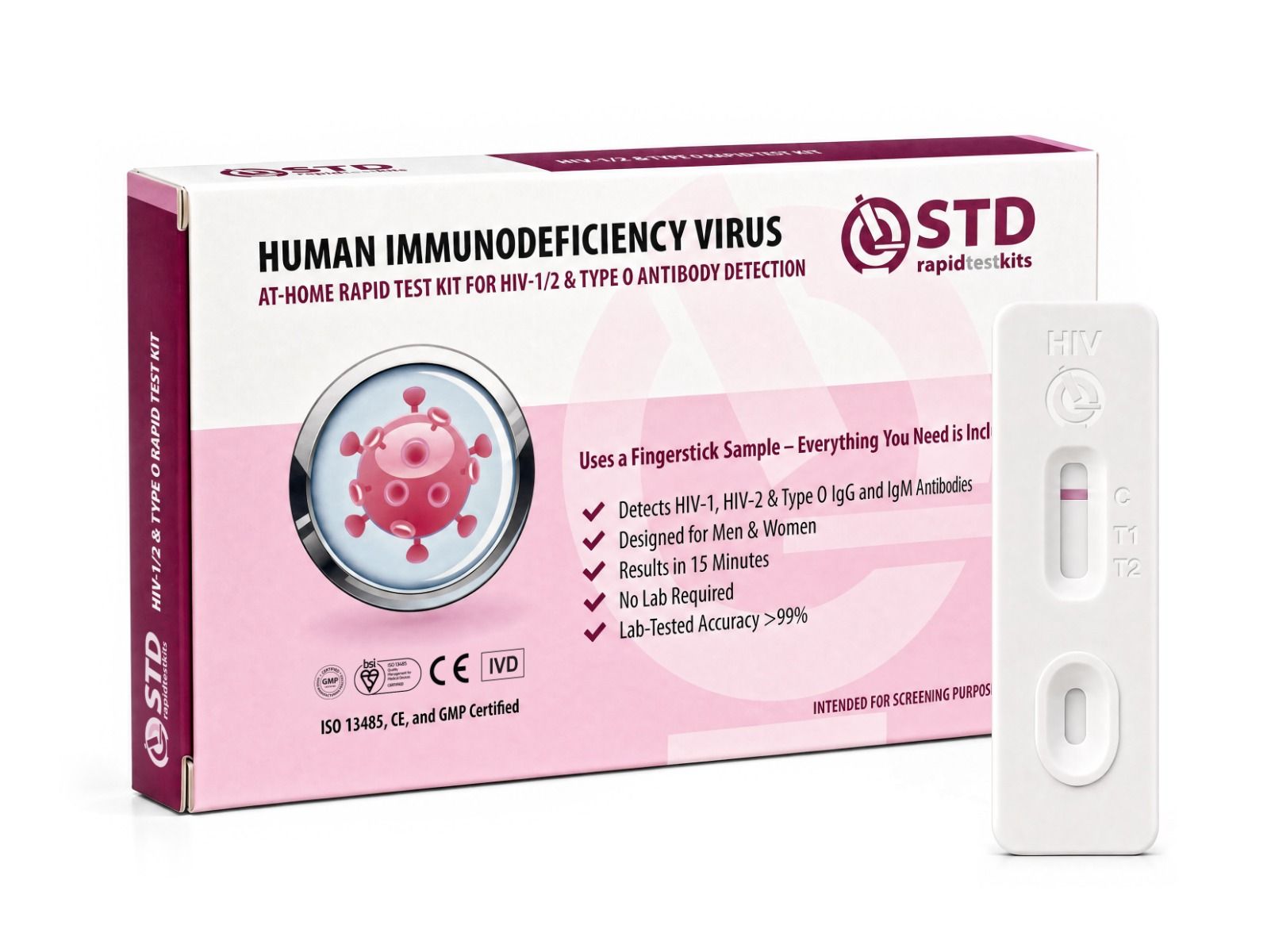
Disclosure: this guide is published by stdrapidtestkits.com, which sells at-home rapid HIV tests. We recommend products based on fit for the reader's concern, not commercial benefit; for any exposure within the last 72 hours, the right step is same-day clinic access for PEP, not ordering a home test.
Do not wait for symptoms, do not wait for test results, do not wait for a daytime appointment. Go to an emergency department, urgent care, or sexual health clinic the same day you read this. PEP is most effective in the first 24 hours and meaningfully less effective by hour 72.
Why catching it early changes the trajectory
A diagnosis during acute HIV is the best timing window for treatment. Antiretroviral therapy (ART) started during the acute phase preserves more CD4+ T-cells, limits the size of the long-term viral reservoir, and gets a person to undetectable viral load faster than treatment started in chronic infection. CDC and DHHS guidelines recommend ART for everyone diagnosed with HIV, regardless of CD4 count or symptoms, and starting as soon as possible after diagnosis is current U.S. standard of care (CDC, About HIV; HIVinfo NIH, Stages of HIV Infection).
Once treatment is established, two things shift. Personal health: people who start ART early and stay adherent have a near-normal life expectancy, and the steep decline that defined untreated HIV in earlier decades is not the current trajectory of treated HIV. Transmission risk to partners: once viral load falls below the limit of detection (typically under 200 copies per milliliter) and stays there for at least 6 months, sexual transmission is effectively zero. The CDC formally endorses this as Undetectable equals Untransmittable, or U=U (CDC, Undetectable = Untransmittable).
The earlier the diagnosis, the earlier those benefits start. Clinicians commonly see patients who shrugged off acute symptoms and were diagnosed years later through routine screening, a pattern that costs them years of optimal treatment timing. The cost of testing on a defined schedule is hours; the cost of waiting can be measured in viral reservoir size.
The CDC formally endorses U=U: a person living with HIV who is on effective treatment and maintains an undetectable viral load has zero risk of transmitting HIV to their sexual partners. This applies to anal, vaginal, and oral sex. It is one of the strongest reasons early diagnosis and rapid ART start matter, both for personal health and for partners.
Long-term prevention: PrEP, condoms, and U=U
Beyond the immediate post-exposure window, four prevention strategies reduce HIV risk for sexually active adults at ongoing risk.
PrEP. Pre-exposure prophylaxis is daily oral medication (tenofovir/emtricitabine, branded Truvada or Descovy) or a long-acting injection (cabotegravir, given every two months). Taken as prescribed, daily oral PrEP reduces sexually-acquired HIV risk by approximately 99%. PrEP does not protect against other STIs, which is why most PrEP programs include three-monthly STI screening as part of the protocol.
External condoms. Consistent, correct external condom use reduces per-act HIV transmission by an estimated 70 to 80%. Condoms also reduce risk of gonorrhea, chlamydia, syphilis, and HSV. For anal sex specifically, water-based or silicone-based lubricant compatible with latex condoms reduces friction and lowers the chance of slippage or breakage. Oil-based lubricants degrade latex; use polyisoprene or polyurethane condoms with oil-based lubes.
Treatment as prevention (U=U). When a person living with HIV takes effective antiretroviral therapy and maintains an undetectable viral load, they cannot transmit HIV sexually. This is the consensus position of the CDC, WHO, and the International AIDS Society, supported by the PARTNER and HPTN 052 studies. U=U applies to anal, vaginal, and oral sex (WHO, HIV and AIDS fact sheet).
Regular testing. The CDC recommends at least annual HIV testing for sexually active adults, and every 3 to 6 months for people with multiple partners, men who have sex with men, people who use injection drugs, and people on PrEP. Knowing your status earlier means starting treatment earlier, which means reaching undetectable status faster, which means protecting partners.
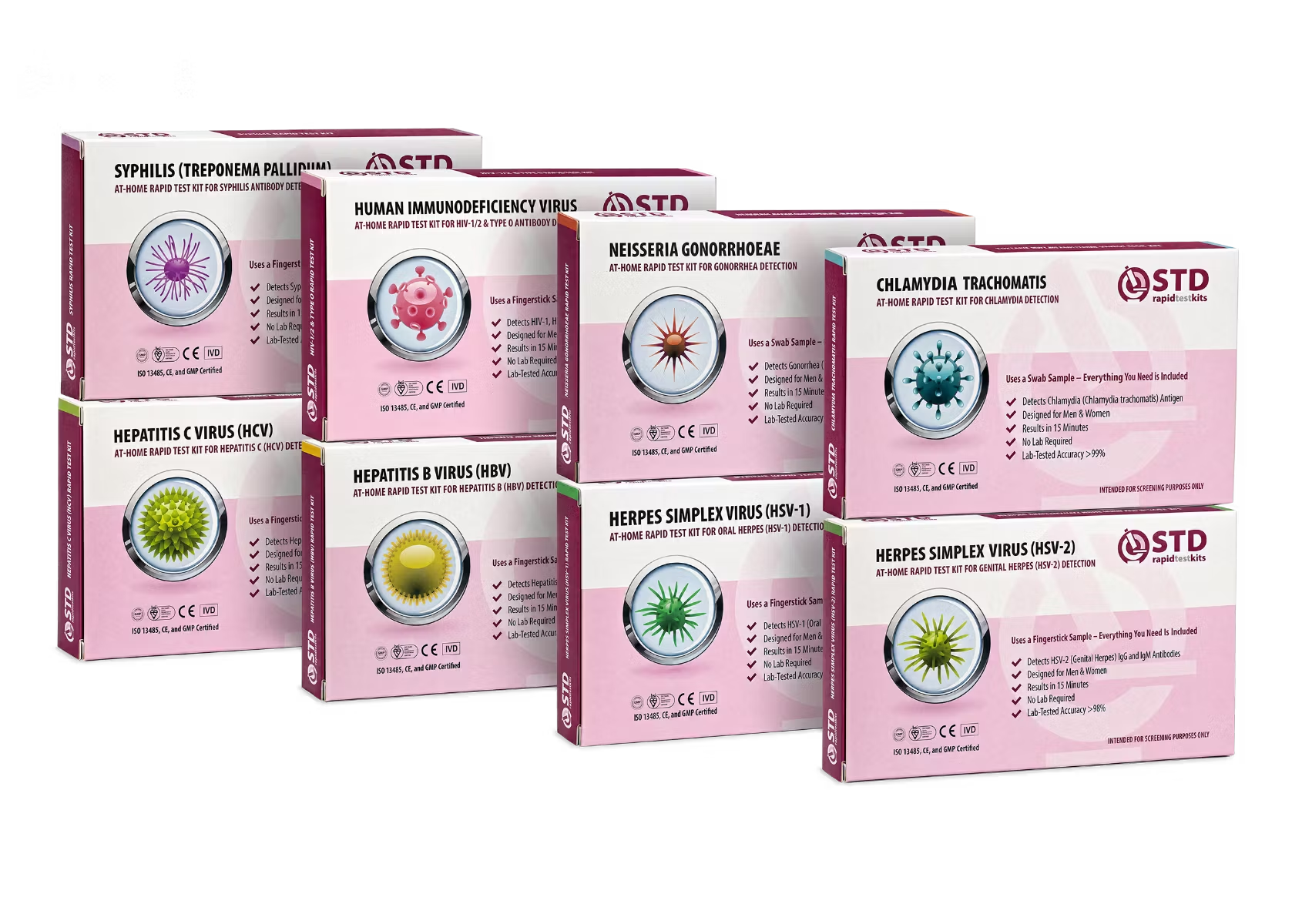
Broader STI screening. Bacterial STIs (chlamydia, gonorrhea, syphilis) increase per-act HIV transmission risk through mucosal inflammation. Syphilis and hepatitis B/C also share overlapping flu-like presentations during early infection, which can muddy the picture if only HIV is tested. Screening and treating co-existing STIs reduces HIV vulnerability indirectly and surfaces infections that may not yet be symptomatic. A combined at-home STI panel makes more sense than one-at-a-time testing for most sexually active adults.
Prevention strategies at a glance
- PrEP (daily oral or two-monthly injection): roughly 99% reduction in sexually-acquired HIV when taken as prescribed.
- External condoms used consistently and correctly: roughly 70 to 80% reduction in per-act HIV transmission, plus protection against other STIs.
- U=U (partner on ART with sustained undetectable viral load): zero sexual transmission.
- Annual HIV testing for sexually active adults; every 3 to 6 months for higher-risk patterns (multiple partners, MSM, injection drug use, on PrEP).
When your symptoms probably aren't HIV
Most people who type "do I have HIV" into a search engine after an exposure event don't have HIV. The symptoms that brought them there are usually something else with overlapping presentation. The table below covers the most common look-alikes and what differentiates each from acute HIV. After an unprotected exposure event, anxiety alone produces real physical symptoms (fatigue, sleep disturbance, stomach upset, vague aches) that mimic infection; the path that resolves uncertainty is testing on a defined schedule, not repeated symptom-checking.
| Condition | Distinguishing feature vs acute HIV |
|---|---|
| Acute viral pharyngitis | Sore throat plus low-grade fever, no other systemic symptoms; resolves in 3 to 5 days. |
| Influenza or COVID-19 | Includes cough or nasal congestion as primary features; acute HIV usually does not. Run a flu/COVID home test. |
| Mononucleosis (EBV) | Sore throat plus enlarged spleen plus weeks-long fatigue. Overlap is real; a monospot plus 4th-gen HIV test sorts it out. |
| Strep throat | Fever and sore throat without disproportionate fatigue; rapid strep test sorts it out. |
| Allergic reaction or contact dermatitis | Rash without fever or systemic illness is rarely acute HIV. |
| Secondary syphilis | Rash often involves palms and soles; acute HIV rash usually does not. Syphilis serology sorts it out. |
| Anxiety somatization | Real symptoms (fatigue, sleep disturbance, vague aches) without fever or rash; common after a perceived exposure. |
Common myths about HIV and anal sex
A few persistent misconceptions still drive bad decisions:
"Only gay men get HIV from anal sex." HIV does not differentiate by sexual orientation. Heterosexual women who have receptive anal sex face the same per-act biological risk as men who have receptive anal sex. CDC surveillance reports continue to show heterosexually-acquired HIV cases in the U.S. across every demographic group (CDC, HIV Facts and Statistics).
"My partner looks healthy, so they don't have HIV." Roughly 13% of people in the U.S. who have HIV are not aware of their status. Many people in the asymptomatic phase look and feel completely well for years while remaining infectious. Status cannot be inferred from appearance.
"You'll feel terrible if it's HIV." Severity is not a reliable signal. Some people develop a clearly flu-like illness; others feel nothing or only mild symptoms.
"Pulling out before ejaculation prevents HIV transmission." HIV is present in pre-ejaculatory fluid. Pulling out reduces but does not eliminate transmission risk.
"A standard STI panel always includes HIV." Not all STI panels automatically include HIV. Specifically request HIV testing when seeking STI screening, and confirm the test type (a fourth-generation antigen/antibody test is the current U.S. standard for clinic-based screens).
"A negative test the next day means I'm safe." Window periods exist for biological reasons. The earliest-detecting test (NAT) needs roughly 10 to 14 days. A test taken the next day is meaningless for ruling out a fresh exposure.
"Douching beforehand reduces HIV risk." Douching disrupts the rectal mucosa and may increase HIV vulnerability rather than decrease it. There is no evidence of a protective effect.
"PrEP makes condoms unnecessary." PrEP protects against HIV. It does not protect against gonorrhea, chlamydia, syphilis, hepatitis C, or HSV. Most guidance recommends PrEP for HIV protection and condoms for STI protection together.
"PrEP is only for gay men." PrEP is approved and recommended for anyone with ongoing HIV exposure risk, including women in serodifferent relationships, anyone sharing injection equipment, and anyone whose partner's status is unknown.
"You can't get HIV from a single exposure." Single-exposure transmission is documented. Per-act risk varies with viral load, co-existing STIs, and condom use, but it is not zero, especially for receptive anal exposure with a viremic partner.
"A positive HIV diagnosis is a death sentence." With same-day ART start, life expectancy on treatment is close to that of an HIV-negative person of the same age. HIV in 2026 is a chronic, manageable infection.
Most people have flu-like symptoms within 2 to 4 weeks after infection. Some people have no symptoms at all. The only way to know if you have HIV is to get tested.
Next steps by time since exposure
Was your last unprotected anal exposure within the past 72 hours?
Yes: Go to an emergency department, urgent care, or sexual health clinic today and ask for PEP. The first 24 hours is most effective; do not wait for symptoms or a daytime appointment.
Has it been 10 to 28 days since the exposure, with or without symptoms?
Yes: Ask a clinician for a lab nucleic acid test (NAT) or a 4th-generation antigen/antibody lab test. These are the only tests that reliably detect acute HIV in this window. If symptoms suggest acute HIV (fever, rash, swollen lymph nodes), go in the same week.
Has it been more than 28 days but less than 90 days?
Yes: A clinic 4th-generation antigen/antibody test is the most useful screen. An at-home rapid antibody test starts to be reliable from 23 days onward; treat any negative before 90 days as preliminary and re-test.
Has it been 90 days or more since the last possible exposure?
Yes: An at-home rapid HIV antibody fingerstick test gives a conclusive result. Any reactive (positive) home result must be confirmed at a lab.
No: If you have any ongoing exposure risk, ask a provider about PrEP this week and set a routine HIV + STI testing schedule.
Guidance only. A clinician can advise on your specific situation.
FAQs
- When can I detect HIV after unprotected anal sex?
- The 90-day mark closes the window for any test type. If you cannot wait that long, the earliest reliable option is a clinic-ordered nucleic acid test (NAT), which can detect HIV from about 10 to 14 days post-exposure but is more expensive than a screening test. A laboratory fourth-generation antigen/antibody test can begin detecting infection from about 18 days post-exposure; a negative result at 45 days is highly reassuring, and at 90 days is conclusive. Home antibody-only kits become reliable from roughly 23 days, with a definitive negative at 90 days.
- What are the earliest symptoms of HIV after anal sex?
- Fever is usually the first symptom, often appearing 2 to 4 weeks after exposure. Other early symptoms include sore throat, swollen lymph nodes (neck, armpits, groin), muscle and joint aches, severe fatigue, a faint pink rash on the chest, and night sweats. Some people have no symptoms at all in the acute phase, which is why a symptom-free period is not the same as testing negative.
- Can HIV be transmitted through pre-ejaculatory fluid?
- Yes. HIV is present in pre-ejaculatory fluid. Transmission is possible without ejaculation, particularly during anal intercourse where rectal mucosa tears easily and the underlying immune cells are immediately accessible to the virus.
- Is HIV risk higher for the receptive or insertive partner during anal sex?
- The receptive partner has a higher per-act risk: approximately 1.38% per unprotected exposure when the partner is HIV-positive and not on treatment, versus approximately 0.11% for the insertive partner. Both numbers are non-zero. The insertive partner risk rises with cuts, sores, or co-existing STIs.
- Can I prevent HIV after exposure?
- Yes, if you start PEP (post-exposure prophylaxis) within 72 hours of exposure. PEP is a 28-day course of antiretroviral medication, most effective when started in the first 24 hours. Emergency rooms, sexual health clinics, and urgent care centers can prescribe it the same day.
- What if my home test was negative but I still feel sick?
- If you are still inside the window period for the test you used, the negative result may be a false negative. For symptoms suggestive of acute HIV (fever, rash, swollen lymph nodes a few weeks after possible exposure), see a clinician for a NAT, which can detect HIV from around day 10. Repeat any home antibody test at 45 and 90 days post-exposure to close the window properly.
- Does acute HIV go away on its own?
- The symptoms usually resolve within 1 to 2 weeks. The virus does not. Untreated, HIV transitions into a clinical latency stage that can last a decade or longer without obvious symptoms, while still depleting the immune system in the background. Antiretroviral therapy is the only thing that controls the virus.
- Are women at the same HIV risk from receptive anal sex as men?
- Yes. The per-act biological risk for receptive anal intercourse is approximately the same regardless of the receptive partner's sex. Heterosexual women who have receptive anal sex face the same baseline risk as men who have receptive anal sex.
- Can a partner with an undetectable viral load transmit HIV through anal sex?
- No. The U=U (undetectable equals untransmittable) consensus, supported by the PARTNER and HPTN 052 studies, holds that a person on effective antiretroviral therapy with a sustained undetectable viral load cannot transmit HIV sexually. This applies to anal, vaginal, and oral sex.
- U.S. Centers for Disease Control and Prevention. About HIV: symptoms of acute infection, transmission routes, and clinical course (flu-like symptoms 2 to 4 weeks after infection; some people have no symptoms; acute-stage viral load and contagiousness).
- U.S. Centers for Disease Control and Prevention. About HIV (transmission and risk section): qualitative ranking of per-act HIV transmission risk by exposure route, including receptive and insertive anal intercourse, vaginal sex, and needle sharing.
- U.S. Centers for Disease Control and Prevention. HIV Testing: test types, window periods, and recommended testing schedules (NAT 10 to 33 days; lab Ag/Ab 18 to 45 days; rapid Ag/Ab 18 to 90 days; antibody only 23 to 90 days).
- U.S. Centers for Disease Control and Prevention. Post-Exposure Prophylaxis (PEP): the 72-hour window, 28-day regimen, and access pathways.
- HIV.gov (U.S. Department of Health and Human Services). Pre-Exposure Prophylaxis: 'reduces the risk of getting HIV from sex by about 99% when taken as prescribed.'
- U.S. Centers for Disease Control and Prevention. HIV Facts and Statistics: approximately 13% of people with HIV in the U.S. are undiagnosed; demographic distribution of new diagnoses.
- World Health Organization. HIV and AIDS fact sheet: global epidemiology, treatment-as-prevention (U=U), and prevention strategy.
- HIVinfo (U.S. National Institutes of Health, Office of AIDS Research). The Stages of HIV Infection: acute retroviral syndrome description, variability of symptoms, elevated acute-phase viral load, and transition into clinical latency.
- U.S. Centers for Disease Control and Prevention. Undetectable = Untransmittable (U=U): CDC formal endorsement that sustained undetectable viral load eliminates sexual HIV transmission.
- U.S. Centers for Disease Control and Prevention. Sexually Transmitted Infections Treatment Guidelines: discussion of STI co-infection and amplified per-act HIV transmission risk through mucosal inflammation.
