
Published: October 2025 | Last updated: May 2026 | Editorial review and quality control: Martina N.
Sexually transmitted infections often do not announce themselves. Many people who carry an STI feel completely fine and have no idea anything is wrong, sometimes for months. The infections that do produce symptoms can mimic urinary tract infections, yeast infections, hemorrhoids, or ordinary skin irritation, which is one of the main reasons they get missed.
This guide walks through how the common STIs transmit (and where condoms help, where they help less), the symptom patterns worth recognizing, what each rapid test actually detects, when each test becomes reliable after a possible exposure, and what to do if a result comes back positive. The information summarizes current public-health guidance from the U.S. Centers for Disease Control and Prevention, the World Health Organization, and the UK National Health Service.
Key Takeaways
- Most common STIs can be silent for weeks or months. Symptoms alone are not a reliable signal of your infection status, which is why routine screening is the standard of care for sexually active adults.
- Each STI test has a window period before it becomes reliable. Testing too early after a possible exposure can return a false negative even when an infection is present.
How STIs transmit (and where condoms help)
Most sexually transmitted infections move between people through one of three routes: contact between mucous membranes (mouth, vagina, penis, anus, sometimes the eye), contact involving broken or non-intact skin, and exposure to infected body fluids such as blood, semen, or vaginal fluid. Several can also pass from a pregnant person to the baby during pregnancy, delivery, or (less commonly) breastfeeding.
Penetrative vaginal or anal sex is not the only route. Several STIs spread through:
- Direct skin-to-skin contact in the genital area, even without penetration. Herpes simplex (HSV), human papillomavirus (HPV), and the chancre of primary syphilis can all transmit this way.
- Oral sex. Gonorrhea, chlamydia, syphilis, herpes, and (less commonly) HIV can all be acquired or transmitted orally.
- Sharing sex toys without cleaning them between users or between body sites.
- Mother-to-child transmission during pregnancy or delivery, including HIV, syphilis, hepatitis B, and herpes.
Condoms substantially lower the per-act risk of fluid-borne infections such as HIV, gonorrhea, chlamydia, hepatitis B, and trichomoniasis. They lower but do not eliminate risk for skin-contact infections (HSV, HPV, syphilis), because the protected area is smaller than the area where lesions or asymptomatic shedding can occur. Per the CDC, consistent and correct condom use is highly effective at reducing HIV transmission, with large meta-analyses estimating roughly 80% risk reduction over a year of consistent use.
Kissing alone is a low risk for most STIs. The main exception is HSV-1, which traditionally causes oral cold sores and is extremely common; most adults carry it.
Almost none of the common STIs spread through casual surface contact. Bacteria like gonorrhea and chlamydia and viruses like HIV do not survive long outside the human body. Trichomoniasis can theoretically survive briefly on damp surfaces, but transmission this way is exceptionally rare. The realistic transmission routes are sexual contact, blood-to-blood exposure, and (for some infections) parent-to-child during pregnancy or delivery.
The symptom patterns most people miss
When STIs do produce symptoms, the patterns are vague enough to be mistaken for a urinary tract infection, a yeast infection, hemorrhoids, or ordinary skin irritation. Patterns that warrant testing:
- Discharge from the vagina or penis that is unusual for you in color, smell, or amount.
- Burning, stinging, or pain on urination.
- Pelvic, lower-abdominal, or testicular pain.
- Sores, blisters, or bumps on the genital area, anus, lips, or mouth, especially if painless.
- An unexplained sore throat after oral exposure to a partner whose status you do not know.
- A non-itchy rash on the palms or soles. This is a classic and easily missed sign of secondary syphilis.
- Bleeding between menstrual periods or after vaginal sex.
- Genital itching or irritation that does not improve with over-the-counter creams.
Symptoms can appear within days of exposure (gonorrhea, primary herpes), within weeks (chlamydia, primary syphilis, HIV seroconversion illness), or only after months or years (late-stage syphilis, untreated HIV). Symptoms can also resolve on their own without the underlying infection being cleared, which is one of the main reasons untreated STIs do so much downstream damage.
Two presentations are commonly missed. First, the painless single sore of primary syphilis. Because it does not hurt and heals by itself in 3 to 6 weeks, many people never connect it to an STI at all. Second, the flu-like illness of acute HIV seroconversion. It looks like any other viral illness, lasts about a week, and then resolves; the only thing that distinguishes it from a passing flu is the timing relative to a possible exposure.
Bacterial STIs: chlamydia, gonorrhea, syphilis
Bacterial STIs are curable with antibiotics if caught and treated early. Syphilis, gonorrhea, and chlamydia are nationally reportable infections in the United States; the CDC tracks their prevalence through annual STI surveillance reports.
Chlamydia
Chlamydia is the most commonly reported bacterial STI in the United States. Per the CDC, chlamydia often causes no symptoms, which is why screening matters more here than waiting for a sign. When symptoms appear, they typically show up 1 to 3 weeks after exposure: abnormal vaginal or penile discharge, burning urination, and (in women) bleeding between periods or after vaginal sex. Untreated chlamydia in women can ascend into the upper reproductive tract and cause pelvic inflammatory disease, which is one of the leading preventable causes of infertility. Treatment is a course of antibiotics, usually doxycycline, with re-testing recommended at 3 months after treatment to detect re-infection.
Gonorrhea
Sometimes called the clap. Symptoms can appear within 2 to 14 days after exposure, but as with chlamydia, more than half of women and a substantial fraction of men have no symptoms. When present, symptoms include thick, cloudy, or sometimes bloody discharge, pain on urination, and rectal pain or discharge after anal exposure. Pharyngeal (throat) gonorrhea is usually completely silent. Drug-resistant strains of Neisseria gonorrhoeae have emerged over the last decade, which is why the CDC now recommends a higher-dose ceftriaxone injection as first-line treatment.
Syphilis
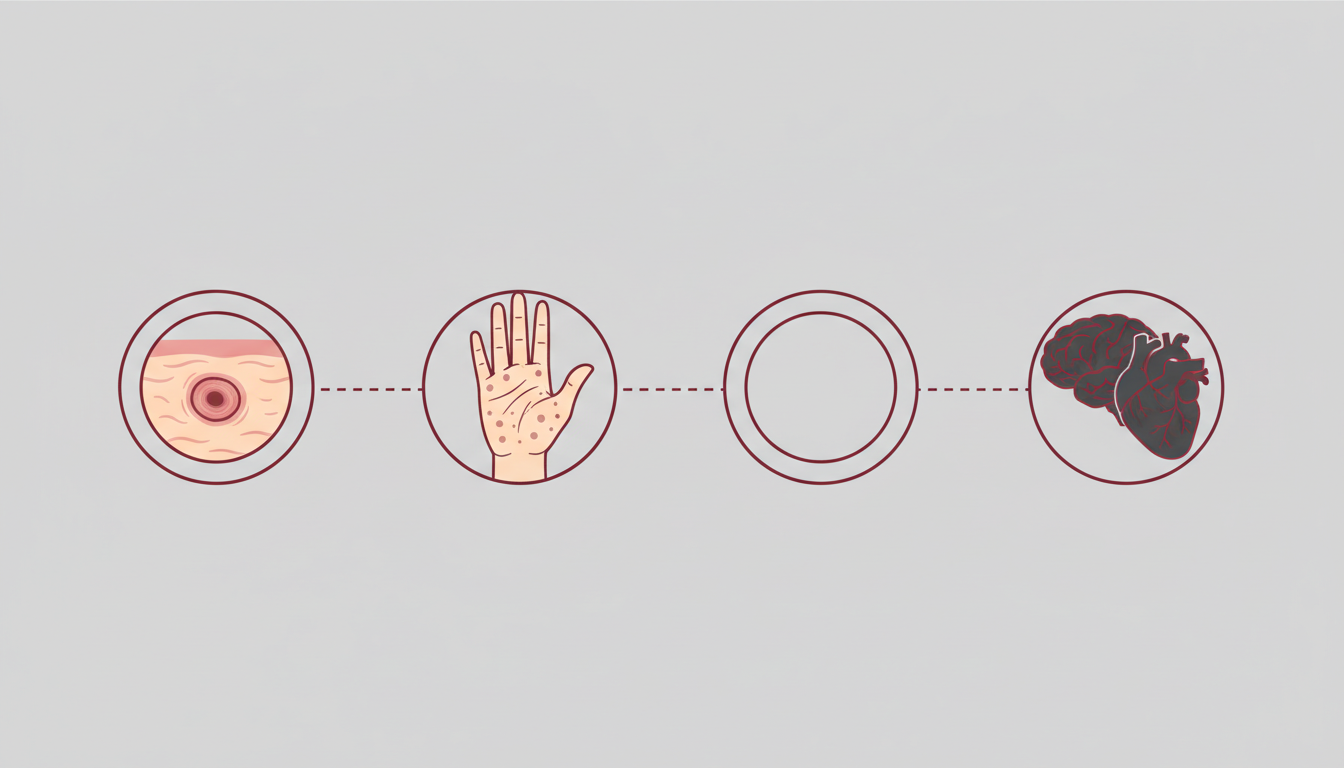
Syphilis is a four-stage infection caused by the spirochete Treponema pallidum. Each stage looks different and appears at a different interval after exposure:
- Primary stage: a single, painless, round sore (chancre) appears at the site of exposure roughly 3 weeks after infection. It heals on its own in 3 to 6 weeks even without treatment, which is why so many primary chancres are missed entirely.
- Secondary stage: a non-itchy rash often on the palms and soles, sometimes with mouth sores, swollen lymph nodes, fever, and patchy hair loss.
- Latent stage: no symptoms at all. The infection is silent but still detectable by blood test.
- Tertiary stage: years to decades later. Can damage the brain, heart, eyes, nerves, and bones. This stage is uncommon today because of testing, but does still occur.
Syphilis is curable with penicillin at any stage. Damage from late-stage syphilis is permanent, which is why early screening matters even when nothing feels wrong.
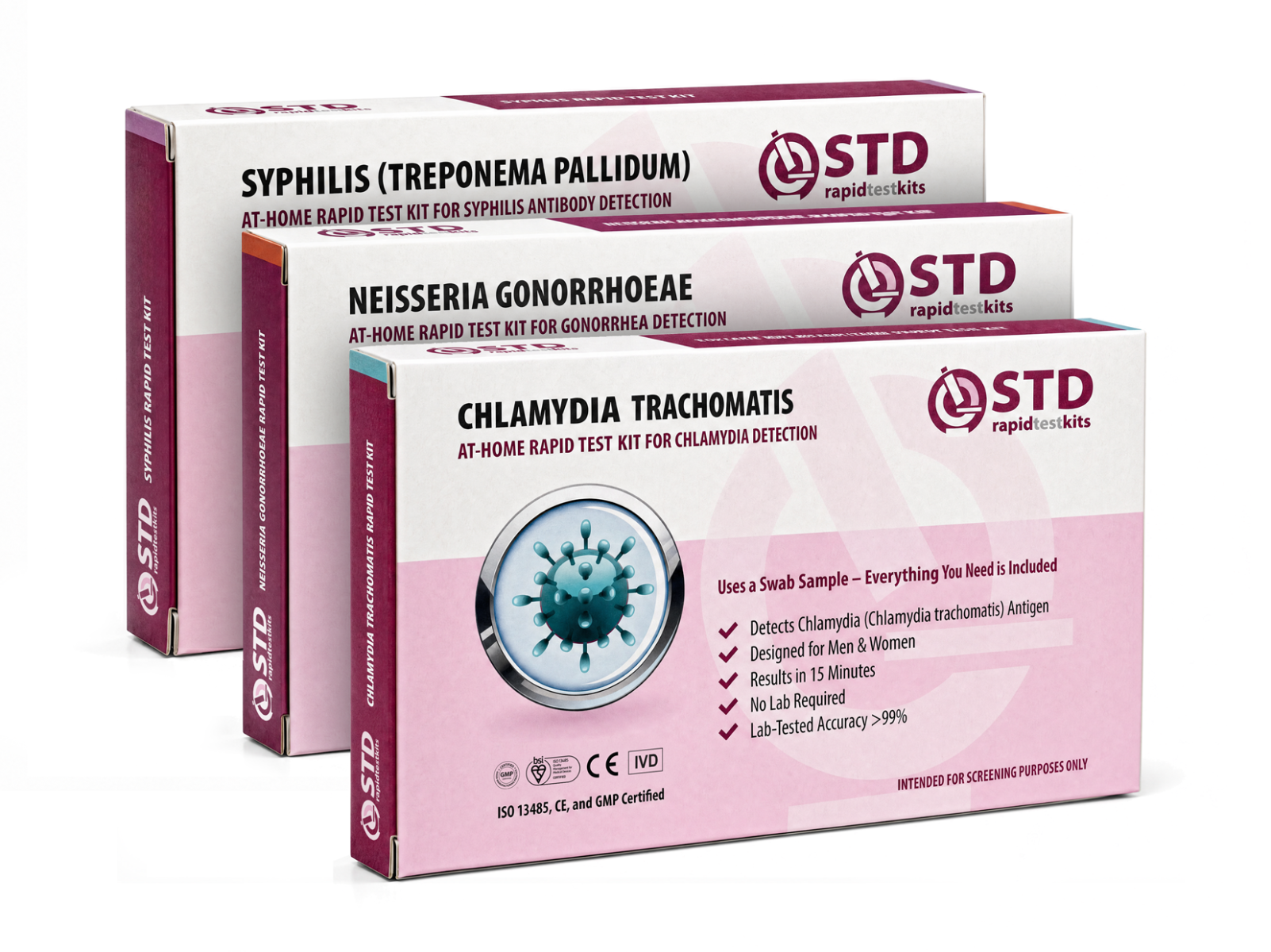
This site sells rapid lateral-flow home tests for the infections covered in this article; a positive result should be confirmed with a clinic test before treatment decisions are made.
Bacterial STI windows close in roughly 1 to 3 weeks. If you test before that point and the result is negative, schedule a follow-up at the end of the longest applicable window before treating the negative as definitive. The detailed window table appears later in this guide.
Viral STIs: HIV, herpes, HPV, hepatitis B and C
Viral STIs are managed rather than cured, with one important exception: hepatitis C has been curable since direct-acting antivirals reached the market. Living well with a viral STI in 2026 is generally possible. Outcomes depend much more on early diagnosis than on how bad the original infection looked.
HIV
The human immunodeficiency virus attacks CD4+ T cells, which coordinate the immune response. Without treatment it can progress over years to acquired immunodeficiency syndrome (AIDS). With current antiretroviral therapy, life expectancy approaches that of HIV-negative peers, and a person with an undetectable viral load on treatment cannot transmit HIV sexually. This is the U=U principle ("undetectable equals untransmittable"), established by NIH-supported research and adopted by the CDC. Acute HIV often produces a flu-like illness 2 to 4 weeks after infection (fever, sore throat, swollen lymph nodes, rash); some have no acute symptoms at all.
Herpes simplex (HSV-1, HSV-2)
HSV-1 traditionally causes oral cold sores; HSV-2 traditionally causes genital lesions. Both can occur at either site, and oral-to-genital transmission of HSV-1 has become increasingly common. Most infections are completely asymptomatic or so mild they are not recognized. When outbreaks happen, they are clusters of small painful blisters that ulcerate and crust over 1 to 2 weeks. The first outbreak is often the worst, sometimes with fever and body aches. Antiviral therapy (acyclovir, valacyclovir, famciclovir) reduces outbreak frequency and lowers transmission risk to partners. Genital herpes is permanent: the virus lives in nerve roots for life, with reactivation triggered by stress, illness, or other factors.
HPV
The most common STI overall. Per the CDC, most sexually active adults will be exposed to at least one strain of HPV during their lifetime. Most infections clear on their own within 2 years and cause no symptoms. Persistent infection with high-risk HPV strains is the cause of nearly all cervical cancer and a growing share of oropharyngeal, anal, and penile cancers. Low-risk strains cause genital warts. The HPV vaccine (Gardasil 9) is recommended for routine vaccination through age 26, with shared clinical decision-making for adults aged 27 to 45 per ACIP guidance.
Hepatitis B and C
Both attack the liver and can become chronic. Hepatitis B has a vaccine (recommended at birth, with adult catch-up vaccination per the CDC); hepatitis C does not. Acute symptoms (when present) include fatigue, nausea, jaundice, dark urine, and right-upper-quadrant pain; most acute infections are entirely asymptomatic. Chronic untreated hepatitis B or C can lead to cirrhosis and hepatocellular carcinoma over decades. Hepatitis C is now curable in over 95% of cases with 8 to 12 weeks of direct-acting antiviral pills, which is one of the major public-health advances of the last decade.
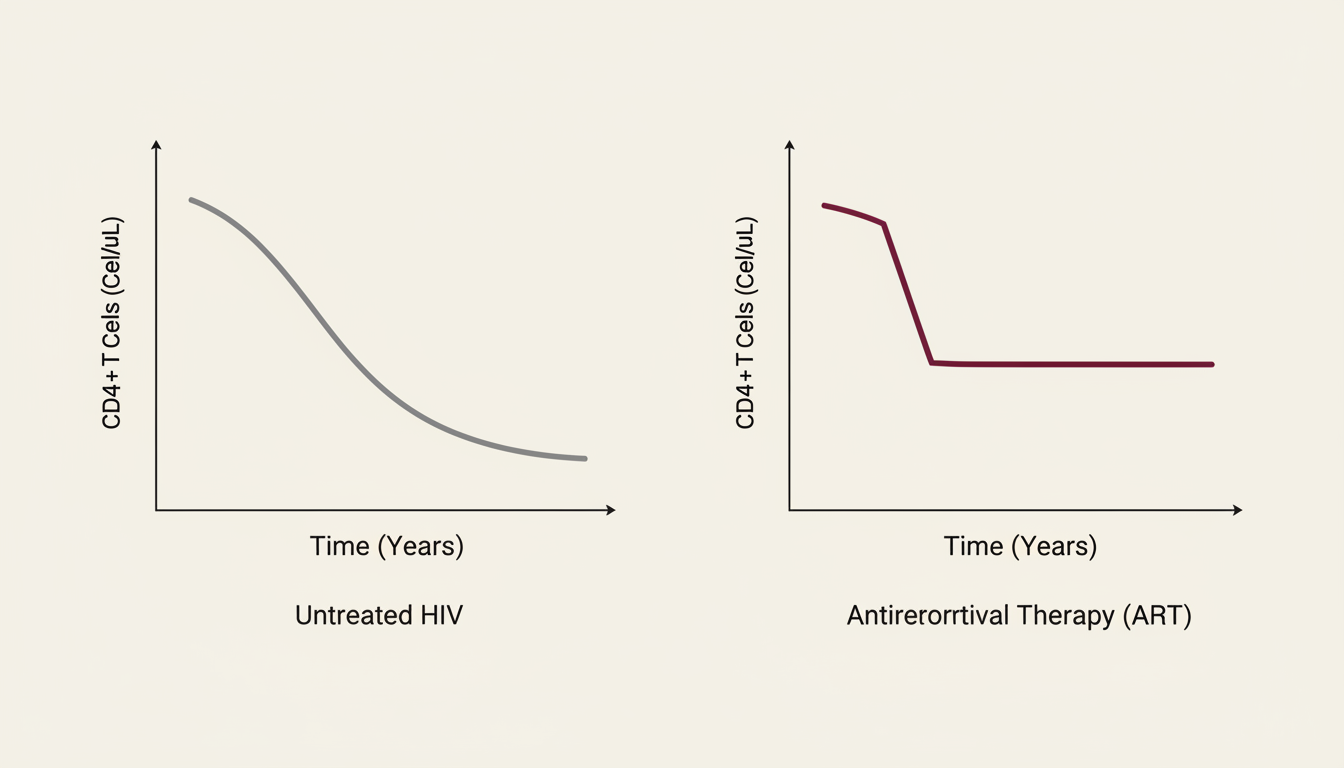
A person living with HIV who is on effective antiretroviral therapy and has had an undetectable viral load for at least 6 months cannot transmit HIV through sexual contact. This is one of the most important shifts in HIV public-health messaging of the last decade and is supported by multiple large prospective studies (PARTNER, PARTNER 2, Opposites Attract, HPTN 052). It does not change recommendations for using barrier protection against other STIs.
Why so many STIs are silent (and why that matters)
The most-cited statistic in this space comes from the WHO: more than 1 million curable sexually transmitted infections are acquired every day worldwide in people aged 15 to 49, and the great majority are asymptomatic (WHO STI fact sheet).
Asymptomatic infection is not a quirk of biology with no consequence; it has practical, named consequences:
- People unknowingly transmit infections to partners while feeling completely fine.
- Untreated chlamydia or gonorrhea in women can cause pelvic inflammatory disease (PID), which the CDC identifies as one of the leading preventable causes of tubal-factor infertility; each untreated episode substantially raises the lifetime risk of tubal infertility, with subsequent episodes compounding the risk. Early antibiotic treatment clears the infection before PID develops and preserves fertility for the great majority of women treated within the first weeks of symptoms. Untreated infection in men can cause epididymitis (painful inflammation of the tube at the back of the testicle), which is usually treatable but is unnecessary harm.
- Untreated syphilis can damage the central nervous system years after the initial infection has faded from memory.
- An undetected ulcerative STI such as herpes or primary syphilis can increase the per-act risk of acquiring HIV by several times, because the open lesion provides a direct entry point.
This is why current public-health guidance treats routine screening, rather than symptom-driven testing, as the standard of care for sexually active adults at meaningful risk. The CDC recommends annual chlamydia and gonorrhea screening for sexually active women under 25 and for older women with new or multiple partners, annual HIV testing as a minimum for sexually active adults, and 3- to 6-monthly STI testing for men who have sex with men.
More than 1 million curable sexually transmitted infections (STIs) are acquired every day worldwide in people 15-49 years old, the majority of which are asymptomatic.
Do STDs always cause symptoms?
No. Most common sexually transmitted infections can be silent, especially in the first weeks after exposure. Chlamydia, gonorrhea, HIV, and even early syphilis can sit asymptomatic for weeks or months while still being transmissible. The only reliable way to know your status is to test on the right window after a possible exposure. At-home rapid lateral-flow tests cover HIV, syphilis, hepatitis B and C, herpes, chlamydia, and gonorrhea, with most producing a result in about 15 minutes.
Testing windows: when each test becomes reliable
Every test has a window period: the interval between exposure and the point at which the test can reliably detect the infection. Testing too early can miss an active infection, which is why a negative result obtained inside the window is not yet conclusive.
Lateral-flow rapid tests (the technology behind home test kits) and clinic-based laboratory assays each have their own windows. The table below gives approximate windows for the common rapid and lab tests so you can plan when to test, when to re-test, and when a negative result becomes definitive.
| Test | Earliest reliable detection | When to confirm a definitive negative |
|---|---|---|
| HIV antigen-antibody (4th-generation lab) | 18 to 45 days after exposure | 90 days post-exposure |
| HIV antibody-only (most rapid home tests) | 23 to 90 days after exposure | 90 days post-exposure |
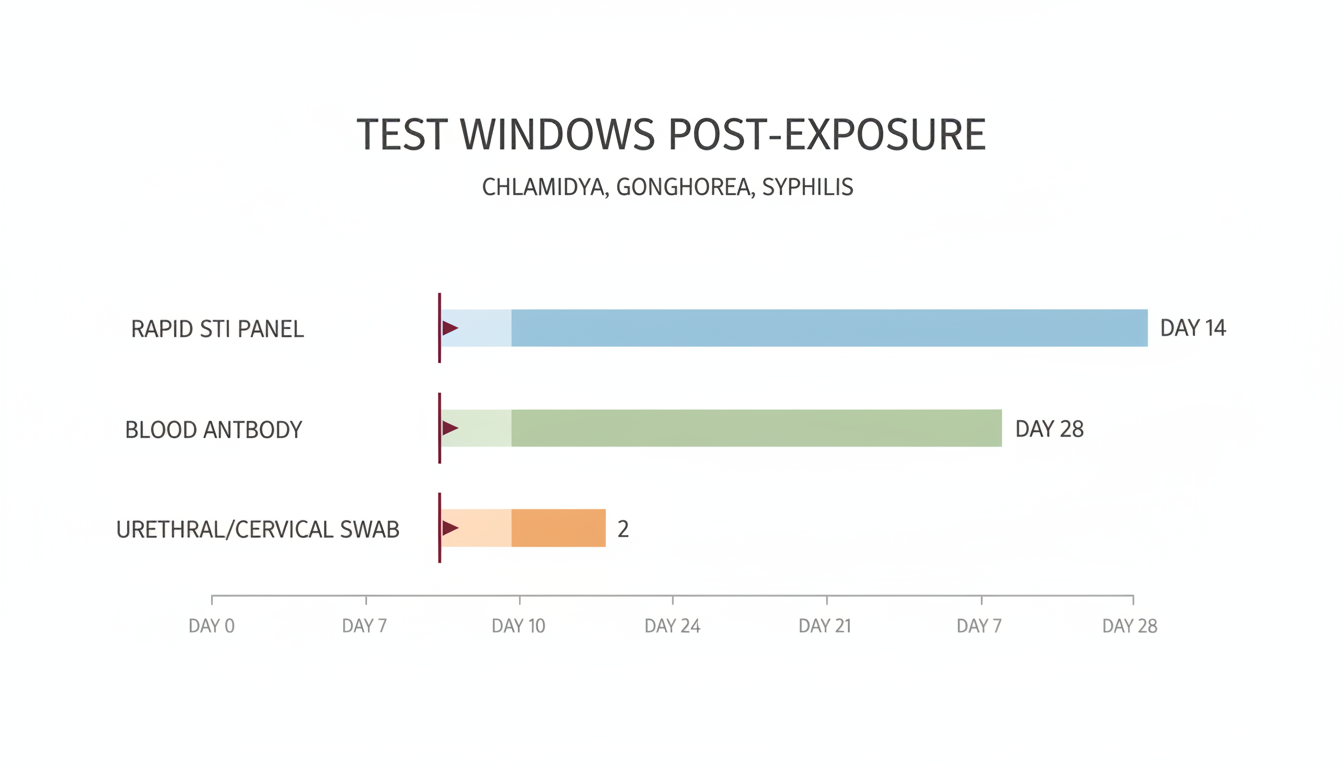
| Chlamydia (NAAT or rapid swab) | 1 to 2 weeks after exposure | Re-test at 2 weeks if first test is negative |
| Gonorrhea (NAAT or rapid swab) | 5 to 14 days after exposure | Re-test at 2 weeks if first test is negative |
| Syphilis (RPR or rapid blood antibody) | 3 to 6 weeks after exposure | 12 weeks post-exposure |
| Hepatitis B (HBsAg blood) | 3 to 9 weeks after exposure | 6 months post-exposure |
| Hepatitis C (antibody blood) | 8 to 11 weeks after exposure | 6 months post-exposure |
| HSV-2 (antibody blood) | 6 to 12 weeks after exposure | Antibody develops slowly; not useful for an active lesion (which needs swab/PCR) |
At-home rapid tests vs. clinic NAATs
Both kinds of test serve a real purpose, and they are complementary rather than equivalent.
At-home rapid lateral-flow tests, the kind sold on this site, are screening tools. They are designed to give a quick yes-or-no result at home in about 15 minutes, with very high specificity (very few false positives) and good sensitivity once the window period has passed. Their strengths are speed, privacy, and the absence of a clinic visit and lab wait. They suit routine screening, post-exposure peace of mind after the appropriate window, and partner pre-screening before unprotected contact.
Clinic-based nucleic acid amplification tests (NAATs) are different technology. They detect the pathogen's genetic material directly using polymerase chain reaction or similar amplification chemistry, which is why the CDC calls them the gold standard for chlamydia and gonorrhea diagnosis. NAATs have higher analytical sensitivity, particularly in low-bacterial-load asymptomatic infections, and they are the preferred follow-up when a result needs to drive immediate treatment, partner notification, or pregnancy planning.
- Rapid lateral-flow at home for routine screening, periodic check-ins, or post-window peace of mind after a possible exposure.
- Clinic NAAT or blood test to confirm any positive home result before treatment decisions are made.
- Clinic testing from the start when timing is critical (high-risk exposure, pregnancy planning, suspected acute HIV) or the result will guide a clinical decision in the next 24 to 48 hours.
What to do after a positive result
A positive at-home test result means treatment starts now. The next steps:
- Confirm the result. Book a clinic appointment for a confirmatory blood test (HIV, syphilis, hepatitis) or NAAT (chlamydia, gonorrhea). False-positive rates on lateral-flow tests are low but non-zero, and the confirmatory test also tells you the strain or viral load that guides treatment.
- Begin treatment. Bacterial STIs (chlamydia, gonorrhea, syphilis) are cured with a course of antibiotics. Viral STIs are managed: HIV with antiretrovirals (often a single daily pill in 2026), hepatitis B with antivirals if needed, herpes with acyclovir or valacyclovir for symptom control. Hepatitis C is usually cured with 8 to 12 weeks of direct-acting antiviral pills.
- Notify recent sexual partners so they can test and be treated. Many local health departments offer anonymous partner-notification services if direct conversation feels too hard.
- Avoid sex until you (and any partner being treated) have completed the antibiotic or antiviral course and re-tested where applicable.
- Re-test at the recommended interval after treatment to confirm cure. The CDC recommends re-testing for chlamydia and gonorrhea at 3 months after treatment, primarily to detect re-infection.
People living with HIV, HSV, or hepatitis B who begin treatment promptly maintain normal or near-normal life expectancy; research from the past decade consistently shows this. Most bacterial STIs treated at this stage are fully curable within one to two weeks, and viral infections caught early carry the best long-term prognosis under current antiviral regimens.
If telling a partner directly feels too difficult, most U.S. state and local health departments operate confidential partner-notification programs. A counselor will contact recent partners on your behalf without revealing your identity, advise them to test, and connect them to treatment if needed. International equivalents exist in most public-health systems. The service is free, voluntary, and protects everyone in the chain from re-exposure.
Our at-home HPV and trichomoniasis rapid swab tests are validated for vaginal self-collection only. Male readers needing these tests should visit a sexual health clinic. The 8-in-1 kit below still covers the other six infections (HIV, syphilis, chlamydia, gonorrhea, hepatitis B, hepatitis C, herpes) for any-gender use.

Frequently asked questions
- How long after sex should I wait before testing for STDs?
- It depends on the infection. Chlamydia and gonorrhea become reliably detectable about 1 to 2 weeks after exposure. HIV antibody-only tests need at least 23 days, with confirmation at 90 days. Syphilis becomes detectable around 3 to 6 weeks. Hepatitis C takes 8 to 11 weeks. The table earlier in this article summarizes the windows for each test. If you test early and get a negative result, re-test at the end of the longest applicable window before treating that result as definitive.
- Can you have an STD without any symptoms?
- Yes, and silent infection is the rule rather than the exception for the most common ones: chlamydia is asymptomatic in most women and around half of men, gonorrhea in over half of women, and acute HIV often passes as a brief flu-like illness or no illness at all. Pharyngeal (throat) gonorrhea and chlamydia almost never produce symptoms. The practical action cue: if you have had a new partner or unprotected contact since your last screen, schedule a test rather than waiting for a sign.
- Are at-home rapid STD tests as accurate as clinic tests?
- Home rapid tests give a yes-or-no result in 15 minutes and are built for screening, not clinical diagnosis. Their main gap is analytical sensitivity in very early or very low-load infections, which is where clinic NAATs outperform them. Use a rapid test to screen; confirm any positive with a clinic test before making treatment decisions.
- Can you get an STD from oral sex?
- Yes. Gonorrhea, chlamydia, syphilis, and herpes can all transmit through oral-genital contact. Pharyngeal (throat) gonorrhea and chlamydia are usually asymptomatic. HIV transmission through oral sex is much less common than through vaginal or anal sex, but it is still possible if open sores or bleeding gums are involved. Barrier protection during oral sex (external condoms, internal condoms, dental dams) reduces but does not eliminate the risk.
- Do condoms protect against all STDs?
- Condoms substantially lower transmission risk for fluid-borne infections (HIV, gonorrhea, chlamydia, hepatitis B, trichomoniasis), with consistent and correct use estimated at around 80% reduction for HIV per the CDC. They lower but do not eliminate risk for skin-contact infections like HSV, HPV, and primary syphilis, because the protected area is smaller than the area where the lesion or asymptomatic shedding can occur.
- What is the most common STD?
- HPV is the most common sexually transmitted infection overall. The CDC reports that most sexually active adults will be exposed to at least one strain during their lifetime, although most infections clear on their own. Chlamydia is the most commonly reported bacterial STI in the United States.
- If I am in a long-term monogamous relationship, do I still need to test?
- Most public-health bodies recommend at least one full STI screen at the start of a new relationship for both partners, before barrier protection is dropped. After that, retesting is generally not necessary unless circumstances change (a non-monogamous arrangement, a known exposure, a new partner). Some longer-window infections (HIV, hepatitis C, syphilis, HSV-2) may not have shown up on the first round of testing if the window had not closed, so an early re-test 3 months after the first one is sensible.
- Can STDs be cured?
- Bacterial STIs (chlamydia, gonorrhea, syphilis, trichomoniasis) are curable with antibiotics if caught early. Hepatitis C is curable in over 95% of cases with 8 to 12 weeks of direct-acting antivirals. Viral STIs (HIV, hepatitis B, herpes, HPV) are managed with antiviral therapy or, in the case of HPV, often clear on their own. HIV in 2026 is generally manageable as a chronic condition with normal life expectancy when treated early.
- U.S. Centers for Disease Control and Prevention. Sexually transmitted infections home page covering screening recommendations, treatment guidelines, surveillance data, and condom-effectiveness evidence.
- U.S. Centers for Disease Control and Prevention. HIV basics, transmission routes, U=U guidance, and rapid-test window-period recommendations.
- World Health Organization. Sexually transmitted infections (STIs) fact sheet, source for the global asymptomatic-infection statistic and routine-testing rationale.
- UK National Health Service. Patient-facing overview of common STIs, presenting symptoms, and clinic-based testing in the UK.
- U.S. Centers for Disease Control and Prevention. Chlamydia basics, transmission, and pelvic inflammatory disease as a long-term complication.
- U.S. Centers for Disease Control and Prevention. HPV basics, ACIP vaccination recommendations through age 26 and shared clinical decision-making for ages 27 to 45.
