

Published: September 2025 | Last updated: April 2026 | Editorial review and quality control: Martina N.
It often starts on a Sunday morning. You wake up with itching, burning when you urinate, and discharge that looks slightly different than usual. Your mind runs through the last few days. Was it that new partner? The antibiotics from last month? The tight workout leggings worn through a sweaty afternoon?
Yeast infections and several sexually transmitted infections (STIs) produce almost identical early symptoms. Both inflame the genital tissue, and inflamed tissue itches, burns, and produces unusual discharge regardless of what triggered it. That overlap is why self-diagnosis from symptoms alone is unreliable, and why even experienced clinicians often order a test before treating.
This guide walks through what is similar, what is different, when antifungal cream is the wrong tool, and how to figure out what is actually going on, drawing on guidance from the U.S. Centers for Disease Control and Prevention (CDC), the U.K. National Health Service (NHS), and the World Health Organization (WHO).
Can a yeast infection feel like an STD?
Yes. Yeast infections and STIs like trichomoniasis, chlamydia, gonorrhea, and early herpes share the same early signals: itching, burning, irritation, and discharge changes. Trichomoniasis is the closest mimic. The most reliable way to tell them apart is a test, especially if antifungal treatment fails to resolve symptoms within a few days.
Key Takeaways
- Yeast infections and several STIs trigger the same early signals (itching, burning, discharge), so symptoms alone cannot reliably tell them apart.
- If a standard antifungal treatment does not fully resolve symptoms within a few days, testing for an STI is the smarter next step.
Why yeast infections and STDs feel so similar
The body has a limited number of ways to react when something irritates the genital tract. Whether the trigger is a fungal overgrowth, a bacterial infection, a parasitic infection like trichomoniasis, or a viral one like herpes, the immune system responds by increasing blood flow, swelling the tissue, and producing more discharge. The result is a familiar bundle: itching, burning, redness, and changes in what comes out.
A yeast infection happens when Candida, a fungus that already lives in small amounts in the vagina, grows out of balance. Antibiotics, hormonal shifts (pregnancy, certain birth control, menstrual cycles), high blood sugar, and friction can all disturb the bacterial population that normally keeps yeast in check. The NHS thrush information describes vaginal thrush as a common yeast infection that is often unrelated to sexual activity.
STIs produce inflammation through different mechanisms (bacteria, viruses, or parasites invading the tissue), but the visible result on the surface is similar. The CDC's STI overview describes itching, burning urination, and abnormal discharge among the most common early presentations of chlamydia, gonorrhea, and trichomoniasis.
| Symptom | Yeast infection | Possible STI causes |
|---|---|---|
| Intense itching | Very common | Trichomoniasis, early herpes |
| Burning during urination | Common (from irritation) | Chlamydia, gonorrhea, herpes |
| Unusual discharge | Often thick, white, clumpy | Trichomoniasis (frothy, yellow-green), gonorrhea (yellow), chlamydia (cloudy) |
| Strong odor | Usually mild | Trichomoniasis often has a noticeable odor |
| Redness or swelling | Very common | Possible with several STIs |
| Pain during sex | Sometimes | Common with several STIs |
| Sores or blisters | Rare | Characteristic of herpes |
The discharge clue and its limits
Discharge is usually the first thing people inspect. It is visible, easy to compare against “normal,” and often the change that prompts the late-night search.
Yeast discharge is classically described as thick, white, and clumpy (the “cottage cheese” comparison most people have read). It tends not to have a strong smell. Itching and irritation often dominate the experience.
Trichomoniasis can mimic that picture, but the discharge tends to be thinner, sometimes frothy, and may carry a stronger odor. Gonorrhea may produce yellow or greenish discharge. Chlamydia may produce only mild discharge changes, or none at all. The NHS vaginal discharge guidance notes that discharge changes alone are not reliable for self-diagnosis.
Two practical caveats matter here. First, plenty of people with confirmed yeast have minimal discharge, and plenty with chlamydia or trichomoniasis have discharge that looks fairly typical. Second, the same person can experience the same infection differently from one episode to the next.
Yeast discharge is usually thick, white, and clumpy with little odor. STI discharge is typically thinner, sometimes frothy or yellow-green, and may carry a stronger smell. But plenty of confirmed cases on either side break that pattern, so use discharge as a clue rather than a verdict.
When antifungal cream does not fix it
This is the moment that brings most people from “probably yeast” to “something else is going on.” You used the over-the-counter antifungal (clotrimazole, miconazole, or a single-dose oral fluconazole). A few days passed. The itching faded a little, then came back. Or the burning never quite went away. Or the discharge changed but did not normalize.
Antifungals only work on fungi. They damage the cell membrane of Candida and similar yeasts. They do not affect bacteria like Chlamydia trachomatis or Neisseria gonorrhoeae, the parasite that causes trichomoniasis, or the herpes virus. If one of those is the real cause, antifungal treatment cannot resolve it.
Confusing things further: antifungal creams sometimes provide temporary symptom relief even when yeast is not the actual cause. The cream’s vehicle (the cream itself, soothing ingredients) can briefly calm irritated tissue. Clinicians sometimes call this “false reassurance.” Symptoms quiet down for a day or two, then return because the underlying infection was never treated.
A simple working rule: if a standard antifungal course does not clearly resolve symptoms within several days, do not start another round on autopilot. Test instead.
Yeast infection treated correctly usually improves within 2 to 3 days and is mostly resolved by day 7. If you finish a course and itching, burning, or unusual discharge persist or return quickly, treat that as a signal to test rather than treat again.
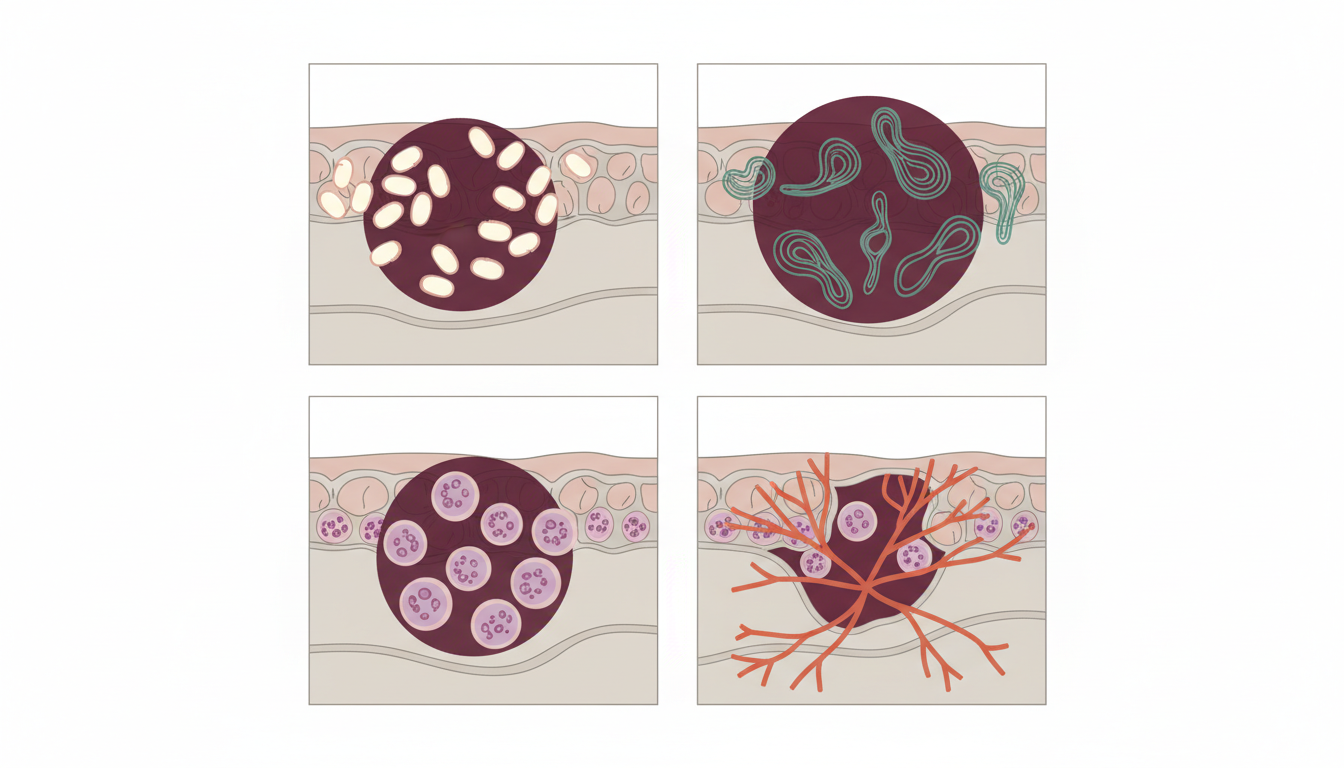
The STIs most often mistaken for yeast
When antifungal treatment fails, four infections account for most of the “oh, it was something else” cases. They each share enough surface symptoms with yeast to fool people in the early stages.
Trichomoniasis is the biggest mimic. It is caused by Trichomonas vaginalis, a microscopic parasite that the CDC identifies as one of the most common curable STIs in the United States. Itching, irritation, and unusual discharge dominate. The discharge can be frothy and have a noticeable odor, but in mild cases it can look almost identical to a yeast infection.
Chlamydia is the most commonly reported bacterial STI in the U.S. and is often subtle. Many infections cause no symptoms at all. When symptoms do appear, they tend to be mild: a little burning when urinating, slightly increased or cloudy discharge, mild irritation. People often dismiss these as a starting yeast infection.
Gonorrhea can produce more dramatic discharge (yellow, sometimes thick) and burning urination, but in milder cases it overlaps significantly with yeast. Co-infection with chlamydia is common, which is why combined testing is standard.
Genital herpes (HSV-1 or HSV-2) often begins with tingling, itching, or burning before any sores appear. People in that early window can easily assume they are starting a yeast flare. The CDC genital herpes resource describes the prodrome (the tingling phase before lesions emerge) as a key clue.
Timing tells you more than most people realize
One of the more useful diagnostic clues is when symptoms started relative to a possible exposure. Most STIs need an incubation period before they produce noticeable symptoms. Yeast infections do not, because Candida already lives in the body and just multiplies when conditions allow.
If symptoms appeared the morning after sex, the cause is more likely to be friction, lubricant or condom irritation, or a yeast flare triggered by the change in vaginal pH. STIs typically take days to weeks to produce symptoms, because the organism needs time to multiply. The reverse is also true: a quiet first week after a new partner does not rule out an STI, because many remain asymptomatic for far longer.
| Condition | Typical onset after trigger or exposure | Common early signs |
|---|---|---|
| Yeast infection | Hours to a few days after the disturbance | Intense itching, thick white discharge |
| Chlamydia | Roughly 1 to 3 weeks after exposure | Mild burning urination, slight discharge changes (often none) |
| Gonorrhea | Roughly 2 to 7 days after exposure | Burning urination, yellow or thicker discharge |
| Trichomoniasis | Roughly 5 to 28 days after exposure | Itching, irritation, frothy discharge |
| Genital herpes | Roughly 2 to 12 days after exposure | Tingling or itching, then small painful sores or blisters |
What we test for at home, and what we do not
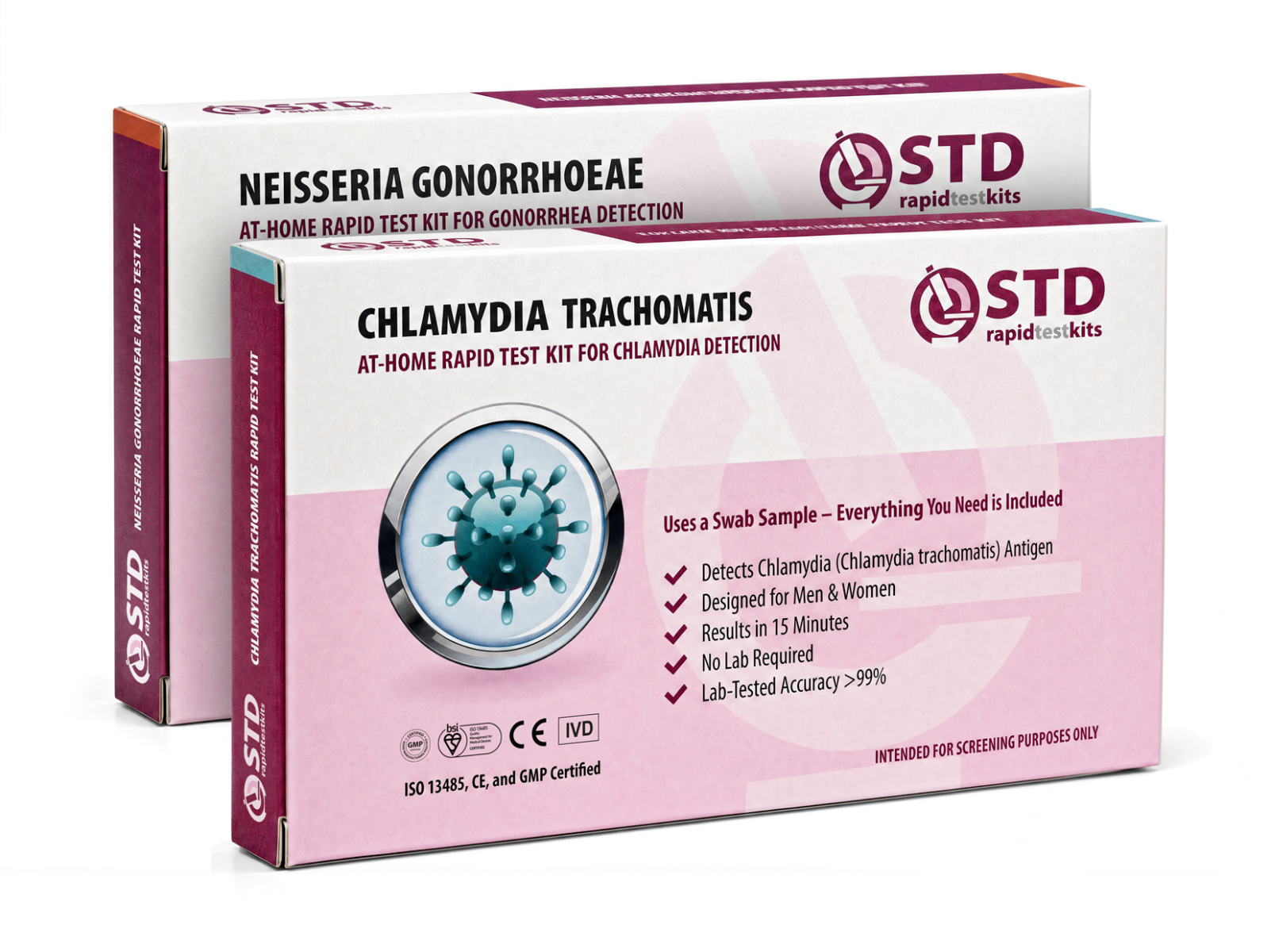
This site sells rapid lateral-flow self-test kits. They are useful screening tools that you can run at home in about 15 minutes, and they cover several of the infections that look like yeast.
For the women-focused presentations described above, the most directly relevant kits are:
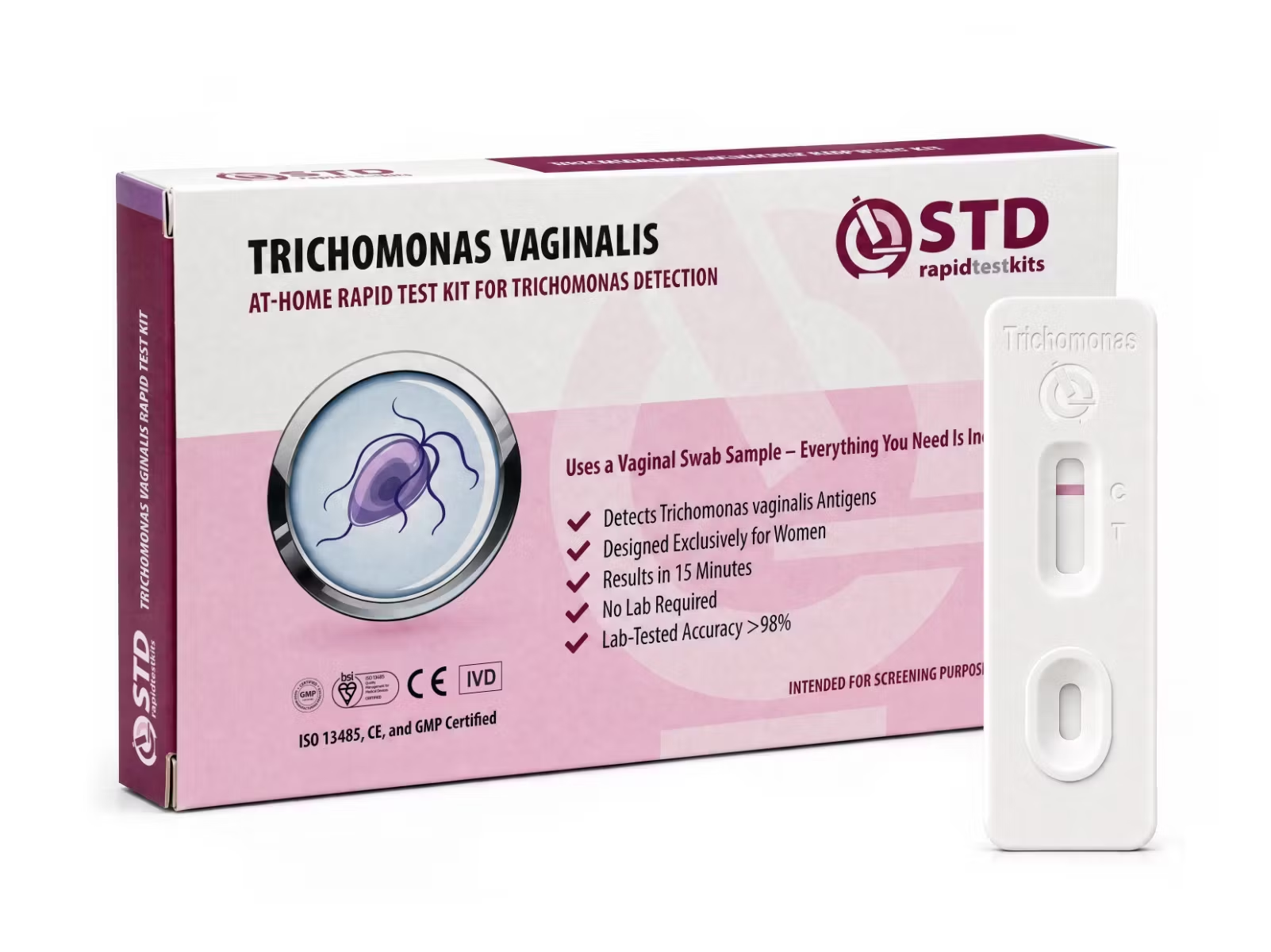
- Trichomoniasis rapid swab: vaginal self-swab. Targets the parasite that is the closest yeast mimic.
- Chlamydia and gonorrhea combination rapid swab: covers the two most commonly missed bacterial culprits behind “antifungal didn’t work” episodes.
- Multi-STI combination kit: useful when you want one screen that covers several routes (chlamydia, gonorrhea, trichomoniasis, plus blood-based tests for HIV, syphilis, hepatitis B, hepatitis C).
Scope notes: our trichomoniasis and HPV at-home kits are validated for vaginal self-swab only. Male readers concerned about trichomoniasis should see a clinic for testing. We also do not sell at-home tests for yeast itself; antifungal treatment is widely available over the counter, and a clinician can confirm yeast through a quick microscopy or culture if it is unclear.
What we test (lateral-flow strips) and what a lab does (NAAT or PCR) are complementary, not equivalent. Lab NAATs are more sensitive on the same swab sample type. A negative rapid result with continuing symptoms is a good reason to follow up with a clinic test rather than assume the problem is solved.
What clinicians actually look for
When you walk into a sexual health clinic with this set of symptoms, providers usually do not jump to a diagnosis. They look at patterns: what changed, when, what medications you have taken recently, what the discharge looks like under a microscope, and what the pH of the vaginal fluid is.
A few patterns shift the working diagnosis:
- Recent antibiotics, hormonal shift, or new diabetes diagnosis raises the prior for yeast.
- New sexual partner, condomless sex, or symptoms appearing within the typical STI incubation window raises the prior for an STI.
- Strong odor, frothy discharge, or pain during urination paired with mild itching raises the prior for trichomoniasis or bacterial vaginosis (which is not an STI but is also commonly mistaken for yeast).
- Tingling or itching followed by small painful sores raises the prior for herpes.
- Pelvic pain, fever, or spotting between periods can indicate that an untreated STI has progressed to pelvic inflammatory disease (PID), which is urgent.
Pelvic pain, fever, or unexpected spotting between periods can mean a chlamydia or gonorrhea infection has spread up the reproductive tract into pelvic inflammatory disease. PID is treatable when caught early, but every week of delay raises the risk of scarring and fertility damage. If those symptoms appear, do not wait on a home test, see a clinician the same day.
Trichomoniasis specifically: the most-missed yeast lookalike
If there is one infection worth singling out, it is trichomoniasis. The CDC describes it as one of the most common curable STIs, and yet it is frequently missed in early presentations because the discharge can look very similar to yeast. The parasite responds well to a single dose of metronidazole (an antibiotic, not an antifungal), so once it is identified, treatment is straightforward.
The catch is identification. People often spend two or three rounds on antifungal cream before someone runs the right test. If you have had repeated “yeast” episodes that do not fully clear, trichomoniasis is high on the list of alternative explanations to rule out.
When to call a clinician right away
Most overlapping itch-burn-discharge episodes are not emergencies. A few combinations should bypass home testing and go straight to a clinic or urgent care visit.
Pelvic pain plus fever; bleeding between periods plus unusual discharge; severe pain during urination; visible sores, blisters, or ulcers; symptoms during pregnancy; or any symptom paired with a known exposure to a partner who has an active STI. These can indicate PID, herpes outbreak, or another condition that benefits from same-day evaluation.
Why early answers actually matter
Untreated STIs do real damage over time. Chlamydia and gonorrhea, in particular, can ascend the reproductive tract and cause PID, which is a leading preventable cause of infertility and chronic pelvic pain. Trichomoniasis is associated with increased susceptibility to HIV transmission. Herpes, while not curable, is much more comfortably managed when antiviral therapy starts early in an outbreak.
From the partner side, the math is simple: knowing what you have means partners can be tested and treated, breaking the chain. Guessing means the chain continues.
None of this is meant to be alarming. STIs are extraordinarily common, the WHO estimates more than a million curable STIs are acquired every day worldwide, and most are easily treated when identified.
Many people with chlamydia, gonorrhea, or trichomoniasis have no symptoms at all. The only way to know for sure is to get tested.
Putting it together: a simple decision path
If you are sitting with itching, burning, or unusual discharge right now, the practical steps look like this:
- Recent antibiotics, hormonal change, or no recent sexual exposure? A short antifungal course is reasonable. Recheck in 3 to 4 days.
- Symptoms persist or come back quickly after antifungal treatment? Switch from treating to testing. Trichomoniasis, chlamydia, and gonorrhea are the top candidates.
- New partner or known exposure within the last several weeks? Test rather than self-treat. Symptoms in this window are more likely to be an STI.
- Sores, blisters, fever, pelvic pain, or pregnancy? Skip self-testing and see a clinician.
- Negative rapid test but ongoing symptoms? Confirm with a clinic NAAT/PCR. Lateral-flow tests are useful screens, not the final word.
Symptoms plus a failed antifungal course equals test, not another round of cream. A second or third antifungal try wastes time and lets a treatable bacterial or parasitic infection sit untreated. Fifteen minutes with a rapid swab kit usually gets you closer to an answer than another week of guessing.
FAQs
- Can a yeast infection really feel exactly like an STD?
- Yes, especially in the first few days. Trichomoniasis is the closest match. Its itching and discharge pattern is almost indistinguishable from yeast without a test. Chlamydia and gonorrhea overlap in milder cases, and early herpes can start as itching or tingling before any sore appears. Because the tissue inflammation looks the same regardless of cause, symptom observation alone cannot reliably tell them apart.
- I treated it as yeast and it kind of helped. Does that mean it was yeast?
- Not necessarily. Antifungal creams can briefly calm inflamed tissue even when yeast is not the cause, then the underlying infection reasserts itself. If symptoms come back within days or never fully resolve, that is a strong signal to test for an STI rather than try a second antifungal round.
- Which STI is most often mistaken for a yeast infection?
- Trichomoniasis. The parasite produces itching, irritation, and discharge that can look almost identical to yeast in mild cases. Chlamydia and gonorrhea are next most common, often because their symptoms are subtle. Early herpes can also start as itching or tingling before sores appear.
- Symptoms started the morning after sex. Is that an STI?
- Probably not. Most STIs need days to weeks before symptoms appear because the organism has to multiply. Same-day or next-day symptoms are more consistent with friction, lubricant or condom irritation, or a yeast flare triggered by changes in vaginal pH. That said, a quiet first week after a new partner does not rule out an STI later.
- How long should I wait after a possible exposure before testing?
- For gonorrhea, rapid swab tests can be reliable from around 5 to 7 days after exposure. For chlamydia, the window is typically 1 to 2 weeks. Trichomoniasis is detectable from roughly 1 to 4 weeks. Herpes blood antibody tests need longer, generally 6 to 12 weeks for reliable detection. If symptoms are present, do not wait for an arbitrary window, an active symptom is reason to test now.
- Can I have a yeast infection and an STI at the same time?
- Yes, and clinicians see this often. Inflammation from one infection disrupts the local microbial balance and can let another take hold. That is one reason symptoms sometimes partially improve with antifungal treatment but do not fully resolve, the yeast clears while a second infection persists.
- Do antifungal medications interfere with STI test results?
- No. Tests for chlamydia, gonorrhea, and trichomoniasis detect the bacteria or parasite directly and are not affected by antifungal cream or oral fluconazole. You can test even if you have already used antifungal treatment.
- If symptoms cleared with antifungal cream, do I still need to test?
- If they cleared completely and stayed gone, yeast was almost certainly the cause and no further testing is needed. If symptoms cleared briefly and returned, or new symptoms appeared, that is a different story. The safest move is to test for the common STI culprits before starting another antifungal round.
Bottom line
Burning, itching, and unusual discharge are common signals. Most of the time the cause is straightforward and treatable. The trap is that the same signals come from very different sources, and the wrong treatment is wasted treatment. Antifungal cream cannot fix a bacterial or parasitic infection, no matter how many rounds you try.
The faster way through the uncertainty is testing. A rapid swab kit can tell you in 15 minutes whether the most common STI culprits are involved, and a clinic NAAT confirms the result if anything is unclear.
- U.S. Centers for Disease Control and Prevention. Sexually Transmitted Infections (STIs): overview, fact sheets for chlamydia, gonorrhea, trichomoniasis, and genital herpes, including symptom presentation and screening guidance.
- World Health Organization. Sexually transmitted infections (STIs) fact sheet, including the estimate that more than 1 million curable STIs are acquired every day globally and the role of asymptomatic infection.
- U.K. National Health Service. Thrush in men and women: causes, symptoms, and treatment of vaginal candidiasis.
- U.K. National Health Service. Vaginal discharge: what is normal, what is not, and when to see a clinician.
- U.S. Centers for Disease Control and Prevention. About Trichomoniasis: symptoms, prevalence, transmission, and treatment with metronidazole, including the description of trichomoniasis as the most common curable STI.
- U.S. Centers for Disease Control and Prevention. Bacterial vaginosis (BV): definition, symptoms (thin white or gray discharge, burning, strong odor), transmission, and treatment guidance.
