
Published: July 2025 | Last updated: May 2026 | Editorial review and quality control: Martina N.
A sore throat that drags on for weeks after a new sexual contact can prompt a very specific worry. The reassuring part first: most persistent sore throats are not sexually transmitted at all. They are viral pharyngitis, post-nasal drip, allergies, acid reflux, vaping irritation, or low indoor humidity. Even when an STI is the cause, gonorrhea and chlamydia of the pharynx are far more common findings than trichomoniasis.
That said, the parasite responsible for trichomoniasis, Trichomonas vaginalis, can occasionally be detected in the throat after unprotected oral contact with an infected genital site. Current public-health guidance does not include routine pharyngeal screening for trich, which means clinicians often do not look for it and most labs are not validated to test for it. This article lays out, in plain language, what is currently known about oral trichomoniasis, how it tends to present, why it falls through the cracks of standard testing, and what realistic options exist for confirming or ruling it out.
Key Takeaways
- Throat-based trichomoniasis is uncommon and not part of routine STI screening, but the parasite can be transmitted through oral-genital contact and may cause a lingering sore throat or no symptoms at all.
- If you have a stubborn sore throat after recent oral sex, ask your clinician specifically about extra-genital STI testing. At-home rapid panels can screen for a genital infection that may be the source, even when oral testing is not available.
What Is Oral Trichomoniasis
Trichomoniasis is caused by Trichomonas vaginalis, a single-celled protozoan parasite rather than a virus or bacterium. According to the U.S. Centers for Disease Control and Prevention, it is one of the most common curable sexually transmitted infections worldwide, and the parasite most often colonizes the vagina, urethra, or cervix.
"Oral trichomoniasis" refers to detection of the parasite in the oropharyngeal cavity (the back of the mouth and throat), usually after oral contact with an infected genital site. It is poorly characterized in the medical literature. Most large STI surveillance programs do not collect pharyngeal swabs for trich, so prevalence estimates are limited to case reports and small research studies. The World Health Organization includes trichomoniasis in its global burden estimates but does not flag oropharyngeal infection as a distinct entity in its public guidance.
Oral trich exists in the medical literature as a documented phenomenon, but it is uncommon and underresearched compared with oral gonorrhea or oral chlamydia.
That distinction matters for testing. Standard rapid strep tests, throat cultures, and viral panels are designed to detect bacteria or viruses. They will not detect Trichomonas vaginalis, even when a sample is collected. A separate trichomonas-specific assay is required, which is one of the reasons throat trich slips through ordinary sore-throat workups.
How Trichomonas Can Reach the Throat
Transmission of trichomoniasis is sexual. The parasite spreads through contact between the genital tract of an infected person and a mucous membrane on someone else. The most common route is penis-to-vagina or vagina-to-penis contact. Oral transmission requires direct contact between the mouth and an infected genital site, which means it is plausible whenever protection is not used during oral sex on a partner with an active genital infection.
A few clarifications about transmission that matter for risk thinking:
- The parasite needs a moist mucosal surface to survive. It does not transmit through saliva alone, casual kissing, sharing utensils, towels, or toilet seats.
- Receptive oral contact with infected genital fluids is the proposed route for oral colonization, though the literature on actual oral establishment of infection remains thin.
- Many people with genital trich have no symptoms. CDC fact-sheet data indicate that only about 30 percent of infected people develop noticeable symptoms, which means partners often do not know they are carrying the parasite.
Condoms and dental dams substantially reduce the risk of transmitting trichomoniasis during all sexual contact, including oral. Uptake of barriers during oral sex is low in most general populations, which is part of why oral-route STIs are underdiscussed in clinical conversations.
Symptoms in the Throat (When They Show Up)
The most useful single fact about oral trich symptoms is that they are nonspecific. There is no clinical sign that lets a provider look at a throat and say "this is trichomoniasis." When symptoms appear, they overlap heavily with viral pharyngitis, strep throat, pharyngeal gonorrhea, allergies, and post-nasal drip. Many cases are asymptomatic.
Patterns described in case reports and in pharyngitis differential workups include:
- A scratchy or raw sensation in the back of the throat that persists for weeks.
- Mild burning when swallowing, sometimes worsening during the inflamed period of an active partner-infection.
- An unusual taste in the mouth, particularly after oral sexual contact.
- Visible redness of the soft palate or posterior pharynx on exam.
- Tender or mildly enlarged cervical lymph nodes, though this is more often seen with bacterial pharyngitis.
The other clinically important pattern is asymptomatic colonization. Some research suggests the parasite may persist transiently in the oral cavity without producing visible inflammation, particularly in male partners of people with genital trich. This mirrors the epidemiology of genital trich, where men frequently carry the organism without symptoms and serve as a reservoir for reinfection.
Two practical implications follow. First, you cannot rule trich in or out from how your throat feels. Second, if a partner has been diagnosed with genital trichomoniasis, both partners should be evaluated and treated, regardless of whether either has throat symptoms.

Why Doctors Often Miss It
If you walk into urgent care with a two-week sore throat, the clinician will usually run through a fairly standard checklist: a strep rapid test, a look for tonsillar exudate or peritonsillar abscess (a pocket of infection beside the tonsil), mononucleosis screening, questions about reflux and allergies, and possibly an empirical antibiotic. Sexual-health testing of the pharynx is not part of that default workflow unless you raise the question yourself.
Several structural reasons explain why throat trich falls through:
- Routine STI panels are genital-focused. Standard testing collects urine or vaginal swabs. Adding pharyngeal swabs typically requires a specific request or risk disclosure.
- Even when extra-genital testing is offered, trich is not always on the menu. Many clinics swab the throat for gonorrhea and chlamydia, the two infections with formal extra-genital screening guidance, but not for trich.
- FDA-cleared trich tests are validated for vaginal, endocervical, and urine specimens. The gold-standard nucleic acid amplification tests (NAATs) for T. vaginalis are not formally cleared for throat swabs. Some research labs run validated in-house assays, but most clinical labs will reject an off-label sample.
- Public-health guidelines reflect available data. Because pharyngeal trich is uncommon in surveillance and the testing pathway is awkward, large guideline bodies do not currently recommend routine throat screening for trich.
None of this means oral trich is fictional. It means the current screening system is not designed to catch it, and self-advocacy or clinician interest is usually required to investigate it specifically.
How to Get Tested (Realistic Options)
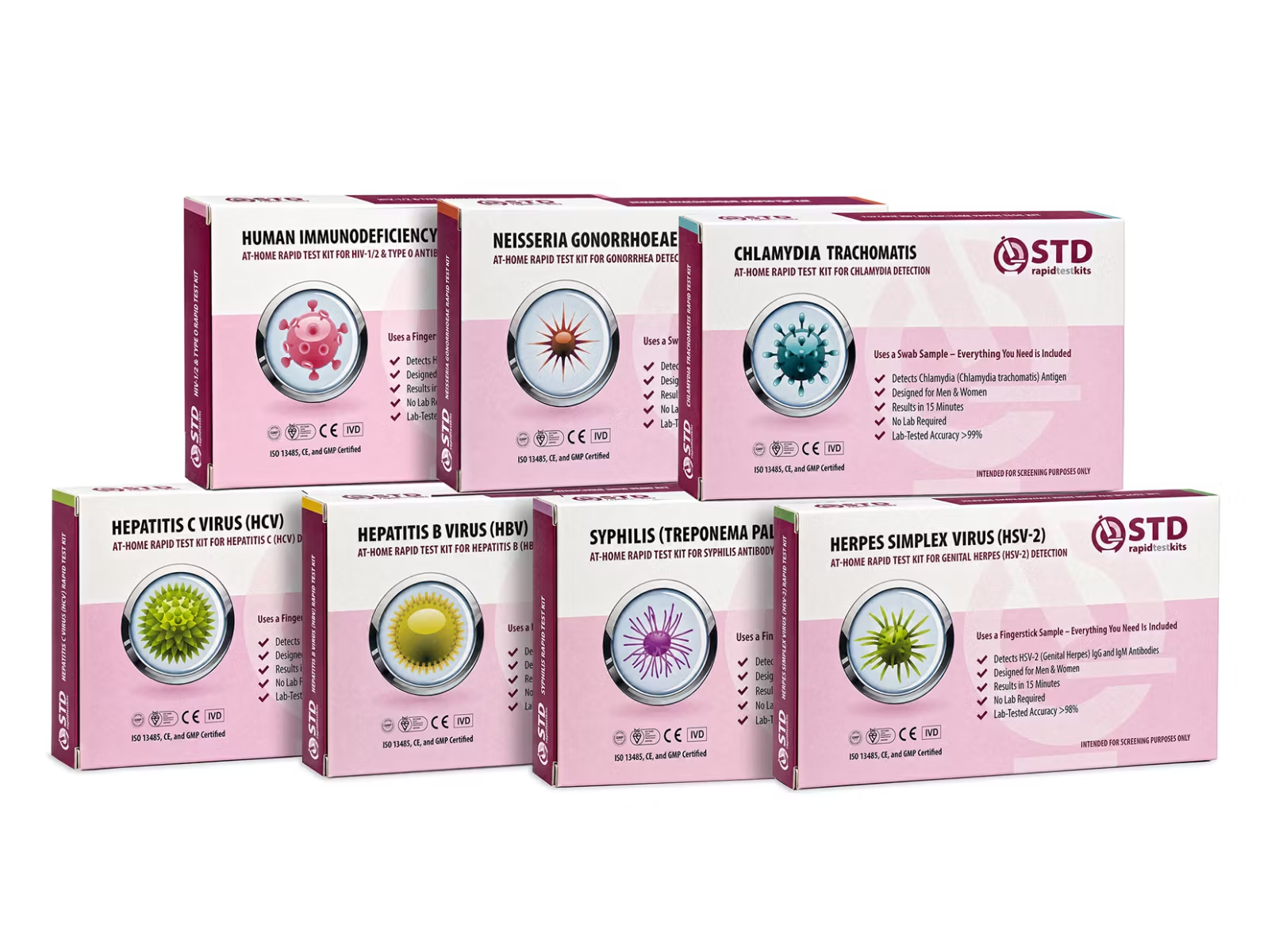
This article is published by stdrapidtestkits.com, which sells at-home STI testing kits, and two of our products are relevant to this section with important caveats. We recommend products based on fit-for-purpose for the reader's concern, not commercial benefit.
Throat-specific testing for trichomoniasis is currently a clinic conversation, not an at-home product. If you want a throat swab analyzed for T. vaginalis, the path is to ask your clinician or local sexual health clinic whether they can collect a pharyngeal sample and send it to a lab with an off-label or validated assay. Some specialty clinics in larger cities offer this. Many do not.
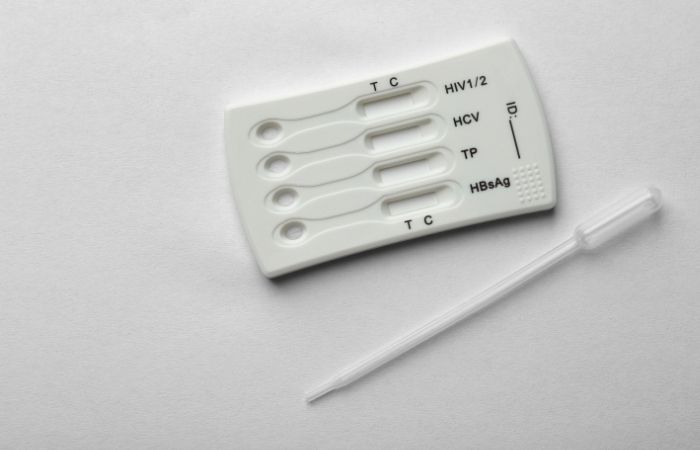
What at-home rapid testing can do well is screen for a genital trichomoniasis infection, which is usually the source of any potential oral exposure. If a recent partner has, or might have, genital trich, confirming or ruling out a genital infection in either of you is a useful first step. It tells you whether the parasite was present in the partnership, which informs whether throat investigation is worth pursuing.
Two things to know about the products we sell that touch this topic:
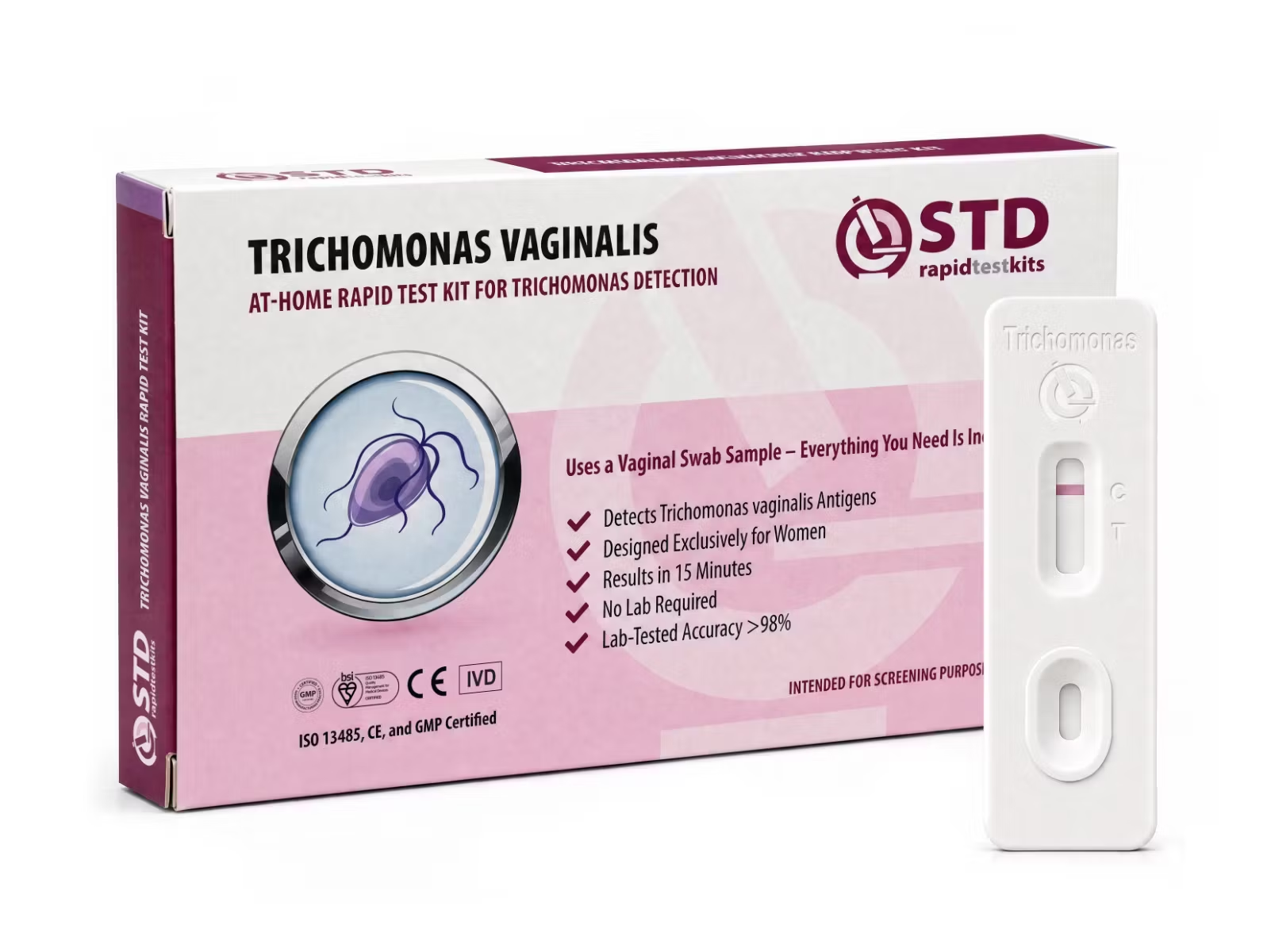
- Our at-home trichomoniasis rapid test is a vaginal self-swab. It is validated for female anatomy only. We do not currently sell a male-compatible at-home trich test. Male partners who want trich testing should see a clinic, where urethral swab or first-void urine NAAT testing is available.
- Neither our trich kit nor any rapid lateral-flow trich kit we sell is intended for throat samples. For a throat-specific evaluation, a clinic visit is the appropriate path.
At-home rapid tests are lateral-flow immunoassays. They are useful screening tools for the sample types they are validated for, but they are not the same technology as laboratory NAAT testing, which is the gold standard. A positive home result is worth confirming through a clinical NAAT, and a negative result during an active concern is worth following up with clinic testing if symptoms persist.
Treatment Options
Trichomoniasis is curable with prescription antibiotics. The two medications used are metronidazole and tinidazole, both of which target anaerobic protozoa. The CDC STI Treatment Guidelines recommend a 7-day course of metronidazole 500 mg twice daily for women, and a single 2-gram oral dose of metronidazole for men, with tinidazole as an alternative. These regimens are based on genital infection studies; the same medications are used when the parasite is detected at extra-genital sites.
A few prescribing details worth knowing:
- Alcohol should be avoided during metronidazole or tinidazole treatment and for the interval specified on your prescribing leaflet, because the interaction can cause nausea, flushing, headache, and vomiting.
- Sexual partners should be treated at the same time, even if asymptomatic. Untreated partners reinfect the treated person at high rates.
- Repeat testing is recommended for women approximately three months after treatment because of high reinfection rates.
- Metronidazole resistance is uncommon but does occur. If symptoms persist after a standard course, the CDC recommends laboratory susceptibility testing and a tinidazole or extended metronidazole regimen.
- Pregnancy is a special case. Untreated trichomoniasis in pregnancy is associated with preterm delivery and low birth weight, per MedlinePlus. Pregnant or possibly-pregnant readers should not delay testing or treatment and should let their prescriber know about the pregnancy when the medication is chosen.
If a clinician confirms oral trichomoniasis specifically, the medication is the same. Whether a longer or different course is needed for extra-genital infection has not been formally studied, so prescribing tends to follow the genital protocol unless symptoms fail to clear.
Reducing Transmission Risk
Three behaviors reduce trichomoniasis transmission, including the oral-genital route:
- Use barriers during oral sex. External condoms during fellatio and dental dams during cunnilingus reduce direct mucosal contact with infected fluids. Most people who want to lower risk here will be starting a habit they have not had before, since barrier use during oral sex is uncommon in general populations.
- Get screened, especially after new partners. Trichomoniasis is curable and partner-treatable. Screening converts a silent infection into a short course of antibiotics rather than a months-long source of reinfection.
- Notify partners after a positive diagnosis. Partner notification is uncomfortable but effective. Most local sexual health clinics offer anonymous partner-notification services when in-person disclosure is difficult.
HIV interaction is worth a separate note. Trichomonas inflammation of mucosal tissue is associated with increased susceptibility to HIV acquisition in observational data.

When to See a Clinician
Self-care is reasonable for most short-duration sore throats. Hydration, throat lozenges, humidified air, and a few days of rest cover the typical viral pharyngitis course. The reasons to escalate to a clinical evaluation are when the symptoms are atypical for a viral cause or when there is a specific exposure history that warrants testing.
Signs that justify booking an appointment:
- A sore throat lasting more than two weeks without improvement.
- Throat irritation that started within a few weeks of new oral sexual contact, particularly with a partner of unknown STI status.
- A partner who has been recently diagnosed with trichomoniasis, gonorrhea, or chlamydia.
- Recurrent sore throats with negative strep testing and no clear viral pattern.
- Visible white patches, severe pain on swallowing, or systemic symptoms like fever or rash.
When you book the visit, the most useful single thing you can do is name the concern directly. Saying "I am worried about an extra-genital STI from oral contact, and I would like the available workup for gonorrhea, chlamydia, and trichomoniasis at relevant sites" is more efficient than letting the clinician work through a generic strep-first algorithm.
About 70% of people with trichomoniasis do not have any signs or symptoms. When trichomoniasis does cause symptoms, they can range from mild irritation to severe inflammation.
FAQs
- Can you actually get trichomoniasis from oral sex?
- Yes, though it is uncommon compared with genital infection. The parasite needs direct contact between the mouth and an infected genital site. Unprotected oral-genital contact with a person who has active genital trichomoniasis is the proposed transmission route documented in case reports.
- How common is throat trichomoniasis?
- Nobody has a reliable population-level estimate, because routine STI surveillance does not include pharyngeal trich testing. It appears in published case reports and small research studies but not in large surveillance data. Oral gonorrhea and oral chlamydia are substantially more common findings during pharyngeal STI testing.
- What does oral trich feel like?
- Symptoms are nonspecific and can include a persistent scratchy or raw throat, mild burning on swallowing, an unusual taste in the mouth, or visible redness of the posterior pharynx. Many cases are asymptomatic. There is no symptom pattern that clinically distinguishes oral trich from other causes of pharyngitis.
- Why won't my doctor test my throat for trichomoniasis?
- Two reasons. First, public-health guidelines do not currently recommend routine throat screening for trich, so it is not part of standard STI panels. Second, FDA-cleared NAAT tests for Trichomonas vaginalis are validated for vaginal, cervical, and urine samples, not throat swabs. Some specialty clinics offer off-label or validated pharyngeal testing, but most general labs will not process the sample.
- Can an at-home test detect oral trichomoniasis?
- No at-home rapid test currently available is intended for throat samples, including ours. At-home kits are designed for vaginal self-swabs or fingerstick blood, depending on the infection. A positive at-home genital trich result still has clinical value when oral exposure is the concern, because it confirms the parasite was present in the partnership.
- Will trichomoniasis go away on its own?
- No. Trichomoniasis is a parasitic infection that requires antibiotic treatment with metronidazole or tinidazole. Untreated trich can persist for months or years, and the person remains capable of transmitting it to partners during that time.
- If I test positive for genital trich, do I need to assume oral infection too?
- Not automatically. The same prescription that treats the genital infection treats the parasite anywhere in the body. Practically, treatment for genital trich also clears any concurrent pharyngeal colonization, so additional throat testing rarely changes management once a positive genital diagnosis is in hand.
- What should I tell a recent oral-sex partner if I test positive?
- Let them know that you tested positive for trichomoniasis, that they should be evaluated and treated regardless of symptoms, and that repeat testing after treatment is recommended for women approximately three months later. Local sexual health clinics offer anonymous partner-notification services if direct disclosure is not workable.
- U.S. Centers for Disease Control and Prevention. About Trichomoniasis (general overview, symptoms, transmission, fraction of asymptomatic infections).
- World Health Organization. Trichomoniasis fact sheet (global burden, outcomes, prevention).
- U.K. National Health Service. Trichomoniasis (symptoms in men and women, testing pathways, treatment guidance).
- MedlinePlus, U.S. National Library of Medicine. Trichomoniasis (symptoms, diagnosis, complications, pregnancy outcomes).
- U.S. Centers for Disease Control and Prevention. STI Treatment Guidelines, Trichomoniasis section (prescribing details, partner management, re-test recommendations).
