
Published: July 2025 | Last updated: May 2026 | Editorial review and quality control: Martina N.
What is drug-resistant gonorrhea, and how do you know if you have it?
Drug-resistant gonorrhea is Neisseria gonorrhoeae that no longer responds to one or more of the antibiotics doctors normally use. The most concerning strains (extensively drug-resistant, or XDR) also resist ceftriaxone, the current first-line treatment. Most cases cause no symptoms, so routine screening (not symptom watching) is what catches them. A positive home test still needs clinic confirmation for culture-based susceptibility testing.
The gonorrhea of 2026 doesn't look the way most people picture it. There is often no burn, no discharge, no pain that drives anyone to a clinic. Instead, the infection sits quietly in places that don't always get tested, while drug-resistant gonorrhea strains continue to outpace the antibiotics that used to clear them in a single dose. That combination, a quieter clinical picture paired with a tougher microbe, is why screening has moved to the center of sexual-health care.
This piece walks through what has changed, why the resistance trajectory matters, how to spot treatment failure, and where at-home rapid testing fits alongside clinic-based care. It is not a substitute for seeing a clinician when something feels wrong. It is a way to make sense of why testing has become the floor of sexual health, not the ceiling.
Key Takeaways
- Most gonorrhea infections, especially throat and rectal ones, cause no symptoms at all, which means screening (not symptom-watching) is what actually catches them.
- Antibiotic resistance is rising globally, and CDC treatment guidance has been updated more than once since 2021. Confirming clearance and treating partners now matter more than they did a decade ago.
Why this isn't the gonorrhea of a decade ago
For most of the 2000s, a single intramuscular shot of ceftriaxone reliably cleared gonorrhea. The bacterium responsible, Neisseria gonorrhoeae, has since cycled through resistance to every major antibiotic class once used against it: sulfonamides, penicillin, tetracyclines, fluoroquinolones, and now increasingly the macrolides and extended-spectrum cephalosporins that backstop current therapy.
That pattern is documented in the WHO's surveillance reports and in the CDC's most recent STI treatment guidelines (CDC STI Treatment Guidelines, gonorrhea). In the 2021 STI Treatment Guidelines, the recommended ceftriaxone dose was raised from 250 mg to 500 mg because clinical and laboratory data showed the lower dose was no longer reliably effective against many circulating strains. Routine co-treatment with azithromycin was dropped at the same time, because azithromycin resistance had become widespread enough to undermine the dual-therapy rationale.
Extensively drug-resistant cases have surfaced in U.S. public-health surveillance, alongside reports from the United Kingdom, Australia, Austria, France, Japan, and parts of Southeast Asia (WHO fact sheet on multi-drug-resistant gonorrhoea). They remain a minority of total infections, but the trajectory is consistent: the safety margin between current first-line therapy and treatment failure has narrowed.
The WHO estimates 82.4 million new gonorrhea infections globally among adults aged 15 to 49 in 2020 (WHO Gonorrhoea fact sheet). In the U.S., the CDC reported 601,319 gonorrhea cases in 2023 and 543,409 in 2024, roughly a 10% year-over-year decline (CDC STI Surveillance, 2024 provisional data). Public-health officials caveat the dip: reduced testing rates can pull case counts down without a real reduction in infections. The broader antimicrobial-resistance picture is sobering: the WHO attributes 1.27 million deaths globally in 2019 directly to bacterial AMR across all infections, with bacterial AMR contributing to 4.95 million deaths in total (WHO Antimicrobial Resistance fact sheet). When even a small percentage of gonorrhea cases against the 82-million-per-year backdrop carry resistance markers, the absolute number of harder-to-treat infections is meaningful at the public-health level, and it raises the floor of what a careful sexual-health routine looks like for individuals.
Resistance milestones at a glance
- 1990s to 2000s: fluoroquinolones (such as ciprofloxacin) lost first-line status as resistance spread.
- 2010s: dual therapy of ceftriaxone plus azithromycin became the recommended approach in much of the world.
- 2021: the CDC's updated STI Treatment Guidelines raised the ceftriaxone dose to 500 mg and dropped routine azithromycin co-treatment.
- Early 2020s onward: extensively drug-resistant strains have appeared in surveillance from multiple regions, including the U.S., with documented clusters in East and Southeast Asia.
When silence is the most common symptom
The single most useful fact about gonorrhea in 2026 is this: a large share of infections cause no symptoms whatsoever. Estimates vary by anatomic site and study, but the asymptomatic share is consistently highest in pharyngeal (throat) and rectal infections, where the majority of cases produce nothing a person would notice. Cervical infection is also commonly silent. Penile infection is the most likely to produce noticeable symptoms, though not always.
That asymptomatic pattern is precisely what makes screening matter. "I feel fine" is not the same as "I am not infected." Untreated gonorrhea continues to transmit, and it can progress to pelvic inflammatory disease, epididymitis, and disseminated gonococcal infection that involves joints and skin. Over repeated cycles of inflammation, untreated chlamydia and gonorrhea are among the leading preventable causes of tubal-factor infertility in women, which is one reason public-health programs treat asymptomatic screening as a fertility-protection measure rather than only an infection-control one.
Here is roughly how the picture varies by site:
- Penile infection: burning during urination, white, yellow, or green discharge from the urethra, and sometimes testicular pain or tenderness. Symptoms typically appear within one to fourteen days of exposure, but a meaningful minority of cases stay silent.
- Cervical or vaginal infection: often no symptoms, or vague ones that are easy to attribute to a urinary tract infection or yeast infection: unusual discharge, light bleeding between periods, pain during sex, lower abdominal discomfort.
- Rectal infection: itching, soreness, discharge, or bleeding. More often: nothing at all.
- Pharyngeal infection: occasionally a mild sore throat. Most people would not connect it to an STI, and it is frequently missed unless a clinician specifically tests the throat.
If the symptom-driven model of testing is your default, where you only seek a test when something feels off, you will miss a real share of infections by design. That is the central reason routine screening exists alongside symptom-triggered care.
Asymptomatic gonorrhea is contagious. Skin-to-skin and mucosal contact during oral, vaginal, or anal sex can transmit the bacterium regardless of whether either person has symptoms. A negative gut feeling is not a substitute for a test result.
Super gonorrhea and drug-resistant strains explained
"Super gonorrhea" is informal shorthand for strains of Neisseria gonorrhoeae that resist most or all of the antibiotic classes routinely used to treat the infection. It is not a single bacterium with a stable definition. It is a moving target that public-health labs track through susceptibility testing.
Public-health agencies use more precise categories. Multidrug-resistant (MDR) means resistance to two or more antibiotic classes used against the infection. Extensively drug-resistant (XDR) is the more serious group: resistance extends to most or all of the standard antibiotics, including the cephalosporins (ceftriaxone and cefixime) that anchor current first-line therapy. When news coverage uses the phrase "super gonorrhea," it is usually XDR strains that are meant.
Strains carrying this kind of multi-class resistance have appeared in surveillance from the U.S., the U.K., Australia, Austria, France, Japan, and several Southeast Asian countries. Each new case prompts public-health investigators to trace contacts and culture the isolate to see whether the strain has spread further. The resistance categories that drive the concern, documented in the CDC's STI treatment guidelines and the CDC drug-resistant gonorrhea program, are extended-spectrum cephalosporins such as ceftriaxone (the backbone of current first-line therapy), macrolides such as azithromycin (paired with ceftriaxone in older dual regimens), and fluoroquinolones such as ciprofloxacin (already dropped as first-line years ago). The WHO runs its own Enhanced Gonococcal Antimicrobial Surveillance Program (EGASP) in selected sites globally to detect resistance drift early.
When a strain resists more than one of these classes, clinicians are forced into less-studied territory: higher-dose ceftriaxone, combination regimens, or repurposed older agents such as gentamicin, ertapenem, or spectinomycin (the last is available in some countries but not all). Newer options in development, including zoliflodacin, have shown promise in clinical trials but are not yet routine therapy in most settings.
Importantly, "super" does not mean "more contagious" or "more aggressive." The transmission route is the same as for ordinary gonorrhea, and the symptoms (when they appear) are the same. The difference is purely in how the bacterium responds to antibiotics. For an individual, a multi-drug-resistant case usually looks like a normal case. The only reliable way to know is through laboratory culture and susceptibility testing, which most rapid clinic visits do not include by default.
Antimicrobial resistance to gonorrhoea is a serious and growing problem, rendering many classes of antibiotics as ineffective with the risk of becoming untreatable.
How Neisseria gonorrhoeae became resistant
Resistance did not appear suddenly. It accumulated over decades, in roughly this sequence:
- Penicillin worked through most of the 1970s. By the 1980s, plasmid-mediated resistance had spread widely enough that the drug was dropped from first-line guidelines.
- Tetracyclines and fluoroquinolones (especially ciprofloxacin) replaced it. Resistance in N. gonorrhoeae followed within roughly fifteen years.
- Cephalosporins, including cefixime by mouth and ceftriaxone by injection, became the standard. Cefixime resistance climbed enough by 2012 that it was removed from first-line monotherapy.
- Dual therapy (ceftriaxone plus azithromycin) was the U.S. recommendation from roughly 2010 to 2020. That combination was discontinued in the 2021 STI Treatment Guidelines because azithromycin resistance had become widespread, with stewardship concerns about the gut-microbiome effects of azithromycin tipping the calculation against it.
Today, ceftriaxone monotherapy is the recommended first-line treatment in most high-income countries.
The trajectory is hard to reverse partly because of how the bacterium acquires resistance. N. gonorrhoeae picks up resistance genes from other bacteria through horizontal gene transfer: plasmids, transposons, and even chromosomal DNA segments move between cells more readily here than in many other bacterial species. A resistance gene that arose in a different organism can land in N. gonorrhoeae within a short evolutionary window.
The infection's clinical profile compounds the problem. Gonorrhea is often asymptomatic, especially in pharyngeal and rectal infections. The CDC notes that "gonorrhea often has no symptoms, but it can cause serious health problems, even without symptoms" (CDC, About Gonorrhea). When an infection goes undetected, the bacterium has time to mutate under low antibiotic pressure (for example, when someone takes an antibiotic for an unrelated reason) and then transmit forward.
| Era | First-line treatment | Why guidelines changed |
|---|---|---|
| 1970s to 1980s | Penicillin (single dose) | Plasmid-mediated penicillin resistance became widespread |
| 1990s to 2000s | Ciprofloxacin (oral) and tetracyclines | Quinolone resistance crossed safe-use thresholds in surveillance data |
| 2010 to 2020 (US) | Ceftriaxone plus azithromycin (dual therapy) | Azithromycin resistance climbed; microbiome and stewardship concerns added |
| 2021 to present (US) | Ceftriaxone 500 mg single dose (IM) | Current first-line; XDR ceftriaxone-resistant strains under active surveillance |
What treatment failure actually looks like
Treatment failure is not always dramatic. The textbook picture is straightforward: symptoms come back, or never fully resolve, after a course of ceftriaxone. The real picture is messier. Many cases are silent before treatment and remain silent after, so the only signal is a test result.
Current U.S. first-line treatment for uncomplicated genital gonorrhea is straightforward: ceftriaxone 500 mg as a single intramuscular injection for adults under 150 kg, with 1 g recommended for adults at or above 150 kg. If chlamydial co-infection has not been ruled out, doxycycline 100 mg orally twice daily for seven days is added on top. The cure rate for uncomplicated infections caused by susceptible strains is very high.
The CDC's drug-resistant gonorrhea surveillance describes several patterns that warrant follow-up:
- Symptoms that persist beyond seven to fourteen days after the recommended antibiotic dose.
- A repeat positive test within four to six weeks of treatment in someone who has not had a new exposure.
- Continued positive results in a partner who completed the same treatment regimen.
- A pharyngeal or rectal infection where standard treatment is used without confirmation of clearance.
The pharyngeal site deserves a particular note. Throat infections are harder to clear than genital ones, partly because antibiotic levels in pharyngeal tissue are lower than in genitourinary tissue. In the current CDC framework, pharyngeal gonorrhea is the site where confirmation that the infection has actually cleared (sometimes called a test of cure) is most strongly recommended. The recommendation is typically a nucleic acid amplification test, a lab method that detects the bacteria's genetic material (often shortened to NAAT), seven to fourteen days after treatment, with culture-based susceptibility testing if results stay positive. The UK NHS frames it similarly, asking patients to come back for a test of cure about a week after starting treatment, since untreated or partially treated infections can persist silently (NHS, Gonorrhoea).
If you have been treated for gonorrhea and something does not feel resolved, that is reason enough to retest and to ask whether susceptibility testing is available. "It is probably just reinfection" is sometimes correct. It is also sometimes the conclusion that gets reached when the harder question, about whether the treatment cleared the bacteria at all, is not asked. When a first dose of ceftriaxone fails to clear the infection, the bacterium remains alive long enough to transmit forward and to encounter further antibiotic exposure that can select for stronger resistance in subsequent rounds.
Where at-home rapid testing fits
Clinic-based testing is the baseline for anyone with active symptoms, a recent positive partner, or a treatment that did not seem to clear the infection. At-home rapid tests are a useful adjunct rather than a replacement: they shorten the path between worry and a first answer, they work in privacy and on your schedule, and they remove the friction of an appointment when you mostly want a quick screen rather than a full workup.
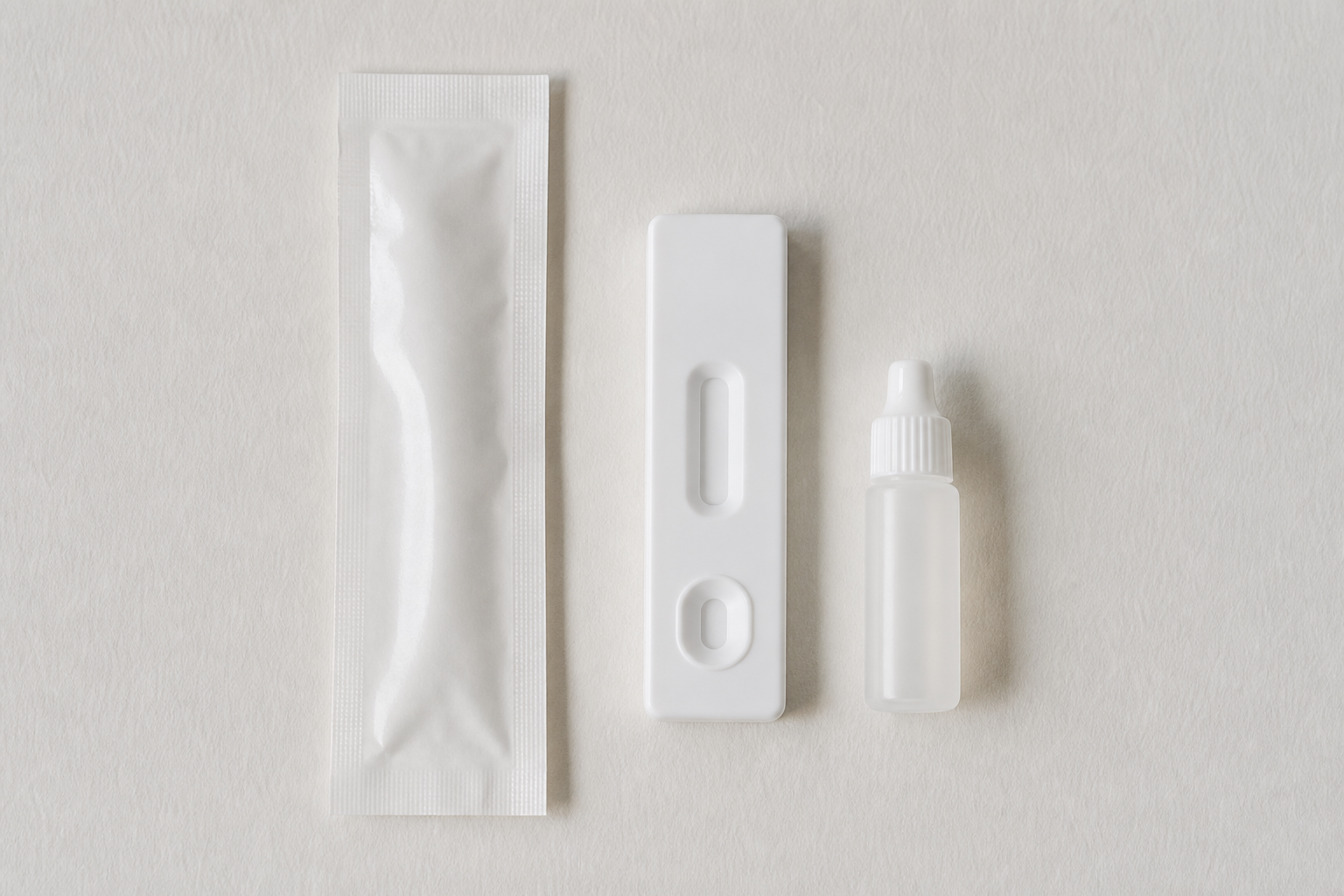
The trade-off is honest. At-home rapid tests use lateral-flow chemistry, similar to the strip tests used for pregnancy or COVID-19 home testing. A self-collected vaginal or penile swab transfers sample to the cassette; a control line plus a test line indicate a result in about 15 minutes. They are generally less sensitive than the laboratory NAATs that clinics rely on as the gold standard, so a negative rapid result does not fully rule out infection, particularly early in the exposure window or for non-genital sites. They also cannot characterize the strain or detect antibiotic resistance. Only a laboratory culture, run by a clinic, can tell whether the bacterium is susceptible to ceftriaxone or any other drug.
For most readers, the right place for a rapid home test is as a first-line screen, followed by clinic confirmation and treatment if the test is positive. Use both pathways as a sequence, not as alternatives.
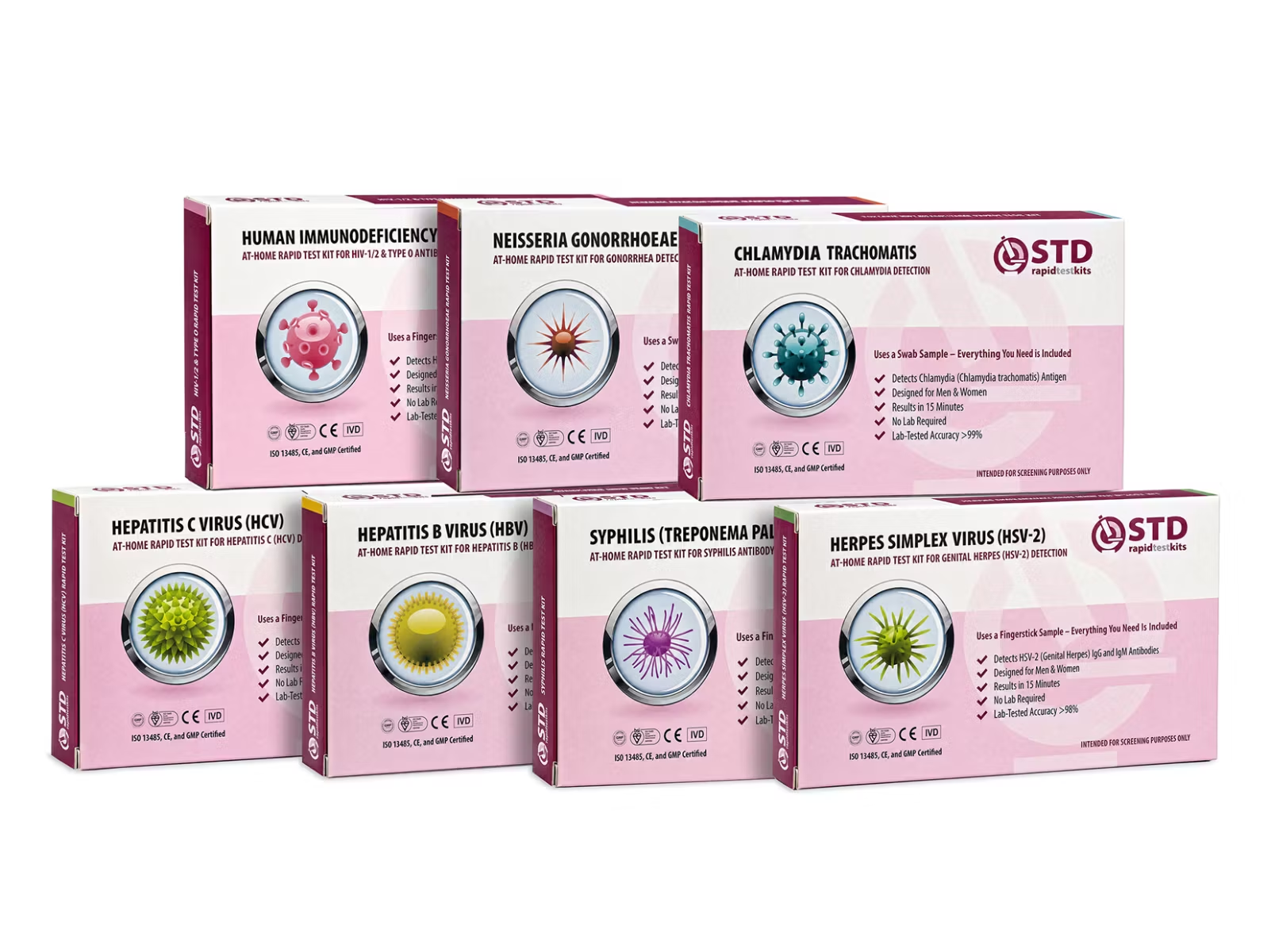
This site sells the rapid at-home STI tests linked below. We recommend products when they fit a reader's situation, not as a substitute for clinical care when symptoms, recent treatment failure, or resistance flags are on the table.
Why untreated gonorrhea matters
Untreated gonorrhea has serious downstream consequences. The CDC warns that infection in women can scar the fallopian tubes, leading to ectopic pregnancy and infertility, and that "untreated gonorrhea can also spread to your blood or joints" with potentially life-threatening results (CDC, About Gonorrhea). The Mayo Clinic's gonorrhea overview echoes the same picture, noting that untreated gonorrhea in women can spread into the uterus or fallopian tubes and cause pelvic inflammatory disease, with long-term fertility consequences.
The specific complications worth understanding:
- Pelvic inflammatory disease (PID): infection of the upper female reproductive tract. Even one episode can damage the fallopian tubes; tubal scarring is a leading preventable cause of ectopic pregnancy and infertility.
- Epididymitis and prostatitis: in men, painful inflammation of the testicles or prostate. Severe cases can affect fertility.
- Disseminated gonococcal infection (DGI): the bacterium reaches the bloodstream, joints, and skin. Symptoms include fever, joint pain, and pustular skin lesions. DGI is rare but treatable when caught early.
- Neonatal eye infection: a baby exposed during vaginal delivery can develop conjunctivitis and, without treatment, blindness.
- HIV co-acquisition risk: mucosal inflammation from gonorrhea makes HIV transmission meaningfully more efficient during exposure, in both directions. A confirmed gonorrhea diagnosis is a strong prompt to also test for HIV (and ideally syphilis) at the same visit.
The CDC recommends annual gonorrhea screening for sexually active women under 25, and at least annual screening for men who have sex with men, with more frequent intervals for higher-risk profiles. None of these complications requires symptoms to develop, which is part of why the asymptomatic share of infections is treated as a public-health problem rather than a clinical curiosity.
Pelvic inflammatory disease can scar the fallopian tubes during a single asymptomatic episode, with fertility consequences that may not surface until years later when someone tries to conceive. Disseminated gonococcal infection is rarer, but it can reach the bloodstream and joints with only mild prior symptoms. "I feel fine" is not a reason to skip routine screening if your sexual practice profile fits the CDC's screening recommendations.
Prevention that still works in 2026
Resistance has not changed the prevention basics. It has changed how strict you have to be with the follow-through.
Condoms still meaningfully lower the risk of urethral, vaginal, and anal transmission. They do less for pharyngeal exposure, because oral sex involves areas not covered by a condom and because pharyngeal infection is easier to acquire and harder to detect than genital infection. Dental dams cover the same gap for cunnilingus and rimming, although in practice they are used less often than condoms.
What works in combination:
- Barrier methods on every new partner, and during the early phase of a new relationship before you have shared test results.
- Routine screening every three to six months if you have multiple or new partners, with site-specific swabs if you have had oral or anal sex. The CDC describes this 3-to-6-month cadence for people in higher-frequency partnering; the NHS recommends testing annually or when you have a new partner.
- Treating partners from the same exposure window, even if their tests come back negative or they are asymptomatic. Untreated partners are the most common reason an infection appears to come back.
- Cleaning shared toys between partners and between body sites, ideally with a condom changed when the toy moves between people.
- Test-of-cure for pharyngeal infections, and any case where there is reason to suspect resistance.
Doxycycline post-exposure prophylaxis (doxy-PEP) has emerged as another tool in some populations. The CDC issued draft guidance in 2023 supporting doxy-PEP after condomless sex for men who have sex with men and transgender women with a history of bacterial STIs. Whether it is right for an individual is a conversation with a clinician, not a self-prescription.
Doxy-PEP's effect on gonorrhea is more modest than on chlamydia or syphilis. Tetracycline resistance in gonococcal strains is already widespread, so the regimen reduces but does not reliably prevent gonococcal infection. Discuss with a provider before treating it as a reliable preventive against gonorrhea specifically.
When to test, and when to retest
The most useful testing schedule is the one that runs in the background of an active sexual life, not the one that only fires when something feels wrong. Practical anchors:
- Roughly one to two weeks after a new exposure: gonorrhea has a short detection window, but testing in the first few days can produce false negatives because the bacterial load is still low. If your initial test is negative but you have ongoing concerns or symptoms, retest at the two-week mark and again at four weeks.
- After completing treatment: for pharyngeal infections, the CDC recommends a NAAT seven to fourteen days post-treatment as a test of cure. For uncomplicated genital infections, some clinicians wait three to four weeks because residual non-viable bacterial DNA can produce false positives at the shorter window. Ask your provider which timing applies to your case.
- Every three to six months if you have new or multiple partners, regardless of symptoms. The cadence rises with the number of partners, not the level of worry.
- After a partner discloses a positive, even if you used protection and feel fine. Asymptomatic transmission is the rule, not the exception.
- Before starting something exclusive, so the conversation is grounded in shared, recent results rather than assumption.
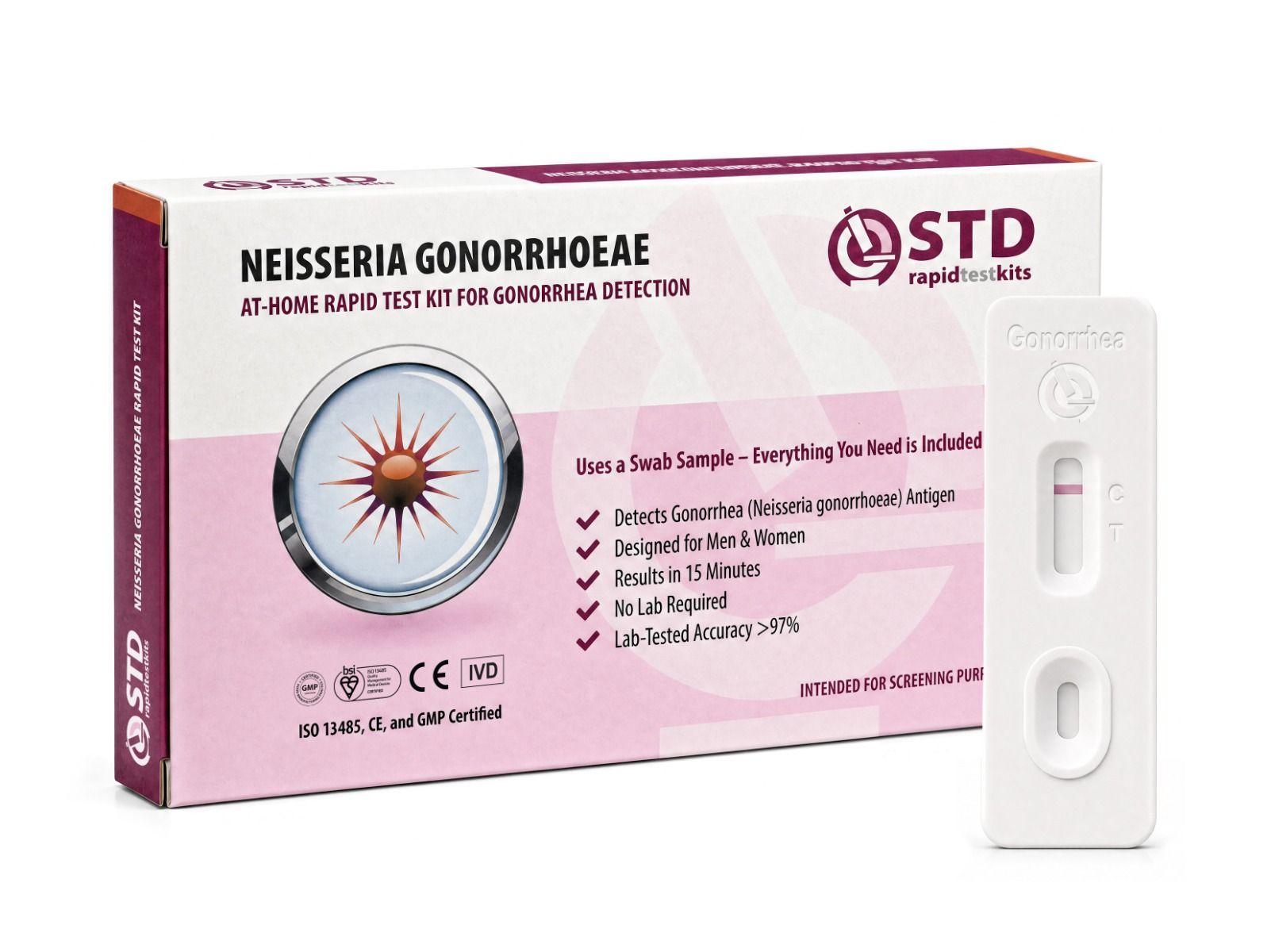
At-home rapid tests fit between clinic visits, not in place of them. They are useful when you want a quick read in privacy, when you are between insurance coverage, when symptoms are mild and you want to triage your own next step, or when a partner has tested positive and you want a faster answer than a clinic appointment can give you this week. For broader baseline screening covering chlamydia and gonorrhea in one sample, the at-home combination kits mirror the pairing CDC clinic protocols use, since the two infections frequently co-occur.
Retest checkpoints worth setting reminders for
- Roughly one to two weeks after a new exposure, with a follow-up test at four weeks if the first is negative and concerns persist.
- Seven to fourteen days after pharyngeal treatment (per CDC test-of-cure guidance); three to four weeks after genital treatment to confirm clearance.
- Every three to six months while you have new or multiple partners.
- Within two weeks of learning a partner has tested positive.
What to ask your healthcare provider
Not every clinic is set up to surface resistance the way the surveillance literature suggests it should be. Most urgent-care and primary-care visits rely on NAATs, which confirm whether gonococcal DNA is present but do not assess susceptibility to antibiotics. Culture testing, which can, is more expensive, slower, and less commonly offered for routine cases.
You do not need to memorize the science to advocate for a thorough workup. A handful of specific questions, asked up front, redirect a routine visit into the kind of workup the CDC's own guidance describes for cases where resistance is on the table.
Clinicians work within constraints of time, lab access, and reimbursement. Bringing these questions to the appointment takes under a minute and makes a real difference to the depth of the workup you receive.
Specific asks for your next clinic visit
- Can we include pharyngeal and rectal swabs, not just genital ones, if I have had oral or anal sex?
- If this comes back positive, can we send a culture for antibiotic-susceptibility testing?
- Can we schedule a test of cure on the right timeline for the site that was treated (one to two weeks for pharyngeal, three to four weeks for genital)?
- Can you treat my partners through expedited partner therapy, so they don't have to schedule a separate appointment?
The bottom line on drug-resistant gonorrhea for 2026
Drug-resistant gonorrhea is not a reason to panic. It is a reason to update what "taking sexual health seriously" looks like. The old model, which assumed treatment was a single shot and silence meant safety, leaves too much margin in 2026. The new model treats screening as routine maintenance, treats every site you have had sex with as a site that can be tested, and treats post-treatment confirmation as part of the protocol rather than an optional extra.
Most people who do this are not going to need a second round of antibiotics, a referral to an infectious-disease specialist, or anything dramatic. They are going to come back negative, repeatedly, and that negative result will be earned by the act of testing rather than assumed by the absence of symptoms.
What to do this week
Have you had a new partner in the last six months?
Yes: Schedule a screening test now, either through a clinic or with an at-home rapid kit. Pair the test with a chlamydia screen, since the two infections frequently co-occur.
Did you recently finish a course of antibiotics for gonorrhea?
Yes: Plan a test of cure on your provider's recommended timeline: typically seven to fourteen days after treatment for throat infections, and three to four weeks for genital infections.
Has a current or recent partner tested positive?
Yes: Test now even if you feel fine and used protection. Asymptomatic transmission is the rule, not the exception, and the practical exposure-to-test window for gonorrhea is one to two weeks.
No: If none of the conditions above apply, keep routine screening on a three-to-six-month cadence when you have new or multiple partners; otherwise an annual screen is reasonable.
A short routing guide. Guidance only; a clinician can advise based on your specific situation.
FAQs
- Can you have gonorrhea with no symptoms?
- Yes. The asymptomatic share is high for cervical and vaginal infections and very high for pharyngeal and rectal infections, where the majority of cases cause nothing a person would notice. Penile infection is the most likely to be symptomatic, though not always. Screening, not symptom watching, is what reliably catches infection.
- What does "super gonorrhea" actually mean?
- It is informal shorthand for strains of Neisseria gonorrhoeae that resist most or all of the antibiotic classes routinely used to treat the infection, including extended-spectrum cephalosporins, macrolides, and fluoroquinolones. Public-health agencies use the more precise labels MDR (multidrug-resistant) and XDR (extensively drug-resistant). These strains are still a minority of global cases, but they have appeared in surveillance from multiple countries and the trend is upward. Importantly, super does not mean more contagious or more aggressive; the transmission route and symptoms are the same.
- How long after exposure should I test?
- Roughly one to two weeks after exposure is the practical window for gonorrhea. Testing too early can produce a false negative because the bacterial load is still low. If your initial test is negative but you have ongoing concerns or symptoms, retest at the two-week mark and again at four weeks. The CDC's guidance reflects this window for clinic NAATs; rapid home tests follow a similar timeline.
- Why might my gonorrhea treatment not have worked?
- Three common explanations: the antibiotic regimen did not fully clear a pharyngeal or rectal infection that is harder to treat than a genital one; the strain had reduced susceptibility to the antibiotic used; or an untreated partner re-exposed you. If symptoms persist or a test of cure is positive after standard ceftriaxone treatment, clinicians can escalate to culture-based testing to identify the resistance profile, then select alternative antibiotics such as gentamicin or higher-dose combination regimens. Public-health labs often get involved with suspected XDR cases.
- When should I retest for gonorrhea after treatment?
- Pharyngeal infections: the CDC recommends a NAAT test of cure 7 to 14 days post-treatment. Genital infections: most clinicians wait 3 to 4 weeks, since residual bacterial DNA can cause false positives at the shorter interval. When in doubt, ask your provider which timeline applies to the site that was treated.
- Can a home test tell me if I have a drug-resistant strain?
- No. A positive home result confirms that gonococcal antigen is present in your sample; it cannot tell you whether the strain is susceptible to ceftriaxone or any other antibiotic. Resistance characterization requires a clinic culture and laboratory analysis. Treat a positive home result as a reason to go to a clinic, not as a reason to look for antibiotics elsewhere.
- Are there places in the world where the resistance risk is higher?
- Documented XDR cases have clustered in parts of East and Southeast Asia, with onward transmission to Europe, Australia, and occasionally the U.S. in recent years. The WHO's Enhanced Gonococcal Antimicrobial Surveillance Program (EGASP) tracks this in selected sites globally. Susceptible strains are still the majority everywhere; resistance rates are not so high in any one country that travel alone changes the testing recommendation, but it does reinforce why a test of cure is worth requesting after treatment for an infection acquired during travel.
- Is there a vaccine for gonorrhea?
- Not as of 2026, though research is active. Studies have noted modest cross-protection from existing meningococcal B vaccines (because Neisseria meningitidis is closely related to Neisseria gonorrhoeae), and several gonorrhea-specific vaccine candidates are in clinical trials. None has been approved for routine use yet. The most reliable prevention tools remain barrier protection, partner communication, and routine testing.
- Should I take antibiotics "just in case" if I think I was exposed?
- No. Empirical antibiotic use without a positive test is one of the drivers of resistance. The right sequence is: test first (home or clinic), confirm at a clinic if positive, and take the prescribed dose under clinical guidance. Doxy-PEP is being studied for some STI prevention scenarios in specific populations, but it should be discussed with a clinician rather than self-administered.
- U.S. Centers for Disease Control and Prevention. STI Treatment Guidelines, gonococcal infections among adults and adolescents. Source for the current ceftriaxone 500 mg single-dose first-line regimen, the 1 g dosing for adults at or above 150 kg, the doxycycline co-treatment guidance, and the rationale for dropping routine azithromycin co-treatment in the 2021 update.
- U.S. Centers for Disease Control and Prevention. Drug-resistant gonorrhea program, including resistance categories tracked by national surveillance and clinical follow-up guidance for suspected treatment failure.
- U.S. Centers for Disease Control and Prevention. About Gonorrhea: public overview of transmission, symptoms, complications, and resistance.
- U.S. Centers for Disease Control and Prevention. STI Surveillance Annual Report (2024 provisional data). Source for the 601,319 U.S. gonorrhea cases in 2023 and 543,409 cases in 2024.
- World Health Organization. Gonorrhoea (Neisseria gonorrhoeae infection) fact sheet. Source for the 82.4 million global new infections estimate in adults aged 15 to 49 in 2020 and the antimicrobial-resistance characterization quoted in the article.
- World Health Organization. Multi-drug-resistant gonorrhoea fact sheet on global resistance trends, EGASP surveillance, and public-health impact.
- World Health Organization. Antimicrobial Resistance fact sheet. Source for the 1.27 million direct AMR-attributable deaths globally in 2019 and the 4.95 million total-contribution figure across bacterial infections.
- UK National Health Service. Gonorrhoea overview: symptoms, single-dose antibiotic treatment, and test-of-cure follow-up about a week after starting treatment.
- Mayo Clinic. Gonorrhea overview: symptoms, causes, and complications including pelvic inflammatory disease and long-term fertility consequences of untreated infection.
