
Published: November 2025 | Last updated: May 2026 | Editorial review and quality control: Martina N.
Gonorrhea is curable. A single injection at a clinic visit clears most uncomplicated cases. But the antibiotic that gets injected, and the medications layered alongside it, look meaningfully different in 2026 than they did even five years ago. The CDC retired dual therapy in 2020 and removed azithromycin from the standard regimen. The list of also-prescribed drugs from older guidance, including ampicillin, amoxicillin, and oral cefixime as a first choice, is no longer current. What replaced those is simpler and more focused, but understanding the shift matters because resistance keeps moving.
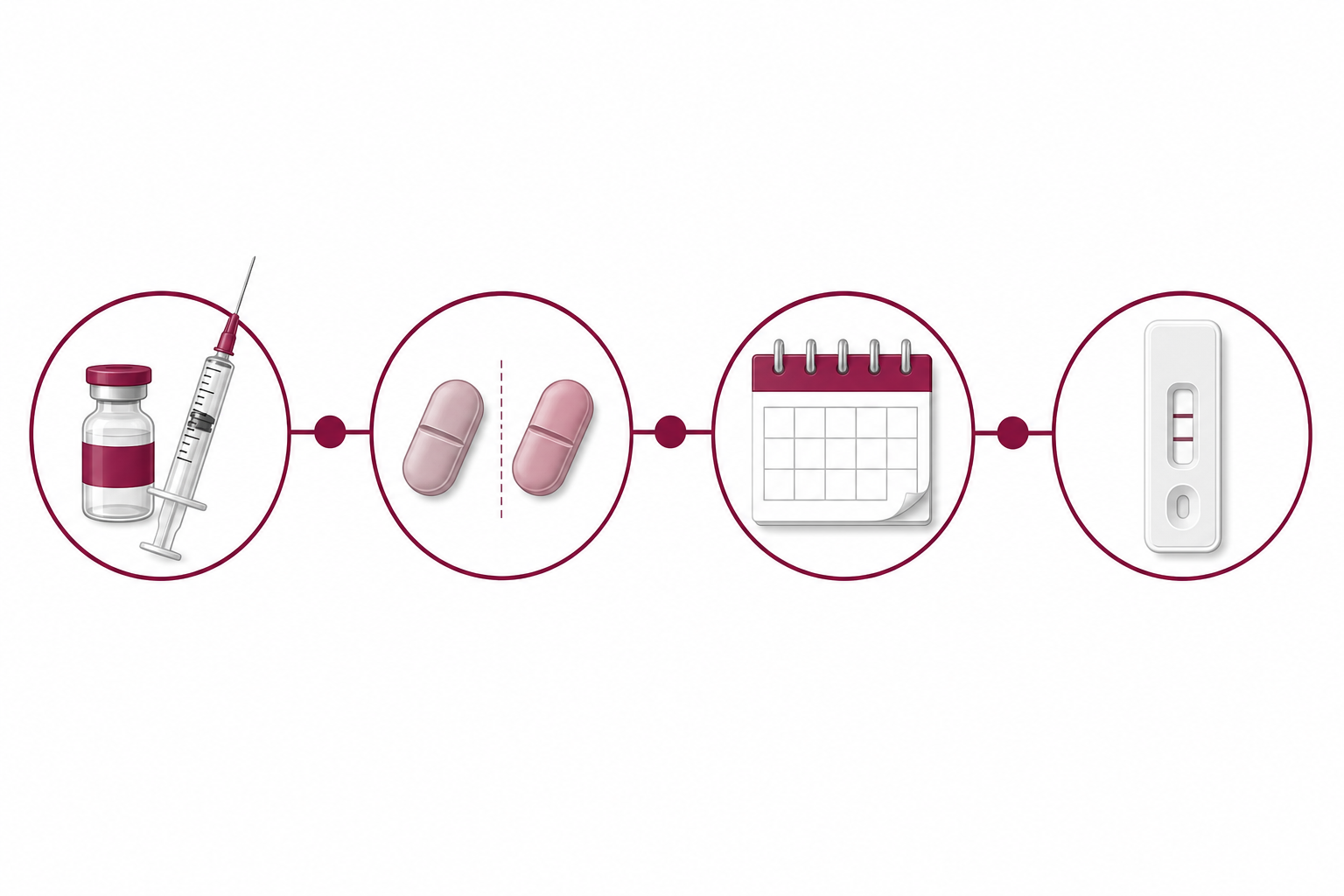
If you have gonorrhea, you almost certainly need exactly one thing: a 500-milligram intramuscular injection of ceftriaxone, given once by a clinician. If your clinic visit didn't also rule out chlamydia, you'll likely add a week of oral doxycycline. That's the entire standard regimen for uncomplicated infection in 2026 per the CDC 2021 STI Treatment Guidelines. Everything else is exception territory: allergies, resistant strains, special populations, disseminated infection.
A note about what this article is and isn't. stdrapidtestkits.com sells at-home swab tests, and does not sell antibiotics. We can't prescribe and don't try to. What follows is a plain-English summary of current CDC and WHO guidance on what your clinician will most likely do, why, and what to expect. We recommend products based on fit-for-purpose for the reader's concern, not commercial benefit. For your actual prescription, see a licensed provider.
Key Takeaways
- The current CDC-recommended treatment for uncomplicated gonorrhea is a single intramuscular ceftriaxone 500 mg injection (1 g if you weigh 150 kg or more). Doxycycline 100 mg orally twice daily for 7 days is added when chlamydia hasn't been ruled out.
- Azithromycin, ampicillin, oral cefixime as a first choice, and other older regimens are no longer standard. The shift is driven by rising antimicrobial resistance, and follow-up testing matters more now than it used to.
What's prescribed now: ceftriaxone single shot
The 2021 CDC STI Treatment Guidelines, which remain current in 2026 with minor 2024 clarifications, recommend a single intramuscular dose of ceftriaxone 500 mg for uncomplicated gonorrhea in adults and adolescents weighing under 150 kg. For people at or above 150 kg (about 330 lb), the dose increases to 1 g. The injection goes into a large muscle, usually the gluteal area or the vastus lateralis on the thigh, takes a few seconds to administer, and is typically done at the same clinic visit that diagnosed the infection.
Ceftriaxone is a third-generation cephalosporin. It works by binding to penicillin-binding proteins on the surface of Neisseria gonorrhoeae and disrupting the cross-linking that holds the bacterial cell wall together. The wall fails, and the bacterium dies. A single injection produces serum concentrations well above the minimum needed to clear susceptible gonococcal strains, and the long half-life means a follow-up dose isn't required for most uncomplicated cases.
Why use an injection rather than a pill? There are two reasons. First, oral cephalosporins like cefixime achieve lower tissue concentrations, especially at pharyngeal sites, and the margin against resistant strains is thinner. Second, an injection in front of a clinician guarantees the dose was taken, which matters when partial-dose treatment can select for resistant survivors. Directly observed therapy is part of why ceftriaxone moved to first-line and stayed there.
The 500 mg dose itself was a 2021 upgrade from the previous 250 mg recommendation. The reason was a small but rising number of strains with reduced ceftriaxone susceptibility, particularly in pharyngeal infections. Doubling the dose gives a wider therapeutic window before resistance starts mattering clinically.
For people with a documented severe cephalosporin allergy, the alternative regimen is gentamicin 240 mg IM plus azithromycin 2 g orally, taken as a single combined dose. This is less effective for pharyngeal infection and requires a test of cure 7 to 14 days later regardless of anatomic site. Most cephalosporin-allergic patients do not actually have IgE-mediated allergy; if the history is unclear, allergy testing or a graded ceftriaxone challenge may be appropriate before defaulting to the alternative regimen.
Ceftriaxone 500 mg as a single intramuscular dose is recommended treatment for uncomplicated gonococcal infections of the cervix, urethra, rectum, and pharynx in adults and adolescents who weigh less than 150 kg.
Why azithromycin and dual therapy were dropped
Until 2020, the U.S. recommendation was dual therapy: ceftriaxone 250 mg IM plus azithromycin 1 g orally, given at the same visit. The thinking was that two antibiotics with different mechanisms would slow resistance development, and azithromycin would catch any chlamydia that hadn't been tested for. Both rationales fell apart over the next few years.
On the resistance side, CDC documents that drug-resistant strains of gonorrhea are increasing, with regional pockets of higher resistance in several U.S. metropolitan areas. At a population level, that meant dual therapy was effectively monotherapy with ceftriaxone for an increasing share of infections, and the second drug was selecting for further resistance without adding meaningful coverage.
On the co-treatment side, doxycycline turned out to be a better partner drug than azithromycin for chlamydia. CDC data show doxycycline has a higher cure rate than azithromycin for both genital and rectal chlamydial infections, which is the reason the 2021 update reassigned doxycycline to the co-treatment role.
So the 2021 update did two things at once. It bumped the ceftriaxone dose from 250 mg to 500 mg, replacing the lost coverage that the second drug used to provide. And it moved doxycycline 100 mg twice daily for 7 days into the regimen as the co-treatment for unconfirmed chlamydia, replacing azithromycin in that role. Azithromycin no longer appears in the recommended adult regimen at all, except as part of the cephalosporin-allergy alternative described above.
The takeaway: if you're reading older treatment guides or articles that mention azithromycin for gonorrhea, they're describing a regimen that the CDC walked back. The same applies to mentions of ampicillin, amoxicillin, or ciprofloxacin as standard gonorrhea treatment. Those entries are leftover from older guidance and no longer reflect what U.S. clinicians prescribe today.
Resistance erosion: rising azithromycin resistance meant the second drug was no longer reliably covering gonorrhea, so dual therapy was effectively monotherapy with ceftriaxone for a growing share of infections.
Better chlamydia coverage: CDC data show doxycycline outperforms azithromycin for genital and rectal chlamydial infections, so doxycycline took over the co-treatment role when chlamydia status is unknown.
Alternatives when ceftriaxone isn't an option
Ceftriaxone is first-line, full stop. The alternatives below exist for narrow situations: documented severe cephalosporin allergy, true ceftriaxone unavailability, or specific clinical contexts. They are workarounds rather than preferences.
Cefixime 800 mg orally as a single dose is the next option down. It's a third-generation cephalosporin in the same family as ceftriaxone, with the advantage of being a pill rather than an injection. Its weakness is that it's noticeably less effective against pharyngeal gonorrhea, where serum and tissue concentrations matter most. Current CDC guidance treats it as a fallback when ceftriaxone is genuinely unavailable. A test of cure 7 to 14 days after treatment is recommended for all cefixime-treated infections, not just pharyngeal ones.
Gentamicin 240 mg IM plus azithromycin 2 g orally, both given at the same visit as a single combined dose, is the cephalosporin-allergy alternative. The injection goes into a large muscle, and the oral dose follows immediately. This regimen has roughly 100% cure for urogenital infection but a substantially lower cure rate for pharyngeal disease (around 80%), which is why a test of cure is mandatory at 7 to 14 days for any patient on this regimen.
Older agents like ampicillin, amoxicillin, ciprofloxacin, and other fluoroquinolones used to appear in gonorrhea treatment lists. All have been removed from current CDC and WHO recommendations because of widespread resistance. If you find a regimen recommendation from before 2013 that includes a fluoroquinolone, treat it as historical. If you find one from before 2020 that includes azithromycin as the primary agent, same.
For complicated infections like pelvic inflammatory disease, epididymo-orchitis, disseminated gonococcal infection, or gonococcal meningitis or endocarditis, the regimens are different again: higher doses of IV ceftriaxone, longer durations, and often hospital management. Those regimens are managed by clinicians and fall outside the scope of this guide.
First-line (uncomplicated infection): Ceftriaxone 500 mg IM as a single dose, increased to 1 g if body weight is 150 kg (about 330 lb) or more.
Co-treatment for unconfirmed chlamydia: Doxycycline 100 mg orally twice daily for 7 days, started the same day as the injection.
Cephalosporin-allergy alternative: Gentamicin 240 mg IM plus azithromycin 2 g orally as a single combined dose, with test of cure 7 to 14 days later.
Adding doxycycline for co-treatment of chlamydia
Most people diagnosed with gonorrhea were tested for chlamydia at the same visit, because the two infections frequently co-occur and the swab or urine sample used for one can usually be tested for the other. If your chlamydia result came back negative, ceftriaxone alone is sufficient and you do not need doxycycline.
If your chlamydia result is pending, positive, or wasn't tested at all, the current CDC regimen adds doxycycline 100 mg orally twice a day for 7 days starting the same day as the ceftriaxone injection. The two drugs together cover gonorrhea (ceftriaxone) and chlamydia (doxycycline) without any pharmacologic interaction.
Practical notes on doxycycline. Take each dose with a full glass of water and remain upright for at least 30 minutes afterward; lying down right after a dose can cause pill-induced esophagitis, which presents as painful swallowing. Avoid taking doxycycline within two hours of dairy products, antacids, iron supplements, or calcium-containing foods, because these bind the drug and reduce absorption.
Doxycycline also increases skin sensitivity to ultraviolet light. During the 7-day course, brief sun exposure can cause a faster-than-usual burn. Cover up, use broad-spectrum sunscreen, and consider taking the second daily dose in the evening if you're outdoors a lot.
Doxycycline is contraindicated in pregnancy and in children under 8 because of effects on developing teeth and bone. In pregnant patients with co-infected or unconfirmed chlamydia, azithromycin 1 g as a single oral dose is substituted for the 7-day doxycycline course. This is the only current adult use of azithromycin in the standard gonorrhea-and-chlamydia treatment regimen.
Completing all 14 doxycycline doses matters. Stopping early because symptoms cleared is the most common way co-treatment fails.
What's the standard medication for gonorrhea in 2026?
A single intramuscular ceftriaxone 500 mg injection (1 g if you weigh 150 kg or more), given once by a clinician. Add doxycycline 100 mg orally twice daily for 7 days if chlamydia hasn't been ruled out. Azithromycin, oral cefixime as a first choice, ampicillin, and amoxicillin are no longer standard treatment for gonorrhea per current CDC guidelines.
Treatment in special populations
The ceftriaxone-based regimen above is the adult and adolescent standard. Specific populations need adjustments, summarized in the table below and discussed briefly afterward.
The neonatal entries cover two distinct scenarios that get confused. Routine erythromycin 0.5% ophthalmic ointment is given to every U.S. newborn within the first hour or two after birth as prophylaxis against gonococcal ophthalmia neonatorum, regardless of maternal infection status. That is the routine appearance of erythromycin in modern gonorrhea-related care per the CDC STI Treatment Guidelines. A newborn who actually has gonococcal conjunctivitis or systemic gonococcal infection is a separate scenario, treated with ceftriaxone in a hospital setting plus eye irrigation.
Any gonococcal infection identified in a prepubertal child triggers a child-protection evaluation alongside the medical treatment, because the infection in this age group is presumptive evidence of sexual abuse and is reportable.
For people living with HIV, the standard regimen does not change. Drug interactions between gonorrhea antibiotics and most antiretrovirals are minimal, and ceftriaxone 500 mg IM remains first-line.
| Population | Regimen adjustment |
|---|---|
| Pregnancy | Ceftriaxone 500 mg IM remains first-line and is safe. Doxycycline is contraindicated; if chlamydia co-treatment is needed, substitute azithromycin 1 g orally as a single dose. |
| Newborn prophylaxis (all births) | Erythromycin 0.5% ophthalmic ointment in both eyes within the first hour or two of life, regardless of maternal infection status. Prevents gonococcal ophthalmia neonatorum. |
| Newborn with active gonococcal infection | Ceftriaxone 25 to 50 mg/kg IV or IM as a single dose (max 250 mg) plus eye irrigation if ocular. Hospital-level decision. |
| Children under 45 kg with gonococcal infection | Ceftriaxone 25 to 50 mg/kg IM or IV, maximum 250 mg. Any infection in a prepubertal child requires a child-protection evaluation. |
| Children at or above 45 kg | Adult dosing applies: ceftriaxone 500 mg IM. |
| People living with HIV | Standard regimen unchanged: ceftriaxone 500 mg IM. Antiretroviral interactions are minimal. |
What to expect during and after treatment
The injection itself takes seconds. Some soreness at the injection site is normal and resolves within a day or two. Symptoms of the infection, which usually means urethral or vaginal discharge, painful urination, or rectal discomfort, typically improve within a day or two and resolve within about a week with effective treatment. If symptoms persist past 7 days or worsen, return to the clinic; that can signal treatment failure, reinfection, or a co-infection that wasn't treated.
Avoid sexual contact, including oral and anal, for 7 full days after the ceftriaxone injection AND until you and any current partner have completed treatment and are symptom-free. The 7-day window is not arbitrary: it's the time needed for the antibiotic to fully clear the infection from all anatomic sites, including the pharynx, which clears more slowly than the genital tract.
Tell your sexual partners from the past 60 days. They need treatment regardless of whether they have symptoms, because asymptomatic gonorrhea is common and untreated partners reinfect each other in a loop. Many U.S. states allow expedited partner therapy (EPT), where a clinician prescribes treatment for your partner without requiring them to be seen first. Ask whether your provider offers it.
Pharmacy or clinic costs. Ceftriaxone is on the WHO Essential Medicines list and is widely covered by Medicaid, Medicare, and most commercial insurance. Out-of-pocket cost at a sexual health clinic is typically free or sliding-scale; a doxycycline 14-pill prescription at a U.S. retail pharmacy is often under $20 with discount-card pricing, and sometimes free at certain large retailers.
Do not use someone else's leftover antibiotics. Leftover antibiotics from another person mean the wrong dose, the wrong duration, and likely the wrong drug class. Sharing or reusing antibiotics is the single most reliable way to fail treatment and contribute to resistance.
That includes oral and anal contact, even with the same partner you were exposed by. The antibiotic needs the full week to clear pharyngeal and rectal sites, not just the urogenital tract. Wait the 7 days, confirm any current partner has finished their own treatment and is symptom-free, then resume.
Confirming cure with follow-up testing
Two distinct concepts get confused here: test of cure and re-screening.
Test of cure (TOC) means a follow-up test to confirm the specific infection you just treated is gone. CDC currently recommends TOC in three situations:
- Pharyngeal gonorrhea: TOC 7 to 14 days after treatment, using nucleic acid amplification testing (NAAT) at the pharyngeal site. Pharyngeal infection is harder to clear than urogenital, and follow-up testing catches treatment failures earlier.
- Any patient treated with an alternative regimen (cefixime 800 mg PO, or gentamicin plus azithromycin): TOC 7 to 14 days after treatment, regardless of anatomic site.
- Persistent symptoms after treatment: TOC at any time symptoms persist or recur.
For uncomplicated urogenital or rectal gonorrhea treated with ceftriaxone 500 mg IM, routine TOC is not required. The cure rate exceeds 99% for ceftriaxone-treated susceptible infection.
Re-screening means a screening test 3 months after treatment to catch reinfection from an untreated partner or new exposure. CDC guidelines recommend re-screening for everyone treated for gonorrhea, because reinfection within 3 months is common enough that routine follow-up testing is cost-effective at a population level.
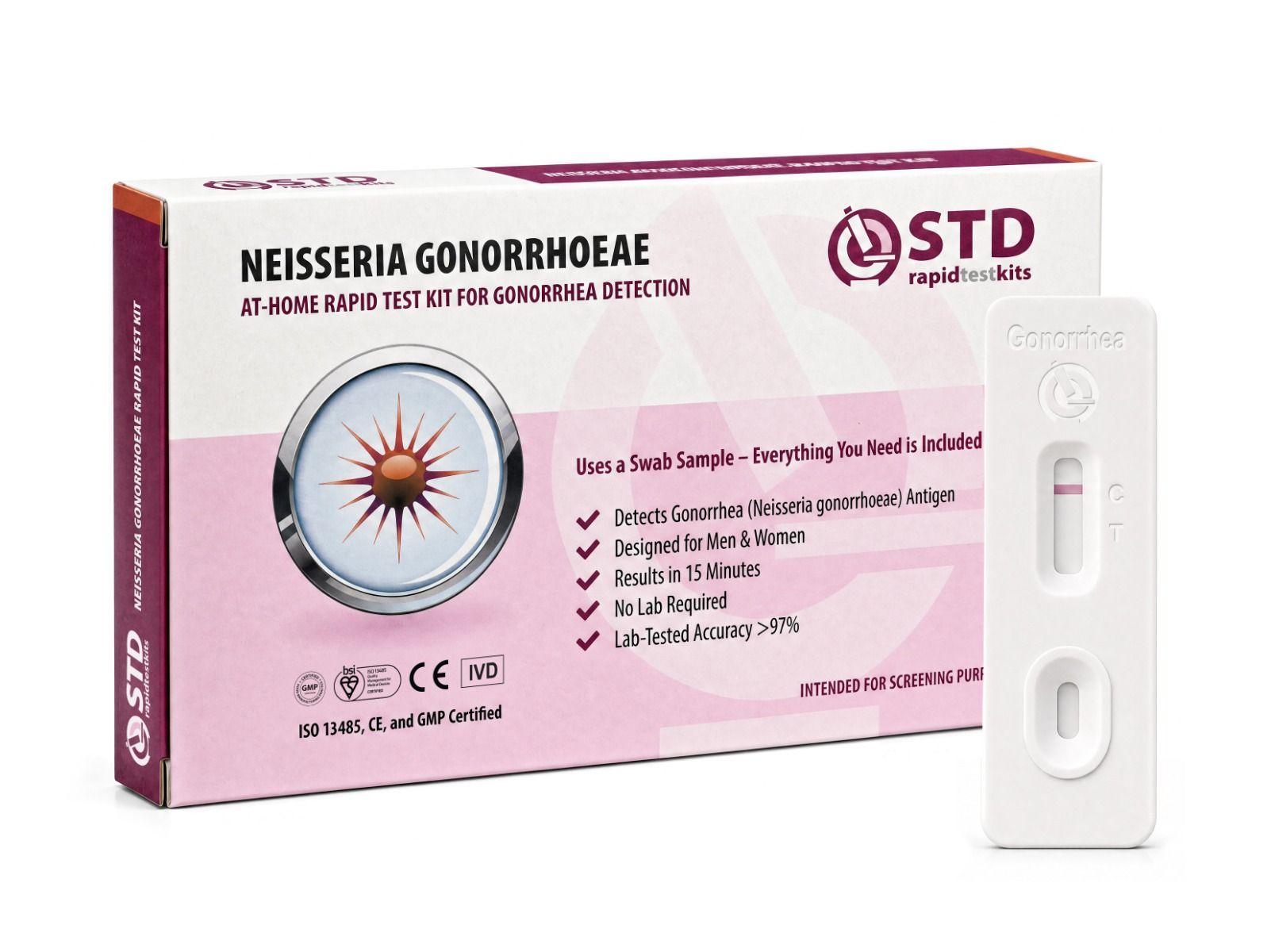
Note the timing distinction. A NAAT test done within 2 weeks of treatment can still show positive even though the infection is cured, because the test detects bacterial DNA fragments that persist briefly after the bacteria themselves have died. This is why TOC at 7 to 14 days uses NAAT cautiously, and routine re-screening is pushed out to 3 months. Our at-home rapid gonorrhea test uses lateral-flow chemistry rather than NAAT, so the same DNA-persistence concern doesn't apply in the same way.
What happens if gonorrhea is left untreated
Untreated gonorrhea doesn't usually stay quiet. Whether or not you have noticeable symptoms, the bacteria continue replicating and spreading from the initial site (urethra, cervix, rectum, pharynx) into deeper tissue. The complications differ by anatomic sex and infection site.
In people with a uterus, the most common complication is pelvic inflammatory disease (PID), where the infection ascends from the cervix into the uterus, fallopian tubes, and ovaries. PID can be acute (severe pelvic pain, fever, abnormal discharge) or low-grade and silent. Both forms scar the fallopian tubes. The CDC notes that untreated gonorrhea can progress to pelvic inflammatory disease, a leading preventable cause of infertility in the U.S. Tubal scarring from PID also raises the risk of ectopic pregnancy substantially.
In people with testes, untreated gonorrhea can spread to the epididymis (the coiled tube behind each testis where sperm matures), causing epididymitis. Symptoms are testicular pain and swelling, usually one-sided. Untreated epididymitis can cause permanent damage to sperm transport and contribute to subfertility.
Rectal infection can progress to proctitis (inflammation of the rectal lining), with rectal pain, mucus or pus discharge, and bleeding. Pharyngeal infection is typically asymptomatic but acts as a reservoir for transmission.
Disseminated gonococcal infection (DGI) is the systemic complication. It occurs when N. gonorrhoeae enters the bloodstream and seeds joints, skin, tendons, and rarely the heart or brain. Classical presentation is the triad of polyarthralgia (joint pain), tenosynovitis (tendon-sheath inflammation), and dermatitis (sparse painless skin lesions). DGI requires hospital admission and IV ceftriaxone for at least 7 days. Mortality is low with treatment but rises sharply without it.
In pregnancy, untreated infection raises preterm-delivery and low-birth-weight risk and can cause gonococcal conjunctivitis in the newborn at delivery, which is the reason for routine erythromycin eye prophylaxis described earlier. A single clinic visit and one injection prevents all of these outcomes.
Pelvic inflammatory disease (PID): tubal scarring, infertility risk, raised ectopic pregnancy risk.
Epididymitis: testicular pain and swelling, possible permanent damage to sperm transport.
Disseminated gonococcal infection (DGI): joint pain, tenosynovitis, skin lesions, requiring hospital admission.
Pregnancy: preterm delivery, low birth weight, and gonococcal conjunctivitis in the newborn at delivery.
Antimicrobial resistance and the future of gonorrhea treatment
Gonorrhea has cycled through nearly every antibiotic class made available to it. The infection used sulfonamides in the 1930s, penicillins from the 1940s, tetracyclines from the 1950s, fluoroquinolones starting in the 1980s, and cephalosporins from the 1990s onward. Each class worked for a time, then stopped working, as resistant strains emerged and spread.
In 2026, ceftriaxone is the last broadly effective injectable antibiotic for gonorrhea. Strains with extensively-drug-resistant (XDR) profiles, including reduced ceftriaxone susceptibility, have been documented in Japan, the U.K., Australia, France, and the U.S. Numbers are still small, but the trajectory is concerning enough that the WHO describes antimicrobial resistance to gonorrhoea as a serious and growing problem, noting that without new antibiotic development the infection risks becoming untreatable. CDC has separately labeled drug-resistant N. gonorrhoeae an urgent threat in its antibiotic resistance reporting.
Two recent additions are working their way through approval. Zoliflodacin, a first-in-class spiropyrimidinetrione antibiotic, completed a Phase 3 non-inferiority trial against ceftriaxone-plus-azithromycin in 2023 and is under regulatory review for single-dose oral treatment of uncomplicated gonorrhea. Gepotidacin, a triazaacenaphthylene already approved by the FDA in March 2024 for uncomplicated urinary tract infections in adult women, has positive Phase 3 data for gonorrhea and may receive approval expansion within 1 to 2 years.
Neither is a silver bullet. Both are oral, which means dose adherence becomes an issue again. Both are likely to be reserved for resistant or allergic cases initially, with ceftriaxone remaining first-line until resistance forces a broader shift. Until one of these candidates reaches primary-line approval, taking the full prescribed regimen and re-testing at three months remains the most reliable thing patients can do.
Zoliflodacin: first-in-class oral spiropyrimidinetrione. Phase 3 non-inferiority trial complete against ceftriaxone-plus-azithromycin; under regulatory review for single-dose oral treatment of uncomplicated gonorrhea.
Gepotidacin: triazaacenaphthylene already FDA-approved in March 2024 for uncomplicated UTIs in adult women; positive Phase 3 data for gonorrhea suggests an approval expansion is possible within the next 1 to 2 years.
FAQs
- How is gonorrhea treated in 2026?
- The current CDC-recommended treatment for uncomplicated gonorrhea is a single intramuscular injection of ceftriaxone 500 mg, given by a clinician at one visit. If chlamydia has not been ruled out at that visit, doxycycline 100 mg orally twice daily for 7 days is added. For people weighing 150 kg (about 330 lb) or more, the ceftriaxone dose increases to 1 g. Treatment requires a prescription; antibiotics for gonorrhea cannot be purchased over the counter in the U.S.
- Why isn't azithromycin used for gonorrhea anymore?
- Azithromycin was part of dual therapy with ceftriaxone until 2020, but rising azithromycin resistance in gonorrhea strains made the second drug unreliable for many infections. The 2021 CDC guidelines dropped azithromycin from the standard regimen, raised the ceftriaxone dose from 250 mg to 500 mg, and moved doxycycline into the co-treatment role for unconfirmed chlamydia. Azithromycin is still used in narrow cases: as the cephalosporin-allergy alternative (with gentamicin) and as the substitute for doxycycline in pregnancy.
- How long until antibiotics clear gonorrhea symptoms?
- Symptoms typically begin to improve within a day or two of the ceftriaxone injection and usually resolve within about a week with effective treatment. Discharge usually stops first, painful urination next, and any residual pelvic or testicular discomfort last. If symptoms persist past 7 days or worsen, go back to the clinic; that can signal treatment failure, reinfection, or a co-infection that wasn't treated.
- When can I have sex again after gonorrhea treatment?
- Wait at least 7 days after the ceftriaxone injection AND until any current partner has completed treatment and is symptom-free. The 7-day window is the time needed for the antibiotic to fully clear all anatomic sites, including the pharynx. Sex during this window, including oral and anal, risks re-transmitting infection that hasn't yet cleared, especially if your partner is also being treated.
- Do I need to be retested after gonorrhea treatment?
- Two separate follow-ups apply. A test of cure 7 to 14 days after treatment is recommended for pharyngeal gonorrhea, for anyone treated with an alternative regimen instead of ceftriaxone, and for anyone with persistent symptoms. Routine re-screening at 3 months is recommended for everyone treated for gonorrhea, because reinfection from an untreated partner or new exposure is common enough that follow-up testing is worth doing.
- Can my partner take my leftover antibiotics?
- No. The ceftriaxone injection is administered in front of a clinician and has no leftover dose to share. The doxycycline tablets, if you have them, are dosed for chlamydia co-treatment based on your weight and infection profile, and they are not a complete gonorrhea regimen on their own. Your partner needs their own clinician visit. Many U.S. states allow expedited partner therapy, where your clinician can prescribe for your partner without seeing them first. Ask.
- Can I treat gonorrhea at home with over-the-counter medications?
- No. No over-the-counter medication treats gonorrhea. The bacterium is resistant to nearly every antibiotic class except current cephalosporins, and ceftriaxone is injection-only. Online or alternative remedies (garlic, apple cider vinegar, colloidal silver, and similar) do not clear gonorrhea and delay effective treatment while complications develop. The home component of care is testing (rapid at-home swab tests can confirm infection) and follow-through (taking the full doxycycline course, abstaining for 7 days, and getting re-tested at 3 months).
- What if I'm allergic to ceftriaxone?
- True severe cephalosporin allergy is uncommon, and many people who think they have one have a different non-allergic reaction (penicillin allergy mislabeled, intolerance, viral rash mistaken for drug reaction). If allergy is confirmed, the alternative regimen is gentamicin 240 mg IM plus azithromycin 2 g orally, taken together as a single combined dose. This regimen requires a test of cure 7 to 14 days later regardless of anatomic site, because it has a lower cure rate than ceftriaxone, especially for pharyngeal infection.
- U.S. Centers for Disease Control and Prevention. Gonococcal Infections Among Adolescents and Adults: section of the CDC 2021 STI Treatment Guidelines, current in 2026. Source for the ceftriaxone 500 mg single-dose regimen, the 1 g dose at 150 kg or above, the doxycycline co-treatment recommendation, the re-screening recommendation, and the cefixime fallback and cephalosporin-allergy alternative regimens.
- U.S. Centers for Disease Control and Prevention. Gonorrhea: detection, surveillance, increasing drug resistance, and complication overview for the general public, including the role of PID as a downstream complication of untreated infection.
- World Health Organization. Gonorrhoea (Neisseria gonorrhoeae infection) fact sheet, with global resistance overview, the 'serious and growing problem' characterisation, and the call for new antibiotic development.
- U.K. National Health Service. Gonorrhoea: symptoms, testing, and treatment information for U.K. patients, including general expectations after treatment.
- U.S. Centers for Disease Control and Prevention. STI Treatment Guidelines hub, including subpages on neonatal ophthalmia prophylaxis, expedited partner therapy, and special-population regimen adjustments.
