
Published: November 2025 | Last updated: May 2026 | Editorial review and quality control: Martina N.
Why do I still have symptoms after finishing STI antibiotics?
Lingering symptoms after a full antibiotic course usually trace to one of five things: reinfection from an untreated partner, a drug-resistant strain, a missed second infection, doses that slipped off schedule, or inflammation still settling after the bacteria are gone. The right next step is a confirmation test, not a self-prescribed second round of pills.
You finished the antibiotics. The pharmacist said you would feel better in a few days. Here you are a week later, still itching, still burning, still wondering whether something went wrong. That experience shows up far more often than a rushed five-minute urgent-care visit prepares people for. Symptoms that linger after STI treatment can mean reinfection from an untreated partner, a strain that resists the drug you were given, an undiagnosed second infection, or post-infection inflammation that takes weeks to settle. The next move is usually more information, gathered through a confirmation test rather than another round of guesswork.
This piece walks through the most common reasons antibiotics look like they failed when they really did not, what the current CDC 2021 STI Treatment Guidelines recommend for each common bacterial infection in 2026, how to tell drug resistance apart from reinfection, and how to decide whether you need a retest, a different drug, or a different conversation with a partner you might be passing the infection back and forth with.
Key Takeaways
- The CDC's 2021 STI Treatment Guidelines moved doxycycline ahead of azithromycin for chlamydia, set the gonorrhea dose at ceftriaxone 500 mg IM (1 g if you weigh 150 kg or more), and shifted trichomoniasis treatment in women from a single 2 g dose to a 7-day metronidazole course because cure rates were measurably higher.
- If symptoms persist 7 to 10 days after finishing your course, the next step is a confirmation test rather than a self-prescribed second course. For suspected drug-resistant gonorrhea, ask specifically for a culture-based test that identifies which antibiotics still work against your isolate.
When the Pills Don't Work, Five Things to Check First
An STI treatment that looks like it failed often did not actually fail. Five causes account for most of the persistent-symptom cases clinicians see in follow-up visits:
- The drug didn't match the strain. Azithromycin used to be a frontline option for both chlamydia and gonorrhea, and resistance changed that. Treating today's gonorrhea with yesterday's go-to is one of the most common reasons symptoms come back.
- The infection was identified by symptoms, not by testing. Discharge, burning, and pelvic discomfort overlap across chlamydia, gonorrhea, trichomoniasis, bacterial vaginosis, yeast overgrowth, and urinary tract infections. A best-guess prescription based on a symptom story alone has a measurably lower hit rate than a swab or fingerstick result.
- An untreated partner reinfected you. Antibiotics clear the bacteria already in your body. They do not protect you from a new exposure a week later. If your partner has the same infection and you have unprotected sex during their untreated window, the count restarts.
- The dose was right but the schedule was off. Doxycycline only works at the right blood level. Skipping the second daily dose, stopping early when symptoms fade, or mixing metronidazole with alcohol all blunt the cure rate.
- You have a second issue running underneath. A treated trichomoniasis infection can be followed by yeast overgrowth as the antibiotic resets vaginal flora. Persistent burning after a clean retest can come from residual inflammation rather than active infection.
If your original prescription came from a symptom story and not a lab result, the diagnosis itself may have been wrong. A confirmation panel is usually the highest-yield next step before any second course of antibiotics. When you go back, the sentence that opens the right conversation is direct: “I was treated for [infection] and I still have symptoms.” That phrasing prompts your clinician to consider resistance, reinfection, or a missed coinfection, and to order a culture-based test rather than just a repeat NAAT (nucleic acid amplification test).
Match the Drug to the Bug: First-Line Antibiotics in 2026
Each STI has its own protocol, and a leftover Z-pack from someone else's bronchitis is the wrong tool for almost any of them. The regimens below come from the CDC's 2021 STI Treatment Guidelines, the current U.S. reference in 2026. Two recent shifts matter most: doxycycline now sits ahead of azithromycin for chlamydia because it clears rectal infection far more reliably, with a CDC-cited trial finding 100% cure at rectal sites versus 74% for azithromycin (CDC chlamydia guideline); and women with trichomoniasis are now treated with a 7-day metronidazole course rather than a single 2 g dose, a change that roughly halved the share testing positive again at a one-month follow-up (CDC trichomoniasis guideline).
| Infection | First-Line Antibiotic | Typical Duration | Notes |
|---|---|---|---|
| Chlamydia | Doxycycline 100 mg twice daily | 7 days | Preferred over azithromycin per CDC 2021; more effective at rectal sites |
| Gonorrhea (uncomplicated) | Ceftriaxone 500 mg IM | Single dose; 1 g IM if 150 kg or more | Add doxycycline 100 mg twice daily for 7 days if chlamydia not ruled out |
| Syphilis | Benzathine penicillin G IM | 1 dose for early stages, 3 weekly doses for late latent | See current CDC guidance for non-penicillin alternatives in non-pregnant adults |
| Trichomoniasis (women) | Metronidazole 500 mg twice daily | 7 days | Replaced single 2 g dose in 2021 due to higher cure rate |
| Trichomoniasis (men) | Metronidazole 2 g | Single dose | Single-dose still acceptable in men per CDC |
When the Bacteria Outsmart the Pills
Some apparent treatment failures trace to evolving bacteria rather than to anything that went wrong in the clinic. Antimicrobial resistance does not appear out of nowhere. It is the predictable result of bacteria meeting a drug that almost, but not quite, kills them. A small fraction survives, those survivors reproduce, and the population gradually shifts toward strains the drug can no longer clear. The same selection drives resistance in tuberculosis and MRSA, and MedlinePlus puts it plainly: every course of antibiotics carries some risk that surviving bacteria adapt.
Gonorrhea has run that loop several times. Penicillin worked from the 1940s until resistance spread in the 1970s. Tetracycline followed and became unreliable by the 1990s. Fluoroquinolones such as ciprofloxacin were dropped from CDC recommendations in 2007. A single intramuscular dose of ceftriaxone is now the last reliably effective option in routine use, and the CDC calls drug-resistant gonorrhea an urgent public health threat (CDC: Drug-Resistant Gonorrhea).
We are currently down to one last recommended and effective class of antibiotics, cephalosporins, to treat this common infection.
Which Infections Resist, and the Backup Plan
Resistance is not spread evenly across infections, and a handful of everyday patterns push it along: skipped follow-up testing leaves partial failures invisible; sharing leftover antibiotics exposes new bacteria to subtherapeutic doses; asymptomatic throat or rectal infections survive a single-site genital treatment; and international travel mixes regional resistance profiles. The scale is large. The World Health Organization estimated about 82 million new gonorrhea infections worldwide in 2020, alongside roughly 129 million chlamydia and 156 million trichomoniasis infections, and it names drug resistance in gonorrhea a major threat to control (WHO STI fact sheet). In the United States, reported gonorrhea has actually declined for three straight years through 2024, yet it remains one of the most common reportable infections (CDC STI surveillance). The three infections where resistance shows up most are below.
| Infection | Resistance Concern | Backup Option |
|---|---|---|
| Gonorrhea | High; oral cephalosporins and azithromycin no longer reliable as monotherapy | IM ceftriaxone 500 mg, plus doxycycline if chlamydia coinfection possible |
| Chlamydia | Moderate; azithromycin less effective at rectal sites | Doxycycline 100 mg twice daily for 7 days |
| Mycoplasma genitalium | Very high; macrolides (e.g., azithromycin) and fluoroquinolones (e.g., moxifloxacin) often fail | Combination therapy guided by resistance testing; specialty consult often needed |
Misdiagnosis or Missed Coinfection
Vaginal symptoms in particular are easy to mismatch. Bacterial vaginosis, yeast overgrowth, trichomoniasis, lower-tract chlamydia, and gonorrhea can all produce overlapping discharge, itching, irritation, and odor changes. A clinician treating by symptom-cluster alone, without lab confirmation, can land on the wrong protocol, and the prescription clears nothing while the symptoms continue.
Coinfection is more common than headlines suggest. Chlamydia and gonorrhea cluster together often enough that the CDC's gonorrhea regimen automatically includes doxycycline coverage when chlamydia has not been ruled out. Trichomoniasis and bacterial vaginosis also coexist at high rates. Pharyngeal and rectal infections add another layer: they are frequently silent in any anatomy, so someone can carry and pass on an infection, including a resistant strain, without knowing it. That is one of the main reasons resistant strains move through communities before surveillance catches up.
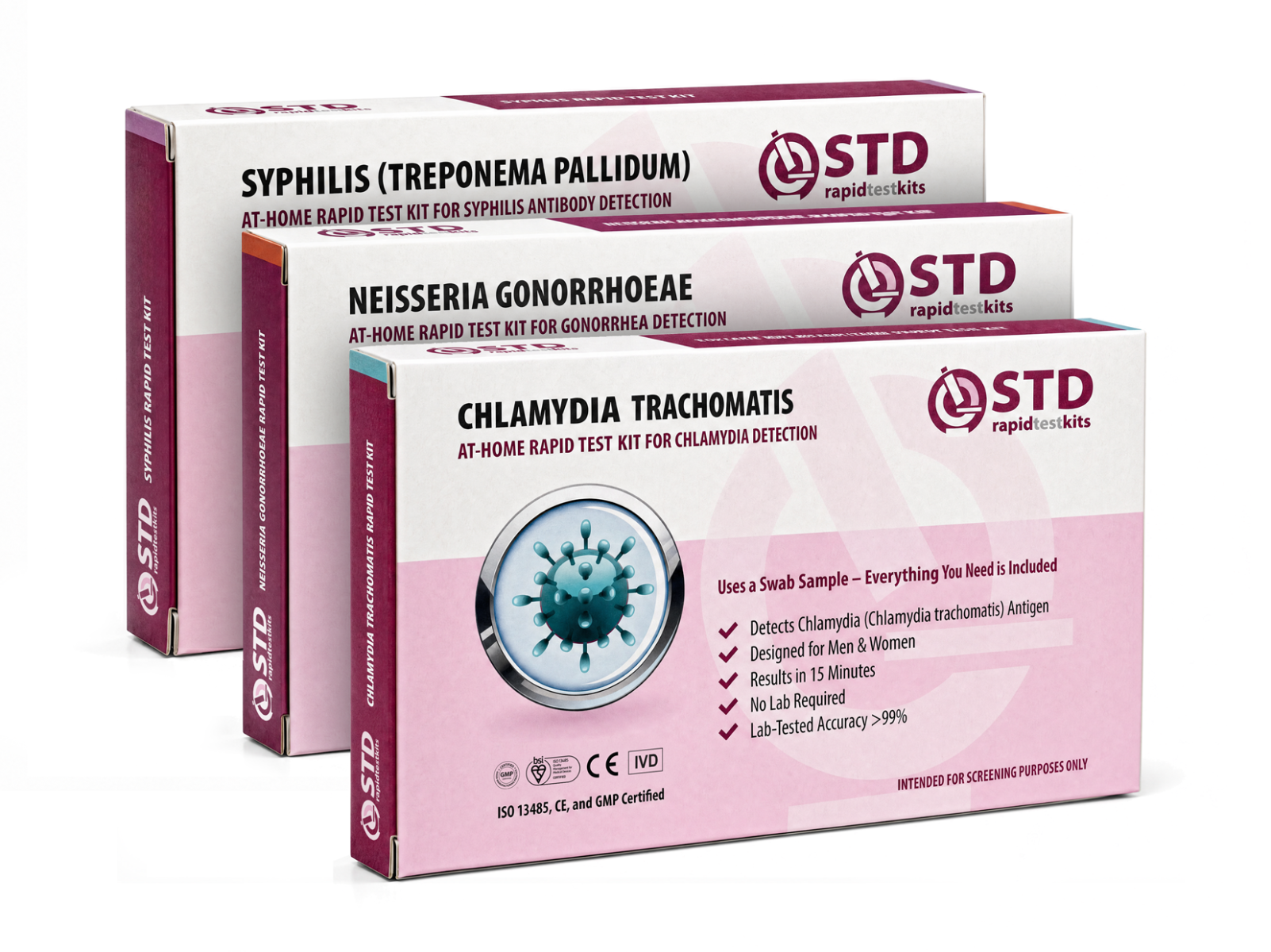
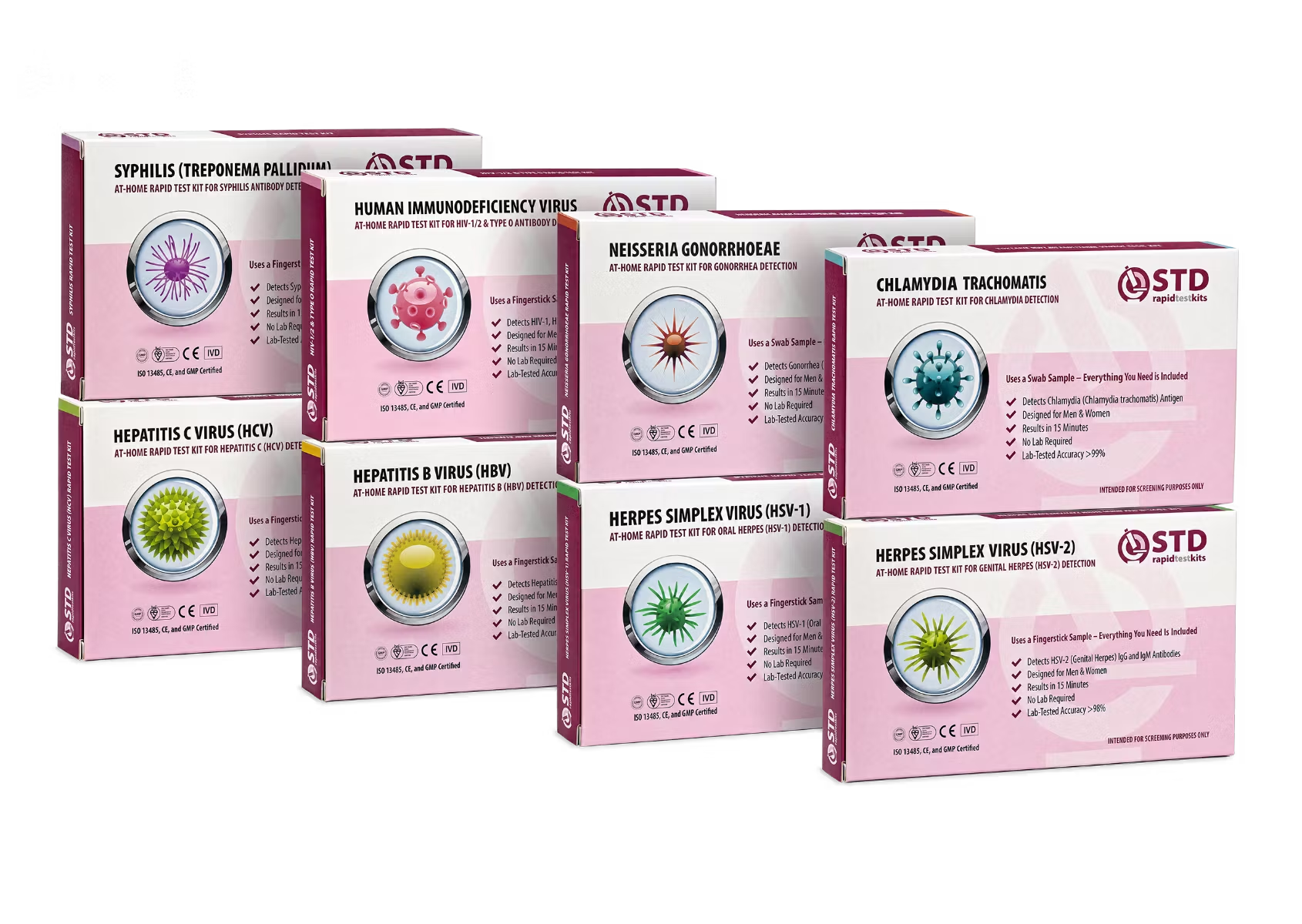
This article is published by stdrapidtestkits.com, which sells at-home STI testing kits. We recommend products based on fit-for-purpose for the reader's concern, not commercial benefit. If you want to confirm or rule out the three most common bacterial STIs in one step, a combined chlamydia, gonorrhea, and syphilis kit is one option, and you can browse our full range of at-home STI test kits if you need a wider panel.
Right Drug, Wrong Dose: How Adherence Quietly Sinks a Treatment
Antibiotics work on a dosing curve. The blood level needs to stay above a threshold long enough for the bacteria to die instead of regrouping. Three common adherence failures push the level below that threshold:
- Stopping early. Doxycycline is a 7-day course taken twice daily. The CDC chlamydia treatment guideline ties cure to the full 14 doses; cutting to 6 days because the burning stopped on day 4 raises the chance of recurrence.
- Missing the second daily dose. Twice-daily means roughly every 12 hours. A morning dose paired with a whenever-I-get-home evening dose departs from the regimen the trial data was built on.
- Mixing metronidazole with alcohol. The combination can trigger a disulfiram-like reaction of flushing, nausea, and headache, and it pulls the regimen off track. CDC and product labeling tell patients to avoid alcohol during the course and for 24 hours after the last dose.
If the prescription was not explained clearly or you were not given written instructions, that is on the visit, not on you.
Avoid alcohol during a metronidazole course and for 24 hours after the last dose. The combination can cause flushing, nausea, vomiting, and headache (a disulfiram-like reaction), and it breaks the steady dosing pattern the treatment depends on.
Reinfection or Resistance? How to Tell Them Apart
Persistent symptoms after a correct antibiotic course usually point to one of two things: reinfection from an untreated partner, or a strain with reduced susceptibility to the drug you were given. Both look like "my symptoms are still here," and they are managed differently. Timing, partner status, and what a follow-up test shows are the three clues that separate them.
Reinfection or Resistance? Reading the Pattern
| Symptom Pattern | Reinfection | Drug Resistance |
|---|---|---|
| Symptoms cleared, then returned weeks later | Likely | Possible |
| Symptoms never fully resolved after a full course | Unlikely | Likely |
| Partner did not get treated or was not tested | Very likely | Possible |
| Tested positive after a correct antibiotic course | Possible | Likely |
| Sexual contact during the treatment period | Very likely | Possible |
Timing, partner status, and a follow-up test are the three clues that separate the two.
When to Retest, and Why It Matters More Than Reassurance
Retesting after STI treatment does more than provide peace of mind. It catches reinfection from an untreated partner and the rarer treatment failure from resistance. The CDC recommends retesting for chlamydia and gonorrhea at 3 months for everyone treated, regardless of whether the partner was treated, because reinfection rates stay high in the months after a positive result. The UK's NHS asks patients to return for a test of cure about a week after gonorrhea treatment and to avoid sex until both partners are clear (NHS gonorrhoea).
The stakes are not only comfort. An infection that quietly persists can climb the reproductive tract. In people with a uterus that can mean pelvic inflammatory disease and a higher risk of infertility or ectopic pregnancy; in people with a penis it can mean epididymitis. STIs such as gonorrhea, herpes, and syphilis also raise the risk of acquiring or passing HIV (WHO STI fact sheet). These outcomes are uncommon and largely preventable, which is exactly why a follow-up test is worth the small hassle.
One caveat on timing: a NAAT taken too soon after treatment can pick up dead bacterial DNA fragments and read positive when the infection is already gone. The windows below are the practical balance.
| Infection | Retest Window | Reason |
|---|---|---|
| Chlamydia | 3 weeks if symptoms persist; 3 months as routine reinfection check | NAAT can show false positive sooner; reinfection is the dominant 3-month risk |
| Gonorrhea | 7 to 14 days if symptoms persist; 3 months as routine reinfection check | Resistance trends make follow-up more important than for most STIs; ask for a culture-based test, not a repeat NAAT |
| Trichomoniasis | 3 months routine; 2 weeks if symptoms continue | Short reinfection window; high partner-recurrence rate |
| Syphilis | Quantitative RPR or VDRL at 6 and 12 months | Track antibody titers to confirm treatment response |
When the Symptoms Are Healing, Not Active Infection
Antibiotics clear the bacteria. The inflammation, irritated tissue, and secondary changes the infection caused can take two to three weeks to settle after the bacteria are gone. Some people feel better within 48 hours; others keep low-grade symptoms for two or three weeks past the last pill while the lining of the urethra, cervix, or vagina recalibrates.
A few signs that point toward residual healing rather than persistent infection:
- Symptoms are milder than at diagnosis and are slowly improving, not worsening.
- You completed the full course on schedule and your partner was treated.
- A retest at the appropriate window comes back negative.
- The character of the symptom has shifted: less burning, more general irritation, less discharge, more dryness.
Signs that point the other direction, toward active infection or a new secondary issue:
- Symptoms are escalating, not improving, after day 10.
- You skipped doses, mixed metronidazole with alcohol, or stopped early.
- Your partner has not been treated yet.
- New symptom types are appearing, such as fever, severe pelvic pain, or visible sores, that were not there at diagnosis.
If your symptoms are improving day over day, you finished the full course on schedule, and your partner was treated, you are most likely watching residual inflammation settle rather than fighting an active infection. The only way to be sure is a retest at the right interval: about 3 weeks for chlamydia, 7 to 14 days for gonorrhea. If symptoms are escalating instead of fading, treat that as the signal to be seen sooner.
At-Home Tests vs Clinic Visits: Which One Now?
Both have a real role. The decision usually comes down to what answer you need next.
An at-home rapid test is the right call when:
- You already know which infection to confirm or rule out, most often a retest after treatment.
- You want privacy, control, and a result the same afternoon.
- You need to check for reinfection after a partner's status changed.
A clinic visit is the right call when:
- Symptoms are severe or escalating, or include fever, severe pelvic pain, or visible sores.
- You suspect drug-resistant gonorrhea and need a culture-based test that can identify which antibiotics still work against your isolate.
- You need a pelvic exam, a pharyngeal (throat) swab, or a rectal swab. We do not sell throat, rectal, or urine-sample tests; if your exposure was oral or anal, the right tool for that site is a clinic-collected swab.
- You are not sure which tests to ask for and want a clinician to choose.
If getting to a clinic is the obstacle, telehealth services that handle STI follow-up are widening; many can order labs, prescribe second-line treatment, and coordinate partner notification without an in-person visit. As for the home option, at-home rapid tests, including ours, use lateral-flow immunoassay chemistry. They are fast, private, and useful for screening and post-treatment confirmation. Laboratory NAAT and PCR carry higher analytical sensitivity, especially for low-bacterial-load or asymptomatic infections, and the CDC treats them as the diagnostic gold standard for chlamydia and gonorrhea. A positive at-home result is meaningful and worth confirming at a lab when possible; a negative result alongside persistent or worsening symptoms is also worth a lab follow-up.
Tell Your Partner: The Single Biggest Reason Symptoms Come Back
Reinfection from an untreated partner is the most common reason chlamydia and gonorrhea symptoms return after a clean treatment course. The bacteria do not care that you took the right pills last week; if your partner has the same infection and you have unprotected sex during their untreated window, you are back at day one.
The CDC's Expedited Partner Therapy (EPT) guidance reports that treating partners directly, through packaged medication or a prescription handed to them by the index patient, lowered chlamydia reinfection by about 20% and gonorrhea reinfection by about 50% in the trials behind the recommendation. EPT is permitted in most U.S. states, though the rules vary by jurisdiction; your provider can tell you what is allowed locally.
If the conversation feels too hard, a short factual script works for most people: “I tested positive for [infection], took the antibiotic that was prescribed, and I still have symptoms. The bacteria might be resistant, or one of us might have been reinfected. Can we both get retested?” Short, no blame. If you and your partner would rather test together at home than wait on appointments, the 3-in-1 chlamydia, gonorrhea, and syphilis kit covers the most common bacterial STIs in one order.
Expedited partner therapy (EPT) lets your provider give you medication or a prescription to pass to your partner without a separate appointment, where state law allows it. If naming yourself is the obstacle, anonymous text-notification services such as TellYourPartner.org alert a partner without identifying you. Either route breaks the reinfection cycle in days rather than waiting on a confrontation.
What to Do Right Now if You're on Day 8 and Still Not Right
If this article sounded familiar, two situations deserve a flag before the steps below. If you were treated based on symptoms alone, without a confirmatory test, a confirmation panel is the highest-value next step, because the actual diagnosis may not be what was treated. And if the exposure was oral or anal rather than genital, a clinic swab of the actual site is the right tool: our at-home tests cover genital swab and bloodwork, not throat or rectal samples, and a pharyngeal-only or rectal-only chlamydia or gonorrhea infection will not show on a urethral or vaginal swab. With those two flagged, here is the short decision path for the most common case.
Day 8 and Still Not Right? Work Through These
Are your symptoms unchanged or worse 7 to 10 days after finishing the course?
Yes: Retest. For gonorrhea symptoms specifically, ask for a culture-based test, not just a repeat NAAT, so the lab can identify which antibiotic still works. For chlamydia, wait about 3 weeks post-treatment for a rapid retest; sooner risks false positives from residual DNA.
Has your partner not been treated yet?
Yes: Hold off on unprotected sex until both of you complete treatment, at least 7 days after both finish and only if both are symptom-free. Anonymous notification or expedited partner therapy are options if the conversation is the blocker.
Are new symptom types appearing instead of the old ones?
Yes: A treated STI can leave room for a secondary issue, such as yeast overgrowth after a metronidazole course or a UTI after urethral chlamydia treatment. New burning or discharge with a different character is worth a clinic visit rather than a guess.
No: If none of these fit and your symptoms are mild and steadily improving, you are most likely watching residual inflammation settle. Confirm with a retest at the appropriate window if you want certainty.
Guidance only; a clinician can advise based on your specific situation.
Frequently Asked Questions
- Why are my symptoms still here after I finished the antibiotics?
- The five common reasons are: a partner who was not treated reinfected you, the drug did not match the actual strain (especially with gonorrhea, where reduced susceptibility is now tracked closely in surveillance), you had a second infection that was missed, the dosing schedule slipped (missed doses, alcohol with metronidazole, stopped early), or your body is still calming down from inflammation that takes weeks to settle even after the bacteria are gone. The next move is a confirmation test, not a self-prescribed second round.
- How long should it take to feel better after STI treatment?
- Most people start to feel relief within 3 to 5 days and are fully better within 7 to 10 days, assuming the right drug, the right schedule, and a treated partner. If you are still symptomatic past day 10, that is the threshold for retesting and re-evaluating rather than waiting longer.
- Is "super gonorrhea" media hype?
- The name is dramatic; the threat is real. The CDC and WHO actively track strains of Neisseria gonorrhoeae that no longer respond to standard treatment, and isolates with decreased susceptibility have been documented in the U.S., U.K., Japan, and elsewhere. Cases are still a small fraction of all gonorrhea infections, but the proportion has been rising, and ceftriaxone is the last reliably effective single agent in routine use, which is why surveillance is intense and why a culture-based retest matters when treatment does not appear to work.
- Can gonorrhea spread through oral sex, and will a home kit catch a throat infection?
- Yes, gonorrhea transmits during oral sex, and pharyngeal (throat) infections are often symptomless and harder to clear with a single-dose regimen aimed at the genitals. If your exposure was oral and symptoms are not resolving, ask a clinic specifically for a throat swab. Our at-home kits use a self-collected genital swab and a fingerstick blood sample; they do not test throat or rectal sites, so a throat-only infection needs a clinic-collected swab.
- Can I just try a different antibiotic on my own using leftover pills?
- No. Self-prescribing a leftover Z-pack or a friend's doxycycline can mask symptoms, push resistance further, and leave the infection partly treated. The right drug depends on which bacteria you actually have, which only a test can tell you. Self-medicating also makes the next clinician's job harder if the symptoms come back later.
- Will I clear a resistant strain eventually?
- Almost always, yes. Even gonorrhea isolates with reduced susceptibility to ceftriaxone usually respond to a different antibiotic, a higher dose, or a combination regimen guided by culture results. "Resistant" generally means the standard first-line did not work, not that nothing works. The path forward is identifying the right second-line drug, which a culture-based test makes possible.
- My partner won't get tested. What now?
- You did your part by telling them. Reinfection risk stays high until they are treated, so the practical move is no unprotected sex with that partner until they complete a course. CDC guidance is to wait at least 7 days after both of you finish treatment, and only if both are symptom-free. Some states allow Expedited Partner Therapy, where your provider gives you medication or a prescription to hand to your partner without a separate appointment. Anonymous text-notification services such as TellYourPartner.org exist if naming yourself is the obstacle.
- Can missing a couple of pills really make that much difference?
- Yes, especially with doxycycline (twice-daily, 7-day course) and metronidazole (multiple-dose courses). Antibiotics work by keeping the blood concentration above the level that kills the bacteria; missed doses dip below that level and let the surviving bacteria regroup. Skipping the second daily dose is the most common form of this, because the morning dose feels like taking the medicine even when the evening one slips.
- How long should I wait before having sex again after treatment?
- CDC guidance is at least 7 days after both you and your partner complete treatment, and only if both of you are symptom-free. For single-dose regimens like ceftriaxone for gonorrhea, that is 7 days from the day of the injection. For 7-day courses like doxycycline, it is 7 days from the last pill. If your partner has not been treated yet, wait longer; the math does not change just because the wait feels long.
- U.S. Centers for Disease Control and Prevention. Chlamydial Infections (STI Treatment Guidelines, 2021). Source for the doxycycline 100 mg twice-daily 7-day regimen, the 100% vs 74% rectal-site cure comparison, and the rationale for moving away from azithromycin as preferred therapy. Also references the linked trichomoniasis and gonococcal treatment guidelines on the same CDC hub.
- U.S. Centers for Disease Control and Prevention. Drug-Resistant Gonorrhea: clinical guidance, surveillance, the historical progression from penicillin through fluoroquinolones (dropped in 2007) to ceftriaxone as the current first-line agent, and the "one last class of antibiotics" framing.
- U.S. Centers for Disease Control and Prevention. Clinical Guidance for Expedited Partner Therapy. Source for the EPT reinfection-reduction figures (approximately 50% for gonorrhea, approximately 20% for chlamydia) and the legal-status overview of partner-treatment programs in the United States.
- World Health Organization. Sexually transmitted infections (STIs) fact sheet. Source for the 2020 global incidence estimates (about 82 million gonorrhea, 129 million chlamydia, 156 million trichomoniasis new infections), the framing of gonococcal drug resistance as a major threat to control, and the statement that STIs such as gonorrhoea, herpes, and syphilis can increase the risk of HIV acquisition.
- National Health Service (UK). Gonorrhoea. Source for the recommendation to return for a test of cure about a week after treatment and to avoid sex until both partners have completed treatment and tested clear.
- MedlinePlus (U.S. National Library of Medicine, NIH). Antibiotic Resistance. Source for how antimicrobial resistance develops through repeated exposure and why prudent antibiotic use matters.
