Published: August 2025 | Last updated: May 2026 | Editorial review and quality control: Martina N.
Why does gonorrhea keep coming back after treatment?
Usually it is not coming back, it is being reintroduced. Antibiotics clear the bacteria but leave no immunity, so a new exposure (an untreated partner, a silent throat or rectal infection, a new asymptomatic partner) restarts it, sometimes the same day treatment ends. The CDC recommends retesting about three months later.
Getting gonorrhea once is unsettling. Getting it again feels like the medication failed, the body broke, or something is fundamentally wrong. None of that is usually true. Repeat gonorrhea is one of the most predictable patterns clinicians see, and the reasons it happens are almost always about exposure, partner testing, and timing rather than any failure of the treatment itself.
The uncomfortable truth most people do not hear at the pharmacy counter is this: reinfection can technically happen the same day antibiotics finish. The drugs cure the existing infection but leave nothing behind to stop a new one. This article walks through what is actually happening when gonorrhea seems to come back, how the so-called ping-pong cycle works, the difference between reinfection and treatment failure, and how to break the loop with retesting and partner treatment. It also explains where an at-home rapid test fits in and where a clinic visit is the better call.
Key Takeaways
- Gonorrhea infection produces no lasting immunity, so each new exposure can cause a new infection even if antibiotics worked perfectly. Reinfection can technically happen the same day a course of antibiotics ends.
- Most repeat positives are reinfection from an untreated partner or a silent throat or rectal infection, not antibiotic failure. The CDC recommends retesting about 3 months after treatment, regardless of how recovery felt.
Treatment Does Not Create Immunity
One of the biggest misconceptions about sexually transmitted infections is the idea that the body learns from them, the way it does with measles or chickenpox. Many people quietly assume that once an infection has been treated, the immune system will recognize it the next time and shut it down.
Gonorrhea does not work like that. The bacterium that causes it, Neisseria gonorrhoeae, is unusually good at avoiding long-term immune memory. It can change the structure of proteins on its surface, so the immune system sees each new exposure as a fresh threat rather than a familiar one. Researchers have long observed that this antigenic variation is part of why prevention has been so difficult and why a licensed gonorrhea vaccine has remained elusive despite decades of work.
In practical terms, someone who had gonorrhea last year is just as biologically vulnerable to catching it again today as someone who has never had it. Antibiotics remove the bacteria. They do not leave behind antibodies, memory cells, or any biological signal that protects against the next exposure.
Neisseria gonorrhoeae continually rewrites the surface proteins that immune cells would otherwise recognize, so the body cannot lock onto a stable target. The same trick is part of why no licensed gonorrhea vaccine yet exists, despite decades of research effort.
So How Soon Can Gonorrhea Come Back?
The short answer surprises most people. Reinfection can technically happen the same day a course of antibiotics ends. Gonorrhea does not need weeks or months to return. It only needs exposure.
If someone has sex with an untreated partner on the day they finish their last dose, the bacteria can transmit back across the same encounter that put them at risk the first time. The drugs in the bloodstream do not act as an ongoing shield. They acted on the bacteria that were already there and finished their job.
That is why most providers, following CDC patient guidance on gonorrhea that instructs people to wait seven days after finishing all medicine before having sex, recommend a pause before resuming sex and specifically advise waiting until all recent sex partners have also finished their own treatment. The 7-day window gives the antibiotics time to fully clear the infection in your own tissues, and it also covers the period when partners are getting their own prescriptions filled and taken.
What Happens in the Days After Gonorrhea Treatment
- Day 0 Treatment given
A single recommended antibiotic dose begins clearing the infection.
- Day 2 First 24 to 48 hours
Antibiotics clear bacteria from infected tissues. A new exposure can still reinfect you.
- Day 5 Days 3 to 7
Symptoms typically improve, in the cases that had symptoms at all.
- Day 7 Day 7, partners also treated
Most guidance allows resuming sex once you and all recent partners have finished treatment.
- Day 90 About 3 months
The CDC recommends a follow-up gonorrhea test for everyone diagnosed.
Antibiotics clear the infection within days, but they leave no immunity, so a new exposure can reinfect at any point.
The Ping-Pong Pattern Clinicians See Most
Sexual health clinicians sometimes use the phrase "ping-pong infection" to describe the most common reinfection pattern of all: partners passing the bacteria back and forth without realizing it. The mechanics are simple. One partner tests positive and gets antibiotics. Symptoms clear within a few days. Sex resumes. But if the other partner was never tested or treated, the bacteria are still living in their body, ready to move right back during the next encounter.
From the perspective of the newly treated person, this looks like the infection came back. In reality, it is a new infection from the same untreated source. The pattern is so predictable that CDC clinical-care guidance for gonorrhea emphasizes partner therapy alongside the patient's own antibiotics. The single biggest preventable cause of gonorrhea reinfection is treating one person while leaving the other partner uninformed and untested.
Public health programs interrupt this cycle through two main tools: direct partner notification and a practice called Expedited Partner Therapy. The same CDC clinical guidance defines Expedited Partner Therapy as a partner-treatment approach in which sex partners of a diagnosed patient are provided treatment without their own prior medical evaluation, a practice that is legal in most U.S. states and one the CDC has recommended since 2006 specifically because it reduces reinfection rates.
Both partners should be tested and treated, and both should wait at least seven days after finishing their antibiotics before resuming sex. If either partner skips testing, or if either resumes sex too soon, the cycle restarts almost immediately. This is true even if both people feel completely fine.
Why Symptoms Do Not Always Warn You
Another reason gonorrhea keeps showing up is that symptoms are wildly unpredictable. Some people develop obvious signs within days. Others carry the infection for weeks while feeling completely normal. According to the CDC's gonorrhea overview, gonorrhea often has no symptoms at all, and infections in the throat and rectum are especially likely to stay silent.
That asymptomatic pattern is the whole reason silent transmission keeps the cycle going. Someone can feel completely healthy, go about their day, and still pass the bacteria during oral, vaginal, or anal sex. Many people with throat or rectal gonorrhea never notice any symptom at all, even after weeks of carriage.
| Body site | Possible symptoms | How often symptoms appear |
|---|---|---|
| Genitals (penis) | Burning urination, white or yellow discharge, swollen testicle | Often noticeable but not guaranteed |
| Genitals (vagina) | Pelvic pain, discharge, bleeding between periods | Frequently mild or absent |
| Throat (pharynx) | Mild sore throat (occasional) | Usually no symptoms at all |
| Rectum | Discharge, itching, soreness, bleeding | Often no symptoms |
The Hidden Driver: Throat and Rectal Infections
One of the most overlooked reasons gonorrhea keeps circulating is that the bacteria can live in body sites that no one tested. Throat infections are the most common example. The NHS overview of gonorrhea notes that not everyone with gonorrhea develops symptoms, including people with infections of the throat or anus. The CDC's gonorrhea overview separately explains that gonorrhea can infect the genitals, rectum, and throat, since standard genital sampling does not detect infection at those other sites.
This creates a quiet pathway for reinfection. Routine STI screening typically uses a genital sample, either urine or a urethral or vaginal swab. A throat infection will not show up on those tests. Unless the clinician specifically asks about oral sex and orders a separate pharyngeal swab, the throat infection can persist quietly while the genital infection gets treated and resolved on paper.
The bacteria can also transmit from the throat back to a partner's genitals during subsequent oral sex. A person who was treated for urethral gonorrhea but who also had an untreated pharyngeal infection can therefore reinfect themselves through the same partner without anyone realizing what just happened, because the same partner and the same encounter can involve an entirely different infection site. Pharyngeal and rectal swab testing is typically a clinic-administered service, often paired with a NAAT lab test rather than a home rapid test.
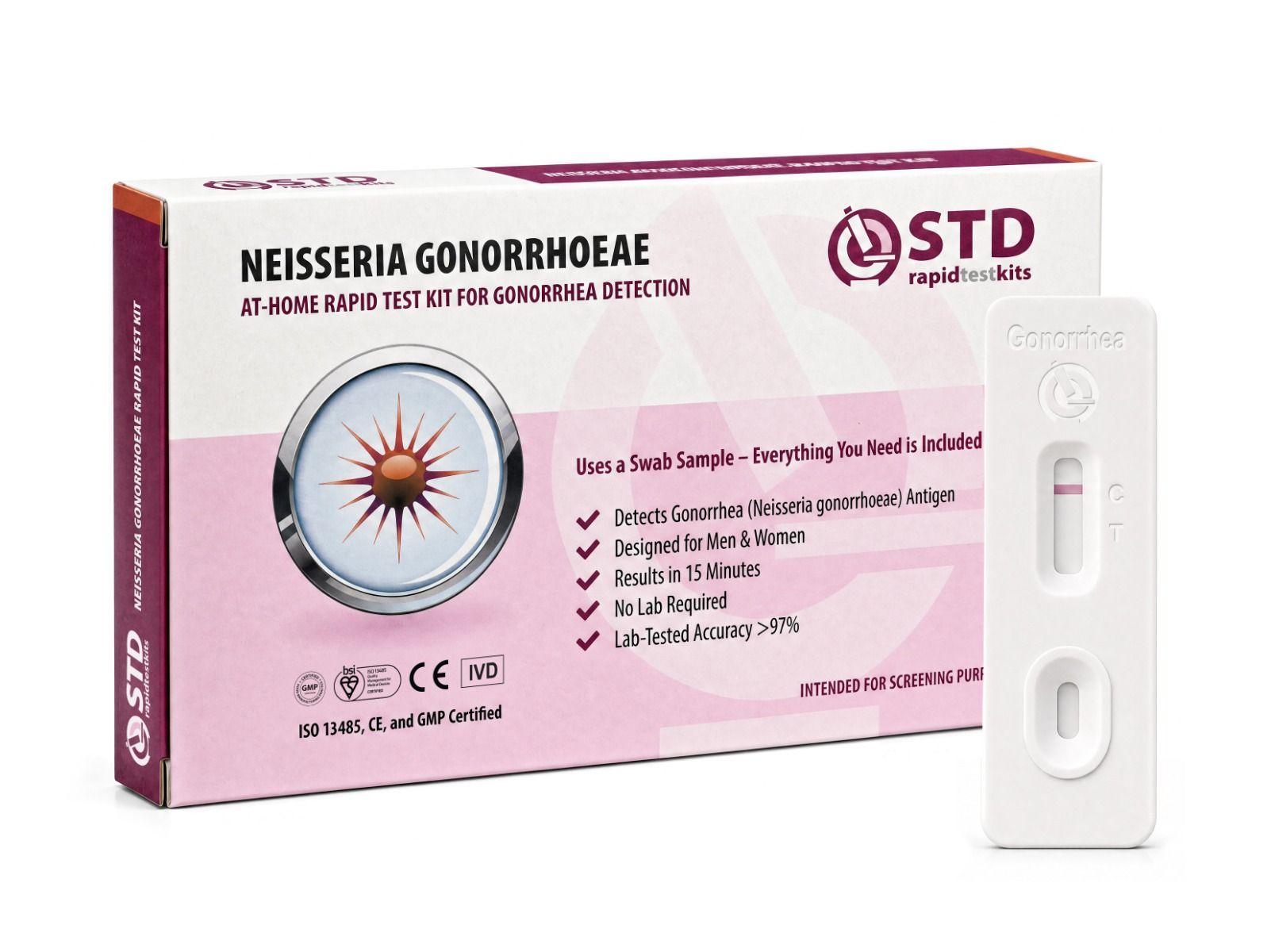
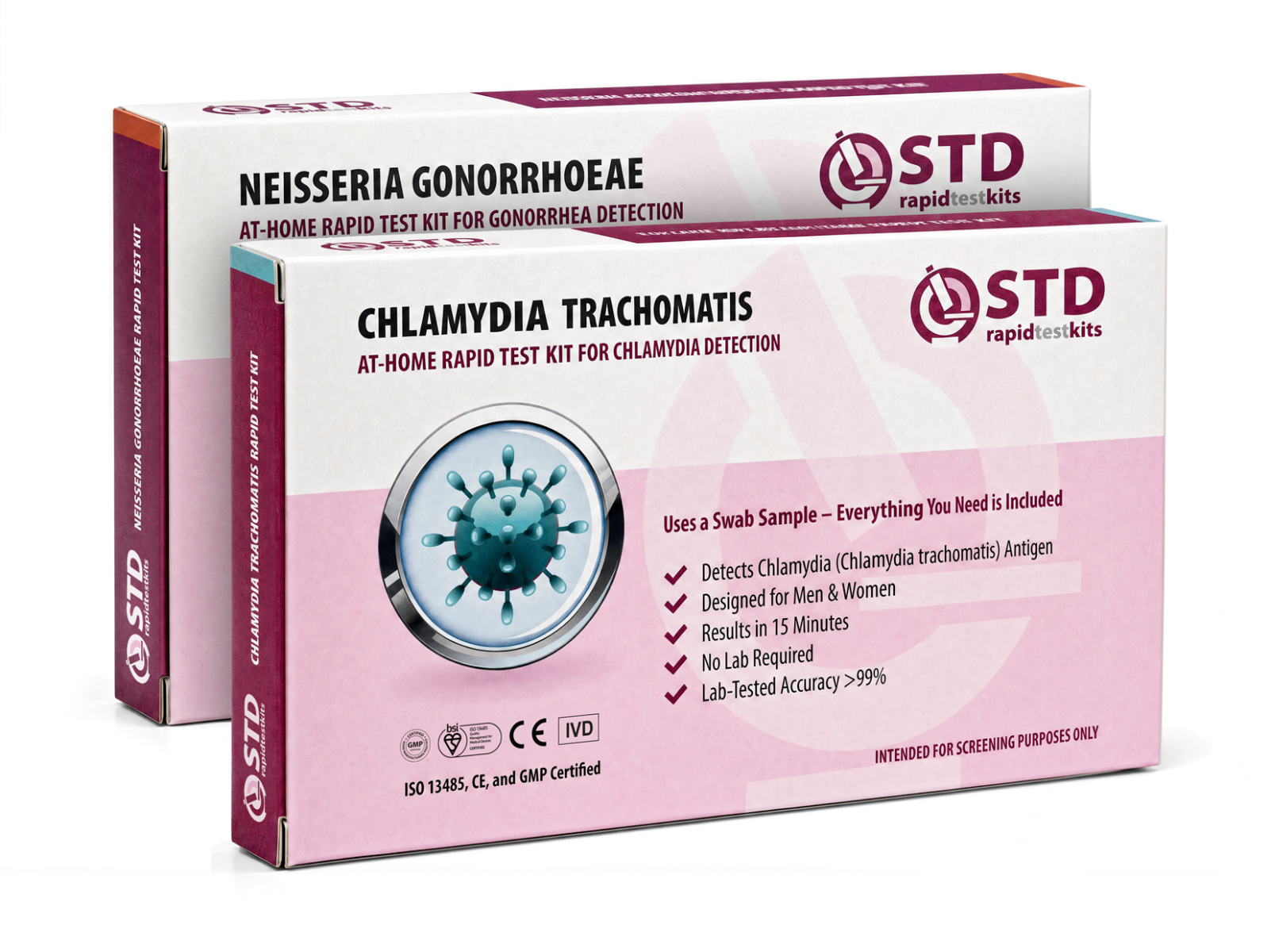
Our at-home rapid kits use a self-collected genital (vaginal or penile) swab, which is the right tool for the most common infection site. Throat (pharyngeal) and rectal infections need site-specific swabs collected at a clinic, often paired with a NAAT lab test. If your exposure was oral or anal, treat the home test as a partial screen and ask a clinician about extragenital testing.
Reinfection vs. Treatment Failure vs. Lingering Symptoms
When symptoms come back after treatment, three different things might be happening, and they get conflated all the time. Sorting them out is the difference between calmly arranging a retest and panicking about drug-resistant super gonorrhea.
The first possibility is reinfection: the antibiotics worked, the original infection cleared, but a new exposure brought the bacteria back. This is by far the most common explanation. Clinicians evaluating recurrent symptoms typically ask about recent sexual contact before assuming anything else, because exposure history accounts for the majority of repeat positive tests.
The second possibility is treatment failure from antibiotic resistance. News coverage of super gonorrhea has made this a high-profile fear, and resistance is a genuinely growing public health problem. The WHO fact sheet on multi-drug-resistant gonorrhoea states that antimicrobial resistance in Neisseria gonorrhoeae has increased rapidly in recent years and has reduced the options for treatment. In routine clinical practice, though, true treatment failure is much less common than reinfection. When it does happen, providers re-evaluate the regimen, may switch antibiotics, and sometimes escalate to specialist care under medical supervision.
The third possibility is lingering inflammation. Antibiotics clear the bacteria quickly, but the tissues that were infected, including the urethra, cervix, or throat, can stay irritated for days or weeks. Mild burning, residual discharge, or pelvic discomfort during that window do not necessarily mean the infection is back:
- Lingering urinary burning that fades over a week is more often residual inflammation than active infection.
- Discharge that returns after sex with an untreated partner is more concerning and warrants a fresh test.
- Pelvic pain weeks after treatment should be evaluated, because untreated gonorrhea can cause complications like pelvic inflammatory disease.
| Situation | Most likely cause | Typical next step |
|---|---|---|
| Symptoms return after sex with an untreated partner | Reinfection | Retest and arrange partner treatment |
| Symptoms never fully improved after antibiotics | Possible treatment failure | Return to clinic for re-evaluation; possibly a different antibiotic |
| Symptoms come back months later after a new partner | New exposure | Test and treat if positive |
| No symptoms, but a partner tests positive | Asymptomatic reinfection or carriage | Test even without symptoms |
| Persistent positive despite zero sexual contact since treatment | Possible treatment failure or a missed infection site | Clinic visit for culture and antibiotic susceptibility testing |
How Common Is Gonorrhea Reinfection?
Reinfection is common. Public health agencies track gonorrhea reinfection because it is a routine clinical concern, not a rare edge case. Guidance summarized on the CDC's gonorrhea page directs providers to retest every diagnosed patient about three months after treatment, precisely because a meaningful share of people test positive again, primarily through new exposure rather than antibiotic failure.
A partner may never have been tested. A silent throat infection from an earlier oral encounter may have gone undetected. A new partner may carry the bacteria without any symptoms. Recognizing which of these is in play for a given person is often the first thing a clinician asks about during a follow-up appointment.

Risk Factors Most People Do Not Realize
Reinfection does not happen randomly. Certain patterns raise the likelihood enough that recognizing them is half the prevention. Some are behavioral, like resuming sex before the seven-day window closes. Others are structural, like having sex with partners whose testing status is unclear, or carrying an asymptomatic infection in a body site that was never swabbed.
Disclosure: this article is published by stdrapidtestkits.com, which sells the at-home rapid swab kits referenced below. We recommend products based on fit-for-purpose for the reader's concern, not commercial benefit. The five situations in the table below account for most reinfections clinicians see, regardless of where someone chooses to test.
| Situation | Why it raises reinfection risk |
|---|---|
| Partner was never tested | Bacteria remain in the partner and pass back during sex |
| Sex resumed inside the 7-day post-treatment window | Antibiotics may not have fully cleared the infection in either person |
| New partner with an asymptomatic infection | Transmission occurs without warning signs in either person |
| Throat or rectal infection that was never swabbed | Site-specific infections do not show up on genital tests and continue to spread |
| Multiple partners with overlapping testing gaps | Bacteria circulate through the network faster than testing can catch them |
How to Break the Reinfection Cycle
The good news is that the cycle is preventable once the patterns are clear. Prevention comes down to closing the gaps that gonorrhea exploits. Three steps cover most of what works.
The first is making sure all current sexual partners are tested and treated at the same time. This is the single most important step, and it is the one most often skipped because the conversation feels uncomfortable. Where it is offered, Expedited Partner Therapy can help: the diagnosed person picks up antibiotics for the partner, so the second clinic visit does not become the bottleneck. The second step is honoring the seven-day waiting window before resuming sex, even if symptoms vanished within a day or two. The third is folding routine testing into life, especially after new partners, and asking a clinician about throat or rectal swabs if oral or anal exposure was part of the picture.
Logistics are usually what break the chain. One person gets tested and the other never books the appointment, weeks pass, sex resumes, and the loop quietly restarts. Testing both people at the same time is what closes it, and doing that privately at home can remove the scheduling and embarrassment hurdles that stall the second visit. At-home STI test kits let both partners check status in about fifteen minutes, though any positive result still needs a clinic to confirm and to prescribe the antibiotics gonorrhea requires.
| Prevention step | Why it works |
|---|---|
| Test and treat all partners at the same time | Removes the hidden reservoir that restarts the cycle |
| Wait at least 7 days after finishing antibiotics before sex | Gives the medication time to fully clear bacteria in both people |
| Retest about 3 months after treatment | Catches reinfection early, before it spreads further |
| Use barrier protection consistently with newer partners | Reduces transmission risk during the highest-uncertainty window |
| Ask about throat or rectal swabs after oral or anal exposure | Surfaces site-specific infections that genital tests miss |
When Should You Retest After Treatment?
Timing matters for retesting just like it does for waiting to resume sex. Test too soon and a NAAT-based clinic test can sometimes pick up dead bacterial DNA from the original infection rather than a new one, which leads to confusing results. The CDC's gonorrhea guidance for the public addresses this directly: retesting is recommended about three months after treatment for everyone, regardless of whether they think a partner was successfully treated.
People who suspect a new exposure sooner, or who have new symptoms, should retest right away rather than waiting for the three-month mark. Anyone with persistent symptoms within a couple of weeks of treatment should see a clinician for a culture-based test rather than a home rapid kit, since culture identifies which antibiotic the bacteria still respond to. Gonorrhea treatment in most cases means a specific prescription regimen (a single intramuscular ceftriaxone injection for uncomplicated infection) that is not available over the counter, so a clinic visit is still required for the treatment side once a positive test is confirmed.
- Days 1 to 7: abstain from sex, finish all medicine, and confirm every recent partner is being treated too.
- Within 1 to 2 weeks, if symptoms persist: see a clinician for a culture-based test to evaluate possible treatment failure.
- About 3 months after treatment: the standard CDC retest for everyone diagnosed, regardless of how recovery felt.
- Any time a new exposure or new symptom appears: retest right away rather than waiting for the 3-month mark.
Those with gonorrhea should be retested about three months after treatment of an initial infection.
What Happens If Gonorrhea Keeps Coming Back?
Occasional reinfection is frustrating but, in itself, does not signal anything unusual about a person's health. It signals that exposure happened again somewhere in the sexual network. The bigger concern is the cumulative effect of repeated untreated infections.
According to the CDC's overview of gonorrhea, untreated gonorrhea can cause pelvic inflammatory disease in people with vaginas, which is associated with chronic pelvic pain, ectopic pregnancy, and tubal-factor infertility. The MedlinePlus gonorrhea topic page describes the same pathway, noting that untreated infection can lead to pelvic inflammatory disease and problems with fertility. In people with penises, untreated infection can spread to the epididymis (the coiled tube behind each testicle that stores sperm) and cause painful swelling, a condition called epididymitis that the CDC notes can, in rare cases, affect fertility. Disseminated gonococcal infection, where the bacteria spread through the bloodstream to joints, skin, and rarely heart valves, is uncommon but documented in clinical literature.
Repeat infections happen because sexual networks are layered, symptoms are often silent, and testing rarely happens at the same time for everyone involved. None of that reflects a personal failing. Catching reinfections early prevents the worst downstream outcomes, and treating gonorrhea as a shared health issue (the same way couples handle a household stomach bug) is what closes the chain. The NHS gonorrhea overview describes the same playbook: testing, treatment, and partner notification, applied consistently.
Complications when reinfection goes untreated
- Pelvic inflammatory disease (PID) in people with vaginas: associated with tubal infertility, ectopic pregnancy risk, and chronic pelvic pain.
- Epididymitis in people with penises: painful inflammation of the coiled tube behind each testicle that stores sperm.
- Disseminated gonococcal infection: rare bloodstream spread that can affect joints, skin, and (rarely) heart valves.
- Increased HIV transmission risk: untreated gonorrhea inflames mucosal tissue and raises the chance of acquiring or transmitting HIV during exposure.
Your Next Steps After Treatment
If gonorrhea keeps reappearing, a stronger antibiotic is rarely what fixes it. Closing the exposure gaps described above is what breaks the cycle. Use the quick check below to decide what to do now, then build the seven-day wait, partner treatment, and three-month retest into one plan.
What Should You Do After Gonorrhea Treatment?
Do you have new or persistent symptoms within two weeks of finishing antibiotics?
Yes: See a clinician for a culture-based test rather than a home rapid kit, so the lab can check whether the bacteria still respond to the antibiotic that was used.
Has a recent partner gone untested or untreated, or have you had a new partner since treatment?
Yes: Arrange testing and treatment for that partner and retest yourself. Reinfection from an untreated partner is the most common reason a repeat test comes back positive.
Has it been about three months since your treatment?
Yes: Retest now, even if you feel completely fine. The CDC recommends a follow-up test for everyone diagnosed.
No: Keep to the seven-day wait before resuming sex, confirm every recent partner is treated, and plan to retest at the three-month mark, or sooner if symptoms or a new exposure appear.
Guidance only. A clinician can advise based on your specific situation.
FAQs
- Can you get gonorrhea twice?
- Yes, as many times as exposure happens. Gonorrhea infection does not produce protective immunity, so each new exposure can cause a new infection even if previous treatments worked perfectly. This is why partner testing and post-treatment retesting are so heavily emphasized.
- How soon after treatment can gonorrhea come back?
- Technically, the same day antibiotics finish. The drugs cure the existing infection but do not create any immunity, so if you have sex with an untreated partner the day your course ends, the bacteria can transmit straight back. That is why most clinicians recommend waiting at least 7 days after you and all recent partners have finished treatment before resuming sex.
- I finished my antibiotics and tested positive again. Did the treatment fail?
- Probably not. In most cases, what looks like treatment failure is actually reinfection from an untreated partner, a silent throat or rectal infection, or a new exposure. Modern antibiotic regimens for gonorrhea are highly effective when taken correctly, so a clinic visit is usually directed at finding the new exposure rather than assuming the medication failed.
- Can my partner reinfect me even if they feel completely fine?
- Yes. Gonorrhea is famously quiet, especially in the throat and rectum. A partner can feel perfectly healthy and still pass the bacteria during oral, vaginal, or anal sex. This is exactly why clinicians stress that partners should be tested and treated together, not based on whether anyone feels symptomatic.
- How long should you wait before having sex after gonorrhea treatment?
- Seven days minimum after you finish treatment, and only once all recent partners have completed their own course. That gap matters because both people need the bacteria cleared before re-exposure is safe; most reinfections in the first month happen because one person resumed too soon, or a partner never got treated at all. Skipping it restarts the cycle almost immediately.
- Can oral sex cause gonorrhea reinfection?
- Yes, and this surprises a lot of people. Gonorrhea can infect the throat during oral sex, often with no symptoms at all. Someone can carry the bacteria in their throat without realizing it and transmit it back to a partner's genitals during later oral sex. Home rapid swab kits do not screen the throat, so a clinic pharyngeal swab is the right tool if oral exposure was part of the picture.
- When should I test again after gonorrhea treatment?
- Three months after finishing antibiotics, per CDC guidance. Test earlier if symptoms return or a new exposure occurs. The wait reflects how common reinfection is in the months following treatment, not any doubt about the medication itself.
- Is super gonorrhea something to worry about right now?
- Antibiotic-resistant gonorrhea is a real and growing public health issue that the WHO and CDC actively monitor, but it remains uncommon compared to ordinary reinfection in routine cases. If your symptoms persist after treatment, providers will evaluate for resistance and adjust therapy. The far more likely explanation in most cases is simple re-exposure.
- U.S. Centers for Disease Control and Prevention. About Gonorrhea: STI overview, asymptomatic infection patterns, infection at genital, rectal, and throat sites, the seven-day post-treatment abstinence guidance, the three-month retest recommendation, and complications including PID and epididymitis.
- U.S. Centers for Disease Control and Prevention. Gonorrhea clinical-care guidance for healthcare providers: partner-therapy recommendations, the Expedited Partner Therapy (EPT) definition and rationale, and the single intramuscular ceftriaxone 500 mg treatment regimen for uncomplicated urogenital, anorectal, and pharyngeal gonorrhea.
- World Health Organization. Multi-drug-resistant gonorrhoea fact sheet: antimicrobial resistance in Neisseria gonorrhoeae has increased rapidly and reduced treatment options.
- National Health Service (UK). Gonorrhoea condition page: symptoms, asymptomatic carriage at the throat and anus, testing, treatment, and partner notification.
- MedlinePlus (U.S. National Library of Medicine). Gonorrhea topic page: untreated infection can lead to pelvic inflammatory disease, fertility problems, and epididymitis.
