Does Vaseline Help a Cold Sore? What Petroleum Jelly Actually Does
At 3AM with nothing else in the cabinet, petroleum jelly feels like the right call. This guide explains what it does to a cold sore blister, which stage it genuinely helps with, what it cannot do, and when a topical antiviral or HSV-1 antibody test would work better than another reach for the jar.
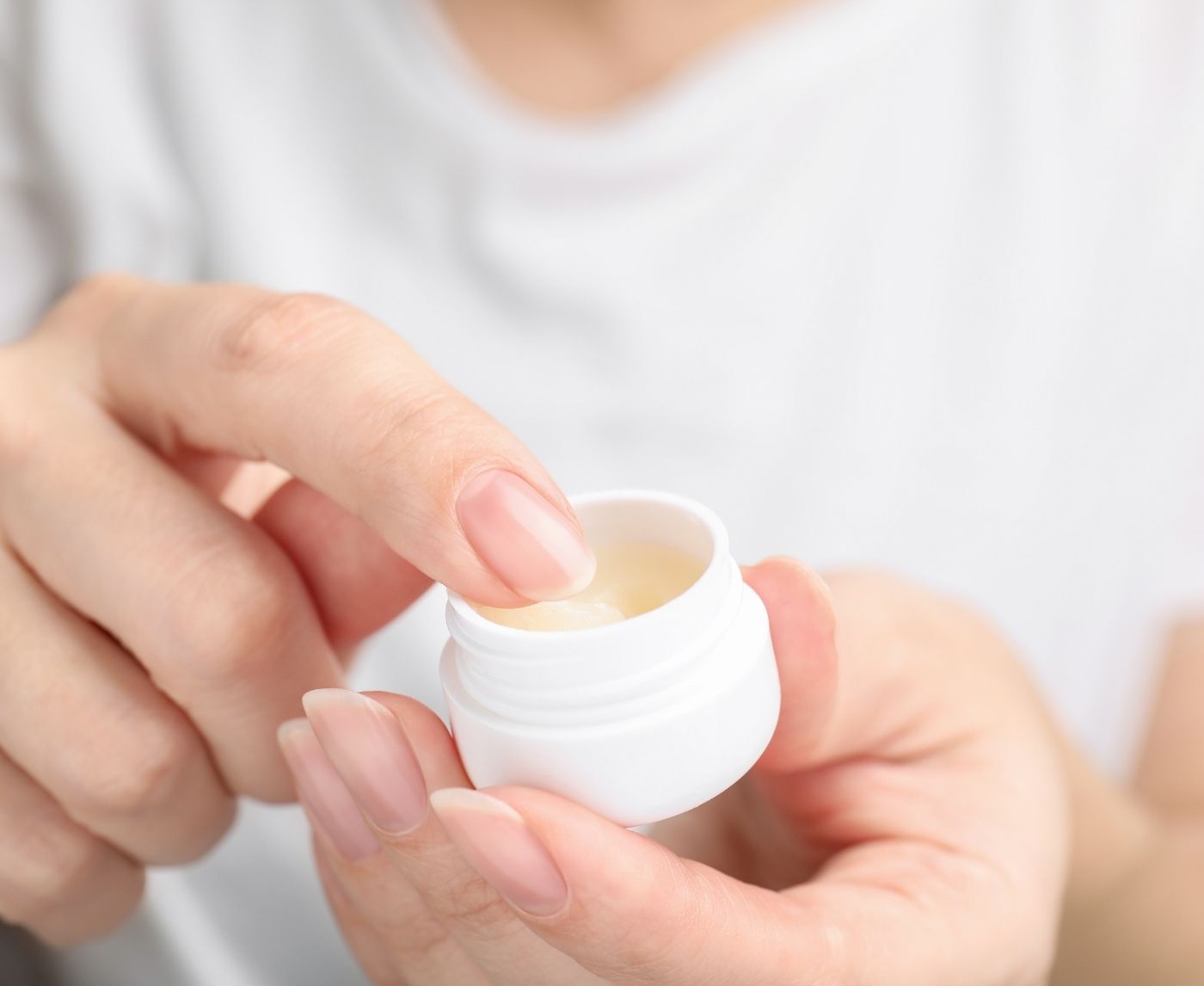



- Vaseline does not kill HSV-1 and does not shorten an outbreak. What it does well is keep the lesion moist, reduce friction, and prevent the painful cracking that happens during the scab stage.
- If outbreaks happen more than four times a year, last beyond two weeks, or you are not sure whether the bump is even HSV-1, testing and a short course of antivirals will help more than another reach for the jar.
Published: July 2025 | Last updated: May 2026 | Editorial review and quality control: Martina N.
At 3AM, with a cold sore stinging on my upper lip and nothing else in the cabinet, I scooped a small dab of Vaseline onto the swelling and hoped for the best. By morning the sore had still bloomed into a full blister, but the area felt less raw, less ready to crack with every word I said. The question I went to bed with is the same one most people ask after the same 3AM ritual: did the petroleum jelly actually help, or did I just feel calmer because I had done something?
That moment, the panic and the medicine cabinet improvisation, is more common than most people admit. Cold sores are caused by herpes simplex virus type 1 (HSV-1), and the WHO estimates roughly 3.8 billion people under age 50 carry HSV-1 globally (WHO HSV fact sheet). Most never plan ahead for an outbreak. This article walks through what Vaseline can and cannot do, what the cold sore is doing under your skin while you smear it on, what the visible stages look like on real lips, and where home tools end and real treatment begins.
Key Takeaways
- Vaseline does not kill HSV-1 and does not shorten an outbreak. What it does well is keep the lesion moist, reduce friction, and prevent the painful cracking that happens during the scab stage.
- If outbreaks happen more than four times a year, last beyond two weeks, or you are not sure whether the bump is even HSV-1, testing and a short course of antivirals will help more than another reach for the jar.
What Vaseline Does to a Cold Sore (and What It Doesn't)
Vaseline, the brand name for petroleum jelly, is an occlusive moisturizer. It sits on top of the skin and blocks water loss. It is not an antiviral. It does not stop HSV-1 from replicating, and it does not shorten the time a cold sore takes to heal. Mayo Clinic guidance on cold sore care lists topical antivirals (docosanol, acyclovir cream, penciclovir) and oral antivirals (acyclovir, valacyclovir, famciclovir) as the treatments that shorten outbreak duration. Petroleum jelly is supportive care, the equivalent of a bandage over a healing cut.
What it does well is real, just smaller than people hope. A thin layer keeps the lesion moist, which softens crusts so they crack less. It reduces friction from talking, eating, and shaving. It creates a physical barrier that limits exposure to outside bacteria, which can lower the (already low) baseline risk of secondary bacterial infection. And the act of applying something can ease the panic spiral that makes the next 24 hours feel longer than they are.
Where Vaseline is genuinely useful sits in a narrow window: the late blistering, weeping, and scab phases, when keeping the surface from drying out and splitting matters more than viral suppression. The phase where it does the least is the very beginning, the prodrome, which is precisely when antivirals do the most. That mismatch is why so many people feel like Vaseline only kind of helps: by the time it goes on, the moment for the most effective intervention has usually already passed.
| Treatment | Main Purpose | Helps With | Does Not Do |
|---|---|---|---|
| Vaseline (petroleum jelly) | Moisture barrier | Soothes dryness, prevents cracking, reduces friction, limits outside contamination | Does not kill HSV-1, does not shorten outbreak duration |
| Topical antivirals (acyclovir, penciclovir, docosanol) | Inhibit local viral replication | Modest reduction in pain and healing time when started at the first tingle | Less helpful once the blister has fully formed |
| Oral antivirals (acyclovir, valacyclovir, famciclovir) | Systemic antiviral treatment | Best option for severe, frequent, or first outbreaks; can be used as suppressive therapy | Require a prescription and ideally early use |
| Cold compress and lip balm with SPF | Comfort and trigger prevention | Reduces inflammation; SPF helps prevent UV-triggered outbreaks | Does not stop an active outbreak |
So, does Vaseline help a cold sore heal faster?
On its own, no. Petroleum jelly does not kill HSV-1 and does not shorten the 7 to 14 day healing cycle. It can keep the lesion moisturized, reduce cracking during the scab phase, and protect against outside bacteria, which is why so many people feel it helps. The treatments that shorten outbreaks are antiviral creams (docosanol, acyclovir, penciclovir) or oral antivirals (acyclovir, valacyclovir, famciclovir) started at the first tingle.
Inside the Life Cycle of a Cold Sore (and Where Vaseline Fits)
A cold sore is not a single event. It is a viral cycle that moves through five fairly predictable phases over 7 to 14 days, per Mayo Clinic's clinical overview. Knowing which phase you are in changes which tool helps.
Vaseline does almost nothing useful at the start, when the virus is replicating fast and antivirals would matter most. Its usefulness rises during the messy middle, when the blister has burst and the area is exposed, and during the late scab stage, when the lip wants to split open every time you smile. The table below maps each phase to where petroleum jelly earns its keep and where it is just placebo.
| Stage | What Happens | Where Vaseline Fits |
|---|---|---|
| Tingling and prodrome (Day 1) | Burning, itching, or tightness on the lip; nerve pain before any visible bump | Low value. This is the antiviral window. |
| Blistering (Days 2 to 3) | Cluster of small fluid-filled vesicles forms; highly contagious | Mild benefit. Reduces friction; do not pop the blisters. |
| Weeping (Day 4) | Blisters rupture, fluid leaks, raw ulcer exposed; peak contagious period | Moderate benefit. Keeps surface moist, may reduce crusting. |
| Scabbing (Days 5 to 7) | Crust forms over the ulcer, often cracks and bleeds with movement | Highest benefit. Prevents painful splitting, eases eating and talking. |
| Healing (Days 8 to 14) | Scab falls off, pink new skin underneath, mild residual color | Useful. Reduces dryness and may limit visible scarring. |
What a Cold Sore Looks Like at Each Stage
Most people see a cold sore for the first time and assume it is something else: a pimple, an insect bite, an allergic reaction. The visual pattern is specific, though, and learning it matters because the right intervention depends on the stage. The figures below walk through how a cold sore changes from the prodrome through to a healing lip, on real skin under standard medical photography.
If what you see in the mirror does not match any of these, or if it spreads beyond the lip area, it may not be a cold sore at all. The next section covers the common look-alikes and what to do about them.
When It's More Than "Just a Cold Sore"
Not every bump on the lip is HSV-1. The most common look-alikes are pimples (single, deeper, no clustered vesicles), angular cheilitis (cracking at the corners of the mouth, often fungal or nutritional in origin), impetigo (honey-colored crust, more spread, bacterial), and canker sores (inside the mouth, on the gums or cheek, not on the lip border). When a lesion does not match the staged pattern above, or when it behaves outside the 7 to 14 day window, that is the signal to look harder.
The other situation that needs more than topical care is when cold sores keep coming back. The CDC's STI treatment guidelines note that recurrent HSV outbreaks can be reduced significantly with daily suppressive antiviral therapy in adults who are good candidates for it. That conversation is worth having with a clinician once the pattern is more than two or three outbreaks a year, or any time the outbreaks interfere with daily life.
Specific signs that the situation has outgrown the medicine cabinet:
| What You Notice | What It Could Mean | Reasonable Next Step |
|---|---|---|
| More than 4 outbreaks in a year | Frequent HSV-1 reactivation | Ask a clinician about daily suppressive therapy |
| Sores spreading beyond the lip and perioral area | Possible eczema herpeticum or immunosuppression | Seek same-day medical evaluation |
| First outbreak with fever, malaise, or swollen lymph nodes | Likely primary HSV-1 infection | Antivirals are most useful early in this scenario |
| Lesion has not healed after 14 days | Possible bacterial superinfection or misdiagnosis | See a clinician for assessment |
| Spreading redness, expanding pus, fever, or worsening pain | Possible secondary bacterial infection | Get evaluated; topical or oral antibiotics may be needed |
Why People Reach for Vaseline Instead of Antivirals
The honest reason Vaseline is the default for so many cold sore outbreaks is not that it works better. It is because it is in the cabinet, costs almost nothing, and does not require admitting out loud that the lesion is herpes. Cold sores are caused by HSV-1, the same family of viruses behind genital herpes, and the word carries a stigma that does not match the biology. CDC seroprevalence data indicate that close to half of U.S. adults carry HSV-1, most through ordinary oral contact in childhood, and most without ever knowing.
The result is a population of people managing a viral infection without using the most effective tools for it. Antivirals work best when started at the first tingle, often within the first 24 hours of the prodrome. By the time someone has decided to call a doctor, the blister has already formed and the antiviral window has narrowed.
The fix is not to feel guilty about the Vaseline. The fix is to have a small, prepared kit (a topical antiviral, a tube of lip balm with SPF, and a plan that does not require the pharmacy to be open) so the next outbreak does not catch you at 3AM with nothing else to try.
HSV-1 is highly contagious and most infections are acquired during childhood. Once acquired, the infection is lifelong. The vast majority of HSV-1 infections are oral, around the mouth, and many people never have noticeable symptoms.
Cold Sore Triggers You Can Actually Track
HSV-1 lives quietly in the trigeminal nerve ganglion between outbreaks. The reactivation that produces a visible cold sore tends to follow predictable triggers, and tracking which trigger preceded which outbreak is the single most useful thing someone with frequent recurrences can do.
The triggers that show up most consistently in the clinical literature, per Mayo Clinic's symptom and cause overview and NHS patient guidance:
- UV exposure on the lips, especially after a beach day, snow day, or skiing trip without lip SPF
- Physical or emotional stress, including sleep deprivation and prolonged work stress
- Fever or recent viral illness (the original common name was "fever blister" for a reason)
- Hormonal changes, particularly the days before menstruation
- Trauma to the lip: dental work, lip biting, aggressive exfoliation, or a chapped lip that has split
- Immune suppression: severe acute illness, chemotherapy, certain immunosuppressive medications
The practical move, once a personal pattern shows up, is to use a topical or oral antiviral preemptively before predictable triggers (a planned sun-heavy holiday, a dental procedure, a known stressful week) rather than waiting for the prodrome.
Should You Get Tested for HSV-1?
Most people with cold sores never get formally tested, and the CDC does not recommend universal HSV screening for adults without symptoms. That said, testing makes sense in three scenarios: you are not sure whether the lesion is HSV-1 at all, you are about to start a new sexual relationship and want to know your status before disclosure conversations, or you have a partner who has been newly diagnosed and you want to know whether you have been exposed.
Two test types are commonly used. A swab (PCR or viral culture) is performed during an active outbreak, ideally within 48 hours of vesicle formation. The swab samples fluid directly from the lesion and detects viral DNA. This is the most accurate test for an active sore, and it is clinic-administered, not an at-home option. A type-specific blood antibody test detects HSV-1 antibodies, which appear weeks after initial infection and remain detectable for life. It is useful when there is no active sore to swab, or when confirming long-term carrier status. Type-specific testing matters because HSV-1 and HSV-2 antibodies look similar on older non-type-specific assays; a modern type-specific result tells you which virus you are dealing with.
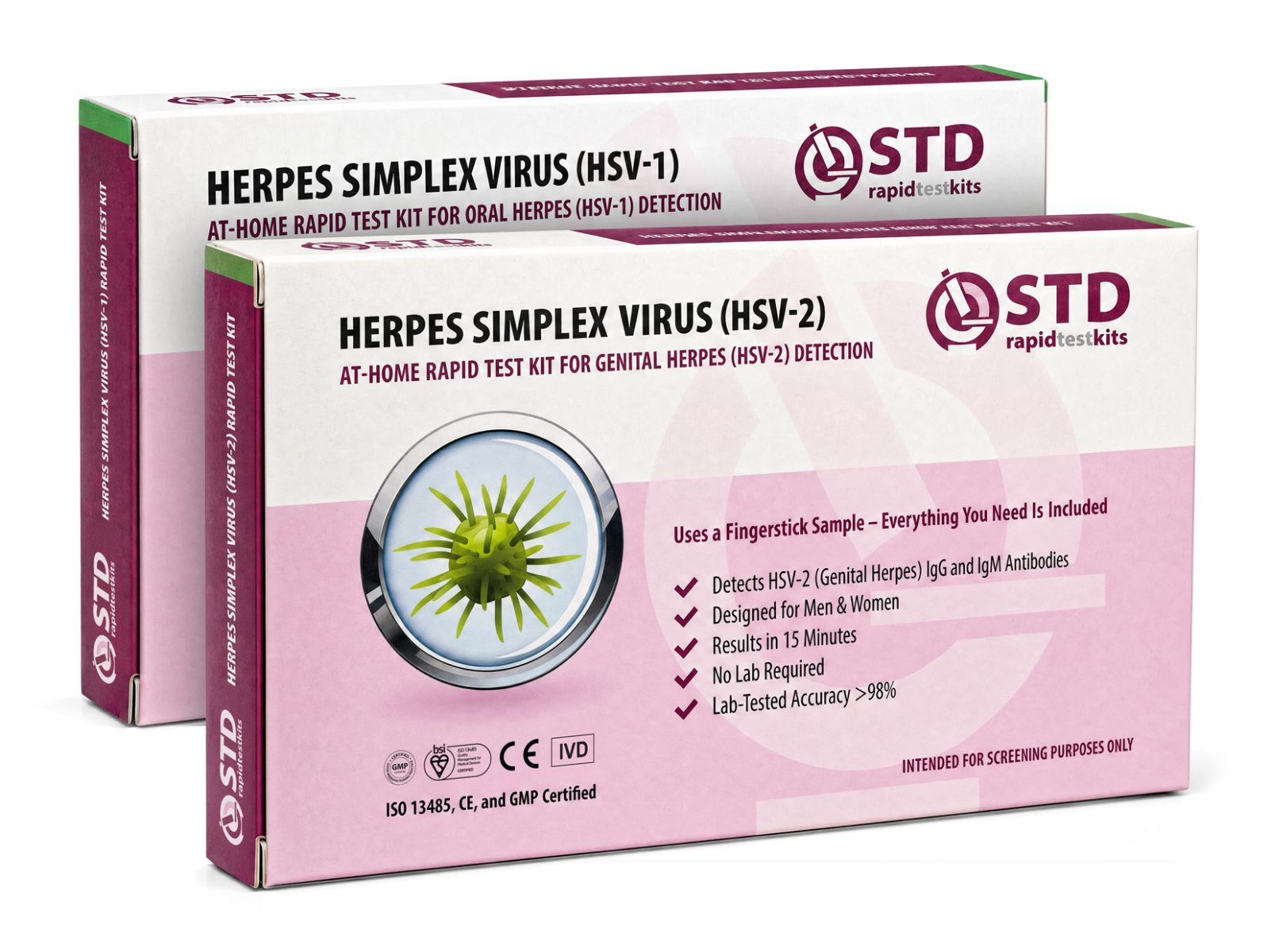
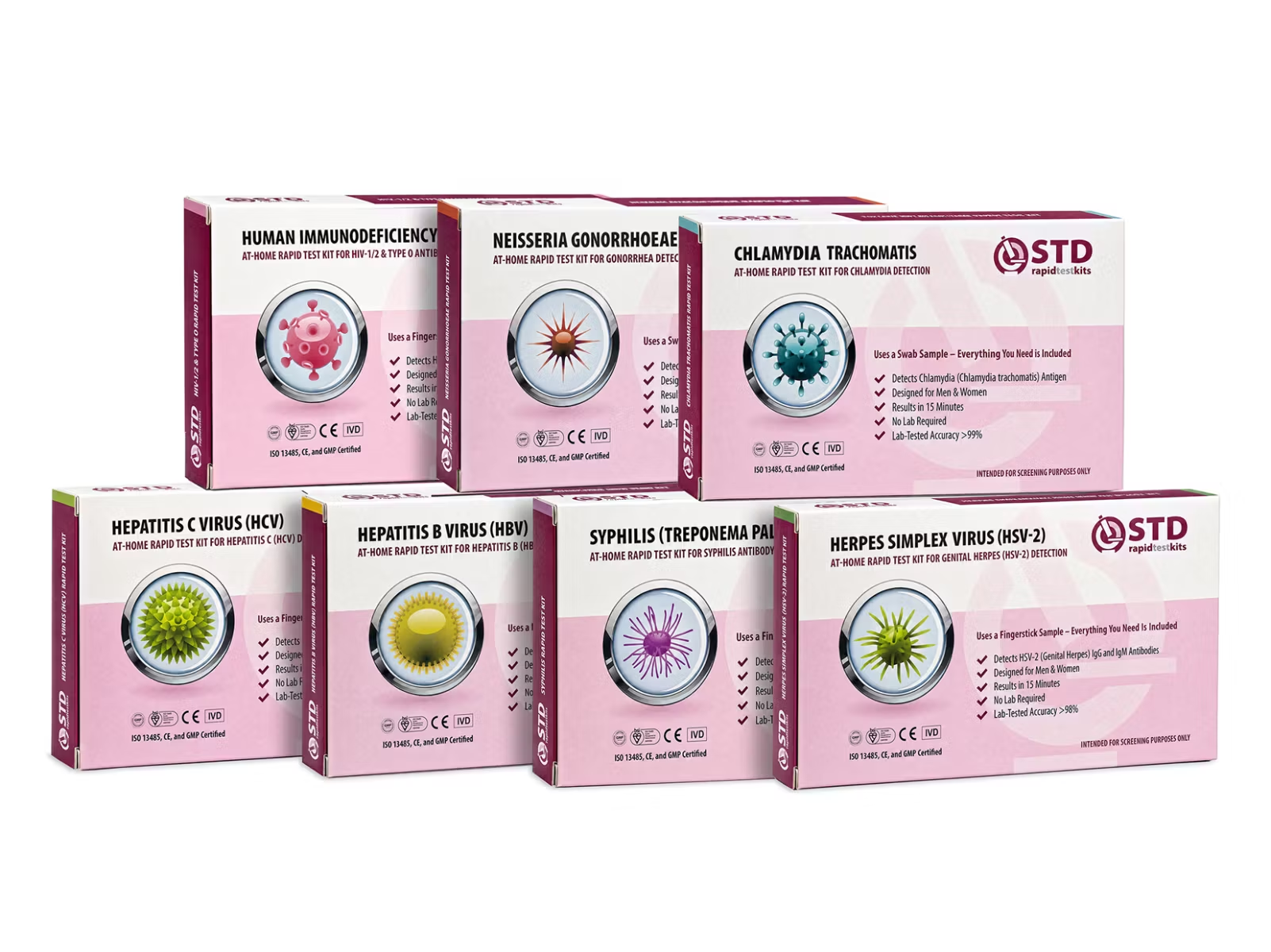
At-home rapid antibody tests are convenient for the second scenario (status confirmation between outbreaks), and a positive result is a reasonable trigger for a follow-up conversation with a clinician about suppressive therapy or partner notification. They do not replace a clinic-administered swab during an active outbreak. We sell at-home rapid blood antibody tests for HSV-1 and HSV-2 if you want to confirm status from home.
The table below compares the two options at a glance.
| Test Type | When to Use | Sample Required | Where Available |
|---|---|---|---|
| Swab (PCR or viral culture) | Active outbreak, within first 48 hours of vesicles | Lesion fluid swab | Clinic only |
| Type-specific blood antibody test | Between outbreaks, status confirmation, partner exposure check | Fingerstick blood | Clinic or at-home rapid kit |
Building a Real Plan: Beyond the Crisis
The single biggest shift after a few cold sore outbreaks is moving from reaction (3AM Vaseline) to preparation (a small plan that can be deployed at the first tingle). The plan does not need to be elaborate.
A useful starter kit looks like this:
- A topical antiviral kept in a known place (docosanol is over-the-counter; acyclovir cream and penciclovir cream are prescription)
- A daily lip balm with SPF 30 or higher, especially before sun exposure
- A short course of oral antiviral on hand (acyclovir or valacyclovir) prescribed in advance for early use, if outbreaks are frequent enough that your clinician is willing to supply this
- A simple log noting the date and presumed trigger of each outbreak (a notes app entry is enough)
- A plan for partner conversations that does not depend on whether you are mid-outbreak when you have to have it
Vaseline still earns a spot in this plan. Its role is just smaller and clearer: comfort during the scab phase, not the primary treatment.
Stigma, Shame, and the Cycle of Hiding
About half of U.S. adults carry HSV-1 and most never know it. The virus does not pick people based on choices, lifestyle, or hygiene. Children get HSV-1 from family kisses. Adults get it the same way years later. None of this is moral information about the carrier.
The reason this matters in the context of Vaseline is that shame is one of the main reasons people manage outbreaks alone, with the cheapest tool available, and never raise the topic with a partner or clinician. The result is more anxiety, longer outbreaks, and more transmission than there needs to be. Public-health framing from CDC and NHS treats herpes management as routine care, not as confession or punishment.
Two practical moves break the cycle. First, use the right tools at the right time: antivirals at the prodrome, lip SPF before known UV exposure, a tested plan you can pull off the shelf. Second, name the situation once to a clinician or a partner; doing so reduces future transmission risk more than any amount of Vaseline does.
Use an antiviral at the first tingle, and name the situation once to a clinician or partner. Both cut future transmission risk and outbreak severity more than the medicine-cabinet habit does on its own.
What If Vaseline Doesn't Help?
If a cold sore is past the 14-day window, expanding instead of healing, draining pus, or causing new fever, the question is no longer about Vaseline. The same is true if a "cold sore" appears to spread beyond the lip and perioral area or shows up in someone with eczema or a weakened immune system. Those are clinic visits, not bathroom-cabinet visits.
For everyone else: if Vaseline plus a topical antiviral plus the trigger awareness above is not bringing outbreaks down, daily suppressive oral antiviral therapy is well-established for HSV, with strong evidence for reducing frequency in people who get more than four outbreaks a year. That conversation can be had with a primary care clinician without any specialist referral, and many people see frequency drop significantly within the first few months.
If you are not sure whether the lesion was HSV-1 in the first place, a type-specific at-home rapid antibody test can confirm long-term carrier status in about 15 minutes. A clinic swab during an active outbreak remains the more sensitive option for an in-the-moment lesion, particularly during a first outbreak when test performance matters most.
Use this to decide how urgently to move beyond home care:
- Sore past 14 days or expanding: see a clinician for assessment.
- Spreading redness, fever, or pus: same-day evaluation; possible bacterial superinfection.
- More than four outbreaks per year: ask a clinician about daily suppressive antiviral therapy.
- Spread beyond lip or perioral area, or any cold sore in someone with eczema or immune suppression: urgent evaluation; possible eczema herpeticum.
FAQs
- Does Vaseline help a cold sore heal faster?
- Vaseline helps most at the scab stage, where it prevents the crust from splitting and reduces friction from eating and talking. That comfort is real. What it cannot do is cut the virus's 7-to-14-day cycle. For that you need an antiviral (docosanol over the counter, or acyclovir or valacyclovir by prescription) started within the first 24 hours of tingling.
- Can I use Vaseline instead of antiviral medication?
- Only if outbreaks are mild and infrequent. For anyone getting cold sores more than two or three times a year, or for severe outbreaks, antiviral creams (docosanol, acyclovir, penciclovir) or oral antivirals (acyclovir, valacyclovir, famciclovir) are the treatments with evidence behind them. Vaseline is supportive care, not a replacement.
- Is it safe to apply Vaseline to a fresh cold sore blister?
- Yes, with two cautions: use clean hands or a fresh cotton swab, and do not double-dip into the jar after touching the sore. Decant a small amount onto a clean surface or use a single-use tube. Reusing the jar repeatedly increases the chance of contaminating it for next time.
- Does Vaseline stop a cold sore from being contagious?
- No. The virus is shed in fluid from the lesion regardless of any topical layer on top. Kissing, sharing utensils, sharing lip products, and oral sex are all transmission routes during an active outbreak, and HSV-1 is most contagious during the blistering and weeping phases. Avoid those activities until the sore has fully crusted and the crust has fallen off.
- What should I do if Vaseline seems to make the cold sore worse?
- True allergic reactions to pure petroleum jelly are very rare. If the area gets more swollen, develops spreading redness, produces pus, or starts hurting more after a couple of days of use, stop applying it and see a clinician. The likely cause is a secondary bacterial infection or contamination of the jar, not the petroleum jelly itself.
- Why do I keep getting cold sores in the same spot?
- HSV-1 lives in the nerve ganglion that supplies a specific area of skin. When the virus reactivates, it travels back down that same nerve, which is why outbreaks recur in the same one or two locations. Tracking triggers (UV, stress, fever, hormonal changes) and using preemptive antivirals before known triggers can reduce frequency.
- Can I cover a cold sore with makeup once Vaseline is on?
- It is not ideal. Makeup can trap bacteria, irritate the lesion, and contaminate the products themselves. If covering is necessary for one event, use a fresh single-use applicator, apply lightly, and remove gently. Discard or deep-clean any products that touched the sore. Do not share lipstick, lip liner, or any lip product after an outbreak.
- How long does a cold sore last with Vaseline versus without?
- Roughly the same: 7 to 14 days. Vaseline does not shorten the cycle. Antivirals started at the first tingle can meaningfully shorten outbreak duration, per Mayo Clinic and NHS guidance on antiviral treatment. Vaseline's contribution is comfort during the scab phase, not duration.
How We Sourced This Article: This guide is built from current public-health and clinical guidance from the World Health Organization, the U.S. Centers for Disease Control and Prevention, Mayo Clinic, and the UK National Health Service, combined with established at-home self-care principles. It is summary content for general audiences, not a substitute for in-person evaluation when symptoms are severe, recurrent, or unusual.
- World Health Organization. Herpes simplex virus fact sheet. Global HSV-1 prevalence (3.8 billion people under age 50) and oral transmission patterns.
- U.S. Centers for Disease Control and Prevention. Herpes (HSV) topic landing page. Background on HSV-1 and HSV-2 epidemiology and transmission.
- Mayo Clinic. Cold sore: symptoms and causes. Stage descriptions, common triggers, and recurrence patterns.
- Mayo Clinic. Cold sore: diagnosis and treatment. Topical and oral antiviral options, supportive care guidance.
- U.S. Centers for Disease Control and Prevention. Genital HSV infections, STI treatment guidelines. Recommendations on episodic and suppressive antiviral therapy.
- UK National Health Service. Cold sores. Patient-facing guidance on self-care, contagious periods, and when to seek medical care.