Published: November 2025 | Last updated: May 2026 | Editorial review and quality control: Martina N.
Vaccines don't transmit herpes or HIV. They never have. The flu shot, COVID boosters, the shingles vaccine, none of them contain those viruses or anything that would teach your body to mistake itself for being infected. What they do contain is a signal strong enough to wake your immune system up for a few days, and that wake-up call is where the confusion starts.
If you already carry herpes simplex virus, even silently, that immune surge can occasionally tip the balance and trigger a flare. If you had a possible HIV exposure in the days or weeks around your shot, the flu-like side effects of the vaccine can look uncomfortably similar to the symptoms of acute HIV infection. Neither situation means the vaccine caused an STI. Both situations call for clear thinking about timing, symptoms, and the right test at the right window.
Key Takeaways
- Vaccines don't transmit herpes or HIV, but the strong immune response after a shot can occasionally trigger a flare in people who already carry HSV, and vaccine side effects can mimic acute HIV symptoms if there was a real recent exposure.
- Symptoms alone can't separate the two. The reliable answer comes from testing at the correct window period using a test matched to the infection you're worried about.
Why This Question Keeps Coming Up
Search traffic spikes every flu season and every booster rollout for some version of this question: did the shot give me herpes? Did the vaccine cause my HIV symptoms? The pattern is consistent because the overlap is real. Fever, fatigue, headache, body aches, swollen lymph nodes, chills, these are textbook responses to a flu shot or an mRNA COVID vaccine. They are also on the symptom list for primary HIV infection (called acute retroviral syndrome) and the prodrome phase of a genital herpes outbreak (CDC: About HIV).
Add in the fact that many people get vaccinated in the same season they're more sexually active (holidays, travel, new relationships), and the timing collisions write themselves. A person notices a tingle, sees a sore, or feels run-down a few days after a shot, and the brain immediately tries to connect the two events. Sometimes the connection is real but indirect: the shot didn't cause the infection, it just nudged a flare in someone already carrying HSV. Sometimes it's pure coincidence with an actual exposure a couple of weeks earlier. Sometimes it's nothing more than ordinary vaccine reactogenicity.
Either way, the worry is legitimate. Telling someone they're being paranoid doesn't help. Walking them through the biology does.
Fever, fatigue, headache, and swollen lymph nodes appear on both the vaccine reactogenicity list and the acute HIV or herpes prodrome list. The body uses the same general inflammatory machinery for vaccines, mild viral illness, and an early STI, so symptoms alone cannot reliably tell the situations apart.
What "Reactivation" Actually Means
When people ask whether vaccines "trigger herpes" or "activate HIV," they're usually asking about reactivation, not new transmission. The two are biologically very different.
Herpes simplex viruses (both HSV-1 and HSV-2) are lifelong once acquired. After the initial infection, the virus retreats to sensory nerve cells (the dorsal root ganglia for genital HSV-2, the trigeminal ganglion for oral HSV-1) and sits there in a latent state. It doesn't cause symptoms most of the time. Periodically it reactivates and travels back down the nerve to the skin, producing either a visible outbreak or asymptomatic shedding (WHO: Herpes simplex virus fact sheet).
The triggers for HSV reactivation are well-documented:
- Stress (mental or physical)
- Other illness or fever
- Hormonal changes (menstruation, hormonal contraception)
- UV exposure (especially for oral HSV-1)
- Local trauma or friction
- Major immune-activating events
A vaccine fits that last category. An mRNA COVID shot or a flu vaccine produces a brief but intense immune response, and clinicians have reported HSV reactivation in some people in the days following these immunizations. The vaccine triggers immune activity strong enough to tip the balance in someone already carrying HSV; it does not introduce a virus that was never there in the first place. People without HSV do not suddenly seroconvert because they got a flu shot.
HIV behaves differently. It does not hide in nerve cells and reactivate visibly the way HSV does. Once someone is infected, the virus replicates continuously unless suppressed by antiretroviral therapy. What can mimic vaccine side effects is acute retroviral syndrome, the symptomatic phase that hits roughly 2 to 4 weeks after a new HIV exposure in many (not all) people. Fever, sore throat, swollen nodes, fatigue, and rash overlap heavily with how a flu shot or COVID booster can feel for a couple of days (NHS: HIV and AIDS symptoms).

When Your Immune System Goes Into Overdrive
Reactogenicity is the technical term for the cluster of short-lived symptoms many people feel after a vaccine. These symptoms come from your immune system actively building a response to the vaccine antigen. They are part of normal immune training and do not indicate allergy or infection.
Common patterns within 6 to 36 hours of a flu or COVID shot:
- Soreness at the injection site (almost universal)
- Low-grade fever
- Headache
- Body aches and fatigue
- Swollen lymph node in the armpit on the injected side
- Chills
For most people these fade within 1 to 2 days. They tend to be slightly stronger after a second dose or a booster, and slightly stronger in younger adults whose immune systems respond more vigorously.
The trouble is that this list reads almost identically to the prodrome phase of a herpes outbreak (especially the tingling, swollen groin nodes, and low-grade fever component) and to acute HIV infection. The body doesn't have a single dedicated alarm system for sexually transmitted infections. It uses the same general inflammatory machinery for vaccines, mild viral illness, and bacterial exposure.
Can a vaccine give me herpes or HIV?
No. No FDA-approved vaccine contains live herpes virus or live HIV, and none can transmit either infection. What a vaccine can do is briefly activate your immune system in a way that may unmask a herpes flare in someone who already carries HSV, or produce side effects (fever, fatigue, swollen nodes) that overlap with early HIV symptoms if there was a genuine recent exposure. To separate one from the other, time your test to the correct window period for each infection and choose a test type matched to the question you're asking.
Timing: When to Test After Vaccination
If you're worried that a recent vaccine triggered STI-like symptoms, or that it might mask or affect a test, the key concept is the window period. That's the gap between exposure to an infection and when a particular test can reliably detect it.
Vaccine immune activity is short-lived. It peaks in the first 1 to 3 days and is largely gone within a week. The window periods for STI tests are all longer than that, which means accurate testing is straightforward as long as you wait for the right test-specific window after your potential exposure. The table below shows general guidance per infection. Always check the specific test you're using, since exact windows vary by assay technology.
If you had an exposure first and got vaccinated afterward, you don't need to start the window-period clock over. Wait the appropriate test-specific window from the exposure date, then test. If results come back borderline or unclear, retest after the peak window to confirm.
| Infection | Earliest Detection | High-Confidence Window | Notes on Vaccine Interaction |
|---|---|---|---|
| HIV | 10 to 14 days (NAAT), 18 to 45 days (4th-gen Ag/Ab) | 4 to 6 weeks after exposure | Vaccine immune signals fade within days and don't affect this window |
| HSV-1 and HSV-2 | 3 to 6 weeks for IgG antibody seroconversion | 6 to 12 weeks; up to 16 weeks for late seroconverters | Antibody tests detect past exposure, not active flares |
| Syphilis | 3 to 6 weeks for non-treponemal tests | 6 to 12 weeks post-exposure | Confirm any positive with a treponemal test |
| Chlamydia and Gonorrhea | 5 to 7 days | 7 to 14 days post-exposure | Not affected by vaccine immune signals |
Vaccine Side Effects vs STI Symptoms
The single most useful question to ask yourself when symptoms appear is: where did they start, how long are they lasting, and what specifically is showing up? Some symptoms strongly favor one explanation over the other. The comparison below covers the most common overlap points.
Anything in the right-hand column that doesn't appear on the left, especially blisters, sores, painful urination, or a rash on the palms and soles, is not a vaccine side effect. Those signs point toward herpes, syphilis, or chlamydia and gonorrhea, and they warrant a test even if the timing makes you want to blame the shot.
| Symptom | More Likely Vaccine | More Likely STI |
|---|---|---|
| Fever | 6 to 36 hours post-shot, fades in 1 to 2 days | Persists longer; can follow new sexual contact |
| Lymph node swelling | Common in the armpit on the injected side | Groin, neck, or generalized; can signal infection |
| Rash | Rare; usually localized near injection site | Can be widespread or genital (HIV, syphilis, herpes) |
| Sores or blisters | Not a vaccine side effect | Classic for herpes or primary syphilis; test promptly |
| Fatigue | Common; up to 48 hours | Can persist; pair with other symptoms or known exposure |
| Painful urination or discharge | Not a vaccine side effect | Common for chlamydia or gonorrhea |
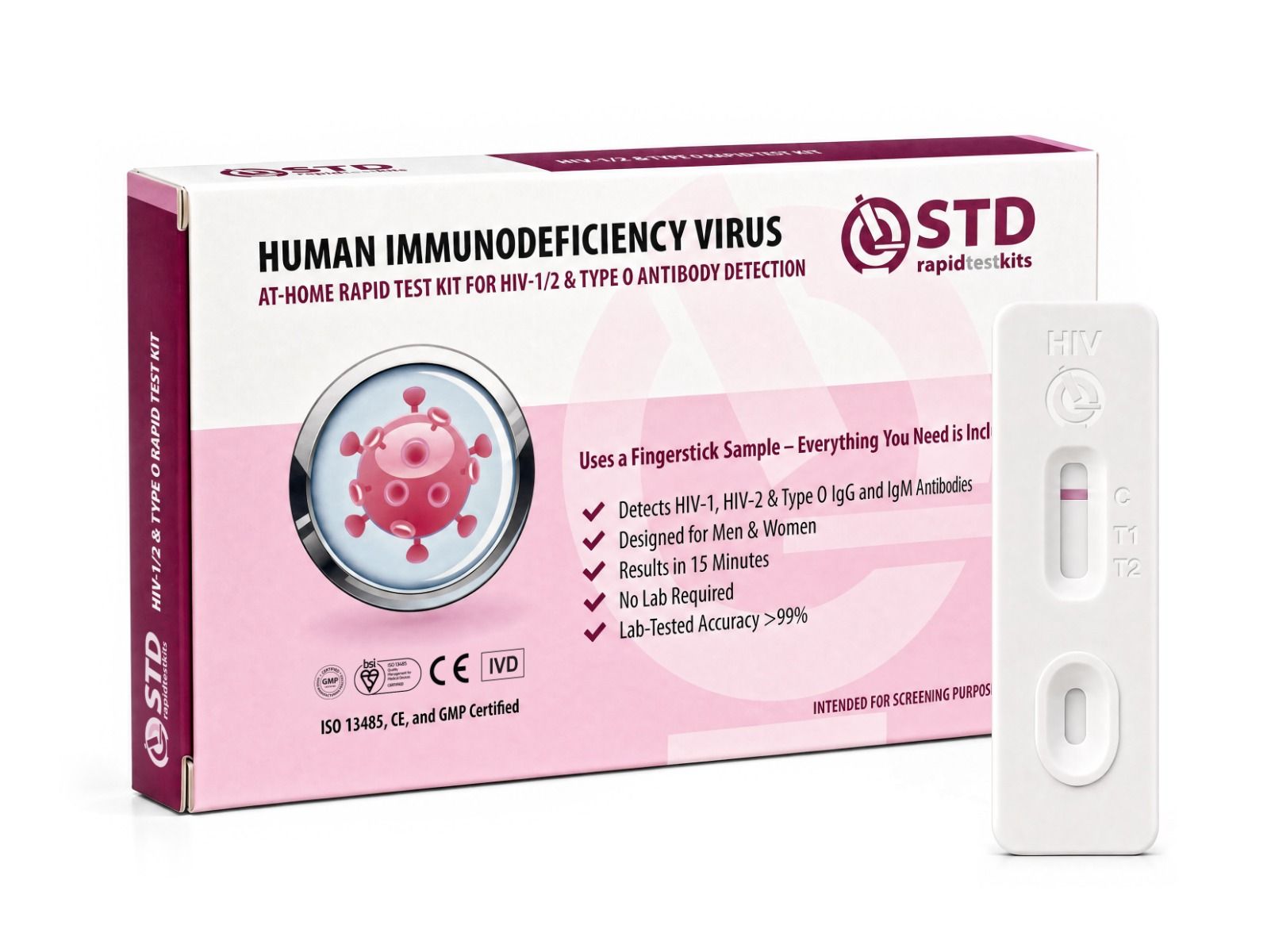
This article is published by stdrapidtestkits.com, which sells the at-home rapid test kits linked below. We recommend products based on fit-for-purpose for the reader's concern, not commercial benefit. For test types we don't carry (lab NAAT panels, throat or rectal swabs), see a clinic.
Recognizing Real STI Signals
Vaccines don't create STIs. But life doesn't pause for a flu shot. If you had a new partner, a condom slip, or sex with someone whose status you didn't fully know in the same general window as your vaccine, that exposure is a separate concern that deserves its own attention.
Symptoms that strongly favor an STI explanation over a vaccine reaction:
- Genital sores or blisters (HSV, sometimes syphilis)
- A single painless ulcer that resolves on its own (primary syphilis chancre)
- Painful urination, especially with discharge (chlamydia, gonorrhea)
- Unusual vaginal or penile discharge
- A rash on the palms or soles weeks after an exposure (secondary syphilis)
- Swollen lymph nodes in the groin (regional infection)
- Tingling, itching, or burning localized to the genitals before any visible lesion (HSV prodrome)
None of these are vaccine side effects. If any of them appear within 1 to 4 weeks of a possible exposure, they're signals worth testing for, regardless of any recent shot (NHS: Genital herpes).
What to Do If You're Not Sure
If you're stuck between "this is probably the vaccine" and "this might be something else," run through a short checklist before anything else:
- Note when the symptoms started. Anything that begins 6 to 36 hours after the shot and resolves within 48 hours is consistent with normal reactogenicity.
- Track any sexual exposures in the past 6 weeks. Be honest with yourself. A condom slip, unprotected oral, or a new partner with unknown status is worth flagging, even if you don't want to think about it.
- Look for symptoms a vaccine can't cause. Sores, blisters, painful urination, abnormal discharge, a rash on palms or soles. If any of these are present, the vaccine isn't the explanation.
- Wait the right window, then test. Don't rush. Testing too early gives false reassurance. Use the window-period table above and match the test to the infection you're worried about.
- If results are unclear, retest. For HIV and syphilis especially, an early test that lands in a gray zone is worth repeating once the peak window has passed.
Anxiety is part of this picture for a lot of people. If you find yourself spiraling, doing nothing won't help, but neither will testing at the wrong time.

Some people have flu-like symptoms within 2 to 4 weeks after infection with HIV. Symptoms can include fever, chills, rash, night sweats, sore throat, fatigue, swollen lymph nodes, and mouth ulcers.
Bottom Line: Your Body, Real Data, No Spiraling
Feeling off after a vaccine is real, and it is also not evidence of infection or something you are inventing. The immune response you felt, your exposure history if there is one, and the worry that follows all deserve to be taken seriously.
The vaccine question is almost always answered by waiting 48 hours and seeing whether the symptoms resolve. The STI question is answered by testing at the right time, using a test matched to the infection. Both questions deserve a real answer, not days of guessing.
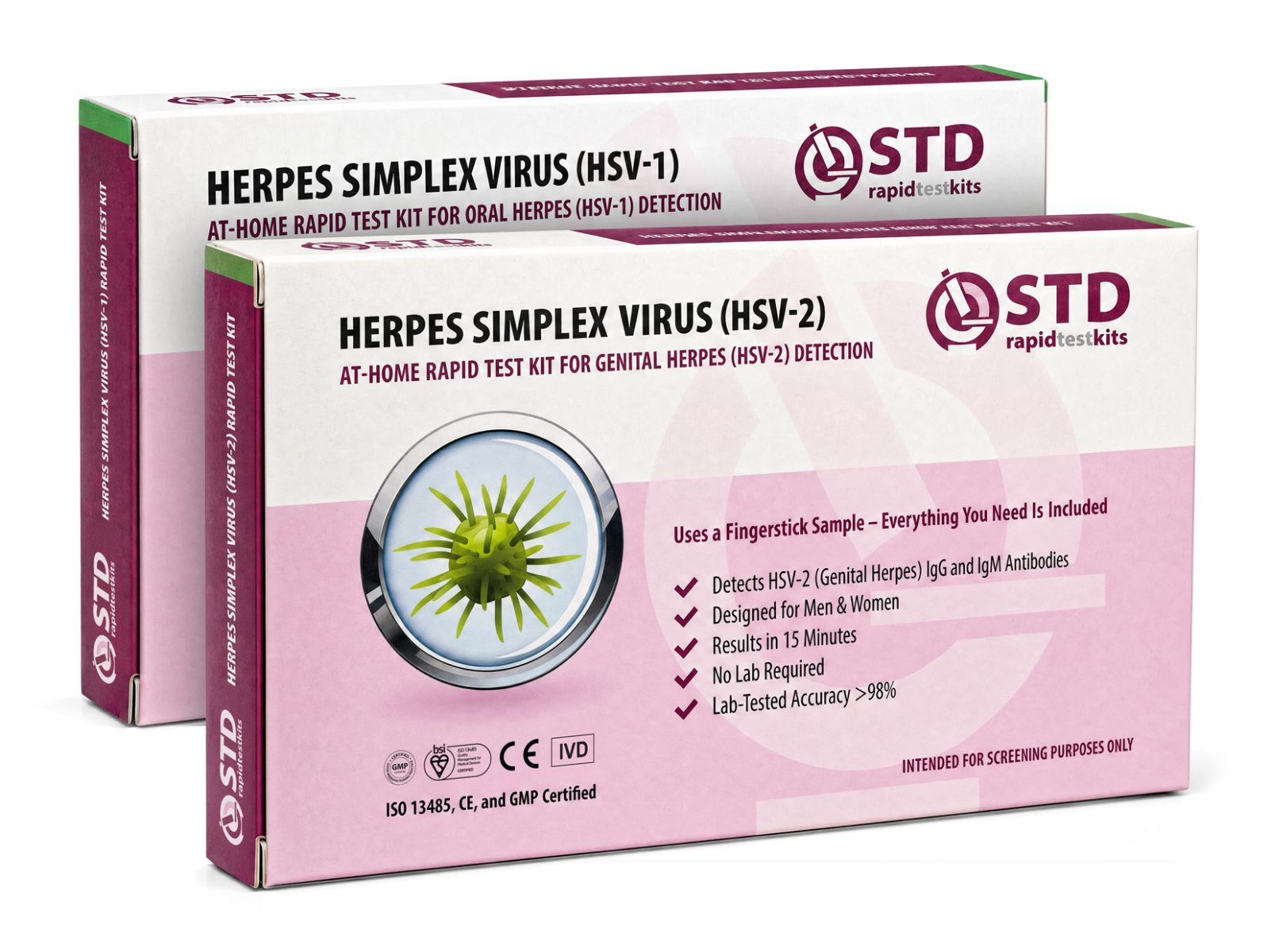
If you want to handle this privately at home, a single-infection rapid test or a combination kit covers most of what people end up worrying about after a vaccine. If symptoms involve open sores, severe pain, or persistent fever, see a clinician in person. No home test kit replaces that conversation.
Two-step plan when in doubt
- Wait 48 hours. Vaccine reactogenicity (fever, body aches, injection-site soreness, armpit lymph node) almost always resolves in that window.
- If a real exposure is also on your mind, time the STI test to the correct window period: 4 to 6 weeks for HIV (4th-gen Ag/Ab), 6 to 12 weeks for HSV antibody, 6 to 12 weeks for syphilis, 7 to 14 days for chlamydia and gonorrhea.
Frequently Asked Questions
- Can a flu shot or COVID vaccine actually cause herpes or HIV?
- No. None of the FDA-approved flu or COVID vaccines contain herpes simplex virus or HIV, and none have been shown to transmit either infection. They can briefly activate your immune system, which may unmask a herpes flare in someone who already carries HSV, but they cannot create a new herpes or HIV infection.
- Why did I get a herpes flare a few days after my booster?
- If you already carry HSV-1 or HSV-2, the immune activity that follows a vaccine can occasionally tip the balance and trigger an outbreak, similar to how stress, illness, or hormonal shifts can. This is reactivation, not a new infection. The virus was already living in your nerve cells. The vaccine just provided a strong enough immune signal to wake it up briefly.
- Can a recent vaccine cause a false positive on a rapid HIV test?
- It's rare. Modern HIV tests target antibodies or p24 antigen specific to HIV and aren't cross-reactive with vaccine-induced antibodies. A small number of antibody tests can produce ambiguous results during a strong immune response, which is why testing outside the first 48 hours post-vaccine and confirming any positive with a follow-up lab test is the standard approach.
- Should I wait to test for STIs after I get vaccinated?
- Base the timing on the exposure date and the window period for that specific test, not on the vaccine. If you simply want vaccine immune activity to settle first, waiting 48 to 72 hours after the shot is usually enough. The key factor is matching the test to the infection's window period, which is much longer than the vaccine response.
- My symptoms started 36 hours after the shot. Is it the vaccine or an STI?
- Symptoms that start 6 to 36 hours after a shot and resolve within 48 hours are almost always vaccine reactogenicity. If your symptoms include genital sores, blisters, painful urination, abnormal discharge, or a rash on the palms or soles, those are not vaccine side effects, and they warrant a test even if the timing feels coincidental.
- I haven't had sex in months, but I have an outbreak. Did the vaccine give me herpes?
- No. Herpes outbreaks don't follow your sexual calendar. Once HSV is in your nerve cells, it can reactivate any time something disturbs your immune balance: stress, illness, sunburn, hormonal shifts, or a strong vaccine response. A flare during a quiet stretch isn't evidence of a new infection. It's evidence the virus has been there silently for some time.
- Should I still get vaccinated if I have HSV or HIV?
- Yes. People living with herpes or HIV are generally encouraged to stay current on routine vaccines (flu, COVID, hepatitis B, HPV where age-appropriate). The benefit of vaccination outweighs the small chance of a temporary herpes flare. If you're on antiretroviral therapy for HIV and your CD4 count is stable, your response to most vaccines is solid. Talk to your clinician about timing if you're due for both.
- Do I need to retest if I tested too early after exposure?
- Yes. Especially for HIV and syphilis, a test taken before the window period closes can miss a real infection. If your exposure was recent and you tested anyway for peace of mind, plan to retest at the high-confidence point (4 to 6 weeks for HIV, 6 to 12 weeks for syphilis, and 6 to 12 weeks for HSV antibody, with some late seroconverters requiring up to 16 weeks). Better timing means a more reliable answer.
How We Sourced This Article: Our article was constructed based on current advice from the most prominent public health and medical organizations, and then translated into plain language for the situations people actually experience. The sources below were the primary references for the specific claims about window periods, acute HIV symptoms, herpes reactivation triggers, and vaccine reactogenicity. We don't cite peer-reviewed studies behind a paywall when a stable public-health source covers the same point.
- U.S. Centers for Disease Control and Prevention. About HIV: acute infection symptoms, transmission, and testing window periods.
- U.S. Centers for Disease Control and Prevention. Genital herpes overview: transmission routes, diagnosis via swab or blood antibody test, and available treatment options.
- U.S. Centers for Disease Control and Prevention. How to prevent STIs, including which vaccines protect against STI-related cancers and infections.
- U.K. National Health Service. HIV and AIDS symptoms, including the early flu-like illness that can follow a new HIV infection.
- World Health Organization. Herpes simplex virus fact sheet: global prevalence, lifelong latency, and clinical course of HSV-1 and HSV-2.
- U.K. National Health Service. Genital herpes symptoms, recurrence patterns, and clinical guidance for recognizing an outbreak.
