
Published: November 2025 | Last updated: May 2026 | Editorial review and quality control: Martina N.
A herpes or HIV diagnosis lands hard, and the first quiet question is usually about sex: will anyone still want me, will I hurt someone, will it ever feel good again? The honest answer, supported by current public-health guidance and the lived experience of millions of people, is yes. A healthy sex life is still possible. What changes is how you communicate, the tools you use to reduce transmission, and the partners you let close. This guide walks through what the science says, what works in practice, and how to think about intimacy after a chronic STI enters the picture, without shame and without false reassurance.
Key Takeaways
- People with HIV who take antiretroviral therapy consistently and reach a sustained undetectable viral load cannot transmit HIV to sexual partners, an evidence-based principle known as U=U.
- Daily suppressive antiviral medication significantly reduces HSV-2 transmission to an uninfected partner, and adding consistent condom use lowers the residual risk further.
What "Healthy" Sex Actually Means After Diagnosis
The word healthy gets used as a stand-in for clean, and that framing causes real harm. If sexual health were the absence of all microbial risk, very few adults would qualify. The World Health Organization defines sexual health as a state of physical, emotional, mental, and social wellbeing in relation to sexuality. Notice what is missing from that definition: a list of diagnoses you have to be free of to qualify.
In practice, healthy means a few specific things. Honest communication with partners. Current information about your status. A treatment plan that lowers transmission risk. Mutual, informed consent. Intimacy that is chosen, not bargained for as proof you are still wanted. By that working definition, plenty of people without any diagnosis are not having healthy sex, and plenty of people living with chronic infections are.
This reframe matters because the binary, clean versus risky, erases a large population. The World Health Organization estimates that about 520 million people aged 15 to 49 worldwide were living with HSV-2 in 2020, and many more carry oral HSV-1 that can also be transmitted to genital sites through oral sex. Around 1.2 million people in the U.S. are living with HIV, and most are in care. These are not edge cases. They are coworkers, dates, and likely some of the people already in your social circle.
What "healthy" looks like in practice
- Honest disclosure before any sexual contact, so partners can give informed consent.
- A current treatment plan: antiretroviral therapy for HIV, suppressive antivirals for herpes when clinically appropriate.
- Barrier methods used consistently in higher-risk windows.
- Regular STI screening for both partners, framed as shared care rather than suspicion.
How Modern Treatment Changes Transmission Risk
One of the most important shifts in sexual health over the past two decades is how dramatically treatment lowers transmission. The phrase Undetectable equals Untransmittable, often shortened to U=U, captures the scientific consensus on HIV: a person who takes antiretroviral therapy consistently and maintains a sustained undetectable viral load cannot pass HIV to a sexual partner. HIV.gov, the U.S. federal information hub on HIV, summarizes the evidence drawn from large clinical studies including HPTN 052, PARTNER, and PARTNER2, which tracked thousands of mixed-status couples with no linked transmissions when the positive partner was virally suppressed.
For genital herpes the picture is less absolute but still encouraging. According to the CDC STI Treatment Guidelines, daily suppressive therapy with valacyclovir, acyclovir, or famciclovir significantly reduces HSV-2 transmission to an uninfected partner, and consistent condom use adds another layer by lowering skin-to-skin contact in the genital area. The largest residual risk is asymptomatic viral shedding, since people can be infectious during periods without visible symptoms.
| Infection | Treatment Approach | Typical Risk Reduction | Can It Eliminate Sexual Transmission? |
|---|---|---|---|
| HIV | Antiretroviral therapy (ART) with sustained viral suppression | Effectively 100% when undetectable is maintained | Yes (U=U) |
| Herpes (HSV-2) | Daily suppressive antivirals plus consistent condom use | Significantly reduces transmission per CDC treatment guidelines; further reduced with barriers | No, but significantly lowers likelihood |
| HPV | Vaccination (HPV9) where age-appropriate; condoms reduce skin-to-skin contact | Vaccine prevents most high-risk strains; condoms reduce transmission but do not cover all exposed skin | No (vaccination is the most effective prevention) |
Disclosure: The Hardest Part, and How to Do It Well
People living with chronic STIs consistently say the diagnosis itself was easier to absorb than the conversations that followed. Disclosing to a partner, even a new hookup, can feel like standing emotionally exposed. The fear is real, and rejection or judgment does happen, sometimes worse than either. But research on disclosure outcomes is less grim than the fear suggests. Multiple studies in the sexual-health literature have found that the majority of partners disclosed to react with appreciation and continued interest, particularly when the disclosure happens before sexual contact rather than after.
The how matters as much as the whether. Sexual-health counselors generally suggest a small handful of principles. Disclose before any sexual contact, not after. Lead with calm confidence rather than apology. Offer to answer questions and point your partner to authoritative information (the CDC and Planned Parenthood pages on the relevant condition work well). Give them time to think rather than demanding an immediate response. Disclosure is also not only an ethics question. In many U.S. states and several countries, failure to disclose an HIV-positive status before sex carries criminal penalties.
A script that works for many people sounds something like this. I want to share something important about my sexual health before things go further. I live with [condition]. It is something I manage with medication and regular care, and I have done the work to keep partners safer. You do not have to make any decisions right now, I just wanted to be transparent. The pause that often follows is usually processing, and it often ends in more intimacy.
People who take HIV medicine as prescribed and get and keep an undetectable viral load have effectively no risk of sexually transmitting HIV to their HIV-negative partners.
Sex Positivity and Chronic Infections Are Not Opposites
One of the most persistent lies in sex education is that an STI diagnosis means you did something wrong. That you were careless, unlucky, or somehow morally lapsed. That story sits in the body long after any physical symptom fades. It shows up as hesitation, self-sabotage, and the quiet thought that you are too risky to love. The reality is closer to the opposite. STIs are common, and largely a feature of being a sexually active adult. CDC surveillance data show millions of new STI diagnoses in the United States each year, with several common infections rising in recent surveillance windows.
Sex positivity, the movement that frames consensual sex between informed adults as a normal and healthy part of life, has plenty of room for chronic infections. People living with HIV, herpes, or HPV often become some of the most informed, communicative partners in any room. They know what informed consent looks like in practice because their everyday life requires it. They know how transmission probabilities work. They know what a viral load test means. That depth of awareness tends to translate into intimacy that is more deliberate, with no loss of pleasure.
There is nothing about a diagnosis that strips you of your right to pleasure, attraction, or partnership. The barrier between you and a fulfilling sex life is rarely the virus itself. More often it is internalized stigma absorbed from outdated sex-ed curricula, religious framing, or pop-culture jokes that treat STIs as punchlines. Those stories can be rewritten, through therapy, peer support, accurate information, and the steady accumulation of experiences that show you are still wanted.

When Both Partners Have the Same Infection
A common misconception is that two people with the same STI no longer need precautions. The reality is more textured. If both partners have herpes but one carries HSV-1 and the other HSV-2, transmission to a previously unexposed site is still possible. If both partners are living with HIV, viral load and treatment status still matter, and reinfection with a drug-resistant strain is a real concern that clinicians track. The general guidance is to stay on whatever combination of medication, monitoring, and barriers your providers were already recommending, and to keep retesting for other STIs at the cadence your provider suggests.
The emotional shift, on the other hand, can be substantial. Couples who share a diagnosis often describe a kind of shorthand. There is no need to explain the basics of viral suppression. No awkward first disclosure conversation. Fewer assumptions to unwind. Online communities and dating platforms now exist specifically for people living with HIV or herpes, and many people find that starting from shared experience accelerates trust. None of that replaces ongoing medical care, but the social ease is genuine.
The practical takeaway is simple. A shared diagnosis still leaves residual risk between partners, so stay in regular care, keep testing for other STIs, and keep the safer-sex conversation alive even when it feels redundant.
Daily Risk Management Without Killing the Mood
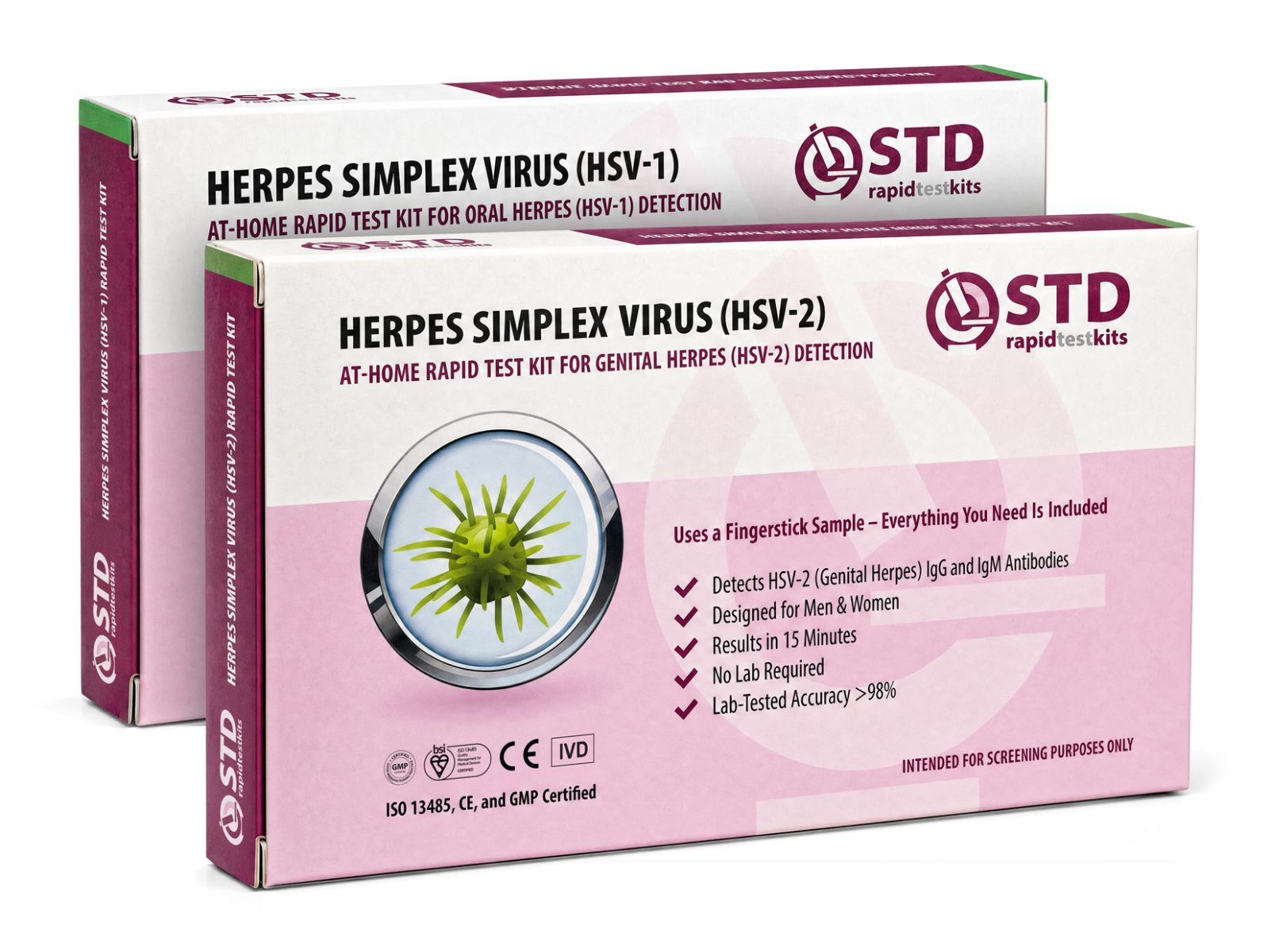
All sex carries some level of risk. Living with a chronic STI shifts the goal from zero risk to known, reduced, mutually accepted risk. The conversation does not have to feel clinical, but it does have to happen. Day to day, the tools are familiar. Track prodrome symptoms, the tingling, itching, or vague off feeling that often precedes a herpes outbreak. Take suppressive medication as prescribed. Avoid sex during symptomatic periods. Use condoms or dental dams, especially during higher-risk windows or with new partners.
For HIV-positive partners, the equivalent baseline is taking antiretroviral therapy as prescribed, monitoring viral load every few months with your provider, and knowing when a missed-dose pattern might affect that load. Pre-exposure prophylaxis (PrEP) is also an option for the HIV-negative partner in a mixed-status couple, even when the positive partner is undetectable, because it adds an independent layer of protection that does not depend on someone else's adherence.
None of this needs to derail intimacy. Couples who handle it well tend to describe routines rather than lectures: a shared note for medication days, a short check-in about how each partner is feeling that week, and agreed defaults for what changes during an outbreak. These small rhythms tend to build trust over time.
- Track prodrome symptoms (tingling, itching, or a vague off feeling) before a herpes outbreak.
- Take suppressive medication as prescribed; missed doses can affect viral suppression for HIV and outbreak control for herpes.
- Avoid sex during symptomatic or prodromal periods.
- Use condoms or dental dams during higher-risk windows or with new partners.
- Consider PrEP for the HIV-negative partner in a mixed-status couple.
Sex and Testing Considerations by Status
Not all STIs behave the same way, and the right testing rhythm depends on your status, your partner's status, and your recent exposure history. The table below summarizes how the conversation shifts in three common scenarios.
| Infection | If You Are Positive | If Your Partner Is Also Positive | If You Are Undiagnosed But Exposed |
|---|---|---|---|
| Herpes (HSV-2) | Suppressive medication, avoid sex during outbreaks | Confirm strain type, still use barriers in higher-risk windows | Blood antibody testing after the seroconversion window has closed |
| HIV | Daily ART, monitor viral load, regular STI screening | Both partners check viral load, watch for drug-resistant strains | 4th-generation antigen/antibody test from about 18 to 45 days, NAAT earlier |
| HPV | Monitor for symptoms, use condoms to reduce spread of other strains | Still at risk for strains either partner does not already carry | Pap or HPV screening at the interval your provider recommends |
Dating With a Chronic STI: What Actually Happens
The myth that a diagnosis ends a person's dating life does not hold up. People with chronic STIs date, fall in love, hook up, get married, raise kids, break up, and start over, the same as everyone else. What often shifts is how early they become deliberate communicators. Disclosure forces a conversation that many couples without a diagnosis put off for years.
People who have lived with a diagnosis for a while often describe disclosure as a filter. Partners who cannot meet honesty with honesty drop out early. The remaining people tend to be more emotionally available and better at conversations about boundaries, vulnerability, and consent. That filter is uncomfortable, and it usually shortens the time spent in mismatched relationships.
The dating landscape has also genuinely changed. Online communities for people with HIV and herpes are larger and more visible than they were a decade ago. Some apps now allow users to list their status or testing history. Public awareness of U=U is slowly reshaping what risky even means in conversations among younger daters. None of this erases the fear of the disclosure conversation, but the cultural backdrop is meaningfully less harsh than it was, and continuing to change.

When to Pause, When to Test, When to Keep Going
One of the most empowering decisions you can make while living with a chronic STI is knowing when to slow down, out of self-care rather than fear. A physical outbreak, a new medication, an unfamiliar partner, or a stretch of high stress are all reasonable reasons to pause sex for a few days or weeks. Stepping back from intimacy temporarily is part of long-term management, not a failure.
Testing also continues after diagnosis. A chronic infection can still change over time, which is why regular monitoring continues to matter. People living with HIV are still advised to test for other STIs regularly, because coinfections can complicate viral load and immune response. The same applies to people with herpes, HPV, or hepatitis. Current CDC guidance recommends full STI screening every three to six months for sexually active people with multiple partners or known exposures. Even partners in long-term, mutually exclusive relationships often retest periodically as a shared commitment to health, not as a sign of suspicion.
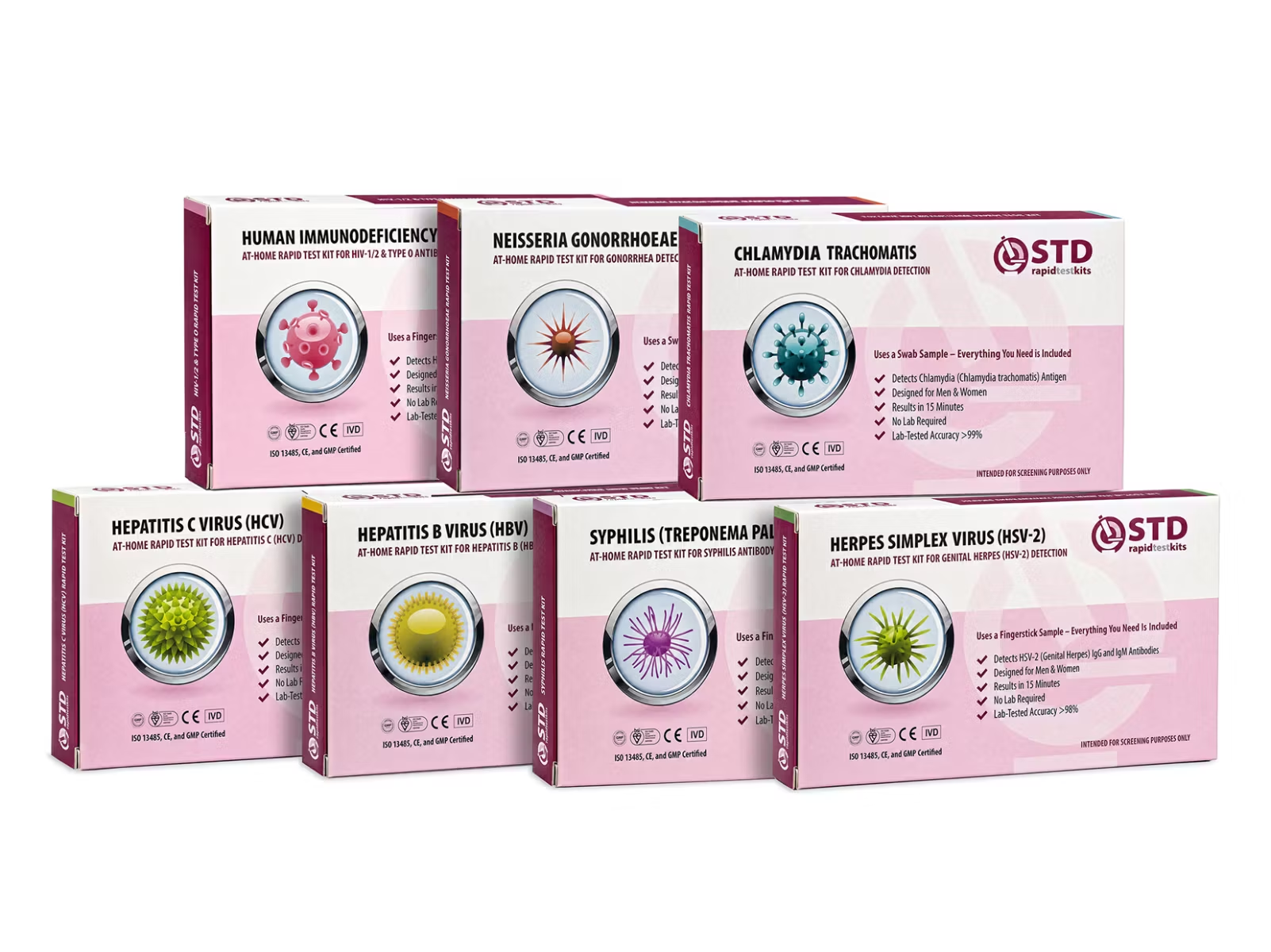
The goal of regular testing is not to catch anyone. It is to stay ahead of your body's needs. A discreet at-home option lowers the friction that keeps many people from testing in the first place, particularly for people who feel watched in clinic waiting rooms or who live in areas with limited sexual-health services.
Rebuilding Confidence and Re-Entering Intimacy
There is no fixed timeline for re-entering dating or sex after a diagnosis. For some people it takes weeks. For others it takes years. Most people describe some version of return fear: what if I freeze, what if I am rejected, what if my body betrays me again. Those fears are valid and usually not permanent. The right move is to start slow and let curiosity lead instead of performance. Solo pleasure is a reasonable on-ramp if partnered intimacy feels too high-stakes right now.
For some, the early shift is physical, learning which positions or activities trigger symptoms and which do not. For others it is emotional, separating the diagnosis from the self-story that says you are now damaged. For most people it is relational, finding a partner who listens, who asks questions, and who treats your status as information, not a verdict.
Therapy and peer support shorten the curve for many people. Sexual-health counselors, support groups (both in-person and online), and structured resources from organizations like Planned Parenthood and the American Sexual Health Association can take you from raw shock to functional confidence faster than going it alone. Pleasure remains yours. The route to it may include more check-ins and clearer conversations than before, a trade that most people, in time, find worthwhile.

Your Sex Life Is Not Over. It Is Evolving.
Living with a chronic STI does not mean shrinking your desire or dimming your life. It means learning a new set of moves rooted in more honesty, more intention, and gradually less shame. You still get to be wanted. You still get to ask for protection and feel sexy doing it. You still get to say here is who I am and here is what I need to feel safe. Partners who value honest communication tend to find that fluency appealing rather than burdensome.
If you are still finding your footing, start with information, then move to action when you are ready. Read the CDC and WHO pages on your specific condition. Talk to a sexual-health provider you trust. Test regularly, on a cadence you can sustain. Find at least one person, whether a therapist, a friend, or an online community, with whom you can be honest about how this is going. The next chapter of your sex life is not behind you. It is in front of you, and it can be better than what came before.
- Read the CDC or WHO page on your specific condition for current treatment options.
- Talk to a sexual-health provider you trust about treatment, testing cadence, and PrEP if relevant.
- Test regularly: every 3 to 6 months if you have multiple partners or known exposures, annually otherwise.
- Find at least one peer or support community, whether a therapist, friend, or online group.
Frequently Asked Questions
- Can I still have sex if I have herpes?
- Yes. Daily suppressive antivirals combined with consistent condom use significantly cuts transmission risk to an uninfected partner per CDC treatment guidelines. Avoid sex during outbreaks or prodrome symptoms, and disclose before any sexual contact so your partner can give informed consent.
- What does "undetectable" mean if I have HIV?
- Undetectable means your viral load is below the threshold that current lab tests can measure, typically under 200 copies per milliliter of blood. When you reach and maintain undetectable status on antiretroviral therapy, you cannot sexually transmit HIV to a partner. This is the U=U principle, endorsed by the CDC, HIV.gov, and the NIH, and confirmed by multiple large studies of mixed-status couples.
- When do I have to tell a partner I have an STI?
- Before any sexual contact, your partner needs the information to give informed consent. You do not have to disclose on a dating profile (some people choose to, especially for HIV), and you do not have to lead with it on a first date. But before genitals meet, your status should be on the table. In many U.S. states and several countries, failure to disclose an HIV-positive status before sex carries criminal penalties.
- What if a partner reacts badly to disclosure?
- Some people will need time to process. A few will pull back. Their reaction reflects their own information level and comfort, not your worth. Give them space to ask questions, point them to CDC or Planned Parenthood resources, and accept the answer they reach. A no clarifies who can meet you where you are. A yes is often more solid because it came after honest information.
- Can I still have oral sex with a chronic STI?
- Generally yes, with awareness. Herpes (especially oral HSV-1), HPV, and gonorrhea can all be transmitted through oral sex. Dental dams, flavored condoms, and avoiding oral contact during outbreaks reduce risk. Talk about symptoms, timing, and barriers with your partner the same way you would for vaginal or anal sex. Discuss any pharyngeal screening questions with a clinician, since at-home rapid kits do not test throat samples.
- Do condoms still matter if both partners have the same STI?
- Often yes. Two people with herpes can still pass different strains (HSV-1 versus HSV-2) to new anatomic sites. Two people with HIV can theoretically transmit drug-resistant strains, which is why ongoing care matters. A shared diagnosis still leaves residual risk between partners. Talk it through with your providers and make explicit decisions rather than defaulting to no barriers.
- How often should I test if I already have a chronic STI?
- Keep testing on a regular cadence. The CDC suggests sexually active people with multiple partners or known exposures consider full STI screening every three to six months. People living with HIV are routinely screened for syphilis, gonorrhea, chlamydia, and hepatitis as part of standard care. Long-term partners often retest periodically as a shared commitment to health. At-home rapid kits make this easier to do consistently.
- U.S. Centers for Disease Control and Prevention. About Genital Herpes, U.S. incidence and transmission overview.
- U.S. Centers for Disease Control and Prevention. STI Treatment Guidelines: Genital Herpes (suppressive antiviral therapy and transmission risk).
- World Health Organization. Herpes Simplex Virus fact sheet, global HSV-1 and HSV-2 prevalence estimates (2020 data).
- World Health Organization. Sexual Health topic page, including the WHO definition of sexual health used in this article.
- HIV.gov. The Science Is Clear: With HIV, Undetectable Equals Untransmittable, summary of the U=U evidence base (HPTN 052, PARTNER, PARTNER2).
- HIV.gov. Viral Suppression and an Undetectable Viral Load, on what undetectable means for sexual transmission risk.
- U.S. Centers for Disease Control and Prevention. Sexually Transmitted Infections (STIs) hub, U.S. prevalence and surveillance overview.
