Published: September 2025 | Last updated: May 2026 | Editorial review and quality control: Martina N.
Most people who have genital herpes do not know they have it. The virus often produces no obvious symptoms, or symptoms so mild they get mistaken for irritation, an ingrown hair, or a yeast infection. This guide leads with the practical questions you probably came here for: how does the virus actually spread, what does an outbreak look like, when can a test reliably tell you yes or no, and what prevention steps work in real life rather than just on paper.
Genital herpes is one of the most widespread sexually transmitted infections in the world. It is incurable but manageable. Most of the fear around it comes from outdated stigma rather than medical reality. If you noticed a single bump, felt a tingle, or had an exposure you are worried about, the most likely outcome is that you do not have anything serious. A single bump that resolves in three days without spreading is unlikely to be herpes; testing, not panic, is the next step.
Key Takeaways
- Genital herpes spreads through skin-to-skin contact, including times when the carrier has no visible sores or symptoms.
- The virus is widespread but underdiagnosed. The WHO estimates 520 million people aged 15 to 49 worldwide carry HSV-2, and most people carrying the virus have never been formally diagnosed.
Two viruses, one family: HSV-1 and HSV-2
Genital herpes is caused by two distinct but closely related viruses: herpes simplex virus type 1 (HSV-1) and herpes simplex virus type 2 (HSV-2). Both belong to the same family, both establish lifelong latent infection in nerve tissue, and both can flare into visible outbreaks anywhere on the body the virus first entered.
The traditional textbook split looks like this. HSV-1 is the virus most people associate with cold sores around the mouth, often picked up in childhood from non-sexual contact such as sharing utensils or being kissed by a relative. HSV-2 is the virus traditionally responsible for genital infection, transmitted almost exclusively through sexual contact in adolescence or adulthood.
That split is now out of date. Oral-to-genital contact has shifted the picture, so HSV-1 now causes a substantial share of new genital herpes cases in many countries, especially among younger adults. Once HSV-1 sets up in the genital area, the body treats it like any other genital herpes infection: same outbreak pattern, same prevention strategy, same effect on partners.
What both viruses share is a behavior called latency. After the initial infection, the virus retreats into sensory nerve cell bodies near the spine (the sensory ganglia) and stays there for life. Antivirals cannot reach it in that location, which is why no current treatment cures the infection. What antivirals do is suppress reactivation events at the skin level, where the visible disease happens. Knowing which type you have matters for prognosis: recurrences differ between types, and blood antibody tests can tell HSV-1 and HSV-2 apart, which is useful when disclosing risk to a partner or planning a pregnancy.
Type matters for how often you can expect recurrences after a first episode in the genital area:
- Genital HSV-2: typically four to six recurrences in the first year, easing in frequency over subsequent years.
- Genital HSV-1: often only one or two recurrences in the first year, and rarely after that.
Both types calm down over time, though HSV-2 tends to stay more active in the long term.
How common is genital herpes?
Common enough that, statistically, you almost certainly know someone who has it. The World Health Organization estimates that around 520 million people aged 15 to 49 worldwide are living with HSV-2 (about 13 percent of that age group), the type most strongly associated with genital infection (WHO herpes simplex virus fact sheet). HSV-1 is even more widespread, infecting an estimated 3.8 billion people under age 50, or roughly two-thirds of that age group globally.
In the United States, the CDC estimated 572,000 new genital herpes infections in 2018, the most recent year for which a published estimate is available, in adults aged 14 to 49 (CDC genital herpes overview). Prevalence skews higher in women than in men, partly because the female genital tract is biologically more susceptible to viral entry during heterosexual contact.
Awareness lags far behind prevalence. The CDC notes that most people with genital herpes have no symptoms or such mild symptoms that they never connect them to an STI. They either had no symptoms, or had a single mild episode years ago that they attributed to something else: an ingrown hair, an irritation, a yeast infection, a friction burn from new underwear. The virus is present in far more people than the formal diagnosis count suggests, which is why transmission keeps happening.
The CDC states that most people with genital herpes are unaware of their infection because they have no symptoms or symptoms too mild to recognize (<a href="https://www.cdc.gov/herpes/about/index.html">CDC genital herpes overview</a>). This undiagnosed share is the single biggest reason the virus continues to spread: most carriers do not know to take the precautions that would protect a partner.
How genital herpes spreads
Genital herpes spreads through direct skin-to-skin contact between an infected area on one person and a vulnerable mucosal surface (or microscopic skin abrasion) on another. The infectious contact pathways are:
- Vaginal sex with a partner carrying genital HSV-1 or HSV-2.
- Anal sex with a partner carrying genital HSV-1 or HSV-2.
- Oral sex from a partner with active oral HSV-1 (a cold sore) or, less commonly, oral HSV-2. This is how oral-to-genital HSV-1 infections happen.
- Genital-to-genital rubbing without penetration, if active viral shedding is occurring on either partner's genital skin.
- Vertical transmission from mother to newborn during vaginal delivery, particularly if the mother acquired the infection late in pregnancy.
Three transmission scenarios cause the most confusion and deserve specific attention:
- Cold sores from a casual kiss. A parent or relative with a visible cold sore who kisses a child can transmit HSV-1 orally. This is how a large share of childhood oral HSV-1 is acquired and why global HSV-1 prevalence is so high.
- Asymptomatic shedding between outbreaks. The CDC explicitly states that the virus can transmit from skin areas with no visible sore.
- Oral-to-genital transmission. Performing oral sex with an active or recently active oral cold sore can transmit HSV-1 to the partner's genitals, where it then behaves like genital herpes. This is the mechanism behind the rising share of genital HSV-1 cases.
Genital herpes is not spread by casual contact: not by toilet seats, towels, swimming pools, hot tubs, eating utensils, or shared bedding. The virus is fragile outside the body and dies quickly on inanimate surfaces. The fear of catching it from a public restroom or a shared chair is unfounded; the realistic risk is intimate contact with someone whose virus is currently active on their skin.
One related point worth flagging: active herpes lesions also raise the risk of acquiring HIV during the same encounter. Open skin and local inflammation at a sore lower the barrier to HIV entry, and the inflammatory response recruits CD4 T cells, the exact immune-cell population HIV targets, to the genital epithelium (CDC genital herpes overview).
The virus can be present and contagious on the skin during periods when the carrier has no visible sores, no tingling, and no idea they are shedding virus. In studies of HSV-2 carriers using daily swabs, the virus was detectable on roughly 10 to 20 percent of days even in people without active lesions, a figure summarized in the CDC's herpes management guidance (<a href="https://www.cdc.gov/std/treatment-guidelines/herpes.htm">CDC STI Treatment Guidelines, Herpes section</a>). Most new infections happen this way: a partner who genuinely did not know they were contagious passes the virus during a shedding day. It is also why “only have sex when you don't have an outbreak” is incomplete advice on its own.
What an outbreak actually looks like
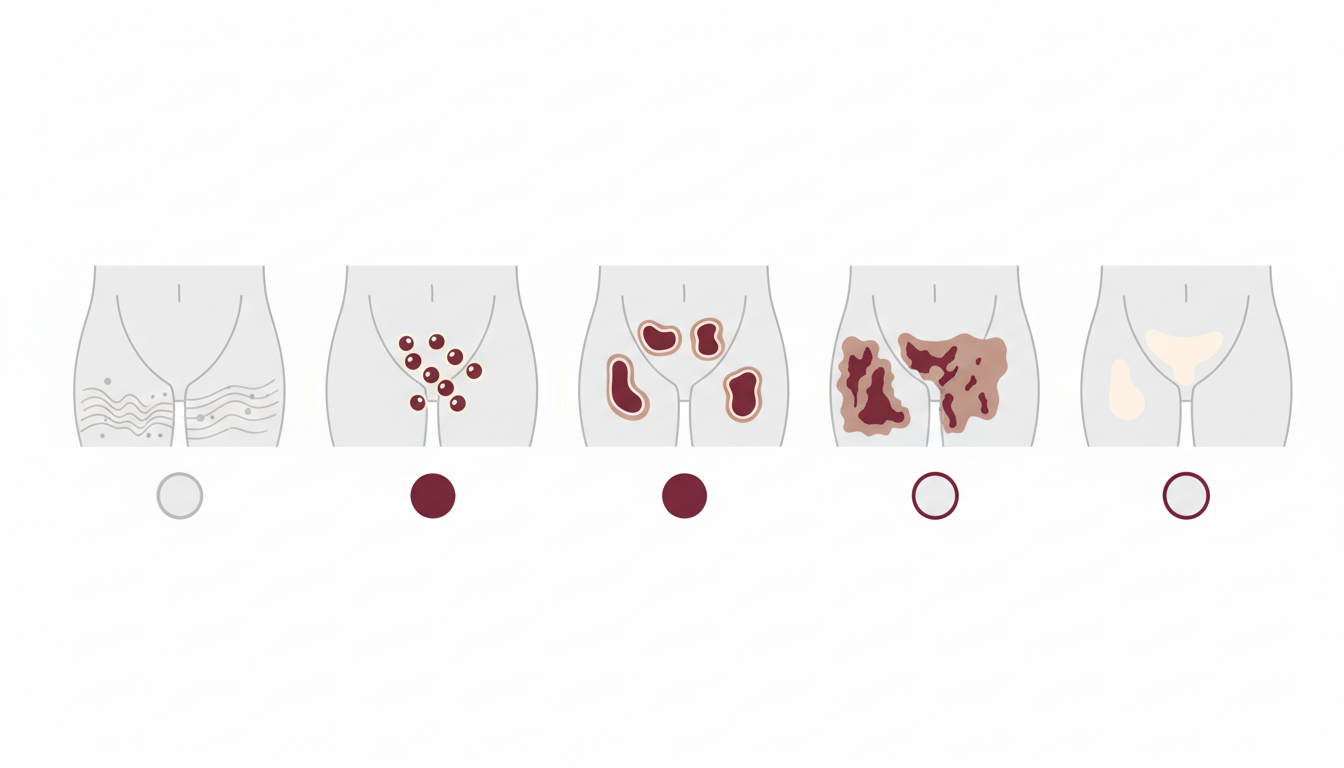
The classic first outbreak of genital herpes follows a recognizable pattern, although many people experience much milder versions or no symptoms at all. A typical first episode includes:
- Prodrome (1 to 2 days before lesions appear): tingling, burning, itching, or shooting pain in the area where the sore will form. Some people describe it as the skin feeling unusually sensitive or off.
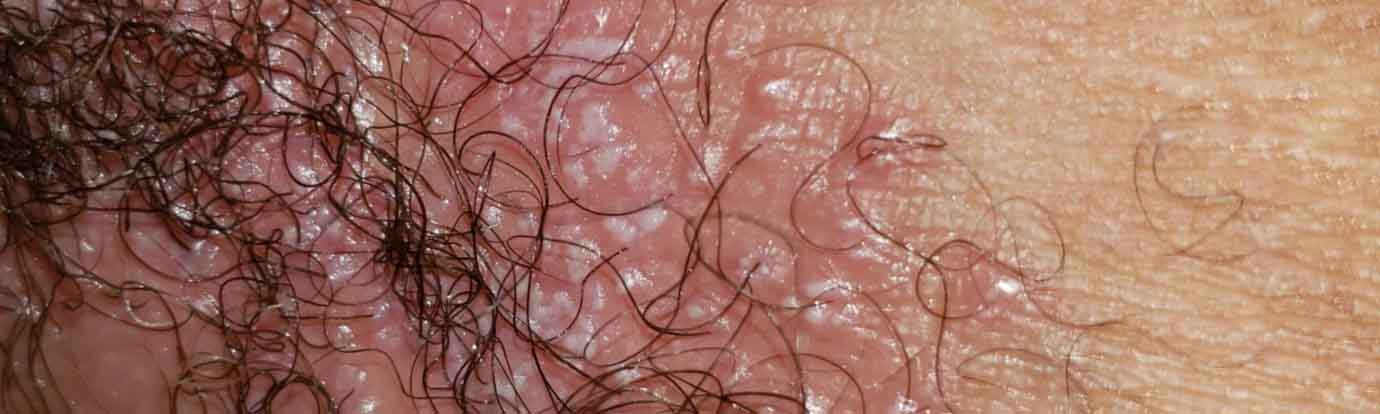
- Small fluid-filled blisters appearing in clusters on the genitals, buttocks, inner thighs, around the anus, or on the cervix in women. The blisters are usually painful or tender and sit on a base of pinkish-red inflamed skin.
- Ulceration: blisters break open within a few days, leaving shallow, painful ulcers that can sting badly when urine touches them.
- Crusting and healing: ulcers scab over and heal without scarring, usually within 1 to 3 weeks of the prodrome.
- Flu-like symptoms during the first outbreak only: fever, body aches, swollen lymph nodes in the groin, and fatigue. Recurrences are usually localized and lack these whole-body symptoms.
Recurrent outbreaks are typically shorter and milder than the first episode, with fewer lesions (NHS genital herpes). The body's immune system has now seen the virus and reacts faster. For many people, recurrences become rarer over time as the immune response strengthens. Some people also notice a recurrence-specific prodrome, often described as muscle aches or shooting pain in the thighs or buttocks a day before any visible lesion appears.
Symptoms in men and women overlap substantially, but the location varies. In men, lesions tend to appear on the shaft, glans, or foreskin of the penis, around the scrotum, or on the buttocks. In women, lesions can appear on the vulva, in the vaginal introitus, on the cervix (where they often go unseen), or around the perineum and anus. Cervical involvement in women is one reason herpes goes undiagnosed: lesions can be present internally with no visible external sign.
The visual signature most clinicians look for is a tight cluster of small clear vesicles on a red base, all at roughly the same stage of healing. A single isolated ulcer, a single firm raised bump, or scattered lesions at different stages are more often something else (an aphthous ulcer, folliculitis, a syphilis chancre, contact dermatitis). When in doubt, a clinic PCR swab settles the question.
Incubation period: when symptoms appear after exposure
If symptoms are going to appear, they typically show up within the first two weeks after exposure, often somewhere between two and twelve days, with around four days being the most commonly cited average in clinical literature. After that initial window, the virus migrates from the skin entry point along local nerve fibers to a sensory ganglion (a cluster of nerve cell bodies near the spine), where it sets up lifelong latent infection. The latent virus is invisible to the immune system and cannot be eliminated.
From its hiding place in the ganglion, the virus periodically reactivates: it travels back down the nerve to the skin and replicates, producing either a visible outbreak or asymptomatic shedding without lesions. Reactivation is more common in the first year after infection and tends to space out over time.
- Physical or emotional stress
- Illness with fever
- Fatigue or sleep deprivation
- Hormonal shifts, including menstruation
- Immunosuppression (HIV, chemotherapy, organ-transplant medication)
- Direct trauma to the area, such as friction or shaving irritation
How genital herpes is diagnosed
Two main testing approaches are used, and choosing between them depends on whether you have an active outbreak right now or are trying to find out about a past exposure.
Direct testing during an active outbreak. If you currently have a lesion, the most accurate test is a clinic-administered swab sent for nucleic acid amplification testing (NAAT or PCR). The clinician takes a sample from the base of an unhealed sore, and the lab amplifies viral DNA to confirm both the presence of HSV and which type (HSV-1 or HSV-2) is present. PCR sensitivity for active herpes lesions is reported at 90.9 to 100 percent in the CDC STI Treatment Guidelines, Herpes section, which is why it is the gold-standard diagnostic when a lesion is available to swab. Older viral culture and direct fluorescent antibody methods still exist but have lower sensitivity than PCR, particularly for recurrent (older) lesions where the virus has begun to retreat.
Blood antibody testing for past infection. If you do not have an active lesion, or you want to know your status from a past exposure, the appropriate test is a type-specific HSV-1 / HSV-2 IgG antibody blood test. The CDC notes that type-specific glycoprotein G antibody tests have sensitivity for HSV-2 ranging from 80 to 98 percent, with false negatives more common in the early weeks after infection (CDC STI Treatment Guidelines, Herpes section). The typical seroconversion window is 6 to 12 weeks for most people, with a small subset taking up to 16 weeks to seroconvert reliably. Testing earlier than 6 to 8 weeks risks a false negative because antibody levels may not yet be detectable.
Home rapid blood antibody tests use lateral-flow chemistry to detect IgG antibodies from a fingerstick blood sample. They share the same window-period limitation as lab serology and are best used at least 12 weeks after the most recent risk exposure. A positive home result is worth confirming with a clinician and a lab-grade type-specific test, particularly because HSV-1 antibody specificity in some assays is lower than HSV-2 specificity.
A note on commercial scope: this article is published by stdrapidtestkits.com, which sells at-home blood antibody testing kits for HSV-1 and HSV-2. We describe the full diagnostic landscape (including clinic PCR swab testing, which we do not sell at home) so you can pick the right tool for your situation rather than just the one we sell.
| Test type | What it detects | When to use | Where |
|---|---|---|---|
| Clinic PCR swab | Active virus DNA in a lesion | During an active outbreak | Clinic, urgent care, or sexual health clinic |
| Type-specific IgG blood test | Past exposure to HSV-1 or HSV-2 | 12+ weeks after exposure | Lab order from clinician |
| Viral culture of a lesion | Live virus from an open sore | Active outbreak (lower sensitivity than PCR) | Clinic; older method |
| At-home rapid antibody cassette | IgG antibodies (HSV-1 and HSV-2) | 12+ weeks after exposure for screening | Self-collected fingerstick at home |
How do you get genital herpes, and how do you confirm it?
Genital herpes is caused by the herpes simplex virus, either HSV-1 or HSV-2. It spreads through direct skin-to-skin contact during oral, vaginal, or anal sex, including times when the carrier has no visible sores. When symptoms appear, they typically show up 2 to 12 days after exposure as clustered painful blisters or shallow ulcers. Diagnosis uses a clinic-based PCR swab of an active lesion (most accurate during an outbreak) or a type-specific blood antibody test taken at least 12 weeks after exposure (most people seroconvert within 6 to 12 weeks; waiting to 12 weeks rules out the slower converters) to confirm past infection.
Treatment: managing herpes, not curing it
There is no cure for genital herpes. Once the virus has established latency in the nerve ganglia, no available drug clears it. What treatment does is shorten outbreaks, reduce their severity, lower the frequency of recurrences, and reduce the rate of asymptomatic shedding, which in turn reduces the chance of passing the virus to a partner.
Three antiviral medications are first-line: acyclovir, valacyclovir, and famciclovir. They work by interfering with viral DNA replication and are similar in clinical efficacy. The choice usually comes down to dosing convenience and cost. Acyclovir is typically dosed at 400 mg three times daily for a 7 to 10 day first episode. Valacyclovir is a prodrug of acyclovir with simpler dosing, often 1 g twice daily for 7 to 10 days. Famciclovir is similar in mechanism and efficacy and is sometimes used when other agents are not tolerated.
Pregnancy, immunosuppression, and severe atypical presentations have specific dosing protocols; these are conversations to have with a prescriber rather than self-managed. Over-the-counter pain relief (sitz baths, loose cotton underwear, topical lidocaine, oral acetaminophen or ibuprofen) helps with the discomfort during an active outbreak. Topical antiviral creams marketed for cold sores have minimal effect on genital outbreaks and are not a substitute for oral antivirals.
Two treatment patterns answer different needs (<a href="https://www.cdc.gov/std/treatment-guidelines/herpes.htm">CDC STI Treatment Guidelines, Herpes section</a>):
- Episodic therapy: a short 3 to 5 day course started at the first sign of prodromal symptoms or visible lesions. Best for people with infrequent recurrences. Shortens outbreak duration by 1 to 2 days when started early.
- Daily suppressive therapy: a continuous low dose to prevent recurrences. Best for people with frequent or severe recurrences (six or more per year) and for couples where one partner is positive and the other is not. Reduces outbreak frequency by roughly 70 to 80 percent and reduces transmission risk to a negative partner by approximately 48 percent in combination with consistent condom use, though it does not eliminate either.
Prevention: strategies that genuinely reduce transmission risk
No prevention strategy is 100 percent effective short of complete abstinence, but several measures meaningfully reduce risk in real-world use:
- Consistent condom or dental dam use reduces HSV-2 transmission by approximately 30 percent in mixed-status couples. Condoms protect skin they cover; the virus can shed from areas the condom does not cover (groin, inner thigh, perineum), which is why protection is partial rather than complete.
- Daily suppressive antiviral therapy by the positive partner reduces transmission to the negative partner by approximately 48 percent on top of condom use (CDC STI Treatment Guidelines, Herpes section). The combined effect of condoms plus daily valacyclovir is the most effective non-abstinence strategy currently available for serodiscordant couples.
- Avoiding sex during prodromal and active outbreak phases dramatically reduces transmission during the highest-shedding windows. This is necessary but not sufficient because of asymptomatic shedding between episodes.
- Open disclosure before sexual contact, allowing the negative partner to make an informed choice. Disclosure is also legally required in some jurisdictions.
- Mutual monogamy with tested partners limits exposure to a single known status.
- Avoiding oral sex during visible cold sores. A visible cold sore means HSV-1 is shedding orally; oral sex during this window is a common route for HSV-1 to land on a partner's genitals.
- Male medical circumcision provides a partial reduction in HSV-2 acquisition for heterosexual men, per pooled data from randomized controlled trials.
There is currently no licensed vaccine for HSV-1 or HSV-2 in humans. Several candidates have shown promise in early clinical trials, but none has reached approval as of 2026.
| Layered strategy | Approximate HSV-2 risk reduction | Notes |
|---|---|---|
| Consistent condoms / dental dams | ~30% | Covers only the skin under the barrier |
| Daily suppressive antivirals (positive partner) | ~48% (on top of condoms) | Reduces but does not eliminate shedding |
| Avoiding sex during prodrome + active outbreak | Largest single-day reduction during outbreak | Does not address asymptomatic shedding |
| Combined: condoms + daily antivirals + outbreak avoidance | Highest combined real-world reduction | Still nonzero residual risk |
Genital herpes in pregnancy and the neonatal risk
The most serious complication of genital herpes is neonatal herpes, a rare but potentially life-threatening infection passed from mother to newborn during vaginal delivery. Outcomes range from localized skin lesions (mildest) to disseminated infection of the brain and organs (most severe, with significant mortality even with treatment).
The risk is highest when a pregnant person acquires HSV for the first time late in pregnancy, because the body has not yet produced protective antibodies to pass to the fetus. Reactivation of pre-existing infection in someone already herpes-positive carries a much lower neonatal risk, though it is not zero. For this reason, pregnant people with a known HSV diagnosis are typically prescribed daily suppressive valacyclovir from week 36 onward, and a cesarean delivery is recommended if there is an active outbreak or prodromal symptoms at the onset of labor (CDC herpes during pregnancy guidance; MedlinePlus Genital Herpes). Disclose your herpes history to your obstetric provider at the first prenatal visit so the plan is in place well before labor.
Outside of pregnancy, the most clinically significant complication is the interaction between HSV-2 and HIV. People living with HSV-2 have approximately three times the risk of acquiring HIV during a high-risk exposure (WHO HSV fact sheet), because the breaks in the genital epithelium during outbreaks (and the recruitment of HIV-target immune cells to the area) provide an entry route for HIV. The two infections together also increase HIV viral load and onward transmission risk. This is why HSV-2 and HIV testing are commonly ordered together in sexual health screening panels.
Acquiring HSV for the first time in the third trimester carries the greatest neonatal risk, because protective maternal antibodies have not yet crossed the placenta. The standard protocol for known HSV carriers is daily suppressive valacyclovir from week 36 onward, and cesarean delivery if active lesions or prodromal symptoms are present at the onset of labor. Pregnant people who have never been tested for HSV should ask about screening at their first prenatal visit, and a partner with a known HSV history should consider abstaining or using condoms plus daily suppressive antivirals throughout the third trimester.
Living with genital herpes
Genital herpes carries a cultural weight far heavier than its medical reality warrants. For most people, recurrences become less frequent over time, antiviral medication keeps outbreaks short and manageable, and consistent precautions allow long-term sexual relationships, including with HSV-negative partners. The psychological impact of diagnosis, particularly the disclosure conversation, tends to be the hardest part for newly diagnosed patients.
Disclosure to a sexual partner is the single biggest source of anxiety. The mechanics are simpler than they feel. A short, factual conversation before sex works better than a long apologetic one. Three pieces of information are usually enough: the type you carry (HSV-1 or HSV-2), where outbreaks occur, and what you do to reduce transmission risk. A useful template sounds like this: “I carry HSV-2. Most people who carry it don't know they have it. With daily antiviral medication and condoms, my transmission risk to you is low but not zero. I wanted to tell you before things go further so you can decide.” Most partners respond reasonably when given factual information, and many carry HSV themselves without realizing it.
If you have just been diagnosed: the diagnosis does not change who you are, does not make you unsafe to a partner who is informed and willing, and does not preclude pregnancy or breastfeeding. The clinical management is well-understood and effective. Support groups and counseling resources run by organizations such as the American Sexual Health Association are particularly useful in the first few months after diagnosis, when the emotional weight of disclosure and adjustment tends to feel heaviest; reach out early rather than waiting for the second or third outbreak.
Most people with genital herpes are unaware of their infection. Many have either no symptoms or have very mild symptoms that they don't notice or that they mistake for another skin condition.
Frequently Asked Questions
- What's the difference between HSV-1 and HSV-2?
- Both viruses cause sores that look identical clinically. HSV-1 is the type traditionally associated with cold sores around the mouth, while HSV-2 is traditionally associated with genital infection. Either type can infect either location through oral-to-genital contact. The main practical difference is recurrence pattern: genital HSV-2 recurs more often than genital HSV-1, and most modern blood antibody tests can tell the two apart.
- Can I get genital herpes from someone with no symptoms?
- Yes, and this accounts for the majority of new cases. Between visible outbreaks, the virus can still be active on genital skin without producing any sore or sensation. A partner can pass it on during these symptom-free shedding windows without realizing they were contagious, which is why disclosure plus precautions matters even when no one has noticed an outbreak in a long time.
- Can I get herpes from kissing someone with a cold sore?
- Yes. A visible cold sore is HSV-1 actively shedding on the lip, and kissing during an outbreak transmits the virus reliably. The same person between outbreaks can also shed asymptomatically, which is why HSV-1 is so widespread globally. If a partner has a visible cold sore, wait until it has fully healed before kissing or oral contact, and avoid oral sex in that window to prevent oral-to-genital transmission.
- How long after exposure can I reliably test?
- For a blood antibody test (in clinic or at home), wait at least 12 weeks after the suspected exposure: that window covers nearly all seroconverters, including the slower-converting subset. Some people develop detectable antibodies sooner, but a negative result before week 12 cannot fully rule out a recent infection. Separately, if you have an active sore right now, skip the antibody test and get a clinic PCR swab today; it works only while the lesion is open and gives an answer the same day.
- Is there a cure for genital herpes?
- No. Once the virus establishes latency in nerve tissue, no current medication clears it. Antivirals (acyclovir, valacyclovir, famciclovir) shorten outbreaks, reduce recurrence frequency by roughly 70 to 80 percent on suppressive dosing, and reduce transmission risk to partners, but do not eliminate the infection. Several vaccine candidates are in clinical trials but none is licensed as of 2026.
- Do condoms prevent herpes?
- Condoms reduce transmission risk by roughly 30 percent in mixed-status couples but do not eliminate it. The virus can shed from skin areas the condom does not cover, including the groin, inner thigh, and perineum. Condoms combined with daily suppressive antiviral therapy by the positive partner is the most effective non-abstinence prevention strategy currently available.
- Will herpes affect my pregnancy?
- It can, but the risk is manageable when known in advance. The main concern is neonatal herpes during vaginal delivery, particularly if the mother acquires HSV for the first time late in pregnancy. Established carriers have already developed protective antibodies that cross the placenta. Pregnant people with a known herpes diagnosis are typically prescribed daily suppressive antivirals from week 36, and a cesarean is recommended if there is an active outbreak at labor onset.
- Can I have a normal sex life with genital herpes?
- Yes. With layered precautions (disclosure, condoms, daily suppressive antivirals by the positive partner, and avoiding sex during prodrome or active outbreaks), the per-encounter transmission risk to a negative partner is small. Many serodiscordant couples remain in long-term relationships with the negative partner staying HSV-negative for years.
- U.S. Centers for Disease Control and Prevention. Genital Herpes overview: basic facts on prevalence (572,000 new U.S. infections in 2018), transmission routes, asymptomatic shedding, pregnancy guidance, and HSV-related HIV acquisition risk.
- World Health Organization. Herpes simplex virus fact sheet: global HSV-1 prevalence (3.8 billion people under 50, ~64 percent of that age group) and HSV-2 prevalence (520 million people aged 15 to 49, ~13 percent), neonatal risk, and the HSV-2 / HIV interaction.
- U.K. National Health Service. Genital herpes: symptom progression, recurrence pattern, antiviral treatment timing, and pregnancy guidance.
- U.S. National Library of Medicine, MedlinePlus. Genital herpes patient overview covering symptoms, causes, neonatal complications, and self-care guidance.
- U.S. Centers for Disease Control and Prevention. STI Treatment Guidelines, 2021: Genital Herpes section. Source for PCR sensitivity (90.9 to 100 percent), type-specific antibody sensitivity (80 to 98 percent for HSV-2), 12-week antibody-test window recommendation, antiviral dosing regimens for acyclovir and valacyclovir, asymptomatic shedding frequency, condom guidance, episodic-vs-suppressive therapy framework, and suppressive-therapy transmission reduction (~48 percent).
- American Sexual Health Association. Patient-facing herpes resources, disclosure scripts, and peer support communities for newly diagnosed patients.
