What Does Herpes Look Like? A Visual Guide to HSV-1 and HSV-2 Symptoms
Herpes lesions follow a predictable pattern at every site they appear: a tingling warning, then a cluster of small fluid-filled blisters, then shallow ulcers that crust and heal within one to two weeks. This guide shows what each stage looks like, the less obvious places HSV can appear, and the everyday skin conditions most often mistaken for it.
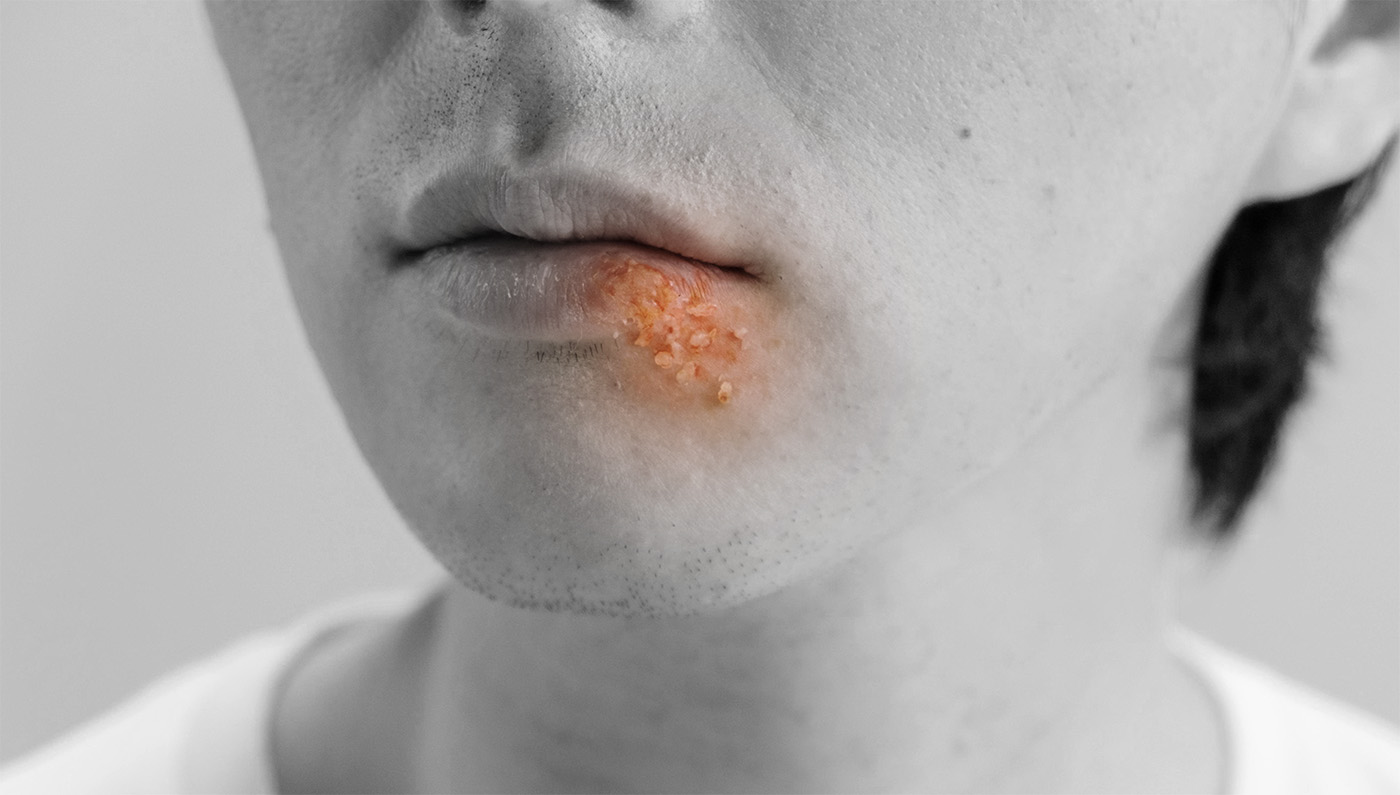



- Most herpes outbreaks follow the same five-stage pattern (tingling, blister, ulcer, crust, heal) regardless of whether they appear on the lips, genitals, or elsewhere on the body.
- Many conditions look like herpes (canker sores, ingrown hairs, yeast irritation, contact dermatitis), so a blood antibody test or a clinic-administered swab is the only reliable way to confirm what you are dealing with.
Published: August 2025 | Last updated: April 2026 | Editorial review and quality control: Martina N.
Herpes simplex virus is one of the most common viral infections in the world, and most people who carry it never know they do. The World Health Organization estimates that about two-thirds of people under 50 carry HSV-1, the strain most often associated with oral cold sores, and roughly 13% of adults aged 15 to 49 carry HSV-2, the strain most often associated with genital outbreaks (WHO herpes simplex virus fact sheet). Many people only learn they have it when an outbreak appears, and even then the lesions can look so different from what they expected that the cause stays unclear.
This article walks through what HSV-1 and HSV-2 actually look like at each stage of an outbreak, the body sites where they show up beyond the obvious mouth and genital regions, and the everyday skin issues most often confused for herpes. If you are trying to figure out what you are looking at right now, the symptom comparisons and the home-testing options at the end will help you decide what to do next.
What does a herpes lesion look like?
A typical herpes lesion is a cluster of small (1 to 3 mm) clear or cloudy fluid-filled blisters on red, inflamed skin. Within a few days the blisters break open into shallow, painful round ulcers, then crust over and heal without scarring in roughly one to two weeks. The first outbreak is usually the worst and may include fever, swollen lymph nodes, and body aches. Recurrent outbreaks are typically milder and shorter.
Key Takeaways
- Most herpes outbreaks follow the same five-stage pattern (tingling, blister, ulcer, crust, heal) regardless of whether they appear on the lips, genitals, or elsewhere on the body.
- Many conditions look like herpes (canker sores, ingrown hairs, yeast irritation, contact dermatitis), so a blood antibody test or a clinic-administered swab is the only reliable way to confirm what you are dealing with.
HSV-1 vs HSV-2: two strains, overlapping presentations
Herpes simplex virus comes in two closely related types. HSV-1 most commonly causes oral herpes (cold sores on or around the lips), and HSV-2 most commonly causes genital herpes. The split is no longer clean: HSV-1 has become a frequent cause of first-episode genital herpes in younger adults due to oral-to-genital transmission, and HSV-2 occasionally causes oral lesions (CDC about herpes).
The visual appearance of an outbreak is similar regardless of which strain caused it. What differs is the location, the frequency of recurrence, and how the immune system responds. HSV-2 tends to recur more often in the genital region; HSV-1 in the genital region tends to recur less frequently. On the lips, HSV-1 is the dominant cause of repeated cold sores. The strain matters most when you are deciding which test to order and when interpreting the result.
The majority of people who carry HSV are asymptomatic or have outbreaks so mild they go unrecognized. The virus can still be transmitted during these silent periods through a process called asymptomatic viral shedding, which is one reason herpes spreads so widely (<a href="https://www.who.int/news-room/fact-sheets/detail/herpes-simplex-virus">WHO</a>). If you have never had a visible sore but think you may have been exposed, blood antibody testing is the way to find out.
The five stages of a herpes outbreak
Whether the lesion appears on a lip, finger, or genital area, the cycle from first warning sign to fully healed skin moves through five recognizable stages. Knowing what each stage looks and feels like helps you start treatment earlier (antivirals work best when taken at the prodrome stage) and avoid spreading the virus during the most contagious window.
- Prodrome (a few hours to two days before any visible lesion): tingling, itching, burning, or a localized aching feeling at the spot the outbreak will appear. Some people also notice a flu-like sense of fatigue or low-grade fever, especially during a first outbreak.
- Blister stage (day 1 to day 3 of visible lesion): a tight cluster of small fluid-filled blisters appears on red, raised, inflamed skin. The fluid is initially clear, then cloudy. The cluster pattern (multiple small blisters together rather than one larger blister) is one of the most diagnostic features of HSV.
- Ulcer stage (day 3 to day 5): the blisters rupture and merge into shallow, round, sharply painful ulcers with a red base. This is the most contagious stage because the ulcer fluid carries a high viral load.
- Crusting stage (day 5 to day 8): the ulcers dry and form a yellow-brown scab. Lesions on moist tissue (inside the mouth, on the labia, or on the foreskin) often skip a true crust and heal as wet erosions instead.
- Healing stage (day 8 to day 14): the scab falls off and reveals new pink skin underneath, which fades to normal color over the following days. Herpes lesions typically heal without scarring; a true scar is more suggestive of a different cause.
A first outbreak (the body's primary infection) is usually the longest and most severe and can take two to four weeks to fully resolve (NHS genital herpes). Recurrent outbreaks are generally shorter, with milder symptoms and no systemic illness, because the immune system already recognizes the virus.
What oral herpes looks like
The classic cold sore appears on or just outside the vermillion border (the sharp pink-to-skin edge of the lip), most often on the upper lip. The lesion almost always starts as a tingling or itching patch a day or two before anything is visible. Then a tight cluster of small clear vesicles appears on inflamed red skin. Within two to three days the vesicles rupture, weep, and fuse into a shallow ulcer, then crust over with a yellow-brown scab and heal in seven to ten days for recurrent outbreaks (NHS cold sores).
HSV-1 also causes lesions outside the lips. Sores can appear on the chin, the cheek, around the nostrils, and inside the mouth on the gums, hard palate, or tongue (a presentation called intraoral herpes or herpetic gingivostomatitis, especially in children with a first outbreak). Intraoral lesions on moist tissue often look like multiple small round ulcers with a red rim, and they can be confused with canker sores. The differentiating feature is location: herpes inside the mouth tends to cluster on tissue firmly attached to bone (gums, hard palate), while canker sores typically occur on movable, non-keratinized tissue (inside the cheeks, soft palate, under the tongue) and are not preceded by vesicles.
A first oral HSV-1 outbreak in childhood or early adulthood often comes with fever, swollen neck lymph nodes, sore throat, and difficulty eating. Recurrences in adults are usually limited to the lip lesion itself and triggered by sun exposure, illness, fatigue, hormonal changes, or stress.
Both over-the-counter docosanol (Abreva) and prescription antivirals like acyclovir and valacyclovir work best during the prodrome, while the immune response is still ramping up. Recognizing that early itch, tingle, or aching feeling and starting treatment within hours can shorten an outbreak by a day or more and reduce its severity. Once a fully formed blister appears, treatment still helps but the window for the biggest benefit has narrowed.
What genital herpes looks like
Genital herpes can be caused by either HSV-2 (most common) or HSV-1 (increasingly common, particularly in younger adults from oral-genital contact). The visual presentation is the same regardless of strain: clustered small vesicles on red inflamed skin that progress through the same five-stage cycle.
Lesion sites in people with female anatomy include the labia majora and minora, the clitoral hood, the perineum, and the inner thighs. The cervix and vaginal walls can also be affected, but lesions there are often invisible to the person and may only be detected during a clinical exam. In people with male anatomy, the most common sites are the shaft and glans of the penis, the foreskin, the scrotum, and the inner thighs. In both anatomies, lesions can appear on the buttocks, the lower back, or the perianal skin (described in more detail below) due to the way the virus travels along sensory nerves.
A first genital outbreak is often substantially more severe than recurrences and frequently includes systemic symptoms: low-grade fever, body aches, headache, and tender swollen lymph nodes in the groin (Mayo Clinic genital herpes). Urination over fresh ulcers can be sharply painful, and some people describe difficulty walking or sitting comfortably until the lesions crust over. Recurrent outbreaks are typically milder, last five to ten days, and are confined to the affected skin area without flu-like illness (NHS cold sores).
One feature of genital herpes that often delays diagnosis is the prodromal sensation of nerve pain, tingling, or shooting pains down the buttock and thigh in the days before lesions appear. People sometimes mistake this for a pulled muscle, sciatica, or a urinary tract infection.
Either oral or genital herpes can extend to the perianal skin during an outbreak, especially in people who have anal sex or whose lesions track along the lower sacral nerves. Symptoms include painful clustered vesicles around the anus, painful bowel movements, rectal itching, and sometimes constipation from people unconsciously holding back to avoid pain. The visual appearance is the same five-stage cycle as elsewhere on the body. Lesions in the perianal area heal more slowly because of constant moisture and friction; keeping the area clean and dry, and applying a barrier ointment, helps shorten the healing time.
This article is published by stdrapidtestkits.com, which sells at-home STI testing kits. We recommend products based on what fits the reader's specific concern, not on commercial benefit. For an active lesion you can see right now, a clinic swab is faster and more sensitive than any home test. Our home antibody tests are most useful for people without an active lesion who want to know their HSV status.
Less common locations for herpes
HSV travels along sensory nerves and can establish itself anywhere those nerves carry it. Outside the typical oral and genital sites, here are the locations clinicians see most often:
- Herpetic whitlow (fingers): a painful, swollen cluster of vesicles on a fingertip, usually around or under the side of a fingernail. It typically results from direct contact between an open lesion and a small break in finger skin (a hangnail, a paper cut). Healthcare workers used to be a high-risk group before universal gloving became standard. Healing takes two to three weeks.
- Ocular herpes (eyes): redness, watering, light sensitivity, blurred vision, and pain in or around one eye. This is a medical emergency. HSV keratitis can scar the cornea and cause permanent vision loss if not treated promptly. Anyone with eye pain plus a history of cold sores should see an ophthalmologist or go to urgent care the same day.
- Herpes on the tongue and inside the mouth: small grouped ulcers on the tongue, hard palate, or gums. Painful when eating or speaking. Often confused with canker sores, but herpes ulcers usually start as vesicles (canker sores do not) and are more likely on tissue attached to bone.
- Herpetic folliculitis (scalp or beard area): rare. Small painful pustule-like vesicles around hair follicles, sometimes with localized hair loss until the inflammation resolves. Easily confused with bacterial folliculitis.
- Eczema herpeticum: a serious complication where HSV spreads across patches of pre-existing eczema, producing widespread punched-out shallow ulcers and systemic illness. Requires urgent medical care.
If a lesion is appearing at an unusual site and you have a history of HSV elsewhere, consider it an HSV recurrence until proven otherwise and avoid touching the lesion or transferring fluid to other body sites with your fingers.
If you have eczema and notice rapidly spreading punched-out shallow ulcers across an existing eczema patch, especially with fever, swollen lymph nodes, or feeling generally unwell, seek same-day medical care. Untreated eczema herpeticum can become a serious systemic infection and in severe cases requires intravenous antivirals. Ocular HSV (eye redness with pain or vision change in someone with a cold-sore history) carries the same urgency for the same-day rule.
Conditions commonly mistaken for herpes
Several everyday skin issues look enough like herpes to send people searching for an answer. The differential matters because most of these need very different treatment than HSV does.
| Condition | What it looks like | Key difference from herpes |
|---|---|---|
| Canker sore (aphthous ulcer) | Single round ulcer with a white-yellow center and red rim, inside the mouth on movable tissue | Starts as an ulcer, not a vesicle. Usually solitary. Almost never on lips externally |
| Ingrown hair / folliculitis | Single red bump or pustule centered on a hair follicle, often on shaved areas | Single lesion centered on a hair, not a cluster of vesicles on smooth skin |
| Pimple (acne) | Inflamed bump with a white pus center, on oily skin areas | Pustule with pus, not a clear-fluid vesicle. No prodromal tingling |
| Yeast irritation | Diffuse red, itchy skin with possible fissures, often with white discharge in vaginal area | Diffuse, not clustered. No discrete blisters or ulcers |
| Contact dermatitis | Red itchy patch, sometimes with tiny vesicles, where skin met an irritant or allergen | Distribution matches contact pattern. Itches more than it hurts |
| Syphilis chancre | Single painless firm round ulcer at the site of exposure | Painless and firm, versus herpes ulcers which are painful and shallow |
| Shingles (herpes zoster) | Painful clustered vesicles in a single nerve-distribution band on one side of the body | Caused by varicella-zoster virus, not HSV. Distribution stays on one side and follows a clear nerve band |
How to confirm: testing options
Looking at a lesion is suggestive, never diagnostic. Two reliable ways to confirm whether HSV is the cause:
1. PCR or viral culture swab of an active lesion (clinic-administered). If you have a visible lesion right now, the most accurate path is a clinic visit where a healthcare provider swabs fluid from a freshly broken vesicle. A PCR test can identify HSV DNA, and the lab can also tell you whether it is HSV-1 or HSV-2. This option only works while the lesion is fresh; once a lesion has crusted over, the viral load drops and the swab can return a false negative (CDC).
2. Blood antibody test (at-home or lab). A blood antibody test detects IgG antibodies your immune system makes against HSV-1 or HSV-2 after infection. Antibodies take time to develop, so this test is most reliable when used at least 12 weeks after a possible exposure (some people seroconvert sooner, but a negative before that window does not rule out a recent infection). Antibody testing is the right choice when you do not currently have a lesion to swab, when you want to know your overall HSV status, or when you want privacy and speed at home.
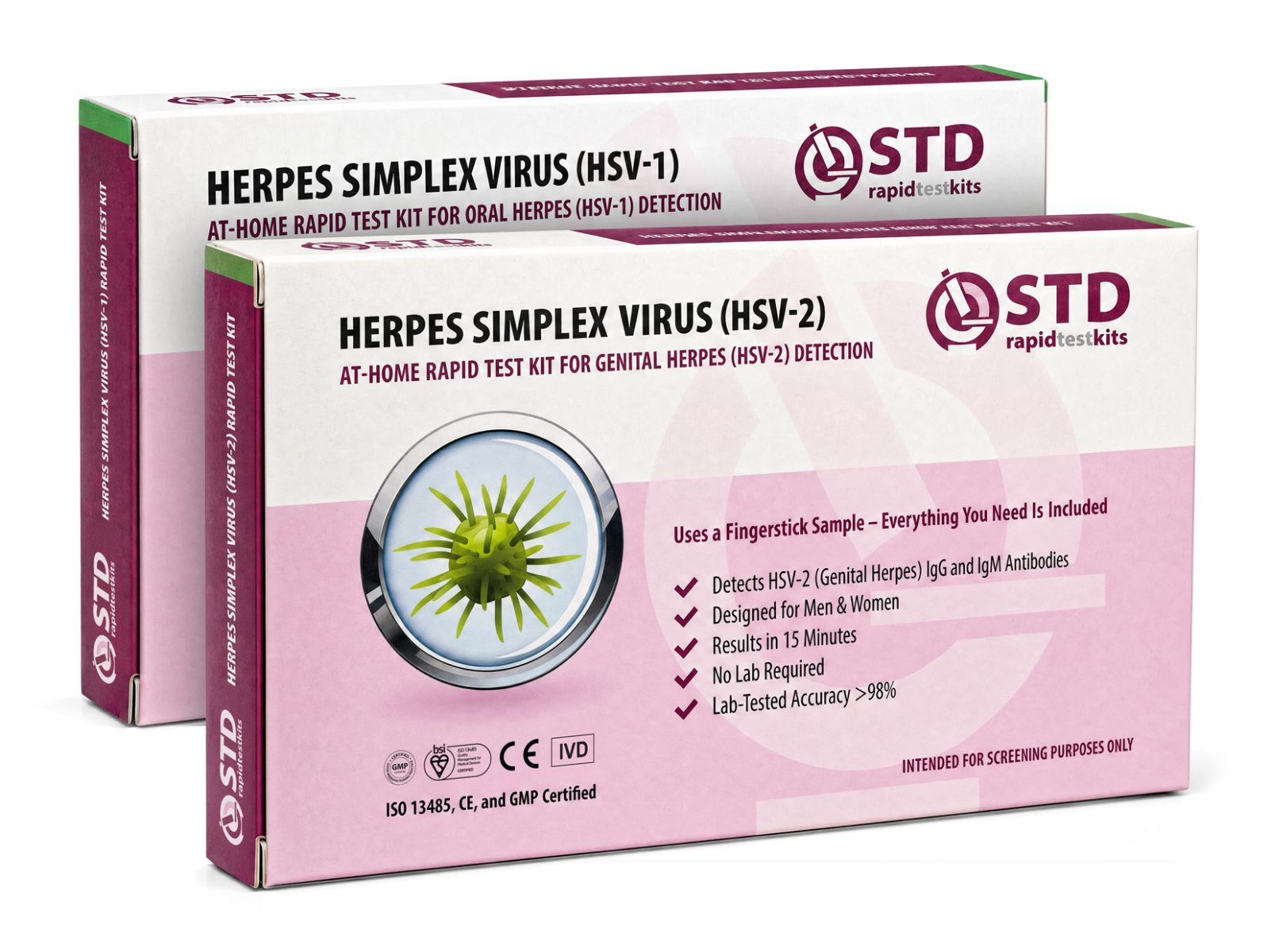
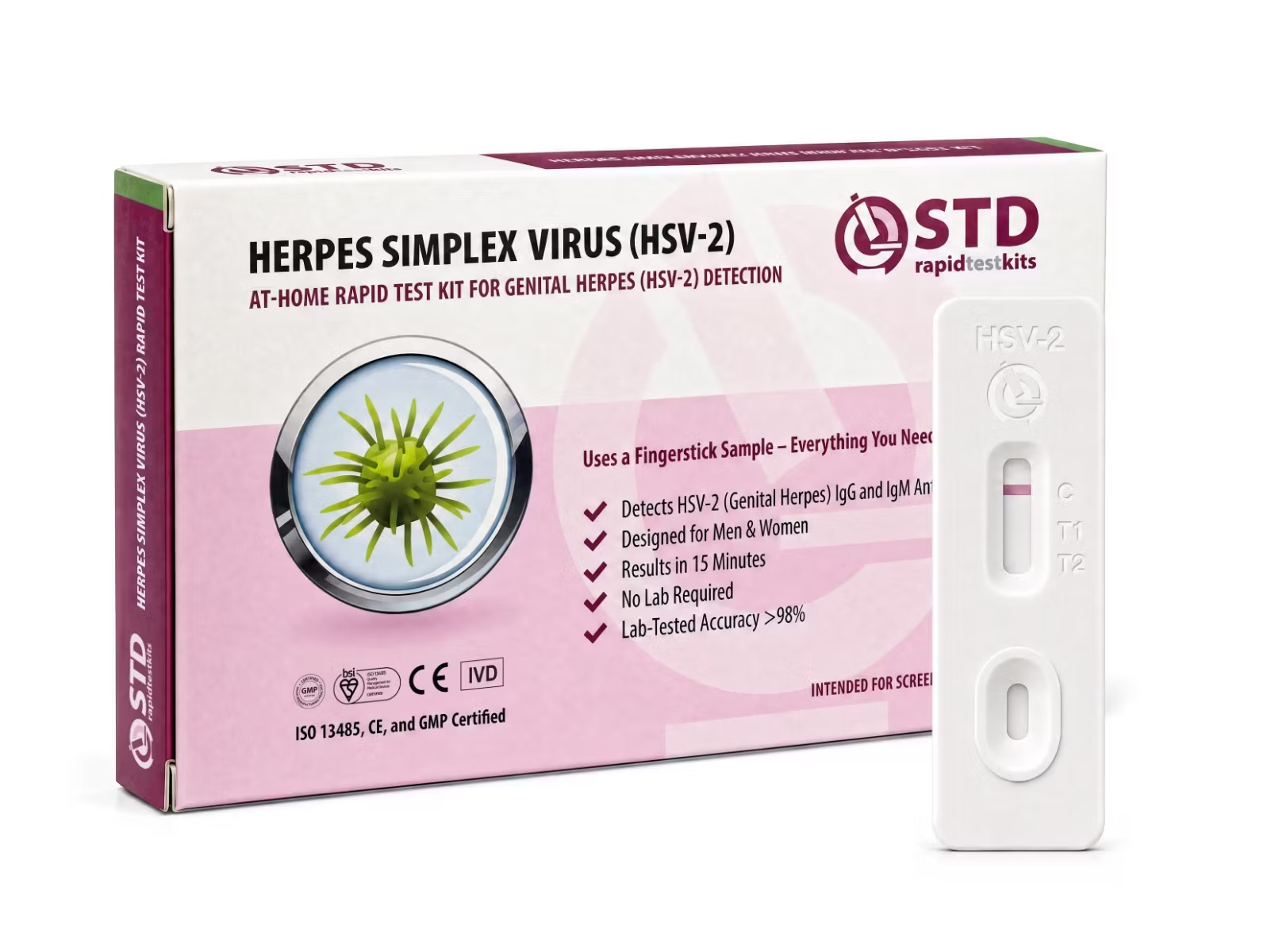
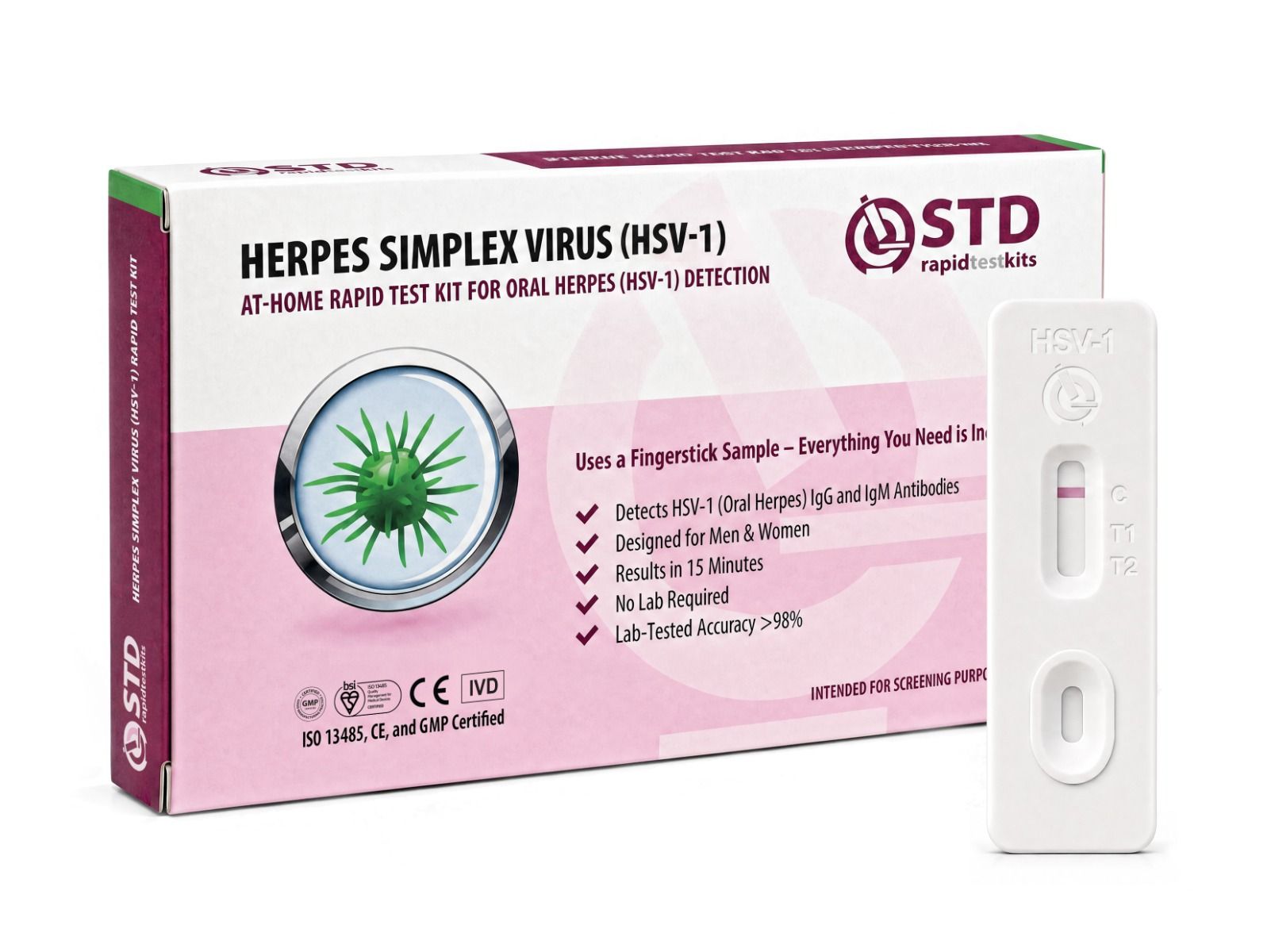
Our at-home herpes panel is a fingerstick blood antibody test using lateral-flow chemistry. It is a screening tool for HSV-1 and HSV-2 antibody status, not a substitute for laboratory NAAT testing of an active lesion. A reactive home result is worth confirming with a clinic-grade lab IgG test, especially before disclosing a status to a partner. The two technologies are complementary: home antibody testing is useful for screening, lab NAAT testing is the gold standard for confirming active infection in a fresh lesion.
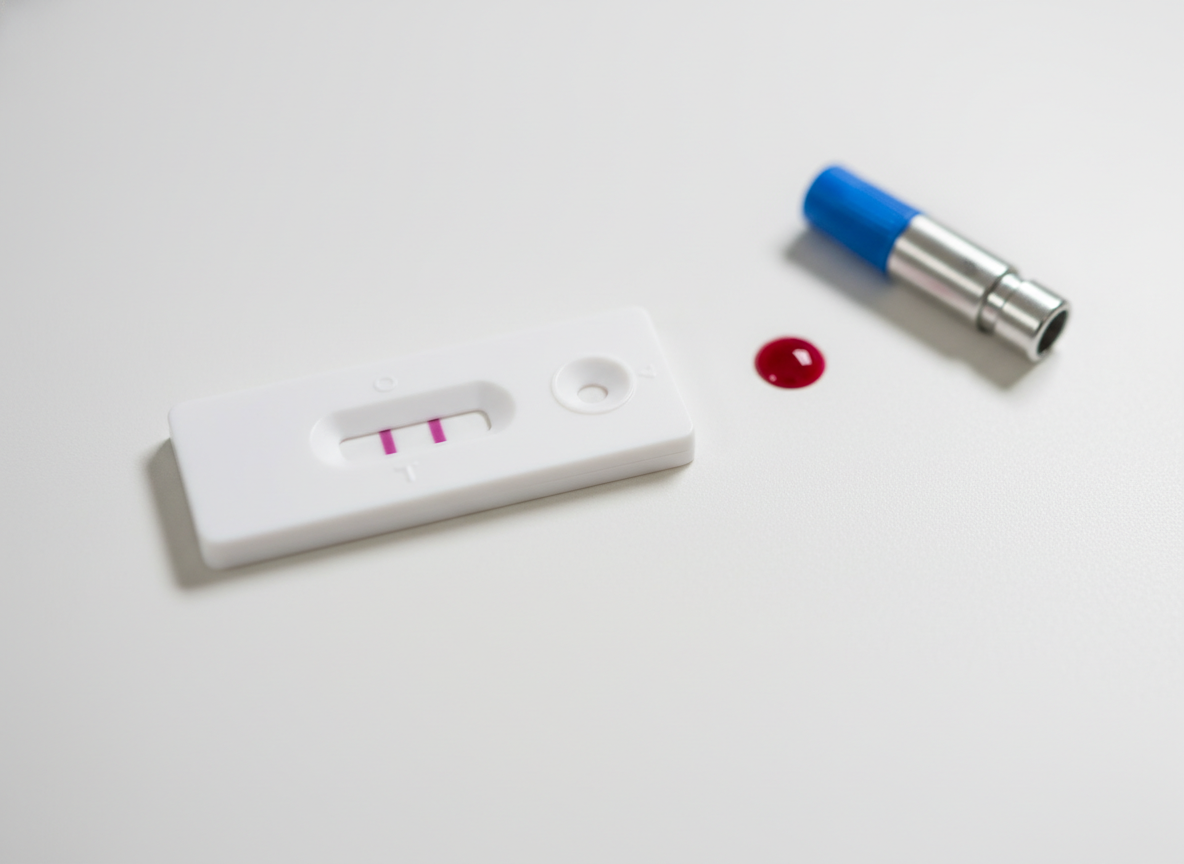
Reading a lateral-flow result is straightforward. One line means the test ran correctly but did not detect antibodies (non-reactive). Two lines means the test detected antibodies (reactive), regardless of how faint the second line is. No lines at all means the test failed and should be repeated with a fresh cassette. Run the test in good lighting and read it within the time window printed in the kit instructions; reading too early gives false negatives, reading too late can introduce evaporation lines.
Treatment and outbreak management
There is no cure for HSV. Once infected, the virus stays in nerve tissue for life and can reactivate at any time. What treatment can do is shorten outbreaks, reduce their frequency, lower the chance of transmitting the virus to a partner, and ease symptoms.
Prescription antivirals (the main tool): acyclovir, valacyclovir, and famciclovir are the three antiviral medications approved for HSV. Used as episodic therapy (taken at the first sign of an outbreak) they shorten the outbreak by one to two days and reduce symptom severity. Used as suppressive therapy (taken daily) they reduce outbreak frequency substantially in most people and lower viral shedding (CDC), which reduces the risk of transmitting HSV to an uninfected partner. Antivirals work best when started during the prodrome stage; this is why recognizing the early tingling matters.
Over-the-counter topical creams: docosanol (Abreva) is the only OTC topical with FDA approval for cold sores. Applied at the first tingle, it may modestly shorten oral HSV-1 outbreaks. It does not prevent recurrence and is not a substitute for prescription antivirals during a serious outbreak.
Symptom relief: cool compresses reduce swelling and dull pain. Acetaminophen or ibuprofen helps with the systemic aches of a first outbreak. For genital lesions, urinating in a warm bath or pouring water over the area while urinating reduces the sting. Petroleum jelly forms a moisture barrier on lip lesions and helps prevent cracking. Avoid touching lesions and then touching other parts of your body, especially your eyes.
Prescription antivirals (acyclovir, valacyclovir, famciclovir) give the largest reduction in outbreak severity and duration when started within the first 24 hours of tingling, before any visible blister appears. Waiting until a fully formed blister is present still helps, but the margin of benefit narrows. If you have recurrent outbreaks, ask a clinician for an episodic prescription you can keep on hand to start at the very first warning sign. People with six or more outbreaks per year may benefit more from daily suppressive therapy than from episodic dosing.
Prevention and reducing transmission
HSV transmits primarily through direct skin-to-skin contact with an active lesion or with skin that is shedding virus asymptomatically. The most effective approach combines several reinforcing habits:
- Avoid contact during a visible outbreak. The blister and ulcer stages carry the highest viral load. Postpone kissing, oral sex, intercourse, and skin-to-skin contact in the affected area until lesions are fully crusted and healed (usually one to two weeks for a recurrence).
- Use barriers between outbreaks. Condoms and dental dams reduce, but do not eliminate, transmission risk because HSV can shed from skin areas not covered by the barrier (the scrotum, the upper thighs, the buttocks). Consistent condom use lowers HSV-2 transmission risk but does not bring it to zero (CDC).
- Daily suppressive antivirals. For people with frequent outbreaks or who are in a relationship with a non-infected partner, daily suppressive valacyclovir, combined with consistent condom use and avoiding contact during outbreaks, substantially lowers the risk of passing HSV to a partner (CDC).
Other practical points: do not share lip balm, razors, towels, or eating utensils during an active oral outbreak. Wash your hands after touching a lesion. If you wear contact lenses, do not handle them while you have a cold sore (HSV-1 keratitis is a real risk). And tell new sexual partners about your status; the conversation is easier than it sounds, and most partners respond with practical questions rather than panic.
Three-layer risk reduction at a glance
- Avoid skin-to-skin contact with the affected area during a visible outbreak (the blister and ulcer stages are the highest-risk window).
- Use condoms or dental dams between outbreaks; coverage is incomplete because HSV sheds from skin not covered by the barrier, but consistent use still lowers transmission.
- Consider daily suppressive antivirals when one partner is uninfected; combining suppression with barriers and outbreak-avoidance gives the largest cumulative risk reduction.
When to see a clinician
Most uncomplicated outbreaks can be managed at home with antivirals and supportive care. Specific situations warrant a same-day or urgent clinical visit:
- A suspected first outbreak (first-episode antivirals are most effective when started early)
- Eye pain, light sensitivity, or vision changes in someone with a history of cold sores
- Lesions in a newborn or a person with a weakened immune system (HIV, chemotherapy, transplant medications)
- An outbreak in pregnancy, especially in the third trimester (may require delivery planning to prevent neonatal HSV)
- Lesions that are spreading rapidly across an existing eczema patch
- Severe pain, urinary retention, or inability to walk or sit due to the size and number of lesions
- Frequent recurrences (six or more per year) where suppressive therapy might be appropriate
Most people with genital herpes have either no symptoms or mild symptoms that go unnoticed or mistaken for another skin condition. Because of this, most people who have herpes do not know it.
Frequently asked questions
- How long does a herpes outbreak last?
- A first outbreak can last two to four weeks from prodrome to fully healed skin. Recurrent outbreaks typically run five to ten days. Antivirals taken at the first sign of tingling can shorten this by one to two days.
- Can I have herpes without ever seeing a sore?
- Yes, and the gap between carrying HSV and being diagnosed can span years. A blood IgG antibody test taken 12 or more weeks after a possible exposure is the only way to check your status without a visible lesion. A negative result before that window is not definitive, since antibodies take time to reach detectable levels.
- How can I tell a cold sore from a canker sore?
- Cold sores (HSV-1) appear outside the mouth, usually on the lip border, start as clustered vesicles, and progress to a crust. Canker sores appear inside the mouth on movable tissue (inner cheek, under tongue), start as a single round ulcer with a white center, and never develop a vesicle stage or external crust.
- When should I test after a possible exposure?
- If you have a visible lesion now, see a clinic for a PCR swab in the next day or two while the lesion is fresh. If you do not have a visible lesion and want to know your overall status, blood antibody testing is most reliable at 12 weeks or more after the possible exposure, since antibodies take time to develop.
- Can herpes spread when there are no visible sores?
- Yes. Asymptomatic viral shedding is well documented for both HSV-1 and HSV-2. The risk is lower than during an active outbreak but is the main reason herpes spreads even between partners who follow the avoid-contact-during-outbreaks rule. Daily suppressive antivirals reduce shedding.
- Will herpes lesions leave scars?
- Uncomplicated HSV lesions typically heal without scarring. Skin may stay slightly pinker than surrounding tissue for a few weeks, then return to normal. A persistent scar from a herpes-shaped lesion is unusual and worth showing to a dermatologist, as it may suggest the lesion was something else.
- Is the at-home herpes test accurate?
- Home rapid antibody tests use lateral-flow chemistry to screen for HSV-1 and HSV-2 IgG antibodies. They are useful screening tools but are less analytically sensitive than laboratory IgG testing. A reactive home result is worth confirming with a lab IgG test, especially before disclosing your status to a partner. A negative test taken before 12 weeks after exposure does not rule out a recent infection.
- Can I get herpes from a toilet seat or sharing utensils?
- HSV does not survive long on inanimate surfaces. Toilet seats are essentially zero risk. Sharing a drinking glass or eating utensil during an active oral outbreak carries a small theoretical risk and is worth avoiding. Skin-to-skin contact, kissing, and sexual contact account for nearly all real-world transmission.
- U.S. Centers for Disease Control and Prevention. About genital herpes, including transmission, symptoms, asymptomatic shedding, and suppressive therapy.
- World Health Organization. Herpes simplex virus fact sheet, including global prevalence estimates for HSV-1 and HSV-2.
- Mayo Clinic. Genital herpes overview, including symptoms, causes, and complications.
- National Health Service (UK). Cold sores: appearance, recurrence duration, stages of healing, and self-care.
- National Health Service (UK). Genital herpes: symptoms, primary-outbreak duration, treatment, and prevention.
- MedlinePlus, U.S. National Library of Medicine. Herpes simplex overview, including ocular and neonatal complications.