First Herpes Outbreak: What It Feels Like and How Long It Lasts
A first herpes outbreak is loud, painful, and often the most intense flare-up most people ever experience. This guide walks through prodrome warnings, blister timing, what internal herpes feels like, and the testing options that work even after the sores have healed.
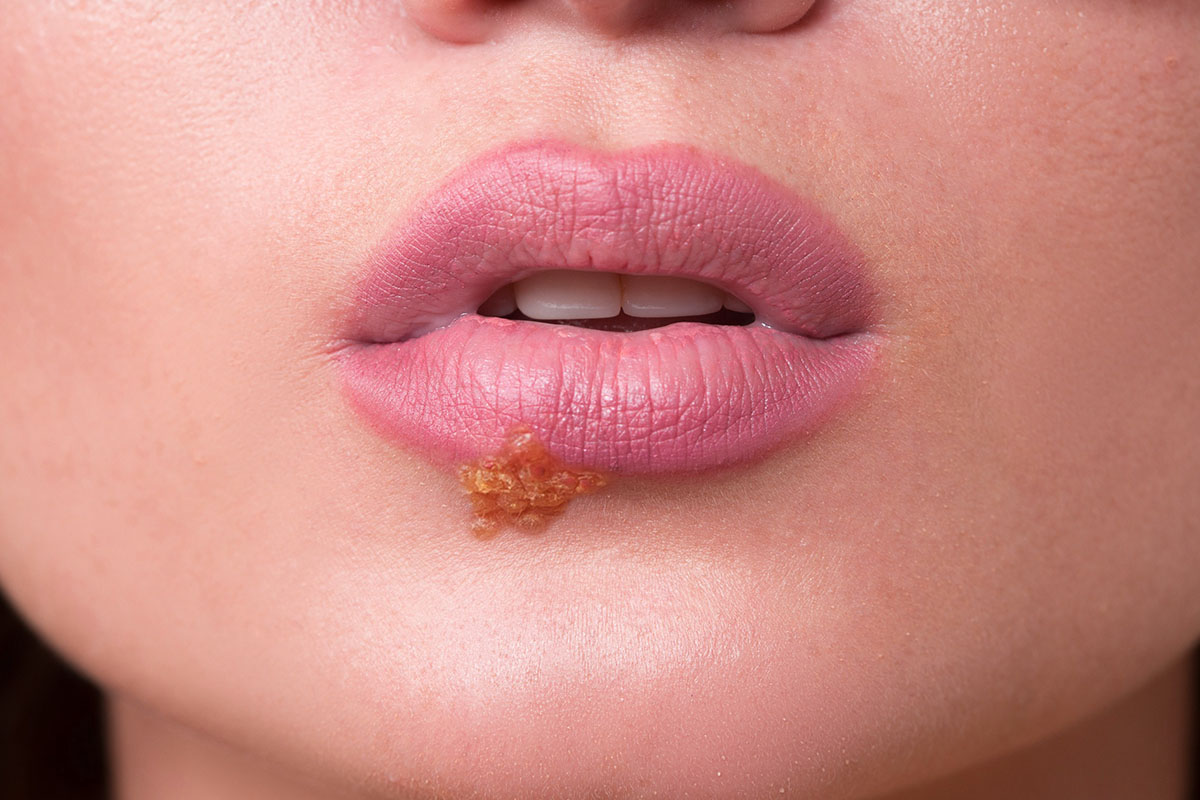



- A primary herpes outbreak is typically the most intense flare-up most people ever experience, often running across several weeks from the earliest prodrome twinge to fully healed skin. Future episodes are usually shorter, milder, and rarely come with the flu-like symptoms of the first one.
- If active sores are present, a clinic-collected swab PCR test is the most accurate diagnostic. After the sores heal, a type-specific blood antibody test for HSV-1 or HSV-2 becomes reliable from roughly 12 weeks post-exposure.
Published: July 2025 | Last updated: May 2026 | Editorial review and quality control: Martina N.
The first sign is rarely the blister. It is the tingle on the inside of a thigh, the faint burn when you wipe, the ache in the lower back that you wrote off as bad sleep the night before. By the time anything is visible, your immune system has been at war for days. A first herpes outbreak is loud, painful, and frightening, and it is also, for most people, the worst it will ever get.
This guide walks through what a first outbreak actually feels like, hour by hour and day by day, and what to do at each stage. It covers prodrome symptoms, blister timing, internal pain, the conditions herpes is most often mistaken for, and the testing options that work even when the sores have already healed. Everything below is drawn from current public-health guidance from the CDC, the World Health Organization, the NHS, and MedlinePlus.
Key Takeaways
- A primary herpes outbreak is typically the most intense flare-up most people ever experience, often running across several weeks from the earliest prodrome twinge to fully healed skin. Future episodes are usually shorter, milder, and rarely come with the flu-like symptoms of the first one.
- If active sores are present, a clinic-collected swab PCR test is the most accurate diagnostic. After the sores heal, a type-specific blood antibody test for HSV-1 or HSV-2 becomes reliable from roughly 12 weeks post-exposure.
Herpes 101: What Is Actually Happening in Your Body
Herpes is caused by the herpes simplex virus, which comes in two types. HSV-1 is the strain most people grew up calling “cold sores,” and it usually lives on the mouth and lips. HSV-2 is the strain most often associated with the genital area. The line between them is fuzzier than it used to be: a growing share of new genital herpes cases in younger adults are caused by HSV-1 transmitted through oral-genital contact, per the CDC's overview of herpes simplex epidemiology.
After exposure during sex, kissing, or close contact with an active sore, the virus enters through tiny breaks in the skin too small to see. It travels up the nerve fibers and settles into a nerve cluster (called a ganglion) near your spinal cord. Once it is there, it stays for life. Your body never fully clears it, but your immune system learns to keep it suppressed between outbreaks.
The first outbreak, in clinical terms a primary outbreak, is your body's first real encounter with the virus. With no antibodies yet, the response is loud: more sores, more pain, more systemic symptoms like fever and swollen lymph nodes than future flare-ups will produce. Per the WHO herpes simplex virus fact sheet, around 3.8 billion people under age 50 worldwide are living with HSV-1, and roughly 520 million people aged 15 to 49 have HSV-2. Most do not know.
Timing varies. Some people see symptoms within days to two weeks of exposure. Others may not have a recognizable first outbreak for weeks, months, or even years after they were first infected.
HSV-1 vs HSV-2 at a glance
- HSV-1 traditionally causes oral cold sores, but oral-to-genital contact has made it a growing cause of genital herpes in younger adults. Genital HSV-1 tends to recur less often than genital HSV-2.
- HSV-2 is the strain most often responsible for recurrent genital herpes, with more frequent reactivations in the first year after infection and a higher rate of asymptomatic viral shedding between outbreaks.
Prodrome: The Early Warning Signs
A few hours to a few days before the first visible blister, most people notice prodrome symptoms. Prodrome is the early-warning phase, and learning to recognize it is one of the most useful skills you can build around this virus. Knowing prodrome lets you start antiviral medication sooner, avoid sex during the highest-risk shedding window, and prepare your day so the worst symptoms do not catch you off guard.
Typical prodrome signs include tingling, itching, or pin-prick sensations on the genitals, anus, buttocks, thighs, or mouth; localized burning or skin sensitivity in one specific area; aching or shooting nerve pain in the lower back, hips, or legs (more common with HSV-2); and a general “off” feeling: fatigue, mild fever, or a low-grade headache.
People often mistake this stage for razor burn, an allergic reaction, an early UTI, or a yeast infection. One useful distinguishing detail: prodrome itch and tingling tend to stay in one focal patch of skin rather than spreading like a generalized rash. If a blister or cluster of bumps then erupts within a day or two in that same patch, call your clinician or a telehealth service the same day; antivirals work best when started early.
Antiviral medications like acyclovir, valacyclovir, and famciclovir work best when started in the prodrome window, before blisters fully form. If you know you have herpes and feel the tingle, call your clinician (or a telehealth service) the same day. A prescription started in the first 24 hours can cut several days off the outbreak.
Blisters, Sores, and Burning: The Main Event
This is the stage that sends people to a search engine at 2 a.m. The bumps start as small red spots, sometimes only a millimeter or two across. Within a day, they fill with clear or yellowish fluid and become true blisters. The blisters group together in tight clusters, then break open into shallow, raw ulcers that weep before they crust over and heal.
The most common features of a primary outbreak are clusters of blisters or ulcers on the vulva, penis, scrotum, perineum, anus, buttocks, inner thighs, or lips; a sharp, stinging or burning pain when urine, sweat, friction, or fabric touches the open sores; swollen, tender lymph nodes in the groin (with genital outbreaks) or neck (with oral outbreaks); flu-like symptoms including fever between roughly 100 and 102 °F, headache, body aches, and fatigue; and pelvic redness and swelling around the cluster, which can make sitting or walking uncomfortable.
If you have a vulva, the burn during urination is often what sends people to urgent care first. Acidic urine touching a fresh ulcer creates a sharp, peel-sized sting that can last for thirty seconds or more after the stream stops. If you have a penis, the discomfort tends to be more positional: pressure on the cluster from underwear, walking, or any sexual contact triggers the worst pain (and yes, the descriptions sound dramatic because the first outbreak feels dramatic; subsequent recurrences rarely match this intensity).
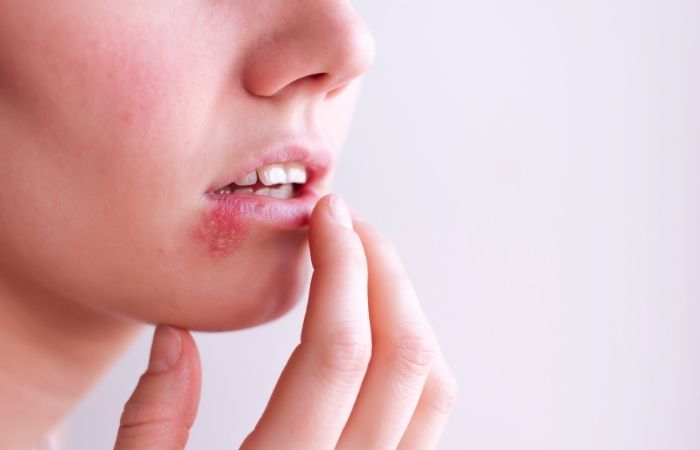
What Herpes Looks Like Compared to Other Conditions
Herpes is one of the most misdiagnosed STIs, especially at the first outbreak. A first-time clinical visit, or worse, a self-diagnosis on Google, often lands on something else. The table below summarizes the practical differences clinicians use to distinguish them.
| Condition | Itching pattern | Burning | Sores | Distribution |
|---|---|---|---|---|
| Herpes (primary) | Localized, often before sores appear | Sharp, especially with urine on open ulcers | Clustered blisters that ulcerate | Genitals, mouth, thighs, buttocks |
| Yeast infection | Diffuse, with cottage-cheese discharge | Mild | Rare | Vulva and vagina, no blisters |
| UTI | Usually none | Inside the urethra during urination | None | No external sores |
| Ingrown hair | Around a single bump | Mild | One pimple-like papule | Shaved skin only |
| Allergic contact reaction | Generalized hives or rash | Mild | None | Spread across the exposure area |
What Internal Herpes Feels Like
If you have a vagina or a rectum, sores during a first outbreak can form on internal tissue that you cannot see in a mirror. This is one of the most common reasons herpes is missed entirely on visual exam, and one of the most common reasons people get treated for weeks for the wrong infection.
The signs of internal herpes include deep, aching pain during urination, vaginal penetration, or bowel movements; a sensation of a fresh tear or paper cut on the vaginal wall or rectum; sharp, brief shooting pains in the pelvis or perineum; and discharge that looks normal but smells slightly off, sometimes with light bleeding from raw spots that you cannot see.
These symptoms get confused with UTIs, yeast infections, and bacterial vaginosis, and one practical clue is that standard antibiotics or antifungal creams do nothing. If two rounds of treatment for a “stubborn UTI” fail to resolve the pain, ask explicitly for a herpes swab. A clinician can usually access the internal lesions with a speculum exam, swab them, and run PCR.
Most first outbreaks can be managed at home plus a same-week clinic or telehealth visit. Same-day or emergency care is warranted if you cannot urinate at all (urinary retention from severe pain or swelling), if you have a high fever (above 103 °F) with confusion or stiff neck, or if sores spread to the eye area. These are uncommon but treatable urgent presentations.
How Long Does a First Herpes Outbreak Last?
A primary herpes outbreak runs longer than recurrences. Per the CDC's herpes overview, open sores from a first outbreak may take a week or more to heal. In practice, the full course (counting the earliest prodrome twinge before any sores appear, the active blister stage, scab formation, and final skin recovery) typically extends across several weeks. Clinical consensus reflected in patient-education materials from major public-health agencies puts that full window at roughly two to four weeks for most people. Antiviral medication started in the first 24 to 72 hours can shorten the active stage by a few days and reduce viral shedding during the outbreak.
Typical day-by-day timeline
- Days 1 to 3: Prodrome begins. Itching, tingling, burning, sometimes a low-grade fever and swollen groin lymph nodes.
- Days 3 to 7: Red bumps appear, then form fluid-filled blisters. Blisters cluster and start to break open into raw ulcers.
- Days 7 to 14: Open ulcers crust over and heal from the edges inward. Lymph node swelling fades. Urination stops stinging.
- Days 14 to 28: New skin replaces scabs. Nerve sensitivity settles. Energy returns to normal.
What Triggers Future Outbreaks
After a primary outbreak, the virus retreats into a nerve ganglion and stays dormant most of the time. Reactivation, the medical term for an outbreak, happens when something throws the immune system off balance enough that the virus can travel back down the nerve and reach the skin or mucous membrane.
Common triggers include sustained emotional or physical stress, a cold or flu, hormonal shifts such as menstruation, perimenopause, or starting or stopping hormonal birth control, friction from sex or exercise, sun exposure on the lip area (the classic cold-sore trigger for HSV-1), and surgery or dental work on the affected nerve area. A simple note on your phone, logging the date of each outbreak and what was happening in the week before, builds a personal trigger map within a few months and gives you something concrete to work on with your clinician.
Getting Diagnosed: What to Expect
If you are in the middle of a first outbreak, you have three reasonable diagnostic paths, and they answer slightly different questions.
Swab PCR test (clinic): A clinician collects fluid from an active blister or ulcer using a sterile swab and sends it to a lab for nucleic-acid amplification testing. PCR is the diagnostic gold standard during an outbreak, identifies the specific HSV type, and is highly sensitive when the sample is taken from a fresh, fluid-filled lesion. Once a lesion has fully crusted, PCR sensitivity drops sharply. We do not sell at-home PCR swab kits; for this test you need a clinic visit or a telehealth-arranged lab collection.
Type-specific IgG blood test: This test detects antibodies your body has built to HSV-1 or HSV-2. Antibodies take time to develop, with reliable seroconversion reached at about 12 weeks for most people and up to 16 weeks for a small minority. This is the right test if your sores have already healed or if you are screening after a known exposure. Ask explicitly for a type-specific test; older non-type-specific tests cannot distinguish HSV-1 from HSV-2, and that difference matters for managing future outbreaks and discussing risk with partners.
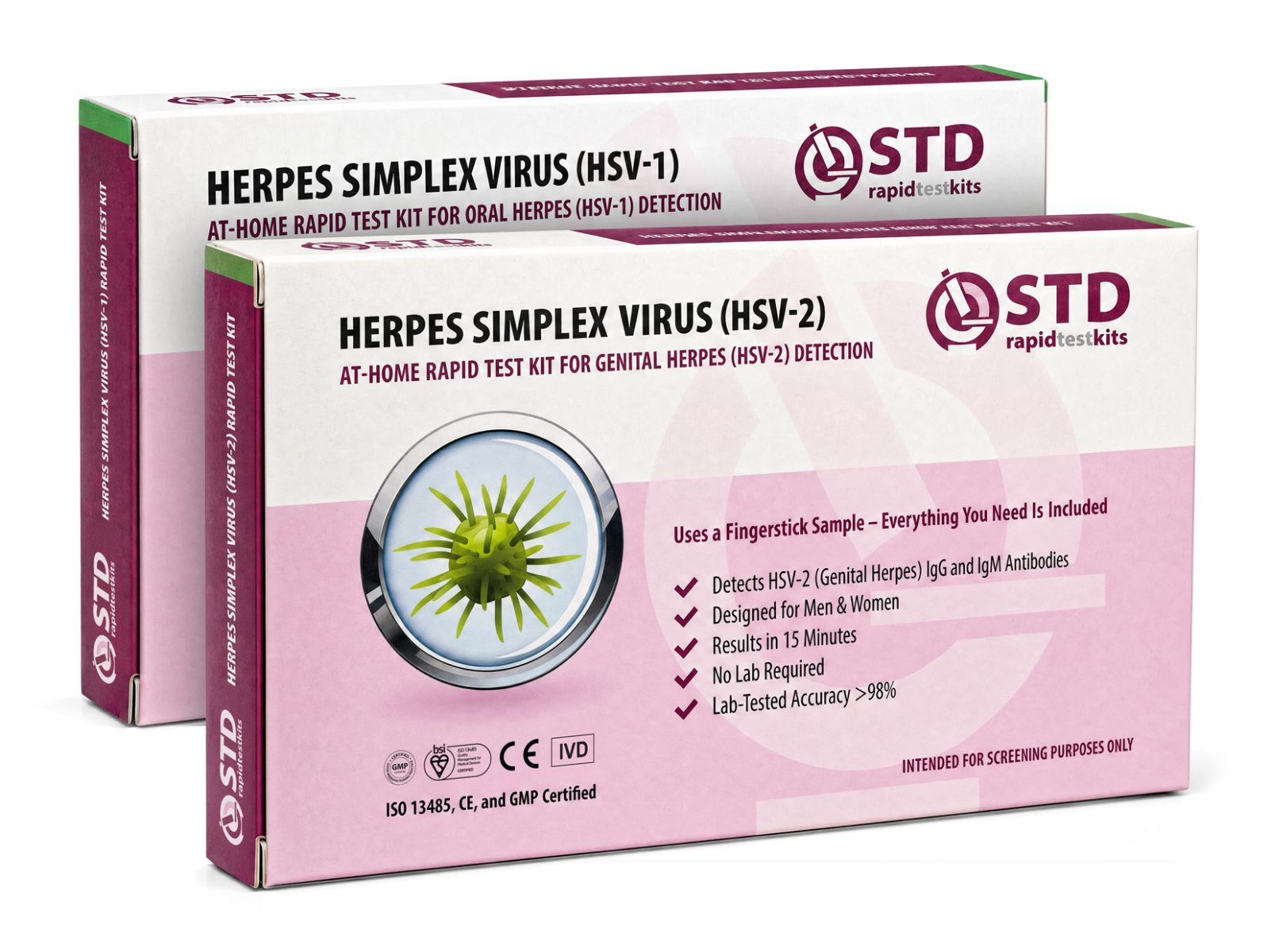
At-home rapid antibody test: An at-home fingerstick blood test detects HSV antibodies in the same window as a lab IgG test. The advantage is privacy, speed, and lower cost. The trade-off is that no antibody test, whether at-home or lab-run, can detect a brand-new infection in its first few weeks. We offer a combined HSV-1 plus HSV-2 antibody panel that tells you which strain you carry, using a single fingerstick blood sample.
A note on technology: at-home rapid kits use lateral-flow chemistry, which is different from the high-sensitivity NAAT chemistry used in labs. A positive at-home antibody result is worth confirming with a clinician, especially during early seroconversion. A negative at-home antibody test within the window period after exposure does not rule out infection on its own.
Treatment: What Helps During a First Outbreak
There is no cure for herpes, but three antiviral medications shorten primary outbreaks and reduce viral shedding between outbreaks. A clinician picks one based on your history, kidney function, and how often you have recurrences. All three are well established and listed in the CDC's STI Treatment Guidelines for genital herpes.
Prescription antivirals: Acyclovir at 400 mg orally three times daily for 7 to 10 days is the most affordable option, with the trade-off of more frequent dosing. Valacyclovir (brand name Valtrex) at 1 g orally twice daily for 7 to 10 days is often preferred for ease of dosing. Famciclovir at 250 mg three times daily for 7 to 10 days is equally effective and less commonly used. For people with frequent recurrences (six or more per year), daily suppressive therapy with valacyclovir 500 mg once daily reduces the frequency of recurrences significantly, and decreases the rate of HSV-2 transmission to a susceptible partner, per CDC STI Treatment Guidelines.
Treatment choices, especially single-episode therapy versus daily suppression and how to talk to a partner about transmission risk, depend on whether you are HSV-1 positive, HSV-2 positive, or both. If you have not been type-tested yet, an at-home antibody panel can fill that gap before your clinician finalizes a longer-term plan.
Sitz baths in warm water with a tablespoon of plain sea salt for 10 to 15 minutes twice daily. Topical 5% lidocaine cream for external sores (numbs the area for 30 to 60 minutes). Cotton underwear and loose bottoms; avoid synthetic fabrics that trap heat. Generous hydration so urine is dilute and stings less. Ibuprofen or acetaminophen for fever and aching. Peeing in the shower or with a peri-bottle of warm water to dilute urine as it passes the sore. Do not pop the blisters, do not scrub, and skip scented soaps, douches, alcohol wipes, and anything labeled “feminine freshness.”
After the First Outbreak: What Comes Next
The first month after diagnosis is a lot. There is the physical recovery, and there is the emotional storm. People describe a week or two of crying, a stretch of not wanting any kind of intimacy, intrusive thoughts about who else might have it, and a sudden hyper-awareness of every twitch in the affected area. For most people, the emotional intensity peaks in the first six weeks and settles noticeably by the three-month mark.
A note for anyone pregnant or planning to be: a primary herpes outbreak during pregnancy is treated as time-sensitive. Neonatal HSV risk is highest when a primary infection occurs near delivery, so flag any first outbreak to your obstetric provider the same day. For people already known to carry HSV-2, daily suppressive antiviral therapy starting at around 36 weeks of gestation is standard practice to reduce the chance of an active outbreak at the time of delivery.
What most people experience over the following six to twelve months
- Recurrences become shorter and milder. The second outbreak typically lasts 3 to 7 days with fewer sores and no flu-like symptoms.
- Outbreak frequency settles. HSV-1 genital infections often recur once or twice in the first year and then become rare. HSV-2 genital infections average four to six recurrences in the first year, then drop in frequency over time.
- Body awareness sharpens. You learn your own prodrome pattern and can act on it within hours rather than days.
- The fear softens. You date again, you have sex again, and you talk about it with partners you trust.
The Mental Health Side: You Are Not Broken
For most people, the shame outlasts the sores by weeks. Multiple psychological-outcomes studies of people newly diagnosed with genital HSV report that anxiety and depression scores spike in the first six weeks and then decline steadily as people build coping strategies and accurate information.
The facts that help most are simple. Herpes is a skin and mucous-membrane virus, not a moral judgment, and it says nothing about your worth or your hygiene. You are not alone: per the CDC's herpes overview, genital herpes is among the most common sexually transmitted infections in the United States, and most people who carry the virus do not know it because their symptoms are mild or absent. People with herpes date, partner, marry, have children, and live full sexual lives. Modern antivirals, honest conversations with partners, and barrier methods reduce transmission risk significantly.
Most HSV infections are asymptomatic or unrecognized, but symptoms of herpes include painful blisters or ulcers that can recur over time.
Frequently Asked Questions
- How bad is a first herpes outbreak compared to later ones?
- A primary outbreak is usually the most intense flare-up most people ever experience. It can involve multiple sore clusters, flu-like symptoms such as fever and body aches, swollen groin or neck lymph nodes, and painful urination. Future outbreaks typically have fewer sores, no flu symptoms, and heal within a week.
- How long does a first herpes outbreak last?
- The CDC notes that open sores from a first outbreak may take a week or more to heal. Counting prodrome before sores appear, the active blister stage, scabbing, and final skin recovery, the full course typically extends across several weeks for most people. Starting antiviral medication within 24 to 72 hours of symptom onset shaves a few days off the active stage and reduces how much virus you shed.
- Can a herpes blister look like a pimple or an ingrown hair?
- Early herpes sores can resemble pimples or razor bumps, especially before they fill with fluid. The distinguishing features are clustering (herpes sores come in groups), the painful tingling that preceded them, and the way they evolve into clear-fluid blisters that ulcerate and weep before crusting.
- Does herpes cause internal symptoms you cannot see?
- Yes. If you have a vagina or rectum, sores during a primary outbreak can form on internal tissue that is invisible without a speculum. Symptoms include deep aching pain during urination or penetration, a paper-cut sensation inside, and sharp pelvic pains. A clinician can swab the internal lesions and run PCR to confirm.
- Can herpes be confused with a UTI or yeast infection?
- Yes, especially during a first outbreak. One practical clue is that standard UTI antibiotics or antifungal creams do not resolve the pain. If two rounds of treatment for a “stubborn UTI” fail, request a herpes swab during an active flare or a type-specific IgG blood test after the sores heal.
- What should I do if I cannot get to a doctor during an active outbreak?
- Manage symptoms at home with sitz baths, loose cotton clothing, ibuprofen, generous hydration, and a peri-bottle of warm water at the toilet. Order an at-home herpes antibody test for after the sores have healed (about 12 weeks post-exposure for a reliable result). Telehealth services can usually prescribe antivirals on the same day in most regions.
- Will every future outbreak be this severe?
- No. The first outbreak is almost always the worst. Recurrences are typically shorter (3 to 7 days), produce fewer sores, and rarely include flu symptoms. For HSV-1 genital infections in particular, recurrences often become rare within a year or two.
- Can I have sex during an active outbreak?
- No. Active sores carry the highest viral shedding and the highest transmission risk. Wait until every sore has fully healed (no scab, no tenderness) before resuming sexual activity, and talk to your clinician about daily suppressive therapy if recurrences are frequent or you have a non-infected partner.
- U.S. Centers for Disease Control and Prevention. Genital herpes overview covering transmission routes, U.S. prevalence and incidence, symptom recognition, and healing timing (open sores may take a week or more to heal).
- World Health Organization. Herpes simplex virus fact sheet, including global HSV-1 (~3.8 billion under 50) and HSV-2 (~520 million aged 15 to 49) prevalence estimates and clinical presentation.
- UK National Health Service. Genital herpes symptoms, transmission, recurrence pattern, and self-care guidance.
- U.S. Centers for Disease Control and Prevention. STI Treatment Guidelines, Genital Herpes section, covering acyclovir / valacyclovir / famciclovir dosing for primary and suppressive therapy, plus transmission-reduction effects of suppressive valacyclovir.
- MedlinePlus (U.S. National Library of Medicine). Genital herpes patient information covering symptom recognition, diagnostic options, recurrence patterns, and self-care guidance.