

Published: October 2025 | Last updated: April 2026 | Editorial review and quality control: Martina N.
Gonorrhea has a reputation problem. People expect it to announce itself with burning urination or discharge, and many readers searching for answers in the middle of the night are looking for symptoms to confirm what they already fear. The trouble is that the most common form of a gonorrhea infection produces no symptoms at all. Public-health agencies have been clear about this for years, yet the assumption that you would feel sick if you had it remains one of the main reasons the infection keeps spreading. This article explains why a silent infection is still a contagious one, where in the body gonorrhea tends to hide, and what testing actually looks like when you have nothing obvious to test for.
Can you spread gonorrhea without knowing you have it?
Yes. About half of urogenital gonorrhea infections in women, roughly one in ten in men, and the large majority of throat and rectal infections produce no noticeable symptoms, yet remain fully contagious. Test based on whether you had a recent unprotected exposure, not on whether something feels wrong. Standard urine testing misses throat and rectal sites unless you specifically swab those locations.
Key takeaways
- Most gonorrhea infections in the throat, rectum, and cervix cause no symptoms but stay contagious for weeks or months until detected.
- Test by exposure site, not by feeling. Urine alone misses pharyngeal and rectal infections, which are the most common silent forms.
This article is published by stdrapidtestkits.com, which sells at-home STI testing kits. We recommend products based on fit-for-purpose for the reader's concern, not commercial benefit. The product references later in this article explain what each kit screens for so you can match the right test to your exposure history.
Why “feeling fine” misses most gonorrhea infections
The textbook gonorrhea symptoms (painful urination, yellow-green discharge, pelvic pain) are real, but they describe a minority of cases. The U.S. Centers for Disease Control and Prevention notes that many people with gonorrhea have no symptoms at all, particularly in the throat, rectum, and cervix (CDC STI Treatment Guidelines, gonococcal infections in adults). Roughly half of urogenital infections in women produce no symptoms; in men, only about one in ten urogenital infections are asymptomatic, but that smaller share still represents a meaningful number of silent carriers.
The pattern is even more lopsided at non-genital sites. Pharyngeal (throat) infections are usually completely asymptomatic, which is why a screening recommendation exists at all for people who have had receptive oral sex. Rectal infections are similarly quiet for most people, with discomfort, bleeding, or discharge appearing only in a small subset of cases.
There is a reason this matters beyond reassurance. Silent carriers do not feel a reason to take precautions, do not avoid sex, and do not seek testing on their own. The infection therefore moves more efficiently from a person who feels fine than from a person with obvious discharge who already knows something is wrong. The World Health Organization estimated more than 82 million new gonorrhea infections globally in 2020, and that scale is sustained almost entirely by transmission from people who never connected an exposure event to a need for testing (WHO gonorrhoea fact sheet).
Symptom-based self-diagnosis is not a screening strategy for gonorrhea. If you had unprotected oral, vaginal, or anal contact with a partner whose status you do not know, the right question is not “does anything feel wrong?” It is “did the exposure happen, and have I tested the relevant sites since the appropriate window?”
About half of cervical infections, roughly one in ten urethral infections, and the large majority of throat and rectal infections produce no symptoms at all. The silent infections cluster at exactly the sites that standard urine testing does not cover.
How gonorrhea spreads without penetration
Gonorrhea is caused by the bacterium Neisseria gonorrhoeae, which colonizes mucous membranes: the moist linings of the urethra, cervix, rectum, throat, and (rarely) the conjunctiva of the eye. Penetration is one transmission route but it is not the only one. Oral sex transmits gonorrhea readily in either direction. Anal sex transmits it. Sharing sex toys without cleaning between users transmits it. Even genital-to-genital contact without penetration can transmit it when mucous-membrane fluids are exchanged.
Two practical implications follow. First, condoms reduce transmission risk for vaginal and anal sex but offer no protection during the parts of an encounter that involve mouths or hands moving directly between partners. The U.K.'s NHS notes that gonorrhea spreads through unprotected vaginal, anal, and oral sex, and through sharing sex toys (NHS gonorrhoea overview). Second, ejaculation is not required. The bacteria live in the mucous lining and can transfer through contact alone, which is why a partner who “did not finish” can still pass the infection.
The silent-spread pattern compounds this. Because most carriers feel nothing, they often do not consider transmission a possibility. Several more partners may pass through their lives before a partner notification, a routine annual screen, or a complication weeks later finally surfaces the infection.
Mucous-membrane contact is enough. Oral sex, sharing un-cleaned sex toys, and genital-to-genital rubbing without penetration can all transmit gonorrhea. Penetration and ejaculation are not required for the bacteria to move between partners.
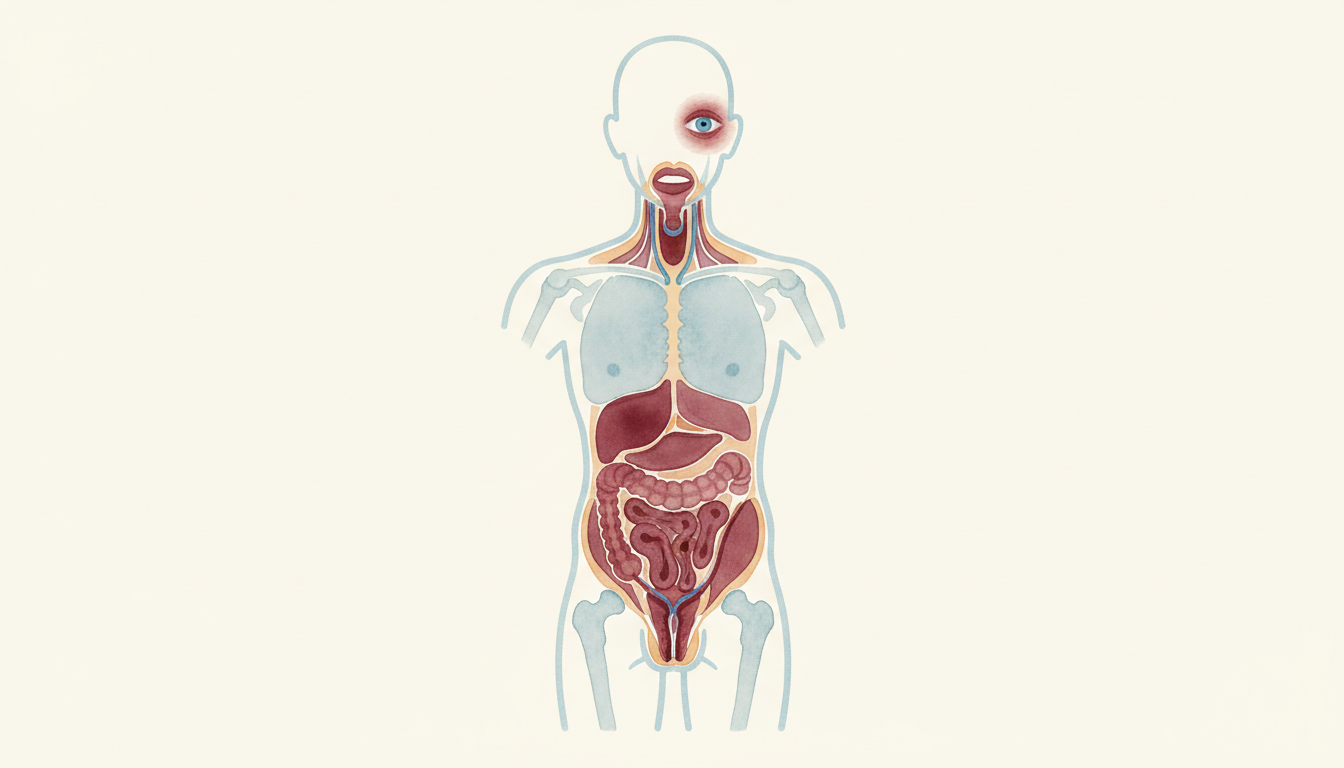
Where gonorrhea hides in the body
Different exposure routes seed different infection sites, and each site behaves differently when it comes to symptoms. The table below summarizes what current CDC and WHO guidance reports about how often each site stays silent.
| Infection site | Common symptoms when present | Typical asymptomatic rate |
|---|---|---|
| Cervix or vagina | Discharge, abnormal bleeding, pelvic pain | About half of infections produce no symptoms |
| Penile urethra | Burning urination, white or yellow discharge | About one in ten infections are silent |
| Throat (pharyngeal) | Usually none; rarely a mild sore throat | The large majority are asymptomatic |
| Rectum | Discharge, itching, bleeding, painful bowel movements | Most infections cause no noticeable symptoms |
| Eye (conjunctival) | Redness, pus, eye irritation | Uncommon, usually symptomatic when it occurs |
The contagious window starts before you feel anything
Gonorrhea has a short incubation period. When symptoms do appear, they typically show up between two and fourteen days after exposure, with most symptomatic cases declaring themselves in the first week. The infection itself, though, can transmit before the immune response is loud enough to produce noticeable signs. That gap is the heart of the silent-spread problem.
The bacteria establish themselves quickly in warm, moist mucosal tissue. By the time you might think to look for symptoms, you have already had several days of normal life during which the infection was both established and transmissible. The table below shows how transmission risk maps to time since exposure for a typical untreated case.
| Time since exposure | Symptoms likely? | Contagious? |
|---|---|---|
| Days 1 to 3 | Almost never | Yes |
| Days 4 to 7 | Occasionally, in some symptomatic men | Yes |
| Days 8 to 14 | Possible, mild signs in symptomatic cases | Yes |
| Day 15 onward, untreated | More likely if a genital infection is going to declare | Yes, often more so as bacterial load increases |
Why silent infections still damage the body
An infection that produces no symptoms can still produce serious damage, which is the most important reason to test based on exposure rather than feeling. In people with a uterus, untreated gonorrhea can ascend from the cervix into the upper reproductive tract and cause pelvic inflammatory disease (PID). PID can scar the fallopian tubes, cause chronic pelvic pain, increase the risk of ectopic pregnancy, and contribute to infertility (CDC gonococcal infections, adults).
In people with a penis, untreated gonorrhea can cause epididymitis, an inflammation of the tube at the back of the testicle that can be painful and, in rare cases, contribute to fertility issues. In both groups, untreated infection can occasionally enter the bloodstream and cause disseminated gonococcal infection, which presents with fever, joint pain, and a characteristic skin rash and requires hospital-level treatment.
There is also a community-health dimension. Untreated gonorrhea increases susceptibility to HIV, both by causing local inflammation that makes transmission more efficient and by allowing the silent transmission chain to continue. Antimicrobial resistance compounds the problem. The WHO has documented decreasing susceptibility to last-line antibiotics for gonorrhea globally. Pharyngeal infections in particular carry a higher rate of treatment failure, which is why the CDC recommends a test of cure specifically for that site (CDC gonococcal infections in adults).
False negatives, window periods, and why timing matters
A negative test is only useful if it was taken at the right time. Modern laboratory testing uses nucleic acid amplification (NAAT), which looks for bacterial genetic material directly. NAAT is highly sensitive, but it still needs enough bacterial material at the sample site to register a result. If you swab on day two of an exposure, you may be testing before the infection has replicated to a detectable level.
Practical guidance: for gonorrhea, a useful window of confidence is roughly one to two weeks after exposure for a NAAT test. Many sexual-health services will offer immediate testing if you are concerned, then a follow-up test at about the two-week mark for confirmation. Rapid lateral-flow tests for gonorrhea use the same swab sample type as lab NAATs but rely on different chemistry, so a positive at home is worth confirming with a lab test where possible, and an early negative at home is worth repeating after the appropriate window.
The same logic applies after treatment. The CDC's treatment guidelines recommend that anyone treated for gonorrhea be retested at three months because reinfection from an untreated partner is common. For pharyngeal gonorrhea specifically, a test of cure at one to two weeks post-treatment is recommended given the higher rate of treatment failure at that site (CDC gonococcal infections in adults treatment guidelines).
None of this is a reason to avoid testing earlier if you are anxious.
For gonorrhea, a NAAT taken 7 to 14 days post-exposure gives a reliable result. An early negative is worth repeating at the 14-day mark. A positive from a home lateral-flow kit is worth confirming with a lab NAAT where one is accessible.
When to retest after exposure or treatment
The right retest window depends on what you are trying to confirm. The summary below covers the most common scenarios.
| Scenario | Suggested retest window | Why |
|---|---|---|
| Negative test taken within 7 days of exposure | Repeat at 14 days or later | Early tests can miss infections that have not yet replicated to a detectable level |
| After treatment, no ongoing exposure (urogenital infection) | Retest at 3 months | Standard CDC guidance to detect reinfection from an untreated partner |
| After treatment for pharyngeal (throat) infection | Test of cure at 1 to 2 weeks | Throat infections have higher treatment-failure rates than genital infections |
| After treatment with new or ongoing exposures | Retest at 2 to 4 weeks | Catches reinfection or rare treatment failure earlier |
| Persistent or new symptoms after treatment | See a clinician within 7 days | May indicate antibiotic-resistant strain or a different infection |
Who is most likely to have a silent infection right now
Gonorrhea does not select by demographic, but the public-health data on who is currently most affected is useful for deciding how often you should test. CDC surveillance data consistently shows higher rates of reported gonorrhea among adults aged 15 to 34, among gay, bisexual, and other men who have sex with men, and among Black and Latino communities, where structural barriers to testing access and culturally competent care widen the gap (CDC STD Surveillance, national gonorrhea statistics).
State-level numbers reinforce the same picture. North Carolina, for example, has consistently ranked among the top U.S. states for gonorrhea incidence in recent years, with tens of thousands of reported cases annually. Reported cases are only the ones that surface, so the actual prevalence of silent infections in any high-incidence state is meaningfully higher than the official count.
The post-COVID environment matters too. Routine STI screening dropped sharply during 2020 and 2021 and has not fully recovered, particularly among younger adults and people in rural areas with limited clinic access. Lower screening rates do not mean lower infection rates; they mean more silent infections circulating undetected.
If your last few months include more than one sexual partner, a new partner whose recent test status you do not know, a partner who has notified you of an exposure, condomless oral sex, or condomless anal sex, your individual risk profile sits above the average and your testing rhythm should reflect that.
Most people who have gonorrhea do not know it. Routine screening of sexually active people at risk is essential to identifying and treating these silent infections.
How to test when you have no symptoms
The single most common testing mistake for asymptomatic gonorrhea is testing only the genital tract. A urine sample or a urethral or vaginal swab will detect a urogenital infection but will not detect a pharyngeal or rectal infection. If you have had receptive oral sex, the relevant sample is a throat swab. If you have had receptive anal sex, the relevant sample is a rectal swab. The CDC's screening recommendations for sexually active men who have sex with men explicitly include pharyngeal and rectal screening at sites of exposure (CDC treatment guidelines).
For most readers, three testing paths cover the realistic options:
- Sexual-health clinic or primary care. Lab NAAT testing across all relevant exposure sites, often with same-visit treatment if positive. This is the most thorough option and the right choice if you have symptoms or a known exposure.
- Public-health STI clinic. Free or low-cost screening in many U.S. counties. Useful if cost or insurance is a barrier.
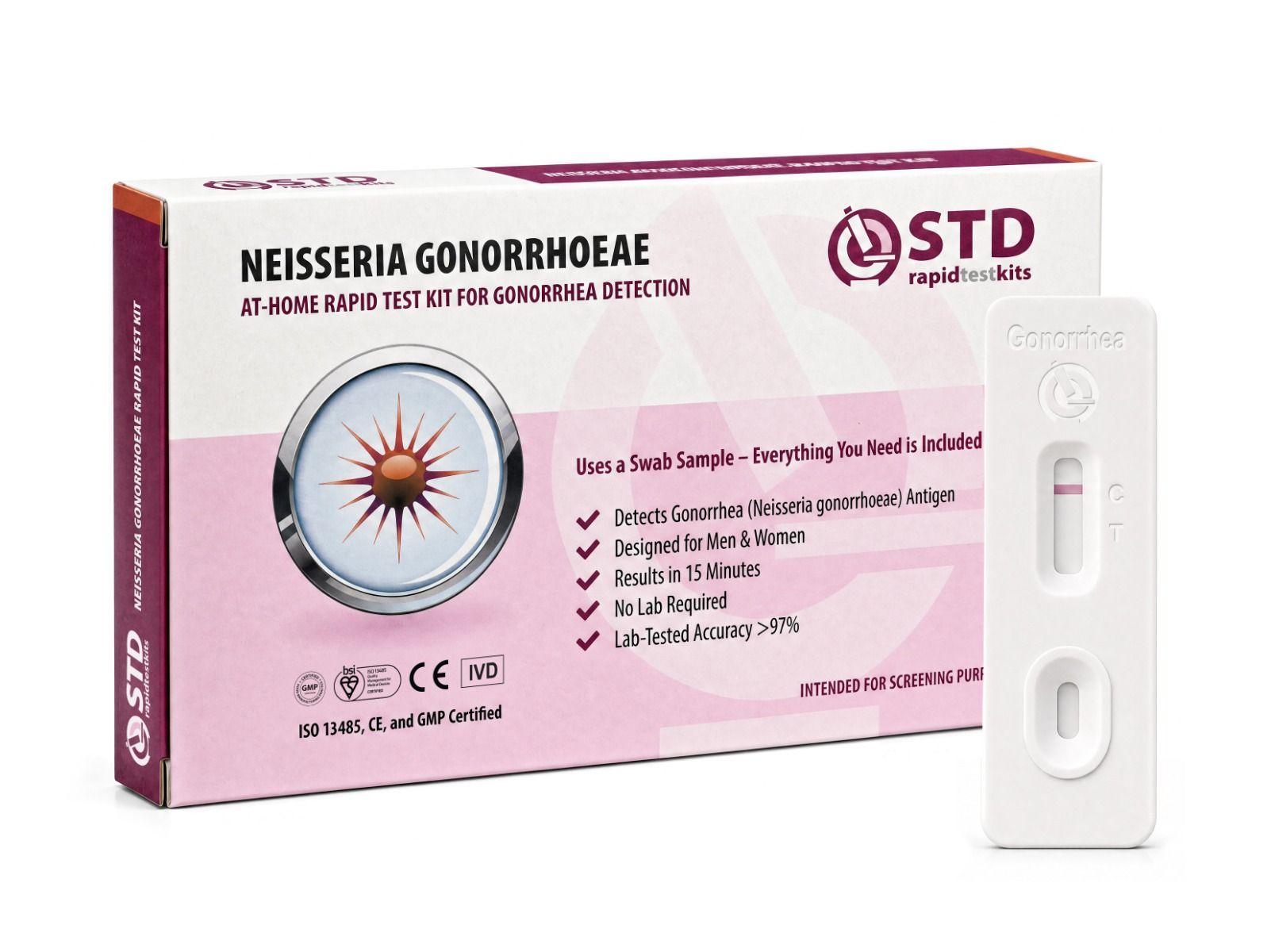
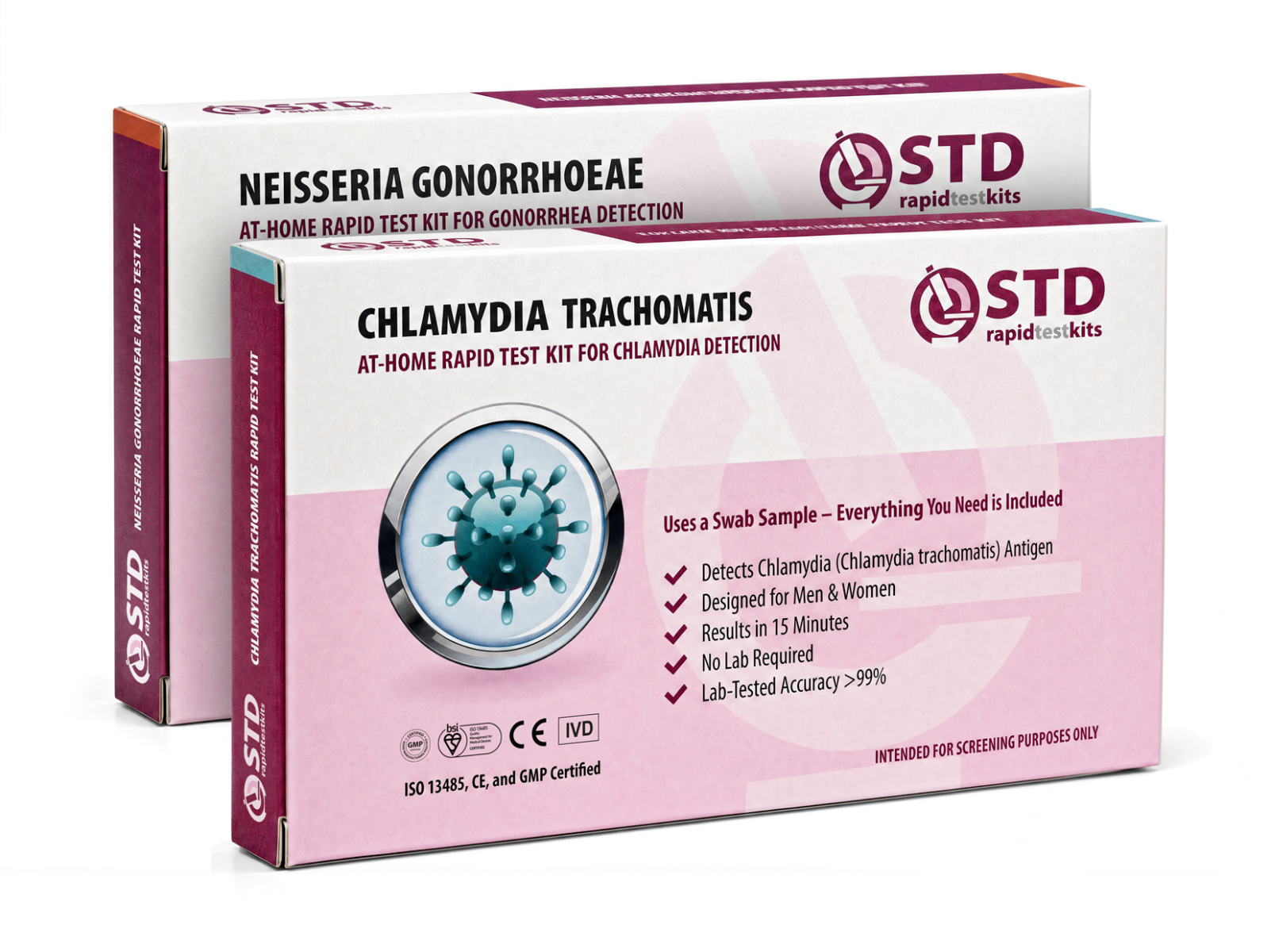
- At-home rapid kits. Discreet self-collection for genital sites. Useful for screening at the appropriate window when a clinic visit is impractical. For throat and rectal screening, mail-in lab kits or a clinic visit remain the right path because we do not currently offer pharyngeal or rectal swab kits at home.
Our at-home gonorrhea kits screen via a self-collected genital swab. If your concern is specifically about throat or rectal exposure, the right test is a clinic-administered swab at that site, not a urine or genital swab.
Telling a partner you tested positive
Partner notification is the part of a positive result that most readers dread, and it is also the part that does the most good. Notifying recent partners breaks the transmission chain and protects them from the same long-term complications you are now trying to avoid. The CDC's gonorrhea management guidance recommends evaluating and treating sexual partners from the 60 days preceding symptoms or diagnosis, or the most recent partner if it has been longer than that since your last sexual contact (CDC partner management for gonococcal infection).
The conversation does not need to be elaborate. A short, neutral message works: “I just got a result back for gonorrhea and you should get tested too. I am not assigning blame; I just want us both to take care of it.” Many U.S. county health departments offer anonymous partner-notification services, where the department contacts the partner without naming you. Several telehealth STI services include similar tools.
If you are the partner being notified, the most useful response is to test (at the appropriate sites for your exposure history) rather than to argue about timelines. Gonorrhea can have been carried for weeks or months before discovery, so a positive notification is not a reliable indicator of when or with whom the infection was acquired.
Frequently asked questions
- Can I really spread gonorrhea if I feel completely fine?
- Yes. Most pharyngeal and rectal infections, and about half of cervical infections, produce no symptoms but remain transmissible. Silent transmission is the main reason gonorrhea remains a high-incidence STI.
- I tested negative a few days after a possible exposure. Could that result be wrong?
- Possibly. If you tested within the first week of exposure, the infection may not have replicated to a detectable level yet. A confirmatory test at 14 days or later is reasonable when the early test is your only data point and the exposure risk was real.
- Does gonorrhea in the throat actually count if it does not hurt?
- Yes. Throat infections are usually completely silent and tend to be more difficult to treat than genital infections. They also transmit during oral sex and through deep kissing, so they matter both for your health and for partner risk.
- Can I get gonorrhea without penetration?
- Yes. Mucous-membrane contact transmits the infection. Oral sex, sharing sex toys without cleaning, and genital-to-genital contact without penetration can all transmit gonorrhea even without ejaculation.
- Will an asymptomatic gonorrhea infection clear on its own?
- No. Untreated gonorrhea can persist for months and cause complications including pelvic inflammatory disease, infertility, epididymitis, and rarely a bloodstream infection. It needs antibiotic treatment to clear.
- How often should I test if I am sexually active but feel fine?
- Routine annual screening is the baseline for sexually active adults under 25 and for anyone with new or multiple partners. Every three to six months is reasonable if you have multiple partners, are in non-monogamous arrangements, or are a sexually active man who has sex with men. Testing immediately after a known exposure is a separate decision and depends on the window period.
- Can I test for gonorrhea at home without a clinic visit?
- A home swab kit returns a result in about 15 minutes for urethral or vaginal sites. For throat or rectal concerns, the right option is a clinic visit or a mail-in lab kit. Home pharyngeal and rectal swab kits are not something we currently offer.
- I finished antibiotics but I am worried it came back. What should I do?
- Retest. Reinfection from an untreated partner is the most common cause of a new positive after treatment. For genital infections, the CDC recommends retesting at three months. For pharyngeal infections, a test of cure at one to two weeks is recommended given higher treatment-failure rates at that site.
- U.S. Centers for Disease Control and Prevention. STI Treatment Guidelines, gonococcal infections among adolescents and adults: screening recommendations, asymptomatic infection rates, partner management, and post-treatment retesting guidance.
- U.S. Centers for Disease Control and Prevention. About sexually transmitted infections: general overview of STI burden and screening rationale in U.S. adults.
- U.S. Centers for Disease Control and Prevention. About gonorrhea: symptom profile, transmission routes, and complications of untreated infection.
- World Health Organization. Gonorrhoea (Neisseria gonorrhoeae infection) fact sheet: global incidence (including the 82-million 2020 estimate), antimicrobial-resistance trends, and clinical implications.
- U.K. National Health Service. Gonorrhoea: transmission routes including unprotected oral, vaginal, and anal sex and shared sex toys; treatment and follow-up testing.
- U.S. Centers for Disease Control and Prevention. STD Surveillance: national gonorrhea incidence statistics and demographic patterns by age, race, ethnicity, and sex of partners.
