
Published: July 2025 | Last updated: May 2026 | Editorial review and quality control: Martina N.
Language is not a side issue in sexual-health care. When a patient cannot read the intake form, cannot describe a burning or itching sensation in the right words, and cannot tell whether the medication being handed to them is for a urinary infection or a sexually transmitted one, what looks like a clinic visit becomes a guessing game with their body. Mistranslation is one of the most common reasons sexually transmitted infections are caught late or missed entirely in immigrant and limited-English-proficient communities, and it is a problem with both clinical and legal stakes.
This article walks through how language gaps shape STD testing in U.S. clinics, what your rights are under federal law, where the most common diagnostic misses happen, and what at-home testing actually changes for people who do not trust that they can be safely understood at a clinic. The goal is plain information you can act on, whether you are the patient, a family member supporting one, or a clinician trying to do better.
Key Takeaways
- Federal law (Title VI of the Civil Rights Act and Section 1557 of the Affordable Care Act) requires clinics receiving federal funding to provide free, qualified interpretation in your language. Many still skip this step, and the result is missed STD diagnoses concentrated in immigrant communities.
- If you have left a clinic without a clear answer because of a language gap, an at-home rapid test kit lets you confirm what you needed checked privately, with no paperwork in a language you do not read and no ID required.
When Forms Are in a Language You Cannot Read
Picture a Spanish-speaking patient arriving at a free clinic in Texas with weeks of pelvic pain and irregular bleeding between periods. The intake stack is in English. She signs because everyone signs, and because the receptionist is looking expectantly at her. The visit ends with a course of antibiotics "just in case," no pelvic exam, and no STD panel ordered. Weeks later she returns with worse symptoms and learns she had untreated chlamydia that has spread to her uterus, where it has now caused pelvic inflammatory disease.
This is not a rare scenario. It is a documented pattern across community clinics, federally qualified health centers, urgent-care chains, and emergency departments. The Agency for Healthcare Research and Quality, the federal body that studies patient safety, has identified limited English proficiency as a measurable driver of diagnostic error, including missed sexually transmitted infections (Agency for Healthcare Research and Quality). The reason is structural: the conversation a clinician needs to have with a patient to make a correct call simply does not happen when there is no shared language and no qualified interpreter in the room.
Patients with limited English proficiency are more likely to leave a visit without a diagnosis they understand, more likely to receive an empiric prescription rather than a targeted test, more likely to skip follow-up because the instructions never made sense in the first place, and more likely to return weeks or months later with the same symptoms in a more advanced form (Agency for Healthcare Research and Quality). Across visits, those small failures compound into measurably worse health outcomes for entire communities.
For many immigrants, the first obstacle to STD care is the paperwork itself, well before stigma enters the picture. Consent forms, sexual-history questionnaires, results explanations, and aftercare instructions are routinely delivered in English only. If you cannot fully read them, you are at risk of consenting to the wrong test, the wrong treatment, or no test at all. None of that is a personal failing on the patient's part. It is a system that quietly leaves them behind.

How Federal Law Frames Language Access in U.S. Healthcare
Title VI of the Civil Rights Act of 1964 prohibits discrimination on the basis of national origin by any program or activity receiving federal financial assistance. The U.S. Department of Health and Human Services has long interpreted that protection to include free, qualified language assistance for patients with limited English proficiency. Section 1557 of the Affordable Care Act reinforces the same obligation specifically for healthcare programs and activities.
In practical terms, that means if a hospital, clinic, or community health center accepts Medicare, Medicaid, or any HHS funding, which is the case for almost all of them in the United States, it has a legal duty to offer free interpretation services to patients with limited English proficiency. Patients are not supposed to be charged for an interpreter, and they are not supposed to be told to bring their own.
The National Standards for Culturally and Linguistically Appropriate Services in Health and Health Care, known as the National CLAS Standards, set out what good language access actually looks like in a clinical setting. Among the key requirements: qualified medical interpreters (not children, not bilingual relatives, not the receptionist), translated written materials in the languages commonly encountered in the patient population, and signage that informs patients they can request language assistance free of charge.
The gap between what the law requires and what patients experience is wide. Reports from the HHS Office for Civil Rights and from independent health-services researchers show that a substantial share of clinics either skip qualified interpreter services entirely or rely on untrained ad-hoc translators, especially after hours, in walk-in settings, and in rural areas where on-call interpreter services are stretched thin.
If a clinic refuses to provide a free interpreter when you request one, that refusal is reportable to the HHS Office for Civil Rights. You can file a complaint online or by mail, and you do not have to be a U.S. citizen or legal resident to do so.
Federally funded clinics must provide free, qualified interpretation in your language for any visit, including STD testing. You can request one at intake, in writing or out loud, and refusing to provide one is reportable to the HHS Office for Civil Rights. This protection applies regardless of your immigration status, and the clinic cannot ask you to pay for the service or bring your own translator.
Can I get tested for STDs if I do not speak English?
Yes. Federal law requires clinics that receive HHS funding (which is almost all of them) to provide free interpretation in your language, including for STD testing. If a clinic refuses, that refusal is reportable to the HHS Office for Civil Rights. If you would rather skip the clinic conversation entirely, an at-home rapid test kit lets you screen privately without any paperwork in a language you do not read and without an ID check, and you decide what to do with the results on your own timeline.
Where Language Gaps Most Often Cause STD Misdiagnosis
STD symptoms are easy to miss even when communication is precise. Add a translation step, especially one done by someone without medical vocabulary, and the same description can mean very different things on the chart. Researchers and clinicians who work in language-discordant settings consistently see a few patterns where small linguistic compressions lead to large diagnostic misses.
The table below shows the most common breakdowns. None of these are theoretical. Each represents a documented category of missed STD diagnosis in U.S. community-clinic data on limited-English-proficient patients.
Without an interpreter who knows medical vocabulary in both languages, an STD screening becomes a guessing game played at the patient's expense. And when results come back, patients who never fully understood what was being tested often leave the clinic believing a negative on one panel means everything was checked, even though herpes, trichomoniasis, and HPV were never on the test order in the first place. A negative chlamydia result does not say anything about herpes status. A clean urine sample does not say anything about syphilis. Patients who cannot read the panel cannot ask the right follow-up questions.
| What the patient describes | How it gets translated or charted | What gets missed |
|---|---|---|
| A burning sensation when urinating | Generic "pain" entered on the chart | The urinary-tract specificity that points toward gonorrhea or chlamydia |
| An unfamiliar discharge or smell | "Normal" or "nothing concerning" | Trichomoniasis, bacterial vaginosis, or chlamydia |
| Bumps or sores in the genital area | "Skin irritation," often dismissed as shaving rash | Herpes, syphilis, or HPV that should have been swabbed and tested |
| Pelvic pain with bleeding between periods | "Period problems" or "cramps" | Pelvic inflammatory disease from untreated chlamydia or gonorrhea |
| Fatigue, fever, and a body rash a few weeks after a new partner | "Probably the flu" | Acute HIV seroconversion or secondary syphilis |
Informed Consent Means Understanding, Not Just Signing
Informed consent is one of the foundational ideas in medical ethics, and one of the most quietly violated when language is in the way. Consent is not a signature on a form. It is the patient knowing what is being done, why it is being done, what the alternatives are, what the possible results mean, and what happens with the information after the visit ends.
If you are handed a dense medical form in English and no one walks you through it, the signature you put on that form is not informed consent in any meaningful clinical or legal sense. That gap matters in STD testing more than almost anywhere else, because patients have specific protections that disappear when they are not understood:
- The right to know which infections are being tested for and which ones are not on this particular panel
- The right to know how results will be stored, who in the clinic will see them, and how privacy is protected from outside parties
- The right to decline HIV testing or any specific test without losing access to the rest of the visit
- The right to refuse a pelvic, anal, or genital exam without being treated as uncooperative or inadequately motivated
- The right to ask for a same-gender clinician when that is preferred for cultural or personal reasons
When language access is missing, those rights become theoretical rather than real. Patients sign forms consenting to procedures they would have refused if they had understood them. Providers occasionally skip parts of the discussion they should have had because the conversation feels too hard.
AHRQ patient-safety research consistently links untranslated visits to higher rates of medical error, longer hospital stays, and avoidable readmissions in patients with limited English proficiency.
Privacy Fears Compound the Language Barrier
For many immigrants, especially undocumented people, walking into a clinic is not just a health choice. It feels like legal exposure. The intake form asks for an ID. The receptionist asks for an address. Someone says they need insurance information or a Social Security number. Each question is a reason to walk back out the door before the appointment even starts.
The reality is that federal HIPAA protections do apply, and most sexual-health services in the United States are confidential. Title X family-planning clinics specifically operate on a confidential, sliding-scale basis and do not share patient records with U.S. Immigration and Customs Enforcement or any immigration authority. None of that reassurance reaches the patient if the consent form spelling out those protections is in a language they cannot read and no one offers to translate it.
A patient panics at the ID question, turns around, and goes home with whatever symptoms brought them in. Multiply that across millions of clinic visits a year, and you arrive at the pattern documented in CDC minority-health and community-clinic research: late-stage STD diagnoses concentrated among undocumented Latina, Southeast Asian, and African migrant communities (CDC, Office of Minority Health). The infections were treatable when symptoms first appeared. The system did not know they existed because the patient did not feel safe enough to be in front of it.
At-home STD testing changes the calculus by removing the paperwork question entirely. There is no ID requirement, no insurance form to fill out, no address to verify. There is also no clinic staff trying to communicate something complex through a language they do not share with the patient. The test happens in the patient's own home, on their own time, and the result belongs only to them.
How Cultural Silence Shapes What Gets Said in the Exam Room
Even when a qualified interpreter is in the room, cultural context still shapes what patients are willing to describe. In many immigrant households, sexual health is not discussed openly. There is no household vocabulary for symptoms below the waist, and certainly not for symptoms a patient suspects might be sexually transmitted.
Women may worry about dishonoring their family by acknowledging that they are sexually active, especially if they are unmarried or recently divorced. Men may fear being judged as unfaithful by an interpreter who could plausibly be from their own community. LGBTQ+ patients in conservative or religious communities often face an additional layer of silence on top of all of that, because the question of who they have been with is not a neutral one in front of a stranger.
An interpreter solves the literal language problem. It does not solve the cultural reluctance to name a symptom out loud, especially in front of a stranger of a different gender or generation. The most effective clinicians in language-discordant settings build trust slowly: they ask permission before sexual-history questions, they offer to step out so the patient can be alone with the interpreter for a sensitive discussion, and they normalize testing as a routine adult-health step rather than a crisis-driven response. They also avoid making assumptions about who a patient sleeps with or whether a partner is faithful, because guesses tend to be wrong and they shut down the rest of the conversation.
For patients who simply will not have that conversation in a clinical setting, an at-home test removes the audience entirely. There is no interpreter, no nurse, no waiting-room neighbor who might recognize them, no clinical chart entry that follows the visit. The conversation about results happens with whoever the patient chooses to include, on the timeline they choose.

What Patients Can Do When the Clinic Conversation Breaks Down
Patients have more options at a U.S. clinic than many visits make obvious. The single most useful thing to know: you can ask for a free interpreter, in writing on the intake form or out loud at the front desk, and a federally funded clinic must provide one. If the clinic refuses or claims it does not have the budget, that refusal is reportable to the HHS Office for Civil Rights and the clinic can lose federal funding for it. Most do not refuse outright once the patient knows the rule.
Practical steps that help when the language gap feels too big to bridge in a clinic setting:
- Call ahead and ask if interpretation in your language will be available, ideally an in-person or video interpreter rather than a phone-only line, and ask the language to be noted on the appointment so it is ready when you arrive
- Bring a written list of your symptoms in your own language, including how long each has been present, anything that makes them worse or better, and any sexual-health context that feels relevant; hand it to the interpreter at the start of the visit
- Refuse to use a family member, friend, or your own child as the translator for sexual-history questions; this is your right and federal CLAS standards specifically discourage clinics from suggesting it
- Ask the clinician to confirm out loud which infections are being tested for and which are not on this panel, and have it written down or printed before you leave
- Ask for the test results and any treatment instructions in your preferred language, and check the clinic patient portal for a translated version
When the whole sequence still feels like more effort than you can manage today, an at-home test gives you a different starting point. You confirm what you wanted checked privately, and only then decide whether to bring the results into a clinic conversation. The trust gap can be closed before the clinic door even opens.
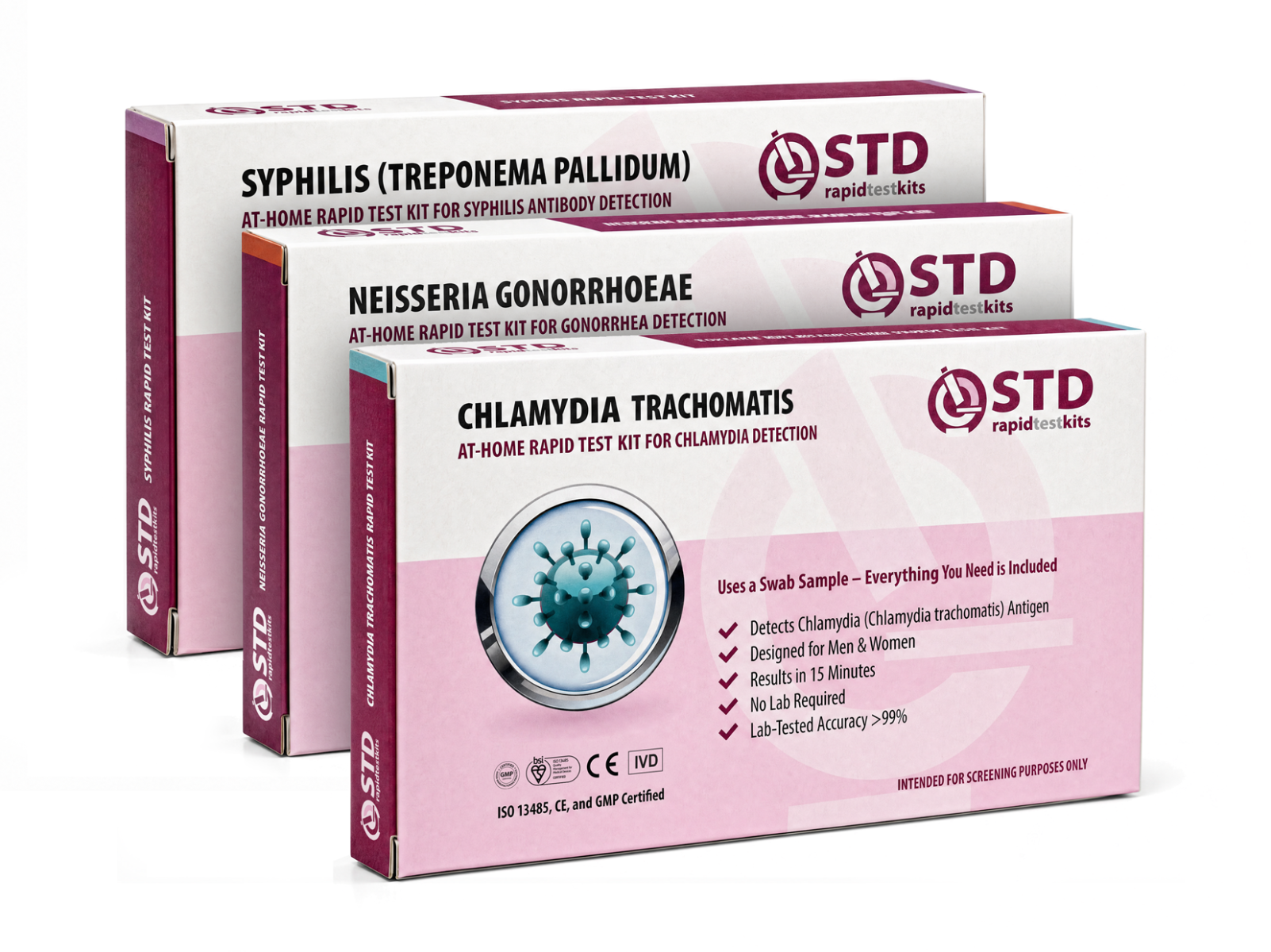
Note: this site sells at-home rapid STD test kits; the options below are from our own catalog.

What Clinics Can Do Better
This is not just a callout to patients. Clinics, urgent-care chains, federally qualified health centers, and hospital STD-testing programs can close most of this gap with workflow changes that do not require new funding, only intention.
- Default to asking every patient at intake if they would prefer the visit in another language; do not wait for the patient to volunteer the request, because many patients with limited English proficiency do not know the service is free
- Use qualified medical interpreters, in person, by video, or by phone, and document which interpreter service was used in the visit note; never rely on a family member, friend, or minor child for sexual-history or consent discussions
- Provide STD-testing consent forms, results explanations, and treatment instructions in the patient's preferred language whenever possible; CDC, HHS, and many state health departments offer translated templates already
- Use the teach-back method: ask the patient to repeat back, in their own words, what they understood about the test, the result, or the treatment plan. A nod is not the same thing as comprehension, and the teach-back is the single highest-yield safety check for limited-English-proficient patients
- Avoid assuming a quiet patient has nothing to report. Silence in this setting is more often discomfort than absence of symptoms, and an open question with a long pause often surfaces the symptom that the closed question missed
The Joint Commission, the HHS Office of Minority Health, and the Agency for Healthcare Research and Quality have all published implementation toolkits for exactly these workflows.
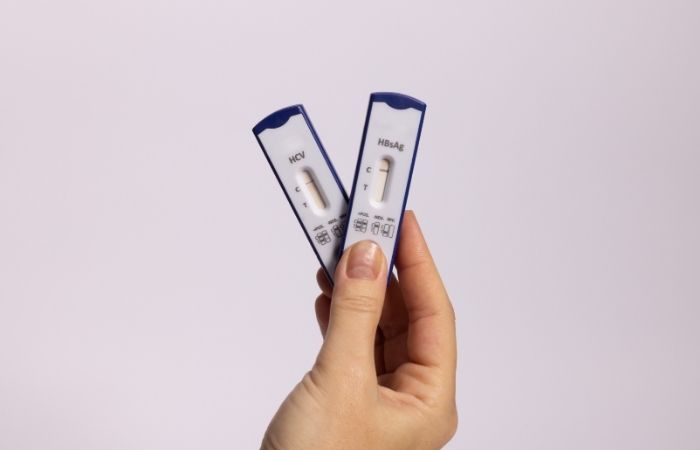
You Have the Right to Understand Your Body
If you have ever left a clinic confused, embarrassed, or still in pain because no one would slow down enough to make sure you understood what was happening, you are not alone. Language is not supposed to be the reason an STD goes untreated, and your body deserves answers in words you can read, asked by someone who is willing to wait for the real reply.
If a clinic visit feels like more than you can navigate today, a private at-home test kit is a way to confirm what you needed checked without walking into the language barrier first. The result is yours, in your own time, on your terms. From there, you decide whether to bring it into a clinic conversation, and you do that on your own footing.
Frequently Asked Questions
- Can I ask for an interpreter at any U.S. clinic?
- At intake, say or write that you need an interpreter in your language. Any clinic that takes Medicare or Medicaid, which covers almost every clinic in the country, must provide one free of charge under Title VI and Section 1557. If the clinic refuses, file a complaint with the HHS Office for Civil Rights online or by mail; you do not need to be a citizen to do so.
- What if I signed a medical form I did not understand?
- If you were not given proper translation, that signature does not represent informed consent in any meaningful sense. You can follow up with the clinic to request a translated copy and a full explanation. If a procedure or test was performed that you would not have agreed to with full information, you can ask for a re-test, a second opinion, or file a complaint with the HHS Office for Civil Rights.
- Do I need an ID to get tested for STDs?
- Many clinics ask for one, especially if you plan to use insurance. Title X family-planning clinics, community health centers, and some county STD programs offer testing without ID on a sliding-scale basis. At-home test kits do not require any ID at all.
- Which STDs are most often missed when there is a language barrier?
- Herpes, trichomoniasis, HPV, and chlamydia top the list. Their symptoms are often described in vague terms (irritation, bumps, smell) that do not translate cleanly across languages, and they are also frequently not on a default panel unless the patient specifically asks for them or the clinician specifically orders them.
- Can I bring a family member to translate?
- You can, but it is not the safest choice for sexual-history questions. Federal guidance and the CLAS Standards specifically recommend against using family members, friends, or minors as medical interpreters because of the risk of mistranslation, withheld information, and discomfort. Ask for a qualified medical interpreter instead.
- Will an at-home STD test be reported to immigration authorities?
- No. At-home STD test kits are sold privately and do not connect to any government database. There is no ID requirement, no insurance file, and no record shared with immigration authorities. Your results stay with you.
- Are at-home STD instructions available in languages other than English?
- Many at-home kits include instructions in Spanish and other commonly requested languages, often with visual step-by-step diagrams that work regardless of the reader's primary language. Check the product page or contact support before ordering if you need a specific language.
- What should I do if I think a clinic skipped tests because of the language gap?
- Ask in writing for a copy of the test order and the results. If panels you expected (herpes, trichomoniasis, HPV) were not run, request them specifically or use an at-home panel that covers those infections. You can also report a refused interpreter or skipped tests to the HHS Office for Civil Rights.
- U.S. Department of Health and Human Services, Office for Civil Rights. Limited English proficiency and Title VI obligations for healthcare providers receiving federal financial assistance, including the right to free qualified interpretation.
- U.S. Department of Health and Human Services, Office of Minority Health. National Standards for Culturally and Linguistically Appropriate Services (National CLAS Standards) in Health and Health Care, the federal benchmark for language access in clinical settings.
- Agency for Healthcare Research and Quality. Health literacy and language access resources, including patient-safety findings on diagnostic error in limited-English-proficient populations.
- Centers for Disease Control and Prevention. Sexually transmitted infections: testing, screening guidance, and standard panel composition.
- Centers for Disease Control and Prevention, Office of Minority Health. Minority health and health disparities data, initiatives, and resources, including access barriers for immigrant and underserved communities.
- MedlinePlus, U.S. National Library of Medicine. Patient rights and informed consent overview, including the requirement that consent be based on understanding rather than a signature alone.
