
Published: December 2025 | Last updated: May 2026 | Editorial review and quality control: Martina N.
The most common sexually transmitted infections in the United States are also the quietest. Chlamydia, gonorrhea, HPV, herpes, HIV, and trichomoniasis spread most efficiently through people who have no idea they are carrying anything. There is no burning, no discharge, no visible sore, nothing the body raises as a flag. Just a normal day, a normal week, a normal year, and a body that is hosting and sometimes transmitting an infection without raising a single alarm.
The numbers are not small. CDC's 2024 STI surveillance report counted 1,515,985 reported chlamydia cases in the United States that year alone (CDC STI surveillance), and the agency's herpes basics page states directly that most people do not know they have a herpes infection (CDC genital herpes basics). That gap between feeling fine and being infected is the entire reason regular screening exists.
Key Takeaways
- Most chlamydia, gonorrhea, HPV, herpes, and HIV infections cause no symptoms in the early stages, so feeling fine tells you almost nothing about your STI status.
- Asymptomatic infections still transmit and still cause long-term damage when untreated, which is why CDC bases screening on age, anatomy, and exposure history rather than on whether anything hurts.
How an STI can live in your body without making any noise
An STI causes symptoms when the immune system mounts a visible response: inflammation, ulceration, unusual fluid, swollen lymph nodes. Many STIs do not trigger that response, or trigger one so mild it gets blamed on something else: a mild rash, an ingrown hair, a one-off bout of cystitis, a stomach bug that came and went.
Clinicians describe two patterns that both end the same way. The first is genuinely silent infection, where the immune system is engaged with the pathogen but the response stays below the threshold a person would notice. Early HIV often looks like this. Primary HSV-2 sometimes does too. The second is mild symptoms attributed to something else: a brief throat scratch dismissed as a cold, light spotting blamed on a cycle, faint discharge that does not match what someone expects an STI to look like. Both lead to a person who feels fine, is not seeking care, and continues to transmit.
Several factors explain why infections stay quiet:
- Anatomical hiding places. Chlamydia and gonorrhea can colonize the cervix, urethra, throat, or rectum without producing pain receptors' worth of inflammation. Throat and rectal infections often cause no symptoms, which is part of why CDC recommends screening at the anatomic site of exposure rather than waiting for a complaint (CDC gonorrhea overview).
- Immune containment without clearance. HSV-1 and HSV-2 retreat into nerve ganglia between flare-ups. The virus is still there, and asymptomatic shedding can transmit it to a partner during stretches when no sore is visible.
- Slow tissue change. HPV typically causes no immediate symptoms. High-risk strains can drive cellular changes in the cervix, anus, throat, or penis over years before anything is felt or seen (CDC HPV basics).
- Years of clinical latency. Untreated HIV depletes CD4 cells slowly. After the brief acute retroviral syndrome (a flu-like illness within the first few weeks, often missed), the infection can stay clinically silent for a decade or longer before AIDS-defining illnesses appear (CDC HIV basics).
- Symptoms that mimic something else. Trichomoniasis discharge can look identical to a yeast infection or bacterial vaginosis. People treat themselves with antifungals from the pharmacy and never test for the actual cause.
Can you have an STD without any symptoms?
Yes, and for the most common STIs it is the rule rather than the exception. CDC describes chlamydia as often producing no noticeable symptoms, states directly that most people do not know they have a herpes infection, and notes that HPV, HIV (during clinical latency), and trichomoniasis are typically silent too. The only reliable way to know your status is to test on a regular schedule, even when nothing feels wrong.
The silent STIs you are most likely to encounter
The infections below cover the overwhelming majority of asymptomatic STI diagnoses. They are not exotic. They are the ones a primary care provider sees every week.
Chlamydia
Chlamydia is the single most-reported bacterial STI in the United States and the textbook example of a silent infection. CDC describes the infection as often producing no noticeable symptoms in either sex (CDC chlamydia overview), and counted 1,515,985 reported cases nationally in 2024 alone. Untreated chlamydia in people with female reproductive anatomy can ascend to the fallopian tubes and cause pelvic inflammatory disease (PID), a leading preventable cause of tubal-factor infertility and ectopic pregnancy. In people with male reproductive anatomy, untreated infection can cause epididymitis, an often painful swelling of the tube behind the testicle. Treatment is short, often a single dose of antibiotic, and reliably curative.
Gonorrhea
Gonorrhea behaves a lot like chlamydia. Genital infections are often asymptomatic in women and frequently asymptomatic in men too. Throat (pharyngeal) and rectal infections often cause no symptoms, which matters because oral and anal exposures are routine routes of transmission. Untreated gonorrhea can cause PID, infertility, joint infections, and in rare cases disseminated bloodstream infection. CDC also tracks rising antibiotic resistance, which makes early diagnosis more important, not less.
HPV (human papillomavirus)
HPV is the most common STI worldwide, and CDC estimates that nearly every sexually active person who is not vaccinated will pick up at least one strain at some point (CDC HPV basics). Most exposures cause no symptoms and the immune system clears the virus within roughly two years. The cases that do not clear matter a lot: persistent infection with high-risk HPV strains is responsible for nearly all cervical cancer and a large share of anal, oropharyngeal, vulvar, vaginal, and penile cancers. Lower-risk strains can cause genital warts. ACIP recommends routine HPV vaccination starting at ages 11 to 12 (with the option to start at age 9), and notes that adults aged 27 through 45 may decide to vaccinate after a conversation with their clinician about ongoing exposure risk (CDC HPV vaccination).
Genital herpes (HSV-1 and HSV-2)
Many people with genital herpes have no recognized outbreak, and many of those who do mistake the first signs for razor burn, a pimple, or an ingrown hair. The virus can be transmitted during asymptomatic shedding, when there are no visible sores at all. CDC's 2018 estimates counted 572,000 new genital herpes infections in the U.S. among people aged 14 to 49, and the WHO estimates that 520 million people aged 15 to 49 globally are living with HSV-2 infection, the type most commonly associated with genital herpes (WHO HSV fact sheet). HSV-1, the type most people associate with oral cold sores, increasingly causes genital infections in younger adults because oral-sex transmission patterns have shifted over the past two decades. The two viruses behave a little differently, but both can be silent for long stretches and both transmit during shedding episodes.
HIV
HIV's silent phase is the longest of any common STI and the consequences of late diagnosis are the heaviest. Some people experience acute retroviral syndrome in the first two to four weeks after infection (fever, sore throat, body aches, sometimes a rash), but the symptoms are nonspecific and often dismissed as a cold or flu. After the acute phase resolves, clinical latency can last a decade or longer before opportunistic infections appear. Started early, modern antiretroviral therapy suppresses viral load to undetectable, preserves long-term immune function, and prevents onward transmission to partners. The case for early diagnosis is unambiguous: late treatment still works, but recovery from advanced disease is much harder than prevention of it.
Trichomoniasis
Trichomoniasis is a parasitic infection. According to the CDC, about 70 percent of people with the infection do not have any signs or symptoms (CDC trichomoniasis fact sheet). When symptoms do appear they look ordinary: itching, an unusual discharge, mild irritation. Untreated trich raises the risk of acquiring HIV and is associated with adverse pregnancy outcomes including preterm birth.
Syphilis and chronic hepatitis B and C
Syphilis cycles through stages, and the latent stage between secondary and tertiary disease can be entirely silent for years while the bacterium continues damaging cardiovascular and neurologic tissue. Hepatitis B and C typically establish themselves silently and progress to chronic liver disease over decades. Treatment for both works, especially when caught early; for hepatitis C, direct-acting antiviral medications now make the infection highly curable.
Heads up on test scope: our at-home rapid trichomoniasis swab and HPV swab are validated for vaginal self-collection only. Male readers who need a trich or HPV check should see a clinician for a sample type appropriate to their anatomy.
| Infection | How often it is silent | What it can do if untreated |
|---|---|---|
| Chlamydia | Often produces no noticeable symptoms (CDC) | PID, infertility, ectopic pregnancy, epididymitis |
| Gonorrhea | Often asymptomatic, especially throat and rectal infections | PID, infertility, joint infection, antibiotic-resistance concern |
| HPV (high-risk strains) | Most infections cause no symptoms | Cervical, anal, oropharyngeal, penile, and vulvar cancers |
| Genital herpes (HSV-2) | Many infections never produce a recognized outbreak | Recurrent outbreaks, asymptomatic shedding, neonatal transmission |
| HIV | Brief acute phase often missed, then years of clinical latency | Immune collapse, AIDS-defining illnesses, onward transmission |
| Trichomoniasis | About 70% have no signs or symptoms (CDC) | Increased HIV risk, preterm birth, low birth weight |
| Syphilis | Latent stage silent for months to years | Cardiovascular and neurologic damage |
| Hepatitis B and C | Mostly silent until late liver disease | Cirrhosis, liver cancer |
How silent STIs keep spreading
People who feel symptoms tend to slow down. They abstain, they call their partner, they book a clinic visit, they get treated. People who feel nothing keep doing what they were doing. That is the central reason asymptomatic infections drive transmission, and it is also why public-health agencies recommend screening based on exposure history rather than waiting for a symptom that may never arrive.
A few specific mechanisms compound the effect:
- Asymptomatic viral shedding. Genital herpes and HPV can be transmitted during stretches when the carrier has no visible signs. Condoms reduce risk substantially but do not fully protect against skin-to-skin contact outside the area covered.
- Skin-to-skin transmission outside penetrative sex. The word "sex" means different things to different people. Herpes, HPV, and chlamydia do not care which definition you are using. Skin-to-skin contact in the genital area is enough to pass HPV with no penetration. Oral contact can pass herpes in either direction. Chlamydia can colonize the throat after oral sex on someone with a genital infection, and the rectum after receptive anal contact.
- Hands and shared sex toys. Hands and shared toys can also move infection between people if they touch infected fluid or tissue and then touch another partner's mucous membranes without washing or being cleaned. The risk is lower than with unprotected penetrative sex, but it is not zero, especially for chlamydia and trichomoniasis, both of which need a wet environment to transfer.
- Standard testing skips the throat and rectum. A typical clinic STI panel often defaults to a urine sample, which catches genital chlamydia and gonorrhea but misses pharyngeal and rectal infections. If oral or anal exposure happened, ask specifically for swabs at those sites.
- Long latency. Some infections can persist for years without producing symptoms, which means the original transmission could have happened well before the current relationship. A long-dormant infection from a previous relationship can surface in the current one.
Many STIs colonize tissues that do not produce strong inflammatory pain signals (cervix, throat, rectum), hide between flare-ups in nerve cells (HSV), or sit at low viral load for years (HIV). The carrier feels nothing while the organism remains transmissible. Standard urine-only testing also misses pharyngeal and rectal infections, so silent cases at those sites can persist even when the person has tested at a clinic.
What untreated silent infections actually do
The damage from an asymptomatic infection starts at the time of infection, not at the time of symptom onset. Tubal scarring, viral integration into host DNA, immune-system depletion, and progressive liver fibrosis all begin during the period when a person feels fine. Most of these complications are preventable when the infection is found and treated early.
- Pelvic inflammatory disease and infertility. Untreated chlamydia and gonorrhea are leading preventable causes of PID, which scars the fallopian tubes and raises the risk of ectopic pregnancy and tubal-factor infertility (CDC PID fact sheet). Clinicians use the term subclinical PID for cases where silent inflammation causes fallopian tube scarring that only declares itself later as ectopic pregnancy or infertility. Many people with PID never had any clear symptoms of the original chlamydial or gonorrheal infection.
- Cancer risk from persistent HPV. Persistent infection with high-risk HPV types is the cause of virtually all cervical cancers and a substantial share of anal, oropharyngeal, vulvar, vaginal, and penile cancers. Decades can pass between the silent infection and the cancer, which is why HPV vaccination and routine cervical screening are foundational, not optional.
- Progressive HIV damage. Untreated HIV depletes CD4 cells over a span of years until the immune system can no longer suppress opportunistic infections. Earlier testing means earlier treatment, which translates to a meaningfully different long-term outcome.
- Adverse pregnancy outcomes. Untreated chlamydia, gonorrhea, syphilis, herpes, and trichomoniasis can each cause complications in pregnancy or transmission to a newborn. Routine prenatal STI screening exists for exactly this reason.
- Higher HIV transmission risk. Several untreated STIs, including herpes, trichomoniasis, and gonorrhea, increase the per-exposure risk of acquiring or transmitting HIV.
- Chronic pelvic pain and recurrent epididymitis. The damage from repeated, undiagnosed infections does not always reverse with treatment. Catching infections early matters.
Public-health modeling studies consistently find that a substantial share of new STI transmissions come from people who do not know they are infected. Carriers with symptoms self-limit their exposure window. Carriers without symptoms do not, which is why population-level screening, not symptom-triggered testing, is what actually reduces incidence.
Many people who have a sexually transmitted infection have no symptoms. Without testing, you can't know if you have one, and you can pass it to others without knowing.
Window period vs asymptomatic period: two different things
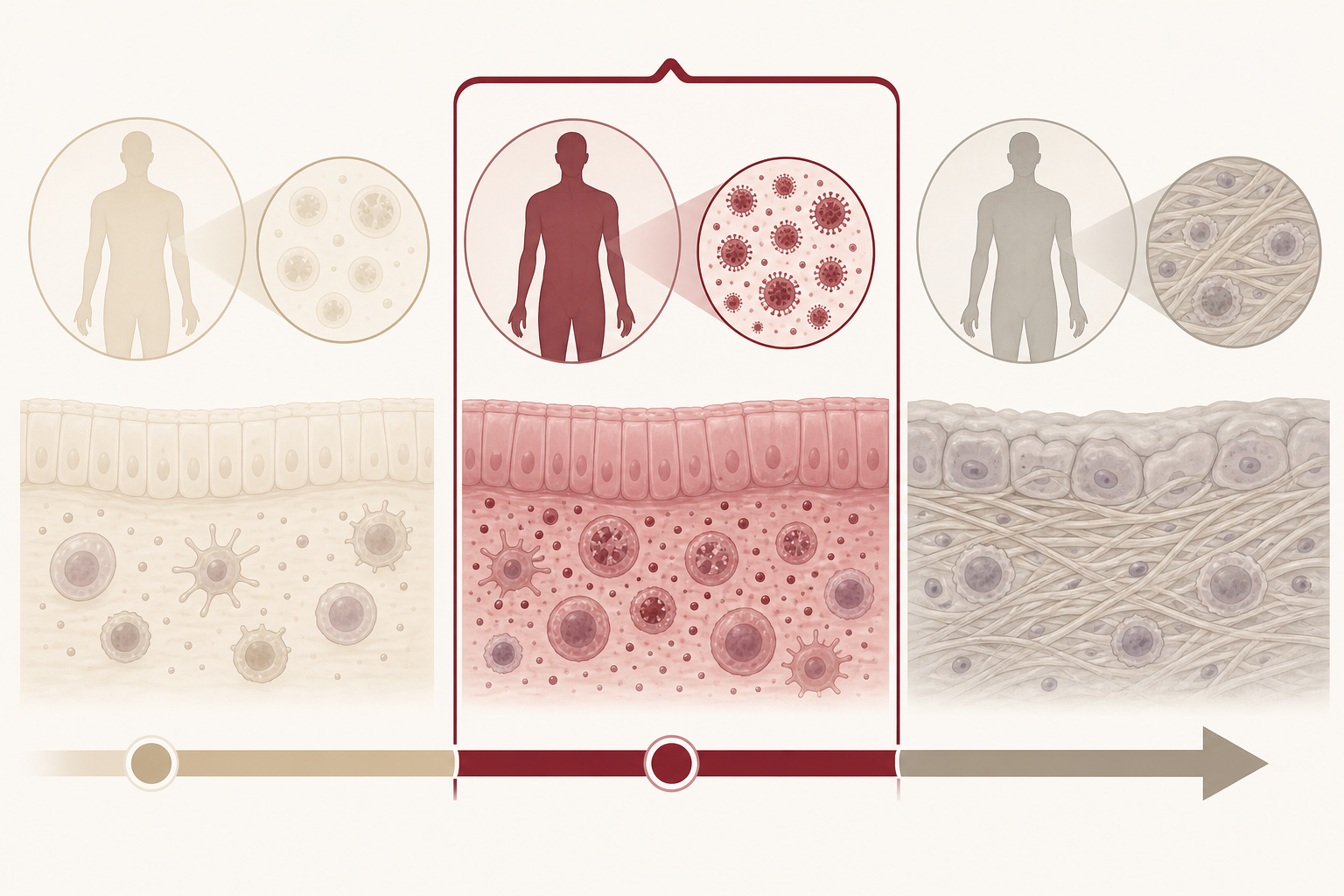
Two timing concepts get conflated and they should not be. The window period is the gap between exposure and when a test can reliably detect the infection. The asymptomatic period is how long the infection may stay quiet in the body. Both matter for testing decisions, but they answer different questions.
Window periods, summarized from CDC and FDA labeling for the relevant assays:
- Chlamydia and gonorrhea: bacterial DNA detectable in laboratory nucleic acid amplification testing (NAAT) within roughly 5 to 14 days. Rapid lateral-flow swab tests are useful from about day 14 forward.
- HIV: fourth-generation laboratory antigen-antibody tests detect by 18 to 45 days. Antibody-only rapid fingerstick tests are reliable by approximately 90 days.
- Syphilis: rapid antibody tests reliable by 3 to 6 weeks; laboratory nontreponemal tests have similar timing.
- Hepatitis B and C antibodies: usually detectable by 6 to 12 weeks.
- HSV-2 antibodies: 6 to 12 weeks for most people, with rare outliers extending longer per assay-specific labeling.
Asymptomatic periods, by contrast, can be effectively indefinite for HPV, HSV-2, and chronic hepatitis B and C. They are commonly months for chlamydia and gonorrhea. For untreated HIV, the asymptomatic phase can stretch a decade before AIDS-defining illnesses appear.
Practical implication: the right time to screen has nothing to do with how you feel. It is governed by when enough time has passed since exposure for the test to reliably detect the infection, and by the routine cadence CDC recommends for your age, anatomy, and partner profile. Test too early and a negative result is meaningless. Test on the right cadence and a negative actually tells you something.
When to test, even when nothing hurts
The CDC publishes screening recommendations specifically because waiting for symptoms means missing the majority of infections. The current general guidance:
- All sexually active women under 25: annual chlamydia and gonorrhea screening.
- Sexually active women 25 and older with risk factors (new partner, multiple partners, a partner with an STI): annual chlamydia and gonorrhea screening.
- Pregnant people: early-pregnancy screening for chlamydia, gonorrhea, syphilis, HIV, and hepatitis B; additional tests later in pregnancy depending on risk.
- Sexually active gay, bisexual, and other men who have sex with men: at least annual screening for chlamydia, gonorrhea (urethral, rectal, pharyngeal as appropriate), and syphilis, with HIV testing at least annually. Rectal and pharyngeal screening currently requires clinic-administered swabs; the at-home market does not yet cover these sample types.
- Everyone aged 13 to 64: at least one HIV test as part of routine care, with more frequent testing based on exposure (CDC STI screening recommendations).
For people with multiple or new partners, every 3 to 6 months is reasonable rather than once a year. The right cadence depends on actual exposure, not on assumptions about a relationship.
If a partner discloses a positive result, get tested even if you feel fine. If you have had unprotected sex with a new partner in the past few months, get tested even if you feel fine. If you do not remember the last time you tested, get tested.
CDC screening cadence at a glance
- Sexually active women under 25: annual chlamydia and gonorrhea screening.
- Anyone aged 13 to 64: at least one HIV test as part of routine care.
- Multiple or new partners: every 3 to 6 months for chlamydia, gonorrhea, and a full panel.
- Men who have sex with men: at least annual chlamydia, gonorrhea, syphilis, and HIV screening, with sites swabbed based on actual exposure.
Symptoms worth recognizing, even if they are not reliable
Absence of symptoms cannot rule out infection, but certain patterns deserve attention when they do appear. The summary below is organized by symptom pattern, not by infection. Any pattern below can also have non-STI causes (yeast, bacterial vaginosis, urinary tract infection, ingrown hair, viral pharyngitis). Use the table as a prompt for testing rather than as a diagnostic checklist; many infections share an identical asymptomatic phase, so testing is the only way to distinguish them with confidence.
| Symptom pattern | Infections to consider first |
|---|---|
| New, persistent, or unusual genital discharge (yellow, green, frothy, or with strong odor) | Gonorrhea, chlamydia, trichomoniasis |
| Burning or stinging during urination not explained by reduced fluid intake or a typical UTI | Chlamydia, gonorrhea |
| Single painless ulcer with a firm rolled border on the genitals, anus, or mouth | Primary syphilis |
| Cluster of small fluid-filled blisters that crust within days; first episode sometimes with fever and swollen lymph nodes | HSV-1 or HSV-2 |
| Persistent pelvic or lower-abdominal pain, especially with intercourse | PID secondary to chlamydia or gonorrhea |
| Flu-like illness within a month of a new exposure (fever, sore throat, fatigue, sometimes rash) | Acute HIV, primary or secondary syphilis |
| Soft flesh-colored or grayish growths on the genital or anal area | Low-risk HPV (genital warts) |
Misconceptions that quietly keep people sick
A handful of common beliefs explain why people skip testing for years at a time. Each one is worth correcting.
"If I had something, I would know."
The data does not support that. The most common bacterial STIs cause no symptoms in the majority of people who carry them. Throat and rectal infections are often silent. CDC's herpes basics page states directly that most people do not know they have a herpes infection.
"Clean" does not mean tested.
One of the most common myths in dating is that you can tell who has an STI by how someone looks. The word "clean" gets used as shorthand for "safe," but it does not carry any real information. Someone can shower three times a day and carry chlamydia. Someone can have one partner for a decade and carry high-risk HPV they picked up before that relationship started. The more honest question is, "Have you tested recently, after the window period for what we are worried about, and do you know which infections were on the panel?" Clinics and home kits do not all test for the same things. Most standard panels include chlamydia, gonorrhea, syphilis, and HIV. Many skip herpes unless asked. HPV testing is generally part of cervical-cancer screening for people with a cervix and is not routine for everyone. Replacing "clean" with "tested for X within the last Y months" removes moral judgment from the conversation and replaces it with information.
"We are exclusive, so we are fine."
An exclusive relationship is only as protective as the testing both partners did before going exclusive. A long-dormant infection from a previous relationship can surface in the current one.
"I got tested last year."
Last year's clean screen reflects last year's exposures, not this year's. Annual is the recommended floor for sexually active adults under 25, and more often for higher exposure.
"I was treated for chlamydia once, so I am covered."
Treatment cures that one infection. It does not grant immunity, does not cover other infections you were not tested for, and does not prevent reinfection from a partner who was not treated alongside you.
"Condoms prevent everything."
Condoms are highly effective against fluid-transmitted infections like HIV, gonorrhea, and chlamydia, and they meaningfully reduce risk for skin-to-skin infections. They do not fully prevent HPV or herpes, which can be transmitted from skin not covered by the condom (the base of the penis, the scrotum, the vulva, perianal skin).
"Pap smears check for STIs."
A Pap smear screens for cervical cellular changes, often related to HPV. It is not a screen for chlamydia, gonorrhea, syphilis, HIV, or herpes. Those need to be ordered separately.
Beliefs that delay testing
- A clean-looking partner is not a tested partner; appearance carries no information about infection status.
- Last year's negative result covers last year's exposures only, not anything that has happened since.
- Pap smears do not screen for chlamydia, gonorrhea, syphilis, HIV, or herpes; those have to be ordered separately.
- One past treatment for chlamydia does not grant immunity and does not prevent reinfection from an untreated partner.
Prevention: layered tools that work together
Testing limits the damage after exposure. Prevention reduces exposure in the first place. The two are complementary, and the most effective sexual-health routines combine both. No single prevention measure is enough on its own, but stacking two or three of the layers below drops practical risk sharply.
- HPV vaccination. The single highest-impact prevention measure for HPV-related cancers and genital warts. ACIP recommends routine vaccination starting at ages 11 to 12 (with the option to start at age 9), and adults aged 27 through 45 who are not already vaccinated may decide to vaccinate after a conversation with their clinician about ongoing exposure risk. Vaccination after exposure to one HPV strain still protects against the other strains in the vaccine, so it is worth raising with a clinician even after years of sexual activity.
- Hepatitis B vaccination. Part of routine childhood immunization in the United States. Adults who were not vaccinated as children should ask a provider about the 2- or 3-dose adult series.
- Condoms. Consistent and correct use reduces (without eliminating) transmission of chlamydia, gonorrhea, HIV, syphilis, hepatitis B, and trichomoniasis. They are less effective against HPV and HSV-2 because both can be present on skin not covered by the condom.
- PrEP (pre-exposure prophylaxis). Daily oral tenofovir-based combinations or long-acting injectable cabotegravir greatly reduce HIV acquisition risk when taken as prescribed (CDC PrEP guidance). PrEP does not protect against other STIs, which is why people on PrEP are typically screened for bacterial STIs every 3 months.
- Doxy-PEP. Doxycycline taken within 72 hours after condomless sex reduces bacterial STI risk (chlamydia, gonorrhea, syphilis) in eligible groups. CDC issued formal doxy-PEP guidance in 2024.
- Communication. A frank conversation about testing history with a new partner is the lowest-cost prevention measure available, and the one most often skipped.
HPV and hepatitis B vaccines remove specific infections from the table; condoms cover bacterial and bloodborne transmission imperfectly; PrEP and doxy-PEP fill in gaps for HIV and bacterial STIs respectively; partner conversations remove avoidable risk. Stack two or three of these and the practical exposure risk drops sharply.
Where at-home testing fits in
The most common reason people give for skipping STI testing is the logistics: a clinic appointment, a waiting room, an awkward conversation. At-home rapid test kits remove most of that friction. They are useful as a first-line screen, especially for people who would otherwise wait months to test.
A few things worth knowing before relying on home tests:
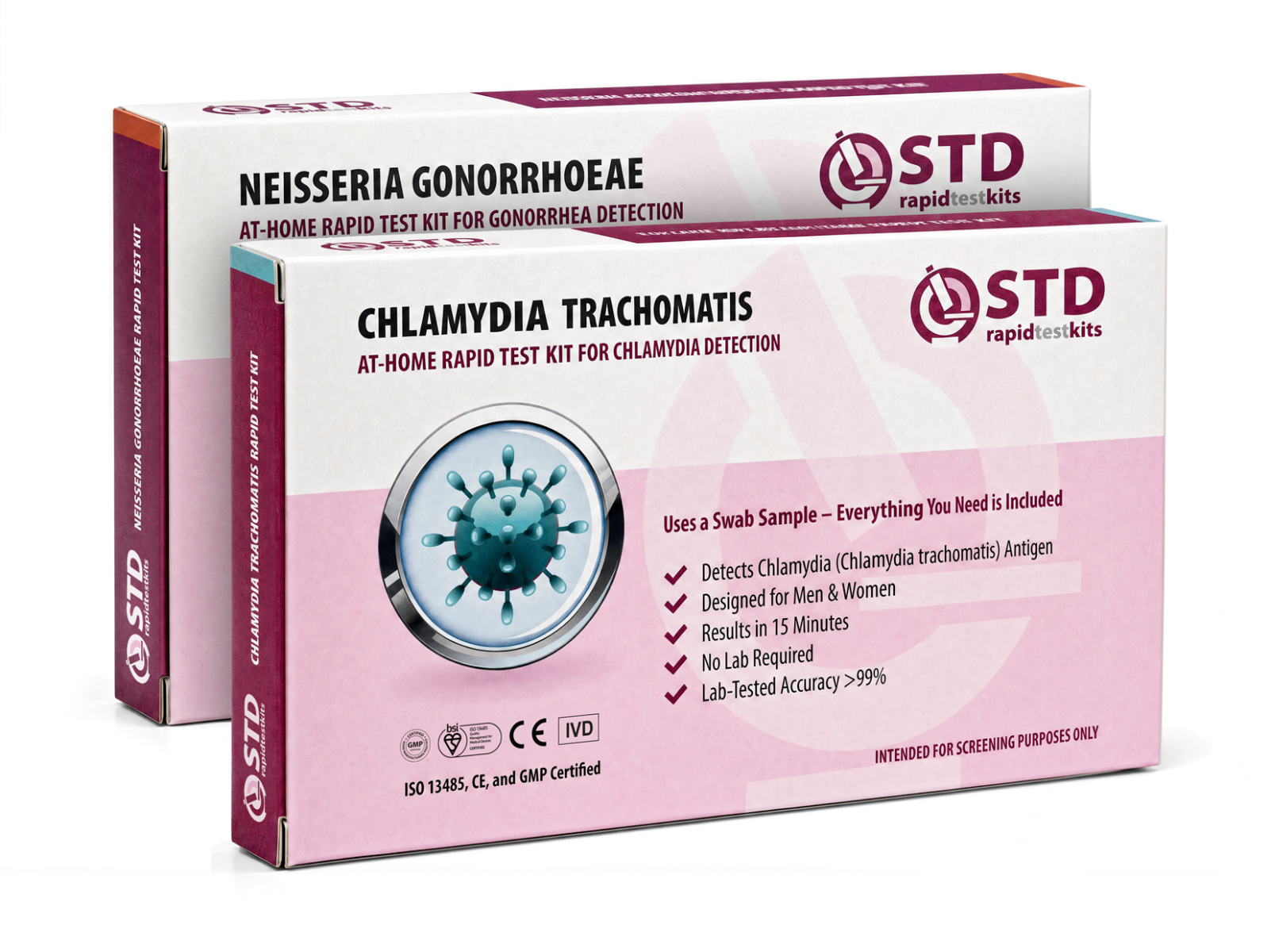
- Our at-home kits are rapid lateral-flow tests. They use the same swab or fingerprick sample type as clinic-based testing for the same infection, but the chemistry is lateral-flow, not laboratory NAAT. NAAT is the molecular test labs run for chlamydia and gonorrhea, and it is more analytically sensitive, especially when bacterial load is low. The two are complementary: a rapid home kit screens quickly and privately; a lab NAAT confirms.
- Test after the right window. Each infection has a window period during which it is not reliably detectable. For chlamydia and gonorrhea via rapid swab, that is typically about two weeks after exposure. For HIV antibody tests, longer. Read the kit insert and time the test correctly.
- Positive at home means follow up. A positive rapid result is a strong signal to call a provider for treatment and confirmatory testing. It is not the end of the diagnostic process, and treatment should not start until a clinician has confirmed with a lab test.
- Negative at home does not always mean negative. If you tested before the window closed, or if you have ongoing exposure, retest at the appropriate interval.
Our at-home trichomoniasis and HPV rapid tests are validated for vaginal self-swab and are intended for female anatomy. Male readers who need testing for trich or HPV should see a clinician for a sample type appropriate to their anatomy. The 10-in-1 combination panel is also women-only; the 6-in-1, 7-in-1, and 8-in-1 panels are formulated for any-gender use. We do not sell pharyngeal or rectal swabs; if your exposure was oral or anal, a clinic visit is the right path. This article is published by stdrapidtestkits.com, and we recommend products based on fit-for-purpose for the reader's concern, not commercial benefit.
What to do if a result comes back positive
A positive at-home rapid test is screening, not diagnosis. It signals "go to a clinic" rather than "start treatment." The reasonable next steps:
- Pause sex until a clinic confirms and treats. This window matters most for bacterial infections where antibiotics resolve the infection quickly.
- Schedule a same-week clinic visit. Telehealth is appropriate for many STIs. Bring the at-home test result for context; the provider will typically run a confirmatory lab NAAT (chlamydia, gonorrhea) or fourth-generation antigen-antibody panel (HIV) regardless.
- Notify recent partners. The standard look-back is the last 60 days for chlamydia and gonorrhea, longer for syphilis and HIV. Most local health departments offer anonymous partner notification, and several apps allow you to send a confidential message that a partner should get tested without identifying you by name.
- For a positive HIV result, do not delay the clinic visit. The speed of starting antiretroviral therapy meaningfully affects long-term outcomes, both for the person diagnosed and for their partners.
A positive at-home test that turns out to be a false positive on lab confirmation is uncommon but not impossible, particularly for antibody-based tests. That is the reason the confirmatory step exists, and the reason no one should start treatment on a rapid result alone.
FAQs
- Can you have an STD for years without knowing?
- Yes. HPV and HSV-2 can persist for years without any recognized sign; HIV's asymptomatic phase averages roughly a decade untreated before opportunistic illnesses appear; chronic hepatitis B or C may stay silent until liver damage is advanced. Routine screening exists precisely because symptoms never reliably surface.
- Which STIs are most likely to be silent?
- Trichomoniasis tops the list per CDC, with about 70% of cases producing no signs or symptoms. CDC also describes chlamydia as often producing no noticeable symptoms, states directly that most people with herpes do not know they have it, and notes HPV and HIV (during clinical latency) are typically silent too. Pharyngeal and rectal gonorrhea are silent more often than not.
- If I had unprotected sex but feel completely fine, do I still need to test?
- Yes, particularly for chlamydia, gonorrhea, HIV, and syphilis. Apply the window-period rules: wait about 14 days for chlamydia and gonorrhea via rapid swab, and about 90 days for an antibody-only HIV rapid test. Then test even if nothing feels wrong. Most onward transmissions happen from people who had no symptoms at the time.
- Is there a difference between asymptomatic and untreated?
- Yes. Asymptomatic describes the host (you feel fine). Untreated describes the infection (no antibiotic, antiviral, or other intervention has cleared it). An infection can be asymptomatic and untreated for years, especially with HPV, HSV-2, and chronic hepatitis, and during that time the pathogen still does its biological damage and remains transmissible.
- Can I transmit an STI if I have no symptoms?
- Yes. Asymptomatic chlamydia, gonorrhea, herpes, HPV, HIV, and trichomoniasis are all transmissible. Genital herpes can be passed during asymptomatic viral shedding when no sores are visible, and HIV transmits at any stage if viral load is not suppressed by treatment.
- How often should I test if I have multiple or new partners?
- Every 3 to 6 months for a full panel is a sensible baseline if you have new or concurrent partners. Test sooner after a specific high-risk exposure, or whenever a partner reports a positive result and you want to confirm your own status.
- Are at-home STD test kits accurate?
- Rapid lateral-flow at-home kits are useful screening tools when used correctly and after the appropriate window period for the infection. They are not equivalent in analytical sensitivity to laboratory NAAT testing for chlamydia or gonorrhea, or to fourth-generation antigen-antibody panels for HIV, so a positive home result is best confirmed with a clinician, and a negative result close to an exposure should be repeated after the window closes.
- Does a negative at-home test mean I am definitely not infected?
- Only if the test was taken after the window period closed for that infection and the test was performed correctly. A negative chlamydia or gonorrhea swab taken 5 days post-exposure is not meaningful; the same test taken 3 weeks post-exposure is. Repeat testing at the right interval is more reliable than a single early test.
Pick the right test for your situation
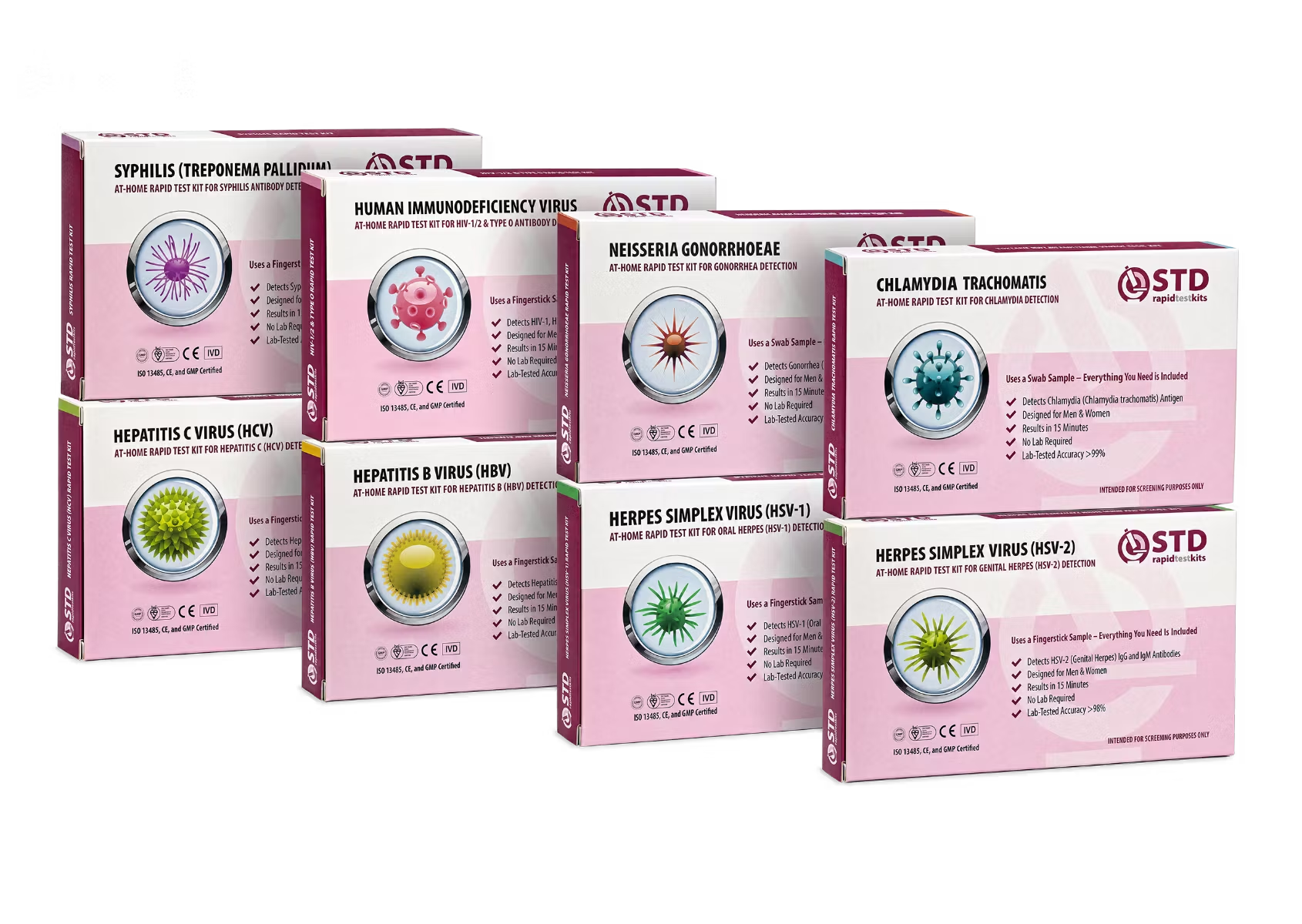
stdrapidtestkits.com sells the rapid lateral-flow tests below, and we recommend the option that fits your concern rather than the highest-priced kit. For routine annual screening focused on the two highest-yield silent infections, the Chlamydia + Gonorrhea Combo Rapid Test in the section above covers the bases. For a broader baseline after a higher-risk exposure or a long stretch without testing, the comprehensive panel below is the more thorough at-home option.
The bottom line
Silent STIs are not rare and they are not harmless. Silent infection is the default state for most of these organisms, not the exception. Most chlamydia, most HPV, most herpes, a large share of gonorrhea and trichomoniasis cases, and HIV during its years-long latency period produce no symptoms a person would think to act on. The damage they cause when untreated (infertility, ectopic pregnancy, certain cancers, neonatal complications, immune-system collapse, and increased HIV transmission risk) is real and largely preventable with screening on a regular schedule and the prevention layers described above.
You do not need to feel sick to take this seriously. You need a testing routine that matches your actual exposure, a willingness to retest after the window period, the prevention tools that fit your situation, and follow-up with a clinician when a result comes back positive or when symptoms appear.
Your three-step silent-STI testing routine
- Match screening cadence to your actual exposure and partner profile, not to whether anything feels wrong.
- Retest after the window period closes if your first test was too soon after exposure to be reliable.
- Confirm any positive at-home rapid result with a clinic-administered lab test before starting treatment.
- U.S. Centers for Disease Control and Prevention. About STIs (general overview, U.S. burden, asymptomatic transmission).
- U.S. Centers for Disease Control and Prevention. STI surveillance (2024 provisional): 1,515,985 reported chlamydia cases in the United States that year.
- U.S. Centers for Disease Control and Prevention. Chlamydia overview (general overview, complications, screening recommendations for women under 25).
- U.S. Centers for Disease Control and Prevention. Gonorrhea overview (genital, pharyngeal, and rectal infection patterns; antibiotic resistance).
- U.S. Centers for Disease Control and Prevention. Genital herpes basics (asymptomatic shedding, transmission, and the 572,000 new infections estimate in people aged 14 to 49).
- U.S. Centers for Disease Control and Prevention. HPV basics (transmission, persistence, near-universal exposure among the unvaccinated sexually active population).
- U.S. Centers for Disease Control and Prevention. HPV vaccination (ACIP routine schedule starting at ages 11 to 12, shared clinical decision-making through age 45).
- U.S. Centers for Disease Control and Prevention. STI screening recommendations (who to test, when, and how often).
- U.S. Centers for Disease Control and Prevention. HIV PrEP guidance (oral and injectable HIV pre-exposure prophylaxis).
- World Health Organization. Herpes simplex virus fact sheet (global HSV-2 burden estimates including the 520 million figure for ages 15 to 49).
- U.S. Centers for Disease Control and Prevention. Trichomoniasis basic information (about 70% of people with infection have no signs or symptoms).
