
Published: July 2025 | Last updated: May 2026 | Editorial review and quality control: Martina N.
Black women walk into clinics with chlamydia, trichomoniasis, herpes, and gonorrhea, and walk out with antifungal cream and a shrug. The infection shows up later, deeper in the reproductive tract, and harder to treat. The script in the room rarely changes: probably yeast, probably BV, drink more water and follow up in a month.
This article walks through why so many sexually transmitted infections get misread when the patient is a Black woman, what U.S. surveillance numbers actually show, which tests get left off the standard panel, and what to ask for the next time something feels wrong.
Key Takeaways
- Black women face higher rates of trichomoniasis, gonorrhea, and HIV diagnosis, and a higher chance their symptoms get attributed to BV or yeast first.
- Most standard STI panels do not include trichomoniasis or HSV antibody testing by default. Asking for them by name changes what gets tested.
When “It’s Just BV Again” Becomes a Pattern
Bacterial vaginosis is real, and it is one of the most common diagnoses Black women receive for vaginal symptoms. Vaginal microbiome research summarized by the NHS BV reference page describes BV as common and recurrent in many populations. The problem is not BV existing. The problem is BV becoming the default answer for any vaginal symptom, often without a workup that rules out anything else.
Qualitative research on patient experience in U.S. clinics keeps documenting the same loop. A patient comes in with discharge, odor, irritation, or pain during sex. The provider treats for BV or yeast. Symptoms come back. The cycle repeats. Months pass. No one orders a swab for trichomoniasis. No one runs a full panel for chlamydia or gonorrhea. By the time someone does, the original infection has had time to ascend.
Trichomoniasis carried an estimated 156 million new infections globally in 2020, the highest incidence among the four curable STIs the WHO tracks in its STI fact sheet (compared with 129 million for chlamydia, 82 million for gonorrhea, and 7.1 million for syphilis). The CDC's trichomoniasis fact sheet reports about 70% of people with the infection have no signs or symptoms; when symptoms do appear, the discharge, odor, and irritation can look indistinguishable from BV.
Recurrent BV-like symptoms after multiple courses of metronidazole are a reason to ask explicitly for trichomoniasis testing by NAAT and a chlamydia/gonorrhea swab. A wet-mount slide misses a substantial fraction of trichomoniasis cases per CDC laboratory guidance, so a negative wet mount does not rule it out.
The Pain Gap: Why Symptoms Get Downplayed
This part is less about test menus and more about who gets believed. A long line of pain-perception research finds that providers underestimate Black patients' pain and undertreat it relative to similar reports from white patients. That holds across pelvic complaints, musculoskeletal pain, and post-surgical pain.
The downstream effect on STI care is concrete. Burning during urination gets called a UTI without a culture. Pelvic cramping gets attributed to “your cycle” rather than triggering a check for pelvic inflammatory disease, the condition that follows untreated chlamydia or gonorrhea and can scar the fallopian tubes. The CDC's overview of pelvic inflammatory disease states that 1 in 8 women with a history of PID experience difficulty getting pregnant, and that damage to the reproductive system cannot be reversed once it occurs.
Medical racism does not always look like a slammed door. Sometimes it looks like a rushed visit, a refusal to swab when the patient asks, or a chart note that says “patient seems anxious” in place of “patient reported pelvic pain for six months.” Self-advocacy in this environment is a clinical tool, not paranoia.

By the Numbers: What U.S. Surveillance Actually Says
Black women make up roughly 13 percent of women in the U.S., but they carry a disproportionate share of reported sexually transmitted infections. The CDC's annual STI surveillance summary tracks national chlamydia, gonorrhea, and syphilis trends; prior CDC surveillance reports broke these out by race and consistently showed reported rates in non-Hispanic Black women several times higher than in non-Hispanic white women.
HIV diagnoses tell the same story. The CDC's Fast Facts: HIV and Women page identifies Black/African American women as the group disproportionately affected by HIV among U.S. women. Kaiser Family Foundation analysis of CDC data found Black women accounted for half of new HIV diagnoses among U.S. women in 2022, with a diagnosis rate roughly 10 times the rate among white women.
Numbers like these get blamed on individual behavior. They should not be. Risk of acquiring an STI is shaped by sexual-network density, partner testing access, condom use among partners, and pre-existing genital inflammation. Those factors connect more closely to local healthcare access and partner testing patterns than to anything personal about the patient. Where access is poor, infections cycle longer in a community before they get treated.
Per Kaiser Family Foundation analysis of CDC surveillance data, in 2022 the rate of new HIV diagnoses among Black women was roughly 10 times the rate among white women (19.2 versus 1.9 per 100,000). Black women accounted for about 50% of all new HIV diagnoses among U.S. women that year, despite making up roughly 13% of the female population.
Standard Panels Don’t Catch Everything
The phrase “I got tested” hides a lot of variation. A typical “full STI panel” at a primary-care clinic covers chlamydia, gonorrhea, syphilis, and HIV. It often does not include trichomoniasis. It usually does not include HSV-1 or HSV-2 antibody testing unless you ask. HPV testing for women is only routine as part of cervical cancer screening from age 21 onward, with specific cytology rules.
That has practical consequences. A negative panel can come back when an active trichomoniasis infection is sitting under the result, because trich was not on the menu. The same gap shows up with herpes: the lesions heal between appointments, the test was never ordered, and the chart says “STI panel negative” while the infection is intermittent and active.
Two more things matter when reading panel results. Every infection has a window period, the gap between exposure and a detectable result. HIV antibody-only tests can take up to three months to turn positive; a 4th-generation antigen/antibody lab test can detect HIV as early as 18 days after exposure, with the window extending to 45 days for some people, per CDC HIV testing guidance. Syphilis treponemal antibody tests typically detect infection by three to six weeks. Sample type matters too: trichomoniasis is most reliably caught with a vaginal swab tested by NAAT, not a wet mount under a microscope.
- Trichomoniasis NAAT on a vaginal swab. Wet mount alone misses many cases.
- HSV-1 and HSV-2 antibody panel by blood test. Has nuance; ask the clinician what a positive means in your situation.
- HPV cytology and HPV-DNA outside the routine cervical-screening interval, when there is a specific reason to test sooner.
- Mycoplasma genitalium, an under-tested cause of urethritis and PID-like symptoms, when standard panels keep returning negative.
How Symptoms Look Different on Brown Skin
Many medical-textbook images of genital herpes, syphilis chancres, and HPV warts were photographed on light skin. Erythema that reads as bright pink-red on light skin can present as a dusky purple, brown, or hyperpigmented patch on darker skin. Inflammation around a lesion can be subtle. Providers trained on a narrow visual reference can miss the same finding when the contrast is different.
Practical implications: a “razor bump” or “ingrown hair” label for a small bump near the labia or groin should be re-checked when the patient has had a new partner, when the bump is painless, or when it appears in a cluster. Painless single ulcers should raise a syphilis question. Painful clustered vesicles, especially recurring in the same spot, point toward HSV.
Many of these infections also include extragenital signs that get attributed to other causes. Throat-area gonorrhea presents as a sore throat that does not test positive for strep. The companion article on oral STI signs dentists notice first covers the throat, gum, and tongue presentations in more detail.

What Happens When STIs Go Untreated
Untreated chlamydia and gonorrhea ascend from the cervix into the uterus and fallopian tubes. That is pelvic inflammatory disease. The CDC's PID fact sheet states that 1 in 8 women with a history of PID experience trouble getting pregnant, and that scar tissue from PID can also cause ectopic pregnancy and chronic pelvic pain.
Untreated syphilis cycles through stages. Primary syphilis presents as a painless ulcer, usually genital but sometimes oral, and resolves on its own. Secondary syphilis can show up weeks later as a body-wide rash, often on palms and soles, and again resolves on its own. The dangerous part is what happens after years of latency, when neurological, cardiovascular, and ocular complications can develop. Late-stage damage is not always reversible.
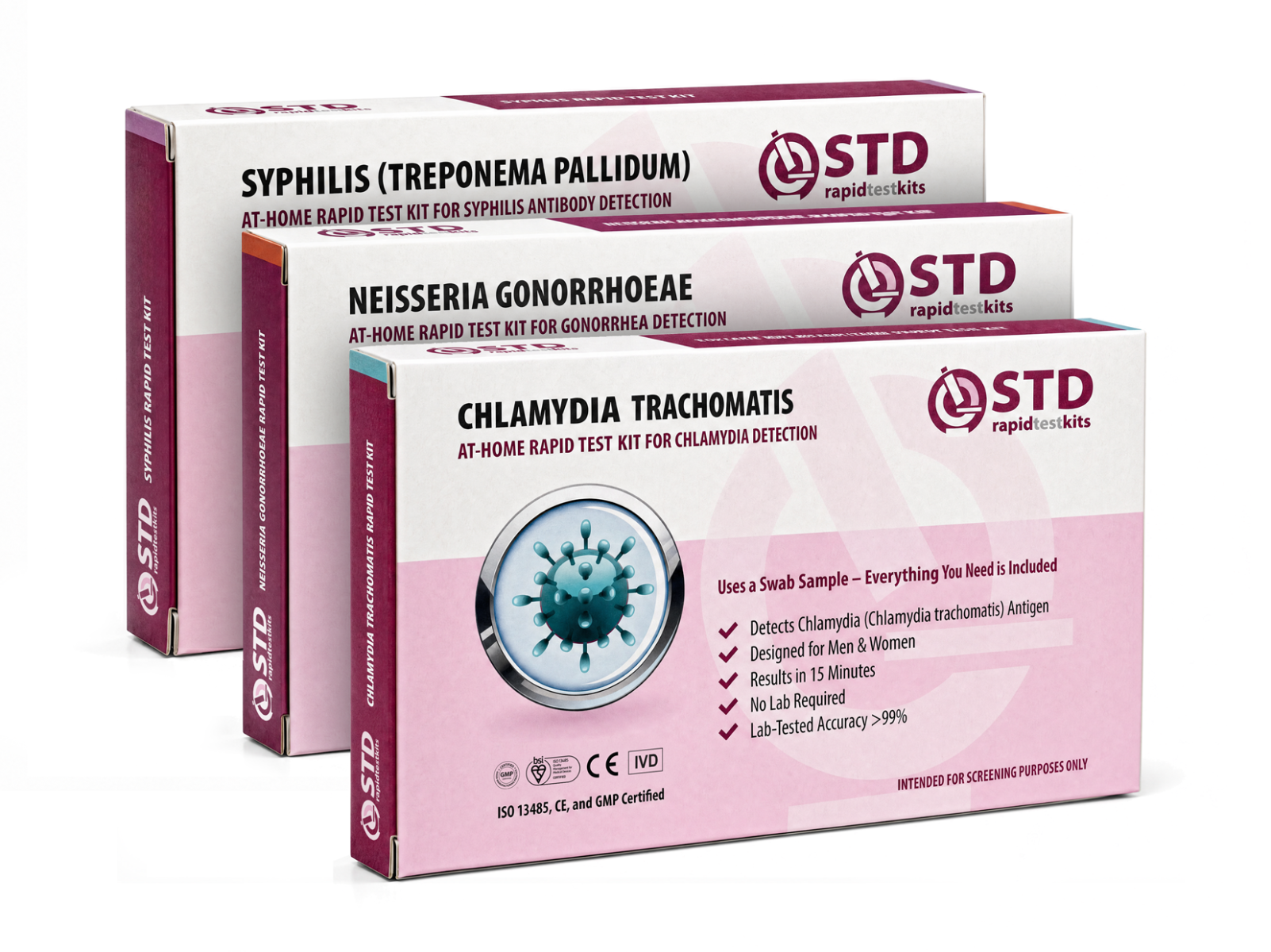
Untreated HIV progresses to AIDS. The treatment landscape has changed; modern antiretrovirals can suppress HIV to undetectable levels, where transmission risk drops to effectively zero, but only when the diagnosis happens. Late HIV diagnosis among Black women correlates with worse outcomes and reflects gaps in screening, not biology. This article is published by stdrapidtestkits.com, which sells at-home STI testing kits; we recommend products based on fit-for-purpose for the reader's concern, not commercial benefit.
Walking Into a Visit and Getting the Right Tests
The tactical part. When you suspect something is being missed, the words you use in the appointment matter. A generic “I want a full panel” returns whatever the clinic's default panel is. Specific asks return specific tests.
What to ask for, by name:
- Chlamydia and gonorrhea: per CDC chlamydia information, providers can collect either a urine sample or a vaginal swab. Ask which the lab plans to use, and request the swab if you have any pelvic or genital symptoms.
- Trichomoniasis by NAAT, not wet mount.
- HIV by 4th-generation antigen/antibody lab test if it has been at least 18 days since possible exposure, with re-testing at 45 days if the first result is negative.
- Syphilis by treponemal antibody test.
- HSV-1 and HSV-2 antibody panel by blood test, with the caveat that asymptomatic HSV testing has nuance and your clinician should explain what a positive means in context.
- Hepatitis B and C if you have not been screened in the last few years.
If the clinician declines a specific test, ask why and ask for that to be documented in the chart. Documentation creates a record you can take to a second opinion. The companion piece on routine testing rhythms covers cadence in more detail.

Cultural Silence Is Part of the Diagnosis Problem
Medical neglect is one layer. The other layer is what happens before the appointment. In communities where sexuality is treated as something to be hidden, women learn early that needing an STI test makes them a bad person. That learning shows up at the front desk in the form of vague chief complaints, unmentioned symptoms, and missed follow-ups.
Religious and family pressure adds another barrier. The fear of being seen at a clinic by someone who knows the family is real in a way that does not translate well in policy conversations. So is the fear of being reported back to a parent or partner. So is the gendered respectability framing that codes “clean” as worth and “infected” as failure.
None of that changes the biology. STIs are infections. Treating them as moral indicators rather than medical conditions delays care and lets infections cycle. Private at-home testing can shorten the gap between worry and a result, especially for someone who is not ready to walk into a clinic asking for a panel by name.
Black/African American women continue to be disproportionately affected by HIV. Among women, Black/African American women had the highest number of new HIV diagnoses compared with all other racial and ethnic groups in recent CDC reporting.
Why do doctors miss STDs in Black women?
The most common pattern is symptoms attributed to BV or yeast infections without a panel that explicitly includes trichomoniasis, HSV antibodies, or HPV testing. Standard STI panels at primary-care visits typically cover chlamydia, gonorrhea, syphilis, and HIV; trich and herpes are usually only added on request. Asking for trichomoniasis by NAAT and an HSV-1/HSV-2 antibody panel by name changes what gets tested and shortens the misdiagnosis loop.
If You Are Reading This Because You Are Worried
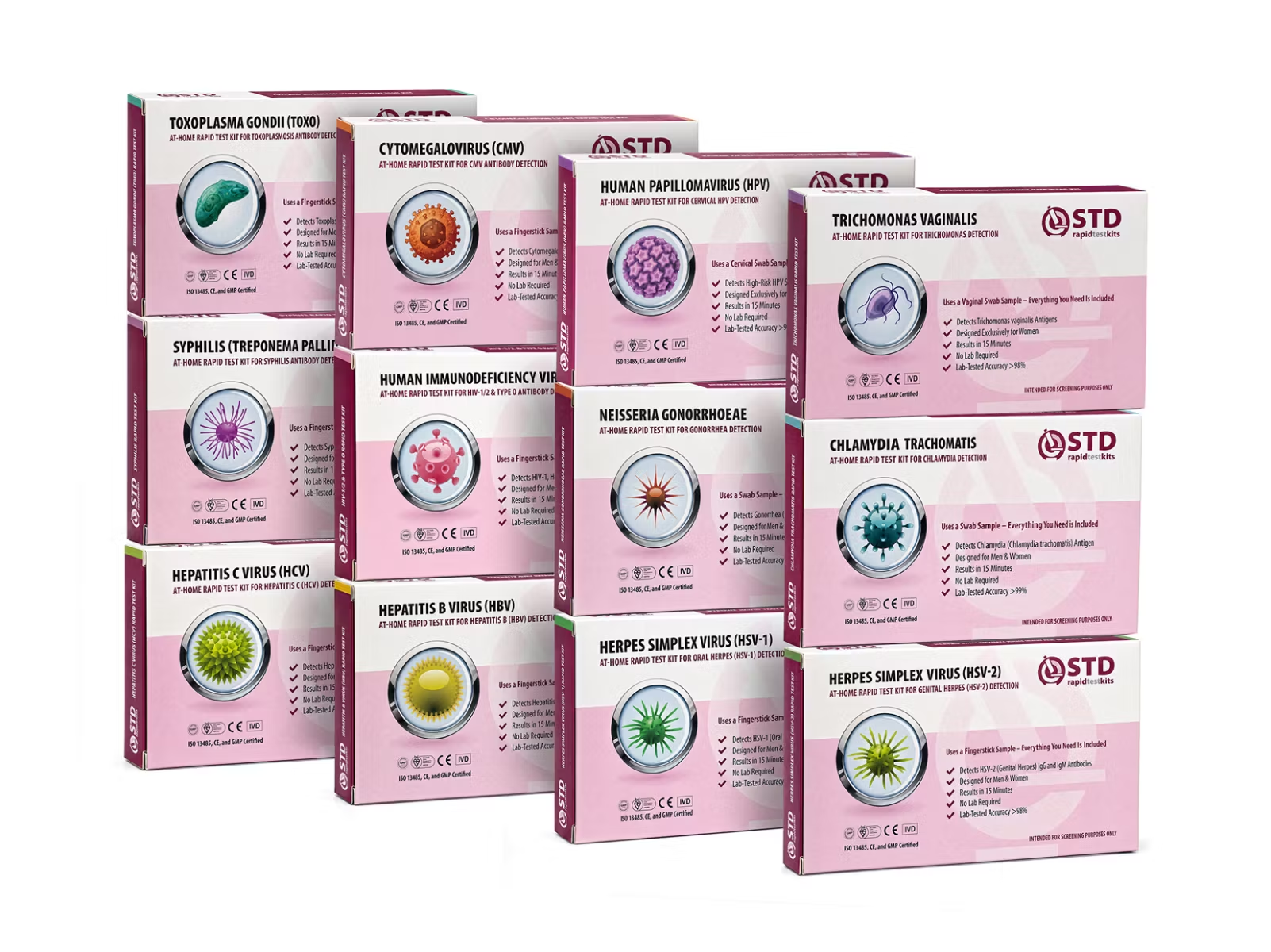
A short, practical close. If you have been told it is “just BV” more than once and the symptoms keep coming back, that is a reason to push for a full panel that explicitly includes trichomoniasis. If you have been told a small bump is a razor bump and it has not changed in a week, ask for a swab or a biopsy. If a clinic refuses, an at-home rapid test can be a screening step you bring to a clinician for confirmation and treatment.
You are not overreacting. You are not dirty. You are reading this because something in the timeline does not add up, and that instinct deserves a follow-up appointment, a different provider, or a private test you can run on your own schedule. Antibiotic-resistant gonorrhea is a separate but related reason early detection matters more now than it did five years ago.
- BV-like symptoms keep coming back after multiple courses of metronidazole. Push for a trichomoniasis NAAT and a chlamydia/gonorrhea swab.
- A small bump labeled “razor burn” hasn’t changed in a week, especially after a new partner. Ask for a swab or biopsy.
- The clinic refuses to test for what you’ve named. A private at-home rapid test is a screening step you can take to a clinician for confirmation and treatment.
FAQs
- Can STIs be mistaken for BV?
- Yes. Trichomoniasis, chlamydia, and gonorrhea can produce discharge, odor, and irritation that overlap with BV symptoms. Without specific testing for each one, providers often default to a BV diagnosis.
- Why do doctors miss STIs in Black women more often?
- Several factors stack: symptoms get attributed to BV or yeast first, pain reports are statistically more likely to be downplayed, and standard panels often skip trichomoniasis and HSV unless explicitly requested. Combined, those gaps produce a longer misdiagnosis loop.
- What if my STI test came back negative but I still have symptoms?
- Ask which specific infections were on the panel. Trichomoniasis, HSV antibodies, and HPV are often left off unless requested. Window-period false negatives are also possible if you tested too soon after exposure; ask whether re-testing in three to six weeks makes sense.
- How do I ask for the right STI tests by name?
- Be specific. Say “I'd like a NAAT for chlamydia and gonorrhea on a vaginal swab, NAAT for trichomoniasis, a 4th-generation HIV antigen/antibody test, syphilis treponemal antibody, and an HSV-1/HSV-2 antibody panel.” Ask the clinician to document any tests they decline.
- Why isn't trichomoniasis on most standard panels?
- Many primary-care panels still rely on wet-mount microscopy or visual inspection, which miss a substantial fraction of trichomoniasis cases per CDC laboratory guidance. NAAT testing for trich is more sensitive but is usually only ordered when a clinician explicitly requests it.
- Can a recurring yeast infection be a sign of an STI?
- Recurrent symptoms that do not respond to standard antifungal treatment warrant a broader workup. Trichomoniasis, chlamydia, and HSV can mimic or coexist with yeast symptoms. Recurrent or atypical yeast can also be a flag for poorly controlled diabetes or immunosuppression.
- What STIs cause burning without visible discharge?
- Chlamydia, gonorrhea, and HSV can all cause urethral burning without obvious discharge, especially in early infection. Painless burning that gets called a UTI without a urine culture is a frequently missed presentation.
- How do at-home rapid STI tests compare with lab tests?
- At-home rapid tests are lateral-flow immunoassays. They are useful as private screening, especially when in-clinic testing is hard to access. They are not equivalent to laboratory NAAT, which has higher analytical sensitivity. Treat a positive rapid result as a reason to seek confirmatory testing and treatment, and a negative result as one data point that does not rule out an early-window infection.
- U.S. Centers for Disease Control and Prevention. Annual STI surveillance summary, covering reported chlamydia, gonorrhea, and syphilis trends in the United States.
- U.S. Centers for Disease Control and Prevention. Fast Facts: HIV and Women. Source for the disproportionate HIV burden among Black/African American women in U.S. surveillance data.
- U.S. Centers for Disease Control and Prevention. About Pelvic Inflammatory Disease (PID). Source for the 1-in-8 infertility figure and the irreversibility of PID-related reproductive damage.
- U.S. Centers for Disease Control and Prevention. About Trichomoniasis. Source for the 70%-asymptomatic figure and confirmation that diagnosis requires laboratory testing rather than symptom-based assessment.
- U.S. Centers for Disease Control and Prevention. About Chlamydia. Source for the urine-versus-vaginal-swab sample-type guidance.
- U.S. Centers for Disease Control and Prevention. HIV Testing. Source for the 18-to-45-day window period of the 4th-generation antigen/antibody lab test.
- World Health Organization. Sexually transmitted infections (STIs) fact sheet. Source for the 156-million-cases-in-2020 trichomoniasis figure and the broader curable-STI burden framing (chlamydia 129M, gonorrhea 82M, syphilis 7.1M).
- Kaiser Family Foundation. Black Americans and HIV/AIDS: The Basics. Source for the 10x diagnosis-rate ratio (Black women 19.2 vs. white women 1.9 per 100,000) and the 50% share of new HIV diagnoses among U.S. women in 2022.
