

Published: August 2025 | Last updated: April 2026 | Editorial review and quality control: Martina N.
Pregnancy doesn't change which infections sit in the sexually transmitted category. What changes is the consequences. An untreated infection that would otherwise be a personal health issue becomes a transmission pathway to a developing fetus or to a newborn passing through the birth canal. The window to catch and treat an STI before it reaches the baby is narrow but real, which is why prenatal care includes routine STI bloodwork at the first visit and often again later in pregnancy.
Most pregnant women catch up to this through standard prenatal screening, which includes universal testing for HIV, syphilis, and hepatitis B, plus age-based or risk-based screening for chlamydia, gonorrhea, and hepatitis C. The harder question is what to do when symptoms show up between OB visits, when a partner discloses a recent exposure, or when you want to be tested before getting pregnant in the first place. That's where this article focuses.
What are the main STI symptoms to watch for during pregnancy?
Most STIs cause no symptoms at all in the early phase, which is exactly why routine prenatal screening exists. When symptoms do appear, the most reliable signs are unusual vaginal discharge (color, smell, or volume change), painful urination, genital sores or blisters, pelvic pain, or new bleeding outside of expected pregnancy spotting. Any of these warrants a same-day call to your OB, because the same symptoms in pregnancy can also signal preterm labor, a urinary tract infection, or other non-STI complications that need urgent attention.
Key Takeaways
- Most pregnant people in the U.S. are screened for HIV, syphilis, and hepatitis B at the first prenatal visit, with chlamydia and other tests added based on age and risk per CDC guidance.
- Treated early in pregnancy, mother-to-child HIV transmission drops below 1 percent and syphilis is largely preventable; untreated, both can cause severe newborn outcomes.
Why STIs During Pregnancy Are a Different Risk Calculation
Outside of pregnancy, an undiagnosed chlamydia or gonorrhea infection mostly poses risk to the person carrying it (pelvic inflammatory disease, ectopic pregnancy risk later, infertility). During pregnancy, the same infection now has two patients: the pregnant person and the fetus. That doubling of stakes is the reason CDC, ACOG, and WHO have built routine STI screening into the standard prenatal visit panel.
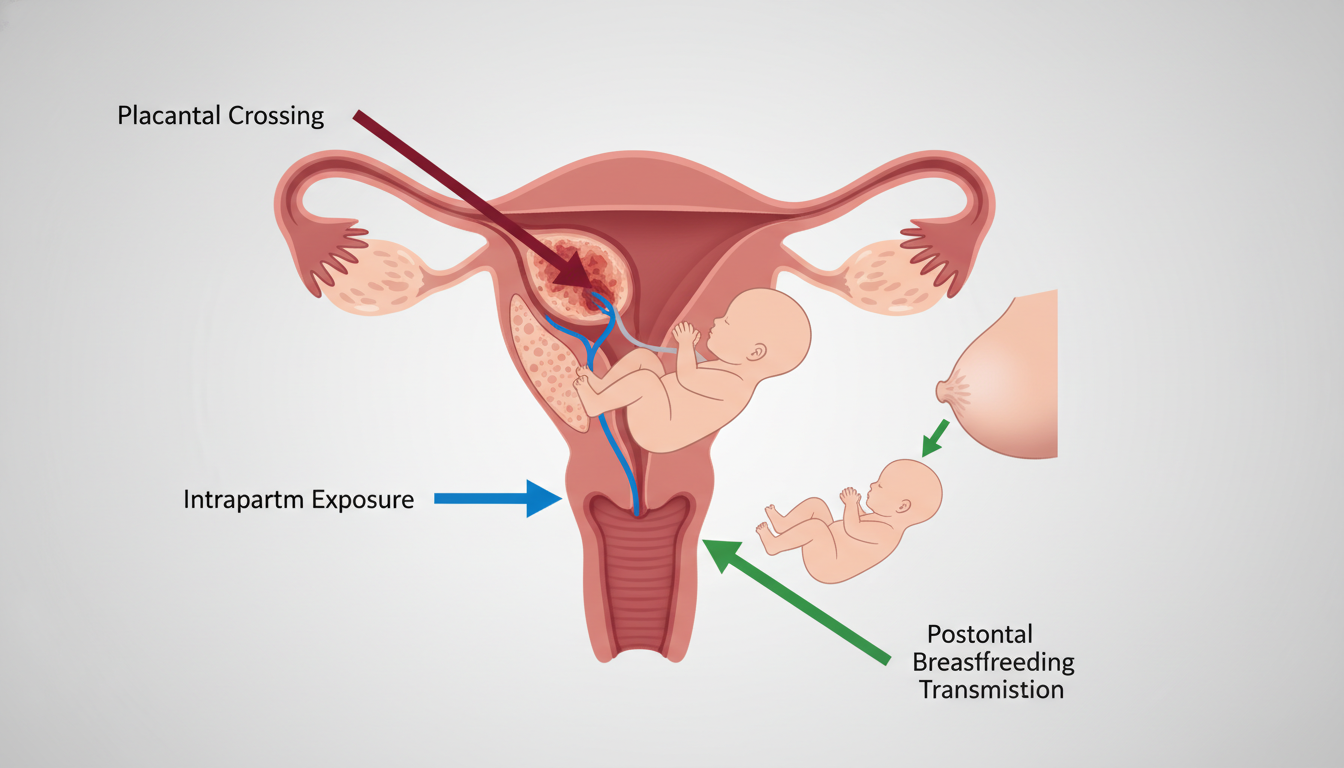
The mechanisms by which STIs reach the baby vary by infection. Some, like syphilis and HIV, can cross the placenta and reach the fetus during pregnancy itself. Others, including gonorrhea, chlamydia, herpes, and hepatitis B, transmit primarily during vaginal delivery as the baby contacts infected secretions or skin lesions. A few, including HIV, can also transmit through breastfeeding after birth. Knowing the route matters because it shapes the prevention plan: a placental-route infection needs to be treated during pregnancy itself, while a delivery-route infection can sometimes be addressed by changing the delivery method or treating the newborn in the first hours of life.
Pregnancy also subtly changes how some STIs present. Increased vaginal discharge is normal in pregnancy, which can mask the abnormal discharge that signals trichomoniasis or bacterial vaginosis. Pregnancy hormones and immune adaptations may alter how the body responds to a primary herpes outbreak, sometimes making it more severe than a non-pregnant first episode. And the routine bloodwork drawn for unrelated reasons in early pregnancy is often the first time someone learns of a chronic infection like hepatitis B or HIV that they had been carrying asymptomatically for years.
The practical takeaway: pregnancy is one of the few life stages where STI screening is genuinely universal in U.S. medicine, and where treating early has the largest possible payoff. The flip side is that the same routine prenatal screening is sometimes the only screen a person gets, which is why it's worth understanding what the panel covers, what it misses, and what to do between visits.
Per <a href="https://www.cdc.gov/std/treatment-guidelines/">CDC's STI Treatment Guidelines</a>, every pregnant person in the U.S. should be tested for HIV, syphilis, hepatitis B, and chlamydia at the first prenatal visit, regardless of self-reported risk. Gonorrhea, hepatitis C, and trichomoniasis screening are added based on age, risk profile, or local prevalence. If you weren't offered these tests, ask.
Symptoms to Watch For (And Why Many Women Have None)
The single most important fact about STI symptoms in pregnancy is the same one that holds outside of pregnancy: most infections produce no obvious symptoms during the period when treatment matters most. CDC surveillance suggests the majority of chlamydia infections in women are asymptomatic, and a substantial share of gonorrhea infections in women are picked up only on screening rather than from symptom-driven testing (CDC STI Treatment Guidelines). Asymptomatic does not mean inactive: the infection is still transmissible, still progressing toward pelvic complications, and still capable of reaching a newborn at delivery.
When symptoms do appear in pregnancy, the most consistently reported patterns are:
- Unusual vaginal discharge. Pregnancy increases normal discharge volume, but a change in color (gray, green, yellow), a fishy or foul smell, or a sudden frothy texture is not normal. Trichomoniasis classically produces a frothy yellow-green discharge; bacterial vaginosis produces a thin gray discharge with a fishy odor; chlamydia and gonorrhea may cause a mucopurulent discharge.
- Painful urination (dysuria). Burning with urination can signal chlamydia, gonorrhea, or a urinary tract infection. UTIs are extremely common in pregnancy and need urgent treatment in their own right, so a same-day call to your OB is the right move regardless of cause.
- Genital sores, blisters, or ulcers. Painful clustered blisters that crust over typically indicate herpes (HSV-1 or HSV-2). A single painless ulcer is the classic primary syphilis chancre. Either pattern needs prompt evaluation.
- Pelvic or lower-abdominal pain. New pelvic pain in pregnancy has many possible causes, several of them serious (preterm labor, ectopic pregnancy, placental issues). STI-related pelvic infection is one possibility on the list and not something to wait out.
- New bleeding outside expected pregnancy spotting. Cervicitis from chlamydia or gonorrhea can cause contact bleeding. New bleeding in pregnancy always warrants prompt OB evaluation.
- Genital warts or new growths. HPV-related warts may enlarge during pregnancy due to hormonal changes; treatment is generally deferred until after delivery in uncomplicated cases.
Notice what is not on this list: mild general fatigue, normal pregnancy nausea, breast tenderness, or any other classic pregnancy symptom. The presence of pregnancy symptoms doesn't tell you anything about STI status one way or the other.
STI-by-STI: Complications and Newborn Risk
Each STI has its own profile during pregnancy. The table below summarizes the headline pregnancy-specific concerns and what current treatment looks like. Detailed prose on the highest-impact infections follows.
| Infection | Main Pregnancy Risk | Standard Prenatal Action |
|---|---|---|
| HIV | Mother-to-child transmission during pregnancy, delivery, or breastfeeding | Universal screening at first visit; antiretroviral therapy reduces transmission to under 1 percent |
| Syphilis | Stillbirth, neonatal death, congenital syphilis with bone, brain, and organ damage | Universal screening at first visit, with repeat in third trimester in higher-prevalence areas; penicillin treatment |
| Hepatitis B | Vertical transmission causing chronic infant infection in up to 90 percent of unprotected newborns | Universal screening at first visit; newborn HBIG plus vaccine within 12 hours of birth |
| Chlamydia | Neonatal conjunctivitis (eye infection) and pneumonia | Universal screening for all under age 25 and risk-based otherwise; azithromycin treatment |
| Gonorrhea | Severe neonatal eye infection (ophthalmia neonatorum) that can cause blindness | Risk-based screening; ceftriaxone treatment; routine eye prophylaxis at birth |
| Genital Herpes (HSV) | Neonatal herpes (rare but high-mortality if it occurs) from delivery exposure | No universal screening; cesarean delivery if active lesions present at labor; antiviral suppression in third trimester for known carriers |
| Trichomoniasis | Preterm birth, low birth weight, premature rupture of membranes | Risk-based or symptom-based screening; metronidazole treatment in pregnancy |
| HPV | Genital warts may enlarge; rare laryngeal papillomatosis in newborn | No universal warts screening; treatment usually deferred until after delivery |
The four highest-stakes infections to understand
HIV. Without effective treatment, HIV during pregnancy carries a substantial risk of transmission to the baby through pregnancy, delivery, or breastfeeding. With antiretroviral therapy started in pregnancy and continued through delivery, transmission drops to under 1 percent per CDC perinatal HIV guidance. This is one of the largest single intervention effects in modern obstetrics, and it depends entirely on knowing the diagnosis. Universal first-visit HIV screening is the gateway, which is why it is offered to every pregnant person in U.S. care.
Syphilis. Untreated maternal syphilis can cause stillbirth, early infant death, or congenital syphilis with permanent skeletal, neurological, and organ damage. Per CDC STI Treatment Guidelines, congenital syphilis cases in the U.S. have risen sharply over the past decade, which is why CDC now recommends repeat third-trimester screening in higher-prevalence areas in addition to the first-visit test. Treatment is straightforward (intramuscular penicillin), but only if the diagnosis is made.
Hepatitis B. A pregnant person who carries chronic hepatitis B can transmit the virus to the newborn at delivery. Without intervention, up to 90 percent of those newborns develop chronic hepatitis B infection of their own, with substantial lifetime risk of cirrhosis and liver cancer. The intervention that prevents this is concrete: hepatitis B immune globulin (HBIG) plus the first dose of hepatitis B vaccine, given to the newborn within 12 hours of birth. Universal first-visit screening identifies who needs this protocol.
Neonatal herpes is rare but devastating when it occurs. The highest risk is when a pregnant person acquires a primary HSV infection late in pregnancy, because they have not yet developed antibodies to pass to the fetus. Routine HSV screening of all pregnant people is not recommended (the test characteristics produce too many false positives in a low-prevalence asymptomatic population), but obstetric protocols include a careful inspection at labor for active genital lesions. If any are present, cesarean delivery is offered to minimize newborn exposure. People with known HSV-2 are commonly offered antiviral suppression in the last weeks of pregnancy.
The Standard Prenatal STI Screening Schedule
The exact tests offered vary slightly by country and by individual risk profile, but the U.S. standard summarized in CDC's STI Treatment Guidelines and ACOG's prenatal care recommendations looks roughly like this:
First prenatal visit (typically 8 to 12 weeks): HIV antibody test, syphilis serology, hepatitis B surface antigen, chlamydia (universal under age 25, risk-based for older patients), and increasingly hepatitis C as part of the new universal adult screening recommendations. Gonorrhea testing is added for those at increased risk or in higher-prevalence settings.
Third trimester (typically 28 to 36 weeks): Repeat HIV in jurisdictions with higher prevalence, repeat syphilis (now widely recommended given rising congenital syphilis rates), repeat chlamydia and gonorrhea for those who tested positive earlier or remain at risk. Group B strep screening (a different category of vaginal-delivery pathogen) is also done in this window.
At labor and delivery: Rapid HIV testing if status is unknown; visual inspection for active herpes lesions if there is any history; rapid syphilis testing if the third-trimester test is missing or status is uncertain.
Postpartum: Newborns of pregnant people with hepatitis B receive HBIG and the first vaccine dose within 12 hours of birth. Newborns of those with HIV receive a short course of antiretroviral medication. Newborns exposed to herpes lesions at delivery are monitored carefully and treated empirically if they show any signs of infection.
What this schedule does not cover well: HSV (no universal screening), HPV (cervical screening is generally deferred during pregnancy and resumed postpartum), and any partner-acquired exposure that happens between visits. Those gaps are where supplemental at-home testing and a fast OB call matter.
What standard prenatal screening covers
- First-visit panel: HIV, syphilis, hepatitis B, chlamydia (universal for those under 25), often hepatitis C and gonorrhea by risk
- Third-trimester repeat: HIV, syphilis, plus chlamydia and gonorrhea for those at continued risk
- Labor and delivery: rapid HIV if status is unknown, visual herpes inspection, rapid syphilis if needed
- Postpartum: protocols for newborns exposed to hepatitis B, HIV, or herpes at delivery
Where At-Home Tests Fit in a Pregnancy Plan
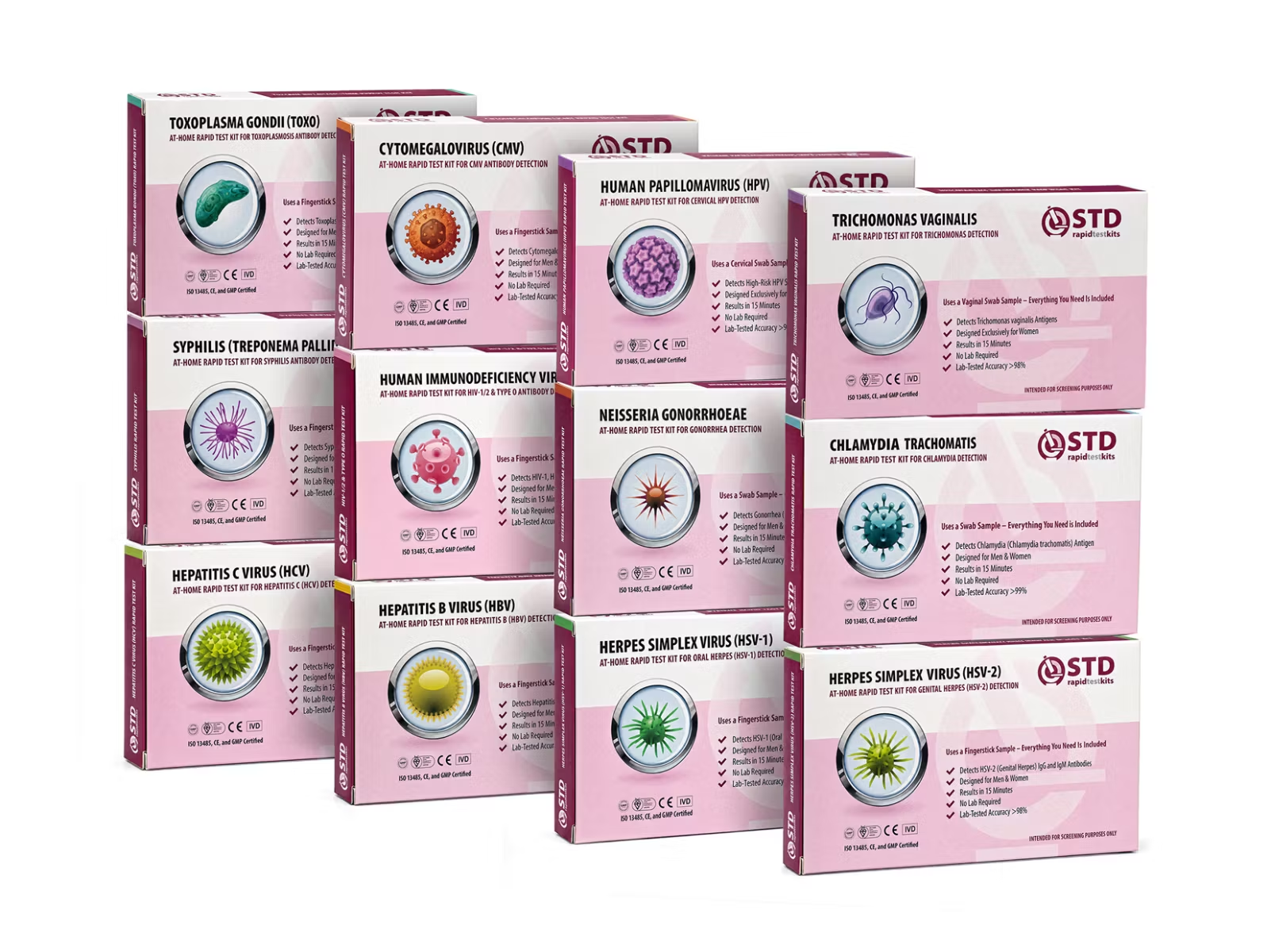
During an active pregnancy, your OB will already be running the most important STI tests through laboratory NAAT or serology, which are the most sensitive available technologies. At-home rapid lateral-flow tests are not a replacement for that prenatal panel. What they can do is fill three specific gaps that prenatal care alone doesn't reach.
Pre-pregnancy planning. The single best time to find and treat an STI is before conception. A comprehensive at-home panel run a few months before trying to conceive lets you start treatment, complete it, retest, and enter pregnancy with a clean baseline. This is especially valuable if you've had a new partner since your last screening or have not been tested in over a year.
Partner testing. Your prenatal panel only screens you. A partner who has not been tested recently can introduce a new infection during pregnancy. Asking a partner to do an at-home panel is often easier logistically than getting them to a clinic, and the conversation around "both of us got tested" is meaningfully different from "please go get tested."
Between visits and after exposures. If symptoms appear between scheduled OB visits, or if a partner discloses a recent exposure, an at-home rapid test can give a same-day signal. A positive home result still needs OB confirmation with laboratory testing (rapid lateral-flow tests are screening tools, not diagnostic gold standards), but a positive screen accelerates the call and the appointment.
What at-home rapid tests cannot do: replace the prenatal screening panel, diagnose neonatal risk, or guide treatment decisions during pregnancy on their own. Treatment in pregnancy is medication-specific by trimester and must be supervised by a prescribing clinician.
This article is published by stdrapidtestkits.com, which sells at-home STI testing kits. We recommend products based on fit-for-purpose for the reader's situation, not commercial benefit.
Treatment During Pregnancy: What's Safe, What's Not
Pregnancy meaningfully narrows which medications can be used to treat an STI. The general principle is that bacterial STIs (chlamydia, gonorrhea, syphilis, trichomoniasis, bacterial vaginosis) have well-established safe-in-pregnancy treatment regimens, while viral STIs (HIV, hepatitis B, herpes, HPV) are managed primarily to suppress activity and reduce transmission rather than eliminate the infection.
- Chlamydia in pregnancy is treated with azithromycin in a single oral dose; doxycycline (the standard non-pregnancy treatment) is avoided in pregnancy due to fetal effects on bones and teeth.
- Gonorrhea in pregnancy is treated with intramuscular ceftriaxone, which is considered safe across all trimesters.
- Syphilis in pregnancy is treated only with intramuscular penicillin G, regardless of stage. People with documented penicillin allergy require desensitization rather than substitution to a different antibiotic, because penicillin is the only treatment with a proven track record of preventing congenital syphilis.
- Trichomoniasis is treated with metronidazole, now considered safe in pregnancy after older concerns about first-trimester use were addressed by additional research.
- HIV is managed with a tailored antiretroviral regimen chosen by an HIV specialist working with the obstetric team. The aim is undetectable maternal viral load by delivery, which essentially eliminates transmission risk.
- Hepatitis B is monitored during pregnancy; antiviral suppression with tenofovir is sometimes added in the third trimester for high viral load to further reduce vertical transmission risk on top of the newborn HBIG plus vaccine protocol.
- Genital herpes is managed with antiviral suppression (acyclovir or valacyclovir) in the last month of pregnancy for known HSV-2 carriers, plus careful labor inspection. Cesarean delivery is offered if active lesions are present at the start of labor.
Several common STI medications used outside of pregnancy (doxycycline, certain fluoroquinolones, some herpes regimens) are not appropriate in pregnancy. Even if you have leftover medication from a prior infection, do not use it. Treatment in pregnancy is dose- and trimester-specific and needs to be prescribed by your OB or another clinician familiar with prenatal pharmacology.
Protecting Your Newborn at Birth and After
For most STIs, the highest-risk transmission window is delivery. The interventions that protect the newborn at this point are well-established and are part of standard hospital practice in U.S. births.
Eye prophylaxis at birth. All newborns in the U.S. routinely receive erythromycin ophthalmic ointment in both eyes within the first hours of life as a universal preventive measure against gonococcal eye infection (ophthalmia neonatorum), which can cause permanent vision loss. This is given regardless of maternal STI status because the consequences of missing a case are severe.
Hepatitis B newborn protocol. Newborns of pregnant people with chronic hepatitis B receive HBIG plus the first dose of the hepatitis B vaccine within 12 hours of birth. The vaccine series continues at one and six months. This combined protocol prevents chronic infant infection in the large majority of cases per CDC viral hepatitis guidance.
HIV newborn antiretroviral prophylaxis. Newborns of pregnant people living with HIV receive a short course of antiretroviral medication starting within hours of birth. The exact regimen depends on the maternal viral load at delivery and the specific risk profile.
Herpes lesion management. If active genital herpes lesions are present at the start of labor, cesarean delivery substantially reduces the risk of neonatal herpes acquisition. Newborns who were exposed despite precautions are monitored closely and treated empirically with intravenous acyclovir if any signs of infection appear in the first weeks of life.
Postpartum follow-up testing. Newborns of treated pregnant people with syphilis or chlamydia receive follow-up testing in the early months of life to confirm absence of infection.
Standard newborn STI protections at a glance
- Erythromycin eye ointment given to every newborn within the first hours of life to prevent gonococcal eye infection, regardless of maternal STI status
- HBIG plus the first hepatitis B vaccine dose within 12 hours of birth for newborns of pregnant people with hepatitis B
- Antiretroviral prophylaxis for newborns of pregnant people living with HIV, started within hours of birth and tailored to maternal viral load
- Cesarean delivery offered when active genital herpes lesions are present at labor; intravenous acyclovir for newborns showing any signs of infection
- Postpartum follow-up testing for newborns of treated pregnant people with syphilis or chlamydia to confirm clearance
Reducing Transmission Risk Throughout Pregnancy
Three habits cover most of what individual prevention can do during pregnancy.
Consistent condom use with any partner whose recent STI status is unknown. Pregnancy does not change the protective math of barrier methods. If a partner has not been tested in the past six months and you are sexually active during pregnancy, condoms remain the simplest tool to prevent acquiring something new.
Mutual testing of all sexual partners. Asking a partner to test, especially with an at-home panel that removes the clinic-visit friction, is one of the highest-leverage prevention moves available. A partner who tests negative across the panel removes the risk of acquiring a new infection mid-pregnancy from that partner.
Reporting any new symptoms or known exposures to your OB the same day. Discharge changes, sores, painful urination, or a partner's disclosure of a recent positive test are all reasons to call. The treatment math improves dramatically when caught early.
If you are planning a pregnancy in the next year and have not been recently tested, this is the single best moment to run a comprehensive screen on yourself and your partner.
Per <a href="https://www.cdc.gov/std/treatment-guidelines/">CDC's STI Treatment Guidelines</a>, all pregnant people in the U.S. should be screened for HIV, syphilis, hepatitis B, and chlamydia at the first prenatal visit, with gonorrhea, hepatitis C, and trichomoniasis added based on age, risk profile, or local prevalence. Earlier diagnosis enables earlier treatment, which substantially reduces mother-to-child transmission risk.
Pregnancy and STI questions readers ask most often
- Can I have an STI without knowing it during pregnancy?
- Yes, and this is the norm rather than the exception. The majority of chlamydia infections in women are asymptomatic, and a substantial share of gonorrhea cases in women are caught only through screening. HIV, syphilis, and hepatitis B can all be carried for years with no obvious symptoms. This is precisely why universal first-visit screening exists in prenatal care: clinicians cannot rely on symptoms to identify who needs treatment.
- Will routine prenatal screening test for every STI?
- No. The standard panel reliably covers HIV, syphilis, hepatitis B, and chlamydia at the first visit, with gonorrhea, hepatitis C, and trichomoniasis added based on age and risk. Herpes is generally not screened universally because of test-characteristic limitations, and HPV testing is typically deferred during pregnancy. If you have specific concerns or a recent exposure, ask your OB to add the relevant test rather than assuming the routine panel covered it.
- If I test positive for an STI early in pregnancy, what happens?
- Most bacterial STIs can be safely and effectively treated during pregnancy with medication regimens chosen for fetal safety. Treatment usually starts immediately, is followed by repeat testing to confirm clearance, and is paired with treatment of any sexual partners to prevent reinfection. For viral STIs like HIV or hepatitis B, treatment focuses on suppressing the infection and protecting the newborn at delivery rather than curing the infection.
- Can I use an at-home rapid test to replace prenatal STI screening?
- No. At-home lateral-flow rapid tests are screening tools and do not have the sensitivity profile of laboratory NAAT or serology used in prenatal care. They are useful for pre-pregnancy planning, partner testing, and between-visit symptom checks, but they should not replace the bloodwork your OB orders. A positive at-home result needs OB confirmation with laboratory testing before treatment decisions are made.
- I just learned I'm pregnant and haven't seen an OB yet. Should I run a home STI panel?
- If your first prenatal visit is within the next two to three weeks, the simpler approach is to wait and let the OB run the comprehensive lab panel at that visit. If your first visit is more than a month out and you have any symptom, exposure history, or untested-partner concern, an at-home rapid panel can give an early signal so you can flag any positives at your first OB visit and accelerate treatment.
- What about my partner? Do they need to be tested too?
- Yes, ideally. If your partner has not been screened recently, they could acquire a new infection and pass it to you mid-pregnancy. Mutual testing closes that loop. At-home panels are a low-friction way for a partner to screen without a clinic visit. If your partner tests positive, both of you should follow up with clinic-grade confirmatory testing and treatment.
- How much do STIs actually affect the baby if treated early?
- Dramatically less than they do if untreated. Treated HIV during pregnancy reduces mother-to-child transmission to under 1 percent; without treatment the risk is substantially higher. Treated syphilis in pregnancy largely prevents congenital syphilis. Treated chlamydia and gonorrhea before delivery prevents the eye infections and pneumonia that untreated cases can cause. The headline message is that early diagnosis is the lever, and that lever is most reliably pulled by the routine prenatal screening panel.
- I have a history of genital herpes. Will I need a cesarean?
- Not necessarily. Most pregnant people with a known herpes history deliver vaginally without complications. The decision depends on what is found at the start of labor. If there are no active lesions or prodromal symptoms, vaginal delivery is generally safe. If active lesions are present, cesarean delivery is offered to reduce neonatal herpes risk. Many obstetricians offer antiviral suppression in the last weeks of pregnancy for known HSV-2 carriers to reduce the chance of an outbreak coinciding with labor.
- U.S. Centers for Disease Control and Prevention. STI Treatment Guidelines, including the screening recommendations table for pregnant patients, congenital syphilis trends, and treatment regimens by infection.
- U.S. Centers for Disease Control and Prevention. HIV: pregnancy, perinatal transmission, and antiretroviral prophylaxis information.
- U.S. Centers for Disease Control and Prevention. Viral hepatitis: hepatitis B perinatal transmission and the newborn HBIG plus vaccine protocol.
- World Health Organization. Sexually transmitted infections fact sheet, including mother-to-child transmission information and global STI burden estimates.
- U.S. Centers for Disease Control and Prevention. Sexually transmitted infections: prevention, screening, and category overview.
