
Published: September 2025 | Last updated: May 2026 | Editorial review and quality control: Martina N.
There's a question that comes up constantly after STD treatment, and it sounds simple: do I need to test again? The answer depends entirely on which infection you had, and there's a distinction most people don't realize exists. A 'test of cure' and a 'reinfection retest' are two different things, done at different times, for different reasons. Mixing them up is one of the most common sources of post-treatment anxiety, false results, and missed reinfections. Here's what each infection requires, in plain terms.
Key Takeaways
- A 'test of cure' confirms treatment worked; a 'reinfection retest' checks whether the infection came back later. Different timing, different purpose, different question.
- For chlamydia and gonorrhea in non-pregnant adults, the retest that matters is at 3 months. Testing earlier produces false positives from dead bacterial fragments and can read like a treatment failure when nothing's wrong.
Test of Cure vs. Reinfection Retest: Why the Difference Matters
These two terms get used interchangeably, but they aren't the same thing. A test of cure is a follow-up test taken within weeks of finishing treatment, specifically to confirm that the medication worked and that the infection has been cleared. A reinfection retest is taken months later for a different purpose: verifying that the infection hasn't returned through a new or untreated exposure, rather than confirming the original treatment worked.
Why does the distinction matter? Because the timing, purpose, and interpretation of results are completely different. Testing too early after treatment for certain infections produces false positives; the test picks up fragments of dead bacteria that haven't been cleared from the body yet, not an active infection. That can lead to unnecessary repeat treatment, unnecessary anxiety, and a misreading of what's going on.
Still Positive After Antibiotics? Here's What It Means covers this specific scenario in detail. But understanding which category your infection falls into, whether it's a test of cure, a reinfection retest, ongoing monitoring, or none of the above, is what this article is here to establish.
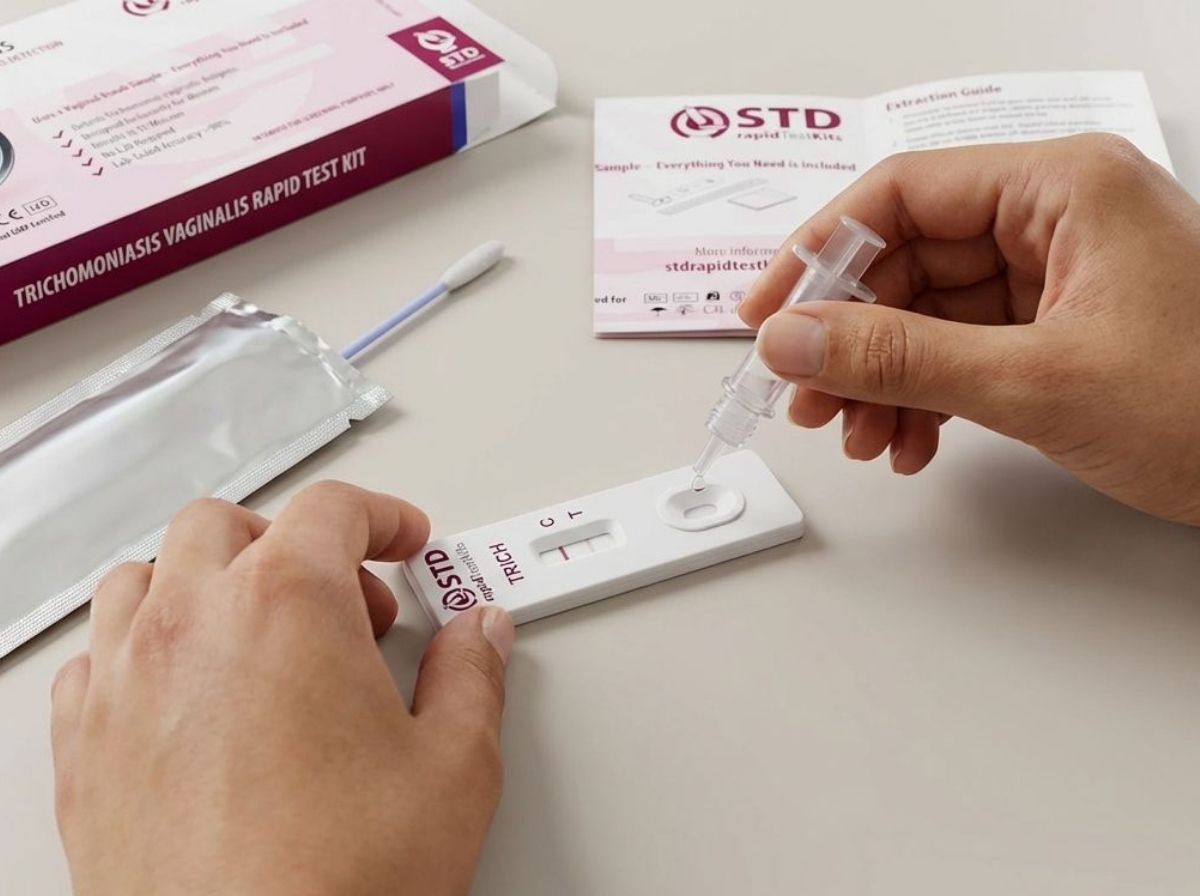
Chlamydia: No Test of Cure Needed (But Retest at 3 Months)
This surprises most people, but for the majority of chlamydia cases in non-pregnant adults, a formal test of cure is not recommended by the CDC. The reason is straightforward: chlamydia tests use a highly sensitive method that can detect fragments of the bacteria for weeks after successful treatment. Testing within 4 weeks of finishing treatment produces a high rate of false positives, results that look positive because of bacterial debris, not because the infection is still active.
According to the CDC's chlamydia treatment guidelines, testing earlier than 4 weeks post-treatment is not recommended for this exact reason. For non-pregnant adults, the appropriate follow-up is a reinfection retest at 3 months, and this one is strongly recommended. Reinfection in the first few months after treatment is common, which is why the CDC recommends rescreening at 3 months regardless of whether you believe your partner was treated.
Pregnancy is the exception. Pregnant people diagnosed with chlamydia should have both a test of cure 4 weeks after completing treatment and a reinfection retest 3 months after diagnosis. The stakes of an untreated or inadequately treated chlamydia infection during pregnancy are significantly higher, which is why the protocol is more rigorous. If you're retesting after chlamydia and want to do it at home, wait the full 3 months. Testing earlier will produce an unreliable result. Tested Too Early for Chlamydia? Here's the Timing That Works explains why the window matters.
No test of cure needed. Skip straight to the 3-month reinfection retest. Testing before that window produces unreliable results because dead bacterial fragments can still register as positive for weeks after the antibiotic has cleared the infection.
Gonorrhea: Retest at 3 Months, Plus a Special Rule for Throat Infections
Gonorrhea follows a similar pattern to chlamydia for most people; a reinfection retest at 3 months is recommended, not an early test of cure. The 3-month window exists because gonorrhea reinfection rates in the months after treatment are high, and catching a reinfection early prevents it from being transmitted further or causing complications.
But gonorrhea has one important exception that chlamydia doesn't: pharyngeal gonorrhea, the term for infection in the throat. Throat gonorrhea is harder to clear than genital or rectal infection, which means treatment doesn't always work as reliably in that location. For anyone treated for pharyngeal gonorrhea, the CDC recommends a test of cure 7 to 14 days after treatment. Testing at 7 days is the earlier end and carries a slightly higher risk of a false positive, so 14 days is generally the cleaner data point if there's flexibility.
If that test of cure comes back positive and there hasn't been a new exposure, that's a genuine treatment failure rather than a reinfection, and retreatment is needed. This matters because gonorrhea has a documented and growing problem with antibiotic resistance, and a persistent positive after treatment in a low-reexposure scenario is one of the clearest signals that resistance may be involved. Why Gonorrhea Keeps Coming Back (Even After Treatment) covers the resistance angle in full. For the pharyngeal swab itself, see a clinic; our at-home rapid gonorrhea kit is validated for genital self-collection, not throat sampling.
| Infection | Test of Cure Required? | Reinfection Retest? | Timing |
|---|---|---|---|
| Chlamydia (non-pregnant) | No, not recommended | Yes, strongly recommended | Retest at 3 months |
| Chlamydia (pregnant) | Yes | Yes | Test of cure at 4 weeks; retest at 3 months |
| Gonorrhea (genital/rectal) | No, not routine | Yes, recommended | Retest at 3 months |
| Gonorrhea (pharyngeal/throat) | Yes | Yes | Test of cure at 7 to 14 days; retest at 3 months |
| Syphilis | Yes, blood titer monitoring | Ongoing | Blood tests at 6 and 12 months post-treatment |
| Trichomoniasis | Not routine | Yes, for women | Retest no sooner than 3 weeks post-treatment |
| Herpes (HSV-1/HSV-2) | No, not applicable | No, not applicable | Ongoing symptom management; no cure |
| HIV | No, not applicable | No, not applicable | Regular viral load monitoring per care provider |
| Hepatitis C | Yes, SVR test | Yes, if ongoing risk | SVR test 12 weeks after completing treatment |
Syphilis: Follow-Up Blood Tests Are Required, and Work Differently Than You'd Expect
Syphilis follow-up testing doesn't work like chlamydia or gonorrhea follow-up testing, and understanding why is key to not misreading the results. Syphilis is confirmed through blood tests that detect antibodies, the immune system's response to the infection. Some of those antibodies persist in the blood for life, even after successful treatment. That means a standard syphilis blood test will often remain positive indefinitely, which is not the same as having an active infection.
After syphilis treatment, providers track a declining titer rather than waiting for a negative result, because the antibodies that drive a positive test can persist in the blood for life. Nontreponemal blood tests (the RPR and VDRL assays) measure antibody levels on a numerical scale, and the expectation after successful treatment is that those numbers drop over time. A fourfold drop in titer within 6 to 12 months is the standard marker that treatment is working. If the titer stays flat or rises, that's a signal worth investigating; either the treatment didn't work, or there's been a reinfection.
The CDC recommends syphilis follow-up blood tests at 6 months and 12 months after treatment for most people. People with HIV, who may respond differently to treatment, are monitored more frequently: at 3, 6, 9, 12, and 24 months. Given how high syphilis rates have climbed in recent years (provisional CDC data for 2024 shows primary and secondary syphilis declining but still at historically elevated levels), keeping up with this monitoring schedule is more clinically relevant than ever. Syphilis Retesting After Treatment: How Long Should You Wait? explains the titer monitoring process in accessible terms.

Trichomoniasis: Retest for Women, And Don't Do It Too Soon
Trichomoniasis sits in an interesting middle ground. For most people, a formal test of cure isn't required after treatment. The medication is highly effective when taken correctly and when partners are also treated. But the CDC does recommend that women retest for trichomoniasis, and the timing rule is specific: no sooner than 3 weeks after treatment.
The 3-week minimum exists for the same reason as the chlamydia waiting period. The test can remain positive from non-viable organisms for up to 3 weeks post-treatment, so testing before that point risks a false positive result. For men, routine retesting isn't recommended, largely because trichomoniasis so rarely produces symptoms in people with penises that follow-up testing has limited practical utility unless symptoms develop or a partner tests positive again.
The bigger issue with trichomoniasis reinfection is the partner-treatment problem. Trich has an unusually high reinfection rate, which is why the CDC recommends that all sexual partners be treated regardless of whether their own test comes back positive; a positive result isn't required to warrant treatment. If a partner goes untreated and sex resumes, reinfection within weeks is likely. The reinfection dynamic for trichomoniasis mirrors what happens with gonorrhea when partners aren't treated simultaneously. One scope note: our at-home rapid trichomoniasis kit is validated for vaginal self-swab only, so male readers needing a trich test should see a clinic.
Women: retest no sooner than 3 weeks post-treatment for a reliable result. Men: routine retesting isn't recommended unless symptoms develop or a partner tests positive again. In both cases, ensuring sexual partners are treated is what prevents the high-rate reinfection cycle trich is known for.
Confirming You're Clear: How to Retest at Home After Treatment
The 3-month reinfection retest after chlamydia or gonorrhea is where at-home rapid testing is particularly well-suited. By the time 3 months have passed, the false-positive risk from bacterial debris is gone, and an accurate test can confirm whether the infection has returned. You don't need a clinic appointment or a lab referral; you need a test taken at the right time. Disclosure: stdrapidtestkits.com sells the at-home rapid tests referenced in this article. Product recommendations here are based on fit for the post-treatment retest scenario, not commercial benefit.
One technology note worth understanding: our at-home kits are rapid lateral-flow tests, which are different from the laboratory NAAT (nucleic acid amplification) tests that clinics typically run. The lab NAAT has higher analytical sensitivity for very low infection burdens. The at-home rapid test is a strong screening tool that gives a result in 15 minutes with privacy intact, and a positive result is always worth confirming with a clinical NAAT when one is accessible.
The window periods for at-home testing after a new exposure (as opposed to post-treatment retesting) are different, and it's worth knowing both. The table below covers new-exposure testing windows, meaning the minimum time needed after a potential exposure for results to be reliable.
| Infection | Test From |
|---|---|
| Chlamydia | 14 days after exposure |
| Gonorrhea | 3 weeks after exposure |
| Syphilis | 6 weeks after exposure |
| HIV | 6 weeks (first indicator); retest at 12 weeks for certainty |
| Herpes HSV-1 and HSV-2 | 6 weeks (first indicator); retest at 12 weeks for a conclusive result |
| Hepatitis B | 6 weeks after exposure |
| Hepatitis C | 8 to 11 weeks after exposure |
Herpes and HIV: No Test of Cure, Because There Isn't One
For herpes and HIV, the concept of a 'test of cure' doesn't apply, because neither infection can currently be cured. Treatment for both manages the infection rather than eliminating it. Herpes is suppressed with antiviral therapy; HIV is managed with antiretroviral treatment that reduces the viral load to undetectable levels. Neither of these is a clearance event that would trigger a follow-up test to confirm the medication worked.
What both do require is ongoing monitoring. For herpes, the relevant question after a diagnosis shifts away from whether treatment worked toward how the virus is behaving and what consistent management looks like going forward. How to Manage a Herpes Outbreak: Home Remedies and Medication covers the ongoing management side. For HIV, viral load tests at regular intervals are the standard of care, tracking whether antiretroviral therapy is keeping the virus suppressed. That monitoring is lifelong rather than a one-time confirmation.
It's also worth noting that a positive herpes antibody test will remain positive after diagnosis indefinitely; the antibodies don't go away after an outbreak resolves. Testing again after a herpes diagnosis to see if it 'went away' will always return a positive result. False Positive Herpes Tests? What HSV-2 Results Can Get Wrong explains the antibody persistence issue clearly.
Herpes: antibody tests stay positive for life after diagnosis. Retesting to see if the infection went away will always show positive, which is why the focus moves to outbreak management instead. HIV: requires lifelong viral-load monitoring to confirm antiretroviral therapy is keeping the virus suppressed. There's no single post-treatment clearance test that confirms eradication.
Hepatitis C: The SVR Test Is the Cure Confirmation
Hepatitis C is the one infection in this group where a genuine test of cure exists and is required. Modern hepatitis C treatment achieves what's called a sustained virologic response, or SVR, meaning the virus is no longer detectable in the blood. That's functionally a cure. But confirming it requires a specific test taken at the right time.
The SVR test is typically performed 12 weeks after completing treatment. A negative result at that point, meaning no virus detected, confirms that treatment worked and the infection has been cleared. This is a significant result: it's one of the only moments in STD care where a test genuinely confirms eradication of a viral infection. People with ongoing risk factors for hepatitis C are also advised to retest periodically, since the absence of immunity after clearing the infection means reinfection is possible.
For hepatitis B, there is no equivalent cure confirmation test. Hepatitis B can clear on its own in some cases, or require long-term management in others. Monitoring focuses on liver function and viral activity rather than a single clearance confirmation. Hepatitis B Window Periods Explained (Without the Confusion) covers the monitoring timeline for hepatitis B specifically.

What a Still-Positive Result After Treatment Really Means
A positive test after finishing treatment is one of the most distressing things to deal with, and it's also one of the most misread. The interpretation depends almost entirely on when you tested and which infection you had. For chlamydia or gonorrhea tested within 4 weeks of completing treatment, a positive result is likely a false positive from bacterial debris, with no indication that the treatment failed. For the same infections tested at 3 months, it almost certainly represents reinfection rather than treatment failure.
For syphilis, the meaningful signal is a persistently elevated or rising blood titer at the 6-month or 12-month mark. A positive antibody test on its own doesn't indicate failure; that result is expected to persist for life after successful treatment. For trichomoniasis tested before 3 weeks post-treatment, the same false-positive caveat applies as with chlamydia. The pattern across all of these is consistent: timing determines whether a result is meaningful or misleading.
If you've tested positive again after treatment and you're not sure what it means, I Treated My STD, So Why Am I Still Testing Positive? and Can Antibiotics Cause a False Negative STD Test? both help untangle what's likely going on based on the specifics of your situation. For a full walk-through of everything that needs to happen between finishing treatment and resuming sex, Treated for an STD? Here's Everything You Need to Do Before Having Sex Again covers the complete sequence.
Persons who are treated for chlamydia or gonorrhea should be retested approximately 3 months after treatment, regardless of whether they believe their sex partners were treated.
Ready to Retest? Here's Where to Start
The 3-month mark after chlamydia or gonorrhea treatment is when a reinfection retest becomes meaningful, and it's one of the most skipped steps in post-treatment care. Catching a reinfection early prevents it from going untreated and being passed on further. At-home testing makes that window easy to act on without a clinic visit or a waiting room.
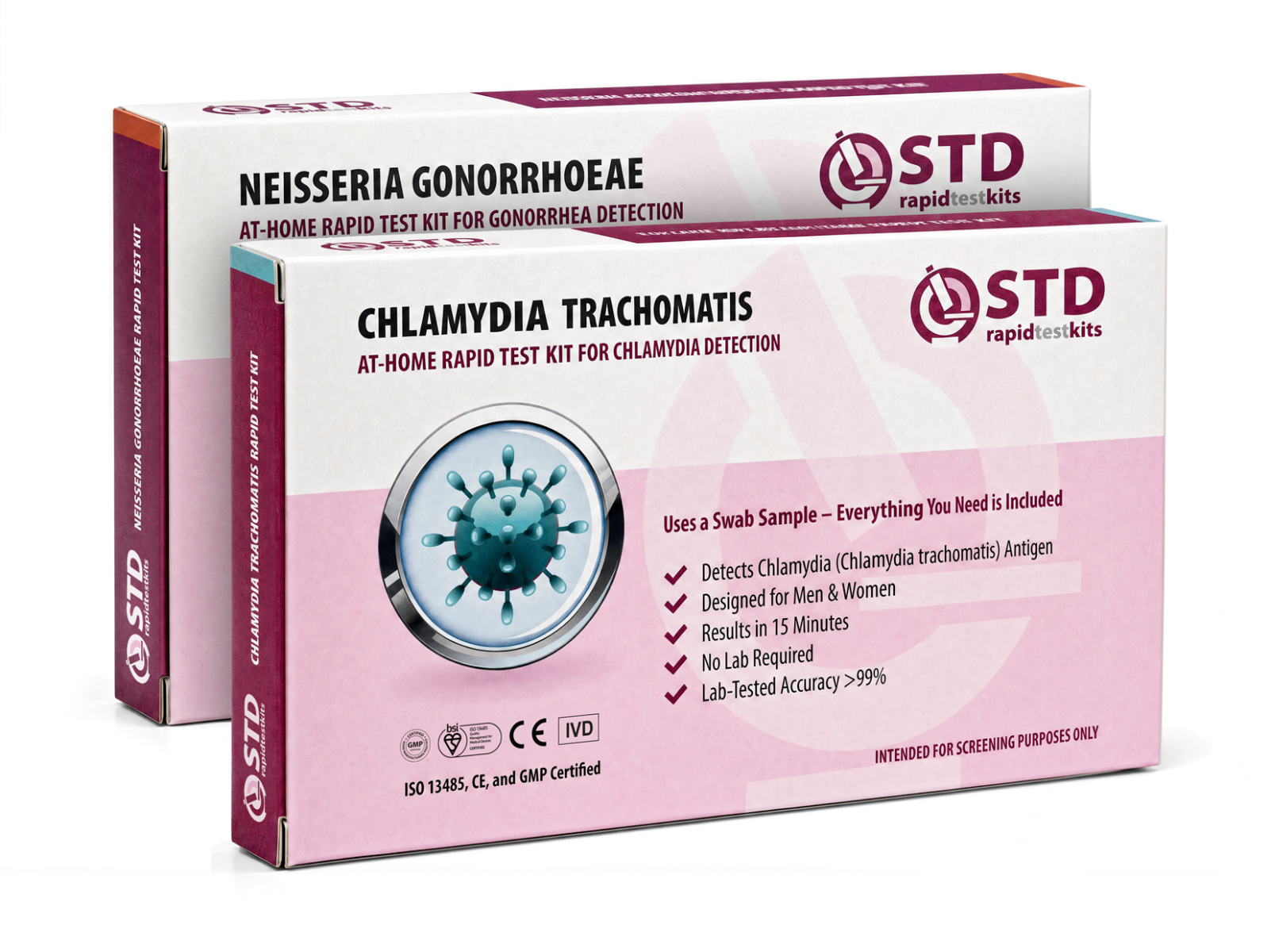
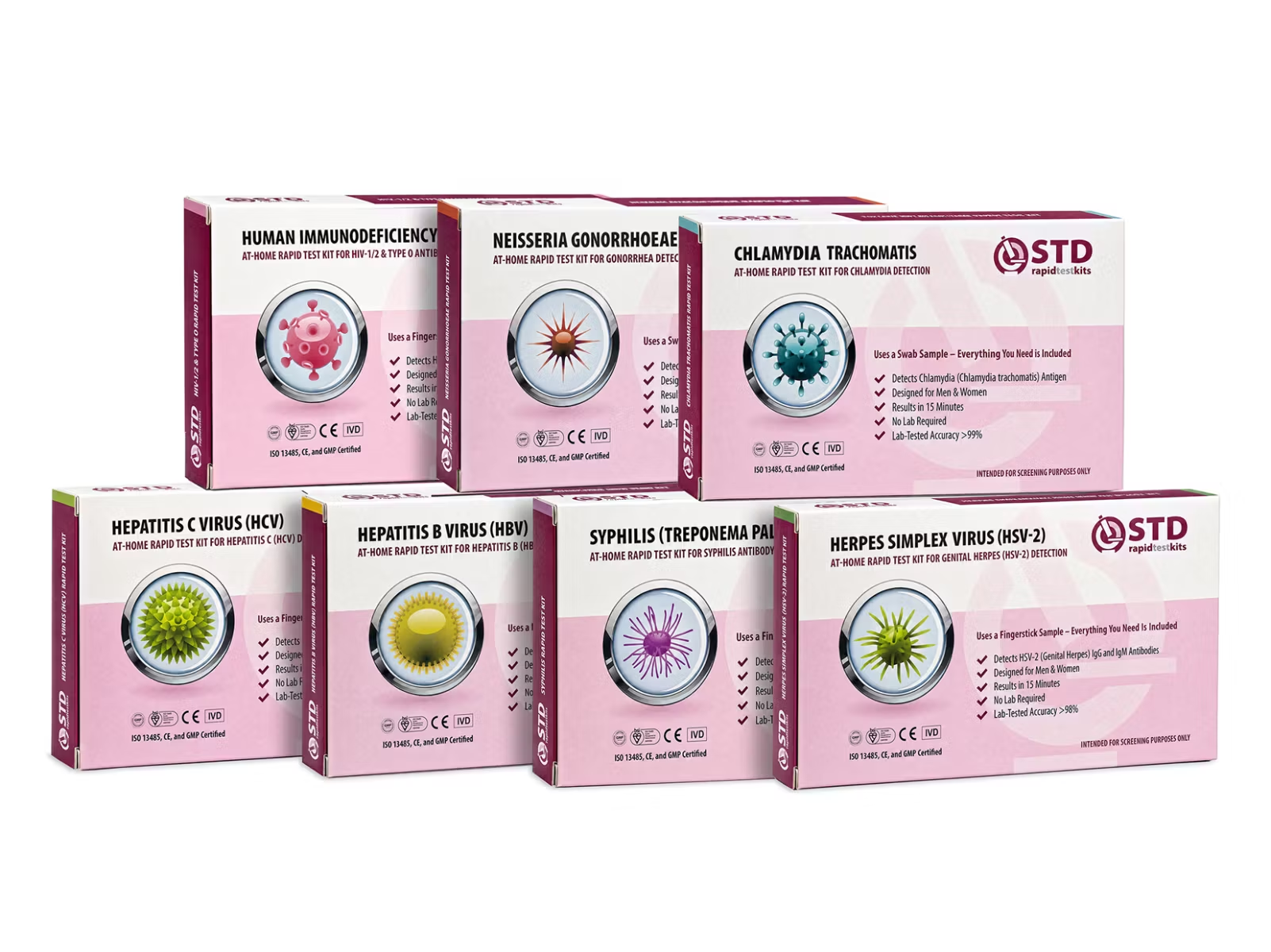
The Chlamydia and Gonorrhea 2-in-1 At-Home Rapid Test Kit is the direct option for the post-treatment retest. For anyone whose original exposure could have involved multiple infections, the Complete 7-in-1 STD Home Test Kit covers seven infections at once. For women who want full coverage including trichomoniasis and HPV, the Women's 10-in-1 Complete STD Test Kit is the most comprehensive option available.
FAQs
- I took antibiotics for chlamydia and retested after 2 weeks. It came back positive. Did treatment fail?
- Almost certainly not. Testing within 4 weeks of chlamydia treatment frequently returns a positive result from dead bacterial fragments, not active infection. The CDC doesn't recommend retesting before 4 weeks for this reason, and the reliable window for a reinfection retest is 3 months. Retest then, and you'll get an accurate picture of what's going on.
- Do I need to go to a clinic to do my follow-up test, or can I do it at home?
- For the 3-month chlamydia and gonorrhea reinfection retest, an accurate at-home rapid test works well; the timing issue that causes false positives is long past by 3 months. Syphilis follow-up requires blood titer monitoring, which is a lab test and not something at-home rapid tests currently cover. For hepatitis C SVR confirmation, a clinical lab test is also required.
- What's the difference between a false positive and a reinfection after treatment?
- If you tested within a month of treatment, false positive is the likely explanation; if you tested at 3 months with no untreated partners, reinfection is almost certainly what's going on. The mechanism is different in each case. A false positive happens because the test detects fragments of dead bacteria left over from the cleared infection, with no live organism present. A reinfection is a genuinely new infection that occurred after treatment cleared. Timing and context tell you which one applies.
- I had throat gonorrhea. When do I retest?
- Pharyngeal gonorrhea requires a test of cure at 7 to 14 days after treatment. This is the one scenario where early retesting is specifically recommended, because throat infections are harder to clear. If that test comes back positive and you haven't had new sexual contact, that's a treatment failure, not reinfection, and a different approach is needed. For the pharyngeal swab itself, see a clinic; our at-home swab kits are validated for genital sampling only.
- My syphilis blood test is still positive 6 months after treatment. Does that mean I still have it?
- The key question is whether your RPR or VDRL titer has fallen fourfold since treatment; if it has, treatment worked. Syphilis antibody tests remain positive for life in most people even after successful treatment, which is why providers focus on the titer trajectory rather than whether the test is positive at all. If the number is flat or rising at 6 months, that's worth investigating with your provider.
- I was treated for trichomoniasis but my partner didn't get treated. Can I still retest to check if I'm clear?
- You can retest at 3 weeks or later for a reliable result, but if your partner was never treated and you've had sex with them since, a positive result most likely means reinfection rather than treatment failure. The retest in that scenario is still useful, but the more pressing issue is ensuring your partner gets treated before sex resumes.
- How soon after hepatitis C treatment can I confirm I'm cured?
- The SVR test is typically taken 12 weeks after completing treatment. A negative result at that point, meaning no virus detected, is considered a functional cure confirmation. Testing earlier than 12 weeks isn't the standard protocol and may not give a definitive result. Wait the full 12 weeks for a meaningful answer.
- I had chlamydia during pregnancy. Is my retesting schedule different?
- Yes, pregnancy changes the protocol significantly. Pregnant people diagnosed with chlamydia should have a test of cure 4 weeks after completing treatment (unlike non-pregnant adults, for whom this isn't recommended) and a reinfection retest at 3 months. The higher stakes of chlamydia during pregnancy justify the more rigorous monitoring schedule.
Our article was constructed based on current advice from the most prominent public health and medical organizations, and then molded into simple language based on the situations that people actually experience, such as treatment, reinfection by a partner, no-symptom exposure, and the uncomfortable question of whether it 'came back.' In the background, our pool of research included more diverse public health advice, clinical advice, and medical references, but the following are the most pertinent and useful for readers who want to verify our claims for themselves.
- U.S. Centers for Disease Control and Prevention. STI Treatment Guidelines: Retesting After Treatment to Detect Repeat Infections. Supports the 3-month reinfection-retest recommendation cited throughout this article.
- U.S. Centers for Disease Control and Prevention. STI Treatment Guidelines: Chlamydial Infections. Source for the 4-week false-positive window and the differing protocol for pregnancy.
- U.S. Centers for Disease Control and Prevention. STI Treatment Guidelines: Gonococcal Infection Among Adults and Adolescents. Source for the pharyngeal gonorrhea 7 to 14 day test-of-cure recommendation.
- U.S. Centers for Disease Control and Prevention. Sexually Transmitted Infections Surveillance, 2024 (Provisional). Source for the syphilis trend data.
- U.S. Centers for Disease Control and Prevention. Laboratory Recommendations for Syphilis Testing, United States, 2024 (MMWR). Source for the fourfold titer decline as the standard marker of successful syphilis treatment.
- American Academy of Family Physicians. Chlamydial and Gonococcal Infections: Screening, Diagnosis, and Treatment. Secondary clinical reference for the screening and retesting workflow described.
