Published: September 2025 | Last updated: May 2026 | Editorial review and quality control: Martina N.
Can a positive HSV-2 blood test be wrong?
Yes, especially when the IgG index value falls in the low-positive range (1.1 to 3.0 on HerpeSelect). The <a href="https://www.cdc.gov/std/treatment-guidelines/herpes.htm" target="_blank" rel="noopener noreferrer">CDC's STI Treatment Guidelines</a> flag this range for elevated false-positive rates and recommend confirming with a Western Blot before accepting the diagnosis. A clearly negative result after 12 to 16 weeks post-exposure is generally reliable.
The moment a herpes blood test comes back positive, most people compress everything on the report into that one word. The index value. The technical qualifier. The line about "consider confirmatory testing." All of it vanishes behind a single conclusion, even when the result might be a false positive.
Whether you just received a positive HSV-2 result, you are about to test, or you are trying to reconcile conflicting numbers from different clinics, this guide explains how herpes blood tests work, where false-positive results come from, and what to do when a result does not match your body.
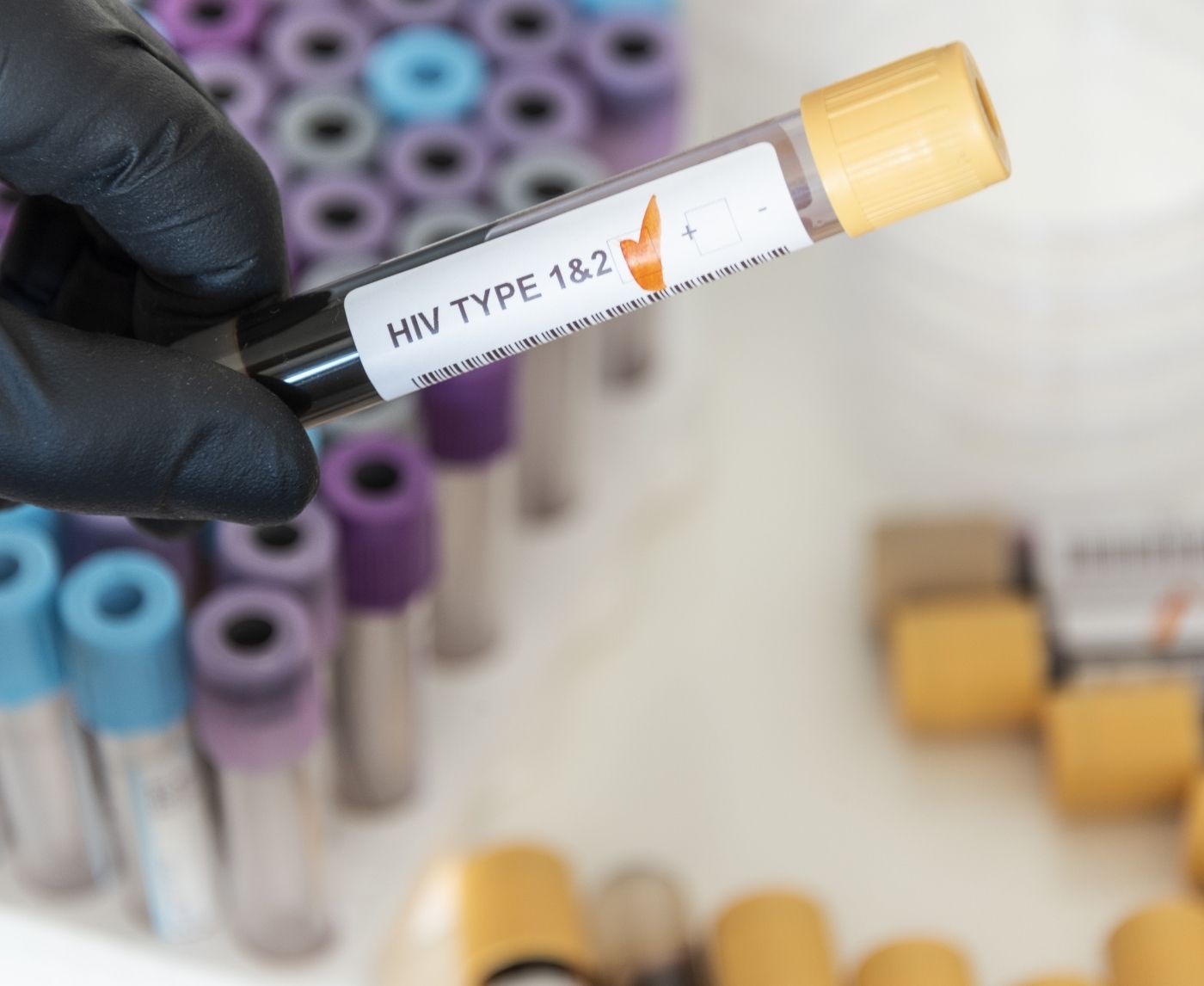
Herpes blood tests detect antibodies, not the virus itself. They measure your immune system's historical reaction to the virus, not whether the virus is currently active in your tissue. That distinction is the core reason false positives occur: a test measuring antibody levels can be fooled by a weak or cross-reactive immune response in ways a direct viral assay cannot.
Key Takeaways
- HSV-2 IgG blood tests detect antibodies, not the virus. Low-positive results (index 1.1 to 3.0) have a known false-positive rate, and CDC guidance is to confirm with a different test before accepting the diagnosis.
- Timing matters: antibodies take 12 to 16 weeks to reach reliable levels after exposure, so results before that window closes can swing between negative, equivocal, and weakly positive.
What "Positive" Actually Means on Your HSV-2 Report
A herpes blood test does not produce a simple yes or no answer. It produces a number called an index value, which reflects how strongly the test detected HSV-2 IgG antibodies in your blood sample. The label on your report (negative, equivocal, low positive, positive) depends on where that number falls within the lab's reference ranges.
The two assays most commonly used in clinical labs are HerpeSelect (by FOCUS Diagnostics) and LIAISON HSV-2 IgG. Both check whether your body has produced antibodies against HSV-2 at any point. The technology is well-validated, but its real-world accuracy depends on context: who is being tested, when, and how the result is interpreted.
Low-positive results carry the most diagnostic risk. HerpeSelect reports a numeric index rather than a binary answer, and the CDC's 2021 STI Treatment Guidelines note that HerpeSelect "often is falsely positive at low index values (1.1 to 3.0)" and specifically recommend a different test method (such as a Western Blot) rather than a simple repeat of the same IgG assay.
| IgG Index Value (HerpeSelect) | What It Usually Means | Clinical Reliability |
|---|---|---|
| Below 0.9 | Negative | High confidence once past the antibody window |
| 0.9 to 1.1 | Equivocal | Unclear; standard practice is to repeat the test in 4 to 6 weeks |
| 1.1 to 3.0 | Low positive | Elevated false-positive risk; CDC recommends confirmatory testing with a different method |
| Above 3.0 | Positive | More likely to reflect a true infection |
Why False Positives Happen
False positives are not a sign of lab error. They are a known limitation of how antibody tests work. Four mechanisms explain most of them.
The most common is cross-reactivity. The World Health Organization estimates that roughly 3.8 billion people under age 50 (about 64% of that age group globally) carry HSV-1 antibodies, most from childhood cold sores rather than from sexual contact. Because HSV-1 and HSV-2 share surface proteins, those HSV-1 antibodies can register as a weak HSV-2 positive on the assay. People with a history of cold sores are more likely to receive a low-positive HSV-2 result that turns out, on confirmatory testing, to be cross-reactivity rather than a real infection.
The second is the math of screening a low-prevalence group. When most people in the tested population do not have the infection, even a small false-positive rate produces a disproportionate share of misleading results. This is why the CDC explicitly advises against routine HSV-2 blood screening for asymptomatic adults.
The third is timing. An antibody test taken before your immune system has fully responded to a recent exposure can produce an unstable result that fluctuates around the cutoff in either direction.
The fourth is assay variability. Different manufacturers use different cutoff thresholds and antigen preparations, so the same blood sample can shift between "equivocal" and "low positive" depending on which assay the lab runs.
- Cross-reactivity: HSV-1 antibodies (often from childhood cold sores) can register on the HSV-2 assay. With about 64% of adults under 50 carrying HSV-1, this is the most common cause.
- Low-prevalence screening math: when most people are uninfected, even a small false-positive rate produces a disproportionate share of misleading results.
- Timing inside the window period: an early-response antibody level can sit just above or below the cutoff and shift on retest.
- Assay variability: different lab platforms use different cutoffs and antigen preparations, and the same sample can read differently on each.
The Window Period: Why Timing Decides Accuracy
Your body does not produce detectable antibodies the moment exposure happens. There is a measurable lag between infection and immune response, and that lag is what clinicians call the window period.
For HSV-2 IgG, antibodies may begin appearing within the first few weeks of infection, but the majority of people do not reach reliably detectable levels until 12 to 16 weeks post-exposure, per the American Sexual Health Association's herpes testing guide. During that window, results can swing: negative one week, weakly positive the next, equivocal on a retest.
Test too early and you risk a false negative. Test in the middle of the window and you risk a weakly positive result that does not actually reflect infection. The timeline below shows how seroconversion (the point at which antibodies become reliably detectable in the blood) typically progresses after exposure.
HSV-2 IgG Seroconversion Timeline
- Week 0 Exposure
Virus transmits; no antibodies detectable yet
- Week 2 Too early to test
Antibodies not yet produced in detectable amounts; false negatives likely
- Week 5 Unstable detection
Early antibody development; index values fluctuate between negative, equivocal, and weakly positive
- Week 10 Many seroconversions underway
Antibody levels rising; results becoming more stable, but some people are still below the detection threshold
- Week 14 Reliable result window
Full immune response established in most people; IgG tests produce their clearest results between 12 and 16 weeks
Most people seroconvert by week 12; some outliers take up to 16 weeks or longer. Ranges based on ASHA and CDC guidance.
Blood Test vs Swab: When Each One Fits
If you have a visible sore, blister, or ulcer, the right test is a swab, not a blood draw. A clinician swabs the lesion and sends it for PCR (polymerase chain reaction), which detects viral DNA directly in the tissue. PCR is the gold standard for active outbreaks because it asks a different question than a blood test: is the virus currently present in this tissue, right now?
Blood antibody tests answer a historical question. They can tell you that exposure happened at some point, but not when, and not whether the virus is active today. The CDC's STI Treatment Guidelines also specifically advise against IgM blood tests for HSV diagnosis, since IgM assays are unreliable and not type-specific. For a fuller comparison of herpes testing methods, see our detailed breakdown.
Herpes Testing Methods Compared
| Feature | PCR Swab (lab) | Type-Specific IgG Blood Test | IgM Blood Test |
|---|---|---|---|
| What it detects | Viral DNA in tissue | Antibodies to HSV-1 or HSV-2 | Early-response antibodies (not type-specific) |
| Best use case | Active sores or lesions | Past exposure, after window period | Not recommended by CDC for HSV diagnosis |
| Reliability | Very high (gold standard for active outbreaks) | Variable; depends on index value and context | Unreliable; frequent false positives and cross-reactivity |
The CDC's STI Treatment Guidelines specifically advise against IgM tests for HSV diagnosis. PCR swabs are the most informative test for an active lesion; IgG blood tests are the standard for asymptomatic screening after the window period.
When Your Result and Your Body Disagree
Symptoms and test results do not always line up, and the disagreement drives real anxiety. Two patterns come up often.
The first: a low-positive blood test with no genital symptoms, ever. You search every memory of a bump, an itch, a sore, looking for proof. Many people genuinely live with HSV-2 without recognizable outbreaks, so absence of symptoms alone cannot rule it out. But the combination of no symptoms plus a low index value is exactly the scenario that should trigger confirmation rather than acceptance. The CDC cites specificity data showing that HerpeSelect's overall specificity is around 57.4%, dropping to roughly 39.8% for index values in the 1.1 to 2.9 range. A substantial share of low-positive results do not hold up under Western Blot confirmation.
The second: genital symptoms with a negative HSV-2 blood test. This can happen when the test was done within the window period, or when the symptoms come from something else entirely. As the NHS genital herpes guide notes, several common conditions produce bumps, sores, or irritation in the genital area that closely resemble herpes. When symptoms are present, swabbing an active lesion for direct viral PCR testing is more diagnostically informative than a blood antibody test, but the swab must happen while the lesion is fresh and visible.
- Ingrown hairs: small, painful bumps that can closely resemble early herpes lesions
- Friction burns: redness, raw skin, or small tears after sex that can mimic the irritation phase of an outbreak
- Yeast infections: itching, redness, and raw or fissured skin that overlaps with herpes discomfort
- Folliculitis: bacterial infection of hair follicles that produces clustered pustules
- Primary syphilis chancre: a painless ulcer sometimes mistaken for a herpes lesion in early evaluation
- Contact dermatitis: inflammation from soap, latex, or fabric that produces redness and small blisters
Visual identification alone is not reliable for distinguishing these. A swab of an active lesion is the only way to confirm whether HSV is present.
Confirmatory Testing and Retesting
If your result is questionable, the most important next step is confirmatory testing, not a repeat of the same test. Repeating an IgG blood draw on a new sample does not resolve a low-positive, because the test methodology itself is what produces those results. The retest needs to use different chemistry.
Clinicians most often resolve uncertain IgG results with an HSV Western Blot, typically performed at the University of Washington reference lab and considered the standard for this purpose. The Western Blot detects antibodies against several specific HSV-2 proteins using a banding pattern rather than producing one summary signal, which makes it much less prone to cross-reactivity than the single-signal IgG assay. A second option is the Biokit HSV-2 assay, which uses a different antigen target than HerpeSelect.
For window-period concerns, a repeat IgG at 12 to 16 weeks post-exposure checks whether the index value rises, falls, or stabilizes, which is useful when you tested mid-window. If a result sits in the equivocal range (0.9 to 1.1), repeating the test in 4 to 6 weeks is standard practice. And if an active sore appears at any point, a PCR swab gives a direct answer about whether the virus is present at that lesion. The flow below helps you choose the right path.
What Should You Do Next?
Is your IgG index value in the low-positive range (1.1 to 3.0)?
Yes: Request a Western Blot (most often through the University of Washington reference lab) or a Biokit assay. Do not simply repeat the same commercial IgG test.
Did you test within 12 weeks of your possible exposure?
Yes: Retest at 12 to 16 weeks post-exposure to let the antibody window close. If the retest comes back low-positive, follow up with a Western Blot.
Do you have an active sore, blister, or ulcer right now?
Yes: Request a PCR swab of the lesion from a clinician. A swab detects the virus directly and is more informative than a blood test for an active outbreak.
No: If your index value is above 3.0, past the window period, and you have no active lesion, discuss the result with a clinician. A high-index positive with consistent exposure history is more likely to reflect a true infection.
Guidance only. A healthcare provider can advise based on your specific situation.
At-Home Screening vs Clinic Tests
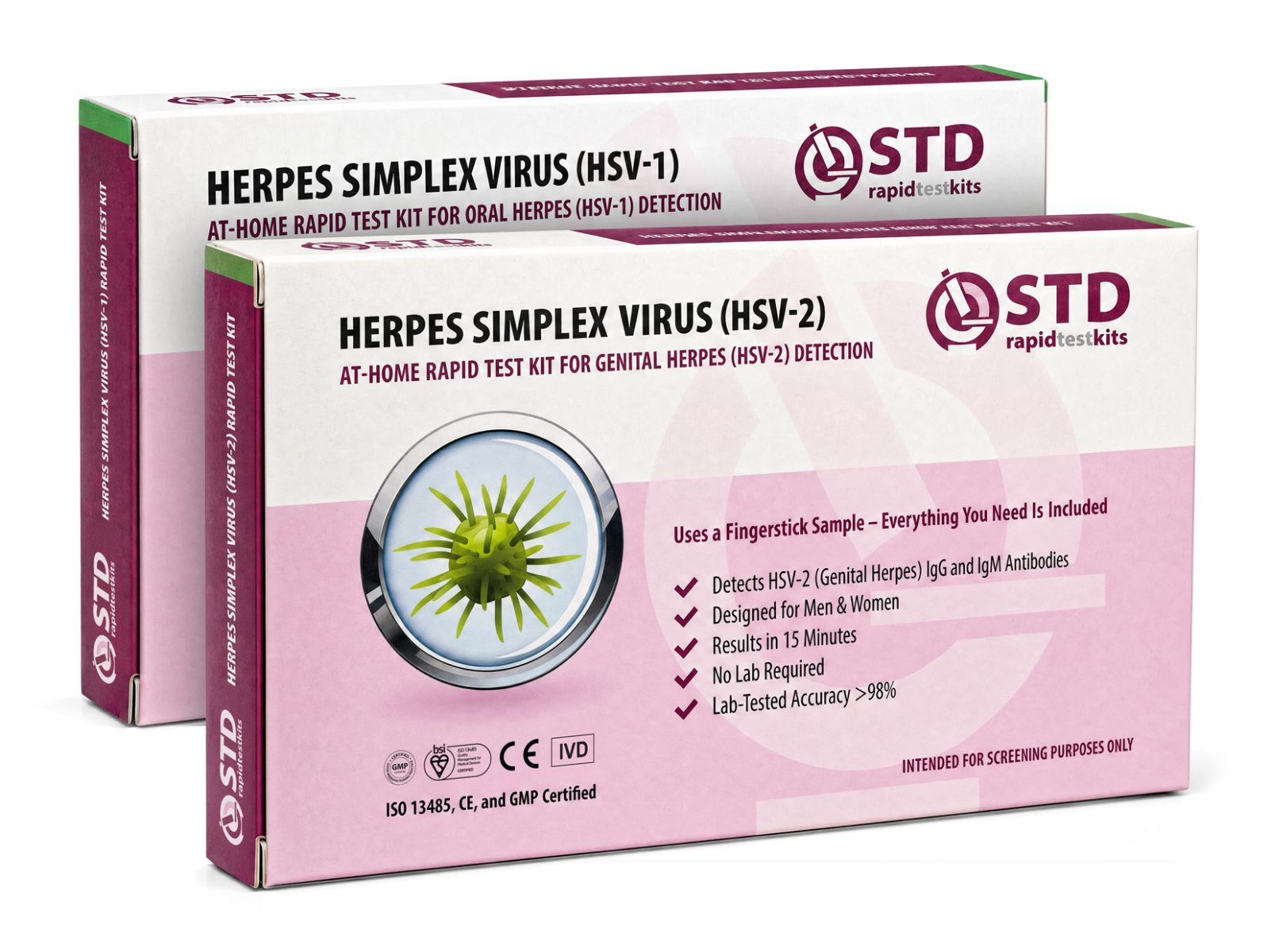
Rapid at-home HSV-2 antibody tests use the same lateral-flow IgG chemistry found in clinic-based assays. Both are subject to the same window-period and cross-reactivity limitations. Both produce a result that, in the low-positive range, benefits from confirmation. For a closer look at rapid herpes test accuracy, see our detailed review.
Where they differ is in convenience, privacy, and access. An at-home herpes blood test removes the appointment and the waiting room, which is genuinely useful when the alternative is delaying testing entirely. The cost is transparent (a flat upfront price, no copay, no separate lab fee, no insurance EOB mailed home), and results arrive in about 15 minutes. At-home rapid tests work well as a first screening step, particularly for ruling out clearly negative results past the window period.
Where the clinic setting adds value is in interpretation. A clinician who knows your sexual history, HSV-1 status, and the numeric index value can place a low-positive or equivocal result in its full context.
This article is published by stdrapidtestkits.com, which sells at-home STI testing kits. Editorial guidance on test accuracy and when to seek a clinician is independent of that relationship.
At-home rapid test: screening after the 12 to 16 week window period, especially when you want privacy, speed, and a flat upfront cost. Strong for ruling out a clearly negative result.
Clinic visit: any low-positive or equivocal result, active symptoms that need a swab, or when you want a clinician to interpret the index value alongside your history.
Common Testing Mistakes That Skew Results
A surprising share of confusing HSV-2 outcomes come not from the test itself but from how it was used. Most of these issues are fixable with a closer reading of the kit instructions and a clearer sense of timing.
Timing fixes itself if you wait the right number of weeks. Sample collection improves with following the instructions step by step. Reading windows are printed on the kit for a reason: a lateral-flow strip changes appearance over time, and reading it outside its valid window creates the "faint line" debates that often have nothing to do with the underlying infection status.
| What Goes Wrong | Why It Matters |
|---|---|
| Testing within the antibody window | Antibodies may not yet be at detectable levels, producing a falsely negative result |
| Insufficient blood sample on a rapid cassette | Low sample volume can cause faint or invalid result lines that are easy to misread |
| Reading the cassette outside the valid time window | Lateral-flow strips change appearance over time; reading at 45 minutes is not the same as reading at 15 |
| Confusing HSV-1 and HSV-2 result regions | Many combination tests have separate lines for each strain, and misreading them leads to the wrong conclusion |
How to Talk to a Partner About an Unconfirmed Result
A test result that is not yet confirmed is genuinely hard to discuss. The honest framing has to communicate uncertainty without understating the risk or overstating the diagnosis. The most useful approach is to say what you know and what you do not know, in that order.
That framing gives the other person real information rather than compressing weeks of testing into a premature conclusion. You can share the confirmatory result when it arrives, whether that result confirms the initial positive or overturns it.
"I got an HSV-2 blood test result that came back positive at a low index value. The standard guidance for results in that range is to do a second, more specific test before accepting the diagnosis, because false positives are known to happen in that range. I am doing that follow-up test, and I will share what it shows."
The Weight Beyond the Lab Report
An HSV-2 result, even an unconfirmed one, does not land like a neutral lab number. It reaches into how you think about relationships, intimacy, and your sense of safety in your own body. That weight is real, and it is part of why a false positive is more than a technical error: it is an emotional event that does not always reverse cleanly even after the result is corrected.
Herpes occupies a particular cultural position that has little to do with its actual medical impact. The CDC's genital herpes information page frames HSV-2 as a common, manageable lifelong infection. Per the WHO, an estimated 520 million people aged 15 to 49 worldwide have HSV-2, and the majority live with no or minimal symptoms. The cultural narrative is much bigger than the clinical one, and that mismatch matters when a test with known accuracy limits produces a result that carries disproportionate emotional weight.
Before a result is confirmed, it does not obligate you to disclose to partners, change major decisions, or carry shame for a number the testing technology itself acknowledges as unreliable at the low end of the index range. The MedlinePlus genital herpes page describes the condition in straightforward terms: common, treatable when symptomatic, and not associated with the severe long-term health consequences that make some other STI diagnoses medically urgent.
An unconfirmed low-positive does not require you to disclose to partners, start medication, or shift how you see yourself. Those decisions belong to confirmed results. If the weight of the moment feels heavy, the <a href="https://www.ashasexualhealth.org/herpes-testing/" target="_blank" rel="noopener noreferrer">American Sexual Health Association</a> runs free peer-support resources for people navigating herpes testing questions.
Type-specific HSV-2 serologic testing is not recommended for the general population because of low positive predictive value and the potential harms of false-positive results.
Your Next Step, by Scenario
Is your IgG index value in the low-positive range (1.1 to 3.0)?
Yes: Request a Western Blot through your clinic or the University of Washington reference lab before accepting the diagnosis. Do not repeat the same commercial IgG.
Did you test within 12 weeks of your possible exposure?
Yes: Schedule a repeat IgG at 12 to 16 weeks post-exposure, then confirm any persistent low-positive with a Western Blot.
Do you have an active sore or blister right now?
Yes: Ask a clinician for a PCR swab while the lesion is fresh. Blood tests cannot diagnose an active outbreak.
No: If your index value is above 3.0, past the window period, and you have no active lesion, the result is more likely to reflect a true infection. Discuss management with a clinician.
These three paths cover the most common situations after a confusing HSV-2 result. A healthcare provider can help you choose.
Frequently Asked Questions
- Does a positive herpes blood test always mean I have HSV-2?
- No. The CDC's STI Treatment Guidelines flag the 1.1 to 3.0 index range for elevated false-positive rates. CDC-cited data shows that a substantial share of low-positive results do not confirm under Western Blot testing. Treat a low-positive IgG as a screening signal, not a final diagnosis, until a confirmatory test using a different method has returned an answer.
- What does "low positive" actually mean on an HSV-2 IgG report?
- It means the test detected a weak signal that crosses the positivity threshold but sits in the band with the highest false-positive rate (typically 1.1 to 3.0 on HerpeSelect). A second test using different chemistry, most commonly a Western Blot, is what resolves whether the signal reflects a true infection.
- I tested positive but have no symptoms. What should I do first?
- Request a Western Blot before treating the result as a diagnosis. Cross-reactivity with prior HSV-1 infection (cold sores) is the most common biological cause of a low-positive result in someone who has never had symptoms. The Western Blot checks for antibodies against multiple specific HSV-2 proteins and is the most specific confirmatory test available.
- Why are herpes blood tests less specific than other STI tests?
- They detect antibodies your immune system produces, not the virus itself. Because HSV-1 and HSV-2 share surface proteins, an immune response to HSV-1 can sometimes register as a weak HSV-2 positive. Tests for chlamydia or gonorrhea, by contrast, look for the pathogen's DNA directly via PCR, which avoids this kind of cross-reactivity.
- Can HSV-1 (cold sores) interfere with my HSV-2 blood test?
- Yes. HSV-1 antibodies are extremely common (the WHO estimates about 64% of adults under 50 carry them) and share structural features with HSV-2 antibodies. Cross-reactivity is especially relevant for people with a known HSV-1 history when an HSV-2 test returns low-positive.
- I tested negative but still have symptoms. Should I trust the result?
- Timing matters. If the test was done within a few weeks of possible exposure, your body may not yet have produced detectable antibody levels; retest at 12 to 16 weeks. If symptoms are active right now, a PCR swab of the lesion is more informative than a blood antibody test, because it detects the virus directly in the tissue.
- Are at-home herpes tests less accurate than clinic tests?
- Not inherently. At-home rapid kits use the same lateral-flow antibody chemistry as clinic-based IgG assays and share the same window-period and cross-reactivity limitations. Follow up any positive (whether from an at-home kit or a clinic draw) with a confirmatory clinic IgG or Western Blot before making clinical decisions.
- Do I really need a confirmatory test, or am I overthinking it?
- If your IgG result was clearly positive with a high index value (above 3.0), especially with consistent symptoms or known exposure, confirmation may be less urgent. If your result is in the low-positive range (1.1 to 3.0) or anything about the clinical picture is uncertain, confirmation is the CDC-recommended next step.
How We Sourced This Article: Our article was constructed based on current advice from the most prominent public health and medical organizations, and then molded into simple language based on the situations that people actually experience. Sources include the U.S. Centers for Disease Control and Prevention's STI Treatment Guidelines (2021), the World Health Organization's herpes simplex virus fact sheet, the U.K. National Health Service, Mayo Clinic, the American Sexual Health Association, and U.S. MedlinePlus patient information. Where this article cites specific numeric ranges (IgG index value cutoffs, specificity figures, window periods), we used the CDC guidelines and assay manufacturer documentation as the primary source. This article summarizes published guidance and is not a substitute for evaluation by a licensed clinician.
- U.S. Centers for Disease Control and Prevention. Sexually Transmitted Infections Treatment Guidelines (2021), Genital Herpes section. Source for the HerpeSelect low-index false-positive caveat (1.1 to 3.0), the CDC-cited specificity figures (overall 57.4%, dropping to roughly 39.8% in the 1.1 to 2.9 range), the recommendation against routine HSV-2 blood screening in asymptomatic adults, the Western Blot and Biokit as confirmatory standards, and the advisory against IgM tests for HSV diagnosis.
- U.S. Centers for Disease Control and Prevention. About Genital Herpes. Used for general background on HSV-1 and HSV-2 epidemiology, clinical presentation, and the framing of genital herpes as a manageable lifelong infection.
- World Health Organization. Herpes simplex virus fact sheet. Used for the HSV-1 global prevalence figure (an estimated 3.8 billion people under 50, roughly 64%), the HSV-2 prevalence estimate (520 million people aged 15 to 49), and global epidemiology framing.
- U.K. National Health Service. Genital herpes overview. Used for patient-facing description of HSV-2 symptoms, clinical course, management, and conditions that resemble herpes in a non-U.S. health system.
- American Sexual Health Association. Herpes testing guide. Used for the 12-to-16-week seroconversion window recommendation and the patient-facing explanation of timing in at-home and clinical testing.
- U.S. National Library of Medicine, MedlinePlus. Genital herpes patient information. Used for general background on HSV-2 transmission, symptom patterns, testing options, and patient-facing framing of the condition as common and manageable.
- Mayo Clinic. Genital herpes overview. Referenced for patient-facing symptom descriptions, clinical testing context, and general management information.
