Published: September 2025 | Last updated: May 2026 | Editorial review and quality control: Martina N.
When can a hepatitis B test be trusted after exposure?
Most hepatitis B surface antigen (HBsAg) tests turn reliably positive between 6 and 12 weeks after exposure, with peak accuracy near the 12-week mark. You can test from week 6, but treat any negative taken earlier as preliminary and plan a confirmatory retest at 12 weeks.
You had a possible exposure last weekend. Maybe a broken condom, a needle stick on the job, or an unprotected encounter with someone whose status you do not know. Now you are staring at a calendar trying to figure out when a hepatitis B test will actually tell you something useful. The short version: most hepatitis B tests reach reliable accuracy between 6 and 12 weeks after exposure, with peak detection around the 12-week mark. You can test sooner, but plan a confirmatory retest once the window closes.
The gap between exposure and reliable detection is called the window period, and it is the single most important number to understand before you order a kit or sit in a clinic waiting room. This guide walks through the biology, the timeline, and the situations that change the math, written in plain language and grounded in current CDC and WHO guidance.
Key Takeaways
- Hepatitis B surface antigen (HBsAg) can appear as early as 1 to 2 weeks and as late as 11 to 12 weeks after exposure per CDC clinical guidance, with a mean detection window of about 38 days and peak test accuracy around the 12-week mark.
- A negative result inside the window does not clear you. If you tested before week 6, schedule a confirmatory retest at week 12; for needle-sharing or a partner with confirmed hepatitis B, add a final test at 6 months to rule out late seroconversion.
Why Testing Timing Matters (Even When You Feel Fine)
Hepatitis B is a quiet infection in its early weeks. Many people who pick up the virus have no symptoms at all in the first month or two. Some never develop noticeable symptoms even while their body fights an active infection that can damage the liver and pass to other people. The World Health Organization estimates that roughly 254 million people worldwide are living with chronic hepatitis B, and a large share of them do not know it (WHO hepatitis B fact sheet).
Timing your test correctly matters more than waiting for symptoms to guide you. A blood test taken too early can miss the infection entirely, and symptoms (when they appear at all) can show up months after exposure, long after you would want a clear answer. Whether you screen with an at-home STI test kit or visit a clinic, the timing is what decides whether the result means anything.
This guide is for you if:
- You have had recent unprotected sex, especially with a new or unknown-status partner
- You are worried about a needle stick, a shared razor, or a tattoo or piercing in unsterile conditions
- You have already tested but you are not sure the timing was right
- You are planning a confirmatory retest and want to know when the window closes
Hepatitis B has both an incubation phase (virus replicating, no detectable markers yet) and a serological lag (your immune response builds before antibodies are detectable). Either phase can produce a falsely reassuring negative if you test before week 6. The fix is timing, not a different brand of test.
What Is the Hepatitis B Window Period?
The window period is the gap between when the virus enters your body and when a test can detect it. The virus is there during this stretch, and you are potentially contagious, but the markers that lab and rapid tests look for have not built up enough to register a positive yet.
The detection range is wider than most people realize. Per the CDC Pink Book chapter on hepatitis B, HBsAg can appear in serum as early as 1 or 2 weeks and as late as 11 or 12 weeks after exposure, and the average incubation period from exposure to symptom onset is 60 to 90 days. The CDC's clinical overview gives a broader outer bound of 60 to 150 days; the Pink Book's 60-to-90-day window captures where most cases cluster, while the longer tail out to 150 days is uncommon. That spread is why a one-time early test is rarely the final answer.
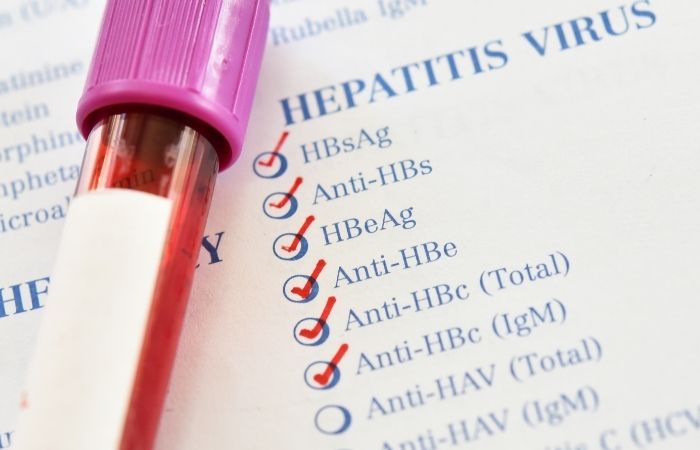
Hepatitis B testing is not one signal. Your body leaves three different footprints at different times. Picture three clues showing up at a crime scene in sequence:
- HBsAg (hepatitis B surface antigen): a protein from the virus's outer coat. Usually the first marker to appear, with a mean detection window of approximately 38 days (about 5 to 6 weeks) after exposure per the WHO Guidelines on HBV testing (NCBI Bookshelf). This is what most rapid at-home kits look for.
- Anti-HBc (hepatitis B core antibody): an antibody your immune system makes once it recognizes the infection. Typically appears 6 to 12 weeks in. The IgM Anti-HBc subtype is the marker for an acute (recent) infection, and because vaccination never produces anti-HBc, it also separates a real infection from vaccine-only immunity.
- Anti-HBs (hepatitis B surface antibody): shows up later. A positive Anti-HBs without other markers usually means you have cleared the infection or you are immune from the vaccine.
Hepatitis B Testing Timeline at a Glance
Use the timeline below to anchor on the rightmost column: should you test now, or wait. The biology and detection columns explain why.
| Time Since Exposure | What's Happening in the Body | Test Detection | Should You Test? |
|---|---|---|---|
| 0 to 7 days | Virus enters bloodstream and begins replicating in liver cells; no antibodies or antigens detectable yet | Too early for any current test | No, unless severe symptoms or a confirmed high-risk exposure (call a clinic about post-exposure prophylaxis) |
| 1 to 2 weeks | HBsAg starts to rise in some people; detection is inconsistent at this stage | Sometimes. Sensitive lab assays may register; rapid home tests usually do not | Optional baseline; plan a confirmatory retest later |
| 4 to 6 weeks | HBsAg reaches detectable levels in many acute infections (mean detection window about 38 days) | Rapid HBsAg tests become reliably useful | Yes, with a confirmatory retest at 12 weeks |
| 6 to 12 weeks | HBsAg and Anti-HBc both detectable in most infections | Most accurate window for initial screening | Yes, ideal for a single decisive test |
| 12+ weeks | All key markers usually present in active infections | Peak accuracy for confirmation | Yes, this is the closing point of the standard window |
| 3 to 6 months | Body has either cleared the virus or progressed to chronic infection | Final confirmation timepoint | Yes for high-risk exposures (needle-sharing, partner with confirmed hepatitis B, occupational blood contact) |
Symptoms (and Why You Cannot Trust Them Alone)
This is where things get emotional. Many people post on forums after a possible exposure describing chills, nausea, or general malaise within days of the encounter. Their first instinct is to order a test immediately.
The biology does not cooperate. Hepatitis B symptoms typically appear 60 to 150 days after exposure (about 2 to 5 months), with an average around 90 days per CDC clinical overview of hepatitis B. Symptoms three days post-exposure are almost certainly something else: a viral cold, anxiety, an unrelated stomach bug. Even when symptoms are real, a test taken at symptom onset may still be too early if the infection is brand-new.
When hepatitis B symptoms do appear, they often include:
- Fatigue that does not lift with rest
- Loss of appetite, sometimes with nausea
- Yellowing of the skin or whites of the eyes (jaundice)
- Dark, tea-colored urine
- Pale stools
- Right-side abdominal pain or tenderness under the rib cage
- Joint pain or low-grade fever
The catch: many adults with acute hepatitis B have no symptoms at all or only mild illness, per CDC clinical guidance. You can feel completely fine and still be infected. Window-period timing, not symptom checks, should drive when you test.
What Kind of Test Should You Take?
Disclosure: this article is published by stdrapidtestkits.com, which sells at-home hepatitis B and combination test kits. We try to recommend the right tool for the situation rather than the most expensive one.
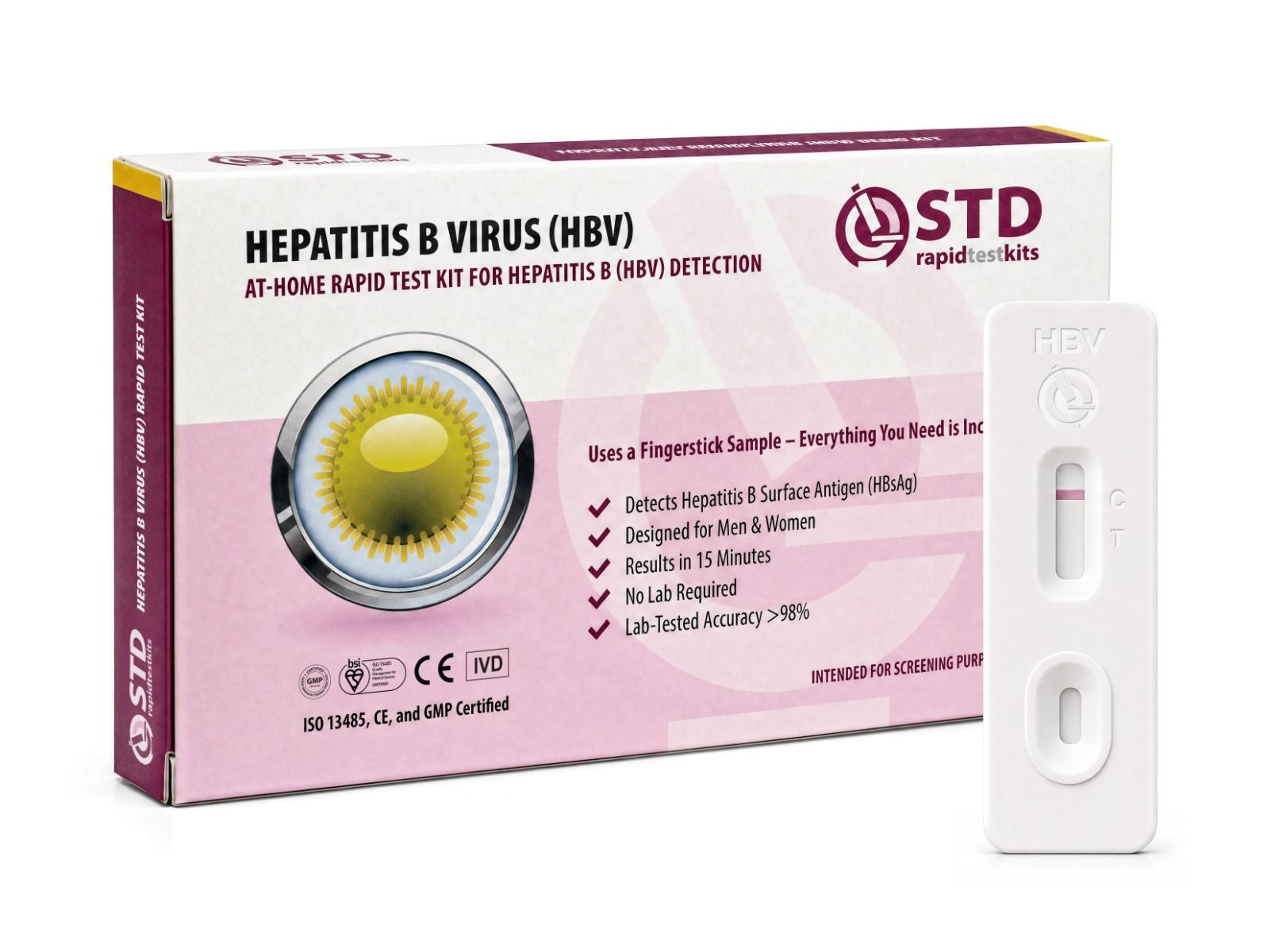
Not all hepatitis B tests look at the same markers, and what you choose changes both the timing and how confident you can be in the result. At-home rapid tests use lateral-flow chemistry, the same strip-and-cassette format you have seen in COVID-19 antigen tests, and they detect HBsAg from a fingerstick blood sample in about 15 minutes. Lab-based chemiluminescent immunoassays and nucleic-acid tests add higher analytical sensitivity, especially for samples drawn early in the window period. Think of the two as different stages of the same care pathway: rapid home tests prioritize speed and privacy, while lab assays prioritize sensitivity and confirm any screening flags. A full clinic workup also checks three markers together (HBsAg, anti-HBc, and anti-HBs), which the 2023 CDC hepatitis B screening recommendations describe as the standard triple panel for sorting someone into currently infected, recovered and immune, susceptible, or chronically infected. The three options most people consider:
| Test Type | Detection Marker | Speed | Best Use |
|---|---|---|---|
| Rapid fingerstick lateral-flow test (at-home) | HBsAg (most kits) | Result in about 15 minutes | Private screening from week 6 onward; positive results need lab confirmation |
| Lab-based serology (ELISA or chemiluminescent immunoassay) | Full panel: HBsAg, Anti-HBc (IgM and total), Anti-HBs | 1 to 3 days turnaround | Most accurate; distinguishes acute, chronic, recovered, and vaccinated states |
| Mail-in at-home collection kit | Varies by kit (often HBsAg plus selected antibodies) | 1 to 5 days after lab receives sample | Discreet, somewhere between rapid and full lab panel in completeness |
What Kind of Exposure Counts (and How to Read Your Risk)
Not every encounter carries the same hepatitis B risk. The virus spreads most efficiently through blood, semen, and other body fluids, so the route and the partner's known status both matter. Hepatitis B also remains infectious on environmental surfaces for at least seven days, per the CDC clinical overview, which means even tiny, invisible amounts of contaminated blood can transmit the virus.
Vaccination status changes the risk picture too. The hepatitis B vaccine offers nearly 100% protection against the virus when the full schedule is completed, per WHO hepatitis B immunization data. If you have had the full three-dose series and developed antibodies, your risk from a single exposure is dramatically lower, though never zero. Rare vaccine breakthroughs do happen.
If your partner is known to be HBsAg-positive and you are unvaccinated, post-exposure prophylaxis (PEP) is a same-day clinic decision, not a home-testing decision. PEP combines a hepatitis B vaccine dose with hepatitis B immune globulin in certain situations, and effectiveness drops as initiation is delayed. Per the CDC post-exposure recommendations, the practical outer limit is roughly 7 days for percutaneous (needlestick) exposures and 14 days for sexual exposures. Use the table below to map your situation to a sensible test window, and call a clinic first if you might still be inside the PEP window.
| Exposure Scenario | Risk Level | Test Timing Recommendation |
|---|---|---|
| Unprotected vaginal or anal sex with a new or unknown-status partner | High (especially if not vaccinated) | Test at 6 to 8 weeks; retest at 12 weeks |
| Sex with a partner known to be hepatitis B positive (you unvaccinated) | High | Same-day clinic visit for post-exposure prophylaxis; testing at 8 to 12 weeks and 6 months |
| Oral sex | Low, but not zero, if cuts or bleeding gums are present | Test if symptoms appear; consider 8 to 12 weeks if the partner is HBV-positive |
| Shared injection drug equipment, needle stick, unsterile tattoo or piercing | Very high | Clinic evaluation now; testing at 6 weeks, 3 months, and 6 months |
| Occupational needle stick or blood splash | High | Clinic protocol immediately; testing at 6 weeks, 3 months, and 6 months |
| Shared razors or toothbrushes with an HBV-positive household member | Moderate | Test at 6 to 12 weeks if any blood contact is suspected |
| Sexual assault or unknown exposure | High, plus emotional weight | Seek immediate care; testing at baseline, 6 weeks, and 12 weeks under provider guidance, and ask about PEP |
You Tested Negative. Can You Relax?
This is the most dangerous moment in the testing journey. A negative result feels like a green light. Sometimes that is true, and sometimes the result is misleading because the window has not closed.
Consider a common pattern: a person has a one-night stand, then learns the partner had previously tested positive for hepatitis B. Panicked, they test five days after the encounter and breathe relief at the negative line. Ten weeks later, fatigue and nausea push them back to the doctor. A repeat test reveals an active hepatitis B infection. The first test was accurate for what it could measure that day; the window simply had not closed yet.
Each new exposure also resets the clock. If you tested negative at 4 weeks after a one-time event but had another potential exposure two weeks later, your 8-to-12-week retest should be measured from the second exposure. The same applies if you started a new sexual relationship while waiting for results.
If you tested before week 6, treat the result as preliminary and schedule a confirmatory test at week 12. If you tested between week 6 and week 12, the negative is reliable for HBsAg but a 12-week retest still adds certainty. If you tested at or after week 12, no retest is needed unless you have a new exposure or develop symptoms. For high-risk exposures (needle-sharing, partner with confirmed hepatitis B, occupational blood contact), add a final test at 6 months to catch late seroconversion.
Can You Get a False Negative for Hepatitis B?
Yes, more often than people realize. A false negative means the test reports you as uninfected when the virus is actually present. The most common cause is timing: you tested before the body produced enough surface antigen or antibodies to register. HBsAg is shed as the virus multiplies in the liver, so before that multiplication builds up, there is simply nothing for the test to find.
The pattern usually looks like this. You are exposed, you panic, you test a few days later. The result reads negative because the HBsAg level is still under the test's detection threshold. Weeks later, real symptoms appear, or a retest at the right time reveals the truth.
- Testing too early in the window. Before HBsAg or antibodies have crossed the detection threshold.
- Wrong test type for the timeframe. An antibody-only test taken before antibodies have developed.
- Sample collection problems. Insufficient blood volume, smudged cassettes, or expired test kits.
- Low viral load in early infection. Especially common in the first few weeks after exposure.
- Immunosuppression. HIV, cancer treatment, and immune-modulating drugs all delay the antibody response.
Retesting: When, Why, and How Often
Standard hepatitis B protocols build in more than one test because no single snapshot covers the full window. Here is how to think about your own retest schedule based on when you tested first.
Plan a second test if any of the following apply: your symptoms change or new symptoms appear, your partner has tested positive, you are not sure the first test was the right type, or you simply cannot shake the feeling that something is off.
| If You... | Initial Test Timing | When to Retest |
|---|---|---|
| Tested within 7 days of exposure | Too early for most markers | Retest at 6 weeks and again at 12 weeks |
| Tested at 6 to 8 weeks | Good detection for HBsAg in most infections | Optional confirmatory test at 12 weeks |
| Tested at 12+ weeks | Peak accuracy, both HBsAg and Anti-HBc detectable | No retest needed unless new exposure or symptoms |
| Had a high-risk exposure (needle-sharing, HBV-positive partner) | Test at 6 weeks | Retest at 3 months and 6 months under provider guidance |
| Are immunocompromised or pregnant | May affect test sensitivity and timing | Follow your provider's guidance; usually a confirmatory full panel at 12 weeks |
| Are starting a new relationship or planning pregnancy | Test regardless of symptoms | Retest after 3 months if any high-risk exposure has occurred |
What If You Test Positive for Hepatitis B?
Take a breath. A positive hepatitis B test gives you specific, actionable information about your status. Most healthy adults who develop acute hepatitis B will clear the infection on their own; CDC clinical guidance notes that around 95% of healthy adults who acquire hepatitis B as adults clear the virus within six months, and the WHO hepatitis B fact sheet puts adult-acquired chronic progression at less than 5%. A smaller share progress to chronic infection, which is why follow-up matters.
If you tested positive on a rapid at-home kit, the next step is confirmatory testing in a clinical lab. A full hepatitis panel will distinguish:
- Acute infection: recent, often resolves on its own
- Chronic infection: lasting more than 6 months, requires ongoing care
- Past infection with recovery: HBsAg negative, Anti-HBs positive, total Anti-HBc positive
- Vaccine-induced immunity: Anti-HBs positive, others negative
The reason follow-up matters so much is what untreated chronic hepatitis B can do over years. Chronic infection is one of the leading causes of liver cirrhosis and liver cancer (hepatocellular carcinoma) worldwide, and the WHO attributes most hepatitis B deaths to these two complications (WHO hepatitis B fact sheet). That long-term risk drops substantially for people who stay in care with antiviral therapy and regular liver monitoring, which is exactly why a confirmed positive is a reason to stay engaged with a provider rather than to step away after one stable result.
What to do once a positive result is confirmed:
- Talk to a healthcare provider about liver enzyme monitoring and whether antiviral therapy is needed. Ask about HBeAg and HBV DNA viral-load testing if it is not ordered automatically, since those markers help distinguish actively replicating from non-replicating infection.
- Notify recent sexual or needle-sharing partners (anonymous notification services like TellYourPartner.org can help if direct conversation feels impossible).
- Use barrier protection during sex until cleared, and avoid sharing razors, toothbrushes, or any item that can carry blood.
- Avoid alcohol while you wait for confirmation, since the liver is doing extra work.
- If you are pregnant, tell your obstetrician immediately. Newborns of HBV-positive parents can be protected with vaccine plus immunoglobulin shortly after birth, which prevents most mother-to-child transmission per CDC hepatitis B guidance.
- Keep follow-up appointments. Even if symptoms fade, the lab work is what tracks whether the infection is clearing or persisting.
Hepatitis B can range from a mild illness lasting a few weeks to a serious lifelong illness. Most healthy adults who get hepatitis B recover completely, but some people develop long-term chronic infection.
How to Protect Others (and Yourself)
Whether you tested positive or just had a scare, the same prevention playbook applies. Hepatitis B is one of the few sexually transmitted infections where vaccination provides near-complete protection, so the prevention story usually starts there.
- Get vaccinated. The hepatitis B vaccine series is safe and effective. WHO reports that the full vaccine schedule offers nearly 100% protection against hepatitis B virus infection (WHO hepatitis B immunization guidance). Most adults who completed the series in childhood retain lifelong protection. If you are not sure you finished, a single Anti-HBs blood test can tell you whether your immunity is still measurable.
- Use barrier protection. Condoms reduce hepatitis B transmission alongside other sexually transmitted infections, and they work best as a layer on top of vaccination rather than instead of it.
- Do not share items that can carry blood. Razors, toothbrushes, nail clippers, and glucose monitors all qualify. Even small amounts of dried blood can transmit the virus.
- Be careful about needles, tattoos, and piercings. If you use injectable drugs, never share equipment. For tattoos and piercings, choose licensed practitioners who use single-use needles and sterilized equipment.
- Test after new exposures. Routine testing once a year (or after a new partner) is sound sexual-health practice for anyone who is not vaccinated or whose immunity status is unknown.
- Disclose to partners and providers. If you have hepatitis B, partners and any medical professional handling blood-related procedures should know. Many states offer anonymous partner-notification services.
1. Confirm your vaccination status. If you do not know whether you completed the three-dose series, an Anti-HBs blood test is the fastest way to find out. 2. Use barrier protection with new or unknown-status partners until you have talked about testing. 3. Do not share blood-contact items at home (razors, toothbrushes, glucose monitors), even with someone you trust.
Your Next Steps After a Possible Exposure
If you have read this far, the plan comes down to a few dated decisions: confirm whether you are still inside the post-exposure prophylaxis window, pick the right test for where you are in the timeline, and put your retest dates on a calendar before you close this page. The quick decision guide below walks through those choices in order.
Should You Test for Hepatitis B Now?
Could you still be inside the post-exposure prophylaxis window (within about 7 days of a needlestick, or 14 days of sex with a partner who has confirmed hepatitis B) and you are unvaccinated?
Yes: Call a clinic or urgent care today before testing at home. Post-exposure prophylaxis is time-sensitive and works best the sooner it starts.
Has it been at least 6 weeks since the exposure?
Yes: Test now. A rapid at-home HBsAg fingerstick test is reliable from about week 6, and a clinic full panel adds sensitivity for early or complicated exposures.
Was your test taken before week 6, or was the exposure high-risk (needle-sharing, a partner with confirmed hepatitis B, or occupational blood contact)?
Yes: Schedule a confirmatory retest at 12 weeks, and add a final test at 6 months after a high-risk exposure to rule out late seroconversion.
No: A negative test at or after 12 weeks is reliable. If you are unsure whether you completed the hepatitis B vaccine series, an Anti-HBs blood test can confirm your immunity.
Guidance only. A healthcare provider can advise based on your specific exposure and vaccination history.
Hepatitis B Testing FAQs
- Can you test too early for hepatitis B?
- Yes, and it is the most common testing mistake. Before the virus has multiplied enough to produce detectable HBsAg or before your immune system has made antibodies, even a sensitive test can read negative. Testing 6 to 12 weeks after potential exposure gives a much clearer answer. If you have already tested early, plan a confirmatory retest at the 12-week mark.
- How soon do hepatitis B symptoms show up?
- Plan around 60 to 150 days, with an average near 90. Symptoms in the first week or two are almost certainly something else (a cold, stress, an unrelated stomach bug), and many adults with acute hepatitis B never feel sick at all. That makes symptom timing a poor signal to test against. Window-period timing is what to plan around instead.
- What is the difference between HBsAg, Anti-HBc, and Anti-HBs?
- HBsAg is what home rapid kits look for; the other two require a lab draw. Practically: a positive HBsAg means active infection, a positive Anti-HBc means past or current infection (and helps separate recent acute from older chronic), and a positive Anti-HBs means immunity from either clearing an earlier infection or completing the vaccine. A clinic panel checks all three together to place you in one of those categories.
- I see a faint test line. Does that count as positive?
- Yes, in most lateral-flow assays a faint line in the test region counts as positive. The line indicates that some level of HBsAg was detected. Confirm any positive home result, faint or not, with a lab-based panel through a clinic. False positives do occur at low rates, and a confirmation panel removes the ambiguity.
- Can the hepatitis B vaccine cause a false positive on my test?
- Not on an HBsAg test. The vaccine contains only the surface antigen protein, not live virus, and it does not cause active infection. The vaccine does cause anti-HBs (surface antibodies) to develop, which is a positive result on antibody testing showing immunity. The anti-HBs signal means your immune system responded to the vaccine correctly.
- Can I get tested for hepatitis B at home?
- Yes. Rapid at-home fingerstick blood tests detect the hepatitis B surface antigen (HBsAg) in about 15 minutes. They are a strong screening tool from week 6 onward. A positive result on any rapid test is worth confirming with a full lab serology panel, which can distinguish acute from chronic infection and check vaccination status.
- Does hepatitis B testing work the same way during pregnancy?
- The biology is the same, but the timing fits into prenatal care. Pregnant patients in the U.S. are routinely screened for HBsAg as part of standard prenatal labs. If you are pregnant and have had a recent possible exposure, talk to your prenatal provider about adding a window-period-aligned retest. Hepatitis B testing during pregnancy is safe and explicitly encouraged.
- Can a weakened immune system delay a positive hepatitis B test?
- Yes, sometimes. People with immunosuppression (from HIV, chemotherapy, transplant medications, or some autoimmune treatments) may produce smaller amounts of HBsAg or antibodies, and detection can be delayed. In those situations, a longer retest window or a PCR-based viral-load test through a clinic is often more reliable than a rapid home assay.
- Can hepatitis B go away on its own?
- For most healthy adults, yes. Acute hepatitis B usually resolves with rest and supportive care, no antivirals required. The way to tell which path you are on is repeat blood work at six months: if HBsAg is still positive then, the infection has become chronic and you will want ongoing care for liver-enzyme tracking and viral-load monitoring. Children and people with weakened immune systems face much higher chronic-infection risk and should be followed closely from diagnosis.
- Should I use a combination kit instead of a single hepatitis B test?
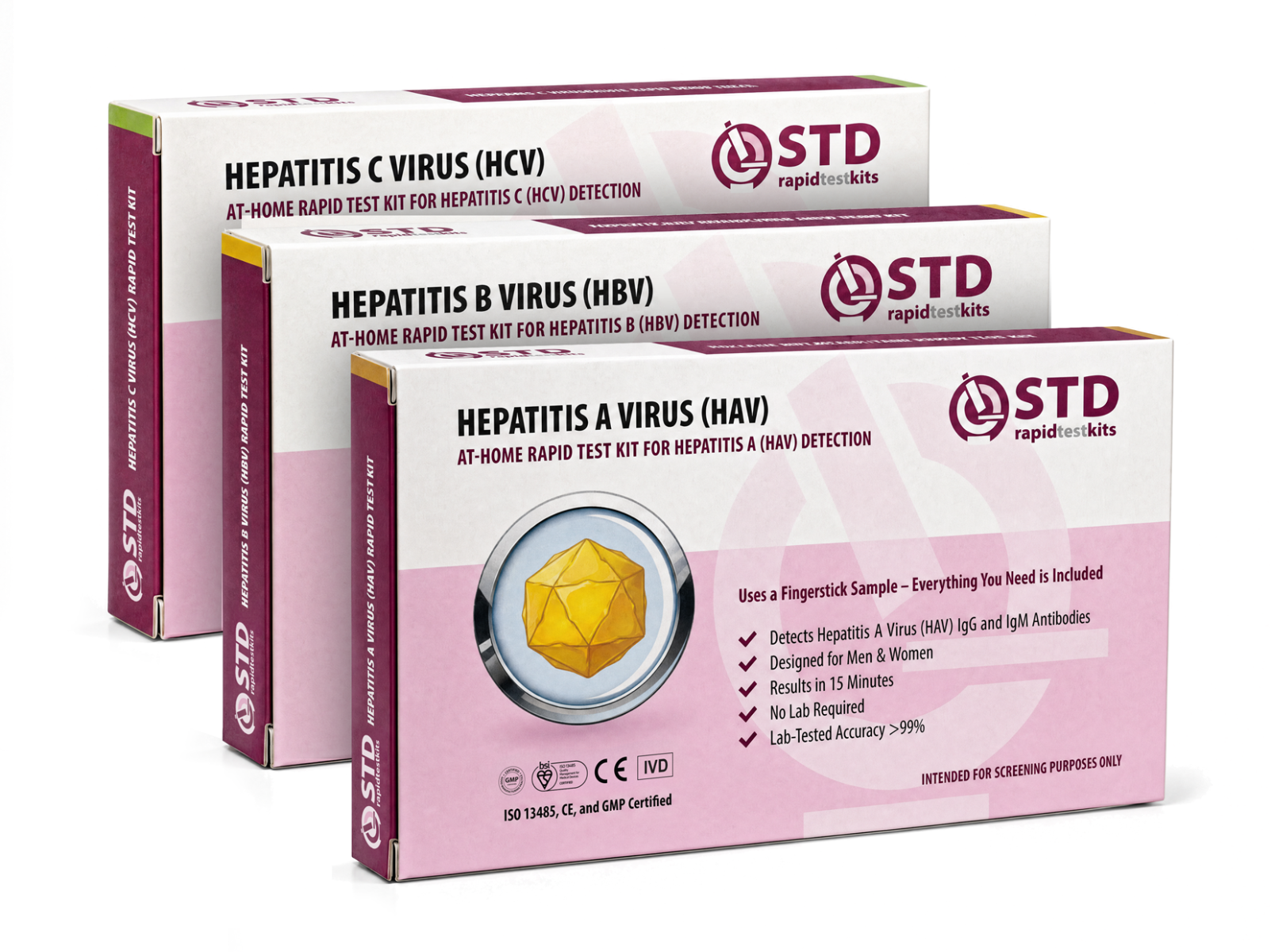
- If you have several STI concerns from the same exposure event, a combination kit can be more efficient than buying separate single-infection tests. The 2-in-1 hepatitis B and C kit is a common pairing because both viruses transmit through similar blood-borne routes. Larger combo kits also include hepatitis B as part of a broader screen. Check the listed markers on each kit so the panel matches your specific concerns.
How we sourced this article. This guide synthesizes current public-health and peer-reviewed clinical guidance from leading medical organizations into plain-English, decision-ready prose. The sources highlighted below are root-domain and standing-reference pages on the CDC, WHO, and NHS. Every external link in this article was checked to confirm it leads to a reputable source and supports the specific claim it is attached to, and each opens in a new tab so you can verify the facts directly. We do not provide individual clinical diagnosis. For symptoms or a confirmed positive result, see a licensed provider.
- World Health Organization. Hepatitis B fact sheet. Global prevalence (254 million chronic), vaccine effectiveness (nearly 100%), adult chronic-progression rate (less than 5%), and the cirrhosis and liver-cancer complications of chronic infection.
- U.S. Centers for Disease Control and Prevention. Hepatitis B clinical overview. Symptom timing (60 to 150 day incubation, around 90-day average), 95% adult clearance rate, asymptomatic-presentation note, and the 7-day environmental viability statement.
- U.S. Centers for Disease Control and Prevention. Pink Book chapter 10, Hepatitis B. Source for the HBsAg detection range (as early as 1 to 2 weeks, as late as 11 to 12 weeks after exposure) and 60-to-90-day incubation period.
- U.S. Centers for Disease Control and Prevention. MMWR Recommendations and Reports, RR-16. Post-exposure prophylaxis timing for hepatitis B (7-day outer limit for percutaneous exposures, 14-day outer limit for sexual exposures).
- U.S. Centers for Disease Control and Prevention. MMWR Recommendations and Reports, Volume 72, RR-1: Screening and Testing for Hepatitis B Virus Infection (2023). Source for the recommended three-marker triple panel (HBsAg, anti-HBs, total anti-HBc).
- U.S. Centers for Disease Control and Prevention. Hepatitis B information hub for the general public. Transmission, prevention, vaccination, and mother-to-child transmission overview.
- NHS. Hepatitis B overview. Symptoms, testing, and treatment context for UK readers.
