







Quick Answer: People avoid STD testing for emotional, social, and practical reasons, including fear of results, shame, stigma, lack of privacy, cost, or trauma. Testing is more accessible than ever, including at-home kits that offer private results in minutes.
Why This Happens (Even When You're "Responsible")
Let’s start with the hardest truth: knowing you should do something isn’t the same as being ready to do it. STD testing hits nerves most health issues don’t, it touches sex, identity, trust, shame, and even our sense of self-worth. You can be a highly functional adult, even someone who advocates for public health, and still freeze when it’s your turn to pee in a cup or swab yourself at home.
Marcus, 34, describes it like this: “I didn’t feel sick. But I’d hooked up with someone new, and the condom came off halfway through. I stared at the home test kit in my drawer for a week. I wasn’t scared of the test, I was scared of what it meant. That I’d slipped up. That I wasn’t as in control as I thought.”
His words echo a common psychological blocker: we equate testing with confession. It seems to be an admission of not recognizing risk. And that fear can triumph over logic even when the solution is only a finger prick away.
It’s Not Just Embarrassment: The Core Barriers
There’s a false narrative that people who don’t get tested are irresponsible or uneducated. The truth is more complicated. Most avoidance is driven by emotional undercurrents and logistical barriers that stack up silently over time. Below, we’ve broken down some of the most common, but rarely discussed, reasons people avoid STD testing.
| Barrier | What It Feels Like | Why It Matters |
|---|---|---|
| Fear of Results | “What if I can’t handle knowing?” | Delays action, even when symptoms are present |
| Shame or Stigma | “I don’t want to be ‘that person’” | Creates silence and secrecy around normal health care |
| Privacy Concerns | “What if someone sees my mail or browser history?” | Makes at-home testing feel risky instead of safe |
| Cost or Access | “I don’t have insurance or a nearby clinic” | Leads to chronic delays even with high motivation |
| Trauma Response | “I shut down around medical stuff” | Often unspoken, but powerful, especially for survivors |
Table 1: Common emotional and logistical barriers to STD testing, based on real-world narratives and public health insights.

People are also reading: Most People With an STD Don’t Feel Sick, Here’s Why
The Trauma Link No One Talks About
For people with sexual trauma histories, STD testing can feel like a landmine. The very idea of discussing past partners, inserting a swab, or being examined can trigger flashbacks or dissociation. This isn’t about being “dramatic”, it’s about the nervous system doing its job to protect you, even when that protection looks like avoidance.
Nia, 27, avoided testing for almost a year after a high-risk encounter. “Every time I tried to make the appointment, my chest would tighten. I’d start shaking. I didn’t even realize it was trauma until my therapist named it.”
In these cases, healing and testing go hand-in-hand. It might mean choosing a trauma-informed provider, asking a friend to be on standby during a telehealth call, or using a home kit in your own space, at your own pace. Testing doesn’t have to re-traumatize you. In fact, when done right, it can be part of reclaiming safety.
When Denial Feels Safer Than Clarity
This is the quietest form of avoidance: nothing seems wrong, but you still can’t shake the “what if?” thought. Maybe you feel a little tired, or you had unprotected oral sex and now your throat feels raw. You Google. You spiral. Then you distract yourself and decide not to test “unless it gets worse.”
This mental loop is common. In fact, it’s a protective mechanism. Denial, intentional or not, lets us feel in control. It’s the same psychology behind skipping dentist appointments for years or ignoring a strange mole. Clarity feels risky. But it’s also the only way forward.
The good news? You don’t have to jump into testing headfirst. You can start by reading about symptoms, checking timelines, or using tools like the STD Rapid Test Kits Risk Checker. Taking action in small steps is still action. Clarity doesn’t have to hurt.
Check Your STD Status in Minutes
Test at Home with Remedium8-in-1 STD Test Kit
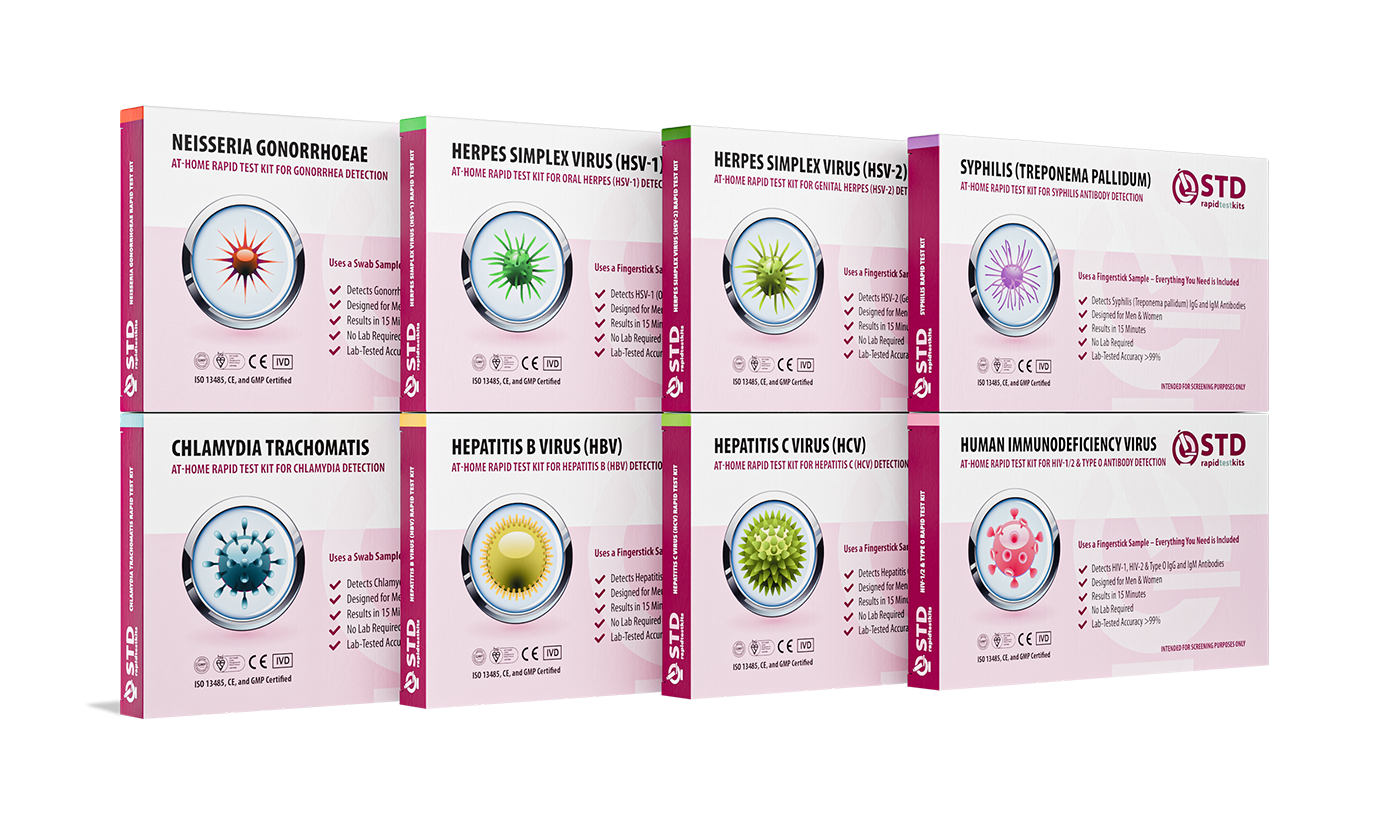
 For Men & Women
 Results in Minutes
 No Lab Needed
 Private & Discreet
Order Now $149.00 $392.00
For all 8 tests
The “I’m Fine” Trap: When No Symptoms Keep You Stuck
One of the most damaging myths around STD testing is that it’s only necessary when something’s clearly wrong. Burning when you pee? Sure, test. Weird discharge? Okay. But what if you feel totally normal? Many people assume that no symptoms = no problem, and that assumption is exactly what allows infections like chlamydia, gonorrhea, and even HIV to spread silently.
Danielle, 22, found out during a routine physical that she’d been carrying chlamydia for months without any symptoms. “I was shocked. I thought you’d feel it, like you do with a UTI. But I didn’t. I felt totally fine.”
That’s the thing about STDs: they don’t always show themselves right away, or ever. You can carry an infection, pass it to someone else, and still feel perfectly healthy. That’s why regular testing matters, even when there’s no itch, no burn, and no obvious red flag. It's not about paranoia, it's about prevention.
STD Testing Doesn’t Have to Be a Public Event
Another hidden barrier? The feeling that getting tested means making it public. You imagine walking into a clinic where someone you know might see you. You wonder if your partner will ask questions. You stress over how it will show up on insurance statements or bank accounts.
That’s where discreet, at-home testing comes in. You can now get FDA-approved test kits delivered to your door in unmarked packaging, complete them in private, and get results within minutes or days, depending on the type. No waiting rooms, no raised eyebrows, no awkward small talk.
| Testing Option | Privacy Level | Result Speed | Best Fit For |
|---|---|---|---|
| At-Home Rapid Test | Very High | 15–20 Minutes | Immediate peace of mind |
| Mail-In Lab Test | High | 2–5 Days | Lab-grade accuracy from home |
| Clinic Testing | Low–Moderate | Same-day to 1 week | In-person consultation needed |
Table 2: Comparison of common STD testing methods by privacy and result timing.
If you need maximum discretion, you can order a combo test kit that screens for multiple STDs at once, no appointment required, and no judgment involved.
What If the Result Is Positive?
This is the fear beneath all the other fears. Not just “what if I test?” but “what if it comes back positive?” For many people, that possibility is so scary they’d rather stay in the dark. They imagine their life changing overnight, labels, judgment, panic. But that imagined future is rarely the reality.
Most STDs are treatable, especially when caught early. Even chronic infections like herpes or HIV are manageable with the right care. You don’t become a different person. You don’t become “dirty.” You become informed, and you begin to heal, physically and emotionally.
Samir, 29, tested positive for HSV-2 after years of assuming he was clear. “At first, I panicked. Then I did my research, talked to a doctor, and realized: this doesn’t define me. I can still date, still have sex, still live my life.”
Testing isn’t the scary part, uncertainty is. And clarity opens doors to treatment, protection, and peace of mind.
When You’re Ready… But Still Frozen
There’s a particular hell reserved for people who want to test but can’t seem to act. You’ve bookmarked the site. You’ve added a kit to your cart. You’ve even written down the local clinic’s phone number. But days pass. Weeks, even. You can’t explain it. You just don’t do it.
This is the “mental block” zone, and it’s more common than you think. In fact, it’s not about laziness or irresponsibility. It’s usually a mix of decision fatigue, unresolved shame, and internalized stigma. Your brain is trying to protect you, but it’s stuck in a loop.
Here’s one way out: shrink the task. Don’t think “I need to get tested.” Instead, think “I’m going to open the test site,” or “I’m going to place the order, and that’s it for today.” Testing doesn’t require bravery all at once. It just needs one small move forward.
If your head keeps spinning, peace of mind is one test away. You can start with a discreet test kit delivered to your door, no appointments or judgment involved.
Waiting, Worrying, and Looping: How Avoidance Turns Into Anxiety
There’s a specific kind of anxiety that hits at night, alone, with your phone screen lighting up the dark. You type things like “STD sore or razor burn,” “does herpes always come with blisters,” or “how long until HIV shows up on a test?” Then you scroll Reddit, compare photos, read nightmare stories, and feel worse. But instead of testing, you shut the tab. Again.
This pattern isn’t about ignorance, it’s about fear. When we don’t have clarity, our brains try to fill in the blanks. The problem is, they usually fill them in with the worst-case scenario. You go from “maybe I should test” to “what if I have something incurable and I’ve already infected someone else and they hate me and my life is ruined?” in five seconds flat.
Jayden, 25, knows that spiral well. “I kept putting off the test because I couldn’t deal with the stress. But the stress of not knowing? That was worse. It started messing with my sleep and my sex life. I felt like a walking question mark.”
Here’s the twist: most people who get tested feel better, regardless of the result. Why? Because knowledge ends the loop. If you’re clear, you can exhale. If you’re positive, you can act. Anxiety thrives in uncertainty. Testing breaks it.

People are also reading: Can You Tell If Someone Has an STD Just by Looking?
STD Testing Timelines: What to Expect (And Why It Matters)
One reason people delay testing is confusion around timing. You might think it’s too soon. Or that it's too late and pointless. But every STD has a “window period”, a span of time between exposure and when a test can reliably detect infection. Testing outside that window can give false reassurance or false fear. No wonder people avoid it, it’s complicated.
Let’s make it simpler. Here’s a timeline snapshot that shows common STDs, how they’re tested, and when accuracy peaks. Think of it as a guide, not a rule. If you’re in doubt, test now and plan a retest later, it’s better than doing nothing.
| STD | Test Type | Earliest Detection | Best Accuracy Window |
|---|---|---|---|
| Chlamydia | NAAT / PCR | 5–7 Days | 14 Days+ |
| Gonorrhea | NAAT / PCR | 5–7 Days | 14 Days+ |
| Syphilis | Blood (Antibody) | 3 Weeks | 6–12 Weeks |
| HIV | Ag/Ab Combo or NAAT | 10–14 Days | 28–45 Days |
| Trichomoniasis | NAAT / Rapid | 5 Days | 14–28 Days |
| Herpes (HSV-1/2) | IgG Antibody | 3–6 Weeks | 12 Weeks+ |
Table 3: STD test types and timing windows for accurate results. When in doubt, retesting after 2–4 weeks can confirm earlier results.
This is where at-home kits shine. You can test early, then test again without having to schedule or explain. You’re in control of your timeline, not waiting on someone else’s system.
Check Your STD Status in Minutes
Test at Home with Remedium7-in-1 STD Test Kit
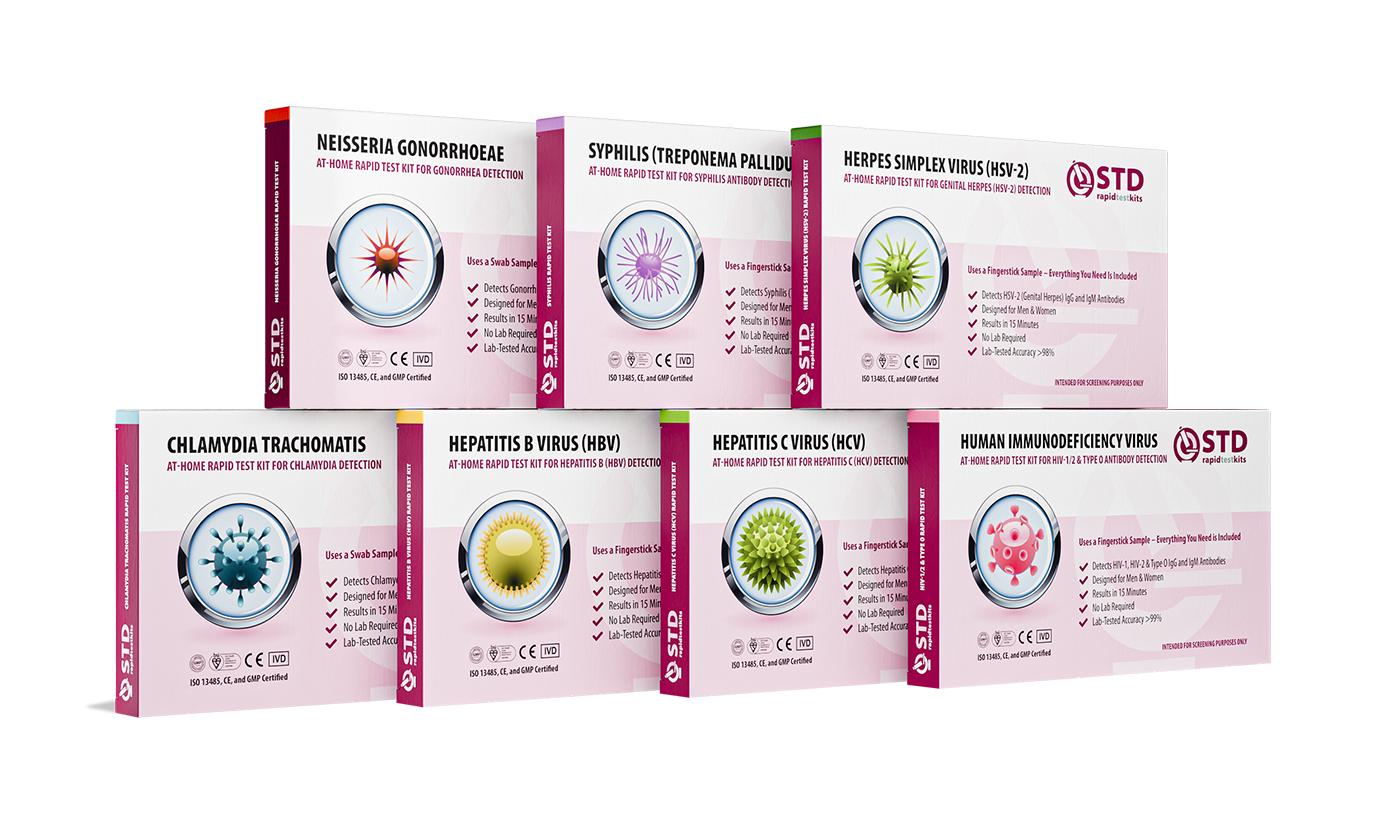 For Men & WomenResults in MinutesNo Lab NeededPrivate & Discreet
Order Now $129.00 $343.00
For all 7 tests
Let’s Talk About Control (And Taking It Back)
Avoidance often feels like control. Not testing lets you pretend things are fine. But real control is knowing where you stand, on your terms, in your space, with support if you need it. Whether it’s after a drunken hookup, a relationship break, or just because you haven’t tested in a year, you deserve to know. You deserve facts over fear.
Alejandro, 30, avoided testing for years after contracting herpes from a former partner. “It wasn’t just the diagnosis, I lost trust in my ability to make good choices. Testing again felt like reopening a wound. But the second time I tested, I felt powerful. Like I was reclaiming my body and my choices.”
That’s the shift. Testing isn’t about punishment or shame. It’s about data. And with the right tools, like discreet at-home test kits, you don’t need permission, a white coat, or a waiting room. Just the willingness to take one brave step forward.
If you’re not ready to test yet, that’s okay. Bookmark the site. Talk to a friend. Read real stories. But don’t stay stuck forever. You’re worth clarity. You’re worth peace. You’re worth care, even when it’s hard to give it to yourself.
FAQs
1. Is it weird to feel nervous about getting an STD test?
Not weird at all. Totally human. Even people who get tested regularly sometimes freeze up beforehand. You're facing fear, stigma, and the unknown, it’s not a simple blood test, emotionally speaking. But the relief afterward? It’s real.
2. Can I really do an STD test at home without anyone finding out?
Yes. Like, absolutely yes. You can order a kit online, it shows up in discreet packaging (no labels, no surprises), and you test in your bathroom when you’re ready. No one needs to know unless you want them to.
3. What if I test positive, am I doomed?
Deep breath. A positive result is not the end of your story. Most STDs are treatable. The ones that aren’t curable (like herpes or HIV) are highly manageable with meds and support. You're not dirty. You're informed, and that’s powerful.
4. I feel totally fine. Do I still need to get tested?
Yep. That’s the trap. Many STDs have zero symptoms, especially early on. You could have chlamydia or gonorrhea and never know. Testing isn’t just for when something’s “wrong”, it’s for staying ahead of the curve.
5. Will it be awkward if I go to a clinic?
Honestly? The staff has seen everything. They’re not judging you. They’re probably more focused on the printer jamming again than what you did last weekend. But if that vibe still stresses you out, home testing is your low-drama solution.
6. How long should I wait after sex to get tested?
Depends on the infection. Some STDs show up within a few days, others take weeks. If you’re not sure, start with a combo test and plan to retest in 2–4 weeks if needed. Our Window Period Calculator can help figure that out.
7. My partner might freak out if I say I got tested. Should I still do it?
You deserve health and peace of mind, period. If someone reacts badly to you taking care of yourself, that says more about them than you. Frame it as responsibility, not accusation. And if you’re nervous, we’ve got a whole article on how to talk to partners about testing.
8. What’s the fastest way to get results?
At-home rapid kits are the speed demons here, some give you results in under 20 minutes. Mail-in lab kits take 2–5 days. Clinics vary, but you might wait a week or more depending on location. If speed matters, go rapid.
9. I’ve had the same partner for years. Do I still need to test?
If you’ve both tested negative and are monogamous, you’re probably in the clear. But if there’s ever been a gap in communication, a new risk, or just a long time since your last check, testing can still be smart, no drama, just clarity.
10. Can I get an STD from oral sex?
Totally. It’s less risky than other kinds of sex, but still a thing. Herpes, gonorrhea, and syphilis can all spread this way, even if everything “looked clean.” If you’ve gone down on someone new, it’s worth considering a test.
You Deserve Answers, Not Assumptions
Let’s be clear: avoiding STD testing doesn’t make you weak, reckless, or unworthy. It makes you human. But there’s another truth too, you deserve to feel safe in your body and confident in your choices. And testing is part of that safety, not a punishment or a confession.
Whether you’re carrying fear, shame, or just a heavy question mark, there’s a path forward that’s quiet, private, and completely within your control. You don’t have to do everything today. You just have to take one small step.
Don’t wait and wonder, get the clarity you deserve. This home test kit checks for the most common STDs quickly and without drawing attention to itself.
How We Sourced This Article: We combined current guidance from leading medical organizations with peer-reviewed research and lived-experience reporting to make this guide practical, compassionate, and accurate.
Sources
1. CDC – STD Screening Recommendations
2. Health Equity and STIs | CDC
4. Confidentiality Issues and Use of STD Services | CDC MMWR
5. Shame and STIs: An Exploration of Emerging Adult Testing Behavior
6. Barriers for Timely Diagnosis and STI Management | NIH / PMC
7. Barriers to Asymptomatic Screening and STD Services | PMC
About the Author
Dr. F. David, MD is a board-certified infectious disease specialist focused on STI prevention, diagnosis, and treatment. He blends clinical precision with a no-nonsense, sex-positive approach and is committed to expanding access for readers in both urban and off-grid settings.
Reviewed by: Jordan M. Patel, MPH | Last medically reviewed: January 2026
This article is for informational purposes and does not replace medical advice.


