







Quick Answer: Roughly 1 in 2 people with an STD have no symptoms at all. The CDC estimates that nearly 50% of STDs are undiagnosed, because most infected people feel totally fine and don’t get tested.
The Silent Majority: How Common Are Undiagnosed STDs?
According to the latest data from the Centers for Disease Control and Prevention (CDC), over 20 million new STIs occur each year in the U.S. alone. But here’s the catch: nearly half go undetected. Some estimates go even higher for certain infections, up to 70–80% of chlamydia cases and 85% of trichomoniasis infections are found in people who had no idea they were carrying anything.
That means millions of people are living their lives, dating, hooking up, trying for kids, without knowing they have an infection that could affect their fertility, their partners, or even their own long-term health. They aren’t ignoring symptoms. They don’t have symptoms.
In one national survey of sexually active adults aged 18–39, nearly 6 in 10 had never had a full-panel STD test, even though most said they were “concerned about sexual health.” When asked why, the most common answer wasn’t fear or stigma, it was: “I don’t think I need one.”
| STD | Estimated % Asymptomatic | Most Affected Groups |
|---|---|---|
| Chlamydia | 70–90% | Women under 25, men who have sex with men (MSM) |
| Trichomoniasis | 85% | Women of color, older adults |
| Gonorrhea | 50–70% | Youth, MSM, Black/African-American populations |
| Herpes (HSV-2) | Up to 90% unaware of infection | General adult population, women > men |
| HPV | 90% clear it without knowing | All sexually active adults |
Table 1: The percentage of asymptomatic infections is staggeringly high across major STDs. These silent infections often go undiagnosed for months or years, especially in people who skip routine testing.
Why Some STDs Stay Completely Silent
Not all infections scream for attention. In fact, many are biologically designed to lurk quietly. That’s not metaphor, it’s evolutionary strategy. If an STD made every person immediately sick, it would be less likely to spread. So, most don’t. Instead, they replicate in the background, especially in areas of the body where you’re unlikely to feel irritation unless you’re looking for it: the cervix, the rectum, the urethra.
Dr. Liane T., an infectious disease specialist, describes it this way: “You’re not going to feel inflammation in your cervix unless it’s severe. And if you’re a man, chlamydia in the throat? No clue. You’ll feel completely fine.”
This is especially true for herpes, which can be transmitted even when no sores are visible. In fact, most new herpes infections are passed by someone who didn’t know they had it. The same goes for HPV, which is so common that almost everyone will get it at some point. And yet, unless a genital wart appears (which isn’t always the case), you’d never know.
What makes these infections dangerous isn’t just the physical risk. It’s the false confidence. People assume “no symptoms” means “no problem.” But silent doesn’t mean harmless.
Consider this: untreated chlamydia can scar the fallopian tubes. Gonorrhea in the rectum can spread to the blood. Trichomoniasis, even when asymptomatic, has been linked to preterm birth and increased HIV risk. The risk isn’t only what you feel. It’s what you don’t know is happening inside you.

People are also reading: What Antibiotic Works Best for Chlamydia in 2025?
Why You Might Feel Fine But Still Be Infectious
Brandon had been in a monogamous relationship for over a year. When his girlfriend tested positive for gonorrhea during a routine exam, he swore it had to be a mistake. He got tested too, positive. No burning. No discharge. No symptoms. He had no idea he’d been carrying it for months, silently infecting her in the process.
What Brandon didn’t realize is that most STDs don’t need symptoms to spread. In fact, asymptomatic transmission is one of the main reasons infections keep cycling in communities. Gonorrhea, chlamydia, and herpes can all be contagious even when the carrier feels completely healthy.
Viral shedding, for example, is the term used when the herpes virus is active on the skin without visible sores. That’s when most transmission happens. Similarly, someone with undiagnosed chlamydia can pass it on during vaginal, anal, or oral sex, despite feeling fine the entire time.
The result is a quiet epidemic. People trust how they feel more than what they know. And the emotional fallout, betrayal, blame, guilt, can be devastating when a partner tests positive and the source never even knew they had anything.
| STD | Can Spread Without Symptoms? | Notes on Transmission |
|---|---|---|
| Herpes (HSV-1, HSV-2) | Yes | Transmitted during viral shedding; most people are unaware |
| Chlamydia | Yes | Passed through vaginal, oral, or anal sex, even without symptoms |
| Gonorrhea | Yes | Often asymptomatic in women; rectal and throat infections are usually silent |
| HPV | Yes | Usually shows no symptoms; contagious through skin-to-skin contact |
| Trichomoniasis | Yes | Silent in up to 85% of cases; linked to increased HIV transmission risk |
Table 2: Common STDs that can be passed along even when the infected person has zero symptoms. This is one of the biggest reasons experts recommend routine testing regardless of how you feel.
Order Now $149.00 $392.00 Check Your STD Status in Minutes
Test at Home with Remedium
8-in-1 STD Test Kit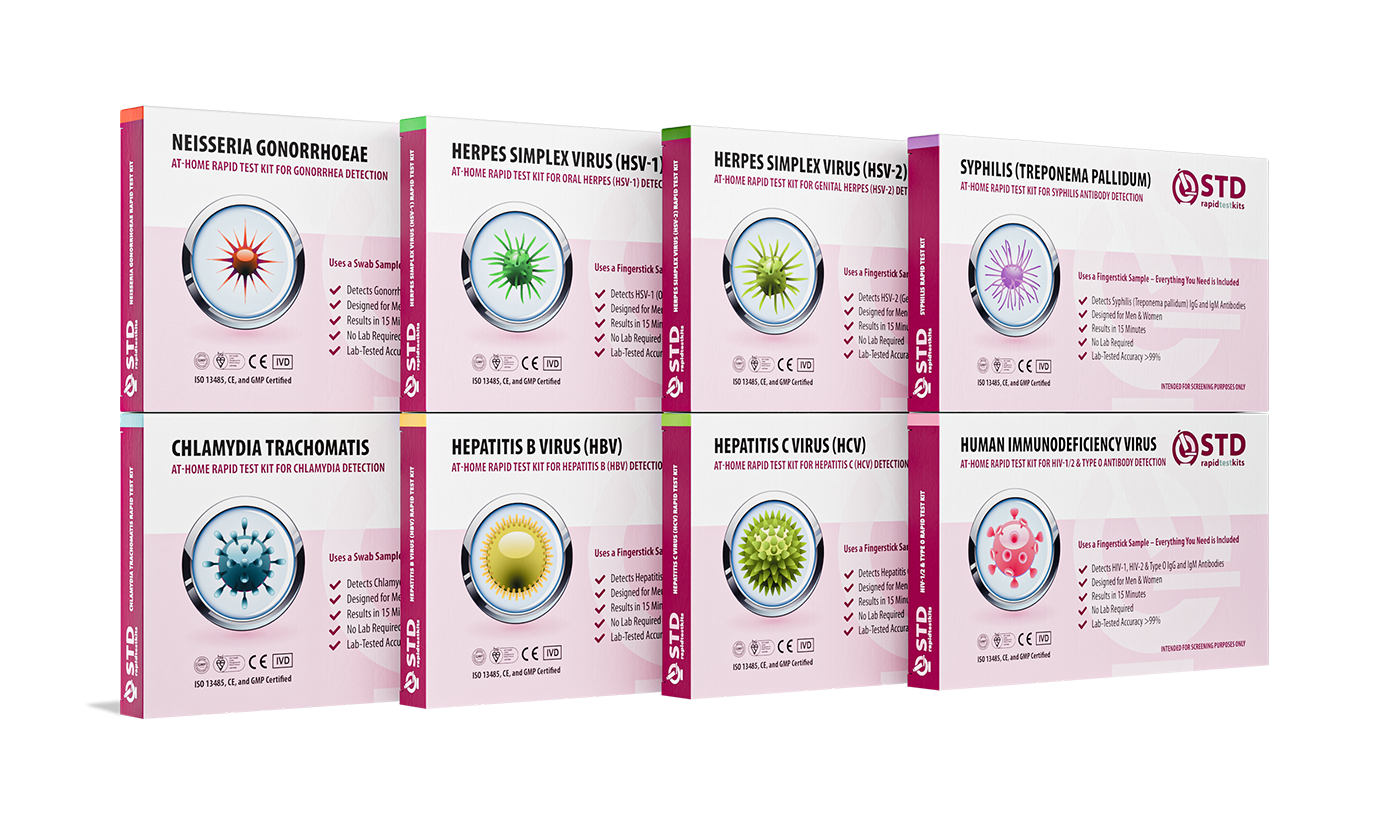
 For Men & Women
 Results in Minutes
 No Lab Needed
 Private & Discreet
For all 8 tests
What Happens If an STD Goes Untreated?
Jules ignored the positive test result for two months. “I felt totally fine,” they said. “I thought maybe it was a false positive. Or just not urgent.” By the time they followed up, the infection had moved upward, causing pelvic inflammatory disease (PID), a condition that can lead to infertility, chronic pain, and pregnancy complications.
Untreated STDs don’t just stay quiet, they escalate. Chlamydia and gonorrhea can damage reproductive organs in people with uteruses, often silently. In men, untreated infections can lead to epididymitis, which causes swelling in the testicles and can affect fertility. Some STDs, like syphilis, can progress through stages, becoming life-threatening if ignored.
Even HPV, which often clears on its own, can lead to cervical cancer in some cases. And HIV? In its early stages, it may cause nothing more than mild flu-like symptoms, or nothing at all. But if it remains undetected and untreated, it weakens the immune system over time and becomes AIDS.
This is why healthcare professionals hammer one message home: symptoms are a terrible indicator. If you’ve had unprotected sex, especially with new or multiple partners, testing is the only way to know. Not guess. Not assume. Know.
“But I Trust My Partner…”: The Role of Assumption in Silent Spread
Avery and her boyfriend had been together for six months. They were exclusive. She trusted him. When she started spotting between periods, her gynecologist tested her “just in case.” She had trichomoniasis. He tested too. Also positive. “We both thought the other had been tested before we got together,” she said, stunned. “Turns out neither of us had.”
This happens more than you think. Partners trust each other. People think they “just know” if someone is clean. But in the absence of regular testing, that trust is built on hope, not knowledge.
The emotional part stings more than the infection. Shame. Guilt. Assumptions. But here’s the truth: the only way to break the cycle is with routine screening. That doesn’t mean you’re dirty or suspicious. It means you’re informed. Responsible. Sex-positive, even. Because asking for a test isn’t an accusation, it’s a form of care.
Want to test discreetly and fast, without stepping into a clinic? You can take charge of your health with an at-home solution. This combo STD test kit checks for multiple infections with one sample, delivered right to your door.
How Long Can You Have an STD Without Knowing?
When Oscar finally got tested for chlamydia, it was after a breakup. Not because of symptoms, just closure. He hadn’t had any unusual discharge or pain, just mild testicular discomfort he blamed on cycling. The test came back positive. “I don’t know how long I’ve had it,” he said, stunned. “It could’ve been six months. Or more.”
That uncertainty isn’t rare. In many cases, there’s no way to know exactly how long an STD has been present unless you’ve had regular, time-stamped screenings. Some people carry infections like HPV for years without ever developing symptoms. Others may contract herpes and not have their first visible outbreak for months, or even years.
Here’s what adds to the confusion: symptoms may come and go. A slight itch. A tingle. A bit of spotting. All of which might be brushed off as friction, stress, or hormones. Then nothing. No reason to test. Until a partner gets diagnosed, or you’re preparing for a new relationship, and suddenly, everything is in question.
So how long can you have an STD without knowing? Realistically:
- Chlamydia: Months or even years
- Gonorrhea: Weeks to months, especially in throat or rectal infections
- Trichomoniasis: Often goes undetected for over a year
- Herpes: Virus may lie dormant; symptoms may never appear
- HPV: Most people clear it within 1–2 years without ever knowing
These are not rare outliers, they're the norm. That’s why many healthcare providers recommend testing every 3–6 months if you’re sexually active with new or multiple partners, or yearly at minimum if you're monogamous but not mutually tested.
What Testing Really Tells You
Let’s be clear: testing doesn’t tell you if you’re “clean.” That language is outdated, shaming, and inaccurate. Testing tells you whether or not a specific infection was detectable in your body at the time the sample was taken. That’s it. It’s a snapshot. Not a moral report card.
STDs have different window periods, the time it takes from exposure to when the infection becomes detectable by a test. That’s why timing matters. Testing too early might miss it. Waiting too long increases the risk of spread.
If you’ve ever wondered “Should I test even though I feel fine?”, the answer is almost always yes. Especially if:
- You’ve had a new sexual partner in the past 3–6 months
- You’ve had unprotected sex
- Your partner has had other partners
- You’ve never been tested before
Testing isn’t about paranoia, it’s about self-knowledge. It’s how you protect your own health and the people you’re intimate with. Think of it like brushing your teeth or checking your blood pressure. It’s routine care, not scandal.
And if walking into a clinic feels overwhelming? You don’t have to. At-home tests are just as accurate when used correctly. STD Rapid Test Kits offers fast, discreet options that give you control over your timeline and your privacy.
People are also reading: Does a Faint Line Mean Positive on a Syphilis Test?
This Isn’t About Fear, It’s About Clarity
Too often, people associate STD testing with fear, cheating, or suspicion. But the reality is far more boring, and more empowering. It’s just part of being an adult. Being sexually active means you might be exposed to infections. That’s not a failure. It’s biology.
Whether you’re casually dating, in a committed relationship, exploring new dynamics, or in a dry spell but planning ahead, getting tested is one of the most grounding things you can do. It brings peace of mind. It clears the fog. It replaces worry with action.
If you’re tired of guessing or waiting, stop. You deserve clarity. You deserve to know.
This at-home combo STD test covers multiple infections in one go. No appointments. No awkward waiting rooms. Just quick, correct answers delivered to your door in private.
Check Your STD Status in Minutes
Test at Home with Remedium6-in-1 STD Test Kit
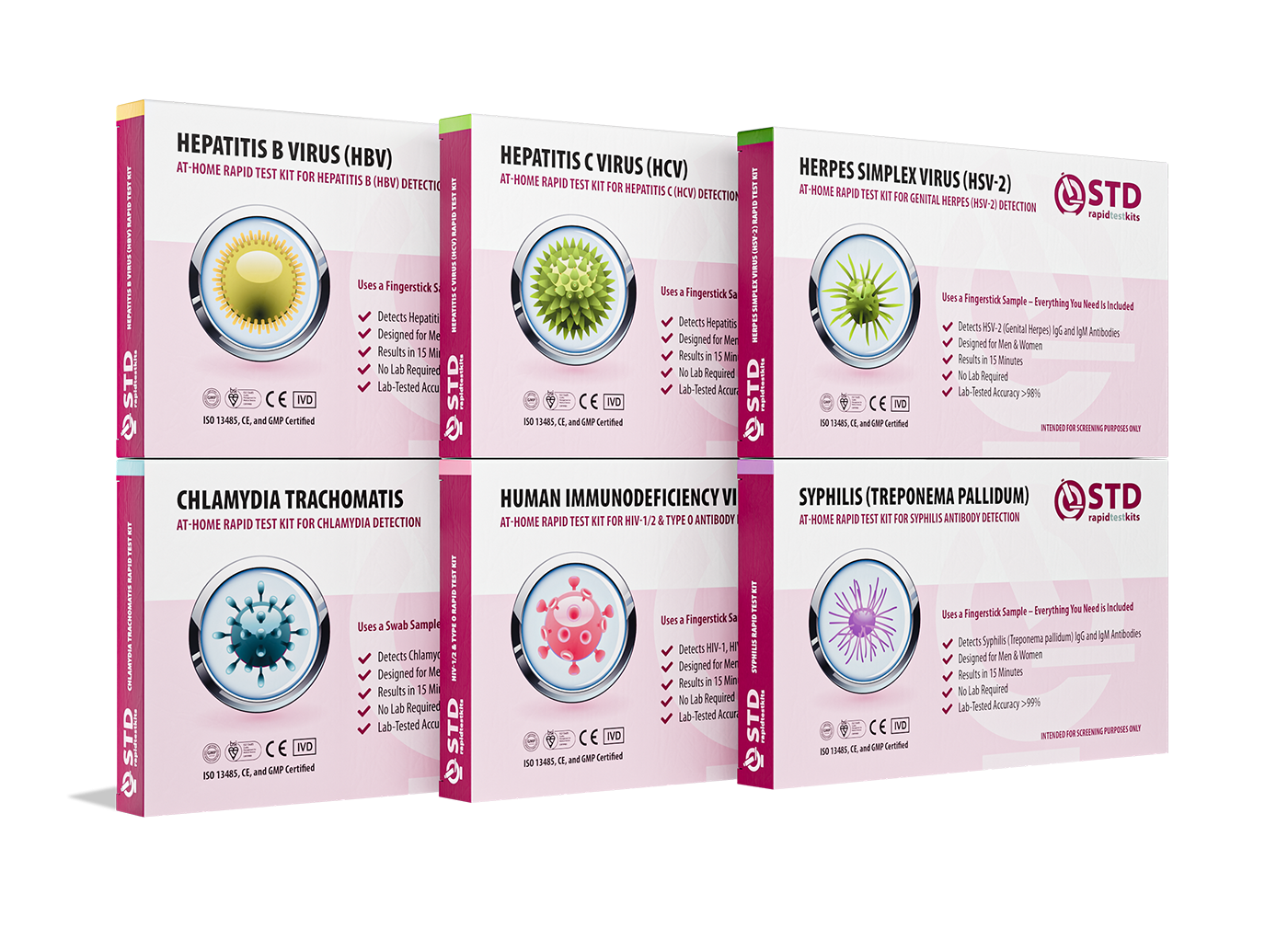 For Men & WomenResults in MinutesNo Lab NeededPrivate & Discreet
Order Now $119.00 $294.00
For all 6 tests
“I Thought It Was Just…”: When Symptoms Are Misread or Ignored
Sometimes it’s not that you feel nothing , it’s that what you feel doesn’t scream “STD.” A little irritation gets blamed on shaving. A bit of spotting gets chalked up to stress. A sore throat after oral sex? Must’ve been the weather. The truth is, even when symptoms do appear, they often get misinterpreted, dismissed, or never even noticed.
Devon had a raw patch on his inner thigh. He figured it was friction from new running shorts. It went away in a few days. Months later, a new partner tested positive for herpes. That patch? Likely a first outbreak. “I didn’t even think to connect it,” he said. “It wasn’t painful or gross. Just looked like I’d rubbed my skin weird.”
For people with vulvas, things get even murkier. Is that itch from a yeast infection? BV? New soap? Sex-related irritation? Many don’t know that trichomoniasis and chlamydia can cause light discharge, subtle itching, or even nothing at all. And when something does feel off, shame often keeps people from checking it out. They wait. They hope it goes away.
This is how people end up carrying STDs without realizing. Not because they’re careless , because the signals are often subtle, and the stigma around testing is so loud. We’ve been taught to look for alarm bells. But most of the time, it’s background noise: a barely-there sensation, an excuse we tell ourselves, or a fear we push down and forget about.
If something feels off , or if you’ve had new or untested partners , don’t wait for the “right” symptom. The safest answer is the simplest one: test. Just in case. Because catching it early changes everything.
FAQs
1. Can you really have an STD and feel totally normal?
Yes , and that’s the scary part. Most people with something like chlamydia or trich don’t get red flags. No weird smells, no pain, no sores. You could feel great, hit the gym, have sex, sleep like a baby... and still be carrying something that can affect your fertility or pass to a partner without warning.
2. Which STDs are most likely to stay silent?
The repeat offenders are chlamydia, gonorrhea, trichomoniasis, and HPV. But even herpes can go unnoticed for years , especially if your first outbreak is mild or misread as an ingrown hair or irritation. The truth? If you’re sexually active, any STD could be hiding quietly. That's why routine testing isn’t just smart , it’s essential.
3. How do people usually find out they have one?
Usually? By accident. Maybe a partner tests positive. Maybe it shows up during a routine gyno exam. Maybe there’s a symptom that finally gets noticed , spotting, a sore, something weird during sex. But a lot of people only learn when they test for unrelated reasons, like starting a new relationship or checking in before pregnancy.
4. If I don’t have symptoms, how can I pass it to someone?
Because symptoms don’t control transmission , the infection does. STDs like herpes can spread through viral shedding when there are no visible sores. Chlamydia and gonorrhea can linger silently in your throat or rectum. Your body might feel normal, but the bacteria or virus can still be doing its thing.
5. How long can someone unknowingly carry an STD?
Weeks. Months. Sometimes years. No exaggeration. People have shown up positive for chlamydia after “dry spells” or stable relationships, only to realize it was there long before. HPV can live in the body for years without showing signs , and may only appear during a pap smear or genital exam.
6. Is it possible to get a negative test but still have an STD?
Yes, especially if you test too soon. That’s called the window period , the time between exposure and when a test can actually detect the infection. If you’re exposed and test right away, you might get a false sense of security. That’s why many people retest after a few weeks to confirm the results.
7. How often should I really be getting tested?
If you’re sexually active with multiple partners, dating casually, or not 100% sure of your partner’s status , every 3 to 6 months is ideal. If you’re in a long-term, tested, monogamous relationship, once a year is a good baseline. But hey, life changes. So should your testing habits.
8. Do condoms protect me from everything?
Condoms are awesome , use them. But they’re not perfect. They reduce risk for most STDs, but skin-to-skin infections like HPV and herpes can still spread from uncovered areas. That’s not a reason to skip them , just a reminder that testing is still part of the equation.
9. Should I really bother testing if I feel totally fine?
Yes. In fact, especially if you feel fine. Because that’s how these infections keep spreading , they stay under the radar. Think of testing like flossing. You don’t do it because your gums hurt; you do it so they won’t.
10. Can I test without going to a clinic and making it awkward?
You can , and thousands of people do every day. With at-home STD tests, you can swab, prick, or pee in the privacy of your own bathroom. No judgment, no waiting room chairs, no awkward small talk with a nurse you’ll never see again. You get control, privacy, and real results.
You Deserve Answers, Not Assumptions
Symptoms aren’t a reliable signal, and silence doesn’t mean safety. If you’re sexually active, the only way to truly know your status is to get tested. Not to prove something to someone else, but to give yourself peace of mind. Knowing is powerful. Acting is freeing.
Don’t wait for symptoms that may never show up. You don’t need to feel sick to take your health seriously. This combo STD home test makes it easy to get answers, fast.
How We Sourced This Article: We combined current guidance from leading medical organizations with peer-reviewed research and lived-experience reporting to make this guide practical, compassionate, and accurate.
Sources
1. About Sexually Transmitted Infections (STIs) | CDC
2. Sexually Transmitted Infections Prevalence, Incidence, and Cost Estimates | CDC
3. Sexually Transmitted Infections | WHO
4. Asymptomatic Sexually Transmitted Diseases | PubMed
5. Sexually Transmitted Disease Symptoms | Mayo Clinic
6. Addressing STI Epidemics: Integrating Sexual Health | NCBI Bookshelf
About the Author
Dr. F. David, MD is a board-certified infectious disease specialist focused on STI prevention, diagnosis, and treatment. He blends clinical precision with a no-nonsense, sex-positive approach and is committed to expanding access for readers in both urban and off-grid settings.
Reviewed by: Lauren R. Nelson, NP, AAHIVS | Last medically reviewed: December 2025
This article is just for information and doesn't take the place of medical advice.


