
Published: October 2025 | Last updated: May 2026 | Editorial review and quality control: Martina N.
A faint second line on a rapid syphilis test sits in an awkward middle zone. It's there, but barely visible. People often dismiss it as a smudge, a shadow, or a trick of bathroom light.
The short version: on virtually every rapid lateral-flow syphilis cassette sold for home use, any visible line in the test (T) area counts as a reactive result, even when it's pale enough that you have to tilt the cassette to spot it. The darkness of the line reflects antibody quantity. The presence of the line is what tells you the test detected something.
This guide walks through what that actually means, why faint lines show up, how to read the cassette correctly, when to retest at home, and how to confirm a reactive result with a clinic blood draw before any treatment decision.
Key Takeaways
- Any visible line in the T zone on a rapid syphilis cassette counts as a positive (reactive) result, no matter how faint. Line darkness reflects antibody quantity, not whether antibodies were detected.
- A reactive home test should be confirmed at a clinic with a two-step blood test (one treponemal and one non-treponemal). Treponemal antibodies typically persist for life, so confirmation distinguishes an active infection from a treated past one.
How a rapid syphilis test works
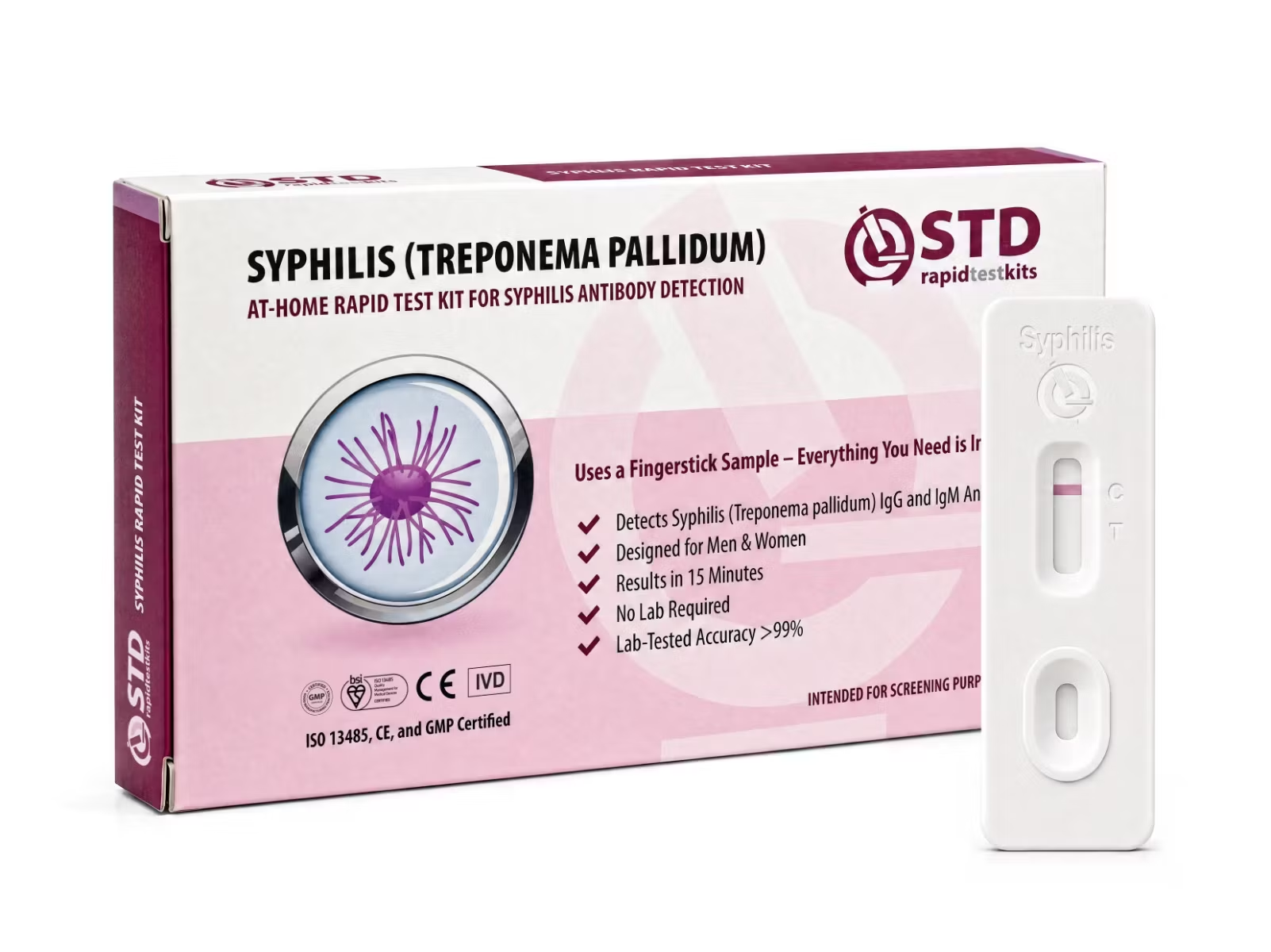
Rapid syphilis cassettes are lateral-flow immunoassays. The strip inside the plastic housing carries antigens (small protein fragments) from Treponema pallidum, the bacterium that causes syphilis. When you add a few drops of blood and buffer to the sample well, the fluid wicks across the strip. Any antibodies your immune system has produced against T. pallidum bind to those antigens and get captured at the test (T) line, where a colored particle attached to the antibody makes a visible mark.
Two lines develop on a valid test. The control (C) line always appears once fluid has flowed past the test zone; it is the cassette's self-check. The test (T) line appears only when antibodies to T. pallidum are present in your sample.
Most home rapid cassettes detect treponemal antibodies, which the immune system starts producing in the weeks after infection. According to the CDC's 2021 STI Treatment Guidelines, treponemal antibodies usually persist for life, regardless of whether the infection was treated. They tell you a person has had syphilis at some point; they don't, on their own, tell you whether the infection is active right now.
That single fact, treponemal antibodies sticking around indefinitely, is why home rapid tests are screening tools rather than diagnostic ones. The follow-up clinic test, RPR or VDRL, measures a different antibody type whose levels rise during active infection and fall after successful treatment.
C line: always appears on a valid test. It is the cassette's self-check.
T line: appears only when antibodies to T. pallidum are detected.
No C line means the test did not run properly, even when a T line is visible. Discard and retest.
What a faint T line actually means
Once any pigment shows up in the T zone within the manufacturer's valid read window, the cassette has detected antibody binding. That's the binary the test is built to deliver: either antibodies attached to the capture line, or they didn't.
Home pregnancy tests work on a similar logic, which is why people often compare the two. A faint hCG line on a pregnancy test still means pregnant; it just signals a lower hormone level (often because of very early pregnancy). On a syphilis cassette, a faint T line still means reactive; it just signals a lower antibody quantity at the moment of testing.
Antibody quantity can sit at the low end for several legitimate reasons:
- The infection is recent and your body is still ramping up antibody production.
- The infection was treated months or years ago, antibody levels have dropped, but enough remain to register.
- The sample volume was on the low end of what the kit's instructions ask for.
- You're in the late latent or tertiary stage, where some treponemal antibody assays show weaker reactivity.
None of those reasons make the result wrong. They explain why the line came out faint. Check the C line and the read window before deciding what you actually saw.
Does a faint line on a rapid syphilis test mean positive?
Yes. On a lateral-flow syphilis cassette, any visible line in the T zone, no matter how pale, counts as a reactive (positive) result. Line intensity reflects antibody quantity, not whether antibodies were detected. Confirm with a clinic blood draw before starting treatment.
Why faint lines show up on syphilis cassettes
Five mechanical and biological reasons account for most faint-line readings. Sorting through them helps you decide whether to retest the same day or wait for clinic confirmation.
- Early infection with a low antibody titer. Treponemal antibodies typically cross the detection threshold somewhere in the third to sixth week after exposure; the curve is gradual, not a switch. During the early portion of that window, antibody levels register on the test but haven't yet built up to the level that produces a dark T line.
- Treated past infection with residual antibodies. Treponemal antibodies usually stay positive for life. If you were treated for syphilis years ago, a rapid test can still show a faint line today. Non-treponemal lab tests (RPR or VDRL) are what differentiate past from current infection.
- Storage or expiration issues. Heat, humidity, or an expired kit can degrade the reagent that produces the colored line. The control line may still appear, but the T line comes out weaker than it should.
- Sample or buffer volume. Adding too little blood to the sample well, or skipping a buffer drop, lowers the amount of antibody that reaches the capture zone. Line darkness drops with it. This is the easiest variable to control: follow the manufacturer's drop count exactly.
- Late-stage or treated latent syphilis. In late latent or tertiary stages, antibody response patterns shift. Some treponemal screening assays show weaker reactivity in these cases, which is one reason CDC laboratories use a reflex algorithm rather than relying on a single test.
Reading the cassette correctly
Before you decide what a result means, make sure the cassette is being read under the conditions the manufacturer designed for. Three things matter most:
- Lighting. Put the cassette on a flat surface in direct, neutral light. Bathroom mirror light, dim hallway light, or the glow of a phone screen all distort how a faint line looks. A window during daytime or a bright desk lamp works best.
- Timing. Most rapid syphilis tests ask you to read the result between 10 and 20 minutes after applying the sample. Read too early and a true T line may not have developed. Read too late (past 30 minutes for most kits) and you risk a dry-line artifact, a faint band from buffer evaporation rather than actual antibody binding.
- Cassette orientation. Lay the cassette flat. Tilting it during development can pool fluid unevenly and create patchy line darkness.
If you've read inside the right window, in adequate light, on a flat surface, and you can see anything in the T zone, you have a reactive result. The common line patterns are summarized below.
| What you see | What it means | What to do next |
|---|---|---|
| Clear C line and clear T line | Reactive (positive) | Confirm with a clinic blood test before starting treatment |
| Clear C line and faint T line | Still reactive (positive) | Treat the same as a clear positive, get clinic confirmation |
| Clear C line, no T line at all | Non-reactive (negative) | If exposure was recent, retest in three to six weeks |
| No C line (with or without T line) | Invalid test | Discard, run a new cassette following instructions exactly |
| Line in T zone only after 30+ minutes | Likely artifact, not a true positive | Discard, retest with a fresh cassette inside the read window |
The syphilis window period
Window period is the gap between exposure and the point at which a test can reliably detect infection. For rapid antibody-based syphilis tests, the window is longer than people expect. Antibodies don't appear immediately; the immune system has to recognize the bacteria, mobilize, and produce enough antibody to clear the detection threshold.
In practice, treponemal antibody tests typically start to register a positive result around three weeks after exposure, with most people seroconverting by the six-week mark. A small share of people take longer, which is why a follow-up test at twelve weeks is the standard public-health recommendation when an earlier result was negative but exposure risk is recent. MedlinePlus notes that antibodies take time to develop, which is why a negative result taken too soon after a possible exposure may need to be repeated.
| Time since exposure | Likely antibody status | What a rapid test usually shows |
|---|---|---|
| 0 to 14 days | Below the detection threshold for most assays | Likely non-reactive; possible false negative |
| 15 to 30 days | Antibodies beginning to develop in many people | Faint T line possible; non-reactive still possible |
| 30 to 90 days (one to three months) | Detectable antibodies in the great majority of infected people | Reactive results are reliable; clear T line typical |
| After treatment (months to years) | Treponemal antibodies usually persist for life | Reactive on a rapid test even when infection is cured |
Why confirmation at a clinic matters
The post-treatment row above is the one that catches people off guard. If you were treated for syphilis at any point in your life, your treponemal antibodies almost certainly still register on a rapid cassette today. That's not a failure of treatment; it's how the immune system works. A clinic's non-treponemal test is what differentiates a cured past infection from a current active one.
The CDC's 2024 laboratory recommendations for syphilis testing describe a two-step algorithm used by US clinical labs: a treponemal test (which your home cassette is doing) followed by a non-treponemal test (RPR or VDRL), or the reverse order. The combination is what tells the clinician whether you have an active untreated infection, a treated infection, or a biological false positive.
The non-treponemal test measures cardiolipin antibodies, which rise during active infection and fall after successful treatment. A reactive treponemal test paired with a high non-treponemal titer points toward active untreated infection. A reactive treponemal test with a negative or very low non-treponemal titer usually points toward a past treated infection, especially when you remember being treated.
A confirmation visit typically involves a venous blood draw (different from a fingerstick), one treponemal test such as TP-PA or EIA, one non-treponemal test such as RPR with a titer, and a discussion of treatment if both come back consistent with active infection. Standard treatment for primary, secondary, and early latent syphilis is one intramuscular injection of benzathine penicillin G; later stages require three weekly injections.
Treponemal antibodies usually persist for life and are not a measure of treatment response. Non-treponemal antibody titers usually correlate with disease activity.
What if the test is faintly positive but you feel fine?
A reactive result without symptoms is one of the most common ways syphilis is caught, not the exception. The infection has four stages and three of them can be silent.
The primary stage typically produces a painless ulcer (a chancre) at the site of bacterial entry, on the mouth, genitals, or rectum, that heals on its own in three to six weeks. People who don't notice the chancre, or who attribute it to something else, move into the secondary stage without realizing they were ever infected.
Secondary syphilis can produce a body-wide rash, including the palms and soles, low-grade fever, sore throat, fatigue, swollen lymph nodes, and patchy hair loss. These symptoms usually fade within weeks even without treatment. The infection then enters the latent stage, where it can sit for years with no outward signs while still being transmissible during the first year and damaging organs over a longer horizon.
A meaningful portion of US syphilis diagnoses come from routine screening rather than symptomatic presentation. The absence of symptoms is not evidence the test is wrong. Latent syphilis is, by definition, asymptomatic, and the only way to detect it is through a blood test of the kind you just ran.
If you are pregnant or planning to become pregnant, a reactive result warrants same-day clinic contact. Congenital syphilis is entirely preventable with timely treatment but carries a narrower intervention window than in non-pregnant adults.

Next steps: confirmation, treatment, and partner notification
After a faint or clear reactive home test, the sequence that protects both you and the people you've been intimate with is straightforward.
- Book a clinic visit within a few days. Public health departments, sexual-health clinics, primary-care offices, and many urgent-care clinics can run the two-step blood test the same day. Tell the booking line you've had a reactive syphilis screen so the right test is ordered.
- Don't start any antibiotics on your own. Self-medicating with leftover penicillin or a friend's prescription can blunt the lab tests and complicate confirmation. Wait for the clinic.
- Pause sexual contact until you have lab results. If lab confirmation comes back consistent with active infection and you're treated, the CDC recommends abstaining from sex until any chancre or rash has fully healed and at least seven days after the last dose of treatment.
- Tell recent partners. Sex partners from the past three months should be notified for primary syphilis, six months for secondary, and one year for early latent, so they can also test. Public health departments offer anonymous partner-notification services in most US states if you'd rather not have the conversation directly.
None of this is punishment. Syphilis is curable when caught at any stage, and the cure is a small number of injections. Catching it from a home test before it produced symptoms is, in real terms, the best-case scenario for an infection that can otherwise progress quietly for years.

When a faint line can be misleading
The faint-line-counts-as-positive rule has narrow exceptions. None of them mean you should ignore a reactive result, but they do explain why home tests aren't diagnostic on their own.
Read past the time window. Almost every lateral-flow cassette can develop a faint shadow in the T zone after 30 to 60 minutes, even on a sample with no antibodies. Buffer evaporates, residue pools, and what looks like a thin pink line is sometimes a dry-line artifact. The 10 to 20 minute window printed on the instructions exists because that's where the test is calibrated.
Biological false positives. A small percentage of treponemal screening tests come back reactive in people who don't have syphilis, often because of cross-reactive antibodies from autoimmune conditions, other spirochete infections, or recent immunizations. This is uncommon, but it's part of why the two-test confirmation algorithm exists.
An expired or improperly stored cassette. Test reagents degrade. A cassette kept in a hot car or used past its expiration date can show ghost lines that aren't real reactivity. Check the printed expiration date and storage temperature range before reading anything into a faint result from a kit that has been sitting in a bag, glove compartment, or bathroom cabinet long-term.
For all three of those scenarios, the answer is the same as for a real faint positive: confirm at a clinic with the two-step blood test.
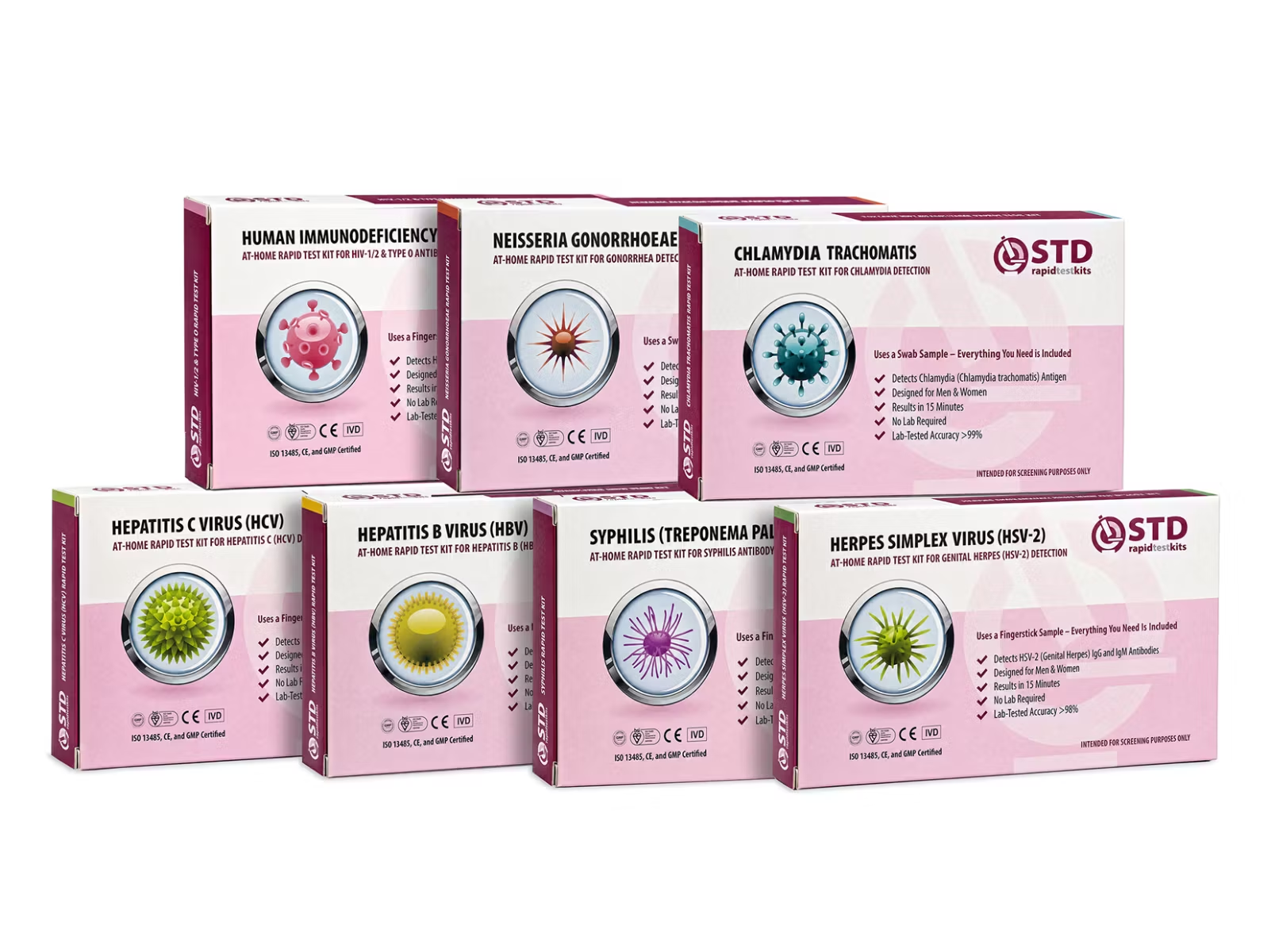
This site sells at-home rapid test kits, including the broader STI panel below. Products are recommended based on fit for the reader's concern, not commercial benefit.
FAQs
- What's the difference between a treponemal and a non-treponemal syphilis test?
- A treponemal test, including the home rapid cassette and the lab's TP-PA or EIA, detects antibodies specific to Treponema pallidum, the bacterium that causes syphilis. Those antibodies usually persist for life once you've had the infection, so a positive treponemal test confirms exposure at some point but doesn't distinguish active from treated. A non-treponemal test (RPR or VDRL) measures cardiolipin antibodies, which rise during active infection and fall after successful treatment. The two together are how a clinic determines whether you have active untreated syphilis, a treated past infection, or a biological false positive.
- How faint is too faint to count?
- There's no darkness threshold below which the T line stops counting. The chemistry is binary by design: either antibodies bound at the capture line, or they didn't. Any color change you can see in the T zone, in adequate lighting and inside the manufacturer's read window, registers as a reactive result. The one exception is a line that appears only after the read window has closed (often past 30 minutes); those are usually buffer evaporation artifacts rather than true antibody binding. Read the cassette inside the printed window, on a flat surface, in good light, and trust what you see.
- Could a faint positive mean I had syphilis years ago and was treated?
- Yes, and clinics tell past from current by running a non-treponemal test alongside the treponemal one. Non-treponemal titers (RPR or VDRL) fall after successful treatment, while treponemal antibodies typically persist for life. A reactive treponemal home test paired with a negative or very low non-treponemal titer at the clinic usually points to a treated past infection rather than an active one.
- I just had a possible exposure last week and the test was negative. Am I in the clear?
- Not yet. Rapid syphilis tests detect antibodies, and those typically take three to six weeks to reach reliably detectable levels after exposure, with some people taking up to twelve weeks. Testing inside the first two to three weeks often produces a false negative. Retest at six weeks post-exposure, and again at twelve weeks if you want a definitive negative.
- What if I see a line in the T zone but no line in the C zone?
- The test is invalid. The control line is the cassette's self-check; without it, you can't trust anything else on the strip. Discard the cassette and run a new one, paying close attention to sample volume, buffer drops, and the read window. If the second cassette also shows no C line, switch to a different kit or visit a clinic.
- Can a faint positive be a false alarm?
- It's possible, but uncommon. Biological false positives happen in a small percentage of treponemal screening tests, often due to autoimmune conditions, other spirochete infections, or recent immunizations. Expired or heat-damaged cassettes can also produce ghost lines. The two-step lab algorithm at a clinic is specifically designed to sort artifact from real reactivity.
- Should I tell my partners about a faint positive before I get confirmation?
- There's no single right answer, but waiting indefinitely for confirmation before pausing new sexual contact isn't the safest choice. A reasonable middle path: pause new sexual contact until you have lab results, get the confirmation test promptly, and notify recent partners once the result is in. Public health departments offer anonymous partner-notification services if you'd rather not have the conversation directly.
- How long should I wait for treatment after a positive home test?
- Don't start treatment based on the home test alone. Book a clinic appointment within a few days for the two-step confirmation blood test. If both tests come back consistent with active infection, standard treatment is a single intramuscular injection of benzathine penicillin G for primary, secondary, or early latent syphilis. Later stages need three weekly injections.
How we sourced this article: our writing draws on current advice from the most prominent public health and medical organizations, then translates that guidance into the situations people actually face when reading a faint line at home. Primary references include the CDC 2021 STI Treatment Guidelines, the CDC's 2024 laboratory recommendations for syphilis testing, the CDC's syphilis fact sheet, the American Sexual Health Association's syphilis education materials, and MedlinePlus's syphilis test guide. The full source list is below.
- U.S. Centers for Disease Control and Prevention. 2021 STI Treatment Guidelines, syphilis section, including treponemal versus non-treponemal test interpretation, partner-notification lookback windows, and recommended treatment regimens.
- U.S. Centers for Disease Control and Prevention. 2024 Laboratory Recommendations for Syphilis Testing, United States. Describes the traditional and reverse-sequence two-step algorithms used in clinical labs.
- U.S. Centers for Disease Control and Prevention. Syphilis fact sheet and topic landing page covering stages, transmission, screening, and treatment.
- American Sexual Health Association. Understanding syphilis: stages, symptoms, testing, and partner notification.
- MedlinePlus (U.S. National Library of Medicine). Syphilis Tests: what the treponemal and non-treponemal tests measure, how the lab uses them together, and why timing matters for accurate results.
