
Published: November 2025 | Last updated: May 2026 | Editorial review and quality control: Martina N.
There is a particular kind of confidence that fails people quietly. You meet someone, they look healthy, you trust what you see, and a few weeks later you are staring at a positive test result wondering how it happened. The piece nobody covers in sex ed is that most sexually transmitted infections are invisible. Chlamydia, HPV, asymptomatic gonorrhea, early-stage HIV, herpes between outbreaks. They live in bodies that look fine, in people who feel fine, in partners who would tell you if they actually knew. So this article is the answer to the question you might have asked a search engine in private: can you tell if someone has an STD just by looking? Short answer, no. Long answer, everything below, including what to do instead of looking.
Key Takeaways
- Most common STIs cause no visible signs in early or chronic stages, so visual inspection misses real exposures and creates false confidence.
- The reliable signal is testing on a known cadence; for sexually active adults with new or multiple partners, that is roughly every 3 to 6 months per CDC screening guidance.
Why You Cannot See Most STIs
The reason visible inspection fails is biological. Many STIs colonize tissue inside the body, where the surface looks completely normal. Chlamydia infects cervical, urethral, rectal, and pharyngeal cells. Gonorrhea behaves the same way. HPV lives in skin cells across the genital and oral tract, often without producing visible warts. HIV replicates in immune cells that show nothing on the skin for years.
The CDC's STI screening guidance is built on the assumption that most infections are silent. According to the CDC's STI overview pages, most people with chlamydia have no symptoms at all. Most genital HPV infections clear without ever producing a visible wart. Most cases of pharyngeal gonorrhea (the kind that lives in the back of the throat) cause nothing the carrier or their partner would notice.
Symptoms, when they do show up, are usually vague and easy to misread. A clear discharge that you might attribute to arousal or normal cycle changes can be a chlamydia sign. Mild peeing discomfort that you would blame on dehydration can be gonorrhea. A scratchy throat after oral sex looks like every other sore throat in February.
These infections live in tissue you cannot see during a partner inspection: chlamydia (cervix, urethra, rectum, pharynx), gonorrhea (same sites), HPV (genital and oral skin cells), HIV (immune cells), and herpes (nerve roots, with intermittent skin shedding). External appearance tells you nothing about whether any of these are present.
What the Public-Health Data Says
The numbers behind the visible-versus-invisible question are not new, and they are not subtle. The World Health Organization estimates that more than one million curable sexually transmitted infections are acquired every day worldwide among people aged 15 to 49. Tens of millions of Americans carry an STI at any given time, per CDC surveillance data, and most do not have symptoms.
The pattern by infection type:
- Chlamydia: most cases produce no symptoms in either sex, per the CDC, which is why universal annual screening is recommended for sexually active women under 25 and for older women with risk factors.
- Gonorrhea: the urethral form often has signs, but pharyngeal and rectal infections rarely do. Pharyngeal infections are common in people who give oral sex.
- HPV: most infections are cleared by the immune system without symptoms within two years; only a fraction produce visible warts or progress to cancer-causing changes.
- Genital herpes (HSV-2): most carriers are unaware, and transmissions can occur during periods with no visible sores at all.
- HIV: an early flu-like illness occurs in some new infections, but it is vague and frequently dismissed as a normal viral illness. Without testing, people can carry HIV for years before any sign.
- Syphilis: the primary chancre is painless and often appears in places people do not see (cervix, anus, mouth), then heals on its own while the infection moves to a later stage.
Can you tell if someone has an STD just by looking?
No. CDC and WHO data both indicate that most chlamydia, HPV, asymptomatic gonorrhea, and many herpes infections produce no visible signs that a partner could catch by inspection. Symptoms, when they appear, often look like razor burn, yeast infection, normal discharge, or a mild sore throat. The reliable answer comes from testing on a regular schedule, typically every 3 to 6 months for sexually active people with new or multiple partners.
What Symptoms Look Like When They Do Appear
When STI symptoms do show up, they rarely match what people expect from public-health posters. Real-world signs are subtle, mimic everyday skin reactions, and often appear in places that are not visible during sex.
For nearly every infection in the table below, symptoms are absent in most cases. The visible signs column is what you might see when symptoms exist, not what to expect by default.
| STI | Visible Signs (When Present) | Asymptomatic Rate |
|---|---|---|
| Chlamydia | Sometimes clear discharge or mild burning when peeing | Most cases in women, around half in men show no symptoms |
| Gonorrhea | Thick discharge, sore throat (oral), redness or itching | Pharyngeal and rectal cases very often show no visible signs |
| Herpes (HSV-1, HSV-2) | Tingling, small blisters, dry cracks, burning sensation | Most carriers can transmit without an active outbreak |
| HPV | Warts (rarely painful), but commonly no signs at all | Most genital HPV infections are asymptomatic |
| HIV | Brief flu-like illness in early stage (often missed) | Years can pass with no visible signs |
| Syphilis | Painless chancre, then later body-wide rash | Primary chancre often unnoticed; latent stage has no symptoms |
Herpes and Asymptomatic Shedding
Herpes is the infection people search for hardest in this category. The question "can you tell by looking" comes up about herpes more than any other STI, and the answer is the most clearly no.
Both HSV-1 (typically oral, but increasingly genital) and HSV-2 (typically genital) shed virus from the skin even between visible outbreaks. This is called asymptomatic viral shedding, and it is extremely common. The CDC's herpes fact sheet notes that most people with genital herpes have either no symptoms or symptoms so mild they are mistaken for another skin condition, and that the virus can be released and transmitted between outbreaks. The skin looks completely normal, the carrier feels fine, and the virus can still spread.
This has two consequences. First, no amount of inspection can rule out herpes. A clean-looking penis, a clean-looking vulva, a healthy-looking mouth: none of those exclude the virus. Second, condoms reduce but do not eliminate herpes transmission, because shedding can occur on skin areas a condom does not cover.
What does help: knowing your partner's serostatus (whether they test positive or negative for HSV-2 antibodies on a blood test), suppressive antiviral medication for known carriers (which reduces viral shedding), and avoiding contact during prodromal symptoms (early warning signs such as tingling, itching, or burning before a visible sore appears) or visible outbreaks.
Many STIs have no symptoms or may only cause mild symptoms, so people can have an infection but not know it.
Oral and Throat: The Hidden Sites
Oral sex transmits more than people assume. Chlamydia and gonorrhea both colonize the pharynx, the back of the throat, where they typically cause no symptoms at all. Per CDC's STI screening guidance, pharyngeal gonorrhea is common in sexually active populations who report oral sex with multiple partners, and the infection is usually only detected through targeted screening rather than symptom-driven testing.
Syphilis chancres can appear in the mouth or on the tonsils, where they look like canker sores or tonsil stones and frequently get dismissed. The chancre is painless, which means it does not trigger a doctor visit. By the time the rash of secondary syphilis appears weeks later, the original sore has healed and the connection is rarely obvious.
HSV-1 transmits readily during oral sex. A cold sore (or even an asymptomatic shedding moment) on one partner's lip can become genital HSV-1 on another partner's body. This route is responsible for a growing share of new genital herpes diagnoses.
If you have had oral sex with a new or untested partner, a comprehensive STI panel should include throat-relevant infections, not only blood and genital swabs. At-home rapid lateral-flow tests cover the blood-based and antibody-based components quickly; throat swabs typically require a clinic visit or a mail-in lab kit.

Why We Default to Visual Judgment
There is a reason smart, sexually experienced adults still rely on visual inspection. Several reasons.
The brain runs a danger-detection routine on new partners. It scans for cleanliness, illness cues, age, hygiene. This routine evolved for visible threats: a partner with chickenpox, an obvious fever, an open wound. It does not pick up on the molecular reality of asymptomatic chlamydia. The instinct gets a vote it should not get.
Asking about STI testing creates social friction. It signals distrust, or it disrupts a moment where the vibe is otherwise good. People who would be perfectly capable of having the conversation in calmer settings skip it because the timing feels wrong. Then they trust their eyes instead.
Stigma still treats STIs as moral indicators. Asking "have you been tested" can feel like asking "are you the kind of person who could have an infection," which most people would prefer to assume their partner is not. The shortcut is to look for visible markers of "the kind of person who has STIs," which is both inaccurate and a form of stigma in itself. STIs are not a character trait. They are an exposure outcome that affects an enormous range of careful, healthy, well-meaning people.
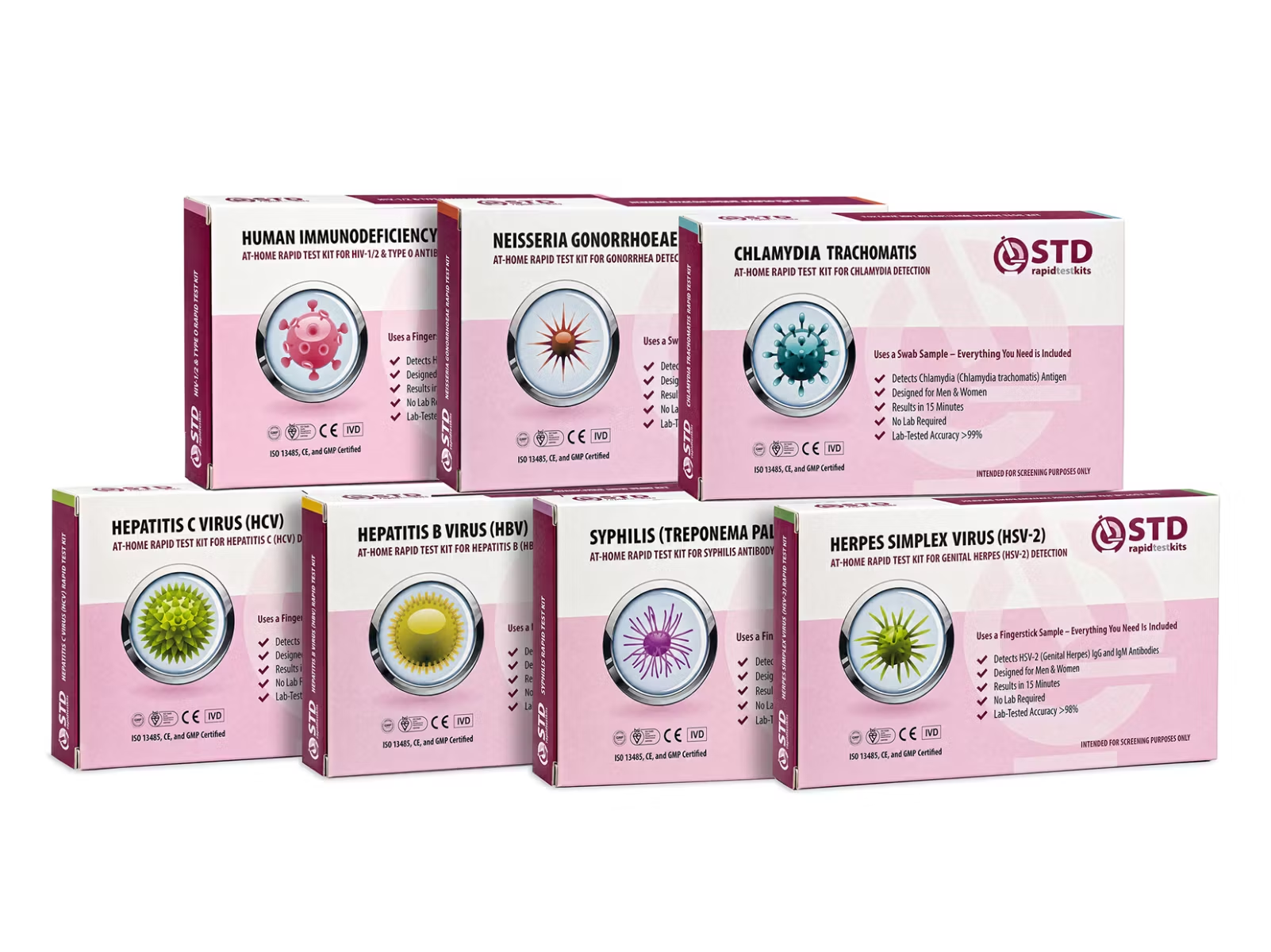
What helps is reframing testing as routine maintenance, the same category as dental cleanings or annual checkups. Most clinics screen every sexually active person who walks in, and at-home rapid kits remove the friction of clinic visits entirely. The site that hosts this article sells rapid at-home test kits; the panel below is one of them.
When Real STI Symptoms Look Like Everyday Issues
Even when an STI does produce symptoms, they routinely get attributed to other causes. The overlap between STI signs and ordinary irritations, infections, and cycle-related changes is wide enough that misdiagnosis is the rule rather than the exception, especially for self-diagnosis.
The table below lists common symptoms and the everyday explanations that often get them dismissed. None of the everyday explanations are wrong as possibilities; the same sign can be either, and a swab or blood test is what tells them apart.
| Symptom | Common Misreading | STIs It Could Be |
|---|---|---|
| Red, irritated skin in the genital area | Shaving rash, friction burn | Herpes, syphilis |
| Clear or white discharge | Normal arousal fluid, yeast infection | Chlamydia, gonorrhea |
| Itching or tingling in genital skin | Allergic reaction, eczema | Trichomoniasis, herpes |
| Sore throat after oral sex | Common cold, strep | Gonorrhea, chlamydia, HSV |
| Spotting between periods | Hormonal shift, stress | Chlamydia, gonorrhea |
| Painless sore that heals on its own | Ingrown hair, minor cut | Primary syphilis |
The STIs That Stay Silent for Years
A subset of common STIs produces essentially no symptoms across long stretches of infection. These are the ones that move quietly through partner networks for years before any clinical signal.
HPV is the leader of this category. The CDC notes that nearly all sexually active people will get HPV at some point, and most clear it without ever knowing they had it. The minority of HPV infections that do not clear can progress to cervical, anal, oropharyngeal, or other cancers. The only way to catch the high-risk strains is through cervical screening (Pap and HPV co-testing) or, more recently, dedicated HPV self-tests.
HIV produces an acute flu-like illness in roughly half to two-thirds of new infections, but it is nonspecific and often dismissed. After that initial window, untreated HIV can sit asymptomatic for years before progressing. Modern fourth-generation HIV tests detect infection by about 4 to 6 weeks after exposure, well before any symptom would appear.
Trichomoniasis is curable with a single round of antibiotics, but most male carriers and a significant minority of female carriers have no symptoms. WHO classifies it among the most common non-viral STIs worldwide.
Syphilis follows its multi-stage pattern: a primary chancre that heals on its own, a secondary stage with a body-wide rash that can be mistaken for many other conditions, then a long latent period of no symptoms followed (in untreated cases) by tertiary disease decades later.
Typical Silent-Period Lengths
- HPV: months to years; most infections clear silently within two years.
- HIV: a brief flu-like phase in some new infections, then years of no symptoms without treatment.
- Trichomoniasis: indefinite for most male carriers; a significant share of female carriers also have no symptoms.
- Syphilis: weeks for the primary chancre, then a latent stage that can last years before later complications.
Why "I'm Clean" Doesn't Mean Anything
The word "clean" is the most common shorthand in STI conversations, and it is almost always wrong on two counts.
First, "clean" usually means "I do not have visible symptoms" rather than "I tested negative on a comprehensive panel within the last few months." A partner who says they are clean often has not been tested in a year or longer, has not been tested for the full range of common STIs (HPV, herpes, and trichomoniasis frequently are not included in standard panels), or was tested before the most recent potential exposure.
Second, the word itself reinforces the framing that people with STIs are "dirty." That framing is part of the reason testing rates are lower than they should be. STIs affect tens of millions of Americans at any given time per CDC surveillance data.
A more useful pair of questions, when discussing testing with a new partner, replaces vague reassurance with concrete information you can act on. If the answer is "annual physical last spring," the panel almost certainly did not include HSV-2 antibodies, HPV self-test, or pharyngeal/rectal swabs. If the answer is "I tested in March for HIV, syphilis, chlamydia, and gonorrhea," you have something specific to work with.
1. When were you last tested? A test from before the most recent exposure tells you very little about what is happening now.
2. Which infections did the panel cover? Standard panels often skip HSV-2 antibodies, HPV, trichomoniasis, and pharyngeal/rectal swabs. Knowing what was checked is more useful than knowing that something was checked.
How Often Should You Test?
Testing cadence is not one-size-fits-all, but it follows a predictable pattern based on partner exposure. Drawing on CDC screening guidance:
- Sexually active people under 25, or anyone with new or multiple partners: HIV, chlamydia, and gonorrhea screening at least once a year, more often (every 3 to 6 months) for higher-risk patterns.
- Pregnant people: HIV, syphilis, hepatitis B, and chlamydia at the first prenatal visit.
- Men who have sex with men: HIV, syphilis, chlamydia, and gonorrhea every 3 to 6 months for those with multiple or anonymous partners.
- People with a new partner: a full panel about 4 to 6 weeks after the start of the relationship covers most window periods.
Window periods are the catch. Most rapid antibody tests have a window of a few weeks to a few months between exposure and reliable detection. A test taken three days after a possible exposure will often miss an early infection. The CDC publishes window-period charts for each infection; in practice, a screen at 4 to 6 weeks plus a confirmatory screen at 3 months covers nearly every common STI's reliable detection window.
Testing every 3 to 6 months for sexually active adults with multiple partners is roughly the equivalent of brushing your teeth: not exciting, but the maintenance schedule that keeps everything functioning.
What a Comprehensive Panel Covers
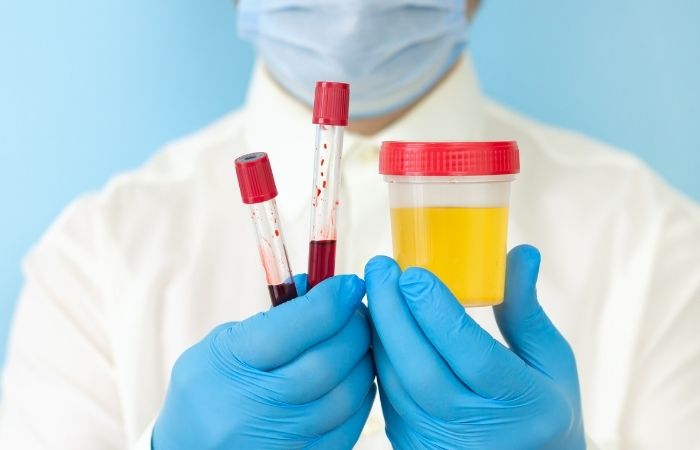
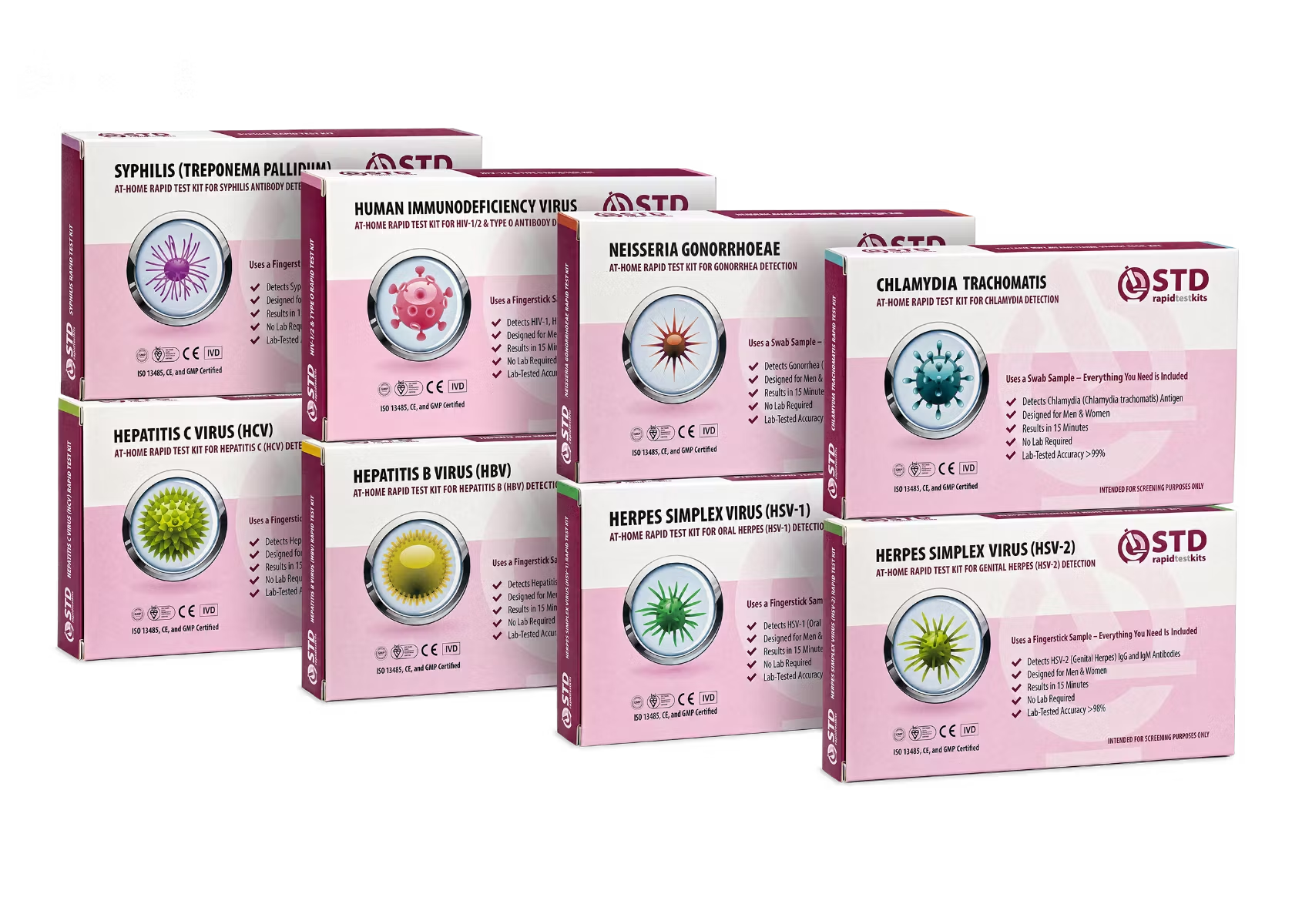
A "full STI panel" is not a standardized term. Different clinics, home test kits, and insurance plans cover different infections. A panel that earns the "comprehensive" label should screen for at least:
- HIV (fingerstick blood, antibody/antigen)
- Syphilis (blood, antibody)
- Hepatitis B (blood, antibody/antigen)
- Hepatitis C (blood, antibody)
- Chlamydia (genital swab, or first-catch urine for clinic NAAT)
- Gonorrhea (genital swab, or first-catch urine for clinic NAAT)
- Herpes (HSV-2 blood antibody for known exposures or chronic concern)
Add, depending on exposure history:
- Pharyngeal and rectal swabs for chlamydia and gonorrhea (clinic only) when oral or anal sex is part of the exposure.
- HPV self-test (for people with cervices, validated home swab).
- Trichomoniasis (vaginal swab; widely available at-home for women).
At-home rapid lateral-flow kits cover the blood-based and antibody-based components quickly and privately. Lab NAAT remains the higher-sensitivity option for chlamydia and gonorrhea and should be the choice when an exposure is recent, an at-home result is positive, or symptoms are present.
FAQs
- Can you tell if someone has an STI just by looking at them?
- No. Most cases of chlamydia, HPV, asymptomatic gonorrhea, and herpes between outbreaks produce no visible signs. Visual inspection is not a screening tool. Per CDC, testing is the only reliable answer.
- What about visible symptoms like sores or warts?
- Even visible signs are often missed. Genital warts can appear inside the vagina, anus, or under the foreskin. Herpes lesions can look like razor burn, dry cracks, or shaving bumps. Syphilis chancres are painless and frequently appear in places (cervix, mouth, anus) the carrier does not see. Visible symptoms, when they exist, often go unrecognized for what they are.
- How long can someone carry an STI without knowing?
- Years, in many cases. HPV can persist for years without producing visible warts. Untreated HIV can be asymptomatic for a decade. Genital herpes can be carried for life with only occasional or no outbreaks. For several of the most common STIs, the typical case is one with no symptoms at all.
- If my partner says they were tested, am I safe?
- It depends entirely on what they were tested for and when. A general physical or wellness check usually does not include STI screening unless specifically requested. Standard panels often miss HSV-2 antibodies, HPV, and pharyngeal/rectal infections. Ask for the date and the specific tests covered.
- Are at-home rapid STI tests as accurate as clinic tests?
- At-home rapid tests use lateral-flow chemistry rather than the laboratory NAAT used in clinics. Window periods differ by test type: for fourth-generation HIV tests, the reliable window is typically 4 to 6 weeks; for syphilis and hepatitis antibody tests, the window extends to 12 weeks or longer. For chlamydia and gonorrhea, lab NAAT remains the higher-sensitivity option. A positive at-home result should be confirmed with a lab test before any treatment decision.
- How often should I test if I have new partners regularly?
- CDC guidance suggests every 3 to 6 months for sexually active people with new or multiple partners, with a full panel at the start of any new relationship and another at 3 months to cover window-period gaps. Specific cadence depends on individual risk profile.
- Can oral sex transmit STIs even with no visible symptoms?
- Yes. Pharyngeal chlamydia, pharyngeal gonorrhea, oral HSV-1, and syphilis can all transmit through oral sex without producing visible signs in either partner. Pharyngeal infections rarely show themselves; many are detected only through targeted clinic screening.
- What is the most efficient way to start testing if I have not been tested in years?
- Two options work for most people: book a comprehensive panel at a sexual-health clinic (often free or low-cost in most jurisdictions) or order an at-home rapid kit that covers HIV, syphilis, hepatitis B and C, and the most common bacterial STIs. Use the clinic option if you have any current symptoms or a known recent exposure; the at-home option works well for routine peace-of-mind screening between exposures.
- U.S. Centers for Disease Control and Prevention. About STIs: most STIs cause no symptoms or only mild symptoms, supporting the article's central claim that visual inspection is unreliable.
- U.S. Centers for Disease Control and Prevention. Getting Tested for STIs: screening cadence guidance and window-period notes by infection.
- U.S. Centers for Disease Control and Prevention. About Genital Herpes: asymptomatic shedding, mild or unrecognized symptoms, and transmission between outbreaks.
- World Health Organization. Sexually Transmitted Infections (STIs) fact sheet: more than 1 million curable STIs acquired daily worldwide among people aged 15 to 49.
- Mayo Clinic. Sexually transmitted diseases (STDs): symptoms and causes overview, including how STI symptoms overlap with non-STI conditions.
- American Sexual Health Association. STDs and STIs reference page, used here for asymptomatic-spread context and partner-conversation guidance.
- MedlinePlus (National Library of Medicine). Sexually Transmitted Infections topic page: symptom variability, screening guidance, and patient-facing testing information.
