






Quick Answer: Most STDs cannot be transmitted through hotel towels, but a few infections like trichomoniasis or pubic lice may rarely survive on moist fabrics. Testing is usually not necessary unless you have symptoms.
Who This Article Is For
This is for the post-trip panickers. The people who used a hotel towel and then remembered that their friend said herpes can “live on stuff.” It’s for anyone wondering if they should test after a girls’ trip, guys’ weekend, spring break mess, or spa day gone slightly wrong. And it’s for people who have symptoms but aren’t sure if they came from sex, sweat, or some stranger’s terry cloth.
You might be asymptomatic and spiraling. You might be itchy and confused. You might be googling “STD from towel” at 2AM while convincing yourself your thighs are tingling. No matter what brought you here, this article’s got you. We’re going to sort myth from science, explain what actually survives on surfaces, and help you figure out if you need to test, chill out, or both.
People are also reading: Burning, Bumps, or Nothing at All? What STD Symptoms Really Look Like
First: What Even Is a Fomite?
The medical term for “thing that can maybe infect you without being alive” is fomite. Towels, sheets, underwear, razors, gym benches, they’re all fomites. But being a fomite doesn’t mean it actually spreads STDs. For that to happen, several things have to line up: the infectious organism must survive outside the body, in enough quantity, on the right surface, for long enough, and still be able to enter your system. That’s a tall order.
Most STDs are extremely fragile outside the body. They need warm, moist environments and close contact to spread. That’s why sex is so efficient, lots of friction, fluids, and proximity. A dry towel sitting on a hook? Not so much. Still, let’s get into the exceptions that might cause trouble (and the ones that definitely won’t).
What Can (and Can’t) Survive on a Towel
Let’s break it down by infection type. Spoiler: the ones people fear most, like chlamydia and gonorrhea, aren’t the ones to worry about here. Those die fast once they hit air or dry fabric. But a few others are a bit more… clingy.
Trichomoniasis: The One That Might Actually Stick Around
Trichomoniasis (or “trich”) is a protozoan parasite that can, under the right conditions, survive for a couple of hours on damp towels or washcloths. It’s one of the few STIs with documented cases of fomite transmission, though it’s still rare. The risk increases if you immediately use a towel that someone else just used in a warm, humid space (think post-sauna or steam room).
If you start experiencing frothy discharge, a musty smell, or genital itching after a shared towel scenario, it’s worth getting tested. But again, this isn’t common, it’s possible, not probable.
Herpes: Scary Name, Not a Towel Threat
Herpes simplex virus (HSV-1 and HSV-2) is fragile. It dies quickly outside the body, especially on dry surfaces. Some studies show it can live a few hours on moist material under perfect lab conditions, but towels are not petri dishes. Even if it survived, transmission requires direct skin-to-skin or mucous membrane contact, just touching a towel isn’t enough.
If you’re freaking out because you used a hotel towel after someone with cold sores, relax. You’re not catching herpes that way.
Pubic Lice (Crabs): Gross, but Not a Virus
Crabs don’t care about moisture, they care about hair. They can survive for 24–48 hours on fabric, which means towels, sheets, and even shared clothing can technically pass them along. If you used a hotel towel and now your pubes itch like hell, this is a more likely culprit than any viral STD.
The good news? They’re annoying but harmless, and easy to treat with over-the-counter meds. You don’t need a full STD panel, just a lice comb and a laundry cycle from hell.
Chlamydia, Gonorrhea, HIV, Syphilis: Nope, Nope, Still Nope
These bacterial and viral STDs do not survive long on surfaces. Once exposed to air, they lose infectivity fast. There are no confirmed cases of chlamydia, gonorrhea, syphilis, or HIV being passed through towels. Zero. Nada. If anyone tells you otherwise, they’re either misinformed or selling something.
So if you’re worried about these after a towel moment? Breathe. You’re fine.
How Long Do STDs Live Outside the Body?
| STD | Can It Survive on Towels? | Typical Viability | Documented Towel Cases? |
|---|---|---|---|
| Trichomoniasis | Yes (rare) | Up to 2–3 hours on damp fabric | Yes, though uncommon |
| Pubic lice | Yes | 24–48 hours | Yes |
| Herpes (HSV) | Unlikely | 1–2 hours under lab conditions | No confirmed towel transmission |
| Chlamydia | No | Seconds to minutes | No |
| Gonorrhea | No | Very short (minutes) | No |
| HIV | No | Dies quickly outside body | No |
| Syphilis | No | Minutes | No |
Figure 1. STD survival times on fabric surfaces like towels. Only trichomoniasis and pubic lice have any real surface viability, and even those are rare.
When Should You Test After a Towel “Incident”?
If you’re symptom-free and the only exposure was using a hotel towel, you probably don’t need to test. Most medical guidelines, including the CDC, don’t recommend screening after indirect contact like towel use unless symptoms develop.
But if you start noticing signs, like itching, discharge, or anything that’s new and weird in your genital area, it’s fair to get tested. Especially if you had other exposures during your trip (like sex you now regret, a partner who wasn’t totally honest, or that massage that went further than expected).
Check Your STD Status in Minutes
Test at Home with RemediumTrichomoniasis Test Kit
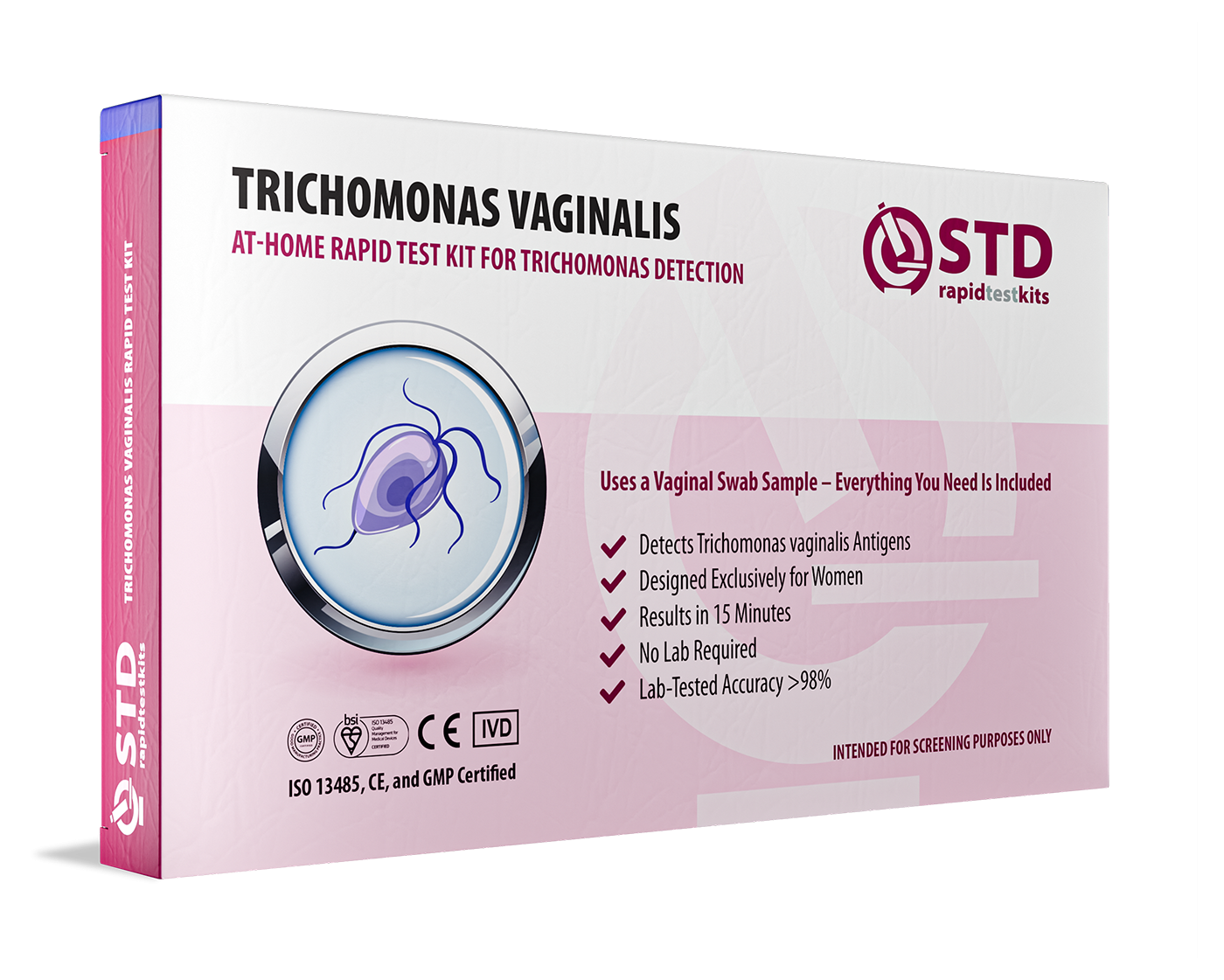
 For Women
 Results in Minutes
 No Lab Needed
 Private & Discreet
Order Now $33.99 $49.00
How to Travel Without Turning Into a Germaphobe
You don’t have to Lysol-blast every hotel towel to avoid STDs. Here's what actually helps:
- Don’t share towels, especially not damp ones.
- Hang up your towel to dry instead of tossing it on the bed or floor.
- Avoid rubbing towels on your genitals or face if they feel even slightly used or moist.
- Pack your own if you’re going somewhere sketchy, or just feel better with your own stuff.
Also? You can ask housekeeping for a fresh towel. They’ve seen worse. They won’t judge. And if you’re really worried, wash it yourself with hot water and dry it completely before using.
Surface vs Sex: The Real Risk Gap
Let’s be honest. Towels get a bad rap because we’re afraid of what we can’t see. But compared to unprotected sex, shared sex toys, or even mouth-on-mouth kissing, the risk from a towel is laughably low.
| Exposure Type | Realistic STD Risk | Should You Test? |
|---|---|---|
| Used hotel towel on dry skin | Extremely low | Not unless symptoms appear |
| Used damp shared towel in sauna/gym | Low–moderate (trich, pubic lice) | If symptoms appear |
| Unprotected sex during the trip | Moderate to high | Yes, test at appropriate window |
| Shared sex toy without cleaning | High | Absolutely, multiple tests |
| Deep kissing with active sores | Low–moderate (HSV-1 risk) | If sores develop or partner discloses |
Figure 2. Comparative risk of different exposures. Towel fear is understandable, but in reality, sexual contact still dominates the transmission game.
I’m Still Worried, Should I Just Test Anyway?
Look, we get it. It’s not just about the towel, it’s about that voice in your head going: “What if this is the one time it actually happens?” You know the odds are low. You’ve read the science. And yet, your body feels weird, your brain won’t shut up, and now you’ve checked your underwear three times today.
If that’s where you are, testing isn’t overreacting. It’s taking control. Even if the risk from the towel is almost zero, the peace of mind from a negative test might be worth everything. Especially if:
- You had sex during your trip and aren’t sure about protection
- You’ve started noticing any new symptoms (itching, discharge, bumps)
- You’re in a high-anxiety loop and need closure to move on
- You want to rule out other exposures from shared spaces (like saunas or massage linens)
That’s not paranoia, it’s proactive health. Just make sure you’re testing at the right time. STDs don’t show up instantly on tests, even if you caught something.

People are also reading: When It Burns but Your Gonorrhea Test Is Negative
STD Testing Window Guide (Post-Exposure Timing)
| Infection | When to Test | Retest? |
|---|---|---|
| Trichomoniasis | 7 to 14 days after exposure | Yes, if symptoms persist after negative |
| Chlamydia | 2 weeks after exposure | Yes, at 3 months if sexually active |
| Gonorrhea | 2 weeks after exposure | Optional, based on symptoms or partner status |
| HIV | 4–6 weeks for accurate result | Yes, again at 3 months for confirmation |
| Syphilis | 3 to 6 weeks post-exposure | Yes, especially if early test was negative |
| Pubic Lice | Immediately visible if infested | No testing, visual diagnosis and treatment |
Figure 3. Testing window periods for common STDs. Testing too early may lead to false negatives. Timing matters, even when anxiety wants instant answers.
If you do decide to test, don’t wait for symptoms to get worse. Use a trusted at-home STD test kit, you’ll get quick results without the side-eye from a clinic receptionist. Just follow the instructions and give your body enough time to show what’s really going on.
FAQs
1. Can you really catch an STD from a hotel towel?
You’d have to be incredibly unlucky, and the towel would have to be freshly marinated in someone else’s bodily fluids and applied directly to your mucous membranes. So… almost never. The risk is microscopic, but your anxiety is valid. Trichomoniasis and pubic lice are the only actual contenders, and even they need perfect conditions. This isn’t how most people get infected. It’s how most people Google at 2am.
2. Okay but I used a towel, and now I’m itchy. What gives?
Could be detergent, dry air, post-waxing irritation, or yes, possibly pubic lice if that towel had a previous, hairy occupant. If you see actual creepy crawlies, we’ve moved from STD anxiety into “time to do laundry and maybe call the pharmacy.” If you’re not sure, test or treat. No shame in checking.
3. Could I get herpes from a towel?
Highly unlikely. Herpes doesn’t thrive on dry fabric and needs skin-to-skin or membrane contact to transmit. You’d need to rub that towel on a fresh, oozing sore and then apply it directly to your own genitals almost immediately. That’s not just rare, it’s practically gymnastic. Stop punishing yourself for drying off.
4. What about trichomoniasis?
Trich is the one fomite-friendly STD. It’s a parasite, not a virus, and can survive for a short time on moist fabrics. If you wiped down with a damp towel that someone just used post-sex or sauna, there’s a sliver of risk. We’re talking rare, but not impossible. If you’re having unusual discharge, itching, or a vague sense that something’s off, test.
5. Do hotel laundries actually kill STDs?
Yes. Commercial laundries use high heat and chemical detergents that are basically death sentences for bacteria, parasites, and viruses. If your towel was actually laundered, it’s safe. If it wasn’t? That’s gross, but still doesn’t mean it’s riddled with gonorrhea.
6. How long can STDs live on fabric?
Most STDs, chlamydia, gonorrhea, HIV, syphilis, die within minutes once exposed to air. Trich might hang out for 2–3 hours on damp material. Pubic lice can last 1–2 days on fabric, because they’re stubborn little beasts. But none of them are immortal. Towels don’t preserve STDs like fossils in amber.
7. I used a towel after someone else and now I’m panicking. Should I get tested?
If that towel was visibly moist and just came off someone’s bits? Maybe. Especially if symptoms show up. If it was dry, folded, and smelled like bleach, stop spiraling. You’re okay. If you can’t sleep because your brain won’t shut up, take the test. Worst case, you bought yourself peace of mind.
8. Can I get an STD without having sex?
Rarely, but yes. Trich, pubic lice, and (in extreme cases) certain skin infections can technically be passed through shared hygiene items. But these are exceptions. Ninety-nine percent of STD transmission happens via sex, oral, vaginal, anal, or skin contact. Towels are side characters in this story, not the villains.
9. Is testing overkill after a towel scare?
Only if you’re symptom-free and rational. But if you’re reading FAQs about towels and STDs, you’re not feeling rational. And that’s okay. Testing isn’t overkill, it’s self-defense against spiraling thoughts. Do it for your sleep schedule.
10. How do I bring this up to a doctor without sounding ridiculous?
You don’t need a monologue. Say: “I used a shared towel and now I’m itchy, could it be trich or lice?” That’s it. They won’t laugh. They've seen worse. Like, way worse.
This Isn’t About Shame, It’s About Clarity
If you’re still thinking about that towel, it’s probably not just the towel. It’s the what-if, the exposure spiral, the “I should’ve been more careful” monologue playing in your head. Here’s the thing: you don’t need to punish yourself. You need information.
Testing isn’t just about infection. It’s about getting your brain to stop doing laps at 3AM. STD Rapid Test Kits lets you test from home, on your terms. No shaming, no waiting rooms, no explaining to a stranger why you think your towel betrayed you.
How We Sourced This Article: This guide was built from current data by the CDC, WHO, and peer-reviewed journals, combined with real-world insight into hygiene fears and transmission myths. Around fifteen reputable sources informed the article; below, we’ve highlighted some of the most relevant and reader-friendly sources.
Sources
2. Planned Parenthood – STDs & Safer Sex
3. CDC — About Sexually Transmitted Infections (STIs)
4. CDC — Syphilis: You Cannot Get It from Sharing Towels or Clothing
5. Mayo Clinic — STD Causes, Symptoms & Transmission
6. StatPearls — Overview: Sexually Transmitted Infections
About the Author
Dr. F. David, MD is a board-certified infectious disease physician who has spent over a decade correcting myths, reducing stigma, and helping people get tested without fear. His work blends evidence-based medicine with a no-nonsense tone that meets readers where they are, whether that’s at the clinic or in their bathrobe post-panic.
Reviewed by: C. Evers, MPH | Last medically reviewed: October 2025
This article is for informational purposes and does not replace medical advice.


