Published: October 2025 | Last updated: May 2026 | Editorial review and quality control: Martina N.
A negative gonorrhea test feels like permission to stop worrying. Then the burning starts again, or never quite stopped, and you are stuck somewhere between trusting the result and trusting your body. Most of the time, the answer is not that the test failed. It is that the test was correct for the moment you took it, and that moment came too early. Bacteria need time to multiply before any test can find them, and a result is only as accurate as the timing behind it.
This guide walks through why early-window tests miss real infections, how long to wait before retesting, what burning without discharge actually means, and which conditions besides gonorrhea produce nearly identical symptoms. The goal is to replace anxiety with a plan: clarity on timing, a sample-site checklist, and a clear next test that fits your situation.
Key Takeaways
- Most "negative result, real symptoms" cases come down to timing. Gonorrhea bacteria need roughly 5 to 7 days post-exposure before any test can reliably detect them, and 7 to 14 days is the recommended testing window per CDC guidance.
- If burning continues after a properly-timed retest, the cause may not be gonorrhea at all. Chlamydia, mycoplasma genitalium, urinary tract infections, and non-infectious irritation produce overlapping symptoms and need a separate workup.
A "Negative" Result Is a Moment in Time, Not a Verdict
Every infection test answers a single question: is the bacterial signal large enough to detect right now? When you test on day 3 after exposure, your body might already be reacting (urethral irritation, the start of burning) but the bacterial load can still be below the test's detection threshold. The test is not broken when it returns negative. It is just answering the day-3 question, not the day-10 one.
This matters because gonorrhea is, in the CDC's words, very common, especially among young people ages 15 to 24 years, and a real infection that tests negative early can still be a real infection at day 10. A second test, taken after the bacteria has had time to replicate, is standard care, not paranoia.
The timing-versus-detection problem also explains why symptom onset and test detectability do not line up. Symptoms can begin within 1 to 5 days of infection, sometimes earlier. Reliable test detection generally needs at least 5 to 7 days, with 7 to 14 days recommended for most kits. That gap, where the body knows but the test cannot see it yet, is where most false-negative confusion lives.
Gonorrhea symptoms can start within 1 to 5 days of infection. Reliable test detection generally requires at least 5 to 7 days, sometimes longer for low-bacterial-load infections. That gap, where the body reacts before the test can see the infection, is where most negative-result confusion originates. A test that returned negative inside that gap is not a wrong test. It is an early test.
Why Timing Determines Whether Any Test Can Find the Infection
The window period is the time between exposure and when a test can reliably detect infection. For gonorrhea, this varies slightly by sample site and test technology, but the general framework holds: bacteria need to multiply enough to produce a detectable signal, and that takes days, not hours.
The table below summarizes the common windows for gonorrhea and two infections often considered alongside it: chlamydia, which frequently co-occurs, and syphilis, which has a much longer window. The right column is what matters most for resolving "negative but still burning" situations. If you tested before the recommended window, the result is incomplete information, not a final answer.
| Infection | Common Test Type | Sample Type | Earliest Detection | Recommended Test Window |
|---|---|---|---|---|
| Gonorrhea | Lab NAAT/PCR or rapid swab immunoassay | Urine, vaginal/penile swab, throat swab, rectal swab | 5 to 7 days | 7 to 14 days post-exposure |
| Chlamydia | Lab NAAT/PCR or rapid swab immunoassay | Urine, vaginal/penile swab | 5 to 7 days | 7 to 14 days post-exposure |
| Syphilis | Blood antibody test | Blood (fingerstick or venous) | 3 to 6 weeks | 6 weeks or later |
How Rapid Home Tests Differ From Clinic NAATs
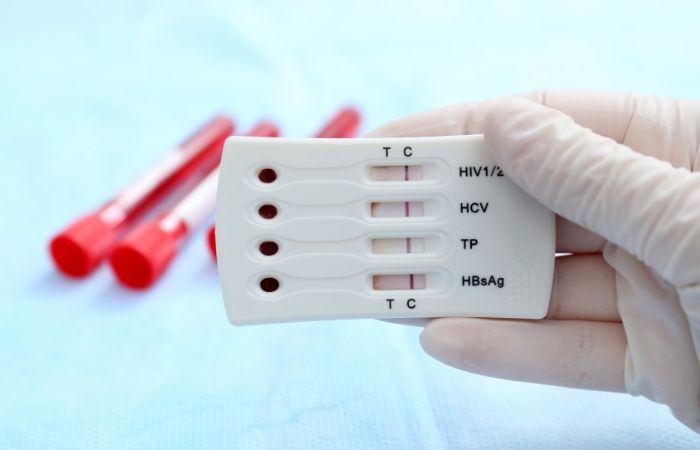
Not all gonorrhea tests work the same way. Clinic-administered laboratory tests use NAAT (nucleic acid amplification testing), which detects gonorrhea bacterial DNA. NAATs are the analytical gold standard with very high sensitivity and specificity. At-home rapid tests, including the kits sold on this site, use lateral-flow immunoassay chemistry, which detects bacterial proteins on a test strip in about 15 minutes.
The two technologies are complementary, not equivalent. Lab NAATs have higher analytical sensitivity (they can detect lower bacterial loads) while rapid lateral-flow tests trade some sensitivity for speed, privacy, and the convenience of skipping a clinic visit. Mayo Clinic's diagnostic guidance describes both methods and their respective roles in screening and confirmatory testing.
What this means in practice: a positive at-home rapid result is informative and worth confirming with a lab NAAT before treatment. A negative at-home rapid result taken inside the recommended window is reasonable reassurance. If symptoms persist, a follow-up clinic NAAT (or a second properly-timed home test) is the right move. Use the at-home test as a screening tool, not a final verdict.
The CDC describes laboratory NAAT as the diagnostic gold standard for gonorrhea because it amplifies the bacterial DNA signal directly. Home rapid tests use a different chemistry (lateral-flow immunoassay) that trades a small amount of analytical sensitivity for at-home convenience and a 15-minute result. Both have their place. Treat a home test as a decision-making tool, and confirm any positive with a clinic NAAT before starting treatment.
When the Wrong Sample Site Was Tested
Gonorrhea infects the genital tract, throat, and rectum, and a test can only detect bacteria where it sampled. If your exposure included oral sex but you only submitted a urine or vaginal swab, the test was not asking the right question. The same applies to receptive anal exposure and rectal infection: a urethral or vaginal swab will not catch a rectal-only infection.
This is one of the most common reasons for symptom-positive, test-negative results in mixed-exposure scenarios. The CDC's STI treatment guidelines for gonococcal infections in adults recommend multi-site testing (urogenital, throat, and rectal as appropriate) for anyone with potential exposure at those sites.
If your symptoms started after oral sex specifically, a single urine-based home test is incomplete coverage. Get a throat swab from a clinic. That is the only reliable way to rule out pharyngeal gonorrhea, and it changes treatment decisions because pharyngeal infection responds differently to some antibiotic regimens.
| Exposure Type | Required Sample Site | Where to Get It |
|---|---|---|
| Vaginal or penile contact | Urine sample or self-collected genital swab | At-home rapid kit or clinic NAAT |
| Oral sex (giving or receiving) | Throat (pharyngeal) swab | Clinic only. Our at-home kits do not cover throat testing. |
| Receptive anal sex | Rectal swab | Clinic only. Our at-home kits do not cover rectal testing. |
A Day-by-Day Decision Framework for When to Retest
The clearest way to make a retest decision is to count days since the most recent exposure and match that to your symptom status. The thresholds below come from the recommended detection windows in CDC and WHO guidance, applied to the practical question of "do I retest now or wait."
Days 1 to 4 post-exposure. A test taken now is likely too early. Bacterial load may not have reached the detection threshold yet, even with the most sensitive lab NAAT. If symptoms are appearing this early, treat the test as preliminary and plan a retest at day 7 to 14.
Days 5 to 6 post-exposure. This is the edge of the detection window. A negative test result is meaningful but not conclusive. If you have ongoing symptoms, retest at day 10 to 14 with a properly-collected sample.
Days 7 to 14 post-exposure. This is the recommended testing window. Sensitivity is highest here for both NAATs and well-validated rapid tests. A negative result on a properly-collected sample carries significant weight. If symptoms persist, the next step is to widen the workup (other infections, alternate sample sites, or non-infectious causes) rather than to retest immediately for gonorrhea.
Day 14 or later, persistent symptoms. At this point a true gonorrhea infection should be detectable by any well-collected, well-performed test. If your test is negative and burning continues, gonorrhea is unlikely to be the cause. Consider chlamydia, mycoplasma genitalium, ureaplasma, urinary tract infection, yeast or bacterial vaginosis (in those with vaginas), or non-infectious irritation. A clinic visit with a broader workup is the right next step.
How long should I wait to retest after a negative gonorrhea result with ongoing symptoms?
If you tested earlier than day 7 post-exposure, retest at day 10 to 14. If you tested inside the recommended day 7 to 14 window and still have symptoms after day 14, gonorrhea is unlikely to be the cause. Get a broader STI panel from a clinic to check for chlamydia, mycoplasma genitalium, and non-gonococcal urethritis, plus a urine dipstick to rule out a urinary tract infection.
| Scenario | Recommended Action | Why |
|---|---|---|
| Tested before day 7 post-exposure, any result | Retest at day 10 to 14 | Bacterial load was likely below the detection threshold |
| Symptoms persist after a day 7-14 negative test | Broader STI workup at a clinic | Other infections produce identical burning symptoms |
| Recent antibiotic use (any indication) | Wait 2 weeks after finishing antibiotics, then test | Antibiotics can suppress without curing, masking detection |
| Partner tested positive but you tested negative | Retest 7 days after last sexual contact; consider empirical treatment | Exposure history outweighs an individual negative result |
What Else Could Be Causing the Burning
When a properly-timed gonorrhea test is negative but symptoms continue, the differential expands. Several other infections and conditions produce nearly identical urethral or vaginal burning.
Chlamydia is the most common co-infection with gonorrhea and produces overlapping symptoms (urethral burning, vaginal discharge, pelvic pain). Many at-home and clinic tests bundle chlamydia and gonorrhea in a single sample because of how often they appear together. If your gonorrhea test was a single-target swab, a chlamydia test is the next logical step.
Mycoplasma genitalium and ureaplasma are bacterial infections that can produce non-gonococcal urethritis. They are not part of routine STI panels everywhere, but they are recognized causes of persistent urethritis once gonorrhea has been ruled out. A clinician can order specific testing if symptoms persist.
Urinary tract infection (UTI) is a non-STI cause of burning with urination, far more common in those with vaginas but possible at any anatomy. Cloudy urine, urgency, and lower-abdominal pressure are typical. A urine dipstick at a clinic settles this quickly.
Bacterial vaginosis and vulvovaginal candidiasis (yeast) can both produce burning with urination plus discharge that is sometimes mistaken for an STI. These do not transmit sexually but can flare after a new partner, new lubricant, or a course of antibiotics.
Non-infectious irritation from new condoms, lubricants, soaps, spermicide, douches, or even vigorous sex can produce transient urethral or vulvar irritation that mimics an STI. The pattern usually self-resolves within a few days once the irritant is removed.
Heightened body awareness from anxiety can amplify a sensation that would normally pass unnoticed. The symptoms are real; the cause is the nervous system's heightened state. This is not the same as imagining symptoms, and it does not mean a workup is unnecessary. It means the workup may need to extend beyond infection testing.
For symptoms that persist after all of the above are ruled out, a clinician visit for a broader urological or gynecological workup is appropriate. Structural and chronic conditions like interstitial cystitis or urethral stricture can produce burning that infection testing alone will not catch.
Gonorrhea often has no symptoms, but it can cause serious health problems, even without symptoms.
Comparing Rapid At-Home Testing With Clinic NAAT
At-home and clinic options each fit different situations. At-home rapid kits offer privacy, speed, and a result without scheduling a visit. Clinic NAATs offer maximum analytical sensitivity, the option for multi-site swabs, and same-visit treatment if the result is positive. Many people use both: a quick at-home rapid test for early reassurance, plus a clinic NAAT during the recommended testing window for confirmation or escalation if symptoms persist.
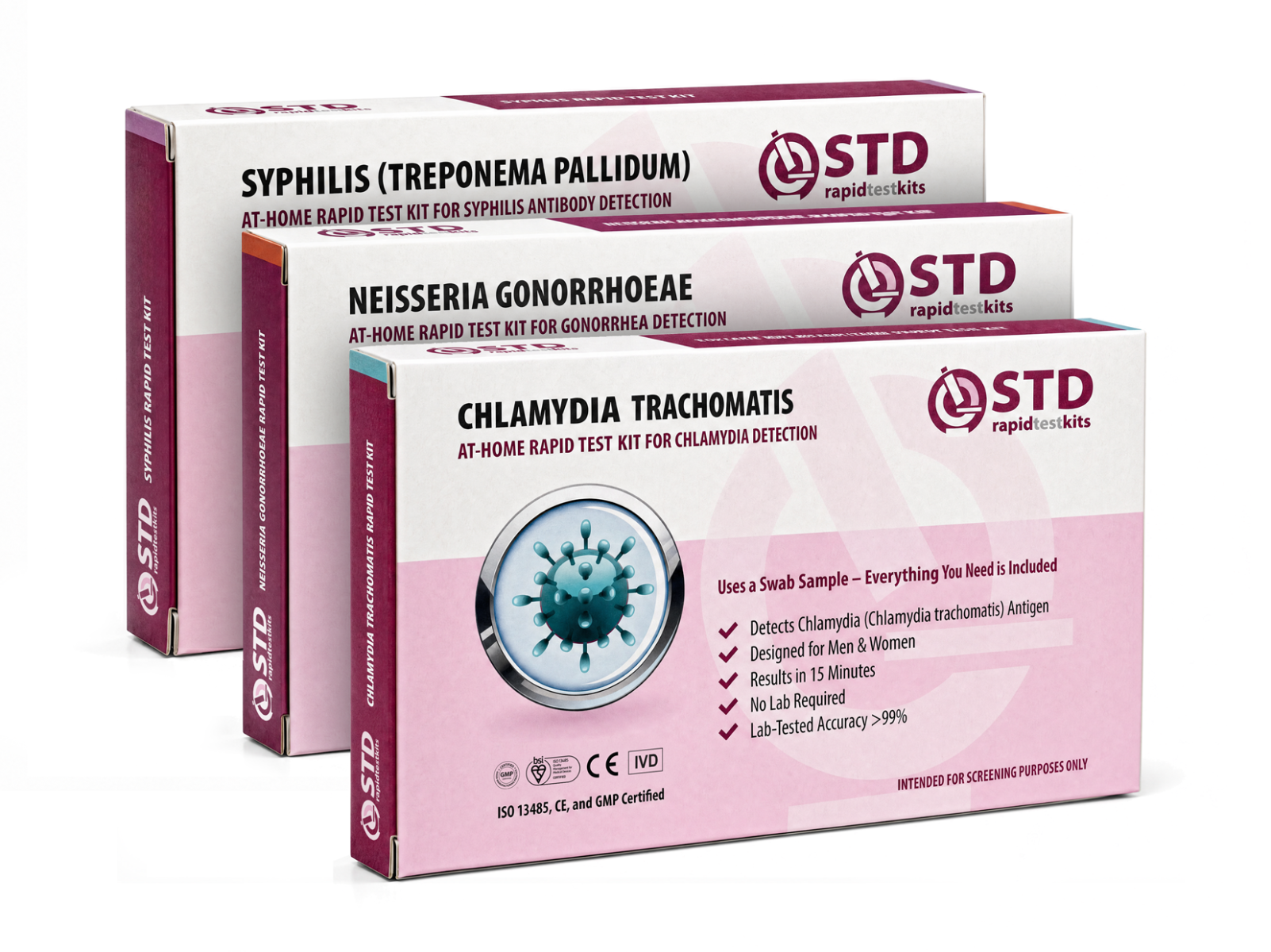
Note: this site sells rapid at-home lateral-flow test kits for chlamydia, gonorrhea, syphilis, and other common STIs. We recommend products based on fit-for-purpose for the reader's concern, not commercial benefit.
| Method | Privacy | Speed | Best For |
|---|---|---|---|
| At-Home Rapid Lateral-Flow | Very high | About 15 minutes | Reassurance during the recommended window when in-person care is not an option |
| Mail-In Lab NAAT Kit | High | 2 to 5 days for results | Lab-grade analytical sensitivity without a clinic visit |
| Clinic-Based NAAT | Lower (in-person visit) | Same-day to 3 days | Multi-site swabbing, broader STI panel, same-visit treatment if positive |
What to Do If Your Retest Comes Back Positive
A positive result is treatable and curable. Modern uncomplicated gonorrhea is treated with a single intramuscular ceftriaxone injection per the most recent CDC treatment guidelines for gonococcal infections in adults. The cure rate with appropriate first-line therapy is very high. The CDC also recommends a test of cure roughly 7 to 14 days after treatment for pharyngeal infections, and re-screening at 3 months for any anatomic site to catch reinfection.
Three actions matter most after a positive result.
First, get clinical confirmation and treatment. If your positive came from an at-home rapid test, bring the result to a clinic or telehealth provider for confirmation NAAT and an antibiotic prescription. Do not try to treat with leftover antibiotics or self-source medications. Gonorrhea has developed resistance to several older antibiotic regimens, and current first-line treatment is specific to a single intramuscular dose.
Second, notify recent sexual partners. The CDC recommends notification of all sexual partners from the previous 60 days (or the most recent partner if your last contact was longer ago). Many jurisdictions and clinics offer expedited partner therapy or anonymous partner-notification services to make this less awkward. Untreated partners are the main reason gonorrhea returns after successful initial treatment.
Third, abstain from sex for 7 days after starting treatment, and until any sexual partners have also been treated. This is the standard public-health window to prevent immediate re-transmission, and it is short relative to the long-term protection it provides.

Your Next Steps When Symptoms Persist
A negative test combined with persistent symptoms is the most common scenario where people feel stuck between trusting the test and trusting their body. Both can be right at different times. A test that returned negative on day 3 was correct for that day. The same test on day 10 might tell a completely different story. Symptoms are not lying, and a result is not a verdict. The right move is almost always one more test, taken after the recommended window, ideally with broader coverage if the first one was a single-target kit.
If you are inside that window and have time to wait, retest on day 10 to 14. If symptoms are severe, escalating, or accompanied by fever, pelvic pain, or testicular pain, skip the home-test path and see a clinician now. Pelvic inflammatory disease, epididymitis, and disseminated gonococcal infection are uncommon but possible complications of untreated gonorrhea, and they are easier to treat early than late. The discomfort you are feeling is information, and so is the test result. Use both.
Inside the window with mild symptoms: retest at day 10 to 14 with a properly-collected sample.
Symptoms severe or escalating: see a clinician now. Fever, pelvic pain, or testicular pain warrants in-person care, not another home test.
Properly-timed negative, ongoing burning: widen the workup beyond gonorrhea. A clinic STI panel plus a urine dipstick rules out chlamydia, mycoplasma genitalium, UTI, and other overlapping causes.
FAQs
- Can gonorrhea cause burning with no discharge?
- Yes. Many people, especially those with vaginas, have minimal or no discharge with gonorrhea infection. Burning during urination, urgency, or pelvic pressure can be the only symptoms. The absence of discharge is not evidence the test was wrong.
- How soon after exposure can a test detect gonorrhea?
- Plan to test between day 7 and day 14 after exposure. Below day 5, even the most sensitive NAAT can return a false negative because the bacteria have not replicated enough to register on any test chemistry. If you tested earlier and still have symptoms, the right move is a repeat test once you reach the day 7 to 14 window, not a different test type.
- Can a properly-timed gonorrhea test still be wrong?
- Test errors are uncommon when the sample is collected correctly inside the recommended window. The most common reasons for false negatives are early-window timing, incomplete sample collection, sampling the wrong anatomical site (urine when the infection is in the throat, for example), or recent antibiotic use that suppressed the bacterial signal.
- What if my partner tested positive but my test came back negative?
- Exposure history outweighs an individual negative test, especially if your test was done early. The CDC recommends retesting 7 days after last sexual contact. Most clinicians will offer empirical treatment based on partner-positive status alone, even if your own test is negative. Talk to a clinician about expedited partner therapy.
- Do antibiotics affect a gonorrhea test?
- Yes, particularly if taken between exposure and testing. Antibiotics for an unrelated condition (UTI, acne, dental work) can suppress gonorrhea bacterial load enough to cause a false negative without fully curing the infection. Wait at least 2 weeks after finishing antibiotics before testing or retesting.
- Is at-home rapid testing as accurate as a clinic NAAT?
- Not quite. Clinic NAATs have higher analytical sensitivity (they can detect lower bacterial loads), while at-home rapid lateral-flow tests trade some sensitivity for speed and privacy. Both are useful in different situations. A negative at-home result inside the recommended window is reasonably reassuring; a positive should be confirmed with a clinic NAAT before treatment.
- Can gonorrhea infect the throat from oral sex?
- Yes. Pharyngeal gonorrhea is a recognized infection site, and it requires a throat swab to diagnose. A urine or genital swab will not detect throat-only infection. Our at-home kits do not include throat-swab testing. If you had oral exposure and have throat or systemic symptoms, see a clinic for a pharyngeal swab.
- What conditions besides gonorrhea cause burning during urination?
- Chlamydia, mycoplasma genitalium, ureaplasma, urinary tract infections, bacterial vaginosis, vulvovaginal candidiasis (yeast), and non-infectious irritation from soaps, lubricants, or new condom materials can all produce nearly identical symptoms. A clinic workup with broader testing is the right next step when a properly-timed gonorrhea test is negative and symptoms persist.
How We Sourced This Article: We combined current guidance from the CDC, WHO, NHS, and Mayo Clinic with the testing-window math used in routine STI clinical practice. References below are the public-facing topic pages we relied on most heavily for the numerical claims and treatment recommendations in this guide. Where guidance varies between sources we deferred to the CDC's most recent treatment guidelines for U.S. readers.
- U.S. Centers for Disease Control and Prevention. About Gonorrhea, public information page covering symptoms, transmission, and the testing window for gonorrhea infection.
- U.S. Centers for Disease Control and Prevention. STI Treatment Guidelines, gonococcal infections in adults and adolescents, with first-line antibiotic regimens, retesting recommendations, and partner notification guidance.
- Mayo Clinic. Gonorrhea symptoms and causes overview, including diagnostic approach and the role of NAAT versus other test methods.
- World Health Organization. Sexually transmitted infections (STIs) fact sheet, used for global incidence context and re-screening recommendations after early or symptomatic testing.
- National Health Service (UK). Gonorrhoea overview, used for sample-site testing recommendations and pharyngeal infection guidance.
- MedlinePlus, U.S. National Library of Medicine. Gonorrhea topic page, used for general background and patient-facing terminology.
