Published: November 2025 | Last updated: May 2026 | Editorial review and quality control: Martina N.
If you are hoping one of these infections resolves on its own, a small minority of cases do. Most do not clear quickly, many do not clear at all, and waiting to see introduces real risks that a 15-minute test and a short course of antibiotics would prevent. Bacteria, unlike viruses, are external invaders the immune system can sometimes overpower without help. The short answer to whether gonorrhea or chlamydia cure themselves is yes, occasionally. The longer answer is the one that matters.
This guide walks through what current research actually shows about spontaneous clearance, what happens when these infections linger, and the testing options that take the guesswork out of the equation. The honest framing matters because both infections are usually silent. You can carry either for months without noticing, all while remaining infectious and accumulating slow, quiet damage to the reproductive tract.
Key Takeaways
- A minority of untreated chlamydia infections may clear on their own within a year, with estimates varying widely between studies; gonorrhea spontaneous clearance is less common and harder to measure.
- Most infections persist silently, can be passed to partners, and quietly damage the reproductive tract. The only way to confirm clearance is a negative test, not the absence of symptoms.
The short answer: sometimes, but not safely
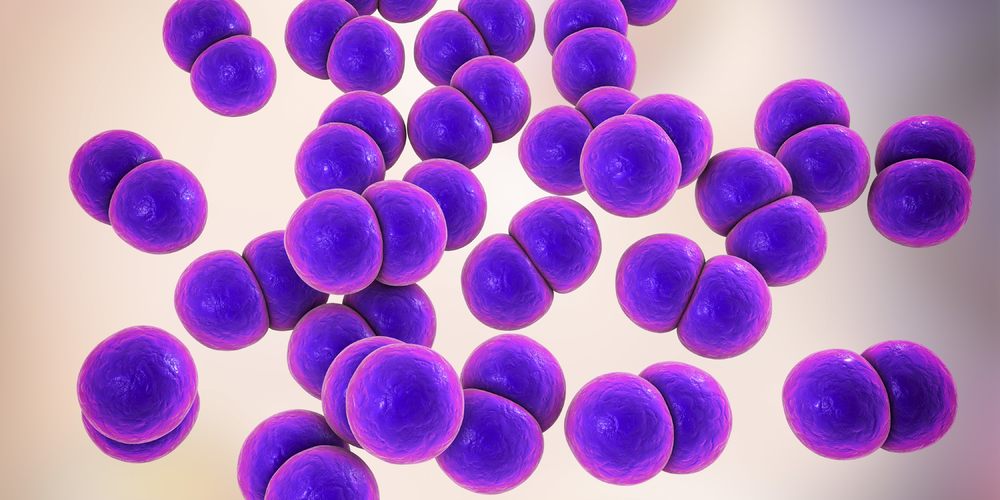
Both gonorrhea (Neisseria gonorrhoeae) and chlamydia (Chlamydia trachomatis) are bacterial infections, not viruses. Viral infections such as herpes and HIV stay with you for life because viruses integrate into your cells; antibody-producing immunity reduces flare-ups but never eliminates them. Bacteria, by contrast, are external organisms. The immune system can sometimes overpower them without help, the same way it can overpower a strep throat or a urinary tract infection without antibiotics.
Cohort research suggests a minority of chlamydia infections do clear without treatment, though estimates vary widely between studies. Gonorrhea spontaneous clearance is studied less and appears to be less common, particularly at genital sites.
The catch is that there is no way to know in advance whether your immune system is going to win this one. Most untreated infections persist for months to years, quietly causing damage that only surfaces when someone tries to conceive or develops chronic pelvic pain.
A minority of untreated chlamydia infections clear within a year. Most do not, and no test or symptom pattern tells you in advance which group you fall into.
How gonorrhea and chlamydia actually work
Both infections spread through unprotected vaginal, anal, or oral sex with someone who has the infection. They tend to colonize wet mucous membranes: the cervix and uterine tubes in people with female anatomy, the urethra in people with male anatomy, plus rectum and throat in anyone exposed at those sites. Co-infection with both bacteria is common, which is why screening tests usually cover both at once.
Gonorrhea
Gonorrhea is caused by Neisseria gonorrhoeae, a gram-negative bacterium sometimes called "the clap." Symptoms, when they appear, typically show up around 2 weeks after exposure per NHS guidance, though some people stay asymptomatic for much longer. In people with male anatomy, common symptoms are painful urination, thick white or yellow penile discharge, and testicular tenderness. In people with female anatomy, signs include abnormal vaginal discharge, painful urination, and bleeding between periods. Throat infections from oral sex usually cause no symptoms; when they do, it looks like a mild sore throat.
Chlamydia
Chlamydia is caused by Chlamydia trachomatis. Symptoms develop within 1 to 3 weeks after exposure when they appear at all. The infection is famously quiet: the CDC notes that chlamydia often has no symptoms in either anatomy. When symptoms do appear, they overlap heavily with gonorrhea: discharge, painful urination, pelvic pain, sometimes spotting between periods. Because the two infections look identical clinically and travel together, testing for both at the same time is standard practice and the reason combination kits exist.
| Feature | Gonorrhea | Chlamydia |
|---|---|---|
| Cause | Neisseria gonorrhoeae | Chlamydia trachomatis |
| Symptom onset when present | Around 2 weeks after exposure | 1 to 3 weeks after exposure |
| Asymptomatic rate | Common, especially at throat sites and in women | Most infections in both anatomies |
| Primary sites | Urethra, cervix, throat, rectum | Cervix, urethra, throat, rectum |
| First-line treatment | Ceftriaxone 500 mg intramuscular (single dose) | Doxycycline 100 mg twice daily for 7 days |
What research actually shows about spontaneous clearance
Studies of untreated bacterial STIs are rare for an obvious ethical reason: it would be wrong to deliberately withhold treatment from people known to have a curable infection. Most data on natural history therefore comes from three sources. Researchers retrospectively analyze stored specimens collected for other purposes. They follow cohorts who tested positive and were retested shortly before treatment to see who had spontaneously cleared in the gap. And they reanalyze older studies from the era before standard antibiotic protocols existed.
The clearest evidence comes from chlamydia. Pooled cohort data tracking untreated infections suggests a minority of chlamydia cases do clear within 12 months, with estimates ranging widely between studies. Some studies report substantially higher one-year clearance rates, but those higher figures are debated because they may include cases of reinfection masking as new infections rather than true clearance of the original.
Gonorrhea is studied less and appears to behave differently by anatomical site. The available evidence suggests gonorrhea is more likely than chlamydia to persist long-term in the genital tract if untreated, while extragenital infections at the throat and rectum more often clear on their own. Pharyngeal gonorrhea in particular often resolves within weeks without treatment, which is one reason throat results can be confusing and why repeat testing is sometimes recommended.
None of this means waiting is a good plan. Even when clearance does happen, it typically takes months. During those months, you remain infectious to partners and at ongoing risk for complications. Clearance success also varies wildly between individuals based on factors including immune status, bacterial strain, and site of infection. There is no reliable way for you, or for a clinician, to predict whether your specific infection will clear or persist.
Can gonorrhea or chlamydia go away on their own?
Yes, but rarely and unpredictably. Cohort research suggests a minority of untreated chlamydia infections clear within a year, though estimates vary widely between studies. Gonorrhea spontaneous clearance is less well measured and appears less common at genital sites, slightly more common at throat or rectal sites. The remaining majority of infections persist for months to years and can cause pelvic inflammatory disease, infertility, and increased HIV risk. Because no one can predict which group an individual falls into, the safer plan is testing and, if positive, a short course of antibiotics rather than waiting to see what happens.
Why feeling better is not the same as being cured
One of the most dangerous patterns with gonorrhea and chlamydia is the symptom-and-relief cycle. A person notices discharge or burning, the symptoms ease over a few weeks, and they conclude the problem went away. In most cases the bacteria are still there. Symptoms wax and wane independently of whether the infection is clearing, and the immune system can suppress symptoms long before it eliminates the organism.
Three things commonly happen when people rely on symptoms rather than testing:
- Symptoms ease but the infection persists. Bacterial counts can drop below the threshold that causes obvious symptoms while the infection remains in the reproductive tract at a lower level.
- The infection moves deeper. Untreated cervical chlamydia or gonorrhea can ascend into the uterus and fallopian tubes, where it causes pelvic inflammatory disease (PID) without producing genital symptoms. The visible symptoms have eased; the underlying infection is doing more damage, not less.
- You stay infectious. Whether or not symptoms are present, you can still pass the infection to sexual partners. Most onward transmission of chlamydia happens from asymptomatic carriers who do not know they are infected.
This is also why the CDC recommends a test of reinfection three months after treatment, even for people who feel completely well.
A negative test result is the only way to confirm clearance. No symptom pattern, however convincing, substitutes for it.
What can go wrong if you wait too long
Untreated chlamydia and gonorrhea cause serious complications. The list below is drawn from current CDC and NHS guidance and is worth taking seriously, because the complications are usually preventable with timely treatment.
In people with female reproductive anatomy
- Pelvic inflammatory disease (PID). The CDC notes that women with untreated chlamydia can develop PID, an infection that spreads upward into the uterus and fallopian tubes. PID often presents with no specific symptoms in its early stages.
- Tubal infertility. PID can scar the fallopian tubes. A single episode reduces fertility; repeat episodes compound the risk substantially.
- Ectopic pregnancy. Scarred tubes can trap a fertilized egg outside the uterus, a medical emergency that requires urgent treatment.
- Chronic pelvic pain. Long-term inflammation can produce pain that persists for years even after the underlying infection is finally cleared.
- Transmission to a newborn. Infants exposed during vaginal birth can develop conjunctivitis or pneumonia from chlamydia, or eye infections that can threaten sight from gonorrhea.
In people with male reproductive anatomy
- Epididymitis. Inflammation of the coiled tube behind the testicle, which causes pain and swelling and can damage fertility if it recurs or goes untreated.
- Reactive arthritis. Both infections can trigger an autoimmune reaction that causes joint pain, eye inflammation, and urethritis weeks after the initial infection.
Risks for anyone
- Higher HIV risk. Active gonorrhea increases the per-exposure risk of acquiring HIV during sexual contact, according to WHO guidance, which groups gonorrhea with herpes and syphilis as STIs that raise HIV susceptibility. The mechanism is mucosal: an active bacterial infection creates inflammation and recruits immune cells to the genital tract, and those are the same cells HIV uses to establish infection. Chlamydia is thought to act through a similar inflammatory mechanism, and successfully treating either infection and confirming clearance through a follow-up test removes that elevated susceptibility window.
- Disseminated gonococcal infection. Rare but serious: gonorrhea bacteria can enter the bloodstream and cause skin lesions, joint inflammation, and in severe cases endocarditis.
- Antibiotic-resistant gonorrhea. Strains resistant to first-line antibiotics are rising globally. Delayed treatment increases the pool of resistant organisms in circulation.
The complications above develop in untreated infections over months to years. A confirmed clearance through a short antibiotic course removes the risk almost entirely. Catching the infection on a routine screen or after a known exposure is the difference.
Who is most at risk, and when to screen
Routine screening, separate from testing after a specific exposure, is recommended for groups with higher background risk. The current CDC screening guidance is straightforward:
- Sexually active women under 25. Annual screening for chlamydia and gonorrhea is recommended for all sexually active women in this age group, regardless of perceived risk.
- Older women with risk factors. Annual screening if a new partner, multiple partners, or a partner with an STI.
- Men who have sex with men. At least annual screening at all sites of exposure (genital, rectal, throat), with more frequent screening (every 3 to 6 months) for those with multiple or anonymous partners.
- Pregnant people. Screening at the first prenatal visit, and again in the third trimester for those at continued risk.
- Anyone with a recent new partner or known exposure. Test 1 to 2 weeks after exposure, repeat at 4 to 6 weeks if the first test is negative and exposure is significant.
Background prevalence helps put personal risk in context. Chlamydia is the most commonly reported notifiable infection in the United States; gonorrhea rates have been rising steadily for the past decade. Anyone sexually active with new or multiple partners belongs in a screening conversation, not just people with symptoms.
These are two different jobs. Routine screening runs on an annual or risk-adjusted cadence regardless of whether anything specific has happened. Post-exposure testing is triggered by a known or suspected exposure event and uses the 1-to-2-week window timing, with a follow-up at 4 to 6 weeks if the first result is negative. Both have their place; doing one does not substitute for the other.
How to test and what timing to use
Diagnosis is straightforward and most testing options are accurate when used at the right time. The main split is between laboratory NAAT testing (the lab gold standard) and home rapid lateral-flow tests (kits you run yourself in about 15 minutes).
Laboratory NAAT (nucleic acid amplification testing) is the most sensitive option and is what clinics use. It detects very small quantities of bacterial DNA from a self-collected vaginal swab, a first-catch urine sample, or a site-specific swab. Results take 1 to 3 days from a clinic. NAAT is the reference standard the CDC and NHS both recommend for diagnosis.
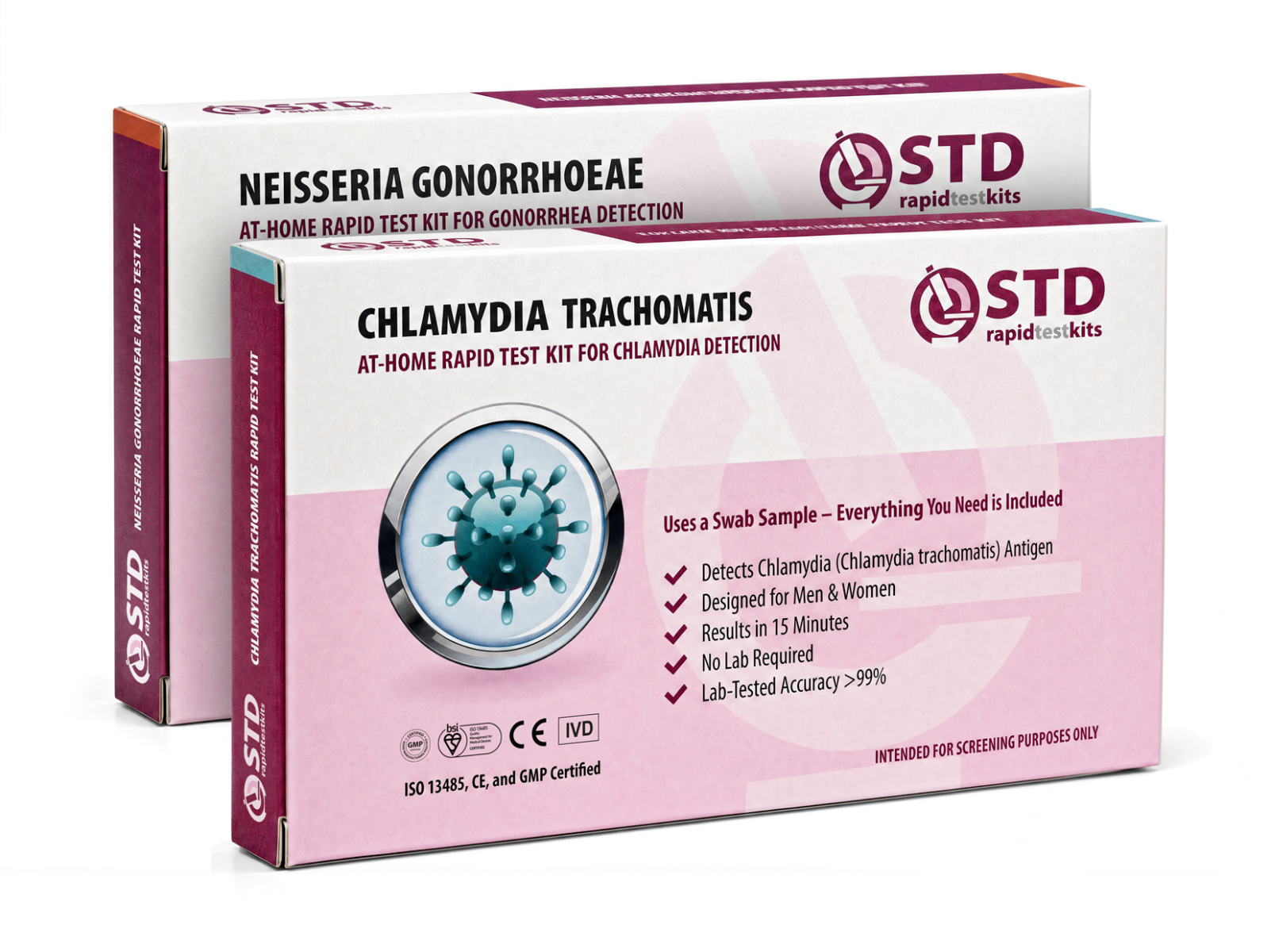
Home rapid tests are lateral-flow immunoassays that detect bacterial proteins or antigens directly from a self-collected swab. They produce a result in roughly 15 minutes. Sensitivity is lower than laboratory NAAT, but for symptomatic infections the agreement is generally good and a positive result lets you act quickly. A negative home test in someone with persistent symptoms is worth confirming with a clinic NAAT. Home tests are also the easiest option for routine screening when a clinic visit is impractical.
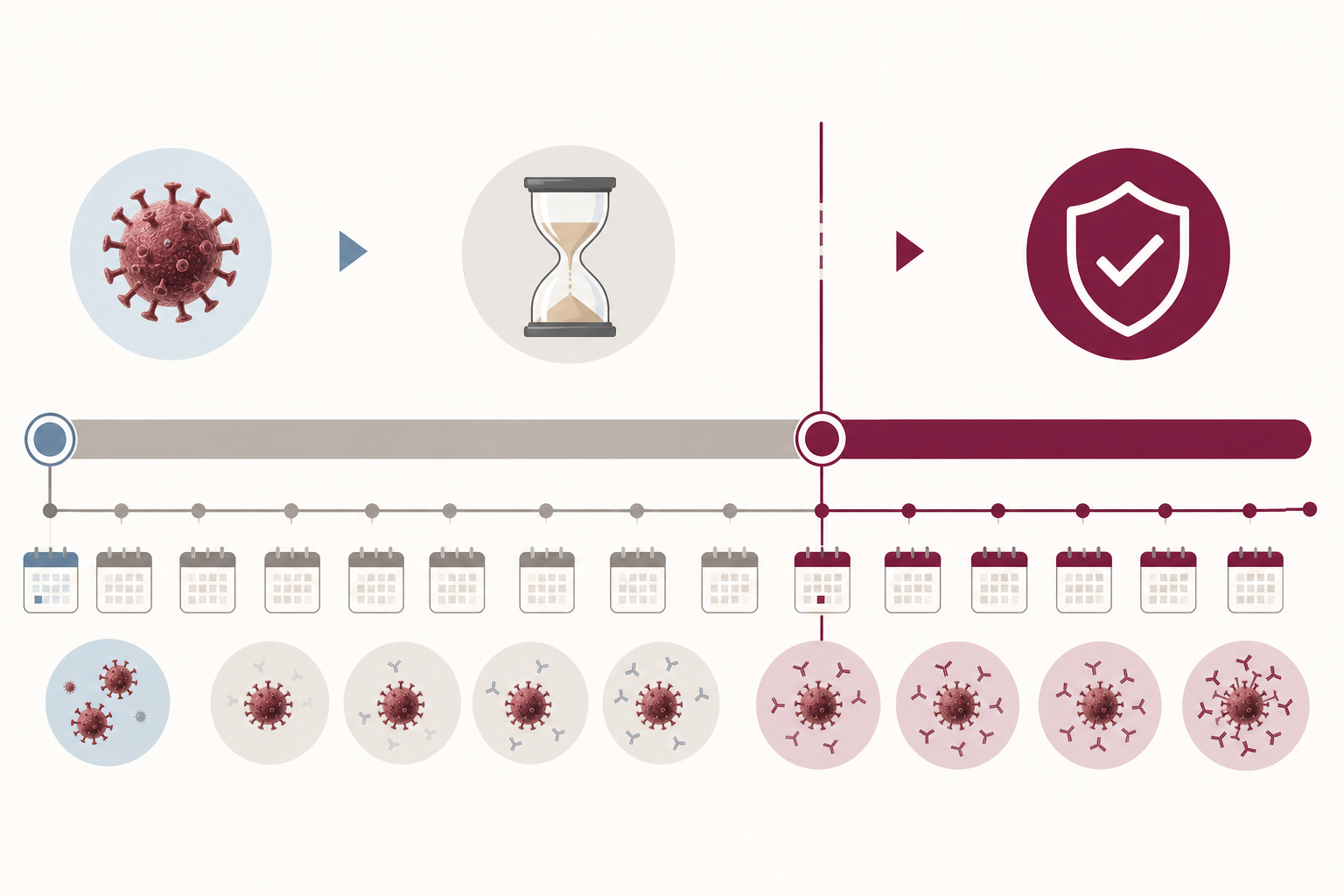
Both infections have a window period during which bacterial load has not yet reached detectable levels and a test can produce a false negative. Standard guidance suggests testing 1 to 2 weeks after a specific exposure for an early result, and repeating at 4 to 6 weeks if the first test is negative and the exposure was significant. For routine screening without a specific recent exposure, timing is less critical: just pick a regular cadence and stick to it.
The combination kit highlighted below is a product we sell; this article covers both at-home rapid tests and clinic NAAT on their merits so readers can pick the option that fits.
Treatment is short, cheap, and effective
Once diagnosed, both infections are highly treatable with a short course of antibiotics. There is no clinical situation in which choosing antibiotics over watchful waiting is the wrong call. Per CDC sexually transmitted infections treatment guidelines:
- Chlamydia: Doxycycline 100 mg twice daily for 7 days is the preferred regimen for most non-pregnant adults. Azithromycin 1 gram as a single dose is an alternative in pregnancy or where adherence is a concern.
- Gonorrhea: Ceftriaxone 500 mg as a single intramuscular injection is the standard. If chlamydia has not been ruled out, doxycycline is added to cover both.
A few practical notes:
- Abstain from sex for 7 days after starting treatment, or until any partners have also completed treatment.
- All recent sexual partners should be notified and tested. Many clinics offer expedited partner therapy (treating the partner without an in-person visit) where state law allows.
- Antibiotic-resistant gonorrhea is rising worldwide. If symptoms persist after treatment, return for repeat testing and possibly a culture so the lab can check susceptibility.
- The CDC recommends a test of reinfection at 3 months. Reinfection from an untreated partner is the most common reason for a positive result at that mark; treatment itself rarely fails.
Most people who have chlamydia do not have any symptoms.
The bottom line
Gonorrhea and chlamydia can clear on their own, but the minority that do so is small and unpredictable. The majority persist quietly, get transmitted to partners, and accumulate damage that becomes visible only when someone tries to conceive or develops chronic pain. Testing is fast, antibiotics work, and the trade-off is heavily in favor of acting rather than waiting.
If you have had a possible exposure, were diagnosed with another STI, have new symptoms, or simply have not screened in a year and have been sexually active, get tested. A home rapid test gets you a fast answer in privacy; a clinic NAAT gets you the most sensitive confirmation.
A home rapid test gives you a result in about 15 minutes with no clinic visit required. A clinic NAAT offers higher analytical sensitivity for confirmation when a result is unclear or symptoms persist. Either option removes the uncertainty that comes with waiting and lets you start treatment sooner if needed.
Frequently Asked Questions
- Can chlamydia really clear up on its own?
- Yes, in a minority of cases. Pooled cohort data tracking untreated infections suggests a fraction of chlamydia cases clear within a year, though estimates vary widely between studies. Most infections persist, often silently, and because no one can predict which group you fall into, current guidance is to treat any confirmed infection rather than wait.
- How long does untreated chlamydia or gonorrhea last?
- Highly variable. Some infections clear within months. Many last a year or longer; some persist for years. Even when an infection is moving toward resolution, you remain infectious during that whole period and at risk for complications such as pelvic inflammatory disease.
- If my symptoms went away, does that mean I'm cured?
- Symptom-free does not mean infection-free. A swab or blood test can still come back positive weeks after discharge and discomfort have resolved, because the bacteria can persist at a level too low to trigger obvious signs. A negative test result is the only reliable signal that the infection has actually cleared.
- Can I retest at home to confirm I'm clear after antibiotics?
- Wait at least 3 weeks before retesting after treatment, since standard NAAT can detect dead bacterial DNA as a false positive before that point. The 3-month follow-up the CDC recommends is specifically designed to catch reinfection from a partner who was not treated, rather than to verify that the antibiotics worked.
- Do antibiotics for chlamydia also cure gonorrhea?
- Doxycycline (the preferred chlamydia regimen) does not reliably cure gonorrhea, especially with resistance rates rising. Standard gonorrhea treatment is a single intramuscular injection of ceftriaxone. When both infections are suspected or co-infection is detected, both medications are given together.
- Can I get reinfected after treatment?
- Yes, very easily. Treatment clears the current infection but produces no lasting immunity. The most common reason for a positive retest at 3 months is reinfection from a partner who was not treated. Notify and treat partners, and abstain from sex for 7 days after both of you complete treatment.
- Is there a vaccine for chlamydia or gonorrhea?
- Not yet. Several candidate vaccines are in trials, including some leveraging meningococcal B vaccines that produce partial cross-protection against gonorrhea, but none are approved for general use. Prevention currently relies on condoms or other barrier methods, partner reduction, and regular screening.
- What if I'm asymptomatic but my partner tested positive?
- Test anyway, and most clinicians will treat presumptively even if your test is negative. Both infections are commonly asymptomatic, especially in their early stages, and the test window may not yet show a positive. Expedited partner therapy exists for this exact scenario in many regions.
- U.S. Centers for Disease Control and Prevention. About Chlamydia page: symptoms, asymptomatic rates, transmission, and complications including pelvic inflammatory disease.
- U.S. Centers for Disease Control and Prevention. Sexually transmitted infections treatment guidelines, including current first-line regimens for chlamydia (doxycycline 7-day course) and gonorrhea (ceftriaxone 500 mg intramuscular).
- World Health Organization. Chlamydia fact sheet, including natural history and global prevalence summary.
- World Health Organization. Sexually transmitted infections overview, including the directional link between active bacterial STIs such as gonorrhea and increased HIV acquisition risk.
- UK National Health Service. Chlamydia condition page, covering symptoms, testing, treatment, and the asymptomatic-but-damaging nature of the infection.
- UK National Health Service. Gonorrhea condition page, including symptom timing (around 2 weeks after exposure), complications, and treatment overview.
