Published: October 2025 | Last updated: May 2026 | Editorial review and quality control: Martina N.
You are staring at a small red bump on your inner thigh. You shaved two days ago, so it is probably ingrown. Probably. Or maybe it is the new soap. Or last weekend. Most people land on a page like this looking for the same thing: a way to figure out whether what they are feeling, or seeing, is something to worry about, or whether it is nothing.
Many sexually transmitted infections (STIs) cause symptoms that look exactly like razor burn, yeast infections, urinary tract infections, or allergic reactions. Many cause no symptoms at all. The CDC notes that the majority of STIs go undiagnosed because most do not produce noticeable symptoms (CDC, About STIs). That is why the only reliable way to know is to test, even if you feel fine.
This guide walks through what symptoms actually look and feel like, why they often hide, when they show up, and when testing makes sense. It is written so you can read your own body more accurately and make a calm decision about what to do next.
Key Takeaways
- Most common STIs cause mild, on-and-off, or zero symptoms in their first weeks, so feeling fine on its own is not a reliable signal of being uninfected.
- Testing windows matter: a negative test taken too early after exposure can miss an infection. Some tests need 2 weeks to 3 months to become reliable.
Why STDs Hide in Plain Sight
The biggest reason people delay testing is not denial. It is pattern matching. Your body produces a small symptom, your brain reaches for a familiar explanation: ingrown hair, period cramps, post-workout chafing, a UTI from holding it too long, the new detergent.
That mental shortcut is usually right. It is also why STIs go uncaught. Many sexually transmitted infections present with symptoms that overlap almost exactly with non-infectious irritation: itching, burning, mild discharge, low-grade pelvic pressure. The CDC describes most early infections as either silent or producing symptoms readers commonly attribute to something else (CDC, About STIs).
There is a second factor at play. Conversations about sex and sexual health still carry stigma. Readers who would happily ask a clinician about a strange mole on their shoulder will quietly ignore a similar spot in their genital area for weeks. That delay matters. Untreated chlamydia or gonorrhea can spread upward into the reproductive tract within weeks, and untreated syphilis progresses through stages over months and years (CDC, STD Prevention).
If a symptom fits a familiar explanation (UTI, ingrown hair, yeast infection, post-shave irritation), most people stop there and skip testing. That shortcut is correct most of the time. The times it is wrong are exactly the cases that progress untreated for months.
The Silent Infections: When Nothing Feels Wrong
Most people picture an STI as something dramatic: visible sores, severe pain, unmistakable signs. The reality is the opposite. The CDC's chlamydia treatment guidelines describe asymptomatic infection as common in both men and women, which is one reason chlamydia remains the most commonly reported notifiable disease in the United States (CDC, Chlamydia Treatment Guidelines). HPV is similar: most genital HPV infections clear without ever producing visible warts or symptoms, but can still transmit through skin-to-skin contact during that period.
You can feel completely fine and still carry an infection that is actively transmissible. You can also have early symptoms so mild that your conscious brain files them under “weird, but probably nothing.” Symptoms this mild, like frequent urination, occasional spotting, an intermittent itch, or discharge slightly off from your baseline, are easy to explain away as something benign.
Routine testing exists for this reason. It is not a judgment about whether you have been “careless.” It is the only way to find what your body is too quiet to tell you. The table below shows roughly how often the most common STIs go silent, drawing on commonly cited public-health estimates.
| Infection | Visible symptoms (when present) | How often it stays silent |
|---|---|---|
| Chlamydia | Burning urination, discharge, pelvic pain | Asymptomatic infection is common in both men and women |
| Gonorrhea | Discharge, pain during urination | Often silent in women; men more often notice symptoms |
| HPV | Genital warts, cervical cell changes (Pap) | Most infections cause no visible symptoms |
| Genital herpes (HSV-2) | Tingling, clustered vesicles, ulcers | Most people who have it are unaware |
| Syphilis (primary) | Single painless sore (chancre) | Often missed because the sore is painless and heals on its own |
| Trichomoniasis | Thin or increased discharge with fishy odor (women) | Most men with trich have no symptoms |
What STD Symptoms Actually Look Like
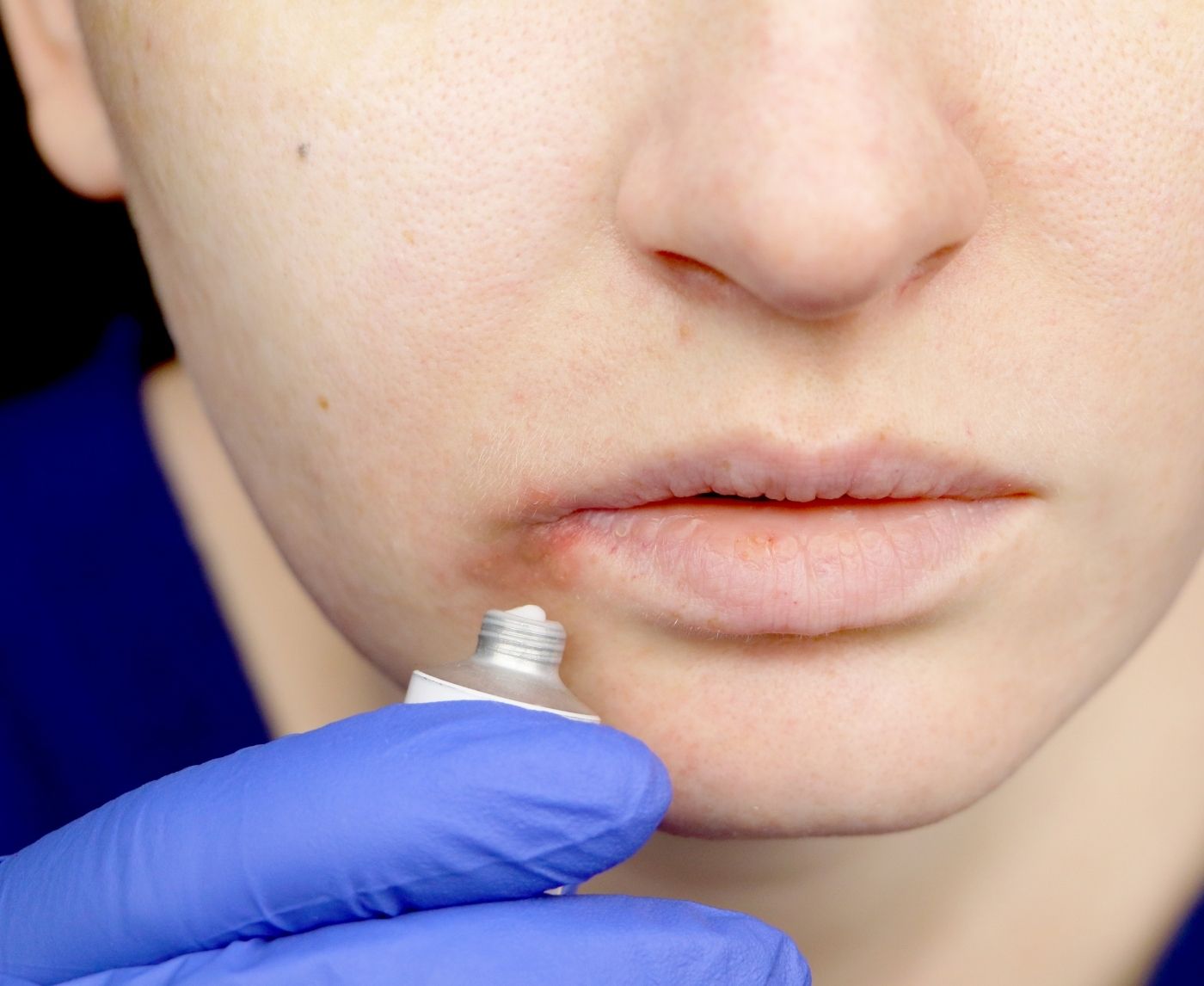
Internet searches for “what does X look like” return a mix of stock photos, severe outlier cases, and decorative art. Real clinical presentations are usually more subtle. The figures below show typical appearances of four common visible STI symptoms, drawn from medical reference photographs.
A few notes before reading them. First, presentation varies. The same infection can look quite different on different skin tones, in different anatomic locations, and at different stages of the same infection. Second, none of these images are diagnostic on their own. A clinician examination, or a confirmed test result, is the only way to know what something is. The point of the gallery is to give a calibrated visual baseline so you can describe what you are seeing more accurately when you do seek care.
When STD Symptoms Mimic Other Things
A second reason readers delay testing is that early STI symptoms are often indistinguishable from common, non-infectious conditions. Burning during urination feels like a UTI. Itching with discharge feels like a yeast infection. A small bump on the thigh feels like a folliculitis pimple.
This overlap is real, and it is the strongest argument for testing rather than self-diagnosing. Treating yourself with an over-the-counter yeast cream when you actually have trichomoniasis or chlamydia means weeks of untreated infection. The CDC treatment guidelines emphasize that antibiotic regimens are condition-specific, and the wrong treatment can mask symptoms while the underlying infection continues to spread (CDC, STI Treatment Guidelines).
The table below maps how the most common vaginal symptoms overlap across yeast infection, BV, UTI, and STIs.
| Symptom | Yeast infection | Bacterial vaginosis | UTI | Possible STI |
|---|---|---|---|---|
| Itching | Yes | Sometimes | Rare | Yes (herpes, trichomoniasis, chlamydia) |
| Burning during urination | Rare | No | Yes | Yes (gonorrhea, chlamydia, herpes) |
| Thick discharge | Yes (white, clumpy) | Yes (grayish, fishy odor) | No | Yes (trichomoniasis, gonorrhea) |
| Pelvic pain | Rare | Occasional | Sometimes (if severe) | Yes (chlamydia, PID) |
| Spotting between periods | Rare | Rare | No | Yes (chlamydia, gonorrhea) |
Why STD Symptoms Come and Go
Several STIs produce symptoms that come, go, and come back, sometimes weeks or months apart. Herpes is the clearest example: most people with HSV-2 experience repeat outbreaks that come and go, with frequency varying widely between individuals (CDC, Genital Herpes). Chlamydia and gonorrhea can also produce mild intermittent symptoms that fade as the body partially controls the infection without clearing it.
That intermittent pattern is part of why people miss infections. A symptom appears, the person worries for a few days, the symptom disappears, and the conclusion is that it must have been nothing. Two months later it returns, sometimes with a complication. Untreated chlamydia, for instance, can ascend into pelvic inflammatory disease for women and epididymitis for men, both of which can cause longer-term reproductive damage.
Clearance of a symptom and clearance of the infection are two different things. If you noticed something worth noticing once, set a retest reminder for the appropriate window even if the symptom has since faded.
- Genital herpes (HSV-2): outbreaks flare and quiet over weeks or months.
- Chlamydia and gonorrhea: mild episodic burning, discharge, or pelvic pressure that fades as the body partially controls the infection.
- Trichomoniasis: symptoms can come and go in women and are usually silent in men.
When to Test, When to Retest
A common testing mistake is going in too early. Each STI has a window period, the time between exposure and when a test can reliably detect the infection. Test before that window and a negative result reflects timing, not safety.
Approximate windows for the most common rapid and lab tests, drawn from the CDC 2021 STI Treatment Guidelines and CDC HIV testing guidance:
- Chlamydia and gonorrhea (lab NAAT or rapid swab): about 1 to 2 weeks after exposure.
- HIV fourth-generation antigen-antibody test: typically detects most infections by 18 to 45 days; the screening window is shorter than older antibody-only tests, which can take closer to 3 months.
- Syphilis antibody tests: roughly 3 to 6 weeks for first detection, with confirmation often at 12 weeks.
- Herpes antibody tests: 12 weeks or longer to reliably show seroconversion after exposure.
- Trichomoniasis: detectable on swab within about 1 week of exposure (CDC, About Trichomoniasis).
Two practical rules. First, if you test inside the first week after a known exposure, set a calendar reminder to retest after the appropriate window. Second, if symptoms develop after a negative test, retest. A new symptom after an early-window test is the most common false-reassurance pattern.
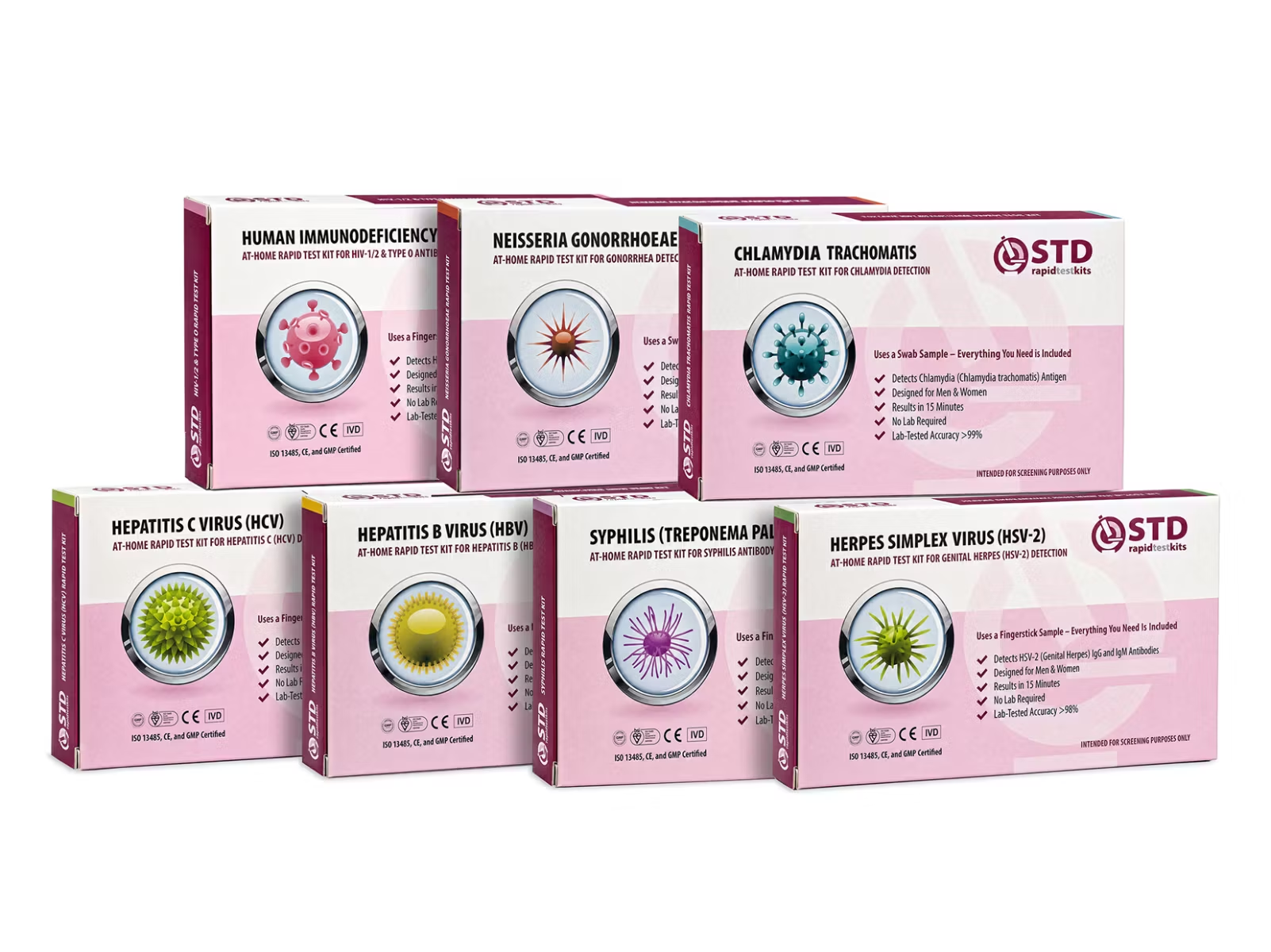
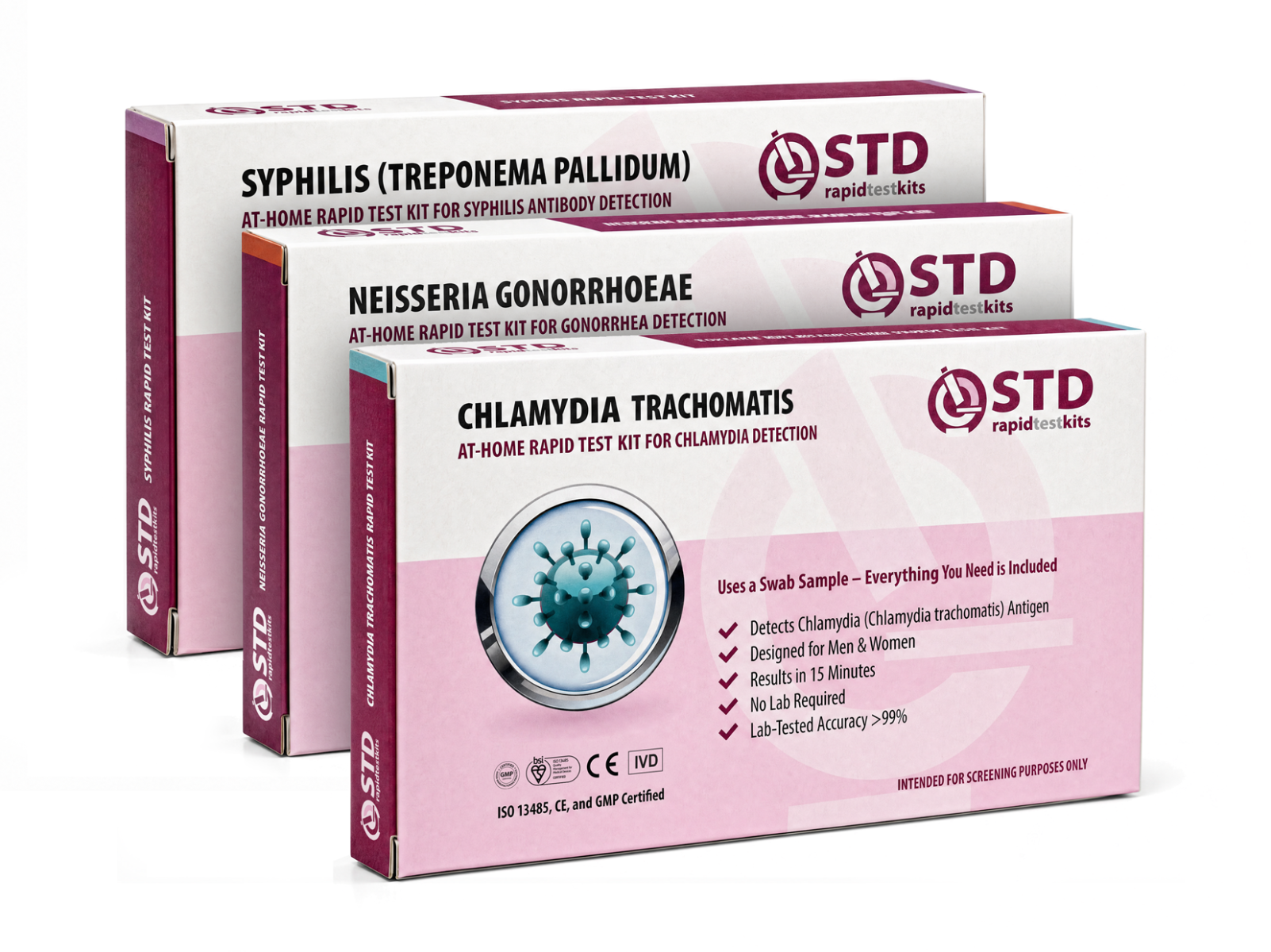
At-home rapid lateral-flow tests are screening tools. They use the same target (antibody or antigen) as comparable lab tests but are read by eye on a cassette, which means a positive result is generally worth confirming with a lab NAAT or laboratory antibody test for the same infection. This site sells rapid at-home test kits for several of the infections described in this article.
How long after exposure should I wait to test?
Most STI tests reach reliable accuracy 1 week to 3 months after exposure depending on the infection: 1 to 2 weeks for chlamydia and gonorrhea swabs, 3 to 6 weeks for syphilis, up to 45 days for HIV fourth-generation tests (older antibody-only tests need closer to 3 months), and roughly 12 weeks for herpes antibody tests. Test once at the early window, then retest at the longer window if symptoms develop or if your exposure was high-risk.
How Symptoms Show Up Differently in Men and Women
The same infection can look very different in two partners, which is part of why couples testing matters even when only one person feels something is off. Anatomy is the largest factor: the female reproductive tract has a larger internal mucosal surface, which both makes infection more likely to be silent and more likely to produce complications when it ascends.
Gonorrhea is a clear example. The CDC notes that men with urethral gonorrhea often develop noticeable burning and discharge within days of exposure, while many women have no symptoms at all until the infection reaches the upper reproductive tract weeks later (CDC, About Gonorrhea). The same asymmetric pattern is true for chlamydia.
Trichomoniasis follows a similar pattern. Women may notice thin or increased discharge with a fishy odor, while men typically have either no symptoms or a mild urethral itch they dismiss as friction (CDC, About Trichomoniasis). Herpes can also present unevenly: one partner may have a single visible lesion on the shaft while the other reports internal irritation that is mistaken for dryness or an allergy.
For couples this matters in two ways. The partner with symptoms gets diagnosed first; the partner without symptoms often skips testing under the assumption that they would feel something if they were infected. They usually would not. If one partner tests positive, the other should test regardless of how they feel.

The Cost of Ignoring a “Small” Symptom
Public-health systems push routine STI screening because the gap between “annoying” and “harmful” can stretch months or years for several common infections. Untreated chlamydia and gonorrhea cause a measurable share of pelvic inflammatory disease, ectopic pregnancy, and tubal-factor infertility (CDC, STD Prevention). Untreated syphilis follows a slow progression: the painless primary chancre disappears, secondary symptoms come and go (rash, hair loss, sore throat), and after a long latent stage some untreated cases progress to neurological or cardiovascular complications.
Most STIs do not cause sudden severe illness. They cause a quiet pattern of damage that is reversible if caught early and difficult to reverse if not. HPV is the slowest-burning example: most infections clear on their own, but some high-risk strains can cause cervical, anal, or oropharyngeal cancer years after the initial infection. Screening (Pap, HPV testing, vaccination) catches these before they progress.
The right time to test is not when symptoms feel “bad enough.” It is when you have any reason to suspect exposure, any symptom you cannot easily attribute to something else, or simply when it has been long enough since your last test that a routine screen makes sense.
Most people with sexually transmitted infections do not know they have one because most do not cause noticeable symptoms.
After a Positive Result: What Comes Next
A positive STI result is rarely the worst thing that happens to the person who gets one. It is almost always a moment of clarity followed by a clear next step. Bacterial infections (chlamydia, gonorrhea, syphilis, trichomoniasis) are curable with the right antibiotic course. Viral infections (HIV, HSV, HPV, hepatitis B and C) are managed with medications that, in 2026, are very effective. The CDC states directly that people living with HIV who maintain an undetectable viral load on consistent treatment will not transmit HIV through sex, the principle known as Undetectable equals Untransmittable (CDC, HIV Treatment).
The harder part is usually the emotional aftermath, not the medical treatment. Most readers describe an initial wave of shame, anger, or fear that fades within weeks as they connect with care, talk with a partner, and realize how common their result is. Millions of new STI infections occur in the United States each year, and most go undetected because they produce no symptoms (CDC, About STIs). You are not alone, and you are not “ruined.”
Practical next steps after a positive at-home test
- Confirm the result with a clinic test for that specific infection.
- Start treatment as prescribed by a clinician.
- Notify recent sexual partners so they can test.
- Retest at the recommended interval to confirm cure (especially for chlamydia and gonorrhea).
FAQs
- Do STD symptoms always mean something is seriously wrong?
- Not necessarily. A small itch, burn, or bump can come from shaving, friction, tight clothing, or new soap. The check is duration and context. If a symptom sticks around longer than a few days, follows a new partner, or does not fit a familiar pattern (like a yeast infection you have had before), it is worth testing rather than guessing.
- How can I tell if a bump is herpes or just a pimple?
- Herpes lesions usually start as a tingle or burn for a day or two before any visible bump, then form small clear-fluid blisters that often appear in clusters and crust over within a week. Pimples typically have a whitehead, are tender to squeeze, and do not follow that tingle-then-blister pattern. The reliable answer is a swab test of an active lesion or, after enough time, a blood antibody test.
- Can I have an STI and feel completely fine?
- Yes, and for some infections the majority of carriers are in exactly that position. The CDC describes asymptomatic chlamydia as common in both men and women, and most genital HPV infections also produce no visible symptoms. Testing at the right window is the only way to know.
- I tested negative right after sex. Am I safe?
- Probably not yet. Most STI tests have a window period: 1 to 2 weeks for chlamydia and gonorrhea swabs, up to 45 days for the HIV fourth-generation antigen-antibody test (older antibody-only tests need closer to 3 months), 3 to 6 weeks for syphilis, and roughly 12 weeks for herpes antibody tests. Testing 5 days after a new partner can miss everything. Retest at the appropriate window if exposure was a real risk.
- My partner tested positive but I feel fine. Do I still need to test?
- Yes. The same infection can be silent in one partner and symptomatic in the other. Couples testing closes that gap. If your partner has a confirmed positive, treat that as your trigger to test regardless of how you feel.
- Can I get an STI even if we used a condom?
- Condoms reduce transmission of fluid-based infections (HIV, chlamydia, gonorrhea, hepatitis B) by a large margin, and they offer less protection against skin-to-skin infections (HPV, herpes, syphilis) when the affected area is not covered by the condom, which means consistent condom use meaningfully reduces but does not eliminate transmission risk for those infections.
- Do I need to test if I only had oral sex?
- Yes, especially for gonorrhea, chlamydia, syphilis, and herpes. Oral sex is a real transmission route, and throat infections often have no symptoms but can still spread (<a href="https://www.cdc.gov/sti/about/about-sti-risk-and-oral-sex.html" target="_blank" rel="noopener">CDC, STI Risk and Oral Sex</a>). For pharyngeal screening you typically need a clinic-collected throat swab; our home rapid kits cover the genital and bloodwork routes from the same exposure event.
- Can an untreated STI affect my fertility?
- Yes, especially if it goes untreated for a long stretch. Chlamydia and gonorrhea can lead to pelvic inflammatory disease in women, which can scar the fallopian tubes and affect fertility. In men, untreated infections can cause epididymitis and may affect sperm parameters. Early detection and treatment essentially eliminate this risk.
- U.S. Centers for Disease Control and Prevention. About Sexually Transmitted Infections (STIs). Overview of asymptomatic-infection rates and the rationale for routine screening.
- U.S. Centers for Disease Control and Prevention. STI Treatment Guidelines, 2021 (Chlamydia chapter). Clinical detail on asymptomatic chlamydia and antibiotic regimens.
- U.S. Centers for Disease Control and Prevention. About Gonorrhea. Symptom presentation differences between men and women.
- U.S. Centers for Disease Control and Prevention. About Trichomoniasis. Asymmetric symptom presentation and detection windows.
- U.S. Centers for Disease Control and Prevention. Genital Herpes. Outbreak patterns, viral shedding, and antibody testing windows.
- U.S. Centers for Disease Control and Prevention. HIV Treatment. Statement on Undetectable equals Untransmittable and effect of consistent treatment on transmission.
