

Published: July 2025 | Last updated: April 2026 | Editorial review and quality control: Martina N.
Do STIs really spike during menopause?
Yes. Lower estrogen thins the vaginal lining, reduces lubrication, and shifts vaginal pH from a protective acidic state toward a more neutral environment where pathogens survive longer. Add reduced condom use after fertility ends, age-related immune changes, and a generation that was rarely screened, and STI rates climb in midlife women. A baseline panel with any new partner is the same standard younger adults use.
Key Takeaways
- After menopause, thinner vaginal tissue and a less acidic microbiome mean STIs can transmit more easily, even from a single exposure.
- Symptoms a doctor calls just menopause (dryness, spotting, pain, discharge) can also signal chlamydia, herpes, trichomoniasis, or HPV-related cervical change. Testing is the only way to tell them apart.
Menopause changes more than periods. The same drop in estrogen that ends fertility also reshapes vaginal tissue, immune response, and the local conditions that decide whether a sexually transmitted infection takes hold. Most public-health campaigns are still aimed at people under 40, so the women most affected by these changes are also the ones least likely to be screened, counseled, or warned.
This article walks through what actually shifts during and after menopause, why STI risk often rises rather than falls, and how to test and protect yourself in a way that fits midlife. It is not about alarm. It is about being seen by your own healthcare and your own decisions.
Sex after 50 means new risk, not less
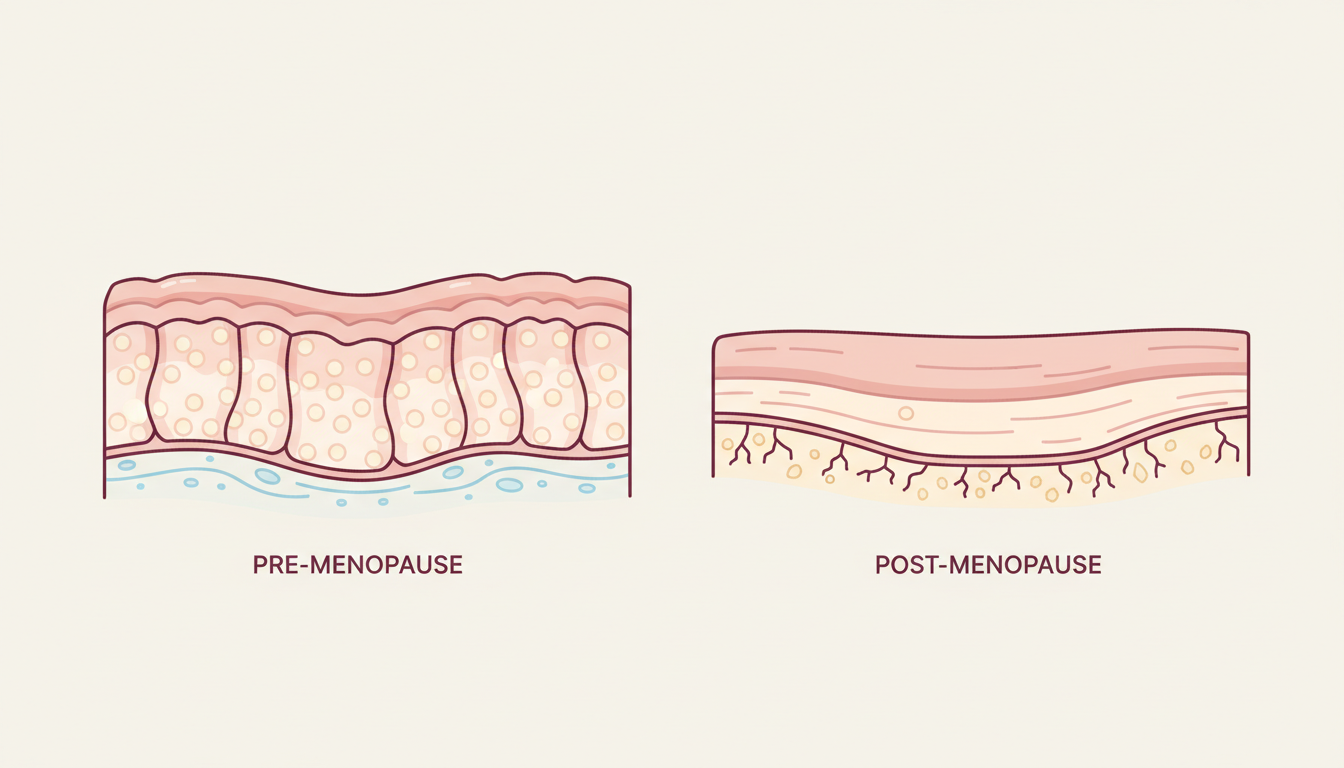
The lining of the vagina is estrogen-dependent. When estrogen falls during perimenopause and stays low after menopause, that lining gets thinner, less elastic, and produces less lubrication. The medical name is genitourinary syndrome of menopause, and the Mayo Clinic reports it affects roughly half of postmenopausal women.
Thinner tissue tears more easily during sex. Those microabrasions are entry points for bacteria and viruses, including chlamydia, gonorrhea, herpes, and HIV. Lower estrogen also shifts the vaginal microbiome: glycogen-rich cells decline, lactobacilli drop, and pH rises from the protective acidic range (3.8 to 4.5) toward a more neutral environment where pathogens survive longer. The protective barrier you had at 30 is meaningfully weaker at 60.
None of this means menopausal sex is unsafe. It means the math changes. A single exposure that your body would have shrugged off two decades ago can carry more weight now, both biologically and in terms of how long an infection sits before symptoms appear. Public-health writing rarely names this shift. Clinical research on menopausal sexual health does, and it lines up with what the NHS guidance on vaginal dryness describes as a real change in tissue resilience after menopause.
When STI symptoms look like just menopause
This is where most missed diagnoses happen. Menopausal change and active infection share a near-identical symptom list, and providers in a rushed visit often default to the more common explanation. The CDC's STI overview notes that many infections in women remain asymptomatic or have only mild symptoms, which is the exact problem when the symptoms you do have are easy to misattribute.
Two patterns are worth flagging. First, postcoital bleeding (spotting after sex) is a classic atrophic vaginitis sign, but it is also one of the most common signs of cervical changes from HPV and of acute gonorrhea or chlamydia. Second, recurring or worsening discharge that does not respond to over-the-counter treatments deserves a swab, not a second tube of cream. The cause matters because treatment differs: a topical estrogen cream relieves atrophy without touching an underlying chlamydia or trichomoniasis infection.
The table below maps the most common postmenopausal symptoms to both their menopausal and infectious explanations. The point is not to alarm anyone. The point is to make clear that one diagnosis does not exclude the other, and that a swab plus a basic blood panel is the only way to settle the question.
| Symptom | Menopause cause | Possible STI cause |
|---|---|---|
| Vaginal dryness | Low estrogen, thinning epithelium | Chlamydia, trichomoniasis, early herpes |
| Postcoital spotting | Atrophic vaginitis, mucosal fragility | Gonorrhea, HPV-related cervical change, chlamydia |
| Painful sex | Vaginal atrophy, reduced lubrication | Active herpes outbreak, pelvic inflammatory disease |
| Unusual discharge | pH shift, bacterial vaginosis | Trichomoniasis, gonorrhea, chlamydia |
| Itching or burning | Atrophic vaginitis, yeast | Herpes, trichomoniasis, HPV |
| Pelvic discomfort | Hormonal shift, urinary changes | Pelvic inflammatory disease from untreated chlamydia or gonorrhea |
Why the condom conversation often stops at 50
For decades, condom messaging has been bundled with pregnancy prevention. Once pregnancy is no longer a possibility, many women stop reaching for them, and many partners stop offering. The infection-prevention case never gets made cleanly.
The biology cuts the other way. Thinner vaginal tissue, less lubrication, and a less acidic environment all favor pathogen transmission. Researchers describe this as mucosal fragility: small tears in the vaginal lining during sex give bacteria and viruses a more direct route into circulation. Lubricant helps reduce friction, but it does not replace barrier protection against infection.
Several behaviors compound the biological shift. Many women start new relationships after long monogamy without resetting their testing baseline. Visual or stated clean status often gets treated as equivalent to actual results. And a generation gap in sex education left out HIV testing routines and HPV almost entirely.
Condoms remain effective at the same physical job they have always done. The reason to use them after menopause is the same reason to use them at any age: they put a barrier between you and an exposure you cannot otherwise control. After menopause, the biological case for barrier protection is, if anything, stronger than it was before.
Water-based and silicone-based lubricants are safe with latex and polyisoprene condoms. Oil-based products (coconut oil, mineral oil, petroleum jelly) degrade latex and break the barrier. Use a generous amount of compatible lubricant to reduce friction microabrasions during sex; comfort and infection prevention pull in the same direction here.
Dating again, decades later
Divorce, widowhood, or simply choosing a new chapter brings many women back into dating after years or decades with one partner. The dating environment looks nothing like the one they left. App-based introductions, faster sexual timelines, and a culture that often skips the testing conversation entirely are the new defaults.
If your last partner was your spouse of 25 years, you may never have been screened for chlamydia, gonorrhea, or HPV. You may not know your HIV status. The World Health Organization reports that more than 1 million curable sexually transmitted infections are acquired every day worldwide among people aged 15 to 49. Surveillance in older age groups is less complete, so rates in the 50-plus cohort are likely undercounted in that figure rather than absent from it.
The American Medical Association has flagged STI rates in older adults as a growing primary-care concern, with guidance encouraging clinicians to screen patients in this age group rather than assuming low risk based on age alone.
This is not about regret over dating again. It is about making sure each new partner starts with shared information. A baseline panel for both people, before unprotected sex, is the same standard younger adults use. There is no medical reason for the standard to change after 50.
The prevention conversation has changed since the last time you had it. Pre-exposure prophylaxis (PrEP) is now an option for HIV prevention in higher-exposure scenarios. The HPV vaccine is approved through age 45 under shared clinical decision-making with a provider. At-home rapid panels make baseline screening straightforward when a clinic visit feels unnecessary. Bring questions to your next appointment rather than relying on memory of what was true twenty years ago.
Your immune system after menopause
Aging changes immune function, a process clinicians call immunosenescence. T-cell diversity drops, mucosal antibody production slows, and the body's ability to suppress dormant viruses weakens. This is part of why shingles outbreaks become more common after 50 and why the recommended shingles vaccine schedule starts at that age.
The same shift affects sexually transmitted viruses. Herpes simplex (HSV-1 and HSV-2) and human papillomavirus (HPV) often go through long quiet periods after initial infection. Reactivation in midlife can produce a first noticeable outbreak years or decades after the original exposure. A new herpes diagnosis at 60 does not necessarily mean a recent exposure. It can mean an old one that the immune system held in check until now.
The same logic applies to HPV. Persistent infection with high-risk HPV strains is the underlying cause of nearly all cervical cancers, and the CDC recommends continued cervical screening for women through age 65. The HPV vaccine itself is approved through age 45 under shared clinical decision-making per CDC HPV vaccination guidance, although routine vaccination remains targeted at adolescents and young adults.
What this means practically: if you tested negative years ago, that result is not a permanent stamp. Reactivation, new exposures, and changing immunity all justify rechecking when something feels different. The body that produced the original negative is no longer the same body responding to the same pathogens.
Testing after menopause: what most doctors miss
Routine well-woman visits past menopause often drop STI screening entirely. The default schedule shrinks to mammograms, blood pressure, and a periodic pelvic exam. Unless you raise the question, a full STI panel rarely happens.
The gap matters because asymptomatic infections are the rule, not the exception. The CDC notes that many cases of chlamydia in women have no obvious symptoms, and the same holds for early syphilis, hepatitis B, and HIV. A person can be infectious for months while feeling fine, which is the entire reason population-level screening exists. CDC STI prevention guidance recommends screening anyone who has had a new sexual partner, with no upper age cutoff in the recommendation.
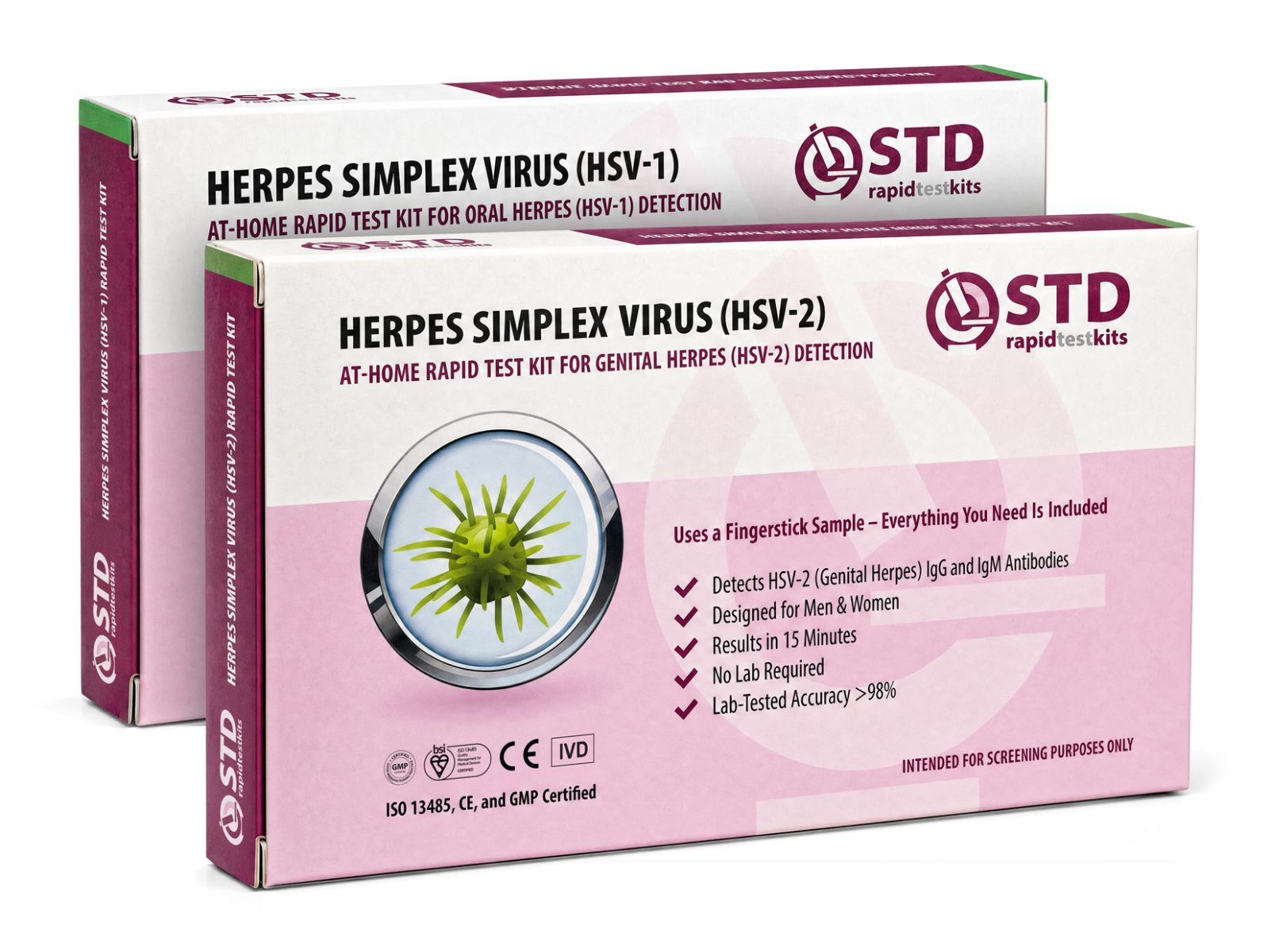
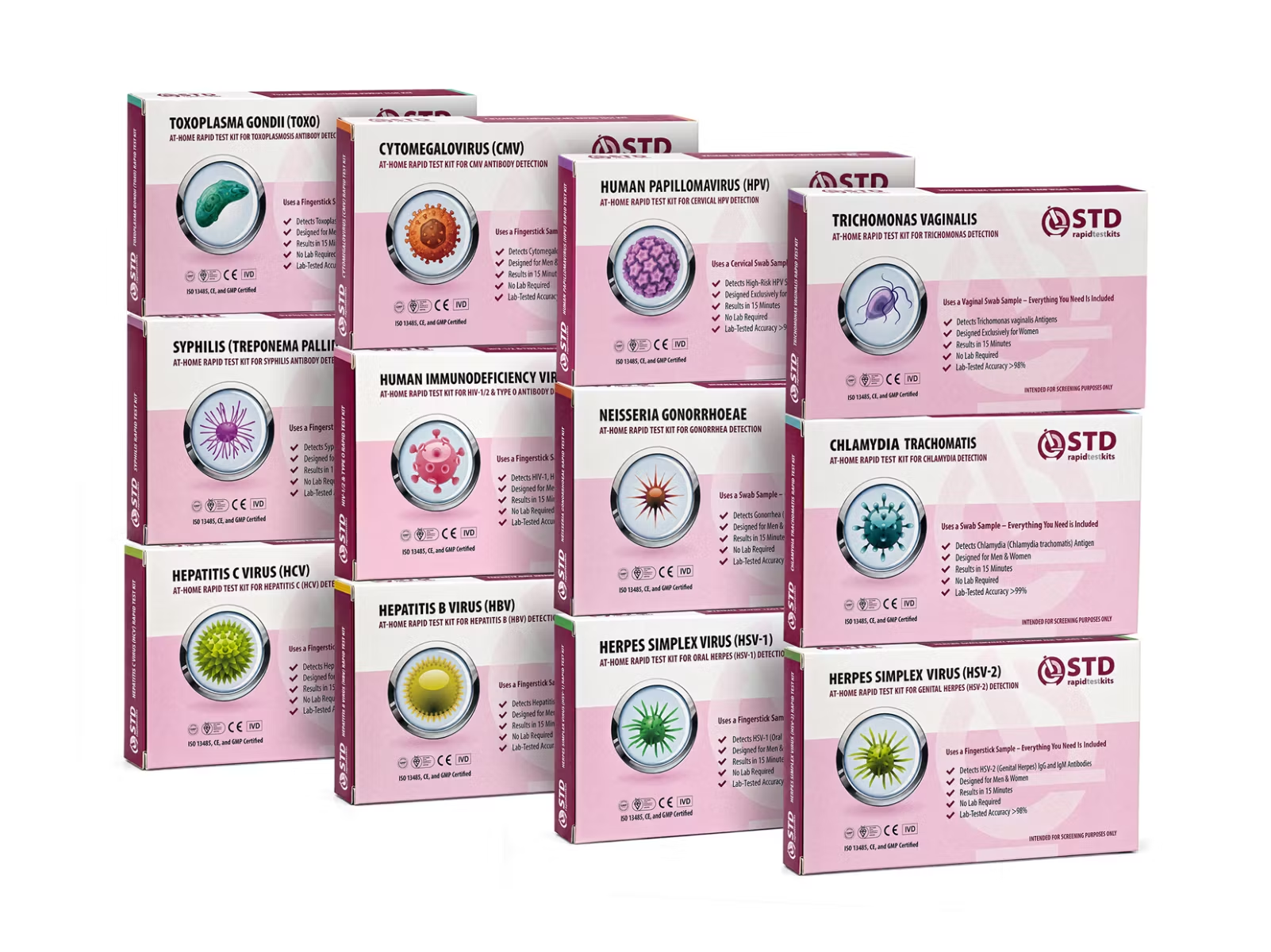
At-home test kits make this easier when a clinic visit is harder to arrange or when the conversation feels unnecessary for what should be routine care. Lateral-flow rapid kits screen at home in about 15 minutes; a positive result is worth confirming with a lab NAAT or serology. The two technologies are complementary rather than equivalent. Lab NAAT is the analytical reference standard for chlamydia and gonorrhea; rapid lateral-flow at home is the screening step that actually happens because the barrier is low.
What a postmenopausal STI panel typically covers
- Chlamydia and gonorrhea via swab in any new-partner scenario
- HIV antibody-antigen blood test as a baseline
- Syphilis serology if there has been any condomless exposure
- Hepatitis B and C if not previously screened in adulthood
- Herpes (HSV-2) antibody when symptoms suggest reactivation, plus HPV co-testing alongside the Pap smear through at least age 65
Atrophic vaginitis or STI? When the diagnosis gets it wrong
Atrophic vaginitis is the most common explanation for postmenopausal vaginal symptoms, but it is not the only one, and treating it without ruling out infection can let an STI sit and progress.
The overlap is striking. Burning, itching, abnormal discharge, postcoital bleeding, and dyspareunia (painful sex) appear on both lists. A topical estrogen cream may relieve the menopause-related cause without touching an underlying chlamydia or trichomoniasis infection. Months later, what gets blamed on slow improvement is actually an unaddressed second condition.
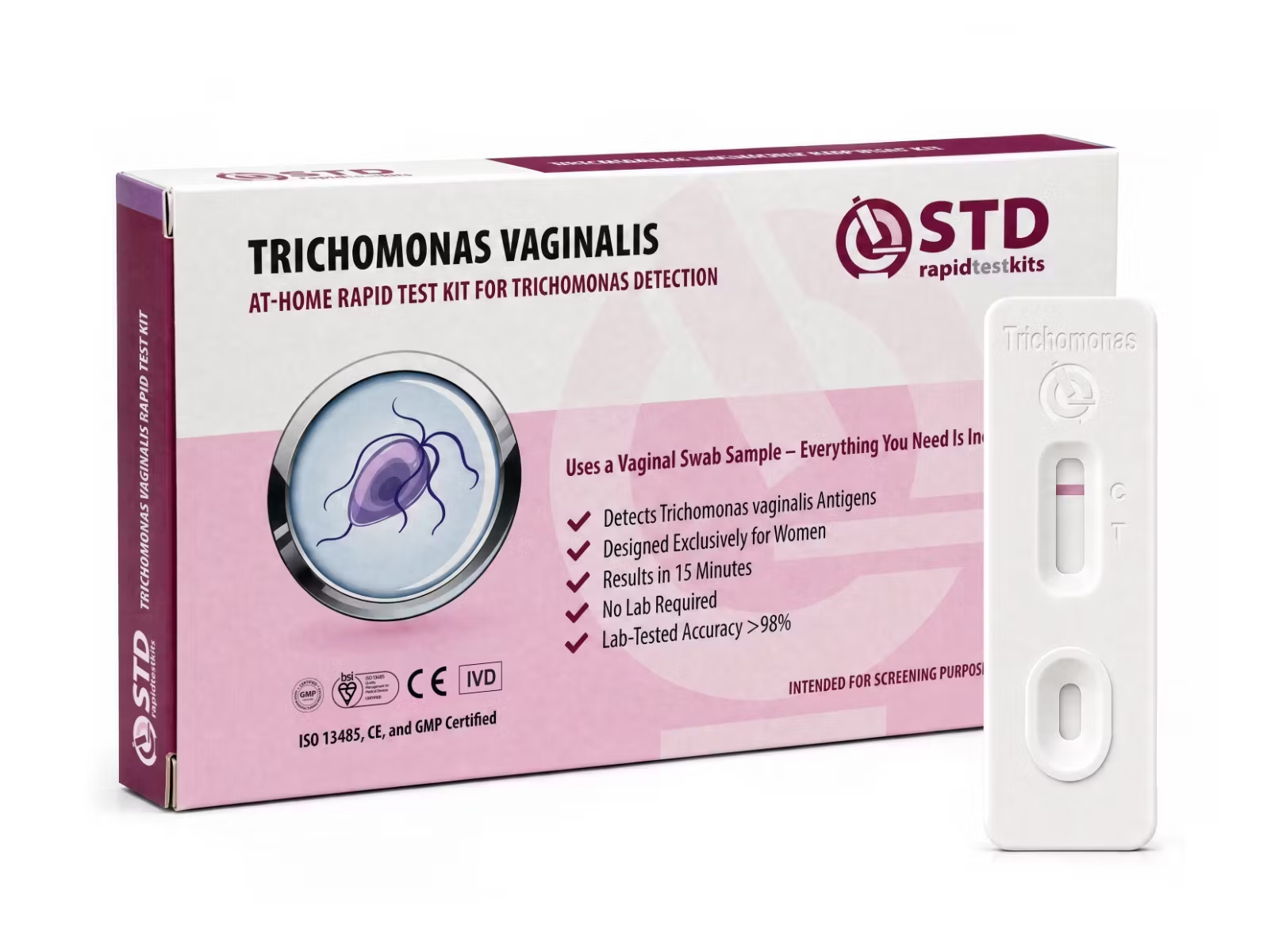
Trichomoniasis is particularly easy to miss. It is the most common nonviral STI worldwide per the World Health Organization, and in women it often presents with frothy yellow-green discharge, itching, and irritation that mimic atrophic and yeast-related symptoms. A simple swab confirms or rules it out within minutes.
The other underrecognized scenario is reinfection from a longstanding partner whose status changed. Long monogamous relationships are not immune to outside exposure. When symptoms appear after a partner's behavior or health has changed, an STI workup is appropriate even if intercourse with that partner has been ongoing for years.
The standard of care should be straightforward: any postmenopausal vaginal symptoms that do not resolve in two to four weeks of expected treatment for atrophy or yeast deserve a swab and a panel. Local discomfort is not a reason to lower the testing bar.
Practical protection: lubricants, barriers, and partner conversations
Barrier protection during any unknown exposure, a lubricant that supports the barrier rather than degrading it, and an upfront conversation about screening cover most of the practical ground in midlife.
Water-based and silicone-based lubricants are compatible with latex and polyisoprene condoms. Oil-based products (coconut oil, mineral oil, petroleum jelly) weaken latex and should not be used with condoms. A generous amount of compatible lubricant reduces the friction microabrasions that make pathogen entry easier, which is the same reason it relieves dyspareunia from atrophy. The two goals (comfort and infection prevention) reinforce each other rather than competing.
For partners, the script does not have to be elaborate. A short version: I have been tested recently and here are my results; have you? If the answer is uncertain, both partners getting baseline panels before unprotected sex is the standard approach, and the wait is short. At-home kits compress the timeline further when a clinic visit is awkward to schedule.
None of this is unique to midlife. What changes after menopause is only that the consequences of skipping these steps land harder on tissue that has less natural protection.
What the numbers show (and what they do not)
U.S. STI surveillance now consistently includes data on adults over 45, and the trend lines move up rather than down. CDC surveillance reports document a sharp rise in chlamydia, gonorrhea, and syphilis cases among adults over 50 over the past decade, a pattern the American Medical Association has flagged for primary-care attention. The increases are most pronounced in women re-entering the dating world after long monogamy, in urban areas, and in communities with limited access to sexual-health services.
Two caveats matter. The reported numbers are floors rather than ceilings: women who never get tested do not get counted, so the true incidence is higher than surveillance shows. And the data often lumps adults over 45 into broad bands, which can obscure the more pronounced increases happening within narrower age brackets.
What this means for an individual reader is simple. The number that matters most is your own: your partner count, your screening history, and when you were last tested. Get tested, and you become someone the system can actually see and treat.
Rising STI rates in older adults reflect both real epidemiologic shifts and improved counting. Reported numbers are population-level floors, not personal verdicts. Individual risk still depends on partner count, partner history, condom use, and how recently you were last screened.
Bacterial vs viral STIs: what the distinction means
Treatment options depend on what kind of infection is involved, and that becomes more relevant when an at-home test returns a positive result.
Bacterial STIs (chlamydia, gonorrhea, syphilis, plus trichomoniasis under the parasite category) are typically curable with a short course of antibiotics or antiparasitic medication. Early treatment prevents complications like pelvic inflammatory disease, which can still cause damage in postmenopausal women even though pregnancy is no longer the concern. Untreated chlamydia or gonorrhea can also seed cardiovascular and joint inflammation in older adults.
Viral STIs (HIV, hepatitis B, hepatitis C, herpes, and HPV) are managed rather than cured. Modern antiretrovirals make HIV a chronic, treatable condition with near-normal life expectancy when treatment is consistent. Hepatitis C is now curable in most cases with direct-acting antiviral courses lasting 8 to 12 weeks. Herpes outbreaks can be reduced in frequency and severity with daily suppressive medication. HPV is monitored through cervical screening, with treatment focused on any cellular changes the virus produces rather than the virus itself.
Whichever category an infection falls into, the next step after a positive at-home result is the same. Confirmation testing through a clinician, then targeted treatment or monitoring. The home test answers the first question (do I have it?) so you can move on to the second (what now?).
| STI | Curable or managed | Standard approach |
|---|---|---|
| Chlamydia | Curable | Short course of antibiotics; partner treatment |
| Gonorrhea | Curable | Antibiotic injection plus oral course |
| Syphilis | Curable | Penicillin (single or multiple doses by stage) |
| Trichomoniasis | Curable | Single oral antiparasitic dose |
| HIV | Managed | Daily antiretroviral therapy for life |
| Hepatitis B | Managed | Antiviral therapy when active; vaccine prevents new infection |
| Hepatitis C | Often curable | 8 to 12 week direct-acting antiviral course |
| Herpes (HSV-1, HSV-2) | Managed | Daily suppressive antivirals reduce outbreaks and transmission |
| HPV | Monitored | Cervical screening; treatment of any cellular changes |
How to talk to your doctor without shrinking
Many midlife women describe the STI conversation with primary care as the hardest part. Decades of cultural conditioning treat older women's sexuality as either invisible or inappropriate. That conditioning lives inside the exam room too.
Direct requests tend to work better than open-ended ones. Telling a provider you are sexually active and want a full panel today usually gets results; asking whether you need screening often gets a default answer calibrated to average risk. A short script you can take to your next visit:
- I am sexually active again. I would like a full STI panel today.
- I am postmenopausal and want to understand my screening schedule going forward.
- I have symptoms that could be infection or could be atrophy. Can we test before assuming?
If the response is dismissive (some version of you do not need that at your age), that is information about the provider, not your medical situation. A second opinion or an at-home rapid panel are both reasonable next steps. Sexual-health screening does not have an upper age cutoff in any major clinical guideline.
One practical note: if you bring a list of specific tests rather than asking generally, you are more likely to leave with the orders you wanted. The list earlier in this article is a starting point.
More than 1 million curable sexually transmitted infections are acquired every day worldwide in people 15 to 49 years old, the majority of which are asymptomatic.
FAQs
- Can you still get an STI after menopause?
- Yes. Menopause ends fertility, not the ability to acquire or transmit infections. Lower estrogen actually thins vaginal tissue and weakens local defenses, which can make some STIs easier to contract from a single exposure than they would be in younger women.
- Why does menopause increase STI risk?
- Estrogen loss after menopause shifts the vaginal environment in ways that each favor pathogen entry: thinner epithelium, reduced lubrication that makes microabrasions during sex more common, and a pH rise from the protective acidic range into neutral territory where bacteria persist longer. Age-related immune decline adds a fourth vulnerability layer on top of the local changes.
- Should I still use condoms after menopause?
- Yes. Pregnancy is no longer the reason, but every other reason still applies. Condoms remain the most effective barrier against bacterial and viral STIs at any age. Use water-based or silicone-based lubricant to support comfort; oil-based products weaken latex.
- What menopause symptoms could actually be an STI?
- Vaginal dryness, itching, discharge changes, postcoital bleeding, and pain during sex all appear on both lists. A swab and a basic blood panel are the only way to tell them apart, and any symptom that does not improve with two to four weeks of expected menopause treatment deserves an STI workup.
- How often should women over 50 get tested?
- With any new partner, before the first unprotected exposure. Then annually if behavior is consistent, or sooner if symptoms appear. With a single long-term partner whose status has not changed, annual screening is reasonable but not strictly required by national guidelines.
- Can I test for STIs at home after menopause?
- At-home rapid lateral-flow panels and individual swab or fingerstick tests are accurate when used correctly, making home screening accessible without a clinic visit. They are most useful as a screening step or when scheduling a clinic visit is inconvenient. Confirm any positive result with a clinician for treatment and any further testing.
- Is the HPV vaccine still useful at my age?
- The HPV vaccine is approved through age 45 under shared clinical decision-making with a provider. Below 26, vaccination is routine. Above 26, the value depends on exposure history and risk profile, which is a conversation worth having with a primary care doctor.
- Do new herpes outbreaks really start in midlife?
- Yes. Most adult HSV-2 infections trace back to exposures earlier in life, with the immune system holding the virus dormant. Age-related immune shifts can allow a first noticeable outbreak in midlife, even decades after the original exposure. A new diagnosis at 60 is not necessarily a recent infection.
- U.S. Centers for Disease Control and Prevention. Sexually transmitted infections overview, surveillance, and prevention guidance, including data on rising rates among adults over 45.
- World Health Organization. Fact sheet on sexually transmitted infections (STIs), including the global daily incidence figure of more than 1 million curable infections acquired per day in people aged 15 to 49.
- Mayo Clinic. Vaginal atrophy (atrophic vaginitis): symptoms, causes, and management, including prevalence in postmenopausal women and overlap with infection symptoms.
- American Medical Association. Clinical guidance on rising STI rates among older adults and recommendations for primary-care screening across the lifespan.
- U.S. Centers for Disease Control and Prevention. HPV vaccination guidance, including the option of vaccination through age 45 under shared clinical decision-making with a provider.
- U.S. Centers for Disease Control and Prevention. STI prevention and screening guidance for sexually active adults of any age, including with new partners.
- U.S. Centers for Disease Control and Prevention. Cervical cancer screening recommendations, including continued screening for women through age 65.
- NHS. Vaginal dryness: causes, treatment, and the role of menopausal hormonal change in genitourinary tissue resilience.
