
Published: August 2025 | Last updated: May 2026 | Editorial review and quality control: Martina N.
Numbers have a way of looking definitive even when they are not. When the U.S. Centers for Disease Control and Prevention released provisional 2024 data showing reported chlamydia, gonorrhea, and syphilis cases ticking down for the first time in years, the headline practically wrote itself: STI rates are finally dropping. Public health officials cheered. Some news outlets ran cautiously optimistic stories. The trendline pointed in the right direction.
Reported cases and actual cases are not the same thing. A reported case requires a test, a positive result, and a logged report to a health department. Lose any link in that chain and the case disappears from the data without disappearing from the population. Testing volumes in the United States have been falling since the pandemic, sharply in some primary care settings, and several recent analyses suggest the apparent decline reflects fewer people getting checked rather than fewer people getting infected.
This article walks through what the surveillance data does and does not show, why falling test counts can produce reassuring-looking numbers, and how to think about your own testing decisions when the headline statistics are hard to trust.
Key Takeaways
- Reported U.S. STI cases dipped slightly in provisional 2024 data, but testing volumes dropped at the same time, and positivity rates held steady or rose, raising the question of whether infections fell or simply went undetected.
- Most chlamydia, gonorrhea, HPV, and herpes infections cause no noticeable symptoms, so people who only get tested when they feel sick miss the largest share of actual disease burden in the community.
Behind the Dip: What the Numbers Are Hiding
Provisional surveillance data from the CDC's STI program showed combined reported cases of chlamydia, gonorrhea, and syphilis declining modestly between 2023 and 2024, after years of steady increases (CDC STI surveillance). On its face, this looks like a long-awaited turning point.
The complication is timing. The same period saw reported testing volumes fall in primary care, college health, and family planning clinics across multiple states, particularly for asymptomatic chlamydia screening in people aged 15 to 24. When the size of the screened population shrinks, the count of identified cases shrinks with it, even if the underlying prevalence stays the same.
A useful sanity check is the positivity rate, the share of tests that come back positive. If real infection rates were falling, positivity should fall too. In several recent state and city-level analyses, positivity has held steady or risen even as case counts dipped. That pattern is consistent with hidden infections rather than fewer infections (WHO STI fact sheet).
The longer-term picture also matters. Even with a recent dip, reported U.S. case counts for chlamydia, gonorrhea, and syphilis remain substantially higher than a decade ago, and congenital syphilis has continued to rise sharply.
Reported case counts go down whenever testing volumes go down, even if no infections were prevented. Positivity rate, the share of tests that come back positive, is more revealing. If real prevalence is falling, positivity should fall with it. If positivity holds steady or climbs while case counts drop, the most likely explanation is that fewer infections are being detected, not fewer infections occurring.
When Tests Vanish, So Do the Diagnoses
Surveillance data has a hidden assumption baked into it: a case has to be found before it can be counted. When fewer people get tested, the cases do not vanish, only the records of them. The infections still exist, still transmit, and still cause complications. The records are what go missing.
Post-pandemic testing patterns make this concrete. Several U.S. analyses found that routine STI screening in primary care dropped sharply between 2020 and 2023 and has not returned to pre-pandemic levels. In the United Kingdom, the Nuffield Trust documented a long, steady decline in chlamydia screening among young adults since the early 2010s, with corresponding drops in reported diagnoses (Nuffield Trust analysis).
Epidemiologists are quick to point out that the British decline does not reflect a healthier young adult population. It tracks closely with reductions in publicly funded sexual health services, fewer screening prompts at GP visits, and a quieter public health messaging environment. Screening volume drives the British numbers more than incidence does.
The same pattern can play out at the local level inside the United States. A clinic that loses staff and trims its hours by 60% will diagnose fewer cases the following year, with no change in the surrounding community's actual transmission rate. Those missing diagnoses look like good news on a public dashboard.
Routine asymptomatic chlamydia screening among UK young adults has roughly halved since the early 2010s, and reported diagnoses fell over the same period. Public health analysts attribute the diagnostic drop primarily to reduced screening capacity, not to safer behavior in the underlying population.
Why the Asymptomatic Default Hides So Much
Most STIs do not announce themselves. Roughly 70 to 80 percent of chlamydia infections in women cause no symptoms, and a substantial share of gonorrhea infections in any anatomic site are also silent. HPV is asymptomatic in the overwhelming majority of carriers. Genital herpes can shed virus and transmit between partners without ever producing a noticeable lesion. Early-stage syphilis can present with a single painless ulcer that heals on its own and is missed entirely.
Public health screening recommendations are built around this reality. The CDC advises annual chlamydia and gonorrhea screening for sexually active women under 25 and for people in higher-risk groups regardless of symptoms (CDC screening recommendations). The reasoning is simple: if you wait for symptoms, you miss most infections, and missed infections drive most of the long-term harm, including pelvic inflammatory disease, infertility, and onward transmission.
This is why a drop in symptom-driven testing does not equal a drop in infection. People who feel fine assume they are fine, and many of them are not. The asymptomatic carriers are the engine of community transmission.
Globally, the World Health Organization's 2020 estimates placed roughly 374 million new infections every year across just four curable STIs (chlamydia, gonorrhea, syphilis, and trichomoniasis), with the majority going undiagnosed at the time of transmission (WHO STI fact sheet). The ratio of diagnosed to actual infections is one of the largest in modern public health.
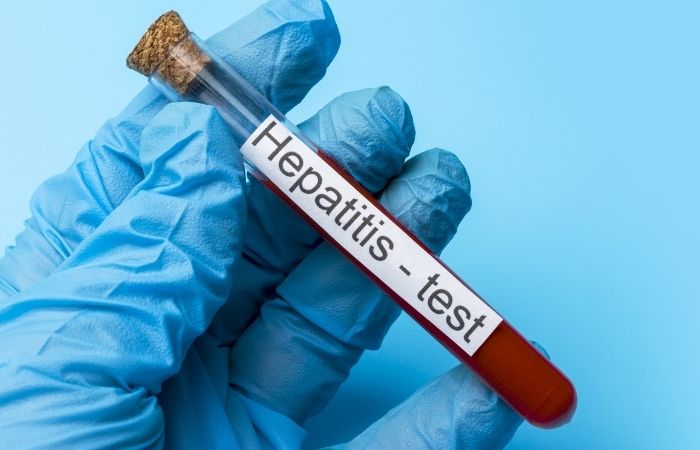
Window Periods and the False Reassurance Problem
A separate force quietly pushes reported case counts down: people testing too early. Every infection has a window period, the gap between exposure and the point at which a test can reliably detect either the pathogen or the antibody response to it. Test before the window closes and the result can come back negative even though the infection is real and active.
For most chlamydia and gonorrhea nucleic acid tests (NAATs) and rapid swab kits, the practical detection window is roughly 1 to 2 weeks after exposure. Syphilis blood tests typically need 3 to 6 weeks for serologic conversion, with follow-up testing at around 90 days standard if the initial result is negative but exposure is suspected. HIV antigen-antibody (fourth-generation) tests detect most infections within 18 to 45 days, with conservative final retesting recommended at 90 days. HSV-2 antibody tests can take anywhere from 4 to 12 weeks to turn positive, with some conversions taking up to 16 weeks. Window-period summaries for each infection are available through the CDC's general STI resources.
Someone who tests on day 3 after a worrying exposure and gets a clean result has not actually ruled out infection. They have only ruled out an infection mature enough to detect. If they take that result as definitive and never retest, the infection that develops over the following weeks never enters the surveillance system, and they may pass it to a partner before they ever realize they have it.
Window-period misunderstandings produce a steady flow of these missed cases.
| Infection | Reliable testing window after exposure | Confirmatory retest |
|---|---|---|
| Chlamydia (NAAT or rapid swab) | 7 to 14 days | Retest at 14+ days if first test was earlier |
| Gonorrhea (NAAT or rapid swab) | 7 to 14 days | Retest at 14+ days if first test was earlier |
| Syphilis (RPR or treponemal) | 3 to 6 weeks | Repeat at 90 days if recent exposure suspected |
| HIV (4th-generation Ag/Ab) | 18 to 45 days | Final confirmatory retest at 90 days |
| HSV-2 (antibody blood test) | 4 to 12 weeks (some up to 16) | Retest at 12 to 16 weeks if tested early |
| Hepatitis B (HBsAg) | 3 to 6 weeks | Retest at 6 months if exposure recent |
What Testing Volumes Look Like in Practice
The numerical effect of falling test counts is easier to grasp with concrete data. Even rough year-over-year comparisons make the pattern visible: as total tests drop, total reported cases drop, while the share of tests returning positive holds steady or rises. That positivity-rate signal is the closest thing surveillance has to a leading indicator that case totals are being undercounted.
The illustrative figures below are typical of directional patterns documented in CDC surveillance reports for chlamydia. Specific values vary by jurisdiction and reporting period; the takeaway is the relationship between the columns, not any single cell.
| Year | Chlamydia tests performed (illustrative U.S. range) | Reported chlamydia cases | Share of tests returning positive |
|---|---|---|---|
| 2022 | About 4.9 million | About 1.65 million | About 33.7% |
| 2023 | About 4.1 million | About 1.52 million | About 37.1% |
| 2024 (provisional) | About 3.7 million | About 1.38 million | About 37.3% |
What Public Health Surveillance Can and Cannot Tell Us
Surveillance systems are mirrors, not microscopes. They reflect whatever the testing infrastructure feeds them, with all of that infrastructure's blind spots intact. The CDC's annual STI surveillance report is built from cases that local providers and labs voluntarily report through state and territorial health departments, then aggregated nationally (CDC STI surveillance program).
Several known limitations apply. Asymptomatic infections that nobody tests for never appear. Cases diagnosed in private labs that fail to report do not count. Cases identified at home through over-the-counter rapid tests are not captured at all unless the person follows up with a confirmatory clinical test. Cases in populations who avoid the formal health system, including many uninsured adults, undocumented residents, and people in rural areas without nearby clinics, are systematically undercounted.
Newer infections add another layer of uncertainty. Mycoplasma genitalium is not part of routine surveillance in most U.S. jurisdictions, and population studies suggest it is more common than the limited data implies. The same goes for some forms of antibiotic-resistant gonorrhea: the resistance picture sharpens only when local labs choose to test isolates, which most labs do not routinely do.
None of this means surveillance data is useless. It does mean surveillance numbers are best read as a rough floor on the true burden, not a measurement of it. A 9 percent drop in reported cases against a backdrop of falling test volumes is much smaller than a 9 percent drop in actual infections, and it could be zero.
Common surveillance blind spots include asymptomatic infections that are never tested for, results from labs that don't report into the state system, at-home rapid test results without clinical follow-up, infections in people who avoid the formal health system, and emerging organisms like Mycoplasma genitalium that aren't part of routine surveillance in most U.S. jurisdictions.
How PrEP Programs Can Make the Numbers Look Worse
Some of the most counterintuitive surveillance signals come from places where prevention is working well. People taking pre-exposure prophylaxis (PrEP) for HIV are tested for HIV and other STIs every three months as part of standard PrEP follow-up. That cadence catches infections that would otherwise sit silent for months or longer.
The result, in clinics and cities with strong PrEP uptake, is that reported STI rates among PrEP users look elevated compared to the general population. The infections are not new arrivals. They are the routine background rate that always existed, finally being detected because the PrEP visit schedule forces the testing.
This is why a city with an aggressive PrEP program can show higher chlamydia and gonorrhea numbers than a similar-sized city without one, even if the two have identical underlying transmission. The first city is finding what the second is missing. By the standard public-health metric, the city with the higher reported number is the one doing a better job of detecting infections.
It also means national totals can shift in unintuitive ways. When a PrEP program expands, reported STIs can rise in the short term even as transmission falls. When a program contracts, the reported numbers fall and look like an improvement.
CDC PrEP guidance recommends STI screening every three to six months for everyone on PrEP. A clinic with strong PrEP uptake will detect more infections per 1,000 patients than a clinic without one, even when the underlying transmission rates in both populations are identical. Higher reported counts in those settings reflect better detection, not worse outcomes.
Global Patterns Versus Local Truths
Zooming out makes the testing-as-visibility problem more obvious. The World Health Organization's 2024 update flagged a major increase in adult and congenital syphilis worldwide and noted persistent or rising rates of gonorrhea and trichomoniasis across most regions, even as some areas showed nominal improvements (WHO 2024 STI update).
The same fact pattern can produce different headlines depending on how a country invests in surveillance. Australia, Canada, and several European countries have reported sustained gonorrhea increases over the past three years, but those increases partly reflect aggressive sentinel testing programs that catch infections others would miss. Countries with weaker surveillance can report flatter or improving numbers without any underlying improvement at all.
Inside the United States, the same pattern repeats by region and demographic group. Rates among men who have sex with men, transgender people, and Black and Latino communities in some metropolitan areas have continued to rise for syphilis even when broader state averages dipped. National totals can flatten while specific populations face worsening trends. In many of the places where transmission is rising fastest, screening capacity is not keeping up.
The headline 'STI rates are falling' tells you nothing about whether the people most likely to be infected are the ones getting tested.
| Factor | Effect on reported cases | Effect on actual infection rate |
|---|---|---|
| Fewer people getting screened | Reported cases fall | Unchanged or rising |
| Testing limited to symptomatic patients | Asymptomatic cases disappear from totals | Underestimated by 50% or more for some infections |
| Clinic closures and reduced hours | Reporting gaps and delays | Missed diagnoses, ongoing transmission |
| Active PrEP screening programs | Reported cases climb in PrEP users | Detection improves; transmission usually steady or falling |
| People testing inside the window period | False negatives never get re-counted | Real infection persists, often treated late |
| Shift to at-home rapid tests with no clinical follow-up | Cases bypass surveillance entirely | Infections detected privately but not reported |
What This Means for Your Own Testing Decisions
The takeaway from a noisy data picture is not paralysis. It is a slightly different framing for personal decisions: the headline numbers should not do your thinking for you. Public-health screening cadence is calibrated to how often these infections circulate in sexually active populations and how easily they evade detection, not to year-to-year case totals.
Three concrete principles follow:
- Make testing decisions from your own exposure history rather than current case-count headlines. A new partner, condomless sex, or a partner who tested positive for anything is reason enough to screen, regardless of whether national reports are trending up or down.
- Respect the window period. A negative test taken too soon is the most common cause of false reassurance in this whole conversation. If you tested within the first week or two after exposure, plan a confirmatory test at the right interval rather than treating the early result as final.
- Use baseline screening even when you feel fine. The CDC recommends annual chlamydia and gonorrhea screening for sexually active women under 25, more frequent screening for people in higher-risk groups, and routine HIV testing at least once for every adult. Asymptomatic infection is the rule, not the exception.

Practical Testing Options When the Data Is Unreliable
For people who want to test without waiting for a clinic appointment or working around limited public-health hours, at-home rapid tests fill a real screening gap. They are most useful for routine-cadence checks (every 3 to 12 months depending on risk), for follow-up after a higher-risk exposure once the relevant window has passed, and for partners who want to test together at the start of a new relationship.
At-home rapid tests use lateral-flow chemistry, the same technology behind home pregnancy and COVID tests. They are not laboratory NAATs and should not be presented as such. A negative rapid result after the proper window is reasonable reassurance; a positive result, especially for syphilis, HIV, or hepatitis B and C, should be confirmed with a clinical lab test before any treatment decisions. Used that way, the at-home format complements clinic care.
Combination panels are efficient for people who want a broader baseline check or who have had a recent exposure that could plausibly involve more than one infection. The 8-in-1 kit covers the eight most common STIs in a single panel, with a mix of fingerstick blood and self-collected swab samples.

Many STIs have no symptoms. As a result, many people who have an infection don't know it and can pass it to others without realizing.
FAQs
- If reported STI rates dropped, isn't that good news?
- It can be, but you can only tell from the underlying testing data. If reported cases drop while testing volumes also drop and positivity stays high or rises, the most likely explanation is hidden infections rather than fewer infections. The headline figure on its own does not distinguish the two scenarios, so look for whether testing volumes and positivity rates are reported alongside case totals.
- Can I trust a single negative at-home test result?
- Yes, if it was taken after the proper window for the infection in question and used correctly. A negative chlamydia or gonorrhea swab taken at least 1 to 2 weeks after exposure is reasonable evidence the infection is not present. A negative result on day 3 is not. For syphilis, HIV, and HSV-2 the windows are longer, and a single test soon after exposure is rarely enough to fully rule out infection.
- How often should sexually active adults get screened?
- The CDC recommends annual chlamydia and gonorrhea screening for sexually active women under 25 and for older women with risk factors. Sexually active gay or bisexual men and people on PrEP should screen every 3 to 6 months. Most adults should have HIV testing at least once. Anyone with a new partner, multiple partners, or a recent higher-risk exposure should test outside that baseline cadence.
- Why does positivity rate matter more than total cases?
- Positivity tells you what fraction of tests come back positive. If real prevalence is falling, positivity should fall along with case counts. If positivity holds steady or rises while case counts drop, the most plausible explanation is that fewer people are being tested rather than fewer being infected. Positivity is the closest thing surveillance has to a leading indicator of undercounting.
- Are at-home rapid tests as accurate as clinic tests?
- Rapid lateral-flow tests have very high specificity (low false-positive rate) and good sensitivity when used after the recommended window. They are not the same technology as laboratory nucleic acid tests (NAATs), which generally have higher analytical sensitivity, especially for asymptomatic infections. Rapid tests work well for screening and routine cadence checks; positive results should be confirmed with a clinical lab test before any treatment decisions.
- What is the 'window period' and why does it matter so much?
- The window period is the gap between exposure and the point at which a test can reliably detect infection. Test before the window closes and you can get a false negative even though the infection is real. Window periods range from about a week for chlamydia and gonorrhea to several months for HSV-2 antibodies. Knowing the window for the specific infection you are testing for is the single biggest determinant of result accuracy.
- Do at-home tests get reported into public health surveillance?
- Generally not. Most at-home rapid tests are run privately, with no automatic reporting to state or local health departments. If the user follows up positive results with a clinical confirmatory test, that lab result enters surveillance. Otherwise the diagnosis stays outside the system. As at-home testing grows, this is one of the largest blind spots in current STI surveillance.
- What should I do if I tested negative but my partner just tested positive?
- Retest at the right interval for the relevant infection, and treat the negative result as preliminary in the meantime. Many infections, including chlamydia and gonorrhea, can transmit before they are detectable, and a negative result inside the window period does not mean you are uninfected. Talk to a clinician about whether expedited partner therapy or prophylactic treatment is appropriate while you wait for confirmatory testing.
How we sourced this article: We synthesized current public-health surveillance data and screening guidance from the CDC, the World Health Organization, and the Nuffield Trust, alongside published analyses of post-pandemic testing volumes. Specific testing-cadence and window-period figures come from CDC and WHO clinical guidelines. Where data uncertainty exists, we have flagged it in the body of the article rather than presenting disputed figures as settled.
- U.S. Centers for Disease Control and Prevention. STI surveillance program landing page, with provisional and finalized national case counts for chlamydia, gonorrhea, syphilis, and congenital syphilis.
- U.S. Centers for Disease Control and Prevention. STI screening recommendations within the Sexually Transmitted Infections Treatment Guidelines, including annual chlamydia and gonorrhea screening for sexually active women under 25.
- U.S. Centers for Disease Control and Prevention. General STI patient resources, with links to per-infection testing guidance and window-period summaries.
- World Health Organization. Sexually transmitted infections (STIs) fact sheet, including the global incidence estimate of 374 million new infections annually across four curable STIs (2020 estimates).
- World Health Organization. May 2024 update flagging a major rise in syphilis worldwide alongside challenges in HIV and hepatitis surveillance.
- Nuffield Trust. Effectiveness of sexual health services in England, including longitudinal data on chlamydia screening volumes among young adults since the early 2010s.
