
Published: November 2025 | Last updated: May 2026 | Editorial review and quality control: Martina N.
Most people exposed to HIV will not feel anything for the first two weeks. The body is busy in ways no thermometer or test will pick up: HIV is replicating inside immune cells, antibodies are still forming, and the surface story is unremarkable. That silent stretch is part of what makes HIV so easy to miss. By the time symptoms do appear, if they appear at all, they often resemble a bad flu, a sore throat, or a stress rash, and most people chalk them up to a virus going around.
This guide walks through what an HIV-exposed body actually goes through, week by week and year by year. The short version: acute symptoms can appear 2 to 4 weeks after exposure (CDC About HIV). Without antiretroviral therapy, chronic HIV infection usually advances to AIDS in 10 years or longer, though in some people it advances faster (NIH HIVinfo, Stages of HIV Infection). With antiretroviral therapy started early, that progression often never happens at all. Knowing where you sit on the timeline matters because every milestone, the eclipse phase, acute infection, chronic latency, and AIDS, has a different testing window and a different action step.
Key Takeaways
- Acute HIV symptoms (fever, sore throat, rash, swollen lymph nodes) typically appear 2 to 4 weeks after exposure but can be absent or mild enough to be mistaken for the flu, per CDC and NIH guidance.
- Without antiretroviral therapy, chronic HIV infection usually advances to AIDS in 10 years or longer (sometimes faster); with antiretroviral therapy started early, most people never reach that stage and can have a near-normal life expectancy.
Why HIV Doesn't Show on Tests Right Away
The first stage after exposure has a clinical name: the eclipse phase. It is the gap between the moment HIV enters the bloodstream and the moment any test, antibody, antigen, or RNA, can reliably detect it. During this window, viral particles are being copied inside CD4 T cells (the white blood cells HIV targets), but their numbers remain below most laboratory detection limits. The body has not yet built measurable antibodies, and the p24 antigen marker sits below threshold for routine assays.
Eclipse durations differ by test type. Nucleic acid (RNA) tests, which look for the virus directly, can pick up HIV at roughly 10 days. Fourth-generation antigen and antibody tests need closer to 18 days at the earliest. Older antibody-only tests, including most fingerstick lateral-flow kits used at home, can take 23 days or longer for an accurate read, with most people seroconverting by 6 to 12 weeks (CDC HIV testing guidance).
This is the practical reason a test taken three days after a one-night risk almost always returns negative, even in someone who is genuinely infected. The viral load is real, the immune response is brewing, but the markers the test looks for have not yet crossed the line. Testing too early creates a false sense of relief that can delay the right test by weeks.
During the eclipse phase, viral load in blood and genital secretions can be very high, which means the person is unusually infectious to sexual partners. Every standard HIV test still returns negative during this stretch. Public-health data on transmission consistently show that a disproportionate share of new HIV infections come from people who do not yet know they have it, often because they are still inside this silent window.
Acute HIV: The 2-to-4-Week Symptom Window
Once the immune system catches on, it reacts hard. About two-thirds of people newly infected with HIV develop a flu-like illness 2 to 4 weeks after exposure, sometimes called acute retroviral syndrome or seroconversion illness (CDC About HIV). For some, it feels like the worst flu of their life. For others, it is a mild sore throat and a vague sense of feeling off. About one in three people experience no clear symptoms at all, which is part of why HIV is so often missed at this stage.
The most commonly reported acute HIV symptoms include fever, fatigue, sore throat, swollen lymph nodes (especially in the neck and armpits), muscle and joint aches, headache, mouth ulcers, a rash on the trunk, night sweats, and sometimes diarrhea or nausea. Symptoms typically last anywhere from a few days to two or three weeks, then resolve on their own as the immune system brings the viral load down to a lower setpoint. Even after the symptoms clear, the virus is still present in the body; the immune response has just brought it to a setpoint where it can be balanced for a while.
The reason acute HIV is so easy to dismiss is that every one of those symptoms maps onto something more familiar. A fever and sore throat in the first week looks like a head cold. Swollen lymph nodes and aches in the second week look like mononucleosis or seasonal flu. A rash and night sweats in the third week look like stress, an allergic reaction, or a recent change in detergent. Without context, the pattern reads as ordinary.
The table below shows the rough timeline, drawn from observational studies and CDC data on acute retroviral syndrome.
| Days After Exposure | Common Symptoms | How They're Often Misread |
|---|---|---|
| 10 to 14 days | Fever, sore throat, fatigue, headache | A bug going around, jet lag, allergies |
| 14 to 21 days | Swollen lymph nodes, muscle aches, trunk rash | Mono, stress, viral exanthem |
| 21 to 28 days | Night sweats, mouth ulcers, diarrhea, nausea | Food poisoning, anxiety, canker sores |
The Quiet Years: Chronic HIV Without Symptoms
After the acute phase resolves, HIV settles into clinical latency, also called chronic HIV infection. This stage can last years, sometimes a full decade or longer, with little or no outward sign that anything is wrong. The virus is still active. It is still copying itself inside immune cells, and it is still slowly chipping away at the body's CD4 T cell count. The clinical word for this stage suggests dormancy, though biologically nothing about HIV is dormant.
Without antiretroviral therapy, CD4 counts decline gradually over years (NIH HIVinfo, Stages of HIV Infection). A healthy adult typically sits between 500 and 1500 CD4 cells per microliter. Once the count drops below 500, the immune system starts losing some of its margin against everyday pathogens. Below 350, the risk of serious infections climbs. Below 200, the diagnosis officially becomes AIDS.
What does this stage feel like? In most people, it feels like nothing for years. Some notice subtle things they do not connect to HIV: a yeast infection that keeps coming back, fatigue that does not track with how much sleep they are getting, a few extra mouth or skin infections. Many feel completely fine and only learn they are HIV-positive through routine bloodwork, a partner's diagnosis, or a screening at a sexual-health visit.
This is the most dangerous stretch from a public-health standpoint, because someone who feels well rarely thinks to test. They can transmit HIV to partners without knowing it, and the immune system is being eroded the whole time. Antiretroviral therapy stops both problems: it suppresses viral replication so the immune system stabilizes, and it lowers viral load to the point of being untransmittable.

What an AIDS Diagnosis Actually Means: The Clinical Definition
AIDS, acquired immunodeficiency syndrome, refers to a specific late stage of HIV infection rather than a separate disease. The diagnosis is based on clinical criteria, not on how someone feels. A person with HIV is diagnosed with AIDS when one of two things happens (CDC HIV stages):
- Their CD4 T cell count falls below 200 cells per microliter, regardless of symptoms.
- They develop one of more than 20 specific opportunistic infections or cancers known as AIDS-defining illnesses, regardless of CD4 count.
The AIDS-defining illnesses include Pneumocystis jirovecii pneumonia (PCP), esophageal candidiasis (severe thrush that spreads down the food pipe), Kaposi sarcoma (a cancer that often appears as purple skin lesions), tuberculosis, severe cytomegalovirus infection, cryptococcal meningitis, certain non-Hodgkin lymphomas, and HIV-related wasting syndrome, among others. These are infections and cancers that a healthy immune system normally controls without difficulty.
Without antiretroviral therapy, chronic HIV infection usually advances to AIDS in 10 years or longer, though in some people it advances faster (NIH HIVinfo). Co-infections like hepatitis C, untreated chronic stress, malnutrition, and certain genetic factors can speed progression. Access to early diagnosis and antiretroviral therapy can stop progression entirely.
What AIDS looks like in the body depends on which AIDS-defining illness arrives first. It might present as a stubborn dry cough that turns out to be PCP. It might be unexplained weight loss of more than 10% of body weight (HIV wasting). It might be recurring shingles, persistent oral thrush, or a Kaposi sarcoma lesion that gets mistaken for a bruise. The unifying feature is that the immune system can no longer fight off pathogens that healthy bodies routinely shrug off.
An AIDS diagnosis is not a death sentence. Even at this late stage, antiretroviral therapy can rebuild CD4 counts, control opportunistic infections, and add decades of healthy life.
| Stage | What's Happening Biologically | Symptoms (If Any) |
|---|---|---|
| Eclipse phase (0 to ~10 days) | Virus replicating; tests still negative | None |
| Acute HIV (2 to 4 weeks) | Immune response surges; high viral load | Fever, sore throat, rash, swollen nodes |
| Chronic HIV (years) | CD4 declines slowly; viral load lower | Often none; subtle frequent infections possible |
| AIDS (CD4 below 200) | Severe immune compromise | Opportunistic infections, cancers, wasting |
Some people have flu-like symptoms within 2 to 4 weeks after infection. These symptoms may last for a few days or several weeks. Other people have no symptoms at all during this stage of HIV.
When Should You Test? Windows That Actually Work
The right time to test depends on the type of test and what it is looking for. HIV tests fall into three groups, each with a different detection window.
Antibody tests (including most home fingerstick rapid tests and oral-fluid tests) detect the antibodies your immune system makes against HIV. Because antibodies take time to build, these tests typically detect HIV between 23 and 90 days after exposure. The CDC recommends a follow-up test at 12 weeks for definitive results when an antibody-only test is the primary method.
Antigen and antibody combination tests (the standard fourth-generation lab blood test) detect both HIV antibodies and the p24 antigen, a viral protein that appears earlier than antibodies. These tests can detect HIV between 18 and 45 days after exposure. The 6-week mark is generally considered reliable for ruling out infection with this test type.
Nucleic acid tests (NAT or RNA tests) detect the actual genetic material of HIV. They can detect HIV between 10 and 33 days after exposure, the earliest of any test type. NAT testing is more expensive and is typically used in clinical settings for people with very recent exposures, suspected acute HIV, or for confirmatory testing.
The practical guidance: if you test soon after a known risk and the result is negative, the test is not necessarily wrong, it might just be too early. The CDC's standard advice is to retest at the end of the relevant window for confidence in a negative result. For at-home antibody tests, that means a confirmatory test at 12 weeks. For 4th-generation lab tests, a follow-up at 6 weeks. For someone with a high-risk exposure who needs an earlier answer, a clinic can order a NAT.
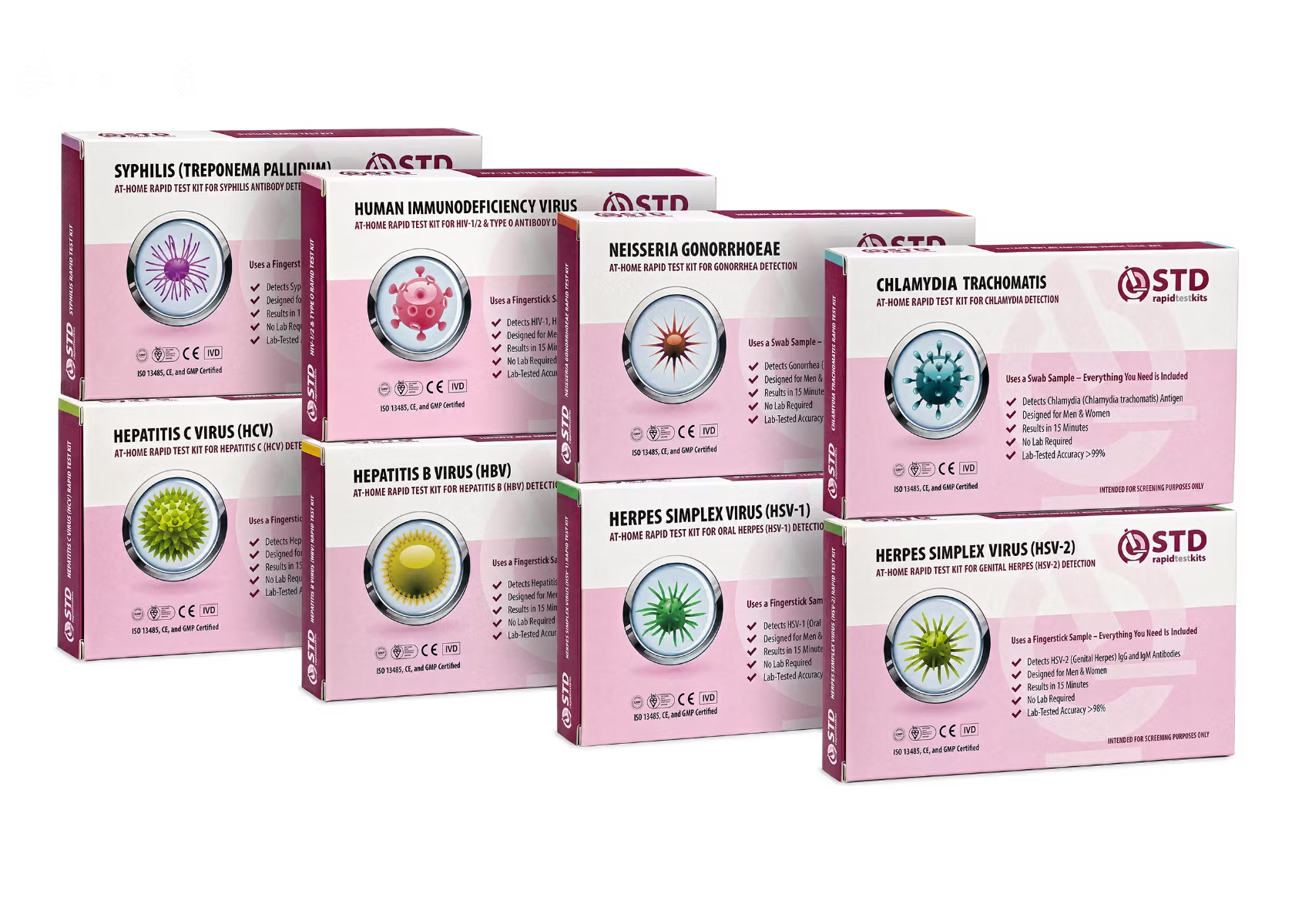
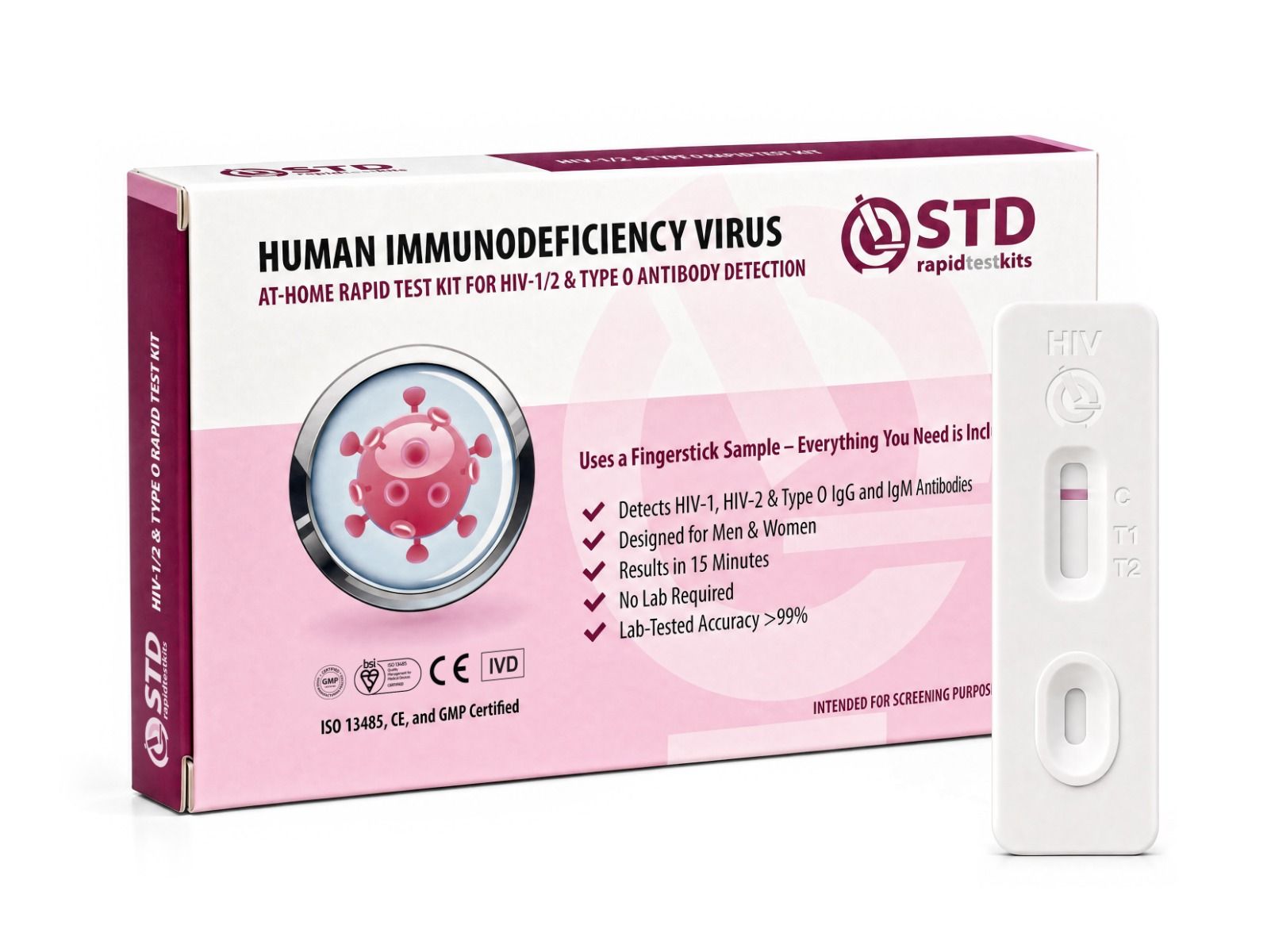
This article is published by stdrapidtestkits.com, which sells at-home rapid antibody-based HIV tests. The kits detect HIV-1 and HIV-2 antibodies via fingerstick and are most reliable from about 12 weeks after exposure. For acute HIV suspicion (high-risk exposure within the past 4 to 6 weeks), a clinic-based 4th-gen Ag/Ab test or a NAT is more sensitive, and we will say so when it is the right call.
| Test Type | Window of Detection | Best Time to Use |
|---|---|---|
| Rapid antibody (home fingerstick or oral) | 23 to 90 days post-exposure | 12 weeks for a definitive result |
| 4th-gen Antigen/Antibody (lab blood draw) | 18 to 45 days post-exposure | 6 weeks for a reliable result |
| Nucleic Acid Test (NAT or RNA) | 10 to 33 days post-exposure | Earliest answer; usually clinic-ordered |
How soon after exposure can a test detect HIV?
It depends on the test. A nucleic acid (RNA) test can detect HIV as early as 10 days after exposure. A 4th-generation antigen and antibody lab test detects HIV between 18 and 45 days. A rapid antibody test, including most at-home kits, takes 23 to 90 days, with 12 weeks the standard window for a definitive negative result.
Treatment Today: U=U and What Recovery Looks Like
Modern HIV treatment is one of the most dramatic public-health success stories of the past 30 years. Antiretroviral therapy (ART) is now typically a single combination pill taken once a day. It works by blocking specific steps the virus needs to replicate, and within months it usually drives the viral load below the limit of laboratory detection.
This is what is known as U=U: Undetectable equals Untransmittable. The principle, endorsed by the CDC and supported by multiple large studies (PARTNER, PARTNER2, Opposites Attract), is that someone with HIV who is on consistent ART and has had an undetectable viral load for at least six months cannot transmit HIV to a sexual partner. U=U does not mean cured; the virus is still in the body, although it is uninfectious through sex (WHO HIV/AIDS fact sheet).
Life expectancy on consistent treatment, when started early, is now close to that of someone without HIV. People with HIV are starting treatment at higher CD4 counts than ever before, and modern ART regimens have far fewer side effects than the early generations of the 1990s and 2000s. Most people achieve undetectable status within 3 to 6 months of starting therapy.
What usually happens after a positive HIV result
- Confirmatory testing: a clinic confirms the result with a lab-based blood test, especially if the first positive came from a rapid or home test.
- Baseline labs: CD4 count, viral load, resistance testing, and a full STI panel guide the initial treatment plan.
- Treatment initiation: most people start ART within days of confirmation; the U.S. and WHO both recommend rapid start.
- Follow-up: viral load is rechecked at 4 to 8 weeks, then every 3 to 6 months, until undetectable status is reached and maintained.
Don't Let Waiting Become a Strategy
Plenty of people who suspect they may have been exposed put off testing for weeks or months. The reasoning is rarely logical: if I don't test, the result can't be bad. Waiting feels protective in the moment. It isn't. The virus, if present, is replicating and possibly transmissible the entire time, and the immune system is working with worse information the longer treatment is delayed.
The data on outcomes is consistent: people who learn their HIV status early and start ART early have substantially better long-term immune recovery, lower viral load setpoints, and lower lifetime risk of AIDS-defining illness compared with those diagnosed late. Late diagnosis (CD4 below 350 at first diagnosis) remains a major driver of HIV-related illness in higher-income countries even now, despite testing being more accessible than ever.
Testing produces an answer either way. A negative result at the right window is a real negative, the kind that lets you stop refreshing search results. A positive result is the start of a treatment path that can lead to undetectable, untransmittable, near-normal-life-expectancy outcomes within months. The hard part is sitting still in the gap between the question and the answer, and the way through is to take the test.
For a routine sexual-health check after a known exposure or a new partner, an at-home HIV antibody kit at the 12-week mark is one practical option. For an earlier or more comprehensive answer, a clinic-based 4th-generation lab test or NAT is the right call.
FAQs
- How soon after exposure can HIV be detected?
- For the rapid antibody kits most people use at home, the reliable window is 12 weeks. If you had a high-risk exposure and need an earlier answer, a clinic-based 4th-generation lab test can rule out infection at 6 weeks; an RNA test can detect HIV in as few as 10 days. The earliest test that fits your exposure timeline is the right one to use.
- Can someone have HIV and feel completely fine for years?
- Yes. After the acute phase resolves, most people with untreated HIV feel essentially well for years, sometimes a decade or more, while the virus quietly reduces their CD4 count. This stage is called clinical latency, and it is the main reason routine testing matters even without symptoms.
- What's the difference between HIV and AIDS?
- HIV is the virus. AIDS is a stage of HIV infection defined by either a CD4 count below 200 cells per microliter or the appearance of one of more than 20 specific opportunistic infections or cancers (AIDS-defining illnesses). With effective treatment, most people with HIV today never reach the AIDS stage.
- What is a CD4 count and why does it matter?
- CD4 T cells are white blood cells that coordinate the immune response, and they are HIV's primary target. A healthy adult sits between roughly 500 and 1500 CD4 cells per microliter. Below 500, immune margin starts to thin. Below 200, the diagnosis becomes AIDS regardless of symptoms.
- If a test at 6 weeks is negative, am I in the clear?
- For a 4th-generation lab antigen and antibody test, a negative result at 6 weeks is generally considered reliable. For a rapid antibody-only test (most home kits), the CDC recommends a follow-up test at 12 weeks for a definitive negative. RNA tests rule out earlier but are not the standard at-home option.
- Does U=U really mean an HIV-positive partner can't pass HIV through sex?
- When someone with HIV is on consistent antiretroviral therapy and has had an undetectable viral load for at least 6 months, the risk of sexual transmission to a partner is effectively zero. This is U=U, Undetectable equals Untransmittable, and it has been validated in multiple large studies and endorsed by the CDC and WHO.
- What does "AIDS-defining illness" mean?
- It is a list of more than 20 infections and cancers that signal severe immune compromise. Examples include Pneumocystis pneumonia, esophageal candidiasis, Kaposi sarcoma, tuberculosis, cryptococcal meningitis, and HIV wasting syndrome. Developing one of these illnesses leads to an AIDS diagnosis even if the CD4 count is above 200.
- Can HIV symptoms come and go before AIDS develops?
- The acute symptoms (fever, rash, sore throat, swollen lymph nodes) usually appear once at 2 to 4 weeks and then resolve within a few weeks as the body brings the virus to a lower setpoint. After that, most people are symptom-free for years. Recurring or persistent symptoms during the chronic phase, like frequent yeast infections, persistent thrush, or unexplained fatigue, can be early signs that the immune system is losing ground.
- U.S. Centers for Disease Control and Prevention. About HIV: stages of infection, acute HIV symptoms, and progression overview.
- U.S. Centers for Disease Control and Prevention. HIV testing guidance: types of tests and detection windows.
- U.S. National Institutes of Health, HIVinfo. The Stages of HIV Infection: eclipse phase, acute, chronic, and AIDS, including the '10 years or longer' progression timing without ART.
- World Health Organization. HIV/AIDS fact sheet: global epidemiology, treatment, and U=U principle.
- U.K. National Health Service. HIV and AIDS overview: symptoms, testing, and treatment.
