Published: August 2025 | Last updated: May 2026 | Editorial review and quality control: Martina N.
Yes, you can have herpes and syphilis at the same time. Coinfection is well documented in clinical literature and far more common than most sex-ed messaging suggests. The two infections come from different families (a virus and a bacterium), they cause different symptoms, and they need different tests to detect. They share something important, though: each one can quietly raise the chances of catching the other.
That matters because each infection on its own is treatable. Syphilis is curable with antibiotics. Herpes is manageable with antiviral medication. The trouble starts when only one is spotted and the other goes unnoticed, often because the second sore felt different or wasn't there at all. The way out of that uncertainty is the same on every guideline: test for both, in the right way, at the right time.
This guide explains how coinfection happens, what each set of sores tends to look like, why a single test rarely tells the full story, and how to handle a positive result without the panic-spiral. The information here synthesizes guidance from the U.S. Centers for Disease Control and Prevention, the World Health Organization, the U.K. National Health Service, and the Mayo Clinic. It is editorial education and is not a clinical diagnosis. If you have a sore right now, see a clinician.
Key Takeaways
- Herpes and syphilis often show up together because each one creates breaks in the skin or mucous membrane that make the other easier to acquire (per CDC STI treatment guidelines).
- A herpes test will not detect syphilis and vice versa: syphilis is detected by a blood antibody test, while herpes is best confirmed by swabbing an active lesion (PCR or NAAT).
How herpes and syphilis end up showing up together
Coinfection is not a moral failing or a sign of being reckless. It is a biological pattern. The U.S. Centers for Disease Control and Prevention notes that genital herpes is a documented cofactor for the acquisition of HIV (CDC genital herpes information). The mechanism is straightforward. Herpes outbreaks cause small breaks in the skin or mucous membrane, and those breaks make it easier for other pathogens, including the bacterium that causes syphilis, to gain entry during sexual contact.
The reverse is also true. A primary syphilis chancre is a painless open ulcer that contains Treponema pallidum, the bacterium that causes syphilis. The same break in the skin that lets syphilis spread to a new partner also gives a herpes simplex virus already present in the body more opportunity to reactivate or shed. The result, in some patients, is two infections found in one round of testing.
Population data backs the pattern. The World Health Organization estimates that more than one million curable sexually transmitted infections (chlamydia, gonorrhea, syphilis, and trichomoniasis combined) are acquired worldwide every day, while herpes simplex virus type 2 affects roughly 520 million people aged 15 to 49 globally (WHO STI fact sheet). With both infections this widespread, simultaneous exposure during sexual contact is a known clinical pattern.
Genital herpes lesions create microscopic breaks in the skin or mucous membrane. Those breaks are easier entry points for Treponema pallidum (the syphilis bacterium) and for HIV. A syphilis chancre acts the same way in reverse, giving herpes simplex virus already in the body more opportunity to shed or reactivate.

What the sores tend to look like, and where they overlap
Symptom recognition is useful but not diagnostic. Both infections can present typically, atypically, or not at all. With that caveat in mind, the classic patterns from clinical guidance look like this:
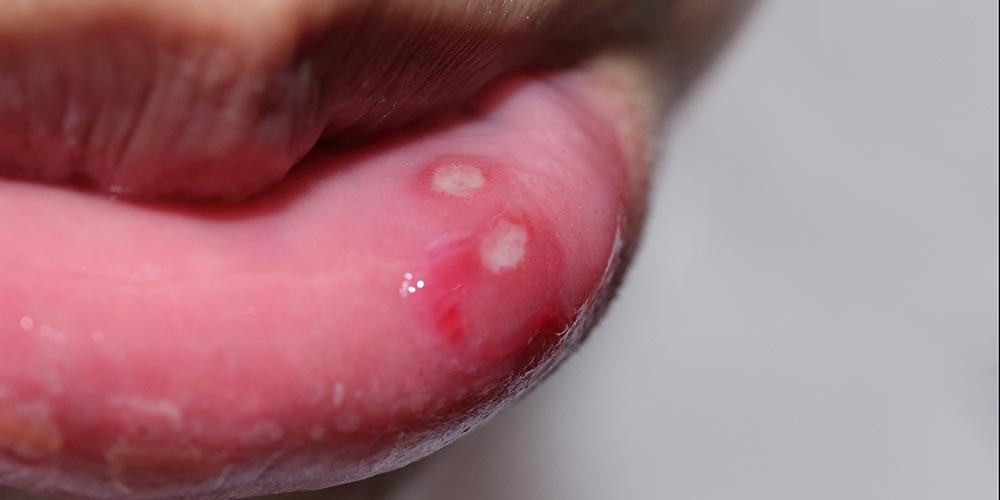
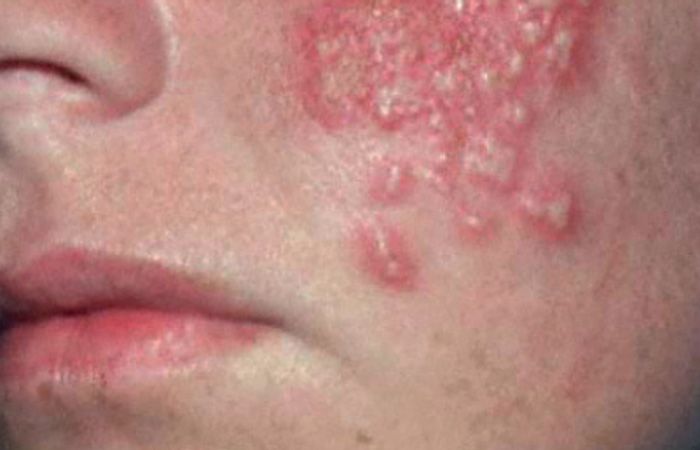
Herpes sores typically appear as clusters of small fluid-filled blisters that progress to open ulcers and then crust over. They are usually painful, often itchy, and frequently preceded by a tingling or burning sensation in the area for a day or two before the visible lesion appears. A first outbreak can include flu-like symptoms (fever, swollen lymph nodes, body aches), while later recurrences are usually milder and shorter (CDC herpes treatment guidelines).
Syphilis sores, in the primary stage, classically appear as a single round ulcer with a clean, raised border. The hallmark feature is that the chancre is painless. Many people miss it entirely, especially when it sits inside the vagina, on the cervix, in the anus, or under the foreskin. Without treatment the chancre heals on its own in three to six weeks, but the bacterium has by then entered the bloodstream and the infection moves to its secondary stage, which can include rashes (often on the palms and soles), patchy hair loss, and flu-like symptoms (Mayo Clinic syphilis overview).
The visual overlap shows up at the edges. A herpes lesion that has burst and is healing can resemble a shallow round ulcer. A syphilis chancre that has been irritated by clothing or mechanical friction can look angrier than the textbook description. When both are present at once, a person may have a tender cluster on one part of the genitals and a separate painless ulcer somewhere else. Self-diagnosis from a photo search will not reliably tell them apart, which is why the next section matters.
Why one test is not enough
Herpes and syphilis are detected with different methods. There is no single sample type that catches both reliably. CDC and NHS testing pathways describe it like this:
- Herpes is best confirmed during an active outbreak by swabbing a lesion and running a nucleic-acid amplification test (NAAT) or polymerase chain reaction (PCR) test, the swab-based pathway used at U.K. sexual health clinics (NHS genital herpes information). Type-specific blood tests for HSV-1 and HSV-2 antibodies are also available, but they are usually used in specific scenarios (a partner has herpes, or there is a clinical reason to know the type) rather than as routine screening (CDC herpes treatment guidelines).
- Syphilis is detected by a blood draw, not a swab. The standard pathway uses a non-treponemal screening test (RPR or VDRL) followed by a confirmatory treponemal test, or a reverse-sequence approach that runs the treponemal test first. Either way, the sample is blood, and the antibody response takes time to develop after infection (CDC syphilis information).
The practical implication for someone wondering whether they have one or both: a herpes swab will not detect syphilis, and a syphilis blood test will not detect a herpes outbreak. A clinician who runs only the test that fits the most obvious symptom will miss whatever else is present. If a sore is the reason for the visit, it is reasonable to ask for both a swab of the lesion and a blood draw covering syphilis (and ideally HIV), even when the working theory is just one infection.
Can a single STI test rule out both herpes and syphilis?
No. Herpes is detected by swabbing an active lesion (PCR or NAAT), while syphilis is detected by a blood antibody test. A negative result on one method says nothing about the other infection. To rule out coinfection, both sample types are needed, and the timing depends on when the exposure happened (window periods differ between the two infections: roughly twelve weeks for HSV-2 antibodies, up to ninety days for syphilis seroconversion).
What treatment looks like for each
Both infections respond well to standard care, especially when caught early.
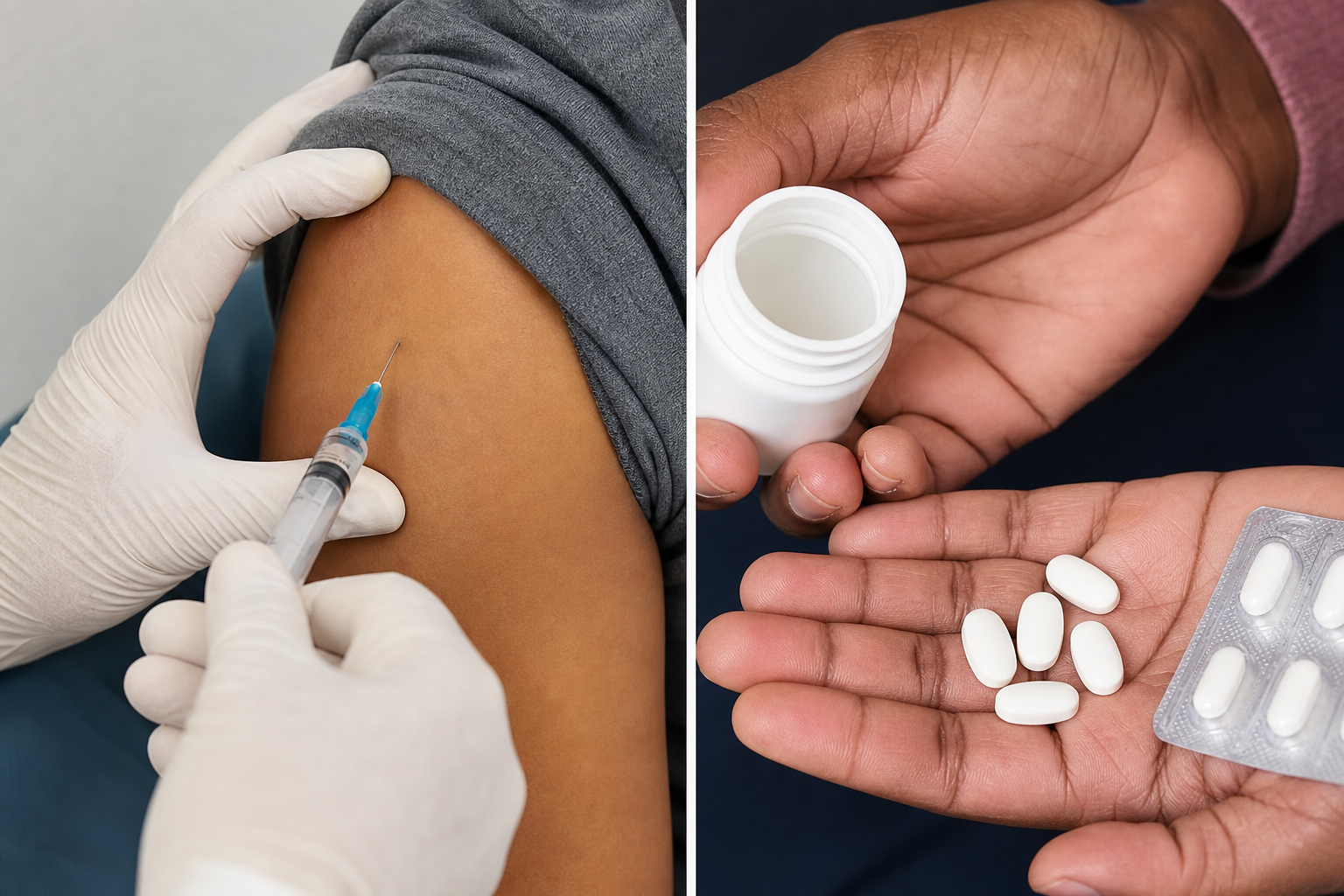
Syphilis treatment in the primary or secondary stage is a single intramuscular injection of long-acting benzathine penicillin G. Late or unknown-duration syphilis usually requires three weekly injections. Penicillin allergy can change the regimen, but the CDC reaffirms penicillin G as the preferred drug across stages and notes that no clinically proven alternative exists for syphilis during pregnancy (CDC syphilis treatment guidelines). After treatment for primary or secondary syphilis, follow-up clinical and serologic evaluation at six and twelve months tracks whether the antibody titer is falling appropriately. Later-stage and HIV-positive patients follow longer monitoring schedules.
Herpes treatment uses antiviral medication, most commonly acyclovir, valacyclovir, or famciclovir. These drugs do not eliminate the virus from the body, but they reduce the severity and duration of outbreaks, lower the frequency of recurrences when taken daily as suppression, and reduce the risk of transmission to a sexual partner. Many people with herpes go long stretches between outbreaks, and a meaningful number have only one symptomatic episode and never another.
Treating one infection does not treat the other. Penicillin will not affect a herpes outbreak. Valacyclovir will not treat syphilis. Each diagnosis needs its own confirmation and its own drug regimen, which is why testing for both is part of the standard workup.
Some situations are not appointment-can-wait situations. Seek same-day medical care if a sore appears with high fever, severe pain that limits walking or urinating, swollen lymph nodes that are tender, a rash that spreads quickly, or any sore during pregnancy. Untreated primary or secondary syphilis in pregnancy can cause severe complications for the fetus, and the CDC recommends prompt evaluation.
How at-home testing fits in
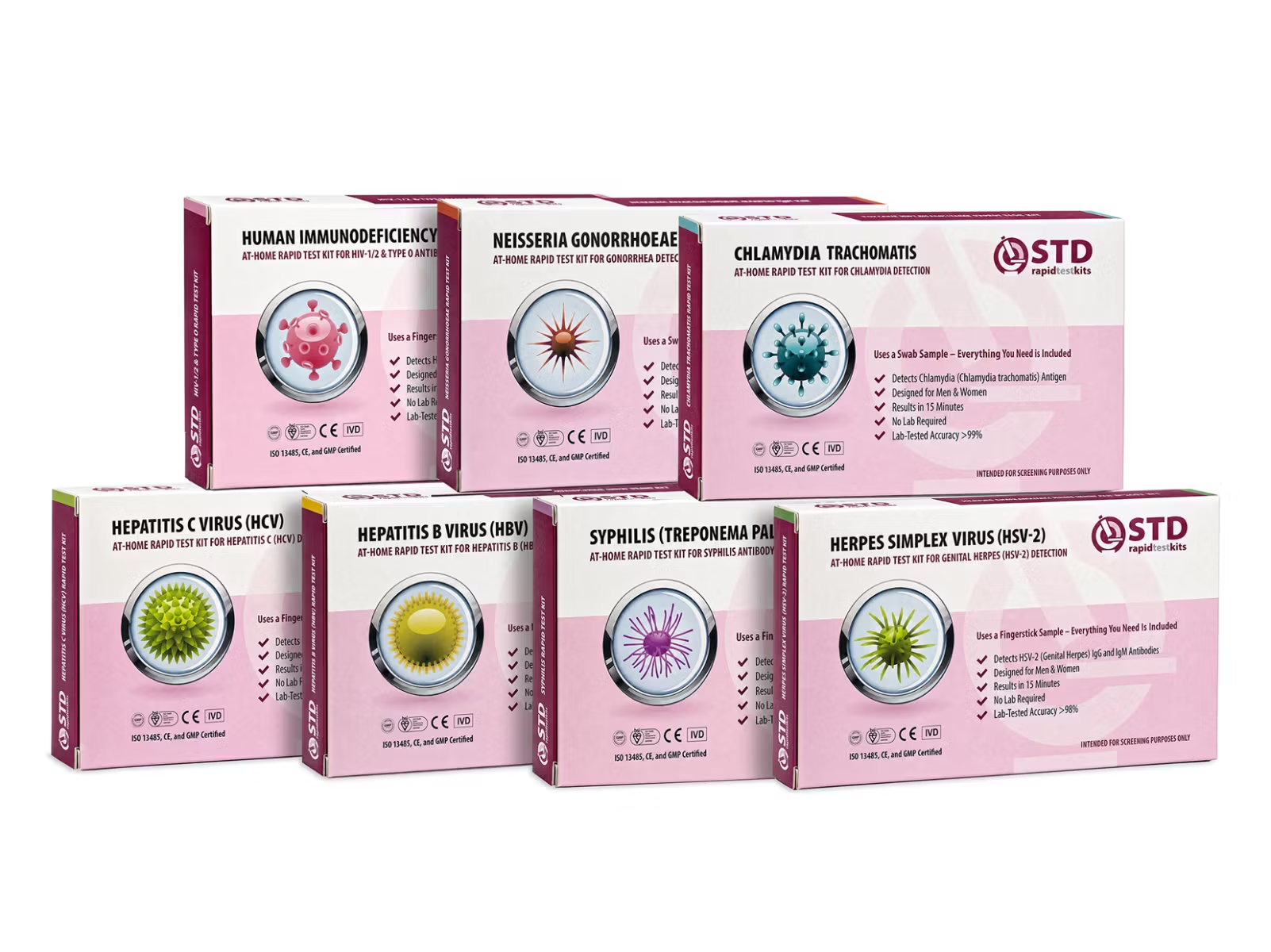
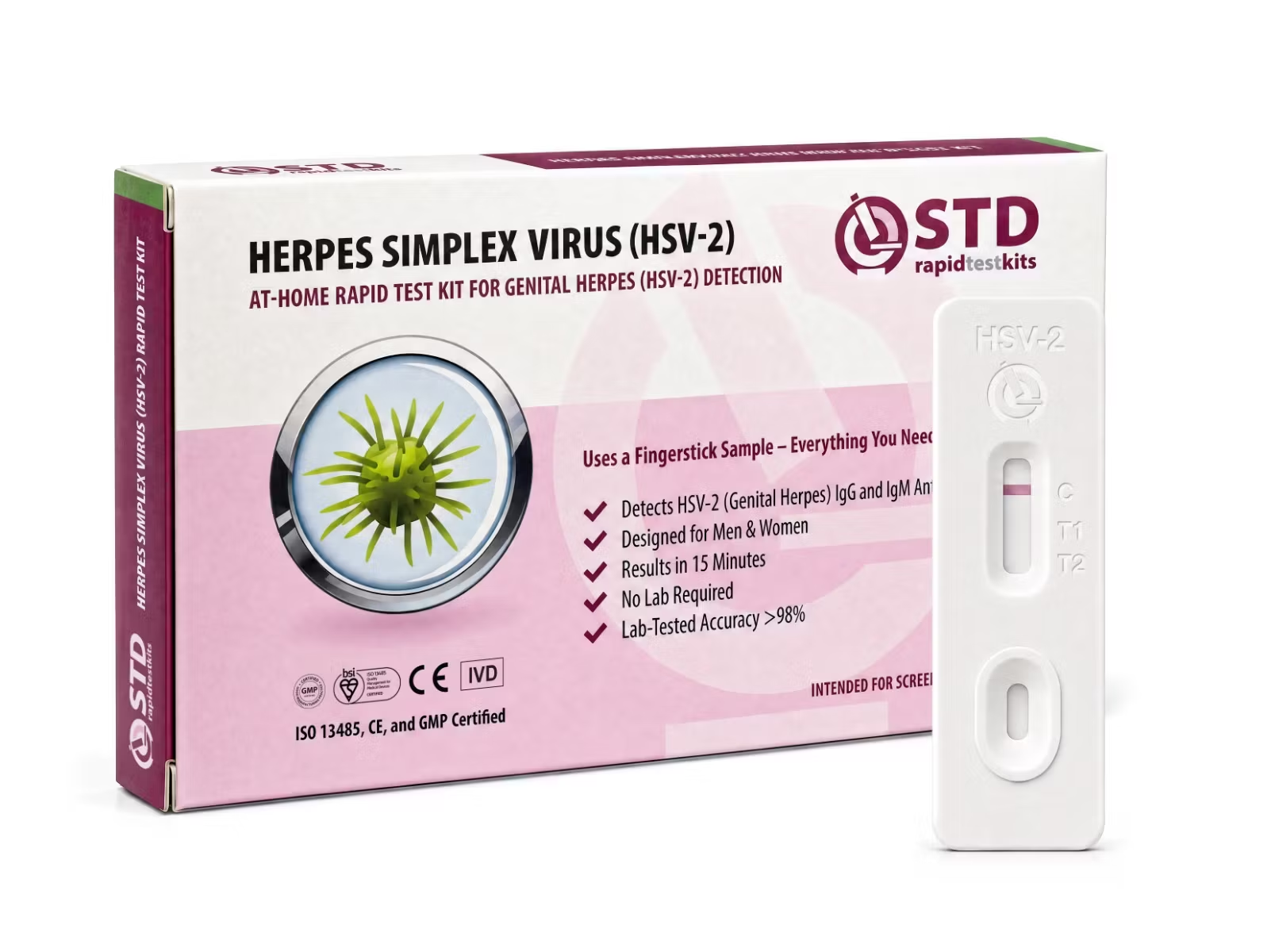
At-home rapid lateral-flow tests can cover several of the relevant infections without a clinic visit. They are useful screening tools, with two specifics worth understanding.
First, the technology. The rapid tests sold for home use are lateral-flow immunoassays. They are not the same as the laboratory PCR or NAAT methods used for confirmation in clinics. A positive result on a home test is a screening signal that should be confirmed with a follow-up clinic test. A negative result during the window period (the time between exposure and antibody seroconversion) cannot rule out a recent infection.
Second, the sample type. Combination kits use a fingerstick blood sample for the blood-based tests (HIV, syphilis, hepatitis B, hepatitis C, HSV antibodies) and a self-collected genital swab for the swab-based tests (chlamydia, gonorrhea, plus the women-only trichomoniasis and HPV swabs). HSV-2 antibody home tests measure systemic seroconversion, which becomes reliable around twelve weeks after exposure. They do not detect a current lesion the way a clinic-administered swab does. If there is a visible sore right now and the clinical question is what is causing this specific lesion, the most informative test is a swab in clinic, not a home antibody panel.
Protection limits, and what actually reduces transmission
Condoms and dental dams reduce the transmission of both infections, but they do not eliminate it. The reason is anatomical. Herpes lesions and syphilis chancres can appear on areas a condom does not cover. The pubic mound, the upper inner thigh, the base of the penile shaft, the scrotum, the labia majora, and the perianal area are all common sites. Skin-to-skin contact with one of those sites during sex can transmit either infection even when penetration is condom-protected.
Three things meaningfully lower risk beyond barrier protection:
- Suppressive antiviral therapy for the partner with herpes. Daily valacyclovir 500 mg decreases the rate of HSV-2 transmission to a susceptible partner in discordant heterosexual couples (CDC herpes treatment guidelines).
- Avoiding sexual contact during prodrome and active outbreaks. Viral shedding peaks during symptomatic episodes, but asymptomatic shedding also happens, which is why suppression matters even when no lesion is visible.
- Routine screening with new partners. Both partners testing before barrier methods are dropped is the single most actionable step. Anyone sexually active with multiple partners benefits from screening every three to six months, per CDC and WHO guidance.
Combining suppressive therapy, barrier protection, and routine screening gives the best cumulative reduction over time.
Daily antiviral suppression for the partner with herpes lowers transmission to a susceptible partner. Avoiding sexual contact during prodrome and visible outbreaks lowers it further. Routine partner screening before dropping barrier protection closes the largest remaining gap. The three measures stack: each one does meaningful work even when the others are imperfect.
Telling a partner, and what to expect
Disclosing a positive result to a current or recent partner is a standard part of post-diagnosis care, and clinicians can help with the wording when it is unfamiliar. The CDC recommends notifying any partner from the past three months for primary syphilis, six months for secondary, and twelve months for early latent (and any partner exposed during the symptomatic period for herpes). Many state and county health departments offer anonymous partner-notification services that contact partners on the patient's behalf without identifying them, which can be useful when the relationship has ended or when direct contact would be unsafe.
The goal of disclosure is care rather than blame. A partner who tests negative early can still be in the window period for syphilis seroconversion (which can take up to ninety days) and may need to retest. A partner who tests positive for one or both infections can start treatment promptly. Clinicians can supply scripts and timing recommendations when the conversation feels difficult to start.

Living with one or both infections
Treated syphilis, caught in the primary or secondary stage, has no long-term sequelae for most patients beyond follow-up titer monitoring. The bacterium is cleared by penicillin and the infection is, in clinical terms, cured. Late-stage and tertiary syphilis (which involves cardiovascular and neurological complications) is what guidelines work hard to prevent through screening and prompt treatment, which is why annual screening is recommended for sexually active adults, more often for those with multiple partners or other risk factors.
Herpes is a chronic infection, but the lived experience for most people is much milder than the diagnosis name suggests. Many patients have one initial outbreak and few or no recurrences afterward. Others have predictable triggers (illness, stress, sun exposure, menstruation) and use suppressive therapy during high-risk windows. Sexual relationships, conception, and pregnancy are all manageable with standard antiviral protocols, and HSV-2 status alone is not a reason to avoid intimacy with a current or future partner.
Early detection matters because tertiary syphilis and frequent unsuppressed herpes recurrences are both harder to manage clinically and more likely to involve onward transmission. Catching both infections at the primary or first-outbreak stage gives the best treatment window and the cleanest long-term prognosis.
STI screening is an important part of staying healthy. Many STIs do not cause noticeable symptoms, especially in early stages. The only way to know your status is to get tested.
FAQs
- Can I really have herpes and syphilis at the same time?
- Yes. Coinfection is documented in clinical literature. Herpes lesions create skin breaks that make syphilis acquisition easier, and a syphilis chancre can also serve as an entry point for HSV reactivation. Each infection is independent and needs its own diagnosis and treatment.
- How can I tell a herpes sore from a syphilis sore by looking?
- Most of the time, you cannot. The classic patterns are different (herpes is usually a painful blister cluster, syphilis is usually a single painless ulcer with a raised border), but real-world presentations vary widely. The only way to know is testing: a swab for herpes, a blood test for syphilis.
- If I test positive for one, should I get tested for the other?
- Yes. The CDC recommends comprehensive STI screening when one infection is diagnosed, because shared transmission routes and shared risk factors mean coinfection is more likely than the general-population baseline. Ask for HIV testing as well.
- Is herpes still transmissible when I have no symptoms?
- Yes. Asymptomatic viral shedding is well documented for HSV-2. Daily suppressive antiviral therapy substantially reduces but does not eliminate the risk, and barrier protection further reduces it. Avoiding sexual contact during prodrome and active outbreaks lowers the per-act risk further.
- How long after exposure should I wait before testing?
- For syphilis, antibody tests become reliable about three to six weeks after exposure but can take up to ninety days. For HSV-2 antibodies, twelve weeks is the typical seroconversion window. For an active herpes lesion, swab testing during the outbreak gives the most reliable result and does not depend on antibody timing.
- Can I get either infection from oral sex?
- Yes. HSV-1 and HSV-2 can both transmit from mouth to genitals or vice versa, and oral syphilis (a chancre on the lip, tongue, or in the mouth) is uncommon but documented. Dental dams and condoms reduce risk during oral sex but do not eliminate it.
- Is syphilis curable, and is herpes curable?
- Syphilis is curable with antibiotics. Penicillin G is the standard regimen across stages. Herpes is not curable, but it is manageable. Antiviral medication shortens outbreaks, reduces recurrence frequency on suppressive dosing, and lowers transmission risk to partners.
- If a home test comes back positive, what next?
- Confirm in clinic. Home rapid tests are screening tools, not diagnostic-grade confirmations. A positive result should be verified with a laboratory test (RPR/VDRL plus a treponemal test for syphilis, type-specific HSV serology or a lesion swab for herpes), after which a clinician will discuss treatment options.
- U.S. Centers for Disease Control and Prevention. About Genital Herpes: transmission, symptoms, and HIV cofactor relationship.
- U.S. Centers for Disease Control and Prevention. STI Treatment Guidelines (2021): genital HSV infections and syphilis, including treatment regimens, suppressive therapy, partner management, and follow-up protocols.
- U.S. Centers for Disease Control and Prevention. About Syphilis: stages, transmission, and testing.
- World Health Organization. Sexually Transmitted Infections (STIs) fact sheet, including curable-STI incidence and HSV-2 prevalence figures.
- Mayo Clinic. Syphilis: symptoms and causes (clinical presentation by stage).
- U.K. National Health Service. Genital herpes: symptoms, swab testing pathways at sexual health clinics, and treatment.
