
Published: October 2025 | Last updated: May 2026 | Editorial review and quality control: Martina N.
A trichomoniasis rapid test gives a result in roughly 15 minutes, but the line that appears (or doesn’t) only tells the truth when the swab was taken at the right time and processed the right way. False negatives are common after testing too early. They are also common after a rushed swab, after recent antibiotics, and after a faint second line was dismissed as a smudge. False positives are uncommon because the chemistry only fires when antigen is detected above a set threshold.
This guide walks through how at-home antigen tests for Trichomonas vaginalis actually work, the published accuracy ranges, the testing window that decides whether a negative result is real or premature, and the small mistakes that make a swab miss an active infection. It also covers what to do when a result feels uncertain, how special situations (pregnancy, recent antibiotics, testing in male partners) change the picture, and when to escalate to a lab NAAT.
Key Takeaways
- FDA-cleared rapid antigen tests for trichomoniasis report sensitivity in the 83% to 95% range and specificity above 97% when used 10 to 21 days after exposure with a properly collected vaginal swab.
- Most false negatives are user-correctable: testing inside the right window period, rotating the swab against the vaginal walls for 10 to 15 seconds, and treating any visible second line as positive will catch the majority of real infections.
How a Rapid Trichomoniasis Test Actually Works
A rapid antigen test detects proteins produced by Trichomonas vaginalis. After you swab the inside of the vagina and transfer the sample into the buffer solution, the lateral-flow strip pulls fluid across a band of antibodies. If enough parasite antigen is present on the swab, the antibodies bind and a colored line forms in the test region. A second line in the control region confirms the test ran correctly.
This chemistry is fundamentally different from the laboratory NAAT (nucleic acid amplification test) that clinicians order to confirm trichomoniasis. NAAT amplifies parasite DNA, so it can detect even a tiny amount of organism. The at-home rapid test needs more antigen on the swab to register a positive. That difference is why timing and technique matter so much for an at-home test, and why a positive result on a rapid cassette is highly likely to be a real infection.
The U.S. Centers for Disease Control and Prevention reports more than two million trichomoniasis infections in 2018, with roughly 70% of infected people never developing noticeable symptoms (CDC, About Trichomoniasis). That asymptomatic majority is what makes accurate testing matter so much. People who feel fine still pass the parasite to partners.
A home rapid test detects parasite proteins that are physically on the swab. A lab NAAT amplifies parasite DNA, which means it can detect a much smaller infection. Both tests can be accurate, but the home test is far more sensitive to swab technique and timing because it has no amplification step to compensate for a thin sample.
Accuracy Numbers Worth Trusting
Studies on FDA-cleared rapid antigen tests for trichomoniasis report consistent ranges: sensitivity from about 83% to 95%, specificity above 97%. Lab NAAT testing performs better on sensitivity (95% to 100%) because DNA amplification can detect a much smaller parasite load. The table below summarizes what each method does best and when each is appropriate.
| Test Type | Sensitivity | Specificity | Result Time | Best Used When |
|---|---|---|---|---|
| Rapid Antigen Test (at-home) | 83% to 95% | 97% to 99% | 10 to 20 minutes | 10 to 21 days post-exposure with symptoms or known risk |
| NAAT (Lab PCR Test) | 95% to 100% | 97% to 99% | 1 to 3 days | From day 7 onward, ideal for confirmation and screening |
Why Timing Decides Almost Everything
The window period is the gap between exposure and when a test can reliably detect infection. For trichomoniasis, the parasite needs days to multiply to detectable levels in the genital tract. Testing the morning after a hookup almost guarantees a false negative, no matter how careful the swab technique was.
Most clinical sources put the rapid-test window between 5 and 28 days post-exposure, with the strongest detection rates landing between days 10 and 21. Symptomatic infections tend to detect sooner because the parasite load is already higher by the time symptoms develop. Asymptomatic infections (the majority of cases) need closer to the day-14 mark for reliable detection.
| Days Since Exposure | Likelihood of Detection | Action Recommendation |
|---|---|---|
| 0 to 5 days | Low | Wait before testing unless symptoms are severe |
| 6 to 10 days | Moderate | Initial test acceptable; plan to retest if negative |
| 11 to 21 days | High | Ideal window for accurate rapid testing |
| 22+ days | Very high | Test and follow up if symptoms persist |
How accurate is a home trichomoniasis rapid test?
FDA-cleared rapid antigen tests for trichomoniasis report sensitivity in the 83% to 95% range and specificity above 97% when used correctly between 10 and 21 days after exposure. A positive line, even a faint one, should be treated as a real result. A negative result inside the first 10 days post-exposure is unreliable; either retest at day 14 or order a lab NAAT if symptoms are present.
Mistakes That Quietly Ruin a Result
Most at-home false negatives come from a small set of preventable errors. Reading the instructions carefully takes about three minutes and avoids almost all of them. The list below is the short version of what goes wrong most often.
- Collecting the swab too soon after urinating, douching, or showering, which dilutes the sample and washes away parasite organisms.
- Failing to rotate the swab against the vaginal walls for the full 10 to 15 seconds the instructions specify, which leaves too little antigen on the swab tip.
- Miscounting buffer drops, contaminating the sample with hand contact, or skipping the wait time before reading the cassette.
- Reading the cassette before the wait period (usually 10 minutes) or after the upper limit (usually 20 minutes); lines that appear after the result window has closed are not valid.
What a Faint Line Really Means
Lateral-flow tests are binary. Any visible line in the result region, no matter how faint, indicates the test detected antigen above the threshold for a positive call. A faint line does not mean “maybe.” It means a positive result with a relatively low antigen load on the strip, which can happen for several reasons: an early infection where parasite numbers are still climbing, a partial sample where less material reached the strip, or a recently treated infection where antigen is still detectable but declining.
The clinical action is the same in all three cases: treat as positive, confirm with a lab NAAT if you want extra certainty, and start treatment if a clinician advises it based on symptoms and exposure history. Photographing the cassette and asking online forums to interpret the line is the wrong move; the rule the manufacturer prints on the insert is the one that applies.
Lateral-flow antigen tests are designed as a binary readout. Any second line in the test region, even one that requires good lighting to see, should be treated as a real positive. The chemistry only triggers a colored line when antigen is bound above the detection threshold.
When Confirmation Testing Makes Sense
Lab confirmation adds certainty when the clinical picture is ambiguous. Specifically: the result is faint and you want certainty before starting medication, you have ongoing symptoms but a negative rapid result, you tested early in the window period and could not wait for the ideal retest day, you are pregnant and want a confirmed diagnosis before treatment, or a partner tested positive and your own rapid test was inside the unreliable window.
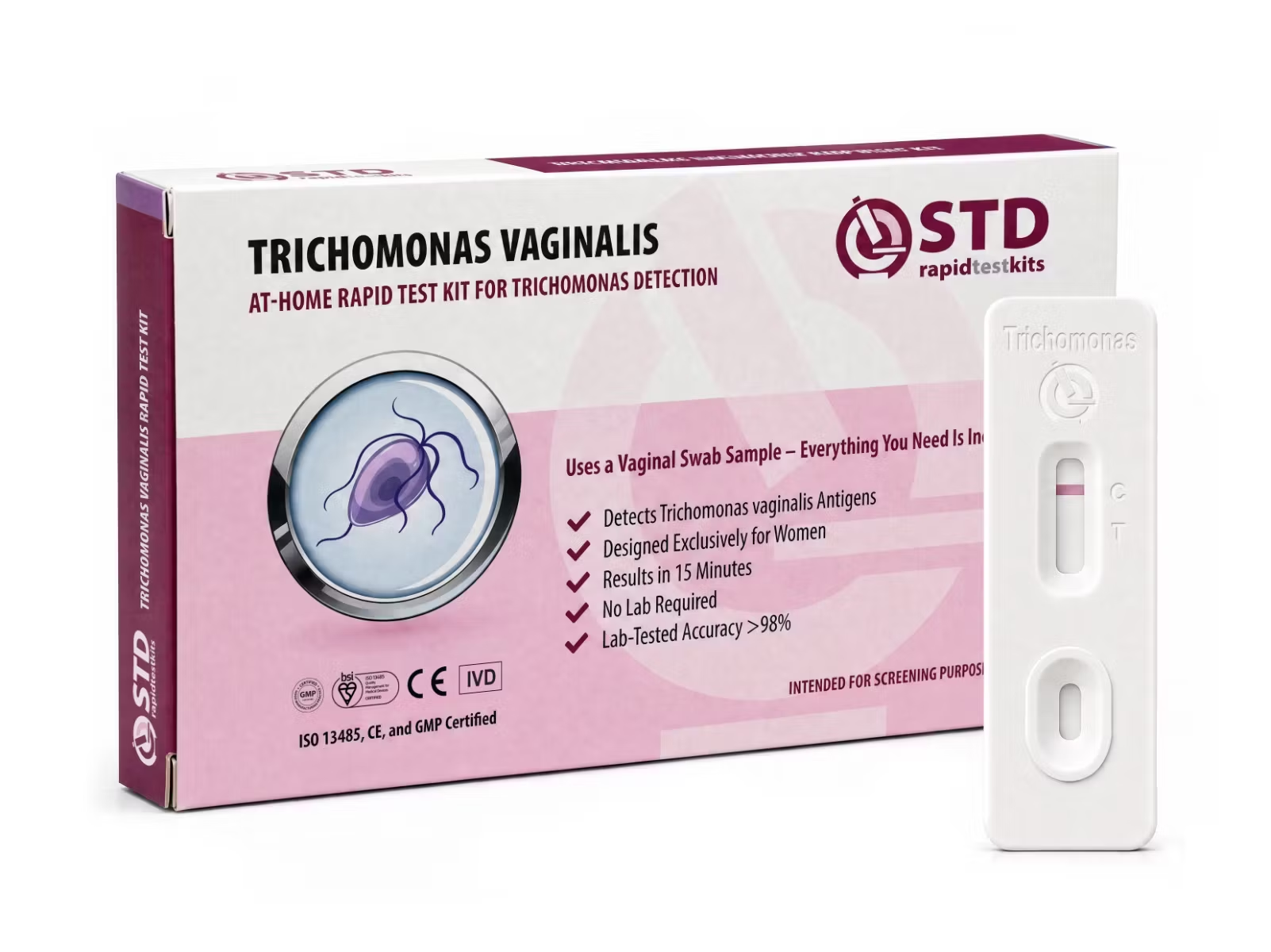
When confirmation does not change anything: a clear positive line plus matching symptoms plus known exposure. Most clinicians will treat in that scenario without an extra lab test, because the specificity of the rapid result is already very high. If you do confirm with a lab, ask for a NAAT specifically. Wet-mount microscopy, the older test method, has substantially lower sensitivity than NAAT and is no longer the recommended diagnostic approach in most settings (CDC STI Treatment Guidelines: Trichomoniasis). This site sells a rapid at-home trichomoniasis test for vaginal self-collection; we recommend it where it fits the reader’s situation, not as a replacement for clinic testing when a clinic test is the right call.
Antibiotics, Pregnancy, and the Limit on Testing in Men
Three situations complicate accuracy in ways that have nothing to do with the test itself.
Recent antibiotics. Metronidazole and tinidazole are the standard treatments for trichomoniasis. If you have taken either drug recently for any reason (a separate vaginal infection, a dental issue, a urinary tract infection), parasite levels may be suppressed below the antigen detection threshold even if some organisms remain. Wait at least 7 to 10 days after finishing the course before retesting if symptoms persist.
Pregnancy. Trichomoniasis during pregnancy has been linked to preterm birth, premature rupture of membranes, and low birth weight, which is why the CDC recommends screening for symptomatic pregnant patients and treating confirmed infections (CDC STI Treatment Guidelines: Trichomoniasis). Rapid testing at home is reasonable for an initial check, but a confirmed positive should be followed up with a clinician for treatment selection. Treatment with oral metronidazole is considered safe at standard doses during pregnancy; tinidazole is generally avoided in early pregnancy.
Testing in men. Trichomoniasis in men is mostly asymptomatic, which is one reason partner notification matters so much. The other complication for at-home testing: our rapid trichomoniasis kit is validated for vaginal self-swab only and is not indicated for male anatomy. Men with a known exposure should request a urethral swab or urine NAAT from a clinic, or, if symptoms are present and exposure is confirmed, ask about presumptive treatment. The standard regimen for men is a single 2-gram dose of metronidazole; the CDC now recommends 500 mg of metronidazole twice daily for 7 days as the first-line regimen for women.
About 70% of people with trichomoniasis do not have any signs or symptoms.
Tested Negative But Symptoms Won’t Quit
A negative rapid test plus persistent symptoms is one of the most common scenarios in sexual-health forums. A negative result is a data point, not a verdict. False negatives happen, especially in early testing, and trichomoniasis can also coexist with bacterial vaginosis, yeast infections, and other STIs that produce overlapping symptoms.
If symptoms are new, persistent, or worsening, the next step is a different test rather than another round of the same rapid cassette. A mail-in NAAT or a clinic visit will catch infections the rapid antigen missed and screen for the conditions a single-pathogen kit does not cover. If a partner tested positive, treat the exposure context as more important than your individual rapid result; presumptive treatment may be appropriate even after a negative rapid test.
If symptoms are persistent or worsening after a negative rapid test, escalate to a lab NAAT or a clinic visit rather than repeating the same rapid cassette. A different test method catches what the antigen test missed and screens for overlapping conditions a single-pathogen kit cannot detect.
Retesting: When and Why
The decision to retest follows a short set of conditions. In most cases the trigger is timing, treatment, or partner status rather than the original result alone. Retesting reinforces peace of mind and protects partners. In a curable infection where roughly seven of ten infected people have no symptoms at all, the test result is the only reliable signal that prevents quiet onward transmission. Order a fresh trichomoniasis kit if you need to time the next test correctly from the start.
- First test was before day 10 post-exposure and came back negative. The infection may not yet have reached detectable levels.
- Symptoms that match trichomoniasis (vaginal itching, abnormal discharge, vulvar irritation, urethral burning) are present and the result was negative or faint.
- You finished a course of antibiotics and want to confirm the infection cleared. Wait at least 7 to 10 days after the last dose to avoid a suppressed-but-not-eliminated false negative.
- A partner tested positive and your own test was inside the unreliable window. Rescreen at day 14 to 21 even if you have no symptoms.
Read the Line, Then Act on It
Trichomoniasis is one of the most treatable STIs in modern medicine. A correctly timed rapid test, used with good technique on a vaginal swab, will catch the majority of real infections. A faint line should be treated as a positive. A negative inside the window period is provisional. A negative plus persistent symptoms or a partner’s positive result is a reason to escalate.
If your result is unclear, faint, or does not match how you feel, the next step is a lab NAAT or a clinic visit rather than another rapid cassette. Either a 7-day course of metronidazole or a single 2-gram dose (depending on sex and clinician protocol) clears the infection in nearly all cases. The test result is the part you can act on today.
Next Steps at a Glance
- Positive line (any visibility) plus matching symptoms or known exposure: contact a clinician for treatment with metronidazole or tinidazole.
- Negative result plus persistent or worsening symptoms: order a lab NAAT or visit a clinic; do not repeat the same rapid cassette.
- Negative result plus a partner who tested positive: rescreen at day 14 to 21, and ask a clinician about presumptive treatment in the meantime.
FAQs
- Can a rapid trichomoniasis test be wrong?
- Sensitivity of FDA-cleared rapid antigen tests runs 83% to 95%, so roughly 5% to 17% of real infections are missed by a single rapid result. The most common cause of a wrong result is testing too soon after exposure; the parasite needs about 5 to 14 days to multiply to detectable levels. False negatives also happen when the swab was rotated too quickly, when the sample was diluted by recent showering or urination, or when a faint positive line was misread as a negative. False positives are uncommon because rapid antigen test specificity is above 97%.
- What does a faint line on a trich test mean?
- Treat any visible line in the result region as a positive, including a very faint one. Lateral-flow antigen tests are designed as a yes/no readout; the chemistry that produces the line only triggers when antigen is detected above the threshold. A faint line usually reflects a low antigen load: an early infection, a partial sample, or a partly suppressed infection. The clinical action is the same as for a bold positive.
- When is the best time to test after a possible exposure?
- Aim for day 10 to 21 post-exposure for the most reliable rapid-test result. Testing at days 5 to 9 is reasonable if symptoms appear, but plan to retest at day 14 if the first result is negative. Testing within 5 days of exposure is unlikely to detect a real infection because the parasite has not yet multiplied to a detectable level.
- Are at-home trichomoniasis tests accurate for men?
- Our at-home rapid swab kit is validated for vaginal self-swab only and is not indicated for male-anatomy testing. Men who have been exposed should request a urethral swab or urine NAAT from a clinic. Most male trichomoniasis is asymptomatic, so the absence of symptoms does not rule out infection.
- Should I confirm a rapid positive with a lab test before starting treatment?
- It depends on the clinical picture. A clear positive line plus matching symptoms plus a known exposure usually does not need a confirmation test; many clinicians will treat in that scenario. Confirmation is worth requesting when the line is faint, when no symptoms are present, when you are pregnant, or when starting treatment carries a meaningful cost (drug interactions, allergy concerns, fertility planning).
- Does trichomoniasis go away on its own?
- No. Untreated trichomoniasis can persist for months or years, often without obvious symptoms. The infection responds reliably to a short course of metronidazole or tinidazole, and it does not clear without medication. Untreated infection has been associated with increased risk of acquiring other STIs and with adverse pregnancy outcomes.
- Will recent antibiotics affect my test result?
- Wait 7 to 10 days after finishing antibiotics before retesting if symptoms persist. The effect is strongest when the antibiotics included metronidazole or tinidazole (the standard trichomoniasis treatments); these drugs can suppress parasite levels below the antigen detection threshold even if the infection is not fully cleared. Other antibiotic classes are less likely to interfere directly with the antigen test, though they can shift the vaginal microbiome and produce overlapping symptoms.
- Can trichomoniasis spread through oral or anal sex?
- Trichomoniasis is overwhelmingly a genital-tract infection. Transmission requires contact between infected genital fluids and a compatible mucosal surface. Pure oral or anal contact is a low-risk route compared with vaginal-penile contact, though transmission is possible if any genital contact or fluid exchange occurred. CDC testing guidance focuses on vaginal swabs because that is where the parasite reliably establishes itself.
- U.S. Centers for Disease Control and Prevention. About Trichomoniasis. Prevalence, asymptomatic rate, and core clinical context.
- U.S. Centers for Disease Control and Prevention. Sexually Transmitted Infections Treatment Guidelines: Trichomoniasis. Recommended treatment regimens for women, men, and pregnant patients.
- World Health Organization. Sexually Transmitted Infections fact sheet. Global incidence context and screening guidance.
- U.K. National Health Service. Trichomoniasis. Patient-facing overview of symptoms, testing methods, and treatment expectations.
- U.S. Centers for Disease Control and Prevention. STI Surveillance Statistics. Annual incidence and prevalence figures used for context.
