







Quick Answer: Yes, virgins can get STDs, because “virginity” isn’t a medical concept, and many STDs spread through skin, saliva, fluids, or shared objects without vaginal or anal sex.
This Isn’t the STD Talk They Gave You in School
Maya, 21, sat on the edge of the student health center’s exam table, fully clothed except for the paper gown. Her urine test had come back positive for chlamydia, and the nurse practitioner was trying to explain how that could be. Maya hadn’t had vaginal sex. In fact, she’d only had oral sex once, with someone who swore they were clean. “How could I have chlamydia if I’ve never even had sex?” she asked, voice cracking under the weight of disbelief.
We’ve been sold a dangerously narrow definition of what sex is, and what counts as risk. The cultural idea of “virginity” is murky at best, and completely useless when it comes to understanding STI transmission. Whether it’s your first time or you’ve never technically “done it,” your body can still be exposed to infections through skin-to-skin contact, oral sex, sharing sex toys, or genital rubbing (yes, even with underwear on).
This article is here to walk you through how this happens, factually, non-judgmentally, and with the clarity you deserve. If you're feeling blindsided by a positive test, or panicking because something doesn’t feel right but you’ve never had what you thought was “real sex,” you are exactly who this was written for.
When Sex Doesn’t Look Like Sex (But Still Spreads STDs)
Let’s dismantle the biggest myth first: that you can’t get an STD unless there’s vaginal or anal penetration. That’s flat-out false. Many of the most common STDs don’t care about your definitions, they care about contact. Skin, fluids, mucous membranes. That’s it.
Take herpes, for example. It’s spread through skin-to-skin contact, so a single kiss, a moment of oral sex, or rubbing against someone during a makeout can transfer the virus. HPV? Same. Even gonorrhea and chlamydia can be passed through oral sex. And because many of these infections are asymptomatic for long stretches, or forever, you might have no idea your partner was carrying anything.
Dev, 19, was stunned when his doctor told him he had oral gonorrhea. He’d only ever given oral sex to one person, once, and thought that didn’t really count. "I didn't even swallow," he said, almost embarrassed. But it didn’t matter. The bacteria had made contact with the back of his throat, where it quietly grew for weeks before a sore throat wouldn’t go away.
Transmission doesn’t require ejaculation, orgasm, or penetration. If there’s contact with infected areas, mouth, genitals, anus, you can be exposed. And some infections, like herpes or HPV, don’t even need fluids, just skin touching skin in the right place at the wrong time.

People are also reading: Kissing, Oral, Sharing Drinks: How You Might Catch Gonorrhea
STD Transmission Paths That Don’t Involve Intercourse
Below is a breakdown of how STDs can be transmitted through non-penetrative sexual activities. These pathways are not hypothetical, they’re medically documented, and they explain how someone who identifies as a virgin might still test positive.
| Activity | STDs That Can Spread | Transmission Details |
|---|---|---|
| Oral sex (giving or receiving) | Gonorrhea, Chlamydia, Herpes, Syphilis, HPV | Mouth-to-genital or genital-to-mouth contact spreads bacteria or viruses |
| Genital rubbing ("dry humping") | Herpes, HPV | Skin-to-skin contact even through thin underwear or exposed areas |
| Shared sex toys | Chlamydia, Gonorrhea, HIV, HPV | If not washed or covered between partners, fluids and viruses can transfer |
| Kissing (deep) | Herpes, rarely syphilis | Saliva exchange and cold sore exposure can lead to oral infection |
| Manual stimulation (fingering, handjobs) | Herpes, HPV, rarely chlamydia | Lower risk but possible if open cuts, sores, or fluids are involved |
Table 1. How common STDs can spread without vaginal or anal intercourse.
If you’re shocked by this table, you’re not alone. Most sex ed curriculums either ignore these realities or shame them into silence. But ignorance doesn’t stop exposure, it just delays action.
Check Your STD Status in Minutes
Test at Home with Remedium7-in-1 STD Test Kit

 For Men & Women
 Results in Minutes
 No Lab Needed
 Private & Discreet
Order Now $129.00 $343.00
For all 7 tests
Case Study: “I Was a Virgin. I Still Got Herpes.”
Sarai, 22, had just started college when she noticed a small sore on her vulva. She panicked. She’d never had intercourse, just some oral sex and dry humping. The campus clinic ran a swab and confirmed it was HSV-1. “I felt disgusting,” she said. “Like I didn’t even get the fun part of sex but got the punishment anyway.”
The nurse explained that HSV-1 is the same virus that causes cold sores, and that her partner may not have had any visible symptoms. Oral herpes can be passed to the genitals during oral sex, even if no one “looks sick.” And since herpes can lie dormant, there’s no way to know exactly when she got it.
This is what makes STD stigma so cruel. Sarai didn’t do anything wrong. She wasn’t reckless. She didn’t even feel like she’d had sex in the way society defines it. But her body had a different kind of contact, and it was enough. And now she had to carry the diagnosis alone, feeling like she couldn’t explain it without sounding like a liar.
But I Didn’t Feel Anything, How Could I Be Infected?
This is one of the most common reactions after a surprise positive test: “But I don’t have any symptoms.” Or, “I feel totally fine.” That’s because most STDs don’t show obvious signs right away, and some may never show symptoms at all.
HPV can live in the body for years without symptoms. Chlamydia is famously quiet in its early stages, especially in people with vaginas. Herpes can flare up once and then disappear for months, or remain so mild it’s mistaken for a razor bump. And oral gonorrhea? Often no symptoms whatsoever, especially in the throat.
Jamir, 18, only got tested after his girlfriend had a routine screening that came back positive. “She swore she hadn’t cheated, and I believed her. But I also knew we hadn’t gone all the way yet. So how could I have given her anything?” It turned out Jamir had chlamydia, most likely from receiving oral sex from a previous partner. He’d had no idea, no symptoms, no suspicion. Just transmission in silence.
This is why testing matters even when you think you’re low-risk. Symptoms are not a reliable guide. And “virgin” status does not equal immunity.
What Does It Mean to “Test Positive” If You’re a Virgin?
When your test result says “positive,” it means traces of the virus, bacteria, or antibodies were detected in your sample. It does not say how you got it. It does not judge your experience. It does not know, or care, whether you had penetration. And it definitely doesn’t mean you lied about your sexual history.
For many, getting a positive result feels like a violation of both body and identity. Virginity, as society defines it, carries baggage. It’s often tied to morality, purity, and “being good.” So a positive STD test can feel like a punishment for something you didn’t do, or a scarlet letter branding you as “dirty.” But none of that is rooted in truth.
Medically, virginity has no definition. What matters is exposure, not penetration, not labels, not perceived innocence. A test doesn’t measure your worth or your choices. It simply gives you data, and from there, you decide what to do next.
And what you should do is simple: Breathe. Then plan.
How Long Ago Was the Exposure? Why That Matters
If you’re wondering how you could’ve gotten an STD from something that happened weeks or months ago, timing might help connect the dots. Every infection has a “window period”, the time between exposure and when a test can detect it. If you test during that window, you might get a false negative. But once that window closes, a positive test means exposure happened sometime in the past, even if it was months ago.
Here’s a simplified timeline for the most common STDs that show up in people who haven’t had intercourse:
| STD | Typical Window Period | Possible Non-Sex Exposure |
|---|---|---|
| Herpes (HSV-1 or HSV-2) | 4–12 days (up to 3 weeks) | Kissing, oral sex, genital contact |
| Chlamydia | 7–14 days | Oral sex, shared toys, pre-ejaculate contact |
| HPV | Weeks to months | Skin-to-skin, oral sex, genital contact |
| Gonorrhea | 2–7 days | Oral sex, finger-to-genital if fluids present |
| Syphilis | 3 weeks on average | Oral sex, genital rubbing, kissing with sores |
Table 2. Window periods for common STDs and their non-penetrative exposure risks.
If you engaged in any of these types of contact, even if it didn’t feel like “real sex”, you may have had enough exposure for infection. And if the contact happened weeks or months ago, your body may only now be showing evidence through testing.

People are also reading: Pubic Lice 2025 Guide: Symptoms, Treatment & Similar Infections
What to Do After a Surprise Positive Result
You don’t need to panic, confess, or spiral. You need a plan, and support. The first thing is confirming the accuracy of the result. Was it a rapid test or a lab-based test? Was it based on antibodies, or did it detect DNA or antigens directly? Depending on the type of test, you may need a follow-up to rule out a false positive or confirm an asymptomatic case.
Next comes care. Many STDs, like chlamydia, gonorrhea, and syphilis, are treatable with antibiotics. Others, like herpes and HPV, don’t have cures, but they can be managed. Knowing what you’re dealing with opens the door to protecting yourself, informing partners (if relevant), and making empowered choices moving forward.
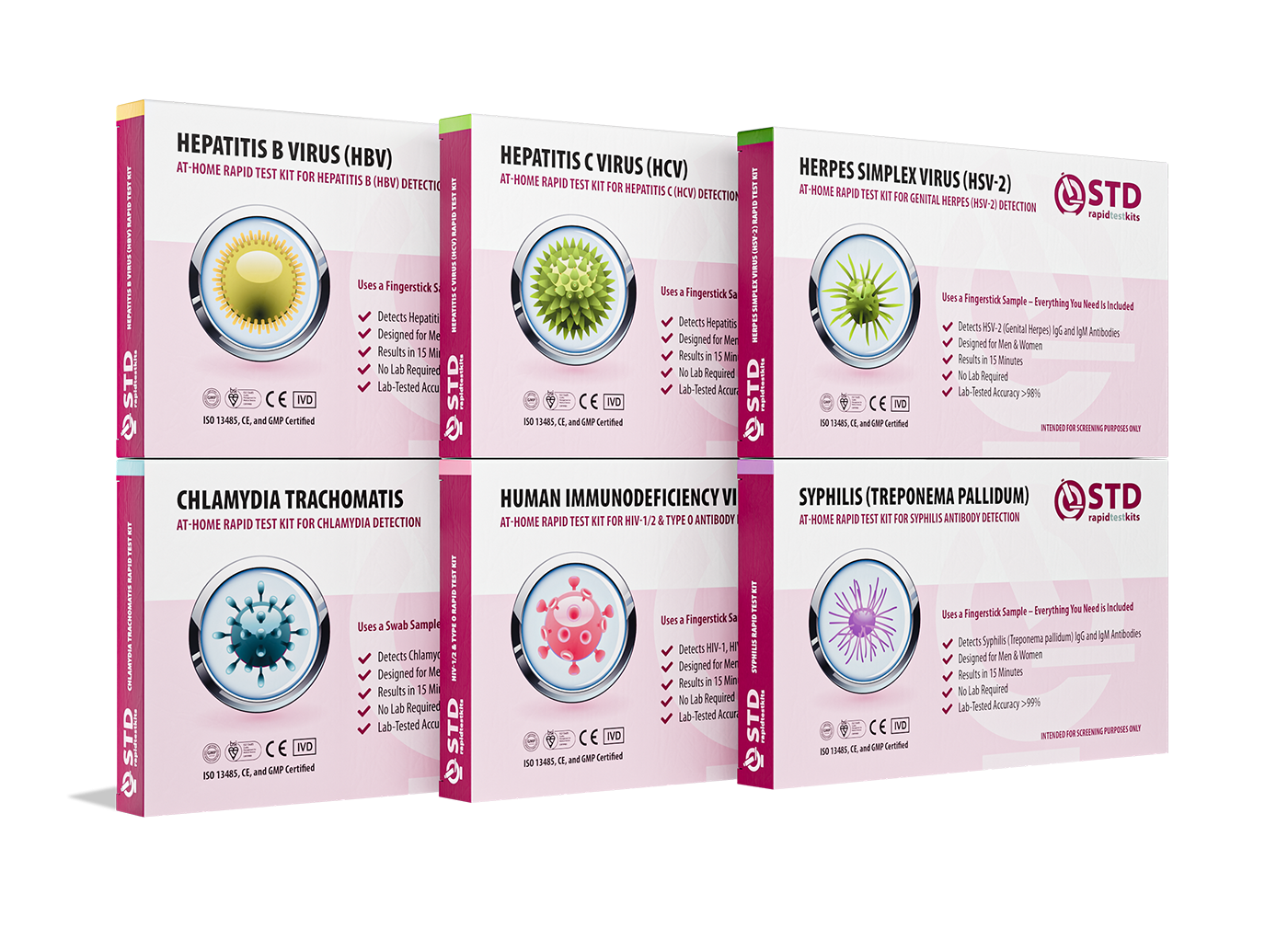
If you’re not sure where to go, consider ordering a discreet at-home test to double-check or follow up. For many people, having control over the when and where of testing reduces anxiety and restores autonomy.
If your head keeps spinning, peace of mind is one test away. This discreet at-home combo test kit checks for the most common STDs and arrives in unmarked packaging.
Check Your STD Status in Minutes
Test at Home with Remedium6-in-1 STD Test Kit
 For Men & WomenResults in MinutesNo Lab NeededPrivate & Discreet
Order Now $119.00 $294.00
For all 6 tests
How to Talk About It Without Shame
This might be the hardest part, especially if you’re still holding onto the belief that a diagnosis means you did something wrong. But shame only grows in silence. If you need to talk to a partner, a friend, or a clinician, lead with facts. “I had some contact that didn’t feel like sex, but I tested positive for something. I’m following up.” That’s it. No guilt. No apology. Just facts.
Li, 20, said she didn’t tell anyone about her HPV diagnosis for a full year. “I was terrified my parents would think I was lying about being a virgin. I didn’t even tell my doctor how it happened, I just said I wanted the vaccine.” But she deserved support, not secrecy. And so do you.
If you're afraid of being judged, find people or providers who get it. Consider talking to a sexual health counselor or using anonymous services to notify a partner. You are not the first person to end up here. You won’t be the last. What matters is what you do next.
When “I’m a Virgin” Isn’t a Protection, It’s a Barrier to Testing
One of the biggest reasons people delay or avoid STD testing is the belief that they’re “safe” because they’ve never had “real sex.” That belief becomes a barrier, not a shield. It prevents early detection. It fuels quiet infections that spread unknowingly. And it lets stigma fester in the silence.
Clinics and providers often reinforce this problem by asking questions like, “Are you sexually active?”, as if the answer is binary. What they mean is, have you had vaginal or anal intercourse? But what the patient hears is, if you haven’t, you must be low-risk. And that assumption can be dangerous.
Nico, 24, had never had penetrative sex of any kind. But after years of oral sex and shared sex toys with casual partners, they decided to get tested after developing a sore on their tongue. It came back positive for syphilis. The clinic nurse seemed surprised, even skeptical. “They kind of looked at me like I didn’t know my own sexual history,” Nico said. “But I know what I’ve done. And now I know what it meant.”
This is why expanding the definition of sexual contact, and reframing the conversation, is so important. Virginity is not a medical term. It doesn’t protect you. It doesn’t diagnose you. And it should never be used to determine your worth, or your risk.
Your Body Deserves Facts, Not Fear
If you’re reading this with your heart racing, wondering whether to order a test, or trying to decode a result that doesn’t match what you thought your life looked like, you’re not alone. You’re not dirty. You’re not broken. And you don’t have to stay confused.
Here’s the truth: many people get STDs from activities they didn’t even realize were risky. From people who didn’t know they were infected. From moments that didn’t feel dangerous. You can protect yourself, but only if you know what you’re protecting against, and how.
That begins with information, then testing, then care. Whether you’re retesting, confirming a diagnosis, or starting from scratch, you deserve to do it on your terms. Confidential. Accurate. Judgement-free.
Don’t wait and wonder, get the clarity you deserve. This at-home combo test kit checks for the most common STDs discreetly and quickly.
FAQs
1. Can you really get an STD if you’ve never had sex?
Yes, and it happens more than people think. If you've ever had oral sex, rubbed genitals together, or even shared a sex toy without cleaning it properly, you've been in the splash zone, so to speak. STDs don’t need full-on intercourse to make themselves at home.
2. I tested positive, but I’m a virgin. Is that even possible?
Totally possible. You’re not broken, and you’re definitely not alone. A “positive” just means something was detected, like chlamydia DNA or herpes antibodies. It doesn't mean you had wild orgies or that someone’s lying. Bodies touch, fluids swap, viruses don’t ask for permission slips.
3. Wait, so can kissing give you herpes?
Absolutely. If someone has oral herpes (cold sores) and kisses you while they’re shedding the virus (even without visible sores), you can catch it. And if they go down on you? That’s how genital herpes happens in people who’ve never had intercourse. Herpes is sneaky like that.
4. How about HPV? I’ve never even done it “down there.”
HPV can spread through skin-to-skin contact, no fluids required. That means rubbing, touching, even certain kinds of oral contact could do the trick. It’s the most common STI, and you don’t have to be “experienced” to get it. You just have to be human.
5. So what does “virgin” even mean medically?
It doesn’t. Doctors don’t diagnose or treat virginity, it’s a social and cultural label, not a health metric. Medically, we care about exposure: what parts touched what, what fluids were involved, and what kind of contact happened. Virginity doesn't show up in your bloodwork, but infections can.
6. Should I still get tested if I’ve only had oral or manual stuff?
Yes. Oral sex can pass gonorrhea, chlamydia, syphilis, herpes, HPV, you name it. Fingering or handplay is lower risk, but if fluids or sores were involved, there’s still a chance. When in doubt, test. It’s not about shame, it’s about knowing your status and staying in control.
7. My partner says they’re clean. Should I still test?
Let’s be real: most STDs don’t come with visible signs, and many people don’t even know they’re carrying something. It’s not about trust, it’s about biology. Testing protects both of you, and if your partner’s legit, they’ll get tested too. If they get weird about it? That’s your red flag.
8. Can I pass an STD without even knowing I had one?
Yup. That’s why they’re called silent infections. Some, like chlamydia, can hang out for months with zero symptoms. You might feel totally fine and still be contagious. That’s why regular testing matters, even when you feel “normal.”
9. Is it weird to test even if I haven’t done much?
Not at all. Testing doesn’t mean you’ve been reckless, it means you care about your body and your partners. Whether you’ve just kissed someone or had oral sex once at a party two summers ago, it’s never “too little” to test. You’re allowed to want answers.
10. Okay, but if I do test positive, will I have to tell everyone?
You don’t owe the world your medical history. If you test positive, you may need to inform partners so they can get tested too, but that’s it. You get to choose how, when, and to whom you disclose. There are even anonymous partner notification tools if you want backup.
You Deserve Answers, Not Assumptions
This article wasn’t written to scare you. It was written because too many people are walking around with symptoms they ignore, or test results they don’t understand, because they think “virgin” means invincible. It doesn’t. And that’s okay. What matters now is that you know.
If you're anxious, confused, or navigating a diagnosis you never thought you'd see, take a breath. The stigma doesn’t define you. The label “virgin” doesn’t protect you. But information does. And care is always available.
Get the clarity you need with private, reliable screening. This discreet at-home STD combo test lets you test on your terms, no judgment, no waiting rooms, just answers.
How We Sourced This Article: We combined current guidance from leading medical organizations with peer-reviewed research and lived-experience reporting to make this guide practical, compassionate, and accurate.
Sources
1. About STI Risk and Oral Sex – CDC
2. About Genital HPV Infection – CDC
3. Transmission and clearance of human papillomavirus infection
4. Herpes increases because oral sex thought safe
6. Sexually Transmitted Diseases/Infections (STDs/STIs) – Cleveland Clinic
About the Author
Dr. F. David, MD is a board-certified infectious disease specialist focused on STI prevention, diagnosis, and treatment. He blends clinical precision with a no-nonsense, sex-positive approach and is committed to expanding access for readers in both urban and off-grid settings.
Reviewed by: M. Tran, MSN, FNP-C | Last medically reviewed: October 2025
This article is for informational purposes and does not replace medical advice.


