
Published: June 2025 | Last updated: April 2026 | Editorial review and quality control: Martina N.
Gonorrhea is the second-most reported notifiable infection in the United States, with more than 700,000 cases logged in 2022 alone, per the CDC's STI surveillance program. Globally, the WHO estimates around 82 million new infections every year. Most cases of efficient transmission come down to one thing: gonorrhea is good at hiding. It can sit in the throat, the cervix, or the rectum for weeks without producing a single noticeable symptom. The questions this article answers are the ones people search for at 1am after a hookup: did kissing count, did oral count, when do symptoms show up, and which test do I actually need.
Can you catch gonorrhea from oral sex, kissing, or sharing drinks?
Oral sex transmits gonorrhea reliably, both directions, and pharyngeal (throat) infections are now well-documented. Kissing transmission is rare but possible during deep tongue-to-tongue contact when one person carries throat gonorrhea. Sharing drinks or utensils is theoretically possible, but not a meaningful real-world transmission route, because Neisseria gonorrhoeae does not survive long outside the human body. The practical answer: oral and vaginal/anal sex are the routes that matter, and testing is how you find out, because most people with gonorrhea feel fine.
Key Takeaways
- Gonorrhea spreads through oral, vaginal, and anal contact with infected mucous membranes. Many infections produce no symptoms, which is why testing is the only reliable way to know your status.
- Symptoms (when they appear) usually show up 2 to 14 days after exposure. Untreated gonorrhea can cause pelvic inflammatory disease, infertility, and increased HIV transmission risk.
How gonorrhea spreads between people
Gonorrhea is caused by Neisseria gonorrhoeae, a bacterium that infects the wet linings of the body: the urethra, cervix, rectum, throat, and (rarely) the conjunctiva of the eye. Transmission requires direct contact between an infected mucous surface and an uninfected one. Ejaculation is not required. Pre-ejaculate, vaginal fluid, and the lining of the urethra or cervix all carry the organism.
The routes that actually move the infection between people, in order of how often they show up in CDC surveillance and clinical guidance:
- Vaginal sex without a condom, with an infected partner.
- Anal sex, insertive or receptive, without a condom.
- Oral sex, both giving and receiving. The throat infection that follows is called pharyngeal gonorrhea.
- Shared sex toys, when not washed or covered with a fresh condom between users or between body sites.
- Mother to newborn, during vaginal delivery, where the bacteria can infect the infant's eyes (gonococcal ophthalmia neonatorum).
Two routes generate a lot of search anxiety and deserve direct answers. Kissing can transmit gonorrhea in rare cases, almost always when one partner has an active throat infection and the kiss involves tongue-to-tongue contact for an extended time. Casual closed-mouth kissing is not a meaningful risk. Sharing drinks, utensils, towels, or toilet seats does not transmit gonorrhea in any practically measurable way; the bacteria die quickly outside the body.
One nuance the WHO highlights: an active gonorrhea infection raises the risk of acquiring HIV through any subsequent exposure, because the inflamed mucous tissue provides easier entry points for HIV.
| Activity | Transmission risk | Notes |
|---|---|---|
| Vaginal sex (unprotected) | High | One of the most common routes; bidirectional |
| Receptive anal sex (unprotected) | High | Easy entry through rectal mucosa |
| Oral sex (giving or receiving) | Moderate | Often produces a symptomless throat infection |
| Sharing unwashed sex toys | Moderate | Wash between users, or use a fresh condom |
| Deep tongue-to-tongue kissing | Low but documented | Real risk if a partner has throat gonorrhea |
| Sharing drinks, utensils, towels | Negligible | Bacteria do not survive on environmental surfaces |
| Toilet seats, hot tubs, swimming pools | None | No documented cases |
The incubation question: why you might feel fine for weeks
The incubation period is the time between exposure and the first symptom. For gonorrhea, that window is unhelpfully wide. The Mayo Clinic puts the typical range at 2 to 14 days. In men with urethral infections, symptoms (when they appear) tend to show up within 2 to 5 days. In women with cervical infections, the window stretches longer, often around 10 days, and a meaningful share of women never develop noticeable symptoms at all.
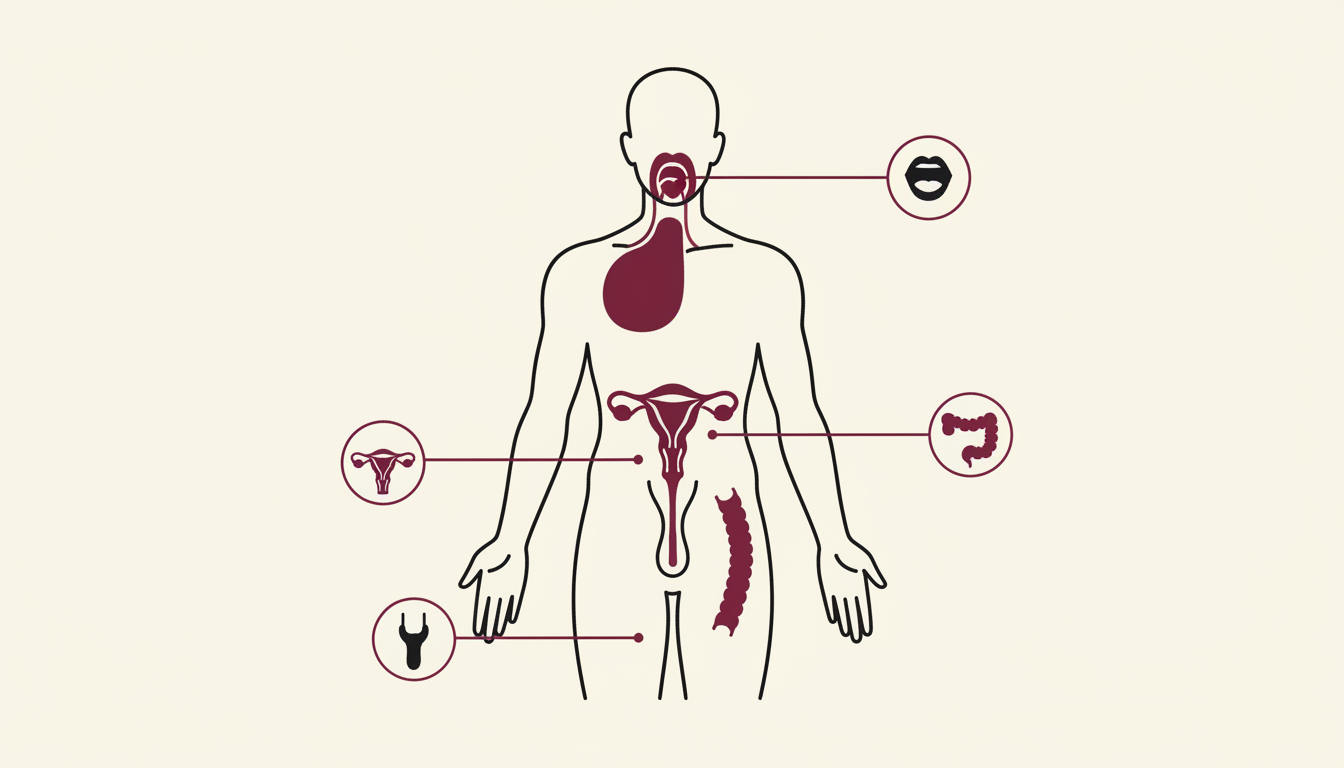
A negative feeling does not equal a negative test. Asymptomatic gonorrhea is the rule, not the exception, in three sites of infection that go silent most often.
What this means practically: if you had unprotected sex (oral, vaginal, or anal) with a partner whose status you do not know, the absence of symptoms is not reassurance. The CDC's recommendation for sexually active people who have new or multiple partners is to screen routinely, not only when something feels off.
Where gonorrhea hides without symptoms
- Pharyngeal (throat) infections are usually silent. Most people who test positive on a throat swab had no sore throat at all.
- Rectal infections are often silent or pass as mild discomfort that gets mistaken for hemorrhoids.
- Cervical infections in women frequently produce no early symptoms, only revealing themselves later as pelvic pain or fertility issues.
Recognizing early signs by site of infection
When gonorrhea does produce symptoms, they cluster by where the bacteria landed. Knowing the site-specific picture helps you and your provider pick the right test.
Urethral (penile) infection
- Burning or stinging during urination
- White, yellow, or greenish discharge from the tip of the penis, often within a week of exposure
- Painful or swollen testicles, which can indicate the infection has progressed to epididymitis
Cervical or urogenital infection (people with vaginas)
- Increased or unusual vaginal discharge
- Painful urination
- Bleeding between periods or after sex
- Lower pelvic pain or pain during intercourse
Pharyngeal (throat) infection
- Mild sore throat in some people; complete absence of symptoms in most
- Occasional redness on the tonsils that can be mistaken for strep or a viral pharyngitis
- Lymph node tenderness in the neck (uncommon)
Rectal infection
- Anal itching, soreness, or discharge
- Painful bowel movements
- Bleeding from the rectum, sometimes mistaken for hemorrhoids
The trap is that none of these symptom sets is unique to gonorrhea. Throat gonorrhea looks like every other sore throat. Cervical gonorrhea overlaps with yeast infection, bacterial vaginosis, and chlamydia. Rectal gonorrhea looks like a hemorrhoid flare. Confirming the cause means a lab test on the right sample type for the site you are worried about.
What untreated gonorrhea does to you
Untreated gonorrhea does not stay confined to the original site of infection.
In people with vaginas, the bacteria can ascend from the cervix into the uterus and fallopian tubes, producing pelvic inflammatory disease (PID). The CDC identifies PID as a direct complication of untreated gonorrhea, listing fallopian-tube scarring, ectopic pregnancy, infertility, and long-term pelvic or abdominal pain as outcomes.
In people with penises, gonorrhea can spread from the urethra to the epididymis, the coiled tube behind each testicle. Acute epididymitis is painful and, the CDC notes, can in rare cases lead to infertility.
In both sexes, a small share of untreated infections progresses to disseminated gonococcal infection (DGI), where bacteria enter the bloodstream. The CDC warns that untreated gonorrhea "can also spread to your blood or joints" and that this condition can be life-threatening. The NHS lists a high temperature (fever), joint pain or swelling, and a skin rash as signs of a more serious gonorrhea infection that needs urgent medical attention.
Throat infections rarely cause severe direct illness, but they make you a silent transmitter. Untreated pharyngeal gonorrhea also contributes disproportionately to antibiotic resistance, because the throat is a site where N. gonorrhoeae can swap genes with related bacteria that already carry resistance.
HIV co-transmission risk rises sharply with an active gonorrhea infection. Inflamed mucous tissue gives HIV easier entry, and people co-infected with gonorrhea are more likely to transmit HIV to a partner. The WHO classifies this synergy as a public-health priority, which is why anyone diagnosed with gonorrhea is also recommended to test for HIV.
An active gonorrhea infection inflames mucosal tissue, making it easier for HIV to enter the body during a subsequent exposure. Anyone diagnosed with gonorrhea is routinely advised to test for HIV at the same time, and to discuss timing of follow-up testing with a clinician based on the exposure window.
Pregnancy, newborn risks, and why prenatal screening matters
Gonorrhea during pregnancy carries a separate set of risks. The CDC notes that an infected pregnant person can give the infection to the baby during delivery, and that this can cause serious health problems for the newborn. Untreated maternal gonorrhea has also been associated with adverse pregnancy outcomes including preterm birth and low birth weight in the broader obstetric literature, though the CDC's general gonorrhea page does not enumerate the full list.
The most recognizable newborn complication is gonococcal ophthalmia neonatorum, a severe eye infection that, if untreated, can cause permanent vision loss or blindness. This is why most US states require routine antibiotic eye ointment (typically erythromycin) for every newborn at birth. The ointment is preventative; if a mother has an active untreated infection, additional treatment is needed.
Prenatal STI screening is now standard. The CDC recommends gonorrhea testing at the first prenatal visit for women under 25 or anyone with risk factors, with re-testing in the third trimester if the risk continues. If you are pregnant and not sure whether you were tested, ask your provider directly rather than assuming the screen happened automatically.
Gonococcal ophthalmia neonatorum is a severe eye infection a baby can acquire passing through the birth canal of an infected parent. Untreated, it can cause corneal scarring and blindness within days. Routine antibiotic eye ointment (usually erythromycin) is applied to every newborn in most US states as a preventative measure, regardless of the parent's known status. If a parent has an active untreated infection at delivery, the newborn also needs targeted antibiotic treatment, not just the ointment.
Treatment today, retesting, and the antibiotic-resistance reality
The good news first: uncomplicated gonorrhea is curable. The current CDC treatment guideline is a single 500 mg intramuscular injection of ceftriaxone (1 gram if you weigh 150 kg or more). If chlamydia has not been ruled out, doxycycline is added orally for seven days.
The older dual-therapy regimen of ceftriaxone plus azithromycin was officially retired in 2020 because of rising azithromycin resistance. If you read an article that recommends the dual therapy, the article is out of date.
The retesting rule that often gets missed: anyone treated for gonorrhea should be retested approximately three months later. This is to catch reinfection, not treatment failure. Reinfection rates are high enough that the CDC explicitly flags the three-month retest as standard care, even when symptoms have cleared.
The harder part is antibiotic resistance. Neisseria gonorrhoeae has progressively defeated penicillin, tetracycline, fluoroquinolones, and now azithromycin. Ceftriaxone is the last reliable first-line treatment in most countries. The WHO classifies N. gonorrhoeae as a high-priority pathogen for antibiotic-resistance surveillance, and isolated cases of ceftriaxone-resistant strains have been documented in multiple countries. This is the reason the public-health stance has shifted toward early diagnosis and partner notification, instead of relying on antibiotics to clean up after exposure.
The CDC recommends retesting about three months after successful treatment, even when symptoms have cleared and you feel fine. The retest is to catch reinfection from an untreated partner or a new exposure, not to confirm cure. Reinfection within months is common enough that this follow-up is built into standard care, and skipping it is one of the most frequent reasons gonorrhea keeps moving through a sexual network.
Testing: what you can do at home and what still needs a clinic
The lab gold standard for gonorrhea is nucleic acid amplification testing (NAAT), which detects bacterial DNA from a swab or urine sample. Laboratory NAAT can test pharyngeal, rectal, urogenital, and urine samples with very high sensitivity, and it is what most clinics, sexual-health services, and the CDC recommend for confirmatory diagnosis.
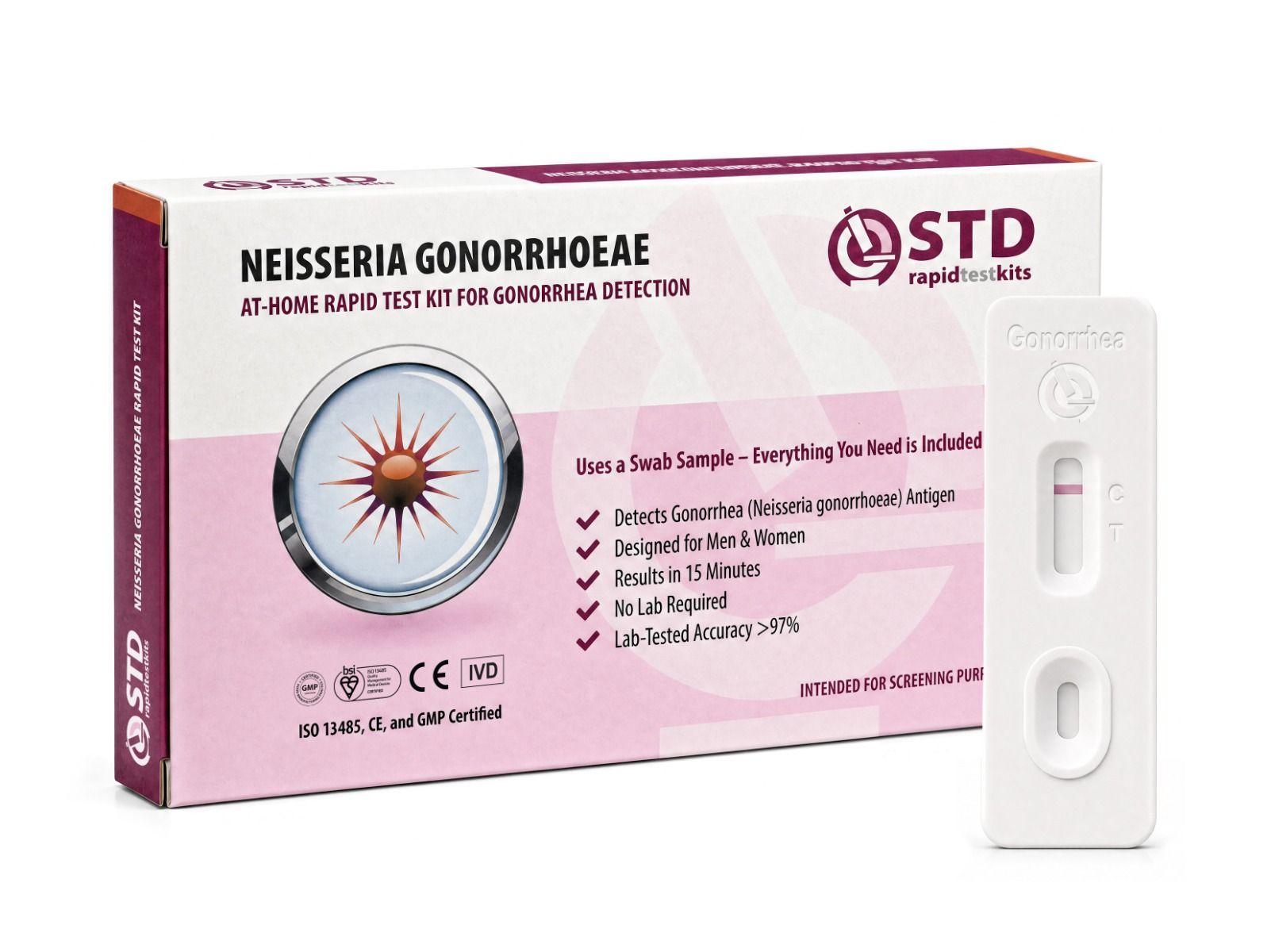
At-home rapid tests are lateral-flow immunoassays: a strip-based screen that returns a visible result in about 15 minutes. The technology is different from NAAT. Rapid lateral flow is faster and more private, and its analytical sensitivity is lower than a laboratory NAAT, particularly in early or asymptomatic infections. The two are complementary, not equivalent. A negative rapid result, especially close to the start of the incubation window, is best confirmed with a lab NAAT if you remain concerned.
Disclosure: this article is published by stdrapidtestkits.com, which sells at-home STI testing kits. Recommendations below are based on fit-for-purpose for the reader's concern, not on commercial benefit.
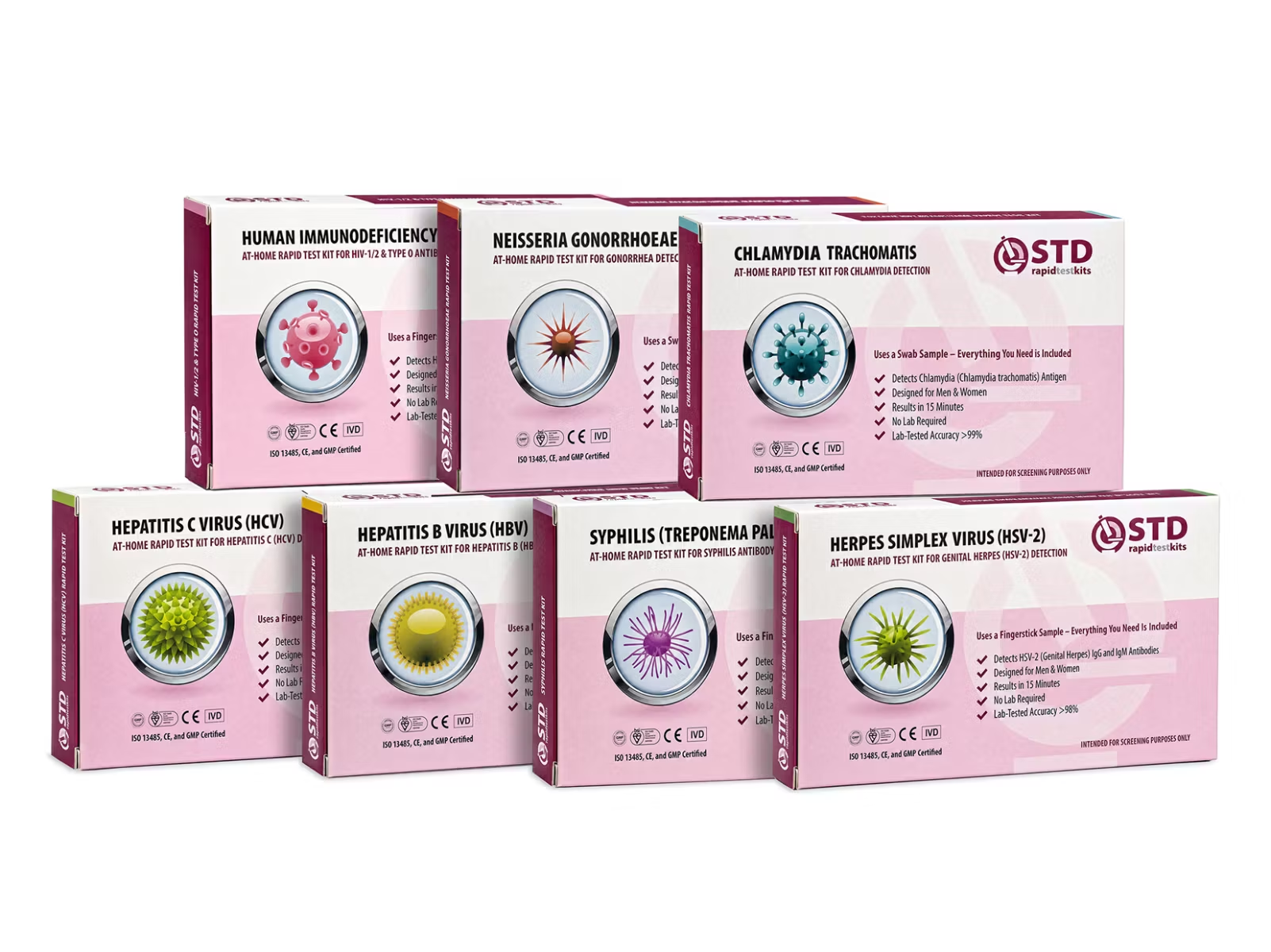
What stdrapidtestkits.com sells, in short:
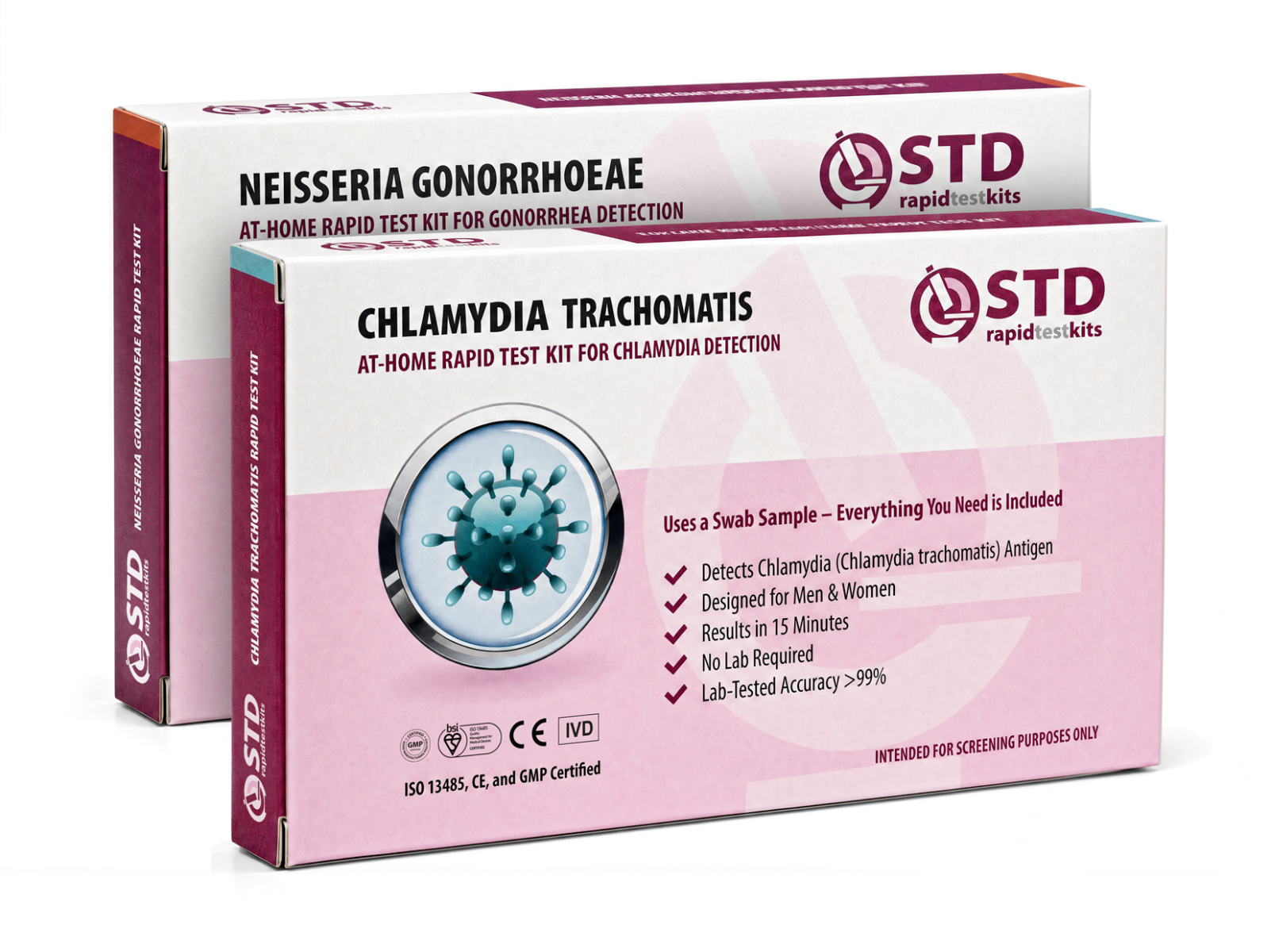
- A self-collected genital swab for gonorrhea (single-infection rapid test) or for chlamydia + gonorrhea together (a 2-in-1 swab kit). These cover urogenital exposures.
- Multi-STI combination kits that pair the gonorrhea swab with rapid blood tests for HIV, syphilis, hepatitis B, and hepatitis C, which makes sense if your concern is broader than one infection.
What we do not sell, and where you need a clinic instead:
- A throat (pharyngeal) swab for oral gonorrhea exposure. If your concern is throat gonorrhea after oral sex, a sexual-health clinic, urgent care, or primary-care office can collect a pharyngeal swab and run it through a lab NAAT. We do not have a home equivalent.
- A rectal swab for receptive-anal exposure. Same path: a clinic-collected swab.
- A urine NAAT panel. Our products are swab-based, not urine-based.
Be honest with yourself about which exposure routes you are testing for. A genital swab kit answers a urogenital question; it does not rule out a throat infection.
Prevention that actually works
None of the prevention advice here is exotic. The reason it works is consistent use, not occasional use.
- Latex or polyurethane condoms on every act of vaginal or anal sex with a partner whose status you have not confirmed. Used correctly, condoms substantially reduce gonorrhea transmission.
- Barriers for oral sex: external condoms for fellatio, dental dams for cunnilingus or anilingus. Underused in practice, and high yield for reducing pharyngeal infection.
- Wash sex toys between partners and between body sites, or use a fresh condom on the toy.
- Routine screening if you have new or multiple partners. The CDC recommends annual gonorrhea screening for sexually active women under 25 and for men who have sex with men.
- Talk to partners. Knowing whether a partner has been tested in the last few months is the single most useful piece of information you can have, and it is information you cannot get from a body scan.
The shift in the public-health conversation is away from just preventing exposure (impossible to guarantee in any sexually active life) and toward catching infections fast when they happen. Early detection plus early treatment closes the transmission chain, and home testing has made that loop faster than it used to be.
External condoms for fellatio and dental dams for cunnilingus or anilingus are the single most underused prevention tool. Pharyngeal gonorrhea spreads efficiently through unprotected oral sex, and most people who carry it have no sore throat to warn them. Adding a barrier for oral activity is the highest-yield change for anyone whose recent exposures have been oral rather than penetrative.
Common myths that keep people from testing
The myths overlap with the reasons people delay screening. Each one deserves a direct answer.
- Myth: oral sex is safe. Pharyngeal gonorrhea is real, common, and usually silent. Oral sex transmits in both directions.
- Myth: only people with many partners get gonorrhea. One unprotected exposure with an infected partner is sufficient. Number of partners changes statistical risk; it does not change whether transmission is possible in any given encounter.
- Myth: if I had it, I would feel it. Most pharyngeal, rectal, and a substantial fraction of cervical infections produce no symptoms. Feeling fine is not evidence of being uninfected.
- Myth: a previous course of antibiotics gives me immunity. Past treatment does not prevent reinfection. The CDC recommends a routine three-month retest after treatment specifically because reinfection is common.
- Myth: I can catch it from a toilet seat. Neisseria gonorrhoeae does not survive on environmental surfaces. Toilet seats, hot tubs, and sharing utensils are not transmission routes.
Drug resistance is a major threat to reducing the burden of gonorrhoea worldwide.
FAQs
- Can you really get gonorrhea from kissing?
- It is uncommon but documented. The risk is highest in deep tongue-to-tongue kissing when one partner has an active throat (pharyngeal) gonorrhea infection. Casual closed-mouth kissing is not a meaningful transmission route.
- How long after exposure do gonorrhea symptoms appear?
- The 2-to-14-day window means you can feel completely normal for up to two weeks after exposure. Urethral infections in men tend to surface faster, often within a few days; cervical, throat, and rectal infections are frequently silent indefinitely. Passing the two-week mark with no symptoms is reassurance about overt infection, not clearance, which is why the only real answer to your status is a test rather than a wait.
- Can I get gonorrhea from oral sex?
- Yes, in both directions. Pharyngeal (throat) gonorrhea is well-documented and frequently produces no sore throat or other symptoms. Anyone giving or receiving oral sex with an infected partner can acquire it.
- Can sharing drinks or utensils transmit gonorrhea?
- No, for a practical reason: Neisseria gonorrhoeae does not survive long outside the human body, so cups, straws, forks, towels, and toilet seats are not realistic transmission routes.
- Is throat gonorrhea dangerous?
- It rarely causes severe direct illness, but it has two important downstream effects. It silently passes to partners through oral sex or kissing, and the throat is a site where N. gonorrhoeae can swap genes with related bacteria, contributing disproportionately to antibiotic resistance.
- How is gonorrhea treated today?
- Per current CDC guidance, uncomplicated gonorrhea is treated with a single 500 mg intramuscular injection of ceftriaxone (1 gram if the person weighs 150 kg or more). The older dual-therapy regimen with azithromycin was retired in 2020 due to rising resistance. Anyone treated should be retested about three months later to catch possible reinfection.
- Can I test for gonorrhea at home?
- Yes for urogenital exposure. Our self-collected genital swab kits give a rapid lateral-flow result in about 15 minutes. They are screening tools; a positive result is best confirmed with a laboratory NAAT, and pharyngeal or rectal exposures need a clinic-collected swab, which we do not sell.
- Can I get gonorrhea more than once?
- Yes. A previous infection does not produce immunity. Reinfection is common enough that the CDC's standard care includes a retest about three months after successful treatment.
- U.S. Centers for Disease Control and Prevention. About Gonorrhea: transmission routes, complications including PID and bloodstream/joint spread, and screening recommendations.
- U.S. Centers for Disease Control and Prevention. STI Treatment Guidelines: gonococcal infections in adults and adolescents, including the current single-dose ceftriaxone regimen.
- U.S. Centers for Disease Control and Prevention. STI surveillance reports and annual case counts in the United States.
- World Health Organization. Sexually transmitted infections (STIs) fact sheet, including global incidence estimates and antimicrobial-resistance status of Neisseria gonorrhoeae.
- NHS (United Kingdom). Gonorrhoea: complications page, listing fever, joint pain or swelling, and rash as signs of more serious gonorrhea infection requiring urgent care.
- Mayo Clinic. Gonorrhea: symptoms and causes, including incubation period and site-specific symptom patterns.
